Fabaceae - Botanical Family
| Number of plants found: 380 |  | Prev | Next | 
|
Go to page: | First | 4 | 5 | 6 | 7 | 8 | 9 | 10 | 11 | 12 | 13 | Last |

Botanical names: Brownea ariza, Hermesias ariza
Common name: Scarlet Flame Bean
Family: Fabaceae
Subfamily: Caesalpinioideae
Origin: South America
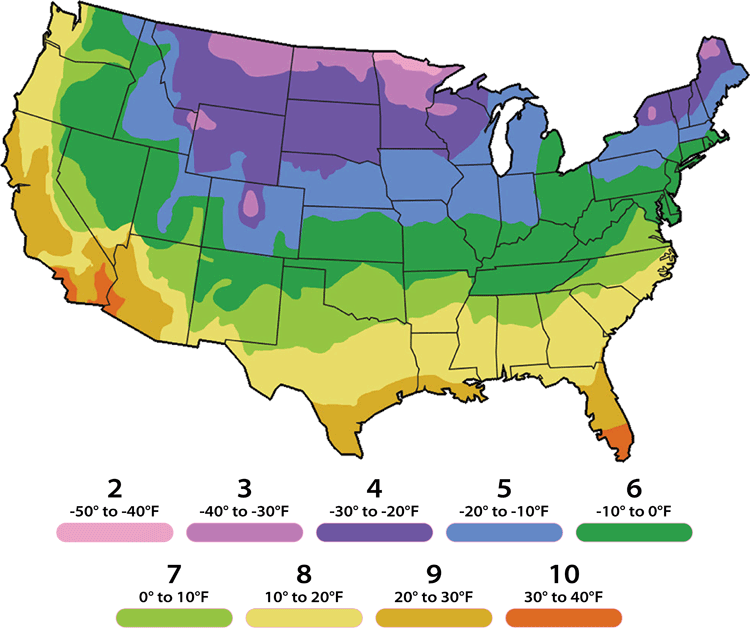
USDA Zone: 10-11


This tropical American native occurs in Colombia and Venezuela, though it is widely grown in other tropical regions worldwide. A true tropical, it requires frost-free environment with hight air humidity. Assuming you can provide the tropical conditions, the species grows into a nice medium size tree 20-25 ft (smaller in containers), with dense umbrella-like canopy, spreading 15-20 ft wide.
Young leaves a pale green to pinkish, almost white, sometimes with light variegation, and hangs down like a large handkerchief (like in all related species (browneas, amherstia, maniltoa, etc.).
Flowering occurs on 3-4th year from seed, at the base of the branches. The flower lasts a few days, however the view is unforgettable.
Related species: Brownea grandiceps, Brownea capitella.


Botanical name: Brownea crawfordii
Common name: Rose of Venezuela
Family: Fabaceae
Subfamily: Caesalpinioideae
Origin: South America
USDA Zone: 10-11
In some sources Brownea crawfordii is hybrid Brownea grandiceps x macrophylla


Botanical name: Brownea grandiceps
Common names: Rose of Venezuela, Scarlet Flame Bean
Family: Fabaceae
Subfamily: Caesalpinioideae
Origin: South America
USDA Zone: 10-12
A slow-growing, small tree with very large heads of red flowers which hang beneath the foliage. The leaflets are aristate, having an elongated apex. Young leaves are mottled pale pink and greenish white, turning pinkish brown and finally uniformly green as they mature. The pods are velvety, and propagation is from seeds. Brownea grandiceps is recognisable from its long pinnate leaves with 12-18 pairs of leaflets and the pendulous bunches of young leaves are pale green, splashed and mottled in a reddish brown. The spotted handkerchieves are impressive enough, but the inflorescences are even more of a sight - dense, salmon-pink balls of 20 cm or more across.
Related species:Brownea ariza, Brownea capitella.


The flower lasts a few days, however the view is unforgettable.
Local pickup only. This item is not available for shipping. Local delivery may be available in Ft. Myers or Sebring, Florida. Contact us for an estimate. Non-pickup orders are subject to restocking fees.
Recommended Fertilizer: SUNSHINE Megaflor - Bloom Nutrition Booster
Last one

Botanical name: Brownea macrophylla
Common names: Panama Flame Tree, Rose of Venezuela
Family: Fabaceae
Subfamily: Caesalpinioideae
Origin: South America
USDA Zone: 10-11
This tropical American native occurs in Colombia and Venezuela, though it is widely grown in other tropical regions worldwide. A true tropical, it requires frost-free environment with hight air humidity. Assuming you can provide the tropical conditions, the species grows into a nice medium size tree 20-25 ft (smaller in containers), with dense umbrella-like canopy, spreading 15-20 ft wide.
Young leaves a pale green to pinkish, almost white, sometimes with light variegation, and hangs down like a large handkerchief (like in all related species (browneas, amherstia, maniltoa, etc.).
Flowering occurs on 3-4th year from seed, at the base of the branches. The flower lasts a few days, however the view is unforgettable.
Related species: Brownea grandiceps, Brownea capitella., Brownea kiwensis.


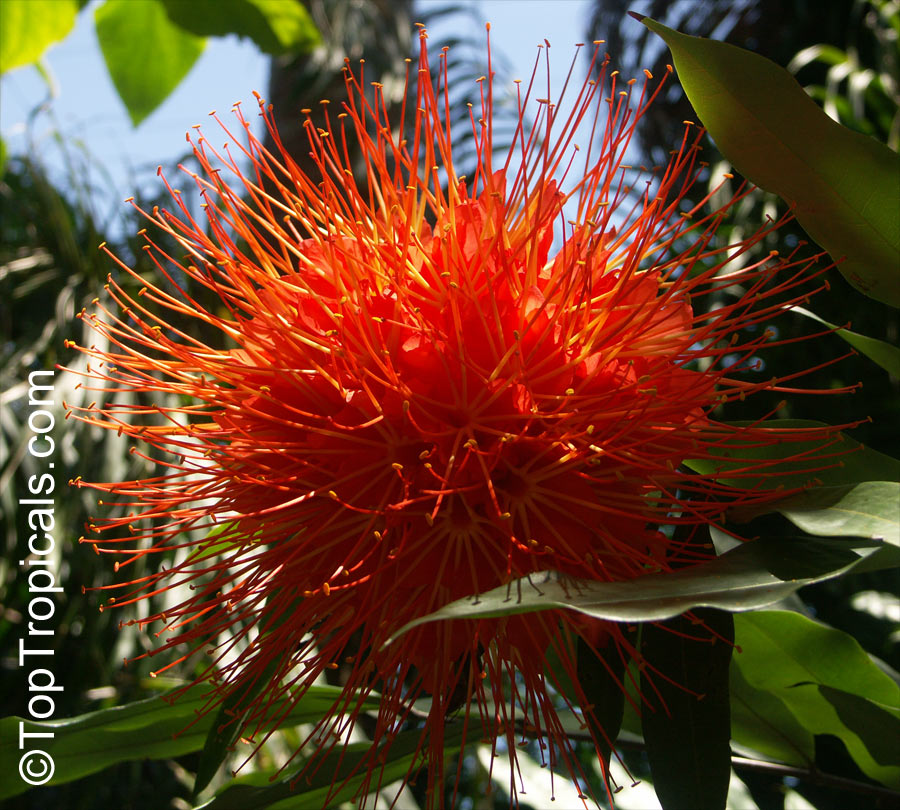


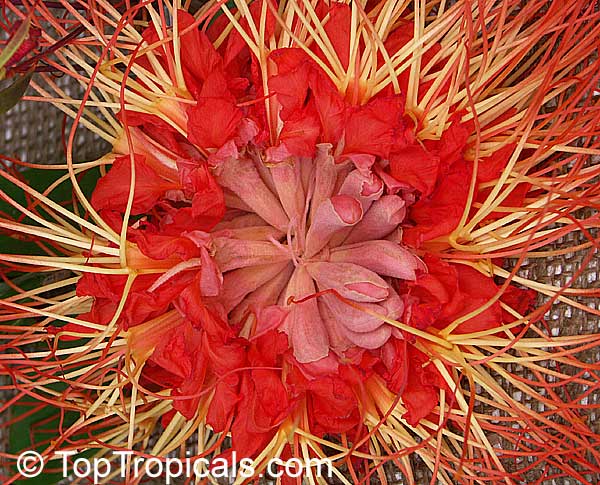


Botanical name: Brownea sp.
Common name: Scarlet Flame Bean
Family: Fabaceae
Subfamily: Caesalpinioideae
Origin: South America
USDA Zone: 10-12


Botanical name: Browneopsis ucayalina
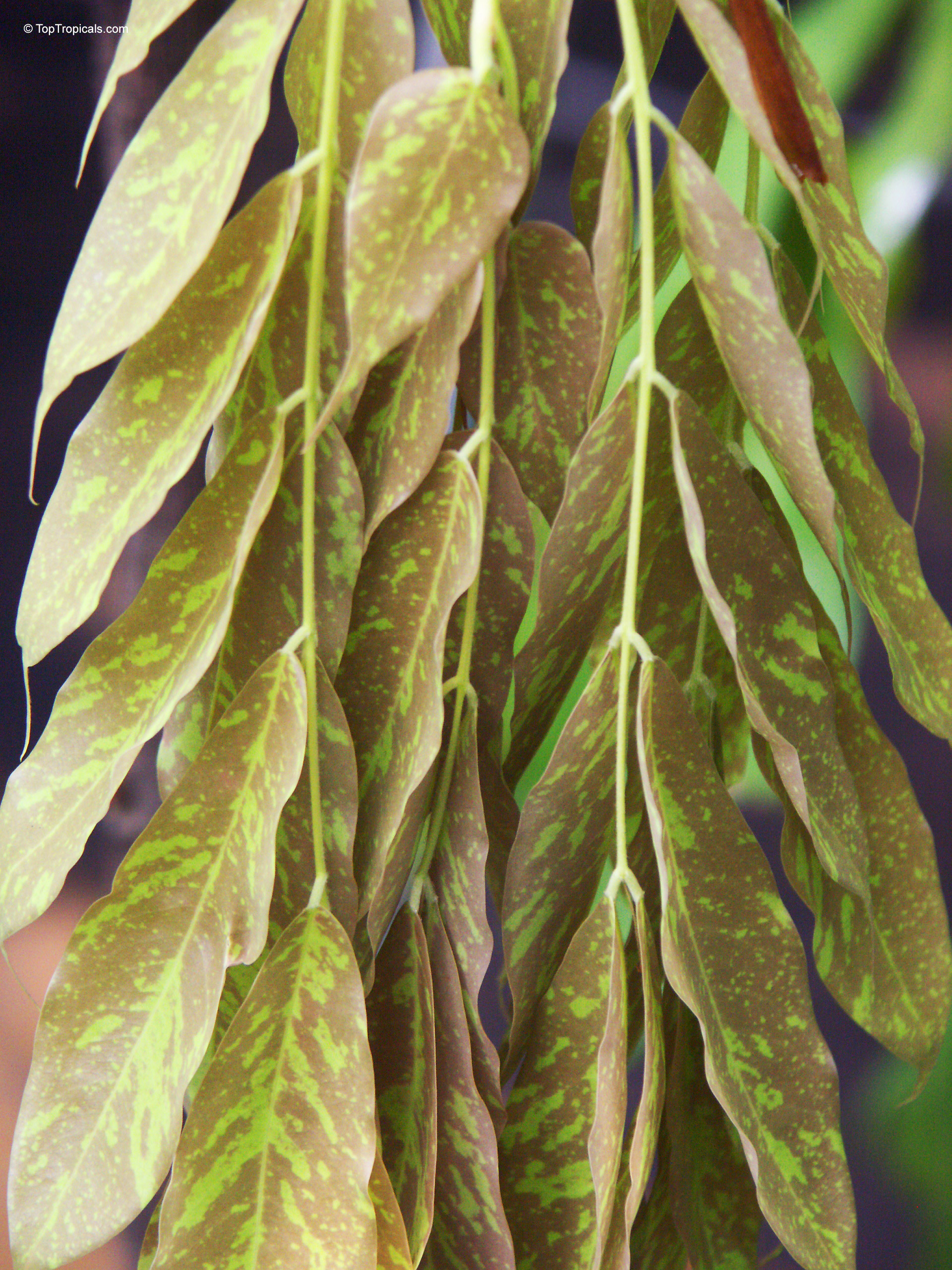
Common names: New Guinea Ghost Tree, Maroon Handkerchief
Family: Fabaceae
Subfamily: Faboideae
Origin: South America
USDA Zone: 11


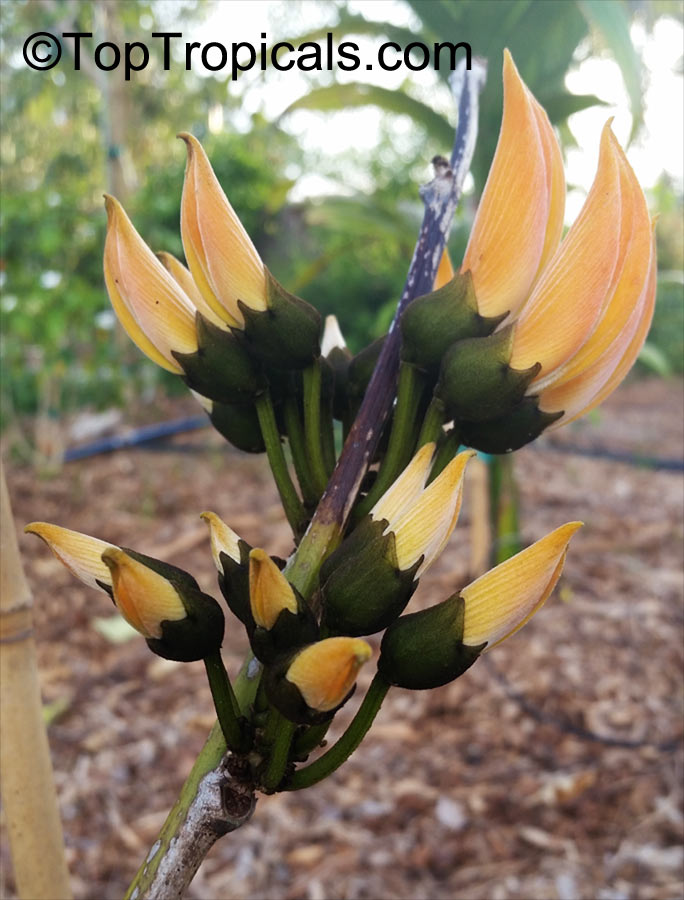
Browneopsis ucayalina is a tropical evergreen tree in the Fabaceae family, native to the rainforests of western South America, particularly the upper Amazon region. It develops a dense crown with large pinnate leaves composed of several pairs of glossy leaflets. Its most remarkable feature is the spectacular cauliflorous flowering: dense clusters emerge directly from the trunk and older branches. The flowers are large and showy, with numerous long protruding stamens, and change in appearance as they develop, creating striking clusters of cream, pink, red, and deep crimson tones. Flowering on the trunk can be particularly dramatic on mature specimens. The flowers are followed by woody legume pods containing large seeds.
Browneopsis ucayalina requires a warm, humid tropical climate and grows best in fertile, organic-rich, well-drained soil with consistent moisture. Young plants benefit from some protection from intense sun, while established trees tolerate brighter conditions. Because of its eventual size and spreading crown, it is best suited to spacious tropical gardens, botanical collections, and parks rather than containers. The species is uncommon in cultivation and should be protected from drought and cold. It is best suited outdoors to USDA Zones 11-12.




Botanical names: Brya ebenus, Aspalathus ebenus
Common names: Jamaican Rain Tree, Ebony Coccuswood, Grenadilla, Granadilla, Jamaican Ebony, West Indian Ebony
Family: Fabaceae
Subfamily: Faboideae
Origin: West Indies
USDA Zone: 10-11


Brya ebenus, also known as the Jamaican Rain Tree, is an incredibly unique and attractive small tree. With a mature height of 10-20 feet and an erupting growth habit that cascades onto the surrounding area with heavier and longer branches, the Rain Tree is a great way to add character to your landscape.
The evergreen foliage of the Rain Tree is comprised of tiny leaves that are highly drought-tolerant and thrive in full sun. During the warmer months and after a rain, clusters of beautiful yellow and orange flowers burst into bloom along the branches and attract butterflies and hummingbirds. With these striking color accents and a moderate water requirement, the Rain Tree makes a superb addition to any garden.
The Rain Tree can tolerate cold temperatures down to the 30's Fahrenheit, so it is suitable for growing in USDA Hardiness Zones 10-11, although a cold-protective pot should be provided when grown in colder areas. The tree should also be pruned regularly to keep its growth in check, as the mature height can reach up to 30 feet.
With the right care, a Brya ebenus can bring life and beauty to your yard all year round. This incredible tree is definitely worth planting for its unique form, foliage and incredible bloom power.


Recommended Fertilizer: SUNSHINE Megaflor - Bloom Nutrition Booster
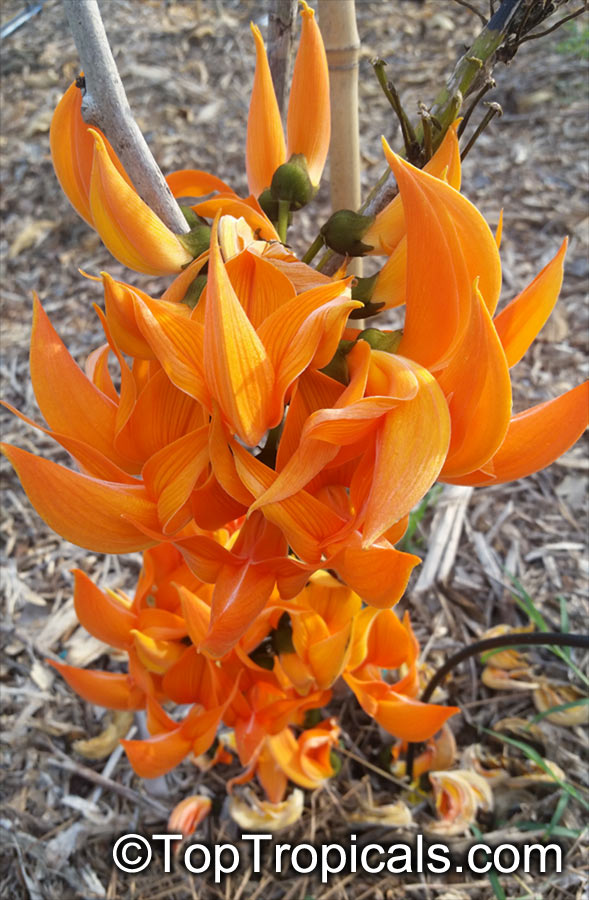
Botanical names: Butea monosperma, Butea frondosa, Erythrina monosperma
Common names: Flame of the Forest, Dhak, Palas, Bastard Teak, Parrot Tree
Family: Fabaceae
Subfamily: Faboideae
Origin: India, Sri Lanka
USDA Zone: 9-10


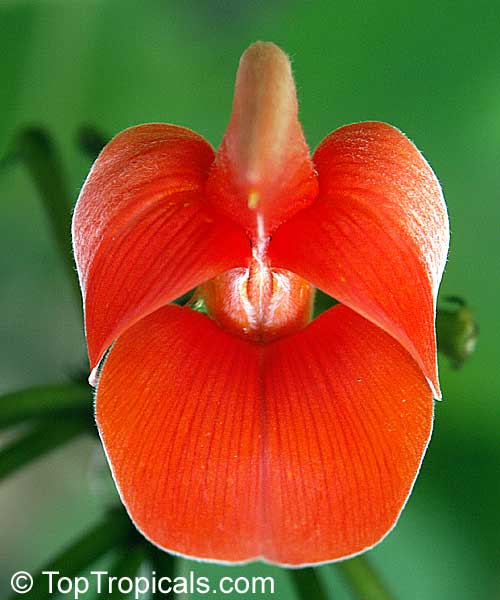
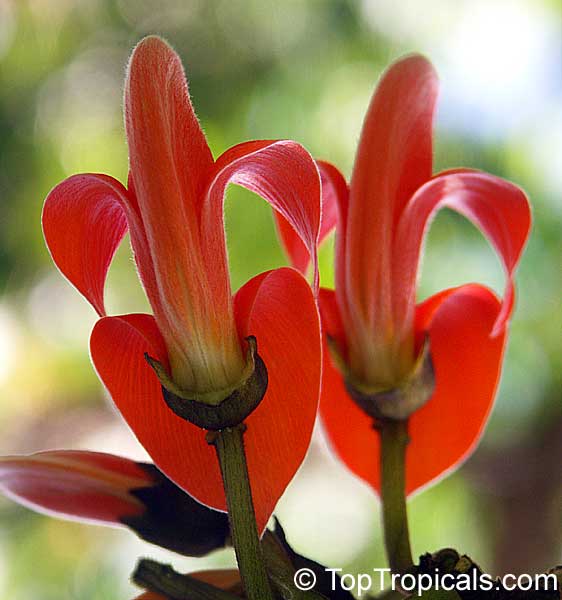
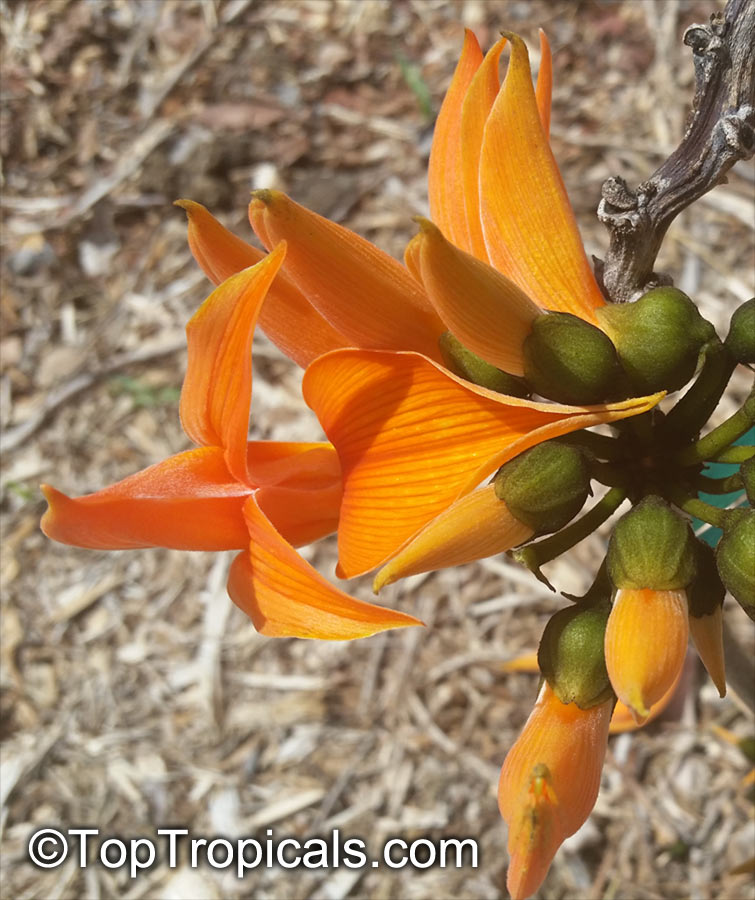
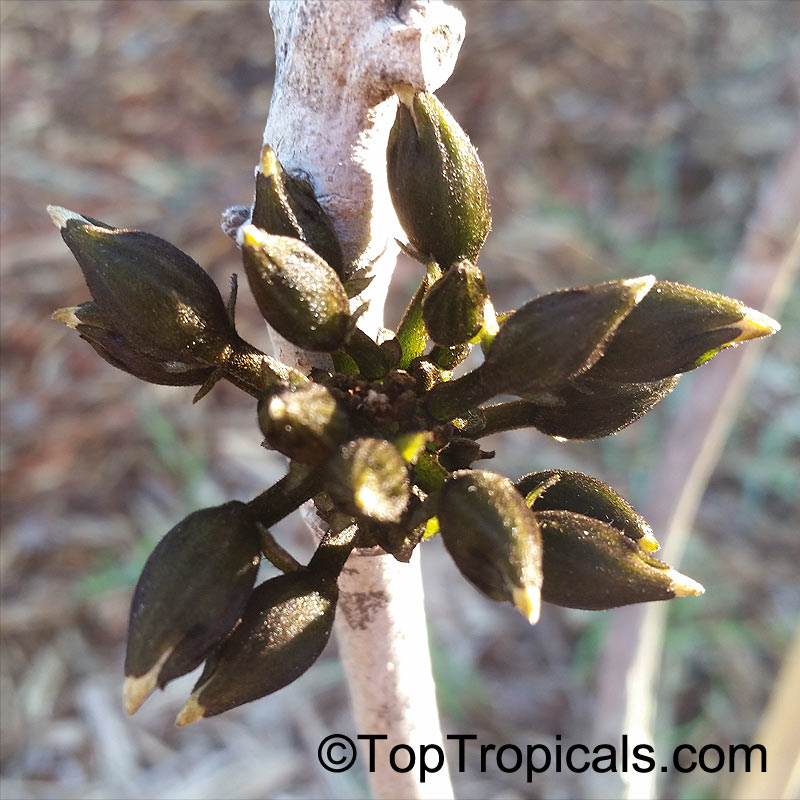
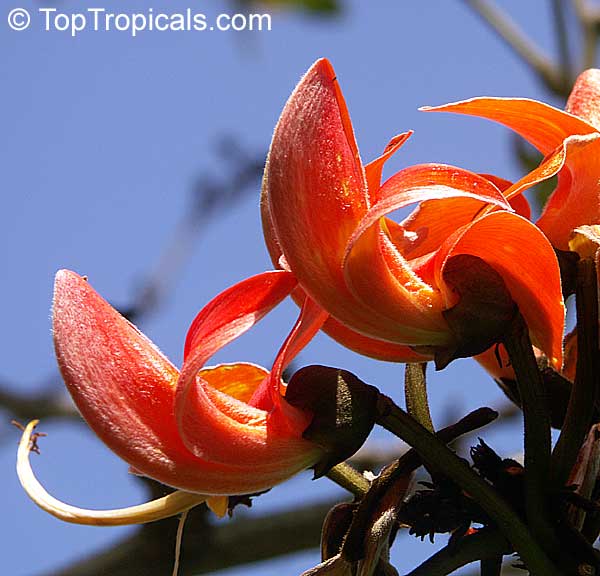
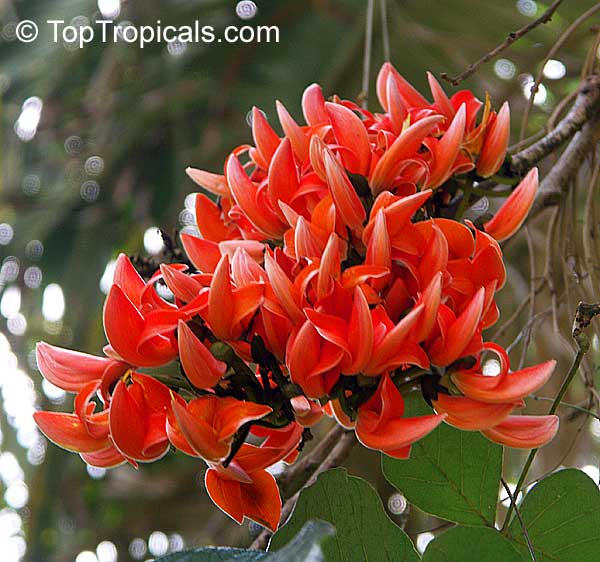
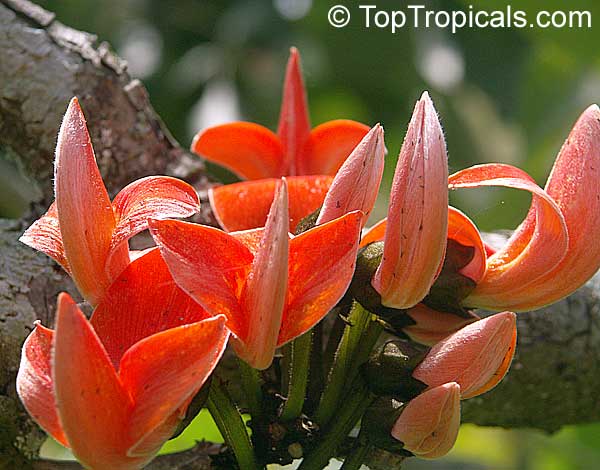
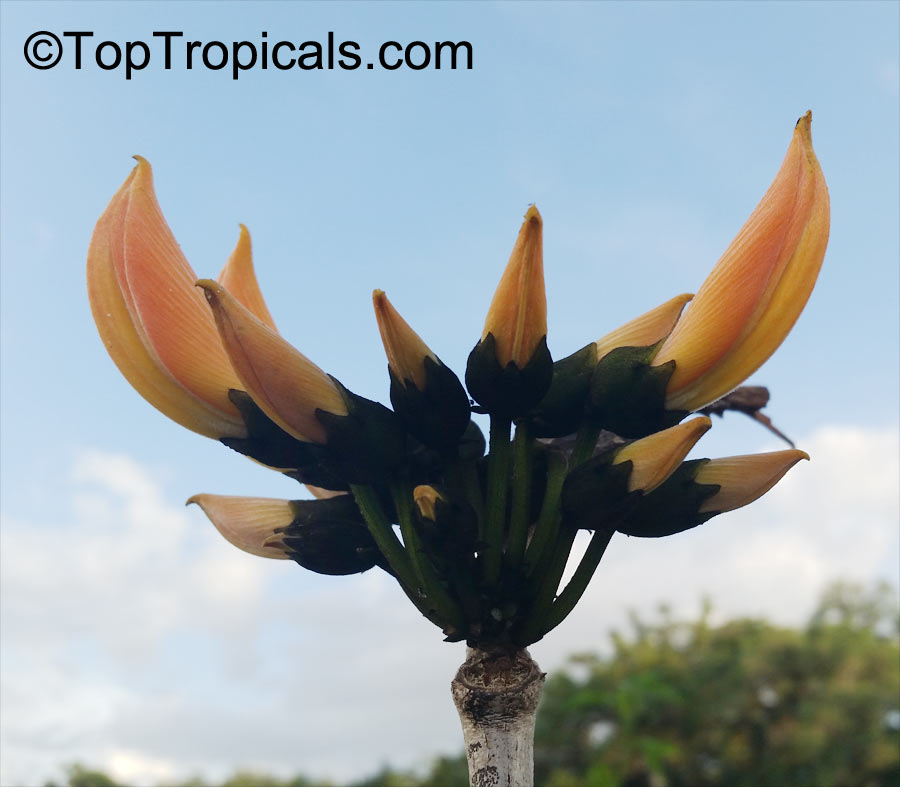
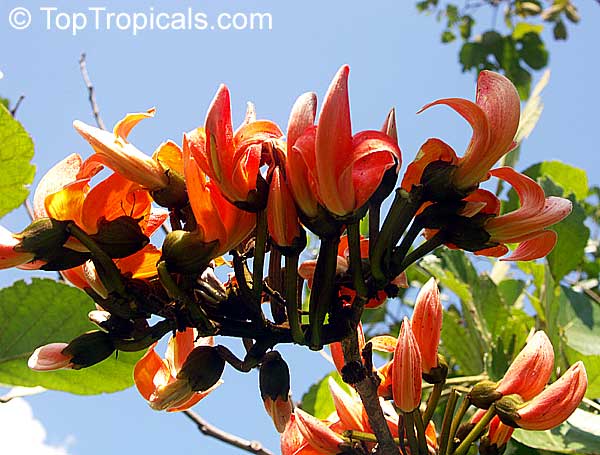
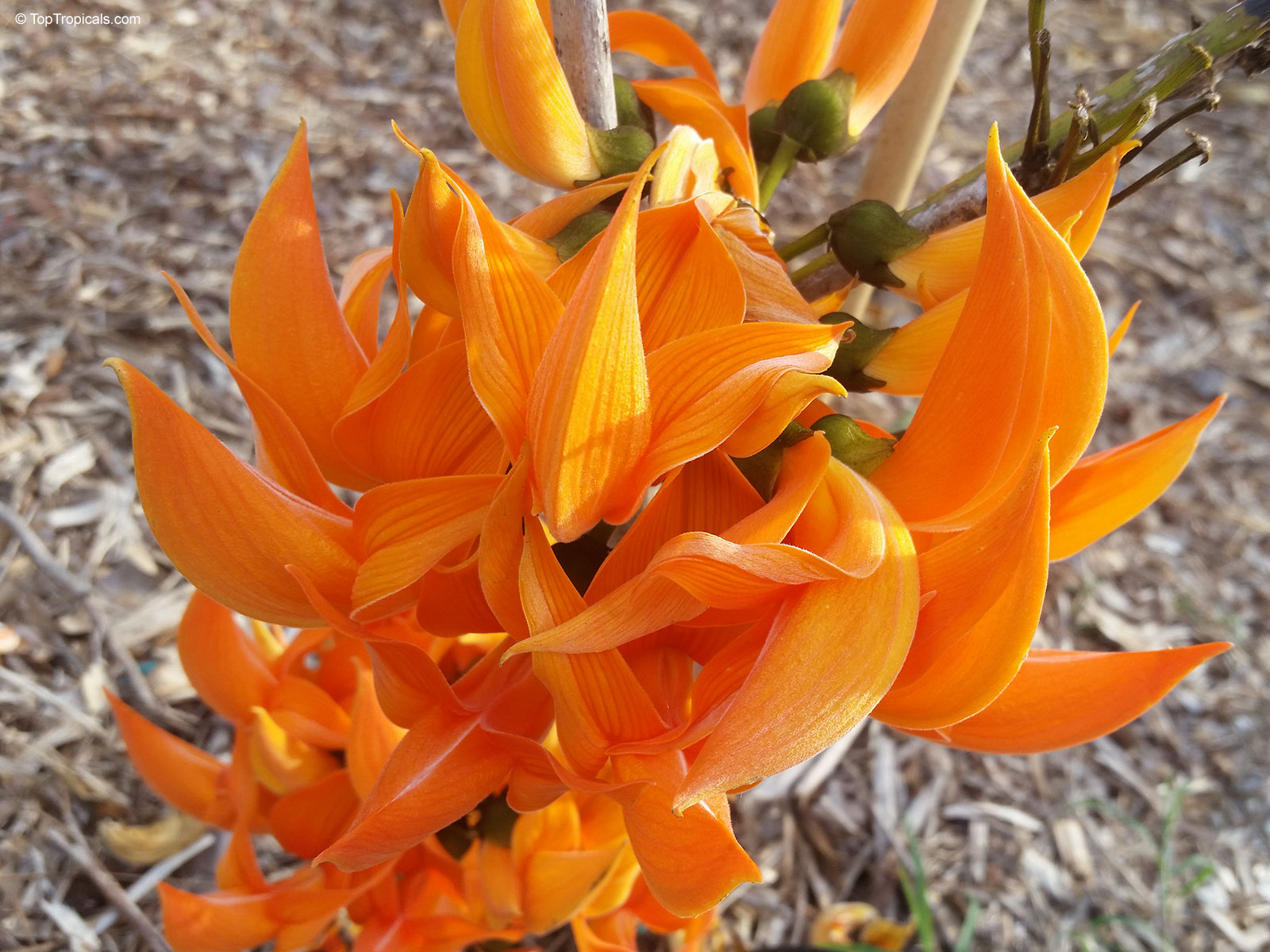
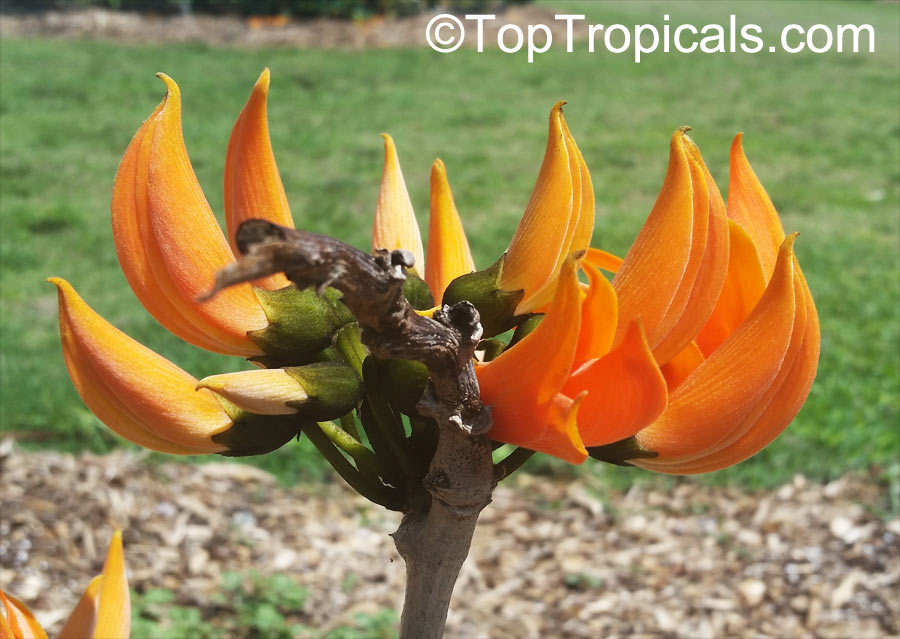
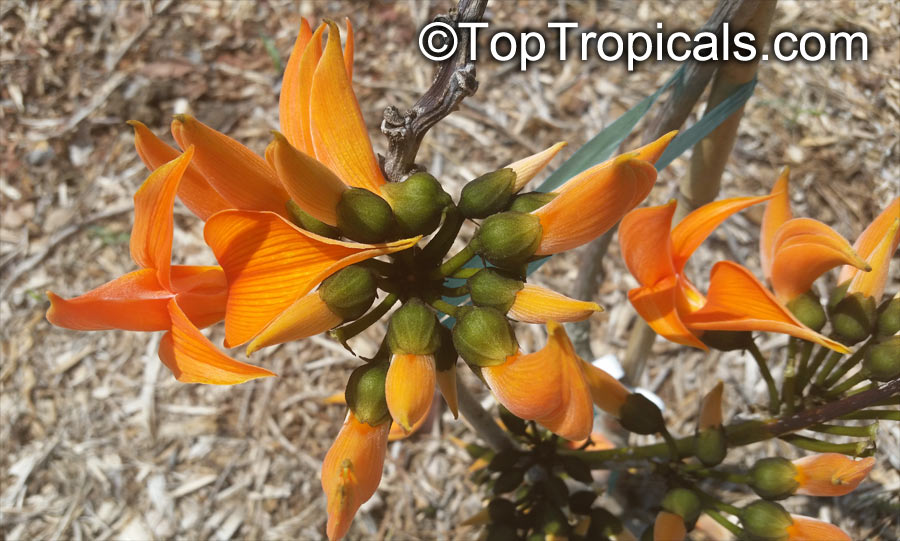
This tree has stunning flower clusters. In the habitat it can grow tall, but can be grown in container as a small specimen tree. The trunk is very interesting, it becomes twisted, follows no particular pattern, making it a conversation piece. At the base it can form a bottle-like caudex if grown in a pot. It is slow growing and attains a height of about 15-20 ft when mature at the age of about 50 years or so. The bark of Dhak is fibrous and bluish gray to light brown in color. It exudes a kind of red juice when injured. That dries into a very useful gum. The leaves are large, up to 1 ft wide and long, compound, each has three leaflets with tough texture: coriascious with the surface glabrescent above and hairy silken beneath. The leaves fall off by December and reappear during spring. When the tree is leafless, it bears flaming orange to red-colored flowers appearing in February and stay on nearly up to the end of April. The flowers form a gorgeous canopy on the upper portion of the tree, giving the appearance of a flame from a distance. The fruit of palas is a flat legume; young pods have a lot of hair a velvety cover. The mature pods hang down like peculiar legumes. This plant is useful in many ways. Its leaves are essential for various religious rituals in Hindu homes. These are also used as cheap leaf plates and cups for rural feasts. In some parts of the country these are used for wrapping tobacco to make biddies. These are further used as packing material for parcels. The cattle also eat the Dhak foliage quite greedily.The bark of Dhak yields a kind of coarse and brown colored fiber, which is used for rough cordage. Butea gum is a dried astringent juice obtained from incisions in the stem of the tree. The juice exuded by the bark hardens in to brittle ruby colored gum beads. This gum is sanctioned to be used as a substitute for the kino gum. It finds use for caulking boats as well. The Dhak flowers yield an orange dye. The seeds are used in Ayurvedic and Unani medicine for treating a number of human maladies. The Dhak tree acts as a host for lac insect and is, therefore, useful in producing natural lac. Use it as a specimen, or as a background component of the canopy. The tree loses its leaves as the flowers develop, in January - March. The plant has a good salt-tolerance, it can be used in coastal areas, but protect from direct exposure to salt spray, which will burn the leaves. See article about this plant with PICTURE GALLERY of Butea.
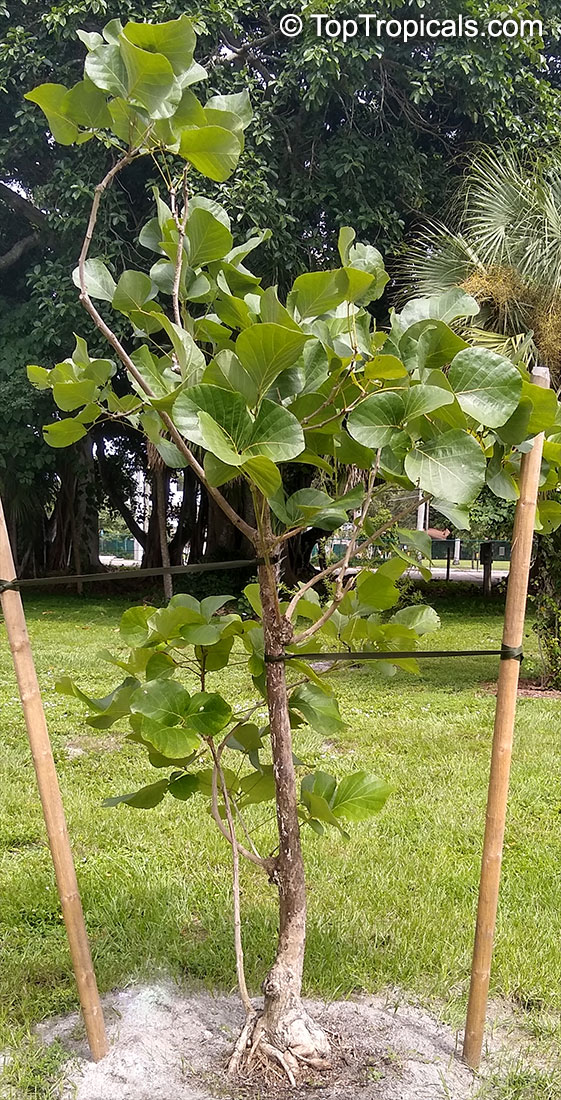
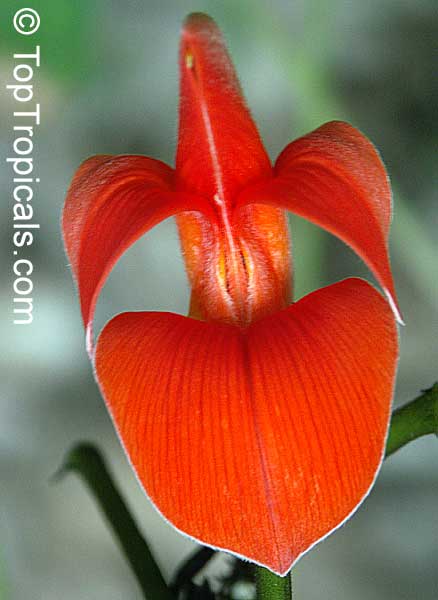
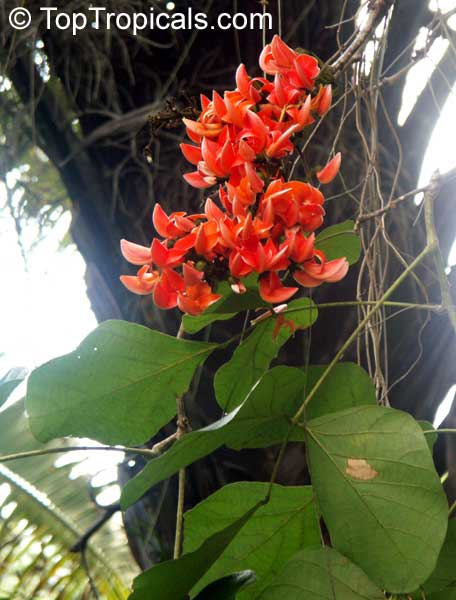

Botanical name: Caesalpinia bonduc
Common names: Grey Nicker, Bonduc Nut
Family: Fabaceae
Subfamily: Caesalpinioideae
USDA Zone: 9-10


Caesalpinia bonduc, also known as Grey Nicker, is an evergreen perennial creeping vine or creeper native to India. It is an ethnomedical plant that is well known for its medical applications. The leaves and flowers are edible, as are the fruits. Not only are the fruits edible, but they are also full of health benefits, containing high levels of proteins, minerals, vitamins, and carbohydrates.
This prolific plant thrives in full sunlight or semi-shade and requires moderate water for growth and survival. The fruits are an attractive yellow or orange color, and when ripe, can be eaten raw or cooked in oil. Caesalpinia bonduc can produce up to 25 fruits from a single plant.
When grown in USDA zones 9-11, it is important to ensure that Caesalpinia bonduc is grown in a pot in cooler regions. When selecting a pot, it is important to opt for one with a drainage hole to allow excess water to escape. The potting soil also needs to be well-draining and light, with a slightly acidic pH. To keep the plant healthy, apply a balanced fertilizer monthly.
Overall, Caesalpinia bonduc is a robust creeper that is an excellent addition to any garden. Not only is it visually attractive, but it is also a useful ethnomedical plant and provides a healthy source of food. It is easy to care for and, when planted in the right conditions, can quickly produce a large crop of fruits.


Botanical name: Caesalpinia cassioides
Common name: Flying Fish Flower
Family: Fabaceae
Subfamily: Caesalpinioideae
Origin: South America
USDA Zone: 10-11
A small to medium deciduous tree with bright red flowers. This Tree blooms while small.


| Prev | Next | |
Use link to repeat this search:
https://toptropicals.com/cgi-bin/garden_catalog/cat.cgi?search_op=and&keyword_op=and&language=e&family=Fabaceae&number=10
&no_change_lang=1&user=tt&sale=1&first=0