Cactacea - Botanical Family
| Number of plants found: 77 |  | Prev | Next | 
|
Go to page: | 1 | 2 | 3 | 4 | 5 | 6 | 7 | 8 |

Botanical names: Pachycereus weberi, Cereus candelabrum
Common names: Candelabro, Cardon
Family: Cactaceae
Origin: Mexico
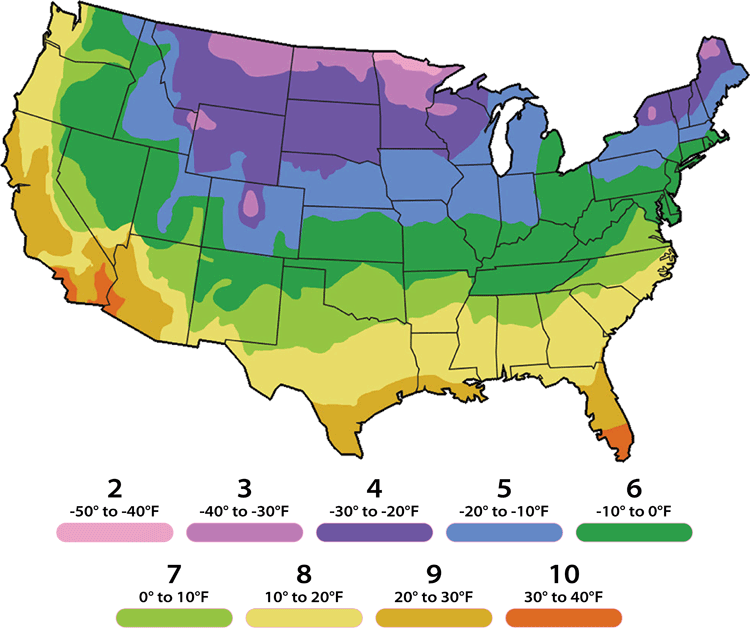
USDA Zone: 9-10


Botanical names: Parodia leninghausii, Notocactus leninghausii
Common name: Yellow Tower
Family: Cactaceae
Origin: Southern Brazil
USDA Zone: 9-10


Botanical names: Parodia magnifica, Notocactus magnificus
Common name: Ball Cactus
Family: Cactaceae
Origin: Brazil, Uruguay
USDA Zone: 9-11
Cold tolerance: 30°F
Parodia magnifica is a compact, globular cactus from southern Brazil, known for its blue-green ribbed body, golden spines, and bright yellow summer flowers. Thrives in well-drained soil with full sun to partial shade. Ideal for pots or rock gardens; protect from frost.


Botanical name: Pereskia aculeata
Common names: Barbados Gooseberry, Lemon Vine, Tsunya, Perescia
Family: Cactaceae
Origin: Caribbean and South America, escaped in Central America to Florida
USDA Zone: 9-11


The Barbados Gooseberry is a tropical treasure that combines beauty with edible delights. Despite being a cactus, it's not your typical prickly plant. Instead, it features climbing woody stems draped in succulent, alternately arranged leaves that can shift in color from green to red, yellow, or purple. In late summer, it delights with clusters of fragrant white flowers that fill your garden with a sweet aroma.
The Barbados Gooseberry is a truly fascinating and unusual addition to any self-sustaining landscape. Combining the traits of both a cactus and a leafy vine, this fast-growing plant offers beauty, practicality, and a productive food source all in one.
This low-maintenance plant is perfect for covering fences or walls, providing greenery while quickly growing to create a beautiful, natural screen. When in bloom, it's adorned with clusters of fragrant white flowers, followed by bright orange, tangy fruits that are edible and delicious. The small, spiny fruits resemble gooseberries and can be enjoyed fresh, stewed, or made into jams and jellies. The young leaves are also edible and can be cooked as greens for an added nutritional boost.
In addition to being visually appealing, the Barbados Gooseberry is practical, offering a food source for your garden with very little water needed. It thrives in humid conditions, with good drainage, and prefers moist soil in summer, while keeping drier during the winter. Whether as a climbing vine for fences or a low-maintenance edible addition to your garden, this unique cactus is a must-have for any tropical landscape.


This unique plant produces small, spiny fruits that resemble gooseberries, with a delightful, pleasant flavor. The fruits are edible and can be enjoyed fresh, stewed, or made into jams and jellies. Even the young leaves are edible, making them a nutritious addition to your meals. The fruit is yellow with a juicy, subacid pulp, and has a flavor that closely resembles a gooseberry.
As a vining cactus shrub, the Barbados Gooseberry bears spines in pairs or trios and thrives in conditions that offer some humidity. It prefers good drainage but likes its soil to remain moist during the summer, while being kept drier in the winter. It's propagated by seed or cutting and is perfect for adding both beauty and function to your garden, provided you give it the right care.
Recommended Fertilizer: SUNSHINE Robusta - Rapid Growth Booster
 SUNSHINE C-Cibus (NPK 2-2-4) - Crop Booster for every watering.
 SUNSHINE C-Cibus (NPK 2-2-4) - Crop Booster for every watering.
Last one

Botanical name: Pereskia aculeata
Common names: Lemon Vine, Tsunya, Golden Barbados Gooseberry, Variegated Pereskia, Variegated Leaf Cactus
Cultivar: Godseffiana
Family: Cactaceae
Origin: Caribbean and South America, escaped in Central America to Florida
USDA Zone: 9-11

A unique cactus with leaves, climbing shrub with a tendency to vine, it bears spines in pairs or trios. Leaves are bright - multi-colored with golden hues, may turn variegated with shades of yellow, orange, red, green and white, but the pattern is unpredictable. Grows up to 20 feet tall (6 m), 1 to 3 short hooked spines, sometimes longer straight spines on older stems. Enjoys some humidity in the air. Needs good drainage, but the soil should stay moist in summer. Keep drier in winter. Very ornamental and unusual.


Botanical names: Pilosocereus tillianus, Pilosocereus lanuginosus subs. tillianus
Common name: Pilosocereus
Family: Cactaceae
Origin: Venezuela
USDA Zone: 9-10
Pilosocereus tillianus is an endemic species native to Lagunillas, Venezuela. With a height of up to 5-10 feet, and a width of 2-5 feet, it is a shrub of substantial proportions. This cactus possesses some of the largest thorns of the Cereus family, with spines that may reach a length of 1-2 inches. Its flowers are yellow to orange in color and bloom singularly on separate stems, while its foliage exhibits a radial pattern in its venation.
When grown outdoors, the Pilosocereus tillianus thrives in open, sunlit areas and prefers dry conditions. Areas that experience cold temperatures may need extra measures, such as shelter and slight moisture at the roots, to prevent frost damage. In tropical climates, pruning is recommended to manage the size of the bush and encourage more flowering.
For successful propagation, cuttings should be taken in Spring or Summer and planted in deep, well-drained soil. It typically takes 3-4 weeks for roots to form before the cutting can be planted. The Pilosocereus tillianus should not be exposed to high winds: it may brake branches.
When caring for the Pilosocereus tillianus, it is important to exercise caution with overwatering; simply allow the soil to dry out in between waterings. Regular fertilization during the flowering season is recommended to ensure the health and floral vigour of the plant. Pruning may also be necessary to maintain the desired shape and remove any diseased or unhealthy parts.
The Pilosocereus tillianus is a moderately low-maintenance, yet distinctive, specimen for gardeners seeking a unique addition to their landscape. Its moderate moisture requirements, as well as its eye-catching yellow to orange blooms, make it an attractive and rewarding plant to grow.
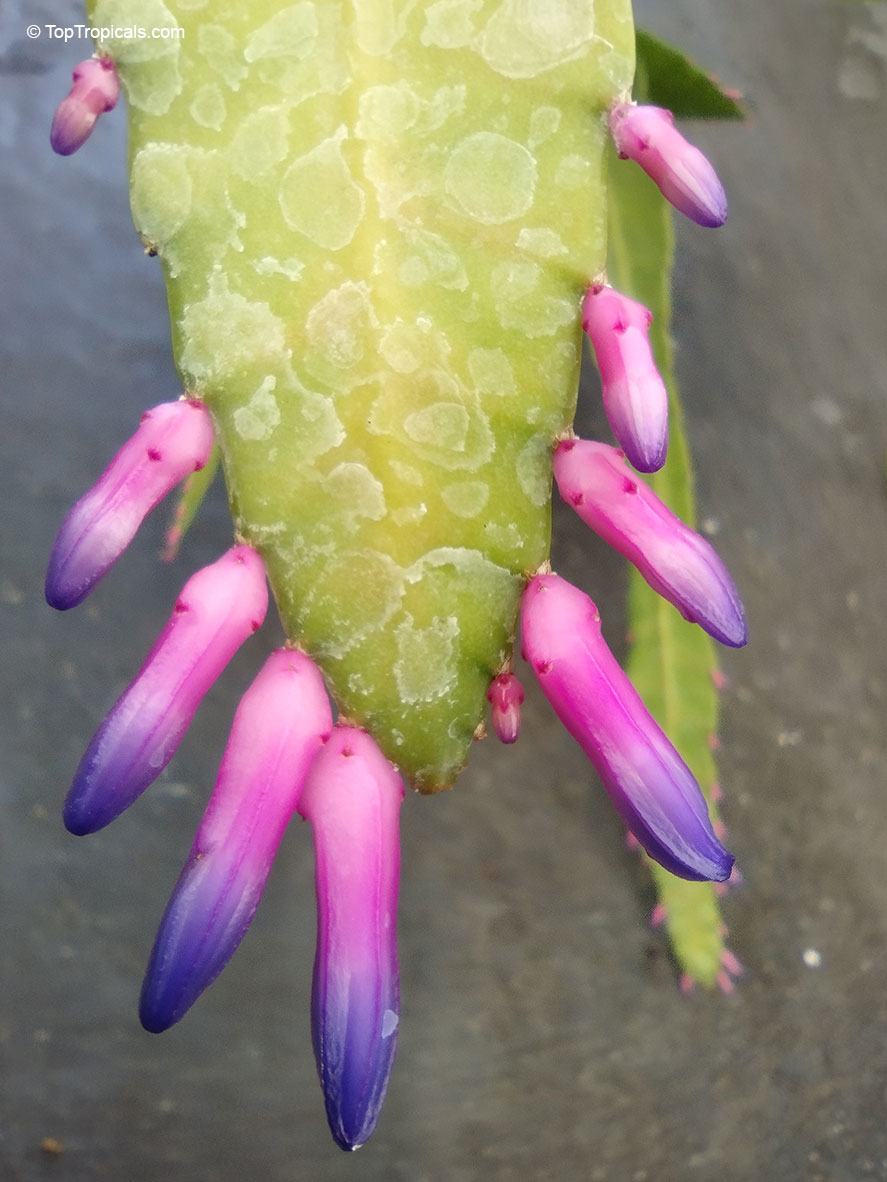
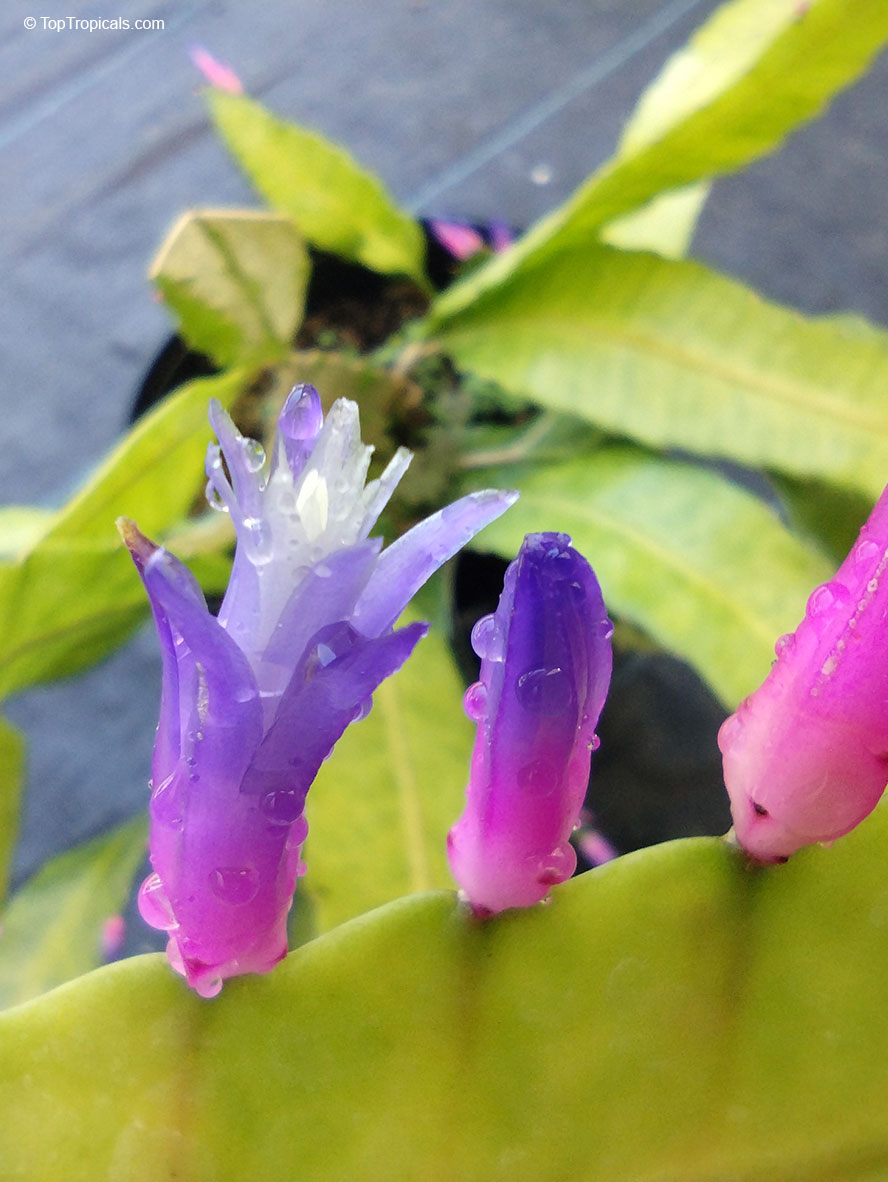
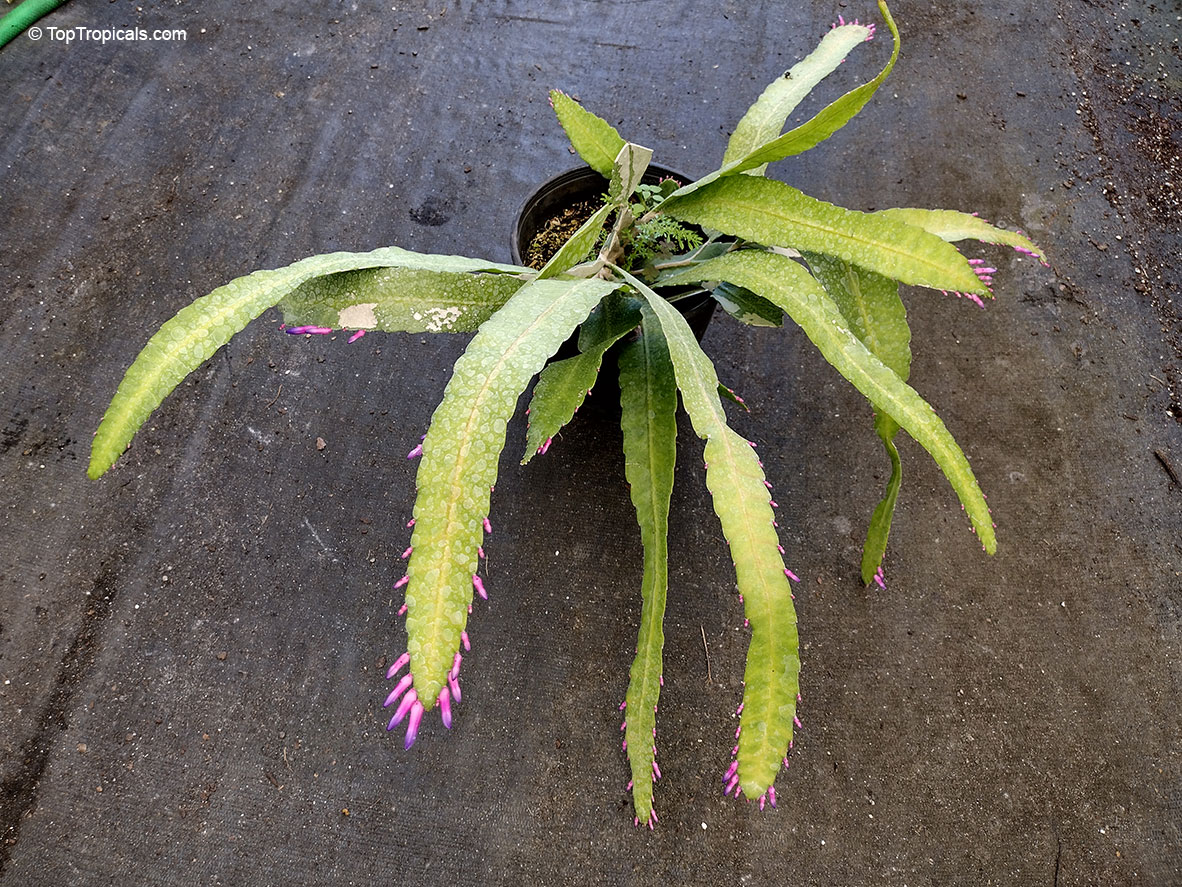
Botanical names: Pseudorhipsalis amazonica, Wittia Amazonica, Disocactus amazonicus, Wittiocactus amazonicus
Common names: Purple Rhipsalis, Blue Flame
Family: Cactacea
Origin: South America
USDA Zone: 9-11
Cold tolerance: 25°F


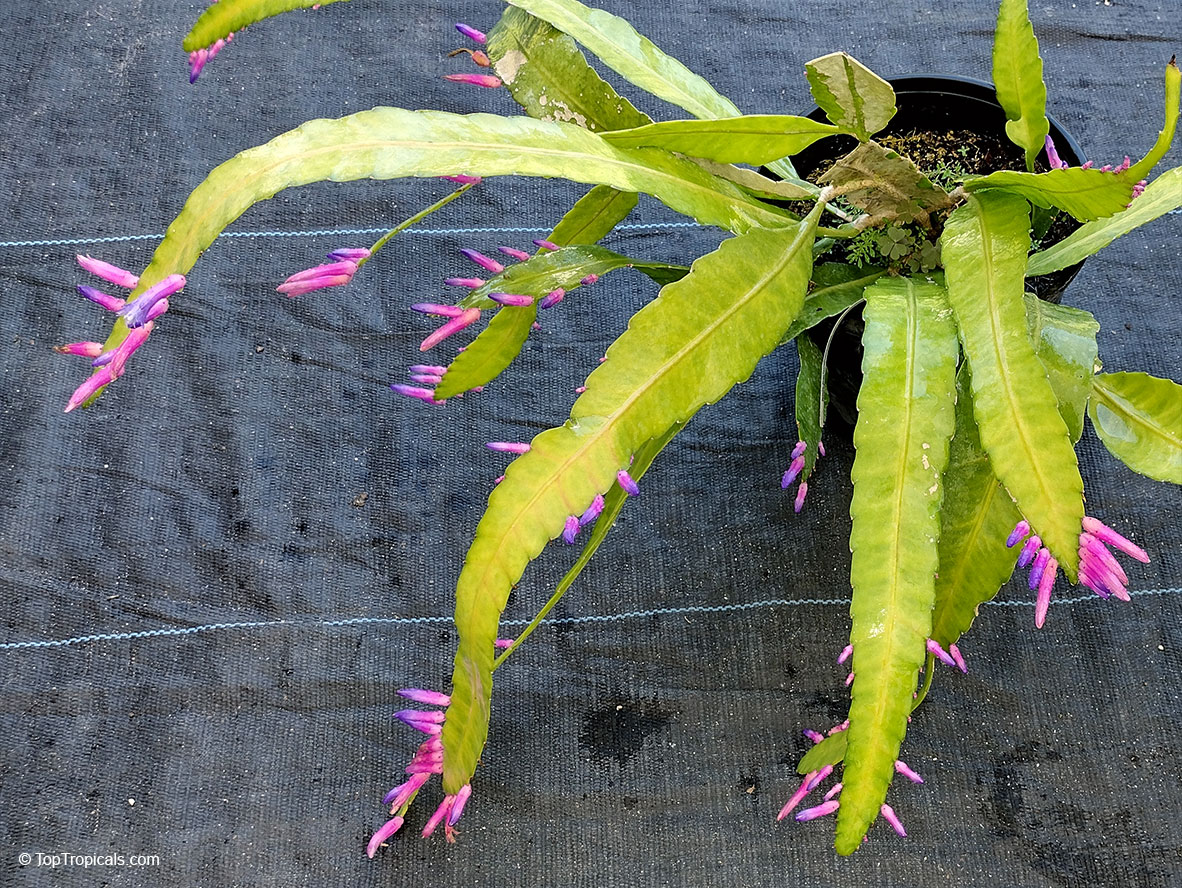
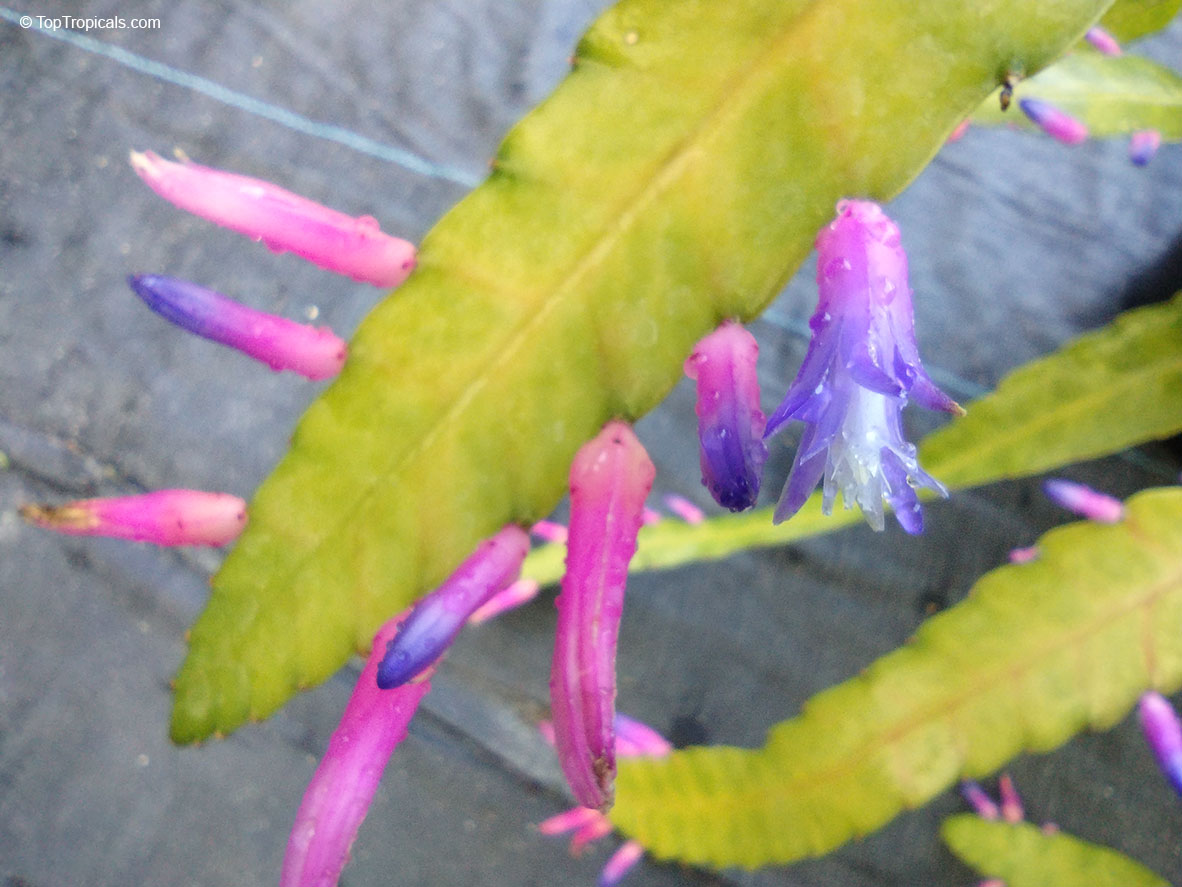
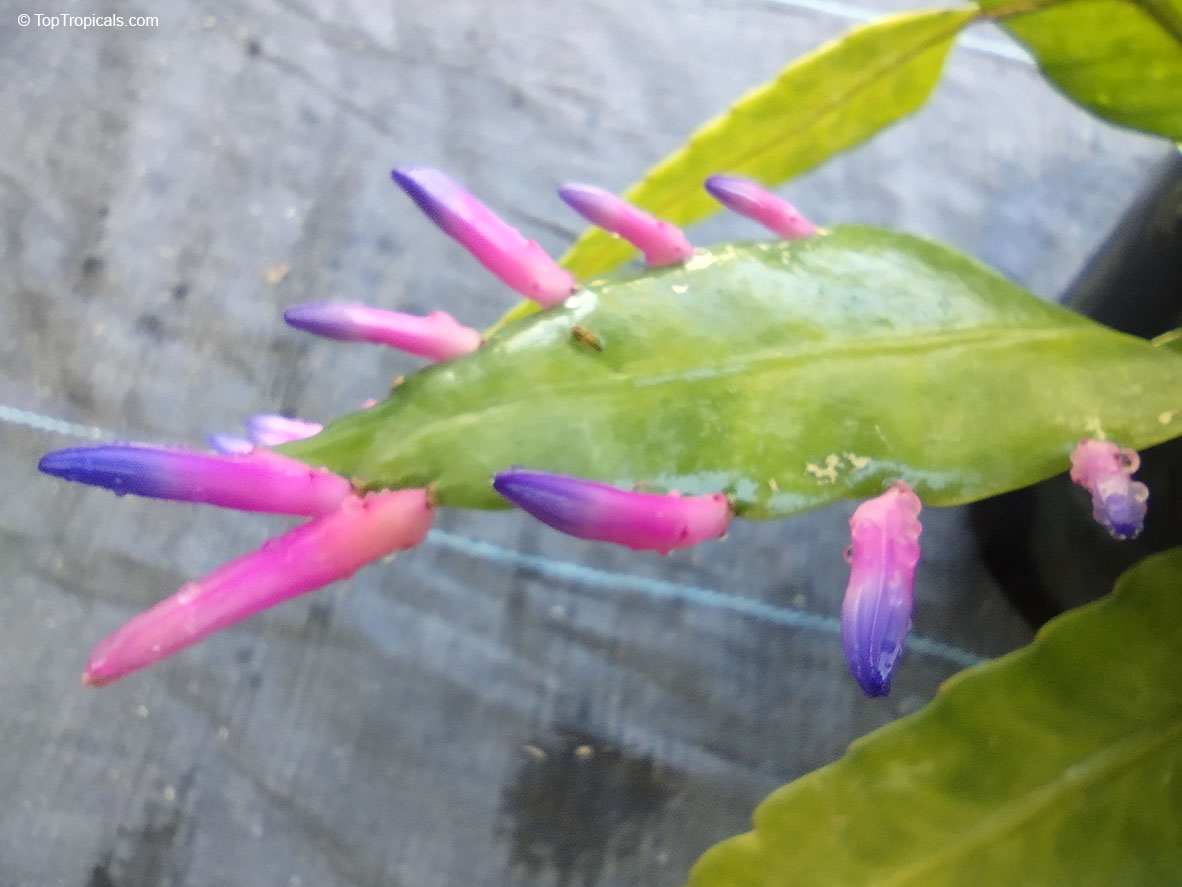
Spectacular bloomer! With foliage resembling an Orchid Cactus (Epiphyllum), Blue Flame is a rare epiphyte from the rainforests of the Amazon jungle. This is a spineless tropical cactus that blooms bright purple flowers. Flowers emerge along the leaf edges from late spring through early summer, and blooms for a couple of weeks. Early sWittia Amazonica, pringtime flowers are magenta, but summer flowers have the distinctive blue tip on the magenta flower. Mature leaves are about 12" long. Blue Flame prefers a hot, humid environment similar to its jungle habitat. Grow in porous cactus soil or Adenium Mix in partial sun to bright, indirect light.
Recommended Fertilizer: SUNSHINE Robusta - Rapid Growth Booster

Botanical names: Quiabentia verticillata, Quiabentia pereziensis, Pereskia verticillata
Common name: Quiabentia
Family: Cactaceae
Origin: South America
USDA Zone: 9-10


Botanical names: Quiabentia zehntneri, Pereskia zehntneri
Common name: Quiabento
Family: Cactaceae
Origin: Brazil
USDA Zone: 9-10


Pereskia zehntneri, now botanically classified as Quiabentia zehntneri, is a rare and unusual leafy cactus native to the dry caatinga regions of Bahia and Minas Gerais, Brazil. Unlike the familiar image of a cactus, this species grows as a branching shrub or small tree, eventually reaching about 10 ft tall, with a central woody trunk and thick, succulent green leaves growing along distinctly spiny cactus stems.
The combination of true leaves and cactus-like stems gives this plant a wonderfully prehistoric appearance. Mature plants produce large, showy pink to reddish-pink flowers, about 3 inches across, near the tips of the branches. Another interesting feature is its natural method of propagation: branches detach surprisingly easily, fall to the ground, and can root to form new plants.
In its native habitat, Quiabentia zehntneri grows among hot, dry limestone outcrops, making it well adapted to heat and periods of drought. Give it plenty of light, excellent drainage, and avoid constantly wet soil. A fascinating specimen for cactus and succulent collectors, especially those looking for something genuinely different from the usual desert cactus.

Recommended Fertilizer: SUNSHINE Robusta - Rapid Growth Booster

Botanical name: Rhipsalis agudoensis
Common name: Rhipsalis
Family: Cactaceae
Origin: Brazil
USDA Zone: 10-11
Rhipsalis agudoensis is a species of cactus native to Brazil, where it is found in humid mountainous and lowland forests. It is a branching, epiphytic cactus that has cylindrical green stems, up to 4 inches long. The flowers are small and white, and bloom in the springtime. Rhipsalis agudoensis has an pendulous habit which makes it a great choice for a hanging basket.


| Prev | Next | |
Use link to repeat this search:
https://toptropicals.com/cgi-bin/garden_catalog/cat.cgi?search_op=and&keyword_op=and&language=e&family=Cactacea&number=10
&no_change_lang=1&user=tt&sale=1&first=0