Asclepiadaceae - Botanical Family
| Number of plants found: 71 |  | Prev | Next | 
|
Go to page: | 1 | 2 | 3 | 4 | 5 | 6 | Last |

Botanical name: Ceropegia ampliata
Common names: Horny Wonder, Bushman's pipe, Condom Plant, Boesmanpypblom
Family: Apocynaceae (Formerly:Asclepiadaceae)
Subfamily: Asclepiadoideae
Origin: South Africa
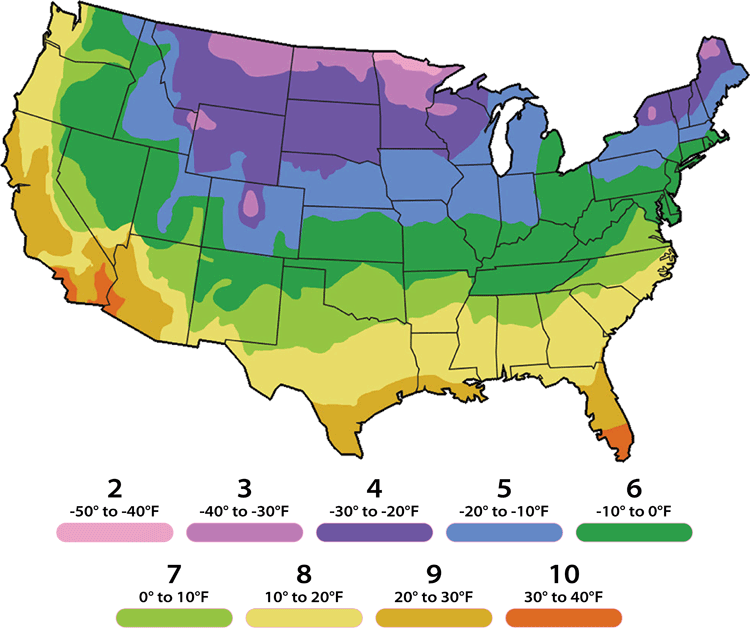
USDA Zone: 9-10


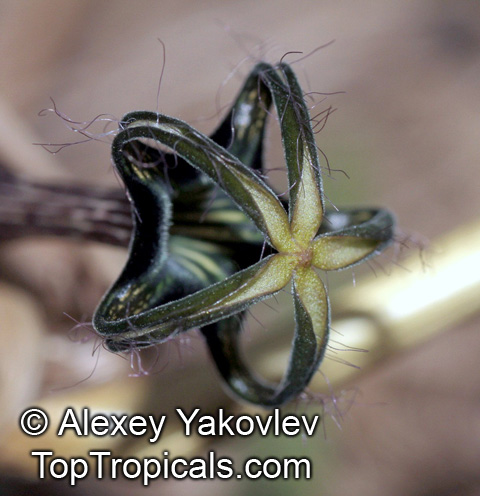
Ceropegia ampliata (Horny Wonder) is a vine or creeper native to South Africa which typically grows in USDA Zone 9-11. It has an unusual color and its twining, leafless stems produce off-white to white flowers that last approximately a day before wilting. The unique tubular 2½ inch flowers are lined inside with downward pointing hairs that temporarily trap insects before releasing them the next day covered with pollen.
This plant enjoys full sun to partial shade and moderate amounts of water. It can withstand some drought, however it should be watered regularly but allowed to dry out between waterings and fertilized with a balanced fertilizer every third watering from May to October. To ensure its best growth, Ceropegia ampliata should be planted in a pot with a well-draining cactus mix and an adequate amount of sunlight. In cold regions, this plant should be placed indoors or in an area that is protected from frost.


Botanical name: Ceropegia linearis subsp. debilis
Common names: String of Needles, Rosary Vine
Family: Apocynaceae (Formerly:Asclepiadaceae)
Subfamily: Asclepiadoideae
Origin: Southeastern Africa
USDA Zone: 9-10

Ceropegia linearis subsp. debilis is a delicate trailing succulent native to southern Africa, with thread-like stems and tiny narrow leaves. It produces small tubular flowers with a dark, cage-like tip. Ideal for hanging baskets in bright indirect light, it prefers well-drained soil and infrequent watering.


Botanical name: Ceropegia meyeri
Common name: Ceropegia
Family: Apocynaceae (Formerly:Asclepiadaceae)
Subfamily: Asclepiadoideae
Origin: South Africa
USDA Zone: 9-10


Botanical name: Ceropegia sandersonii
Common names: Parachute Plant, Umbrella Flower
Family: Apocynaceae (Formerly:Asclepiadaceae)
Subfamily: Asclepiadoideae
Origin: Mozambique to Natal
USDA Zone: 9-10
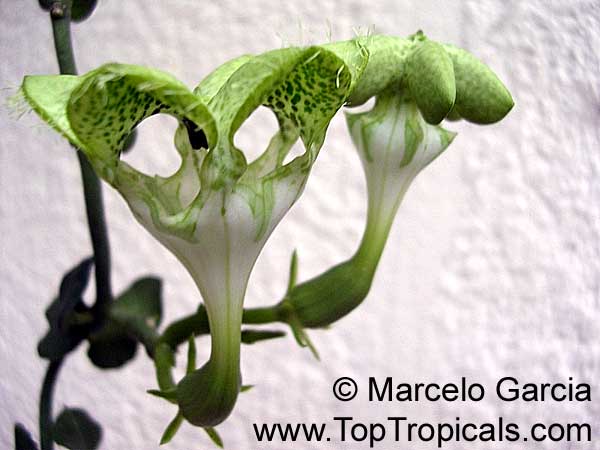
This is one of the more striking specie of the genus. From fleshy, narrowly fusiform clustered roots, the robust climbing or twining stems bear thick fleshy leaves and the large showy flowers. Flowers can measure up to 10 cm. Light green to striped green white. Flowers appearing in succession from spring until autumn. Stems are twining up to a brighter position. Flowers appear on young stems.
In winter - light watering about once a month with warm water.
Ceropegia hybrid 'Uranus' - Hybrid between Ceropegia sandersonii x Ceropegia radicans




Botanical names: Ceropegia woodii, Ceropegia linearis subsp. woodii
Common names: Rosary Vine, Chain of hearts
Family: Apocynaceae (Formerly:Asclepiadaceae)
Subfamily: Asclepiadoideae
Origin: Southeastern Africa
USDA Zone: 10-11

The Rosary Vine (Ceropegia woodii) is an exceptionally unique and beautiful plant, featuring thin and wire-like vines with marbled, heart-shaped leaves and ornamental foliage. This plant is best suited for hanging or being placed atop a pedestal, in a spot that receives bright light for the majority of the day. During the summer months, it prefers temperatures of around 70-75°F and in winter, should be kept in a cooler room with temperatures at 60-65°F.
Since the Rosary Vine is somewhat succulent, it's important to pay careful attention to watering, so as not to overdo it or let it sit in water. It should be thoroughly watered, and then allowed to dry out completely before watering again. In addition, when repotting in early spring, a porous potting soil with coarse sand added is ideal to ensure adequate drainage. During the plant's growing season in spring and summer, an all-purpose liquid houseplant food diluted to half strength should be applied once a month.
Another special feature of the Rosary Vine are its delicate purple-barred, inverted-vase flowers. These draw in hummingbirds when placed outdoors during the summer months. Furthermore, 'beads' form along the stem at the leaf base, which can be planted and uprooted to create new plants. When planting it's best to keep the tubers moist (but not wet). In colder regions, the plant should be kept indoors, in a bright and well-ventilated area, free of drafts. When temperatures are cooler, water sparingly every 5 to 7 days, allowing the soil to dry out fully between waterings. During the summer, it can be grown outdoors in warmer climates but will benefit from being placed in a semi-shaded spot or filtered sun to prevent sunburn. With consistent care, this unique and striking plant will bring beauty and energy to any home.


Botanical name: Cryptostegia grandiflora
Common names: Rubber vine, Purple Allamanda
Family: Apocynaceae (Formerly:Asclepiadaceae)
Subfamily: Periplocoideae
Origin: Madagascar And Tropical Africa
USDA Zone: 10-11


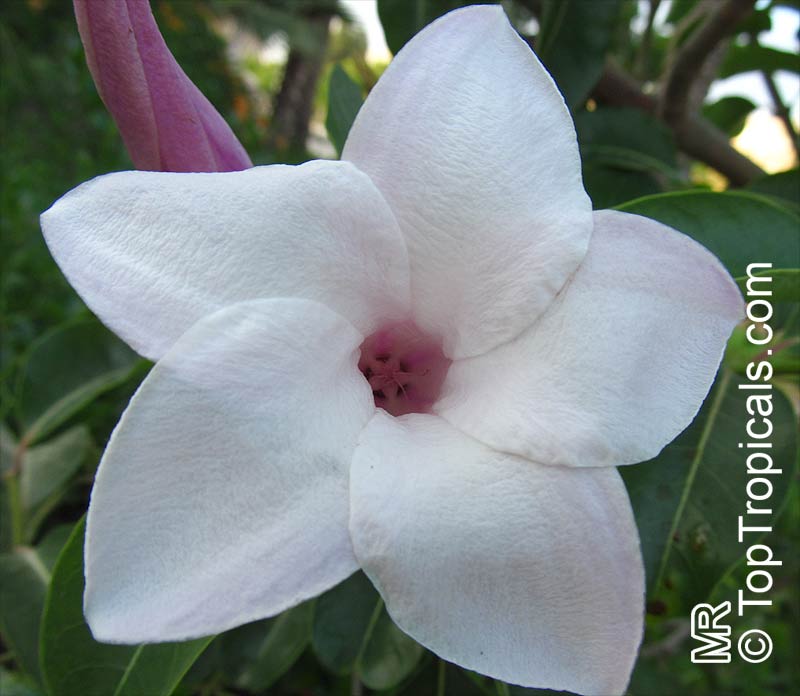
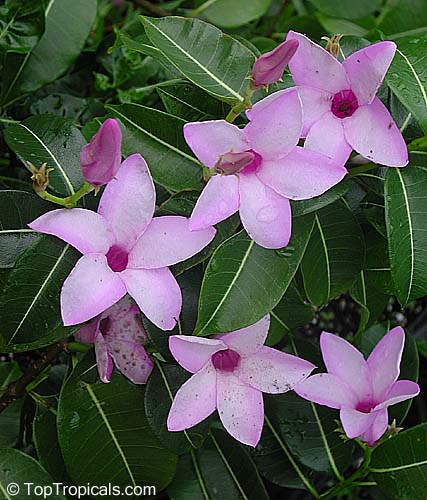
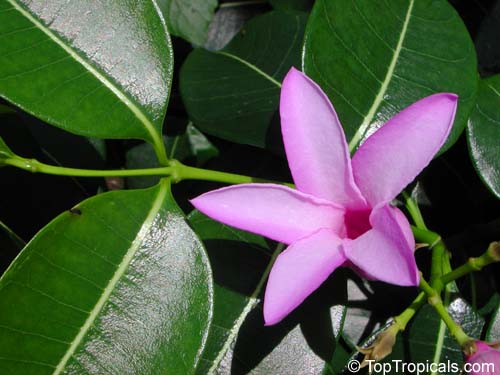
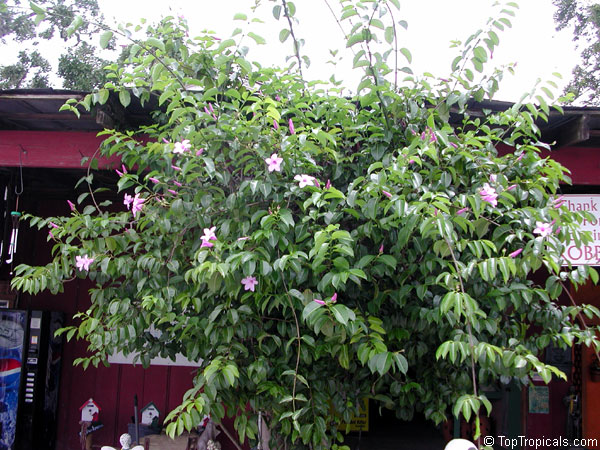
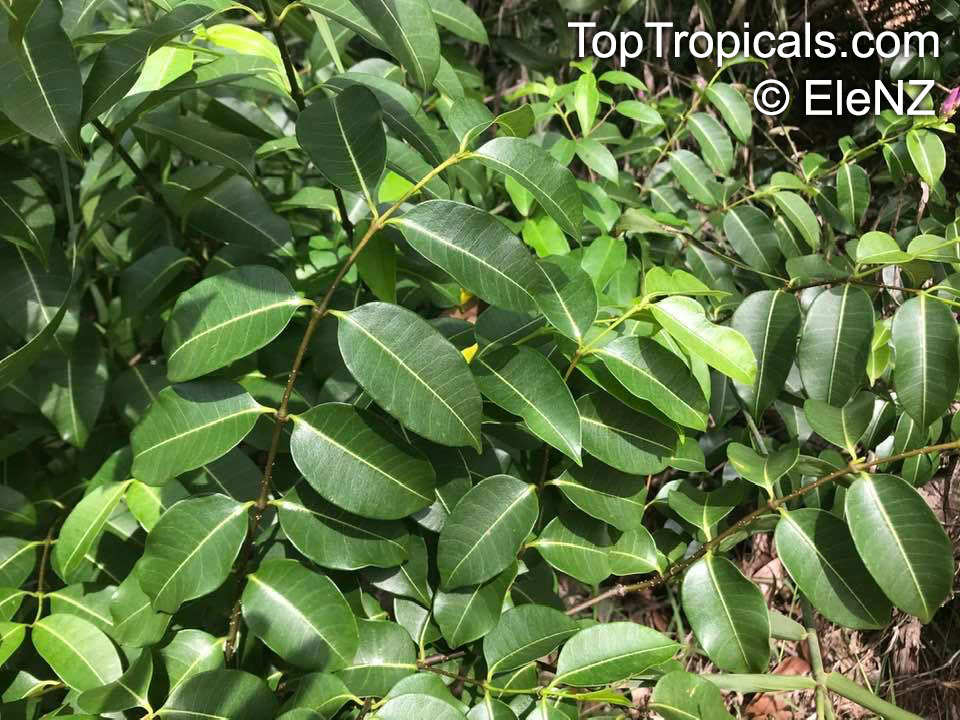
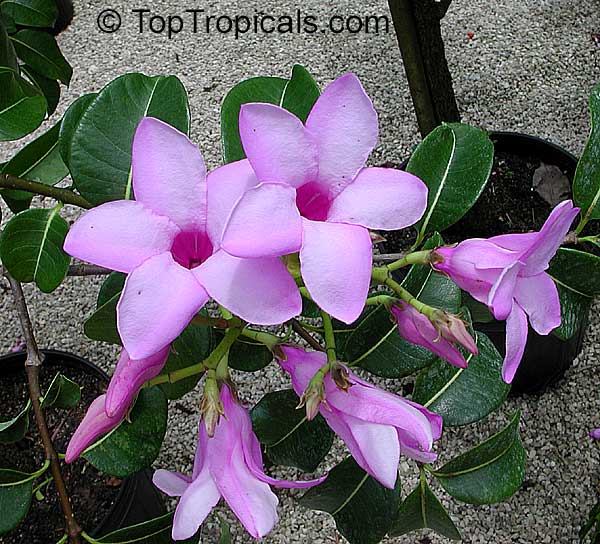
Cryptostegia grandiflora, commonly known as thePurple Allamanda, is a vigorous vine or creeper native to Madagascar and tropical parts of Africa. Its glossy foliage adds a spectacular color to the garden. It produces masses of pink flowers during mid-summer, which are very attractive to bees and hummingbirds.
This plant prefers full sun to semi-shade, and requires regular watering and fertilizing in order to thrive. Rubbervines are highly tolerant of salty coastal winds and can tolerate periods of drought.
Be aware that Cryptostegia grandiflora has irritating sap and should be handled with gloves. It is an aggressive plant, so plant in an area with plenty of room for it to grow. It can also be grown in large containers.
Cryptostegia grandiflora is cold hardy at least to the 30s F for a short period of time, so it can be grown in USDA Zone 10-11. In colder regions, it can be grown in a pot and brought indoors during the winter. When grown in a pot, the soil should be kept moist and fertilized regularly.
For best success, use a good-quality potting soil and make sure the container has plenty of drainage holes. Water thoroughly when the surface of the soil starts to feel dry, and avoid over-watering. Make sure the plant is in direct sunlight for at least 6 hours per day. Also, provide additional warmth with the help of a heat mat to maintain the plant's tropical temperature requirements.
Cryptostegia grandiflora is a striking, evergreen perennial that can be easily grown in a tropical climate. With regular watering, fertilizing, and adequate sunlight, it can thrive and provide a vibrant color to your garden.



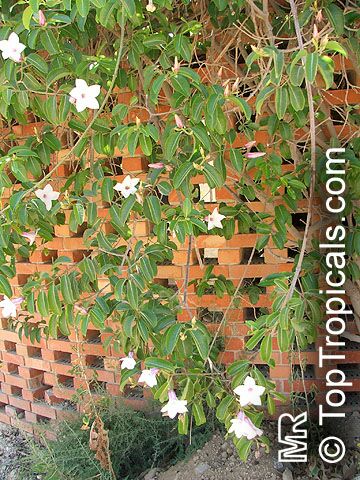
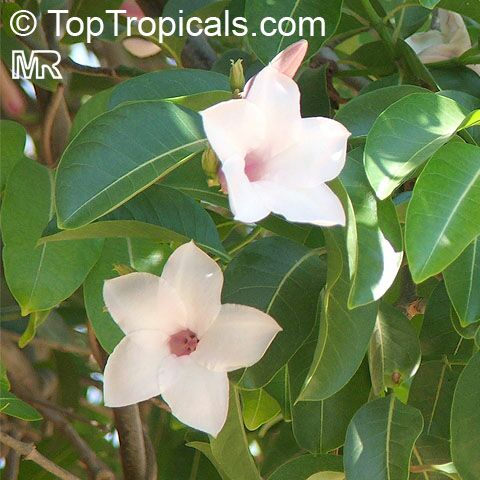
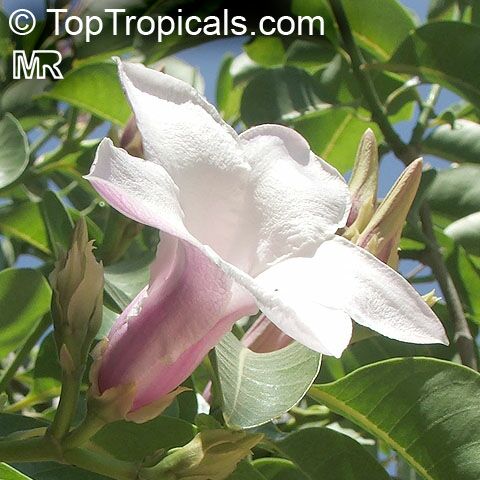
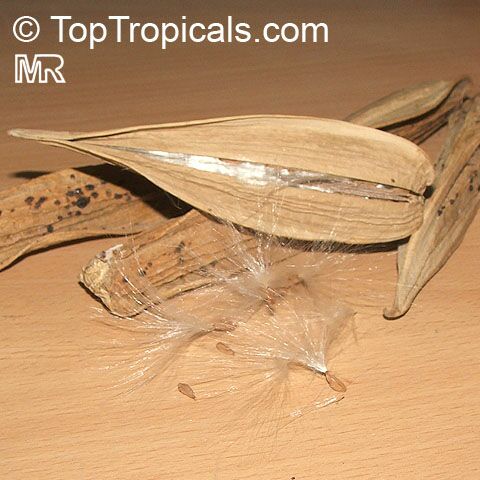
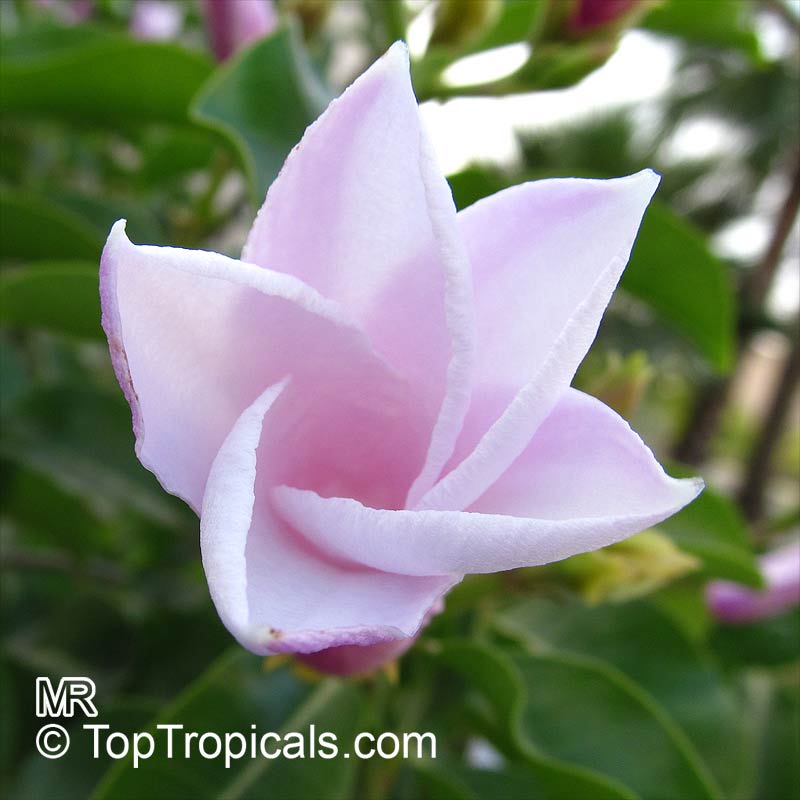
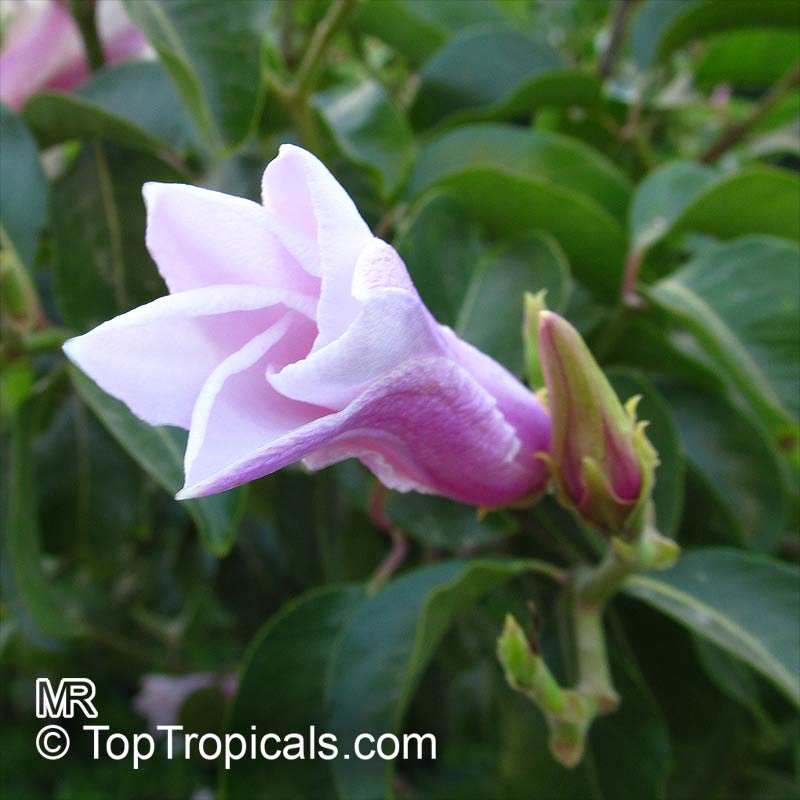
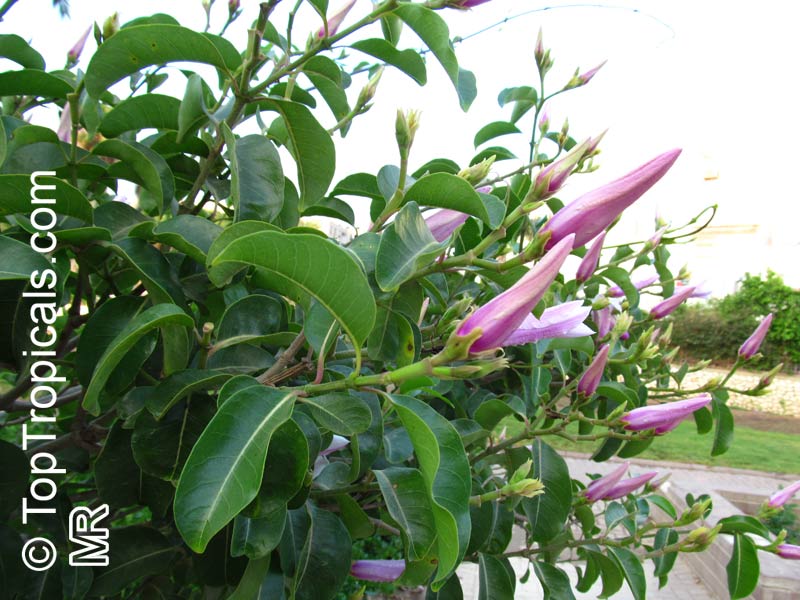
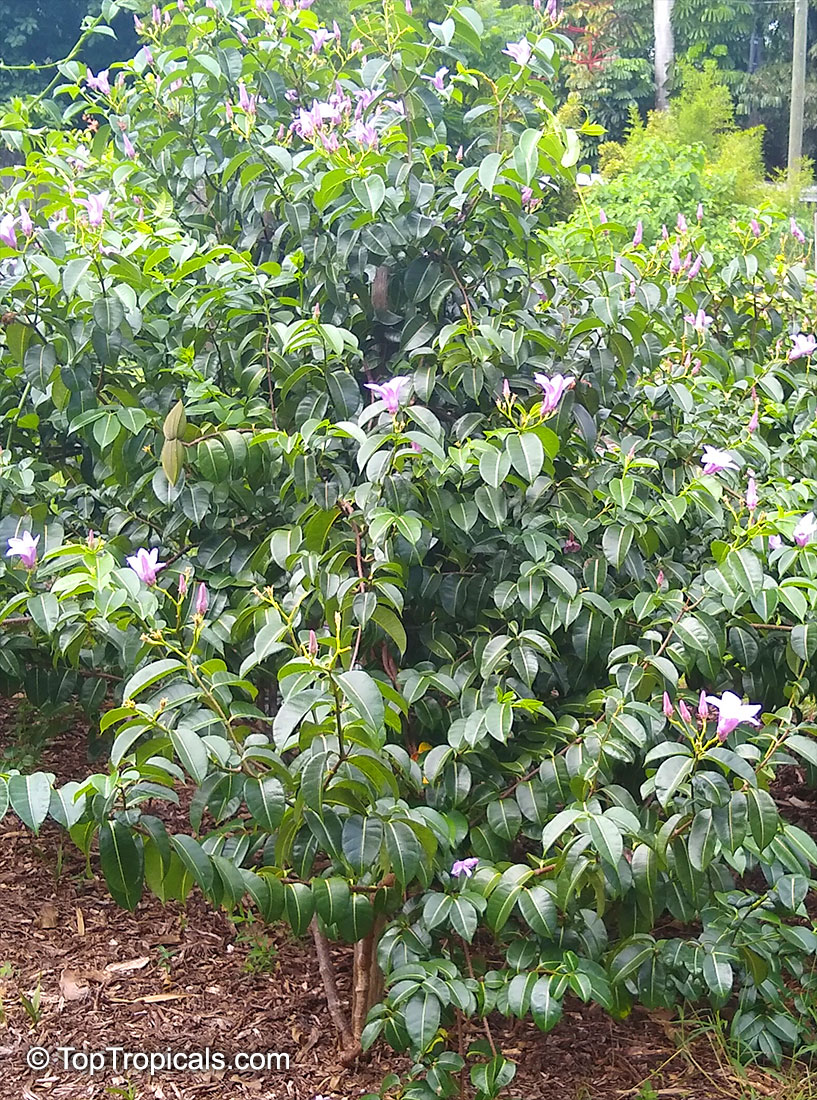
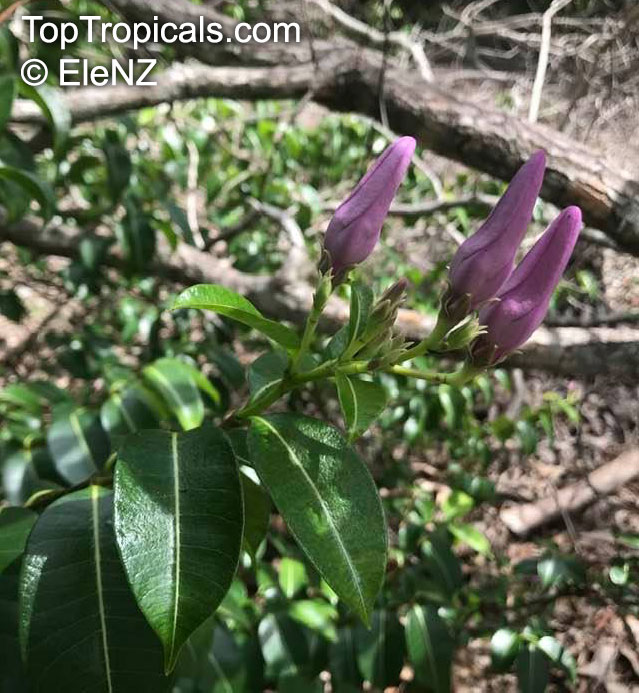
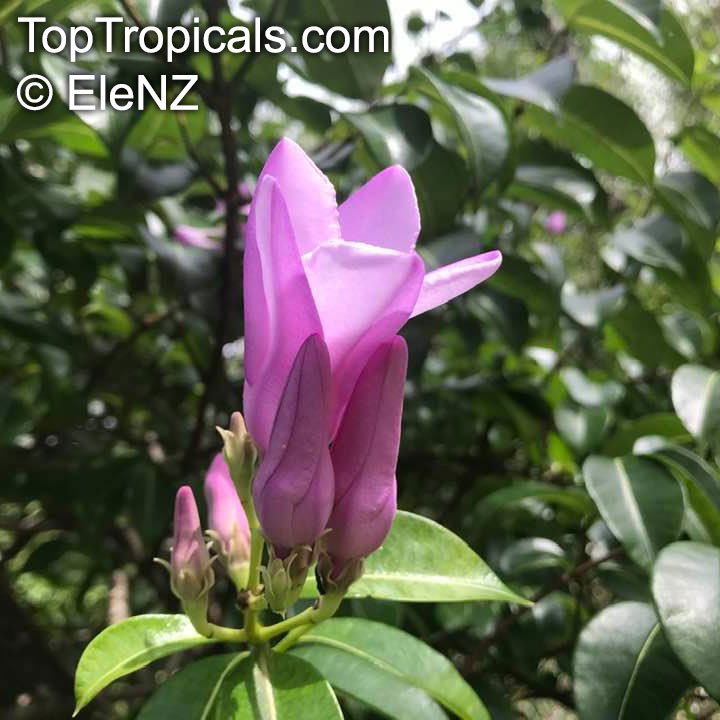
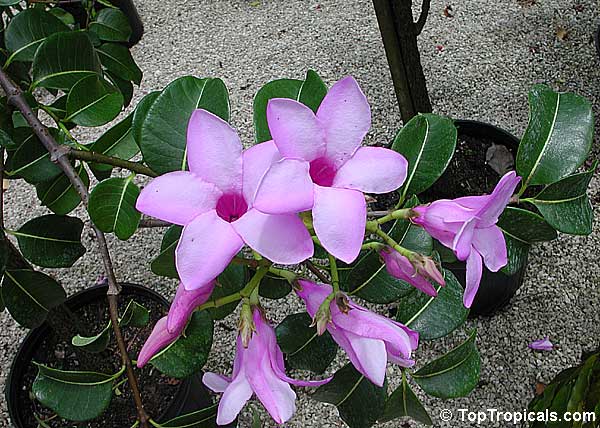
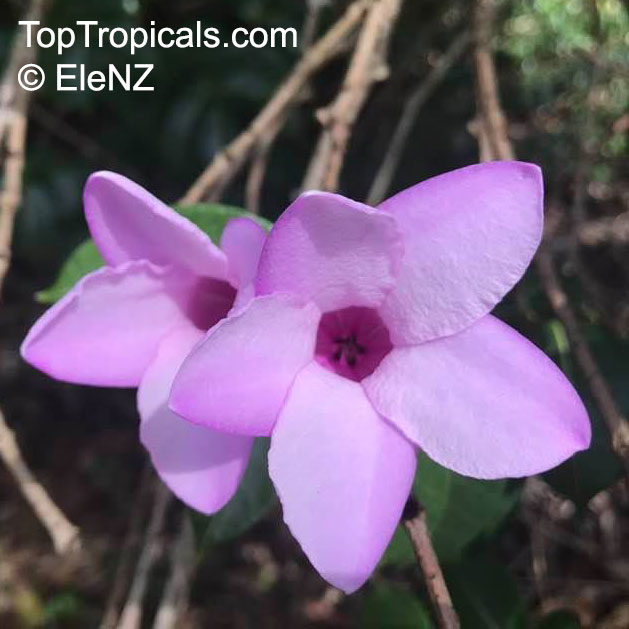
Botanical name: Cryptostegia madagascariensis
Common names: Rubber vine, Purple Allamanda
Family: Apocynaceae (Formerly:Asclepiadaceae)
Subfamily: Periplocoideae
Origin: Madagascar
USDA Zone: 10-12


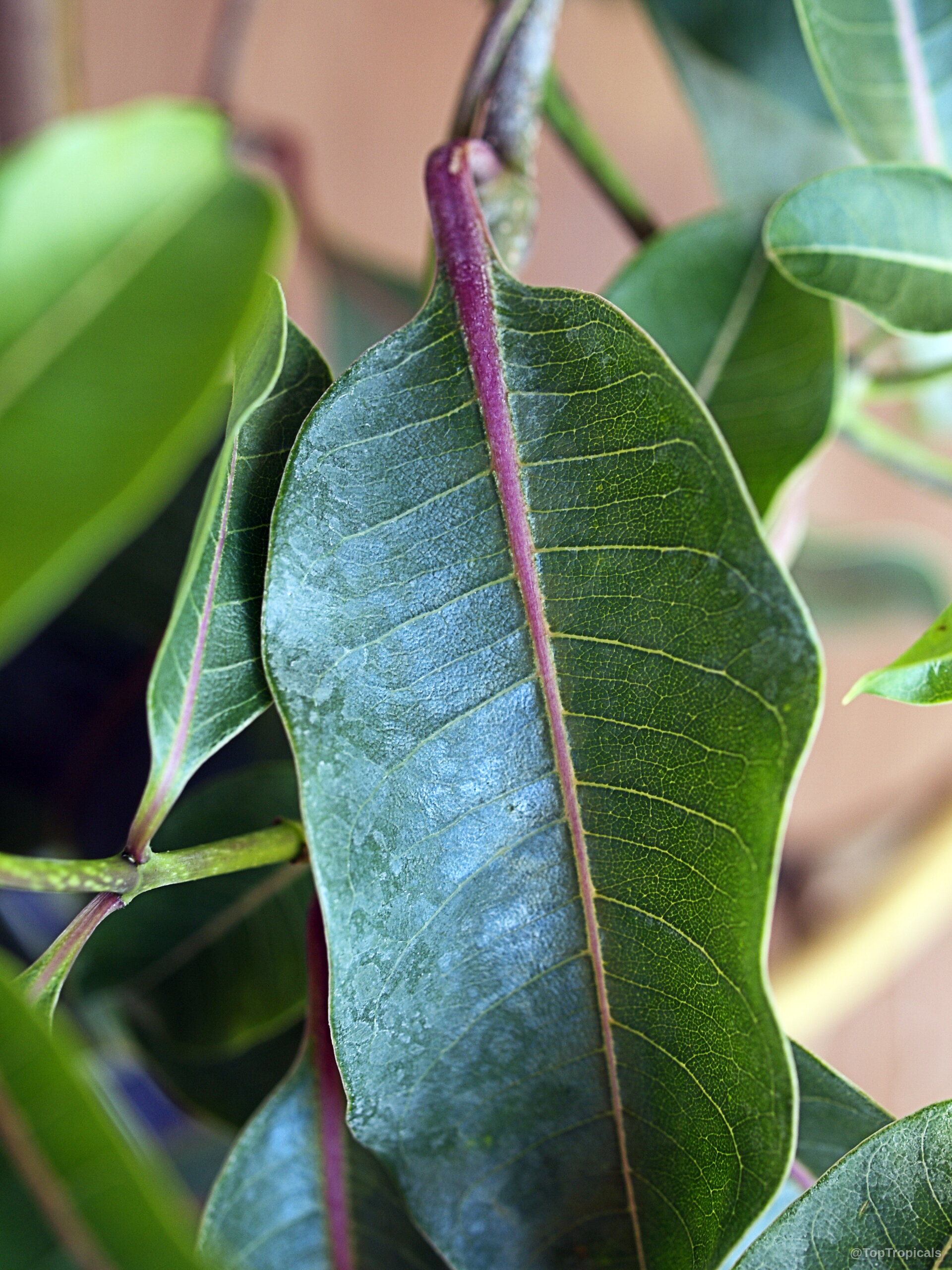
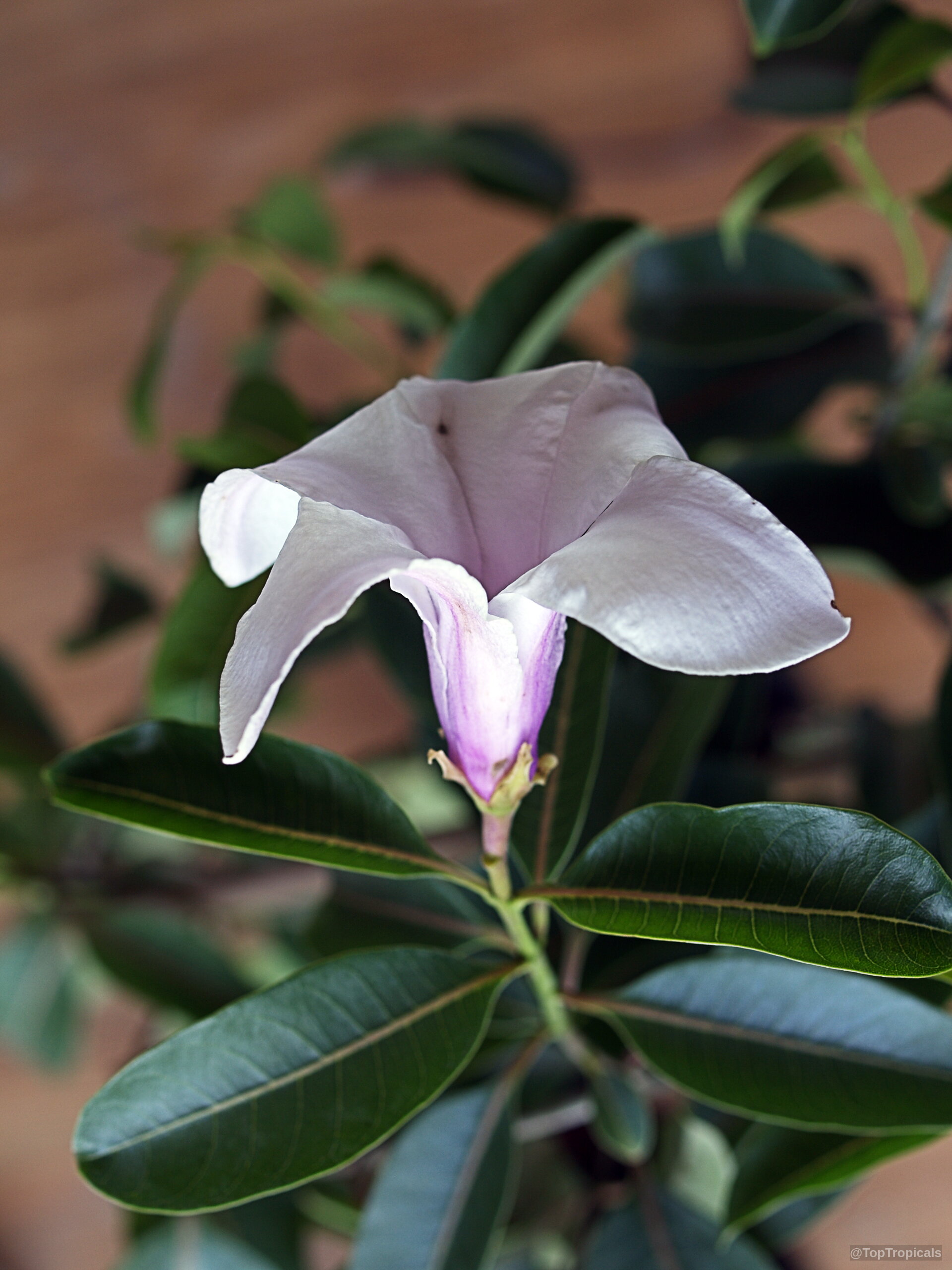
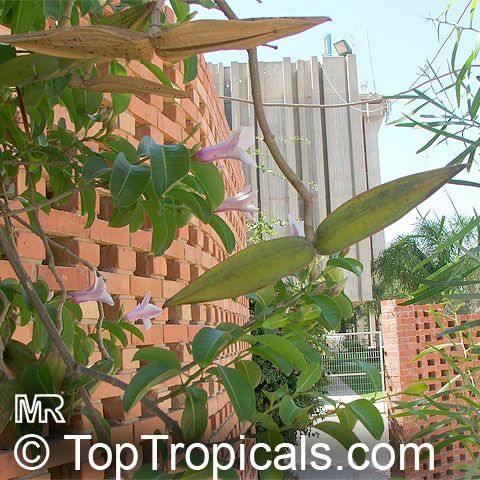
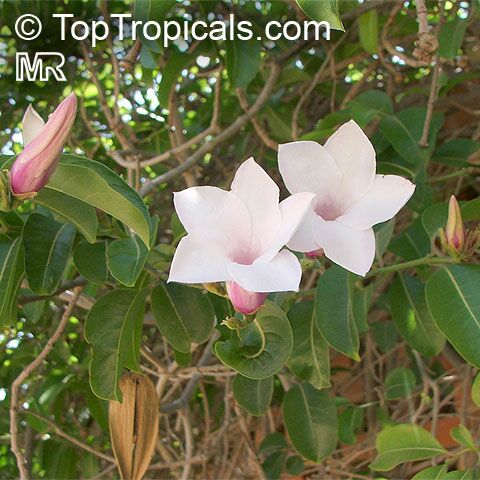
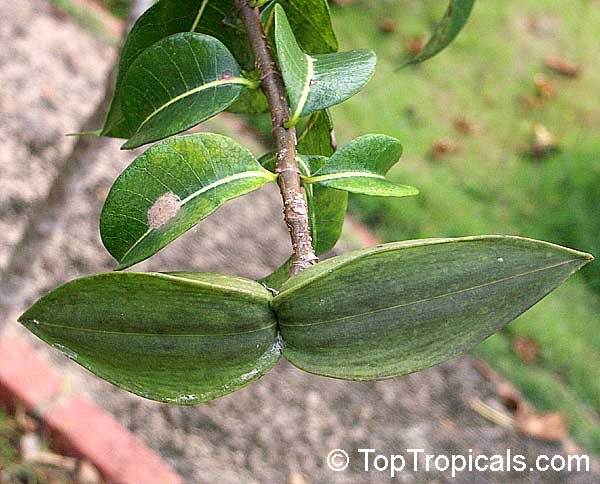
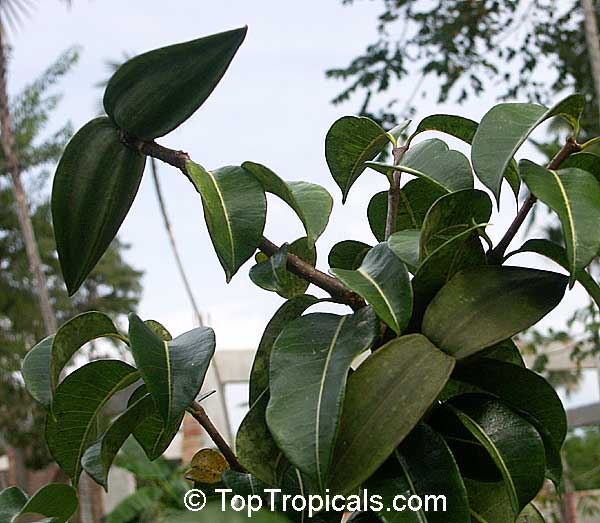
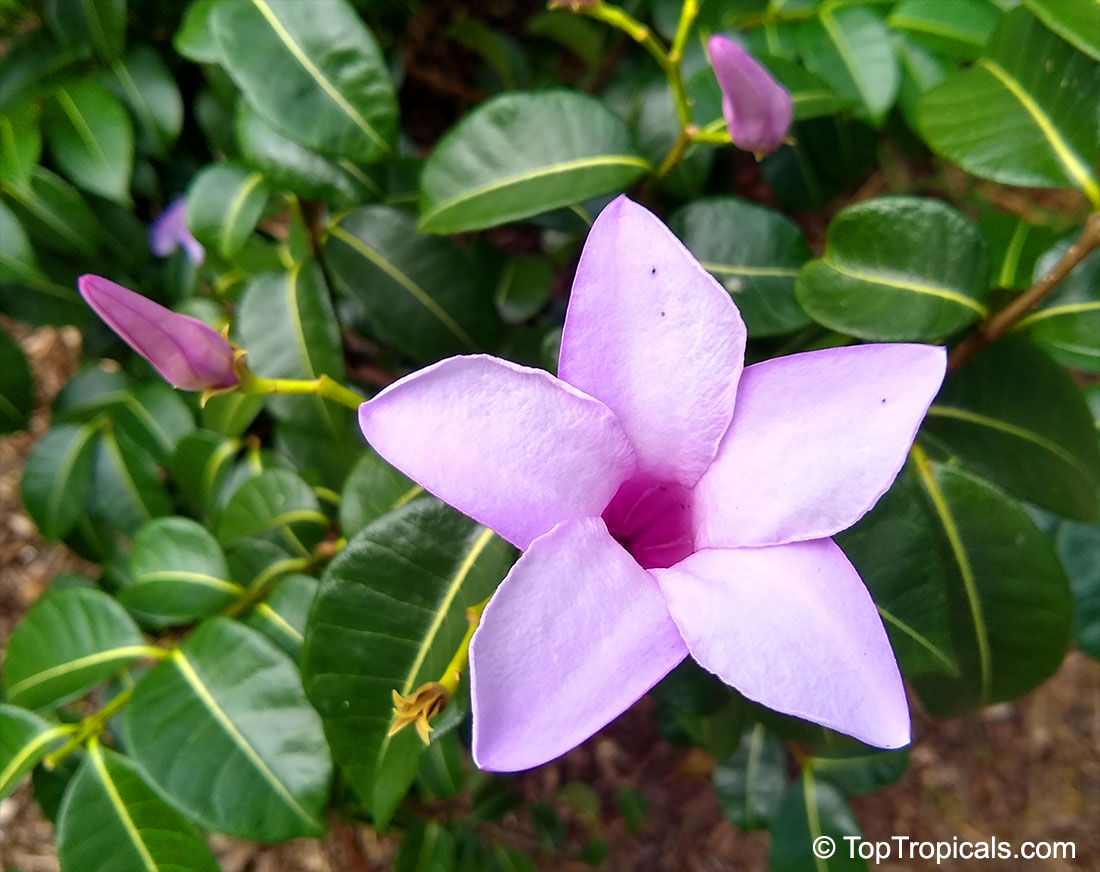
The Madagascar rubbervine originates from Madagascar and was formerly grown there and later in India to produce a poor quality rubber latex. Has large (2" across), showy, lilac flowers with a broad funnel-shaped tube and five spreading lobes. Leaves are very ornamental, wide, deep green and waxy. This exotic woody vine poses a significant threat to northern Australian savanna landscapes. The Rubber Vine is poisonous it contains glucosides interfering with the heart, and ingesting with provoke stomach and intestinal upset. When trimming wear gloves since the sap is very irritating to the skin, and discard what you trimmed rapidly, because the dust from dried plants is also irritating.
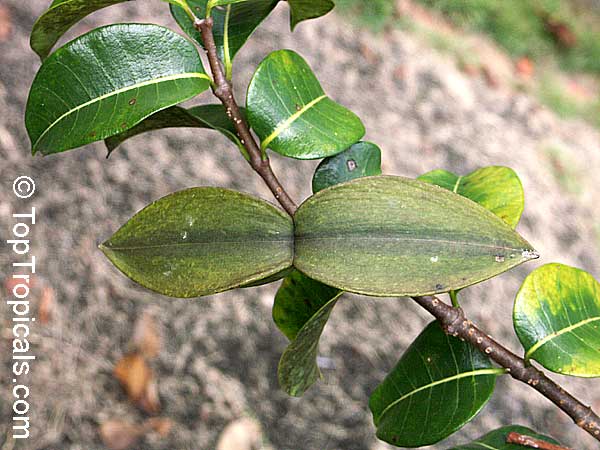
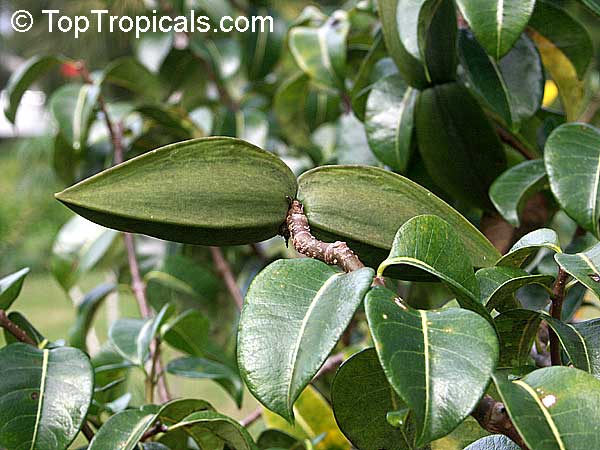

Botanical names: Cynanchum viminale, Sarcostemma viminale
Common names: Caustic Bush, Rapunzel Plant
Family: Apocynaceae (Formerly:Asclepiadaceae)
Subfamily: Asclepiadoideae
Origin: Western Africa
USDA Zone: 9-10


Cynanchum viminale is a leafless succulent plant with cylindrical, green photosynthetic stems. The plant may grow as a shrub or a scandent vine. The stems produce copious amounts of milky exudate when broken. This exudate is caustic in nature and can cause burns if it contacts human skin. The plant produces small white flowers in clusters.
Toxicity appears to be variable, even locally.
An interesting plant for succulent, cactus and rock/cliff gardens and spilling over dry walls. It also does well in hanging containers.

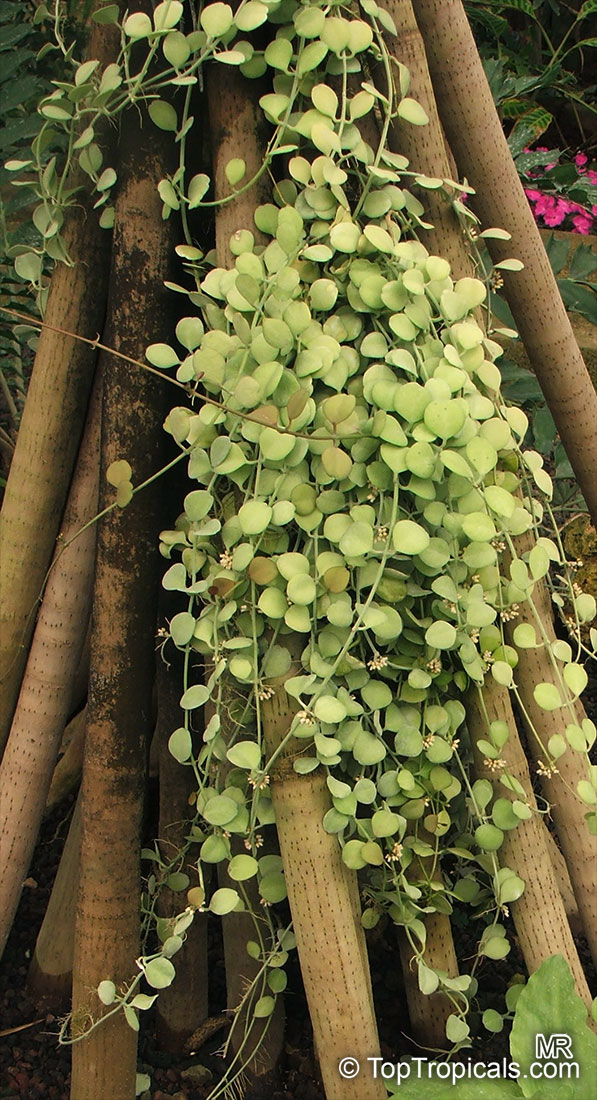
Botanical names: Dischidia minor, Dischidia nummularia
Common names: Kadul, Button Orchid
Family: Apocynaceae (Formerly:Asclepiadaceae)
Subfamily: Asclepiadoideae
Origin: Malaya, Australia
USDA Zone: 9-10

Dischidia minor is a unique and captivating plant native to Malaya and Australia. Also known as Kadul and groundcover, the low-growing vine or creeper can reach a height of 2ft and is perfect for using as an ornamental foliage. It has pendent stems, and small button-like, silver-grey leaves, along with inflorescence that is an umbel of small white tubular flowers with a ring of sparse hairs inside. After the blooms have faded, masses of fluffy seeds develop.
Preferring a semi-shade position, Dischidia minor is an epiphyte and loves moderate water. It is also known for living in various environments, such as on paperbark trees, moss or bark, terrariums, and hanging baskets or pots. For drainage, the pot should have organic matter and coarse sand, and it should be semi-shaded. Bright light is suitable for the plant, but it should be kept out of direct sun.
In USDA zones 9-11, caring for a Dischidia minor includes watering, feeding, and misting. Water the plant moderately and only when the soil has dried out. Liquid feeding once a month with half strength is advised, and it's also recommended to mist the plant once or twice a week. In colder regions, it is best to grow the plant in a pot so that it can be moved indoors during winter.


Recommended Fertilizer: SUNSHINE Orchidasm - Rapid Growth Booster

Botanical name: Dischidia ovata
Common names: Hoya Watermelon, Dischidia Watermelon
Family: Apocynaceae (Formerly:Asclepiadaceae)
Subfamily: Asclepiadoideae
Origin: New Guinea
USDA Zone: 10-11
Cold tolerance: 30°F
Miniature hoya with striped tiny 1/2" leaves, dark green and white, exactly like watermelon stripes! Very unusual and eye-catching. It's an epyphite, can be grown in orchid medium or light potting mix with lots of bark conditioner. Beautiful house plant.


| Prev | Next | |
Use link to repeat this search:
https://toptropicals.com/cgi-bin/garden_catalog/cat.cgi?search_op=and&keyword_op=and&language=e&family=Asclepiadaceae
&number=10&no_change_lang=1&user=tt&sale=1&first=0