Euphorbia - Plant Encyclopedia Results
| Number of plants found: 17 | Next | 
|
Go to page: | 1 | 2 |
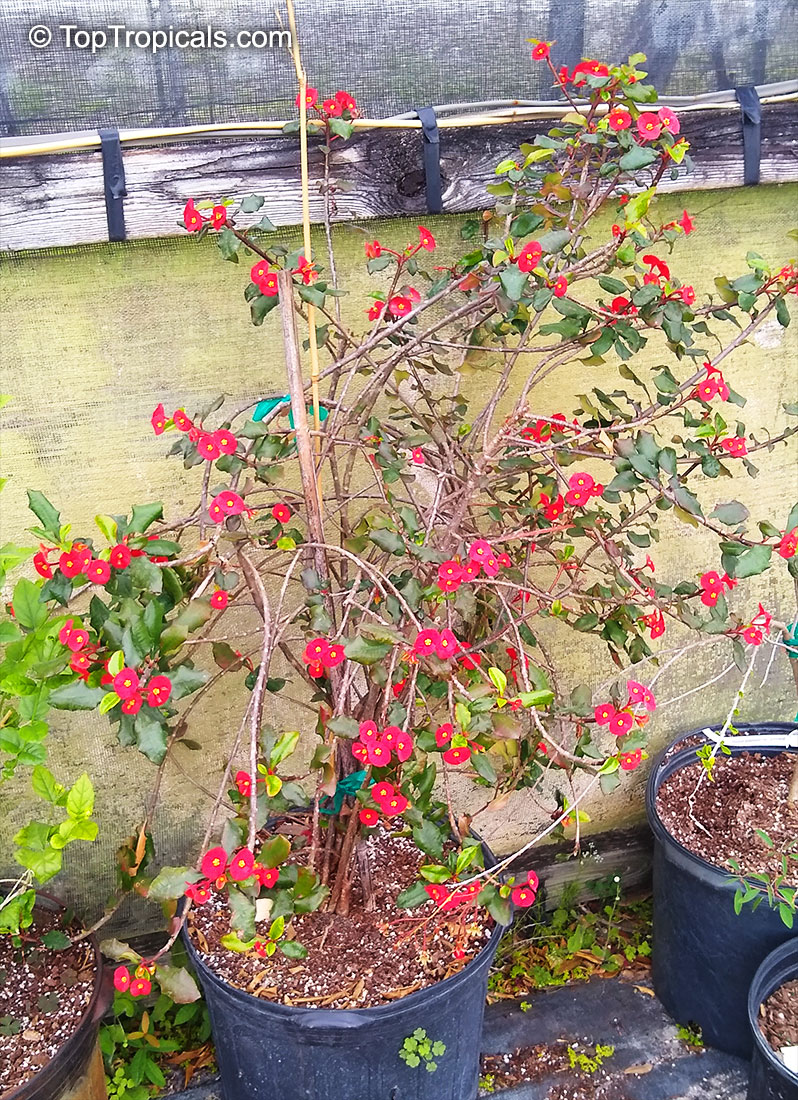
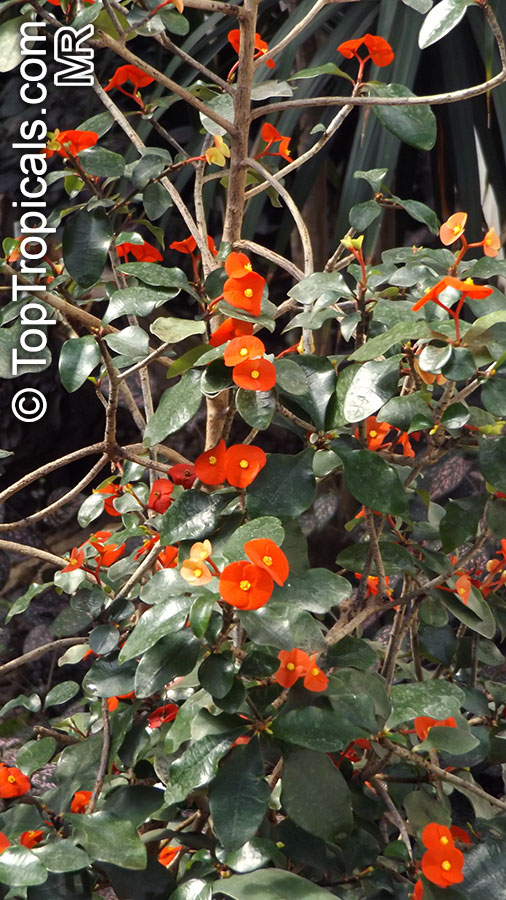
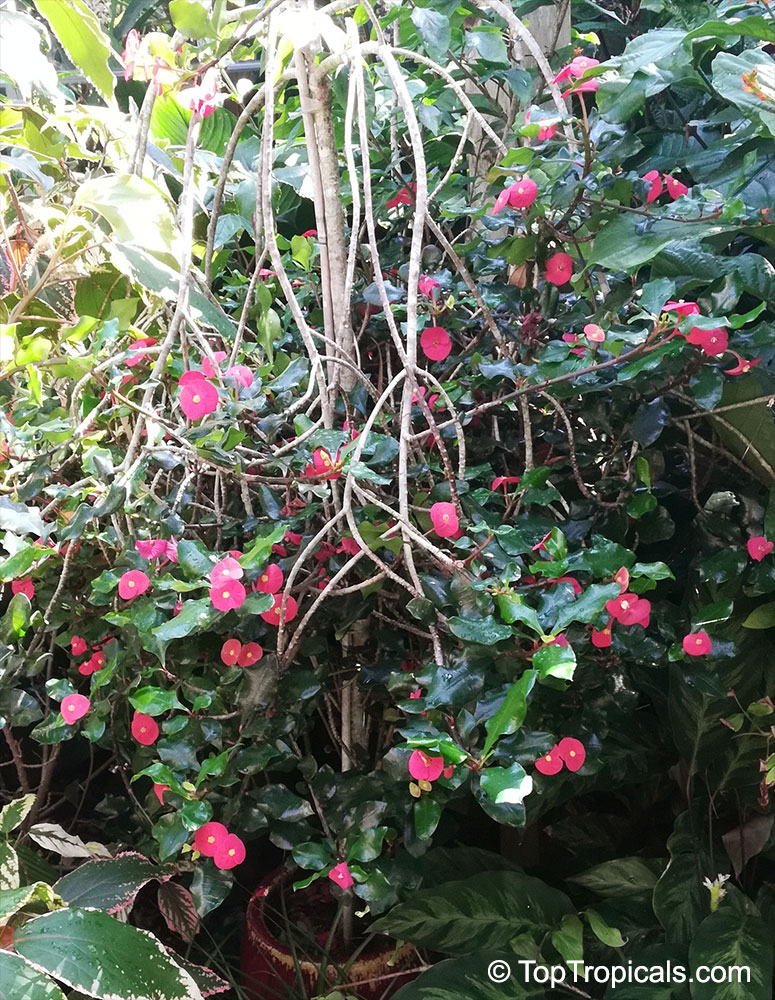
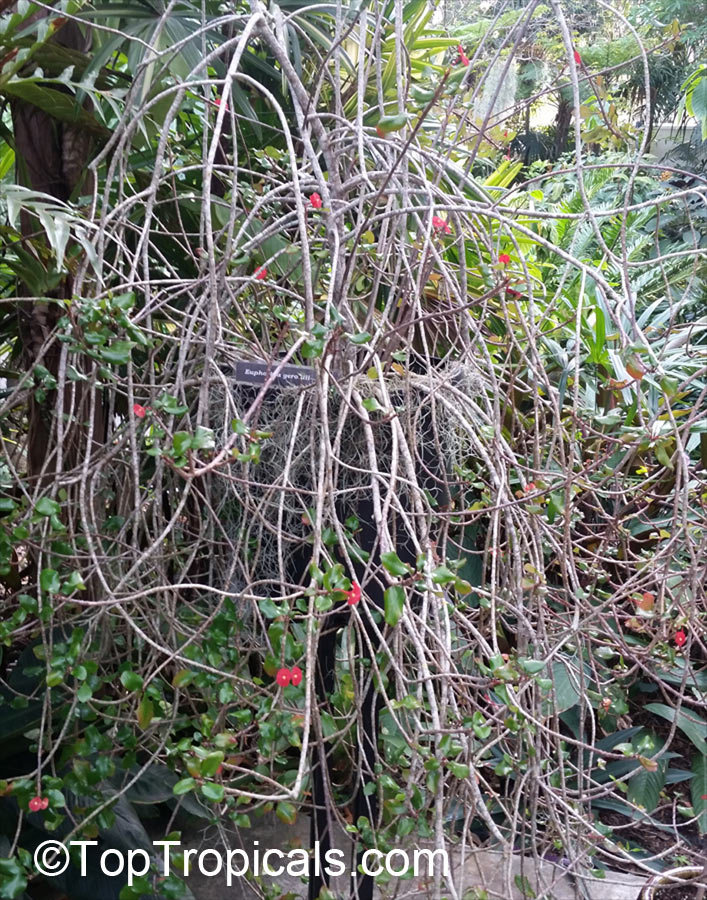
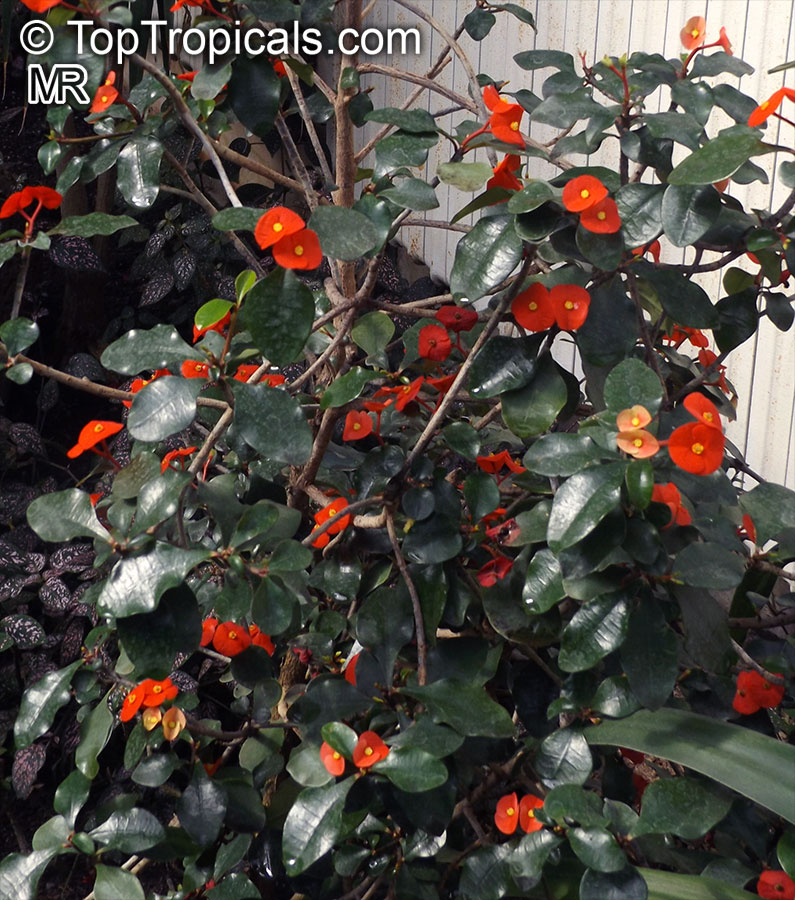
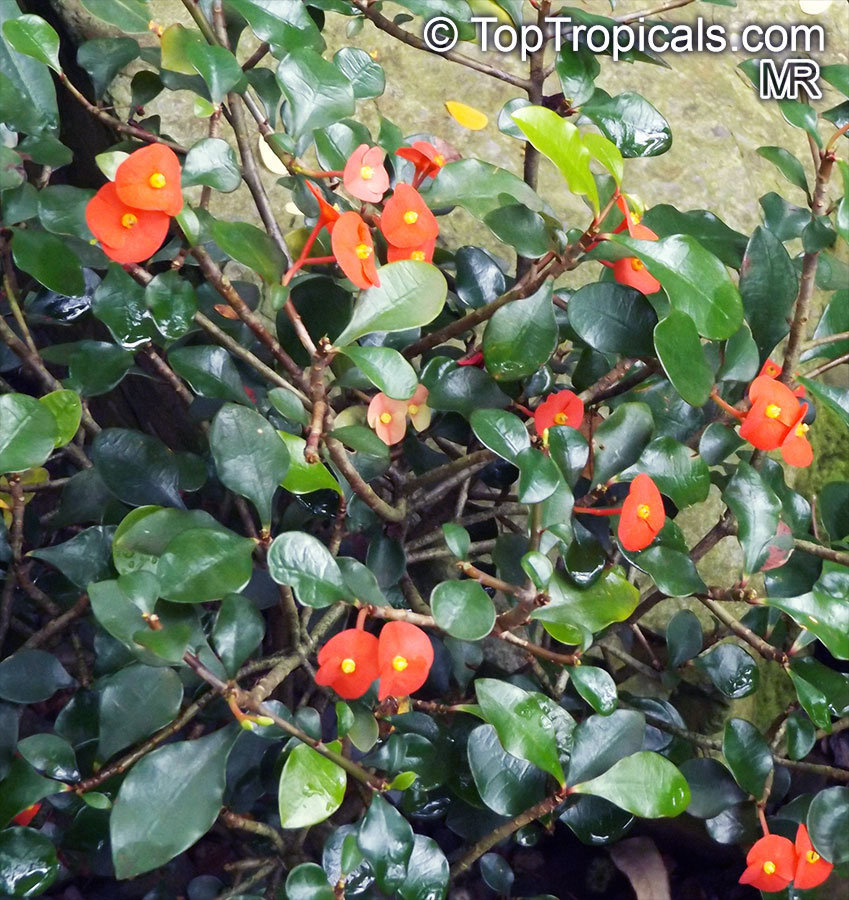
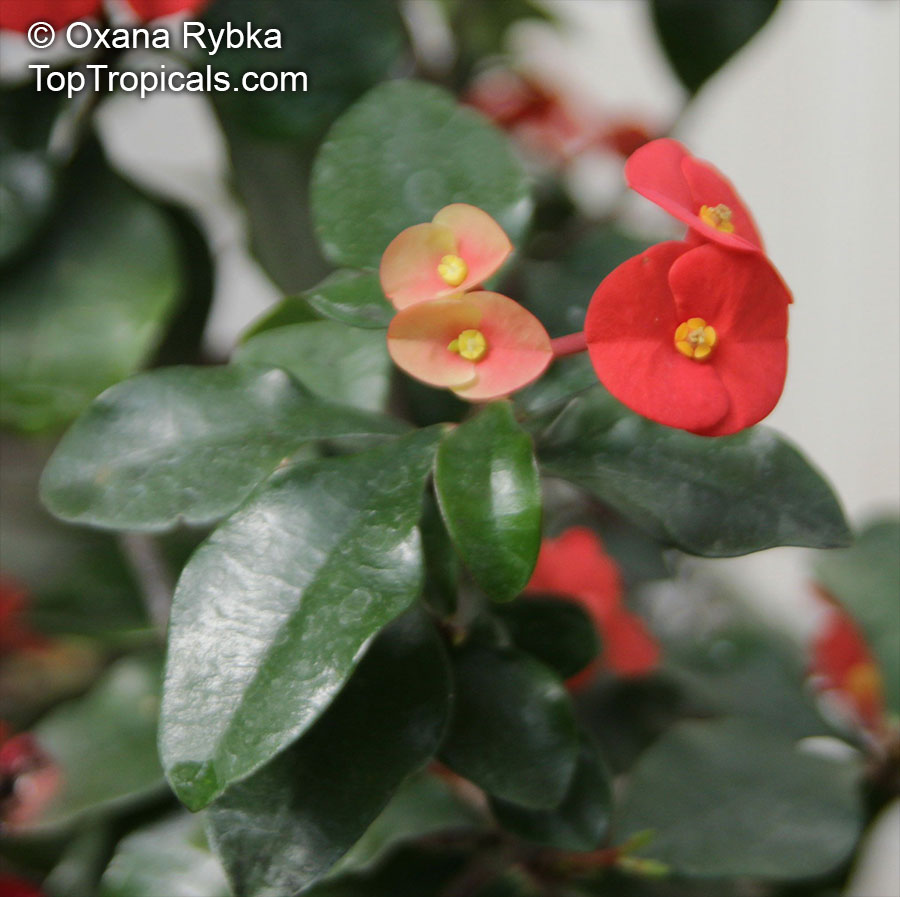
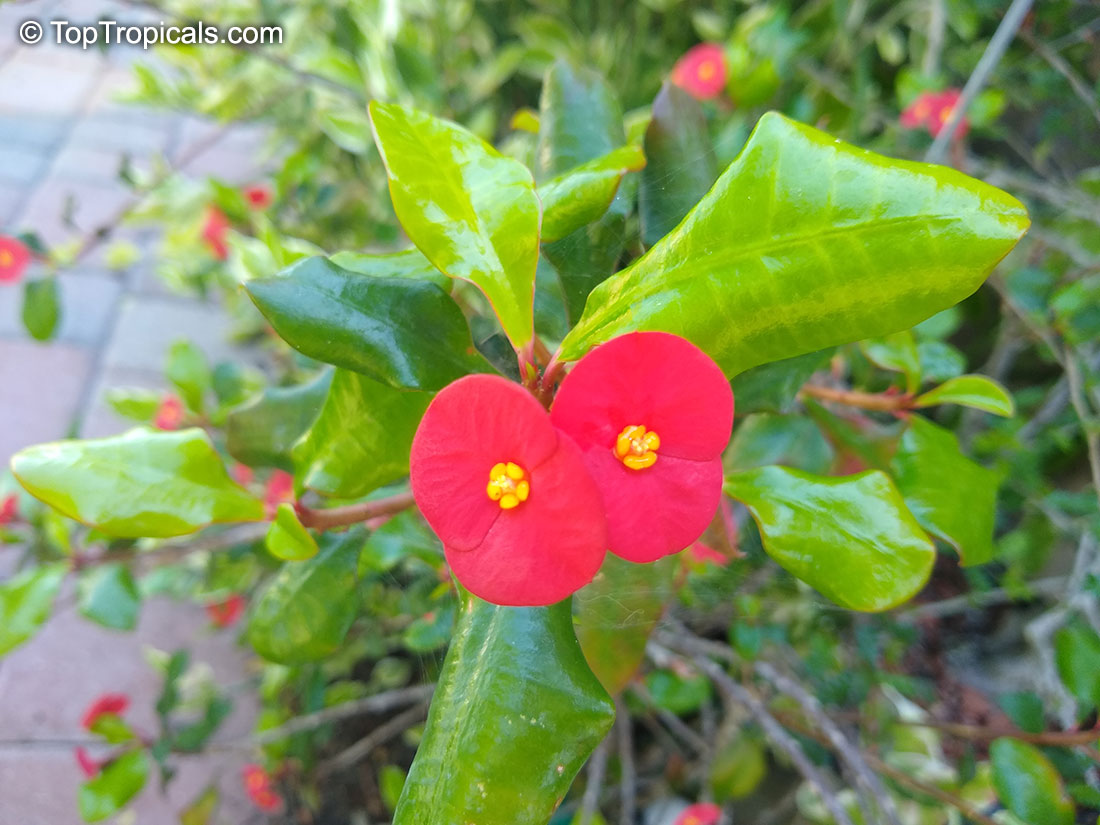
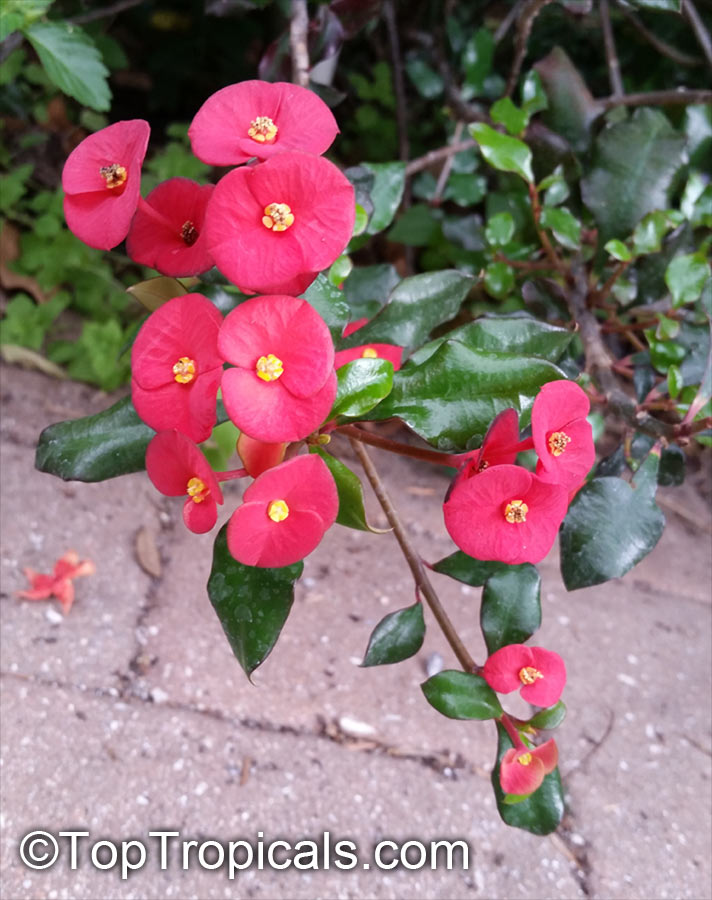
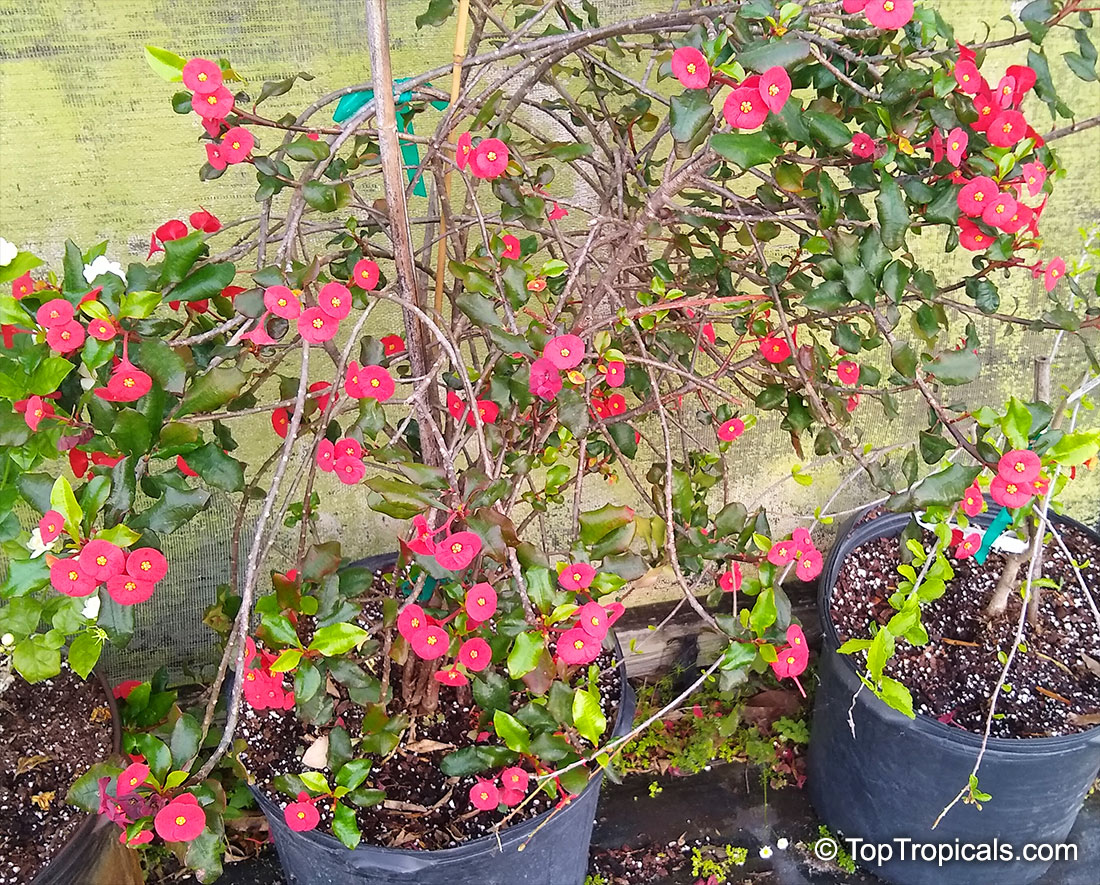
Botanical name: Euphorbia geroldii
Common name: Thornless Euphorbia
Family: Euphorbiaceae
Origin: Madagascar


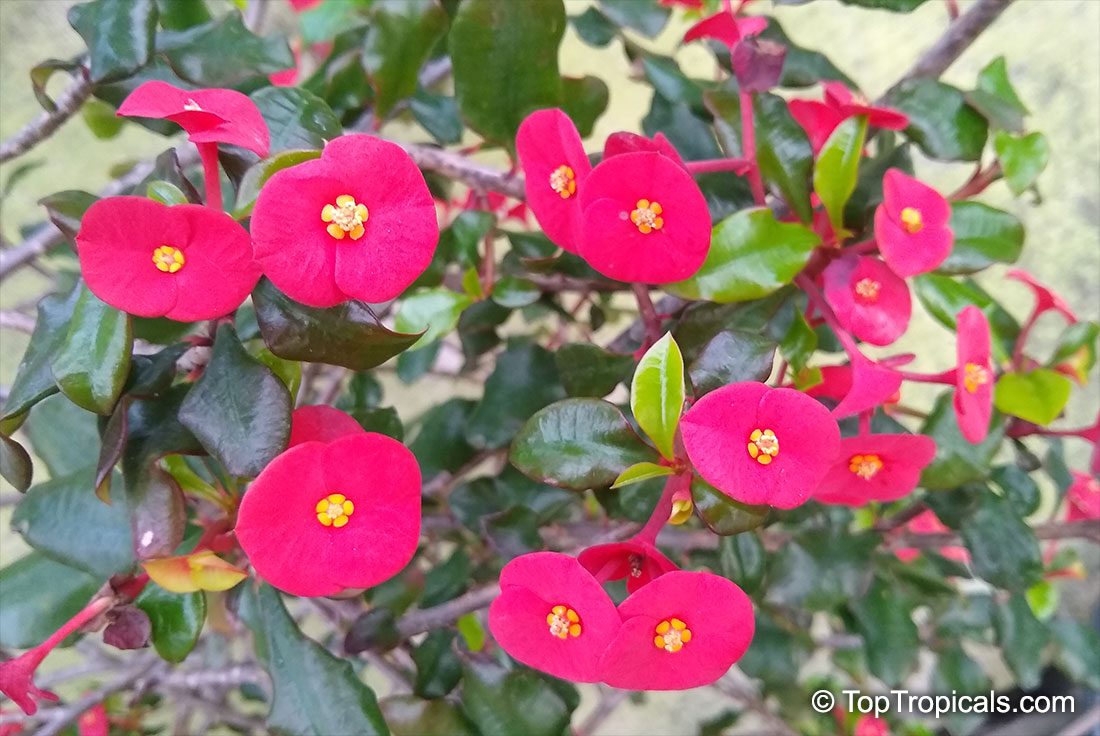
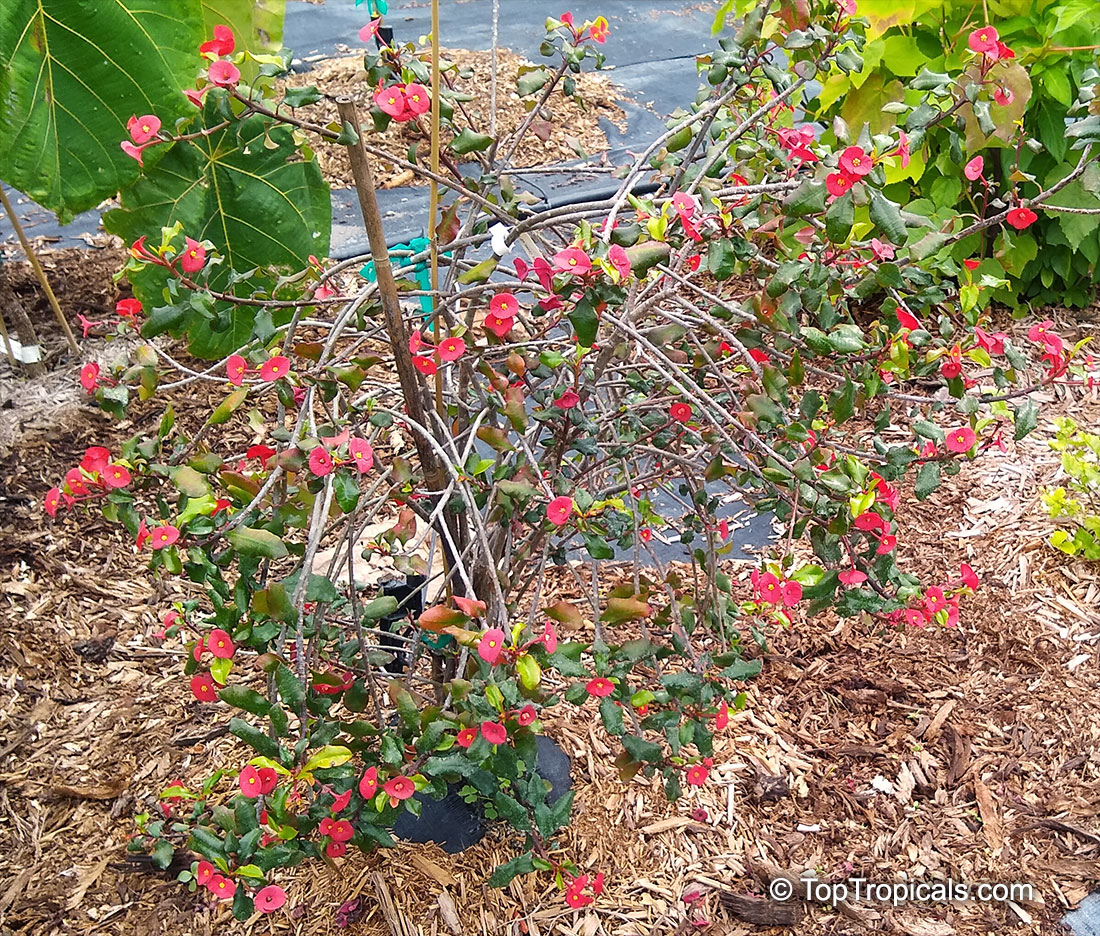
This semi-succulent shrub blooms all summer with bright red flowers in pairs with yellow centers. With wider leaves than Euphorbia millii and no spine, it prefers semi-shade and likes more moisture than other similar Euphorbias.
Native to Madagascar, like its spiny cousin Euphorbia millii, but much rarer in cultivation.
Discovered in the 19th century, it's one of the very few thornless Euphorbias in this group.
Flowers nearly year-round in warm climates, not just summer, especially if kept moist.
The flowers are actually bracts (modified leaves), and they appear in pairs around the true tiny yellow center.
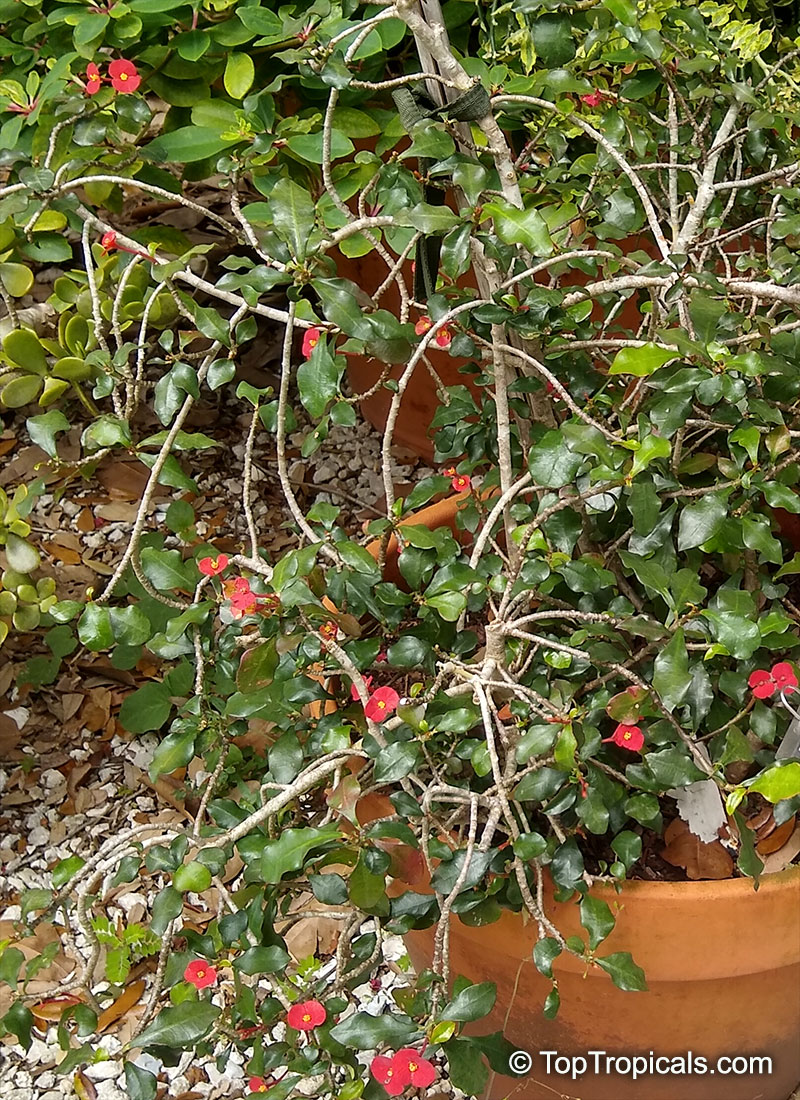
It tolerates containers very well, making it popular for bonsai and small space gardening.
While thornless, it still produces the typical Euphorbia milky sap, which is irritating if it touches skin.
In its natural habitat, it's endangered due to deforestation and over-collection, which makes cultivated plants even more valuable to collectors.
Compared to Euphorbia millii, it prefers a bit more shade and water, giving it a softer, lusher look.

Recommended Fertilizer: SUNSHINE Megaflor - Bloom Nutrition Booster
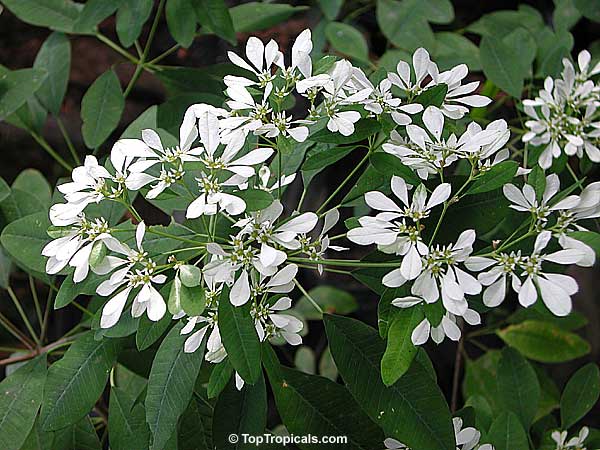
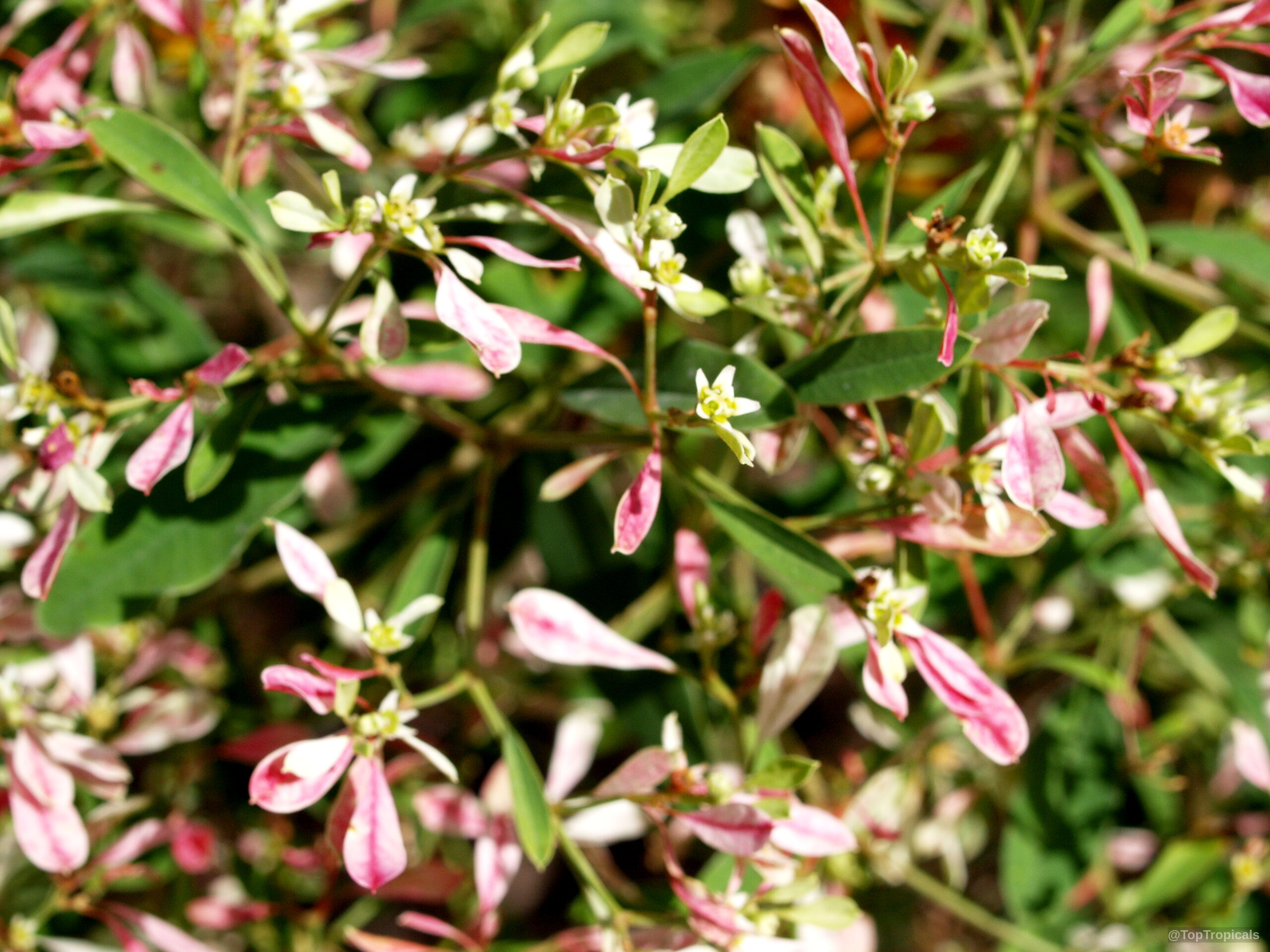
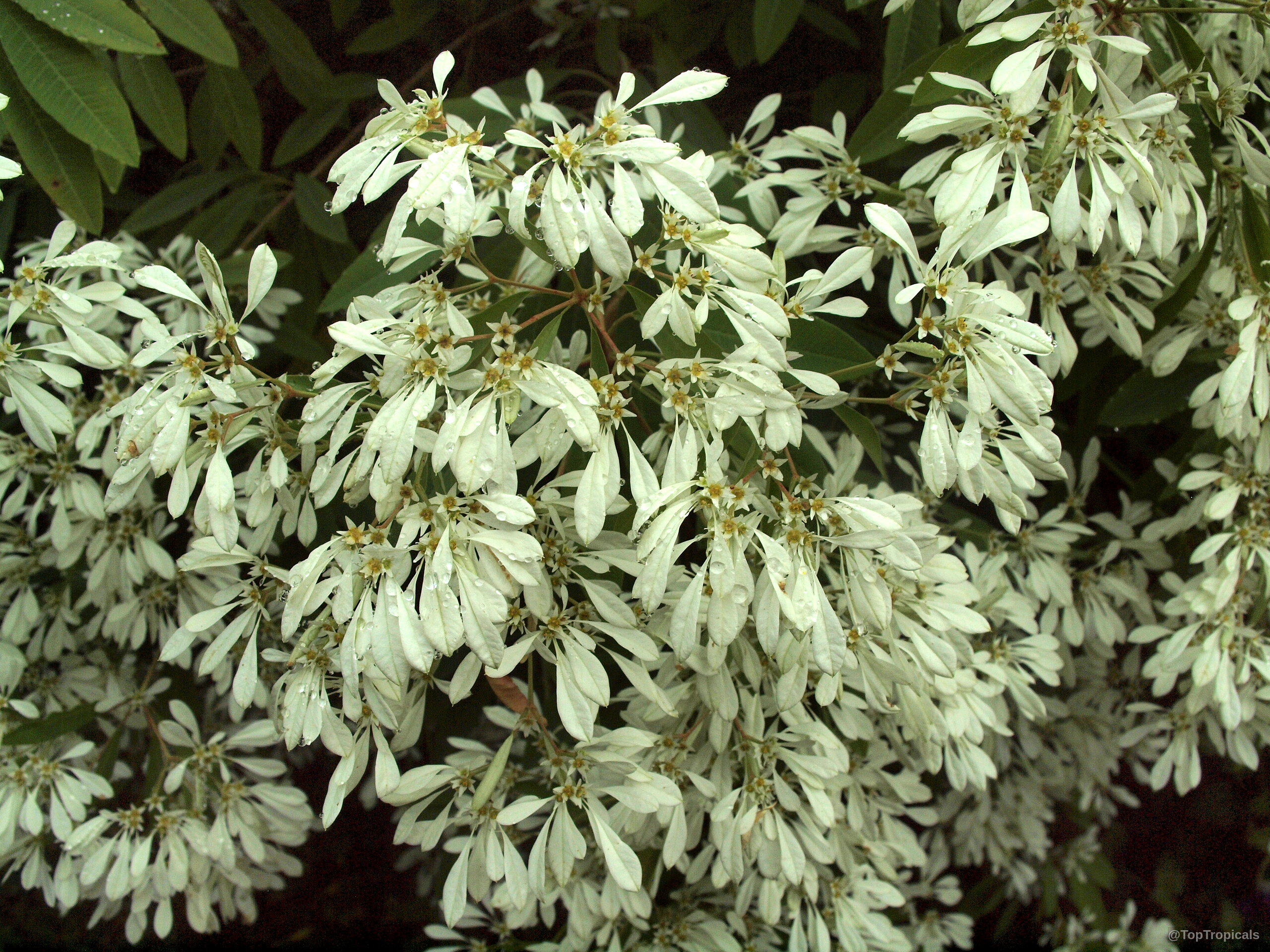
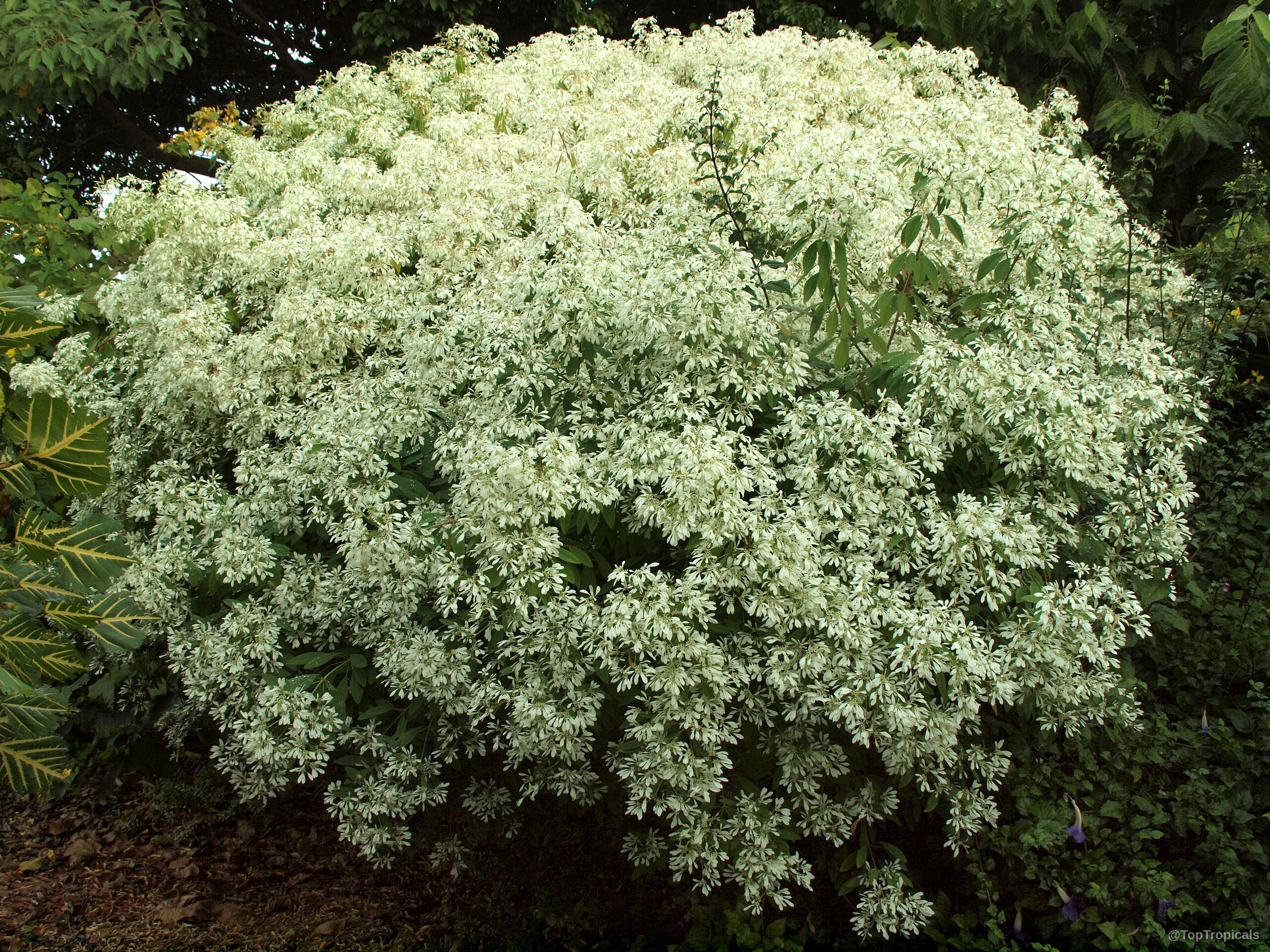
Botanical name: Euphorbia leucocephala
Common names: Pascuita, Snows of Kilimanjaro, White Small Leaf Poincettia, Snow Bush, White-laced euphorbia, Snow Flake, Poinsettia
Family: Euphorbiaceae
Origin: Central America, from southern Mexico to El Salvador


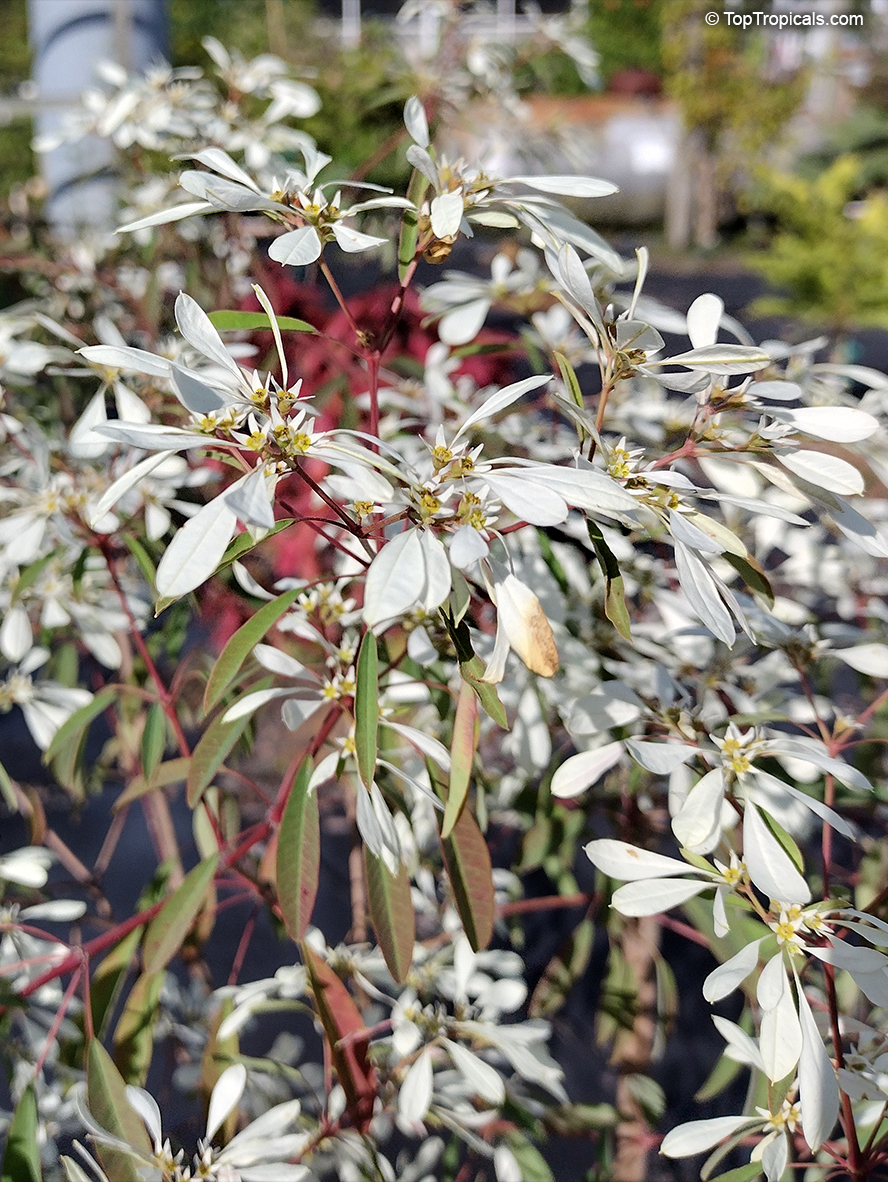
Shrub with decorative white bracts. Unusual species with tiny small leaves, white on top, reminding popular Poincettia. Unlike many other euphorbias, this plant is very fragrant. When it is in bloom, the air around is filled with a sweet pleasant smell. It is a close relative of the well-known and equally eyecatching, Poinsettia. In Euphorbias, the showy parts of the plant are actually leaf-shaped bracts; the tiny flowers are found in the centre of each bract. It is a fast rowing, relatively large shrub. Every part of the plant exudes a milky-white latex when damaged and may cause skin irritation when touched. Flowering time - late autumn. Protect from wind as stems tend to be brittle. It will need to be pruned back hard after flowering to stop it from becoming straggly. Caution - wear gloves when pruning and ensure no milky sap touches the body as it may be very irritating.
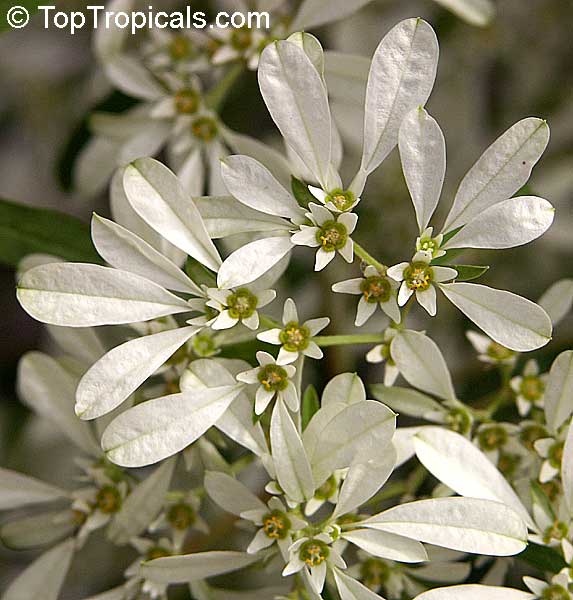
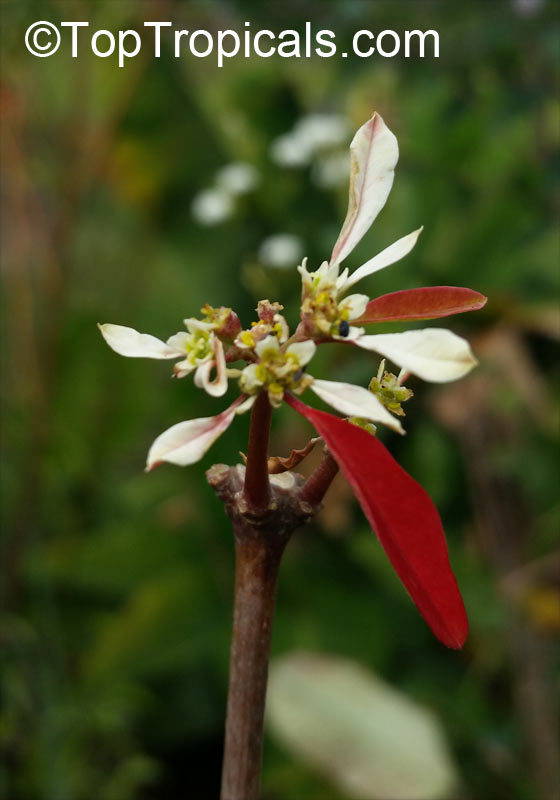
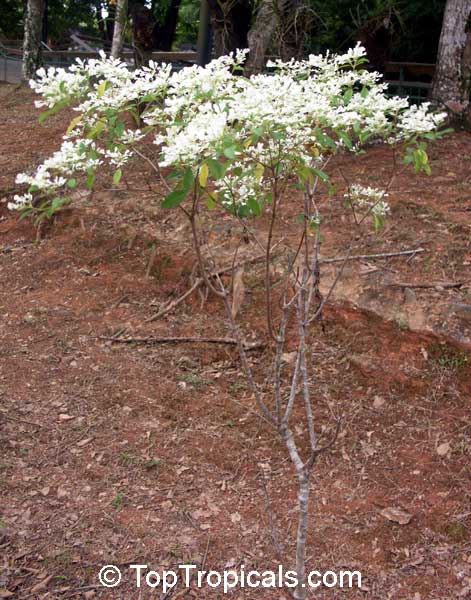
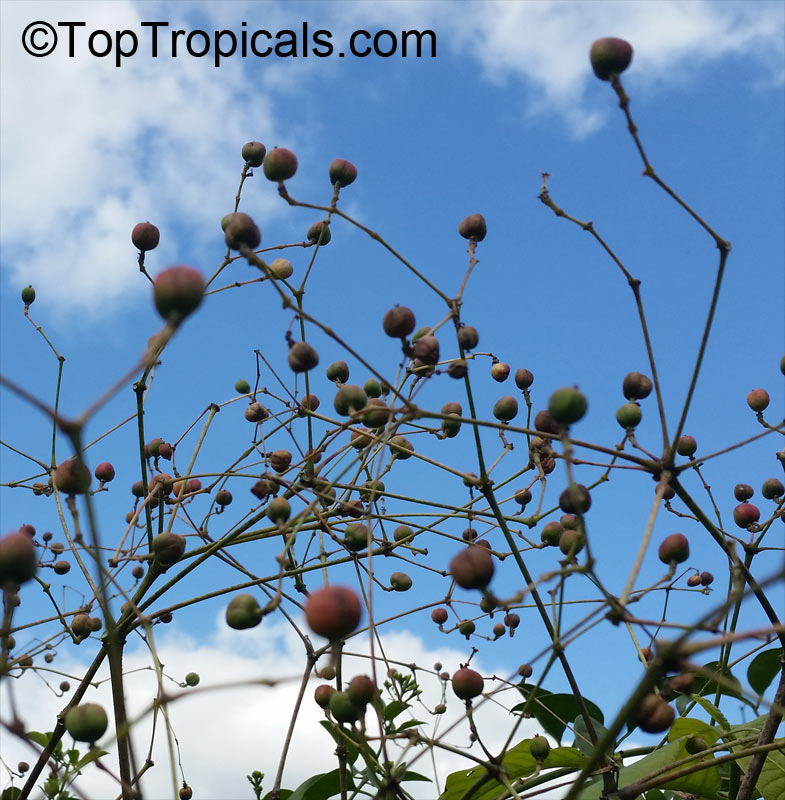
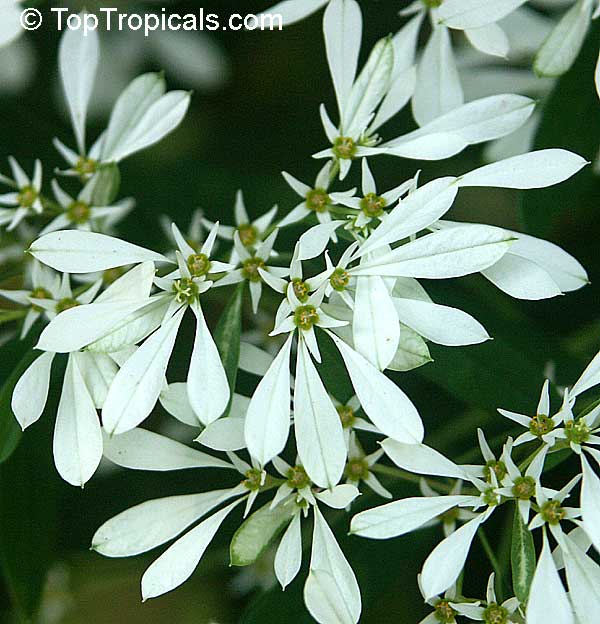

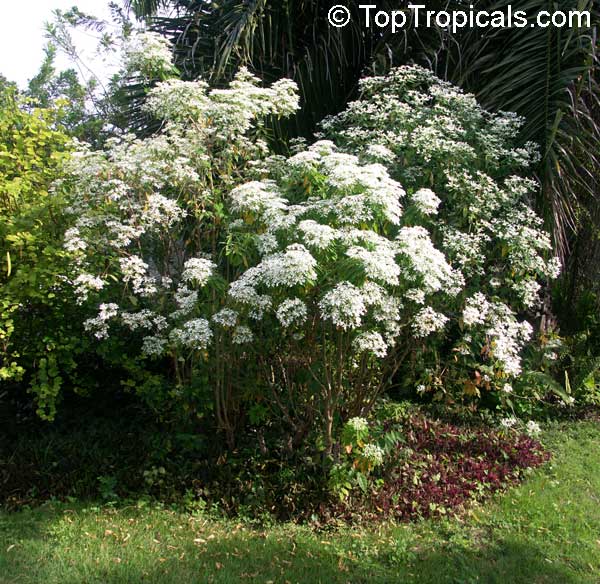
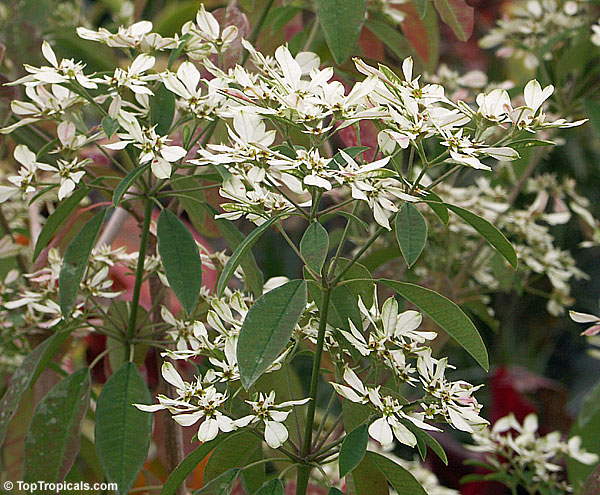
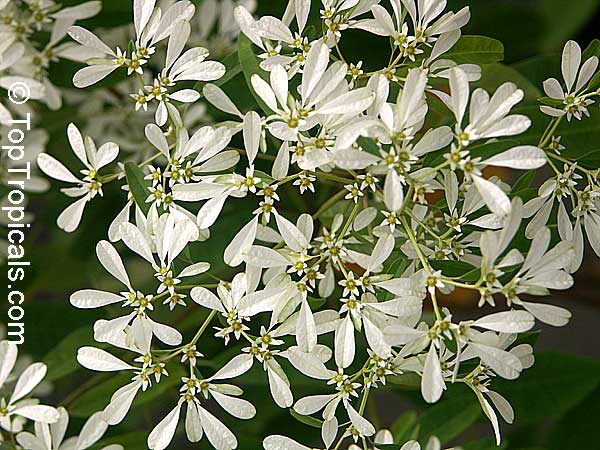
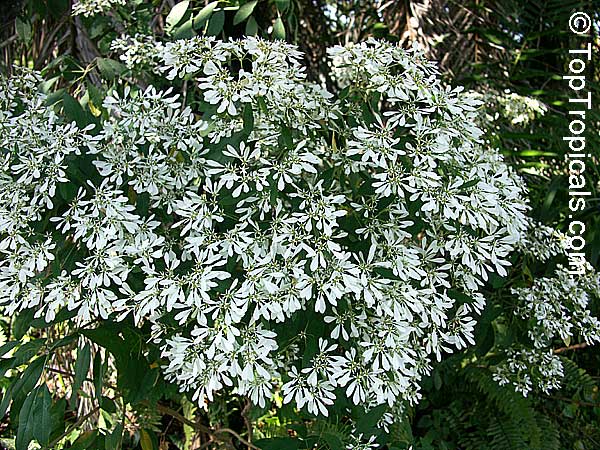


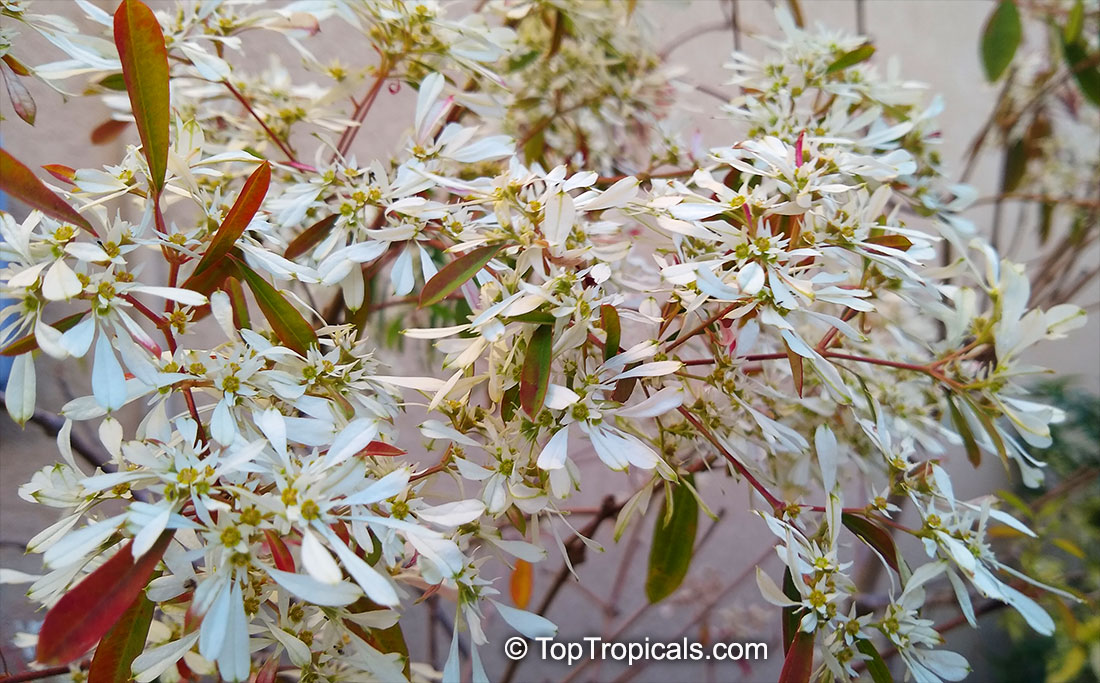
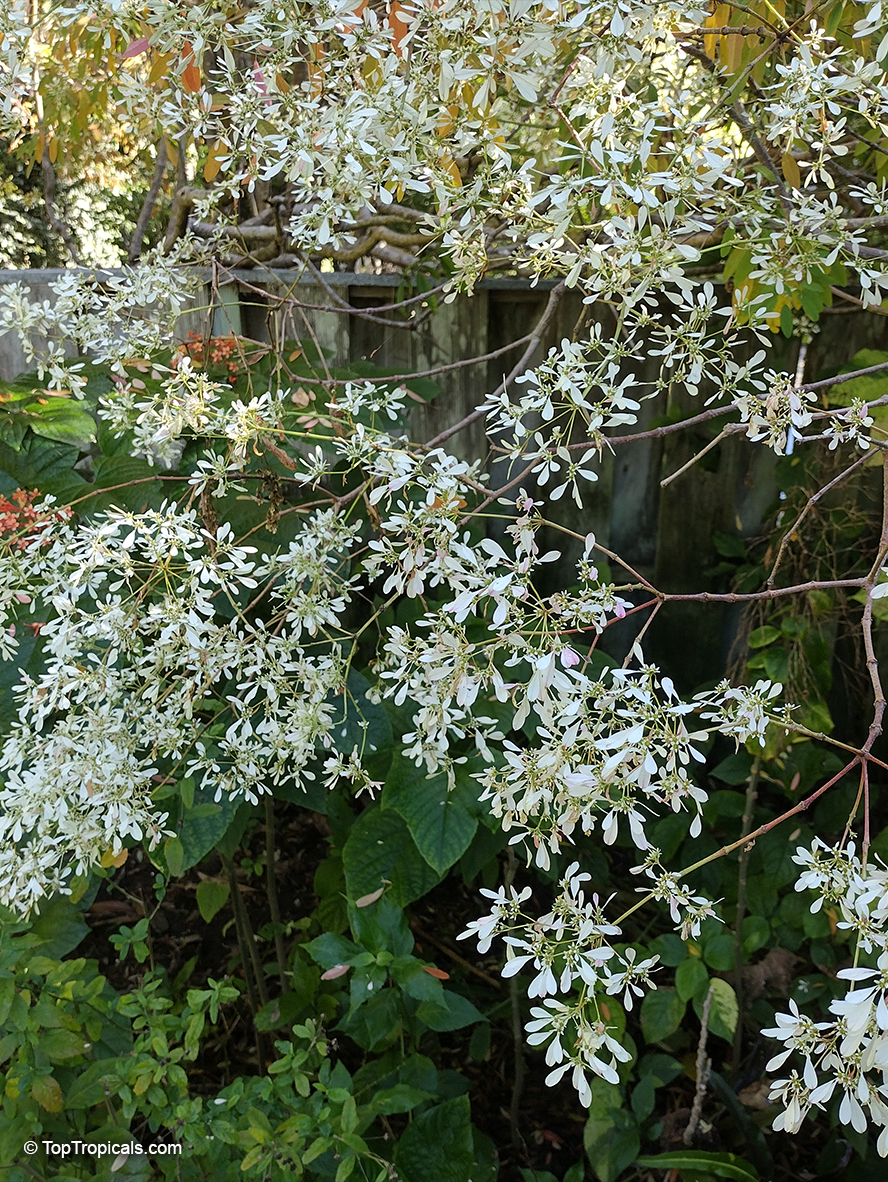
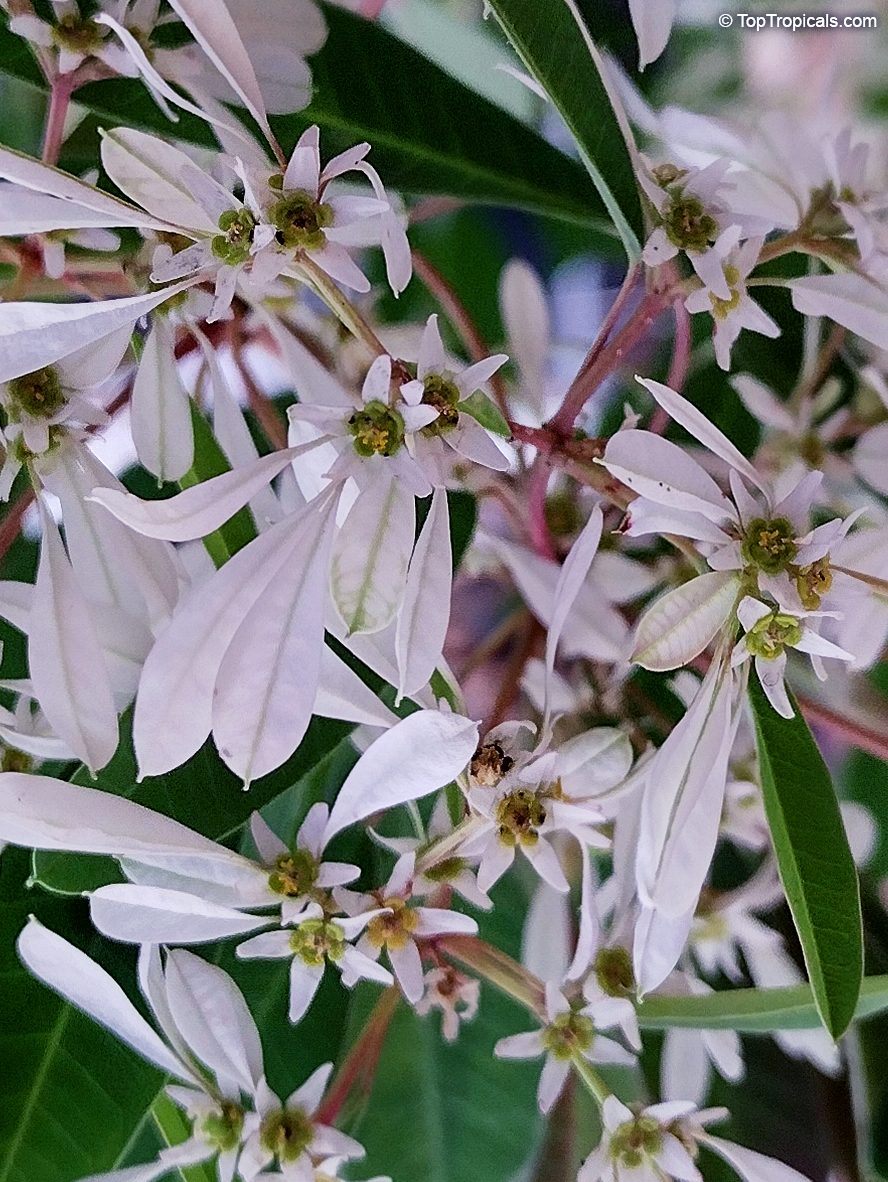
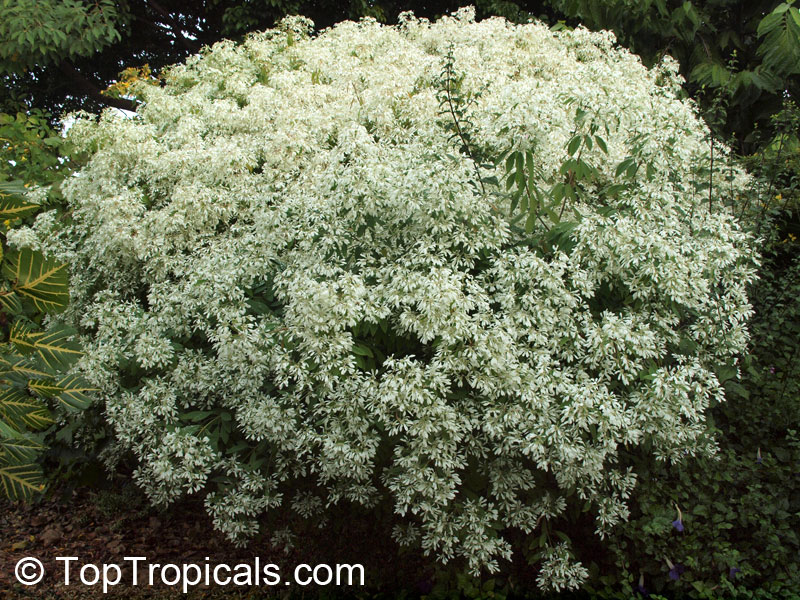
This plant completely loses leaves for winter, re-leafs in spring.
Recommended Fertilizer: SUNSHINE Megaflor - Bloom Nutrition Booster
 SUNSHINE Pikake (NPK 2-2-4) - eco-friendly concentrated nutrition booster for fragrant flowers. Improves quantity and quality of flowers. Encourages profuse blooming. Increases flower fragrance intensity. Can be used with every watering. For best results, use in combination with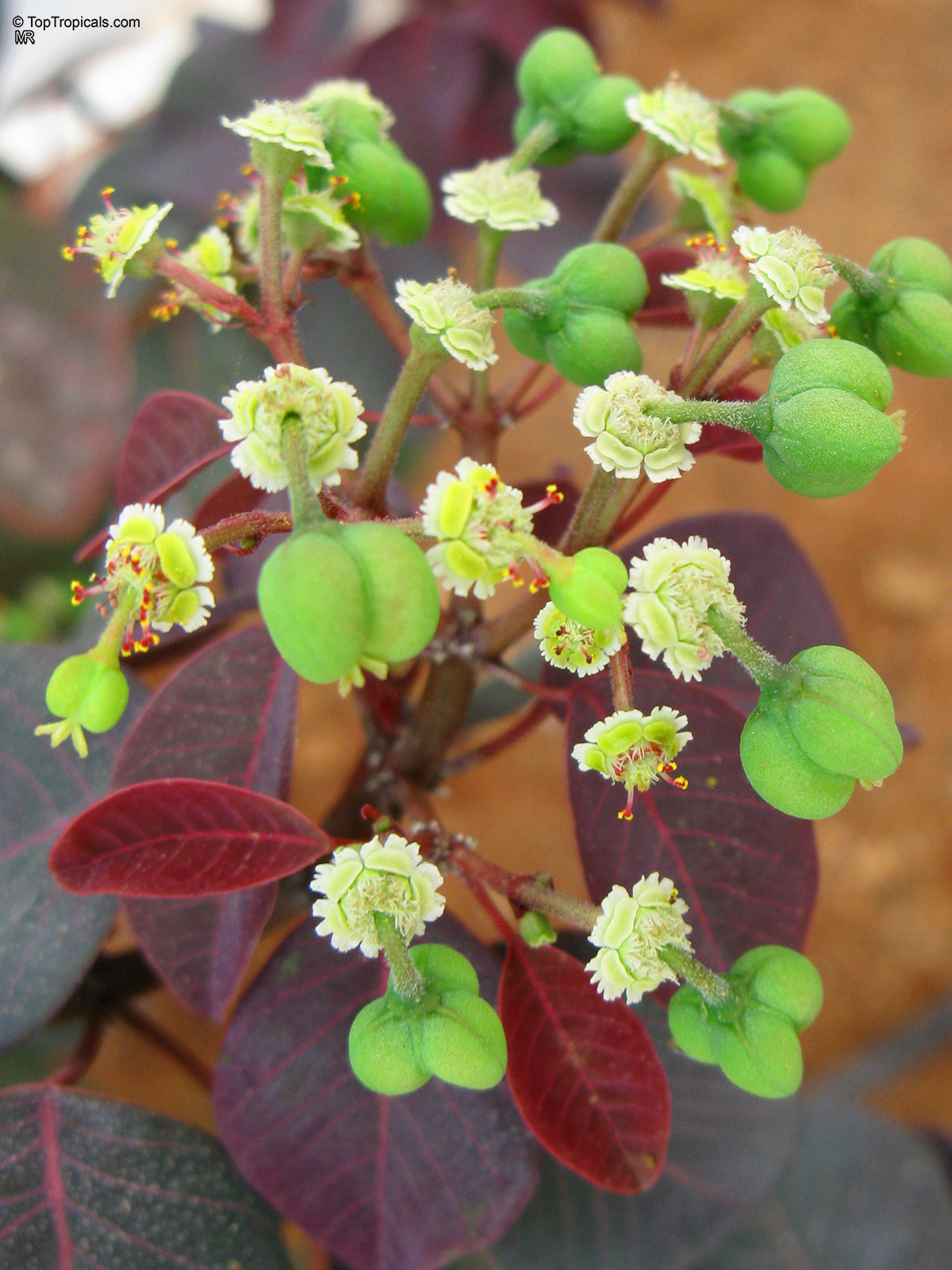
Botanical name: Euphorbia cotinifolia
Common names: Red spurge, Mexican shrubby Spurge, Caribbean Copper Plant
Family: Euphorbiaceae
Origin: Central and South America
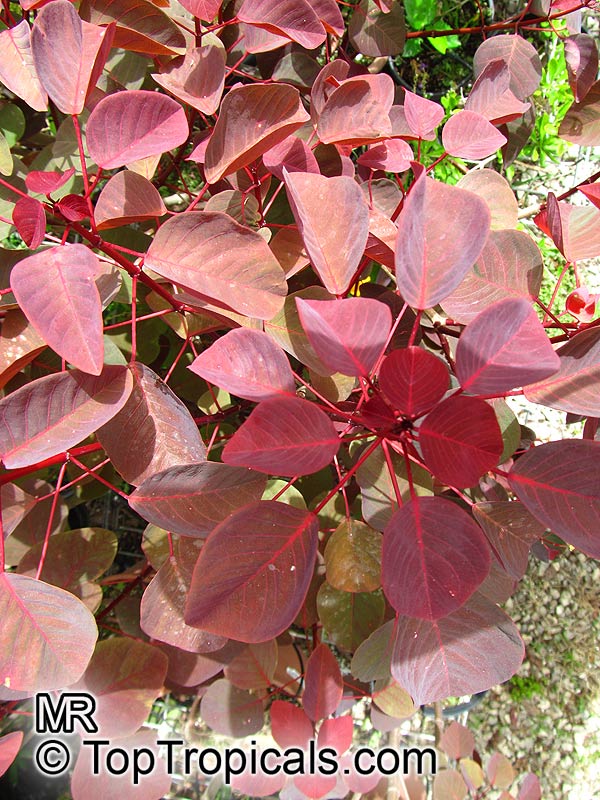
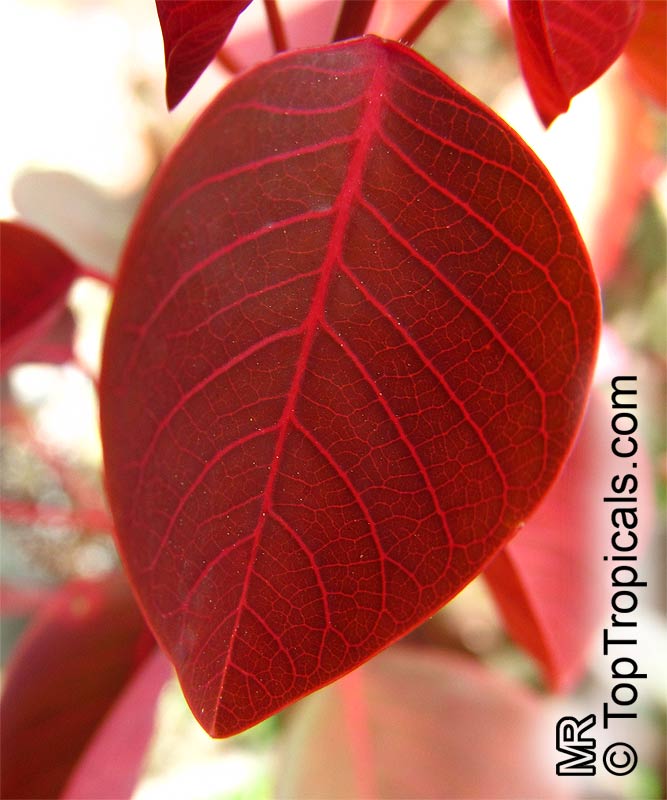
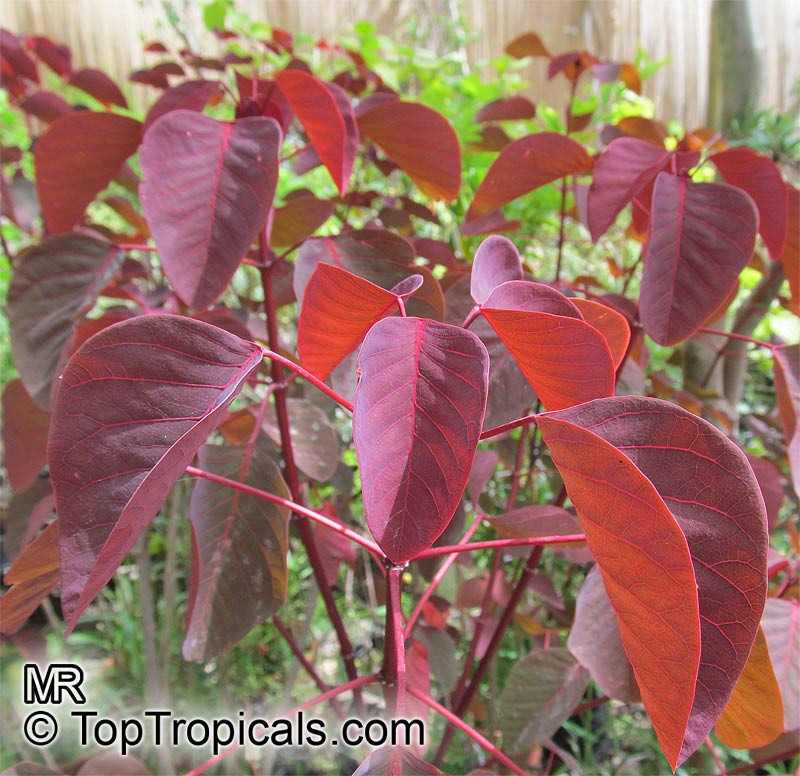
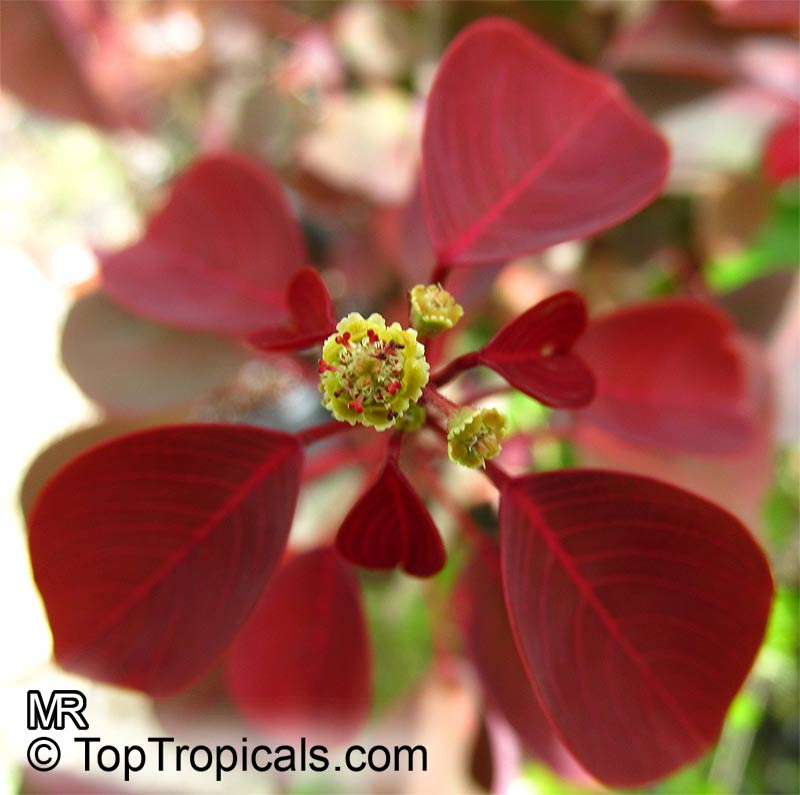
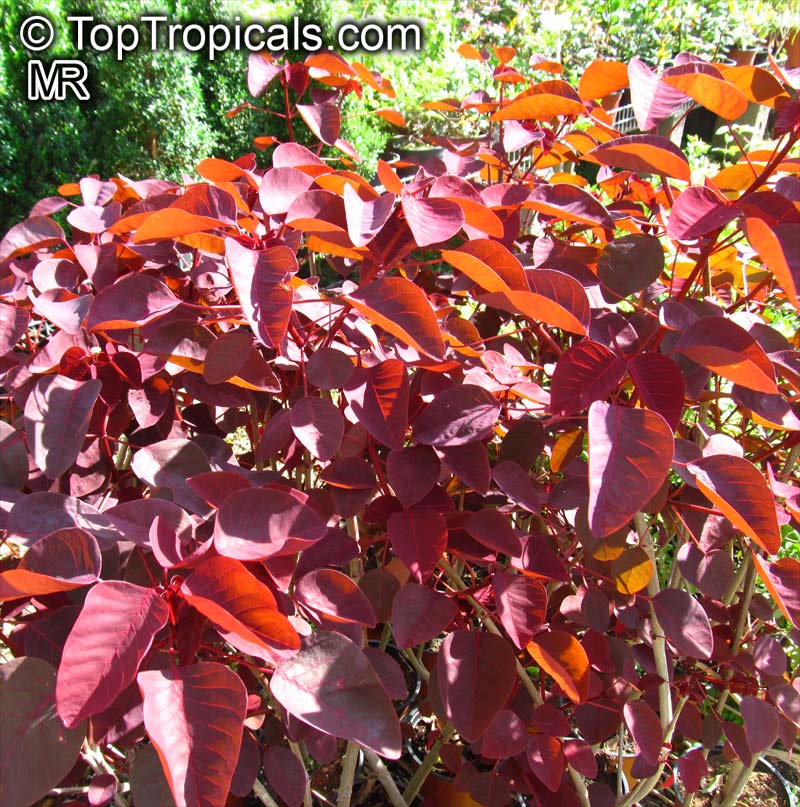
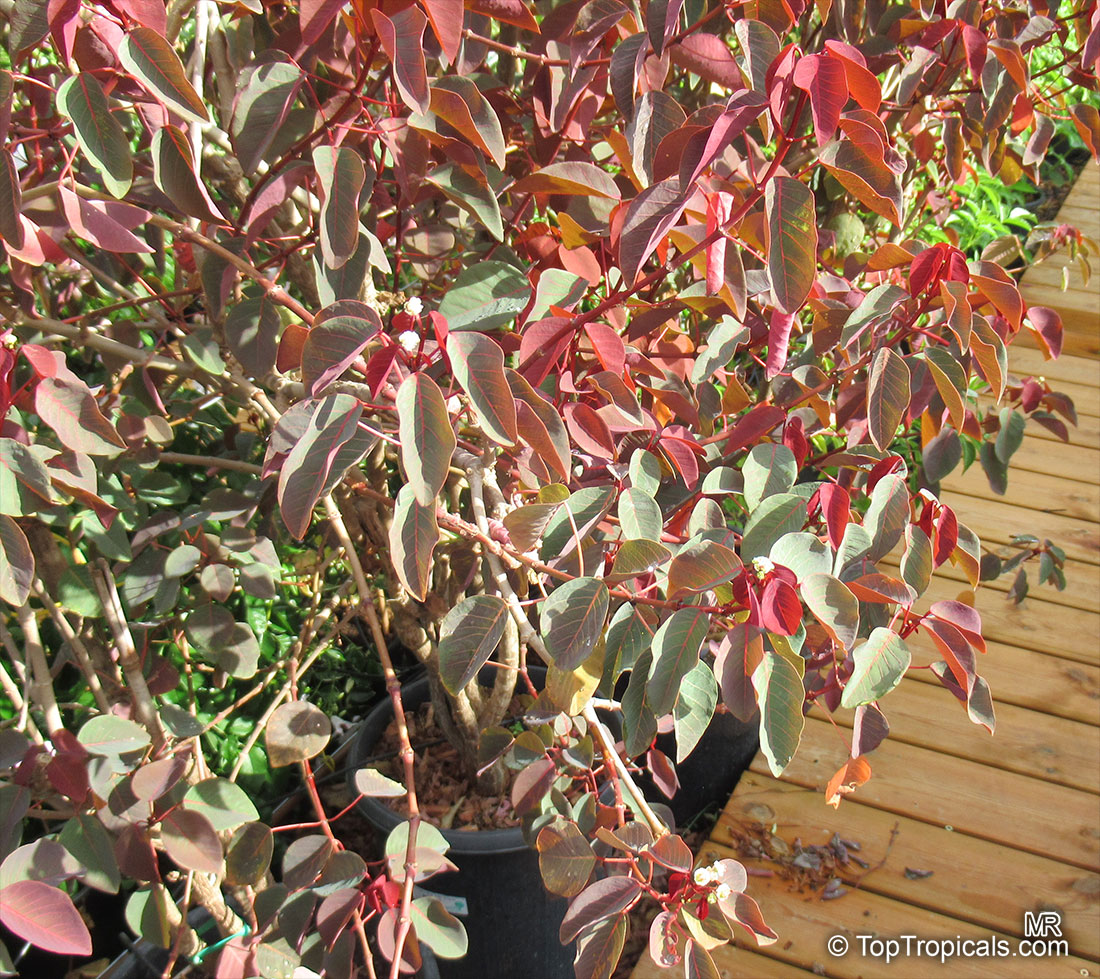
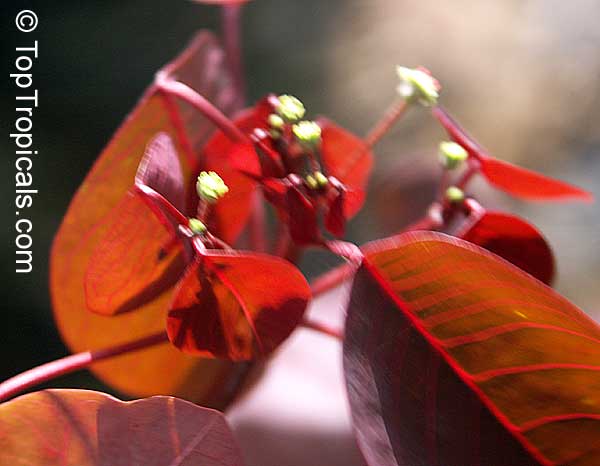
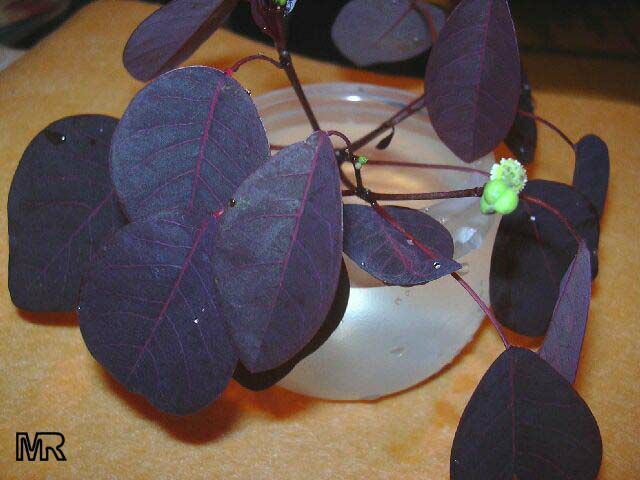
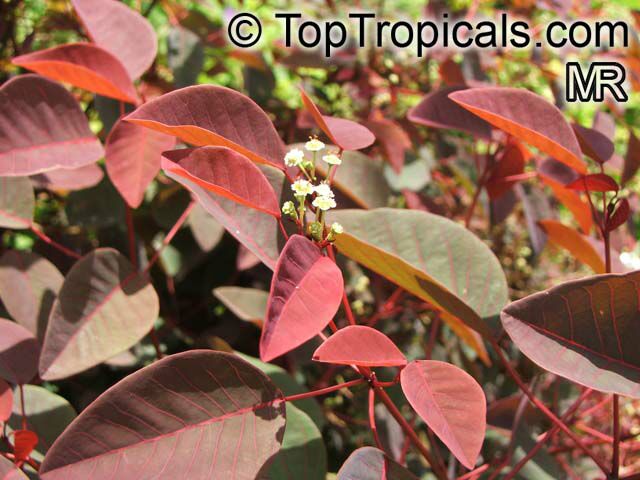
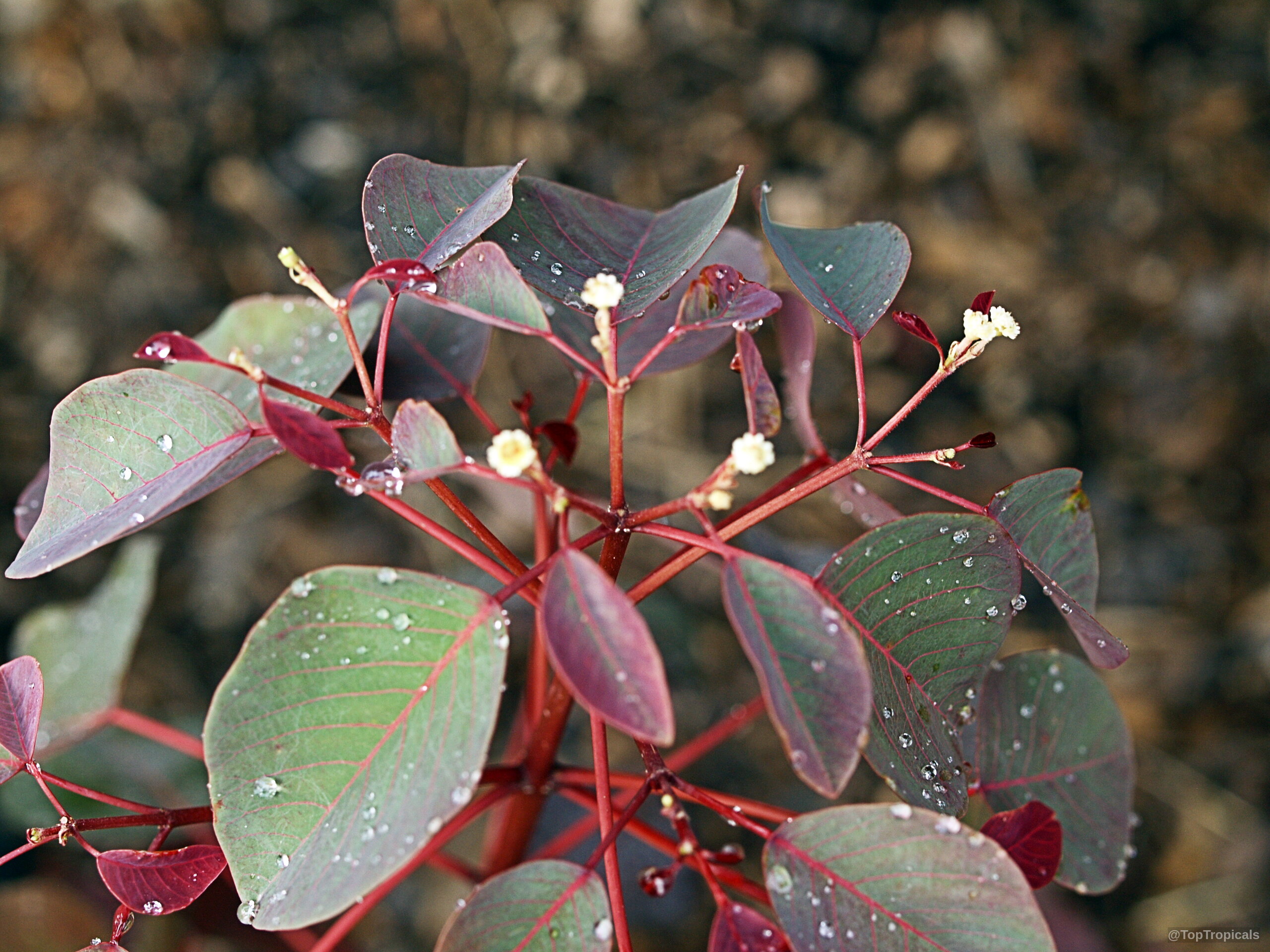
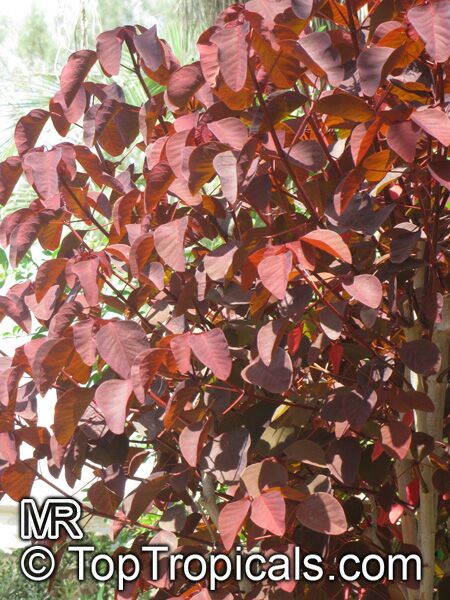
Small multi-stemmed tree or large shrub up to 10 feet. Wine red foliage and small white flowers. The red leaves stand out against the pale bark.
Euphorbia cotinifolia has red leaves the color of the Smoke Bush, Cotinus coggygria. The Caribbean Copper Plant will lose all of its leaves if there is anything even close to a frost. Euphorbia cotinifolia will perform best if there is regular garden water. While they are quite drought tolerant they withstand this affront by dropping all of their leaves.






Recommended Fertilizer: SUNSHINE Megaflor - Bloom Nutrition Booster
Last one
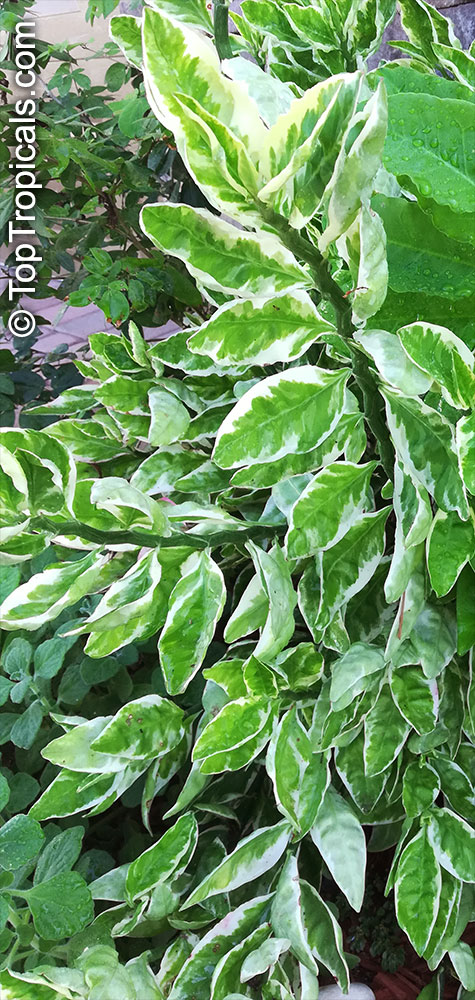
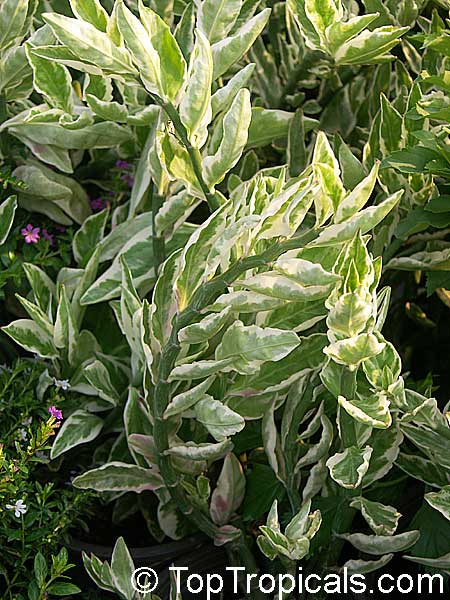
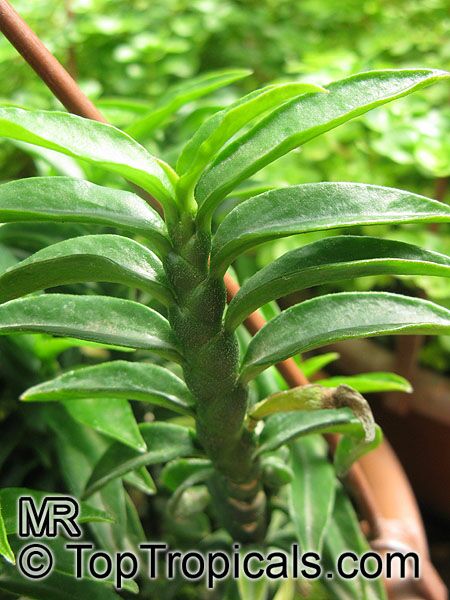
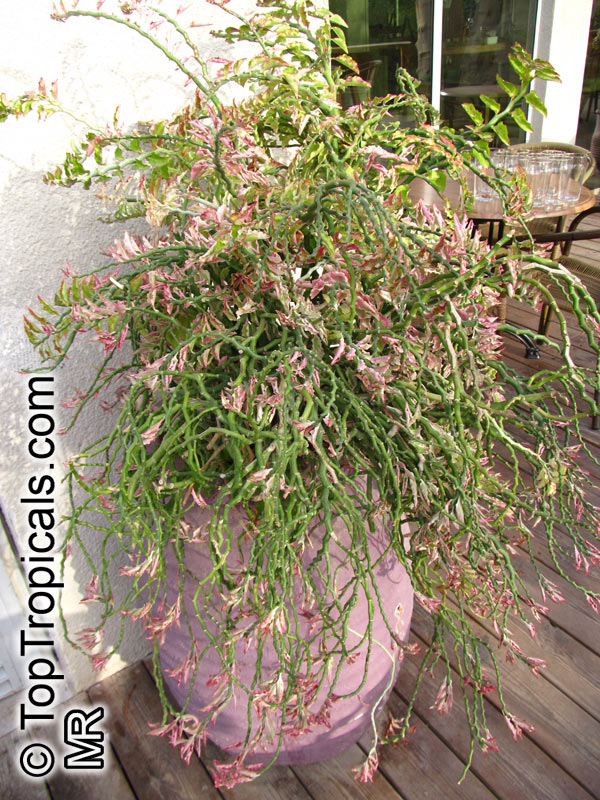
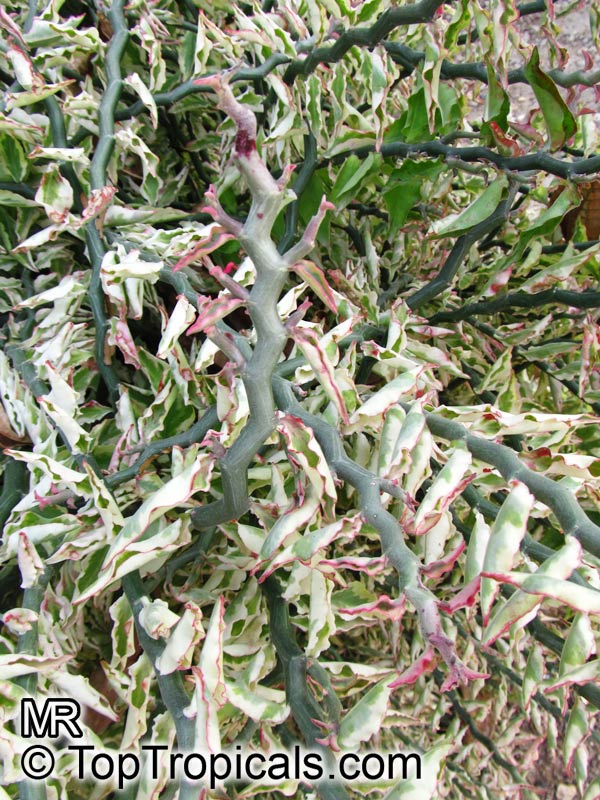
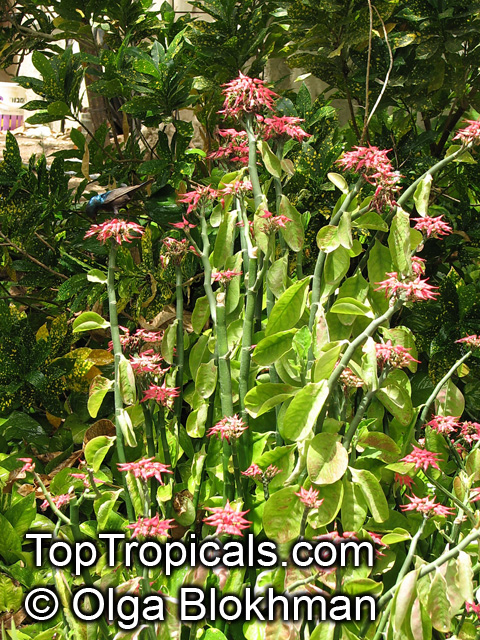
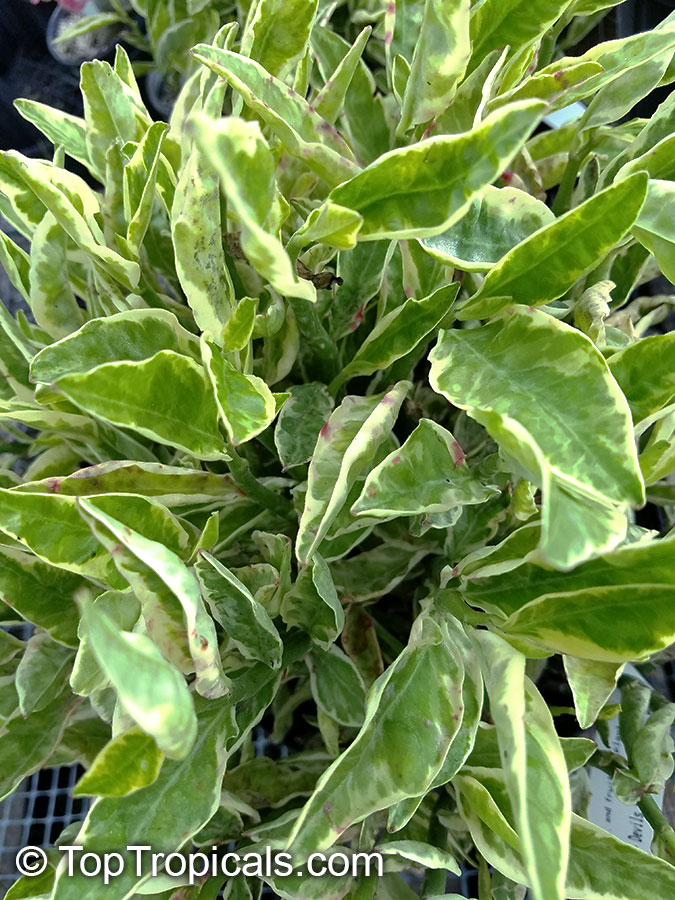
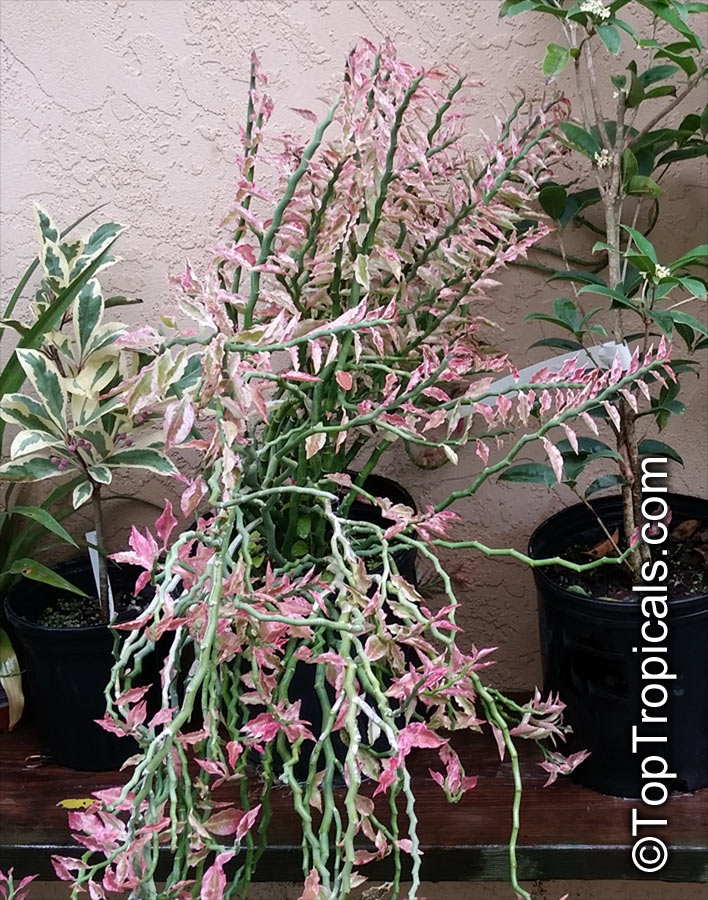
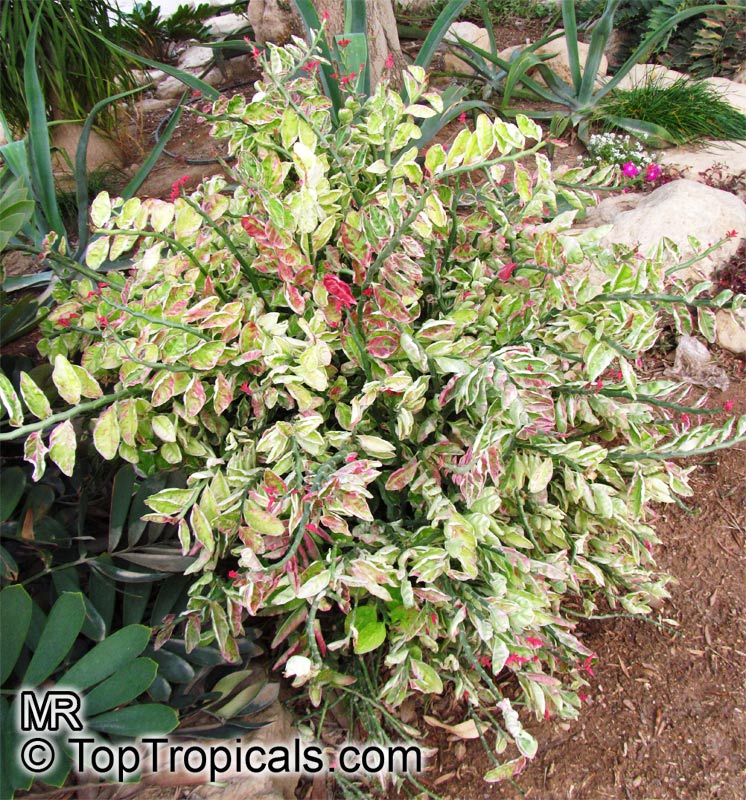
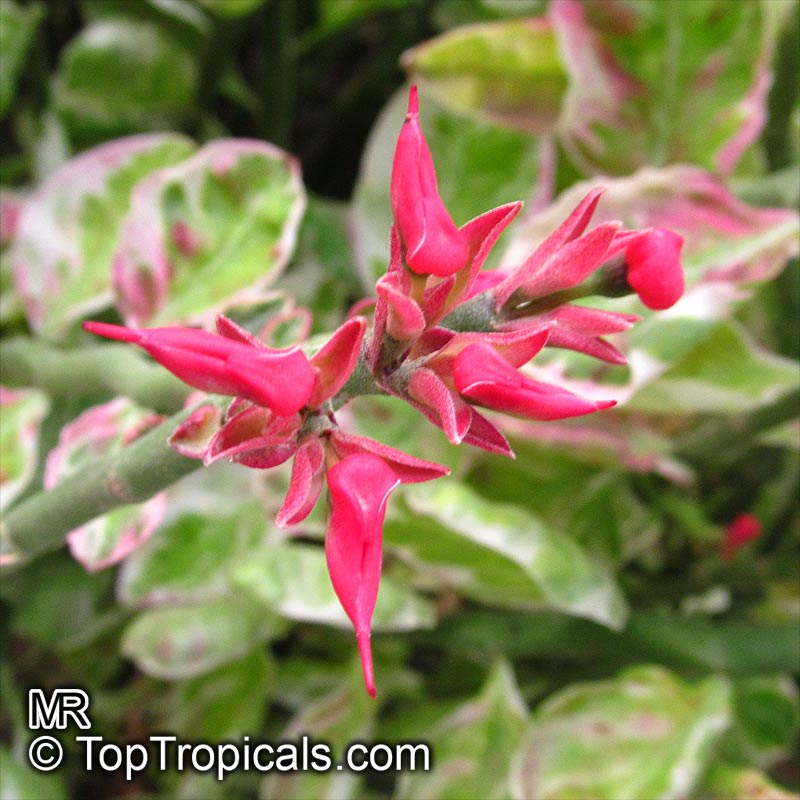
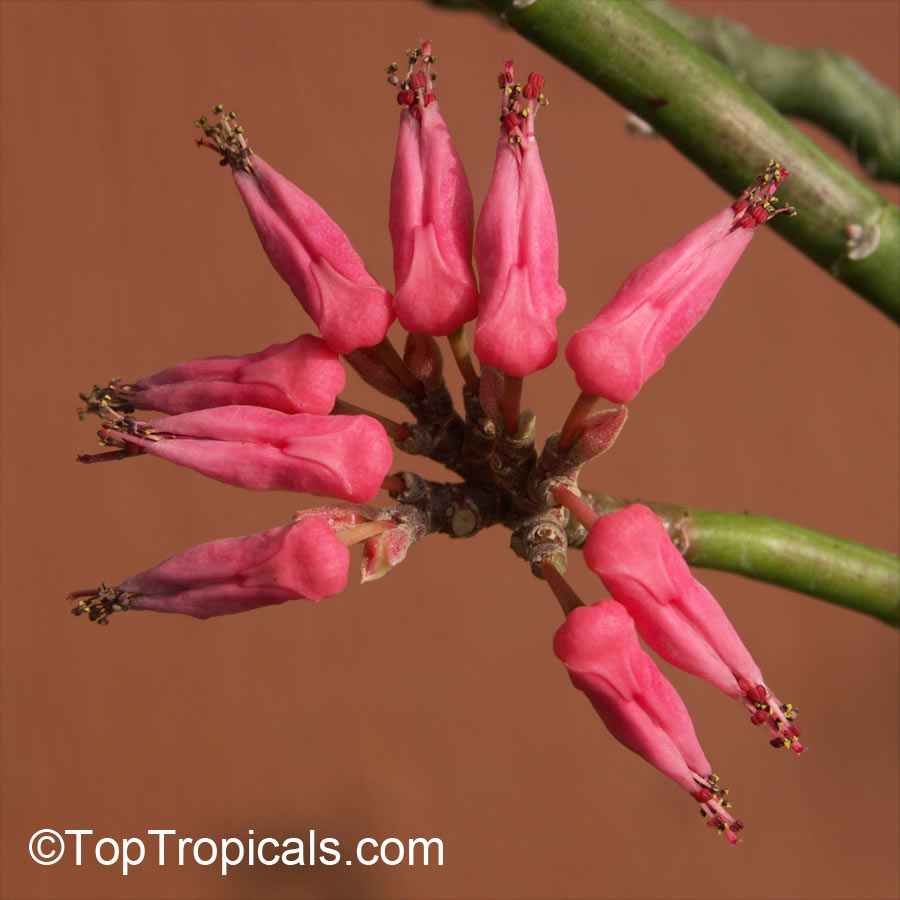
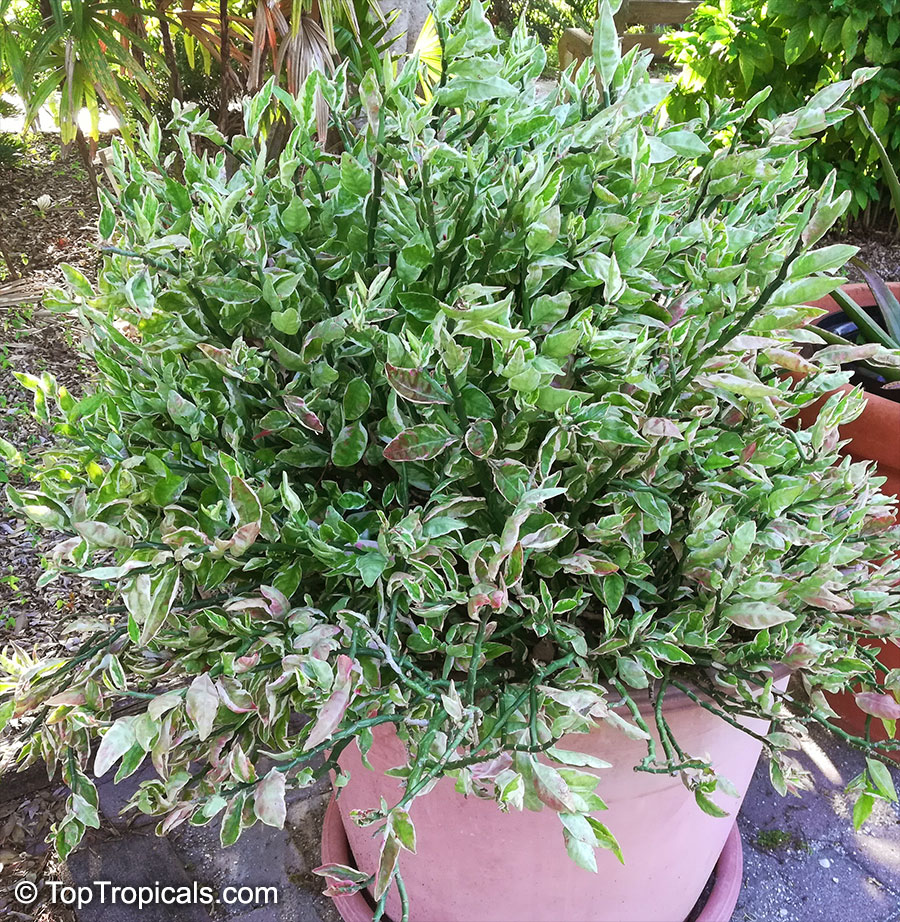
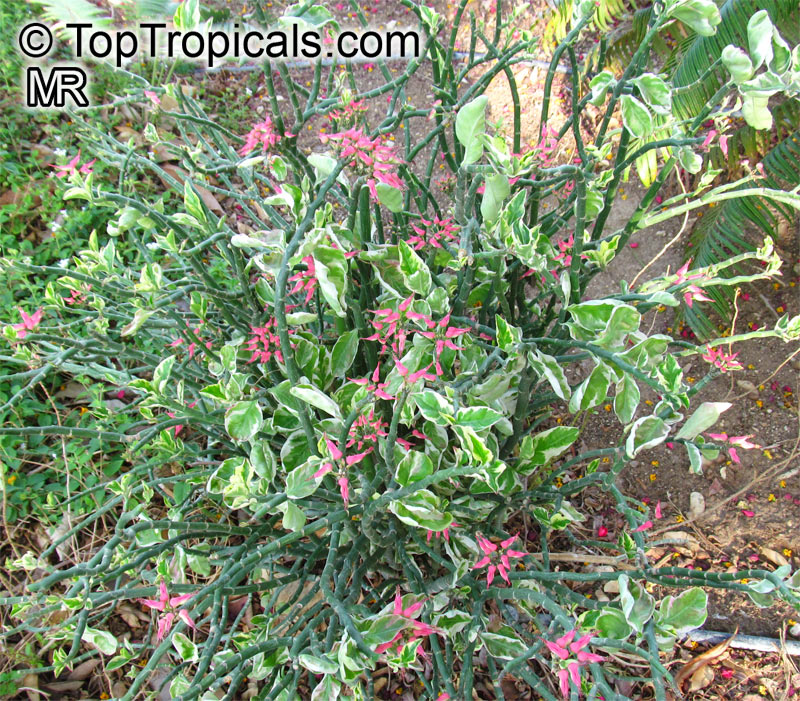
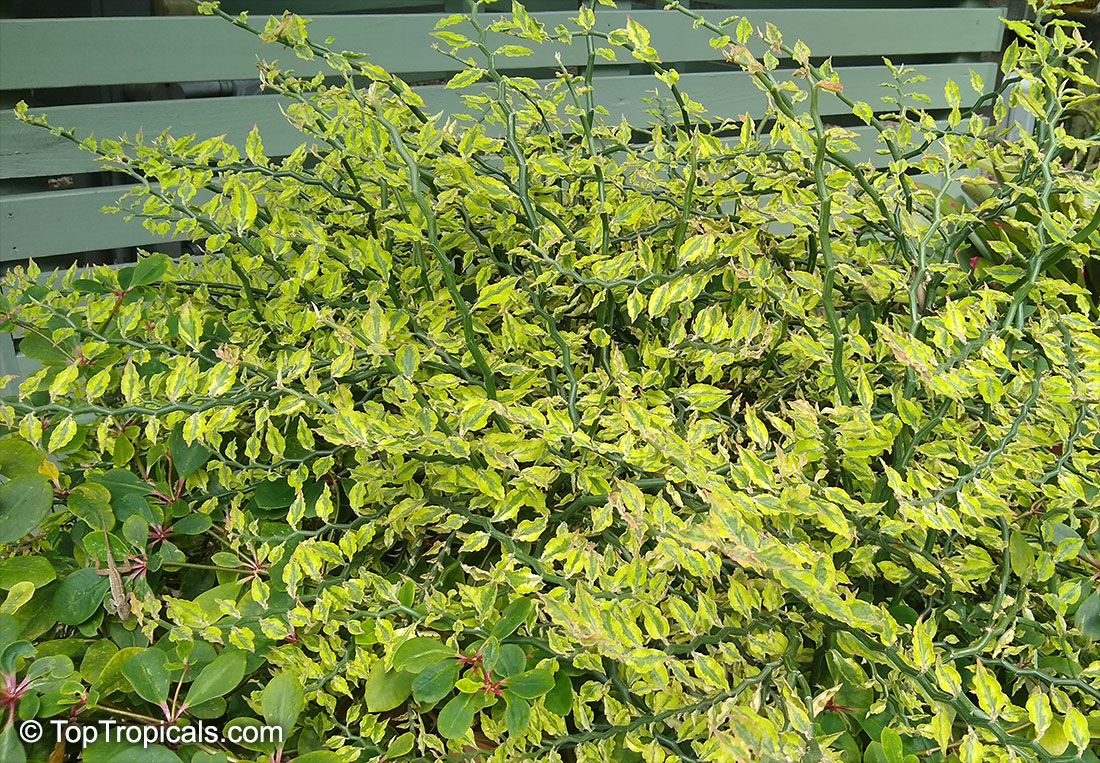
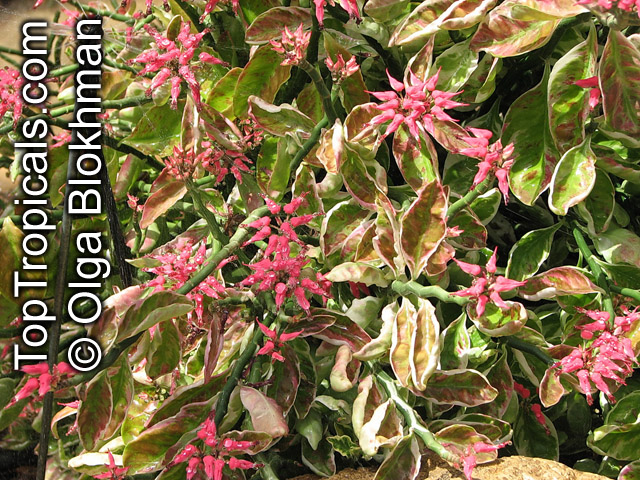
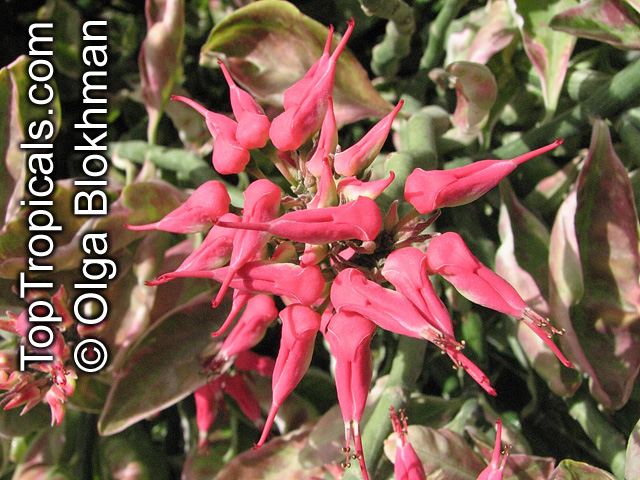
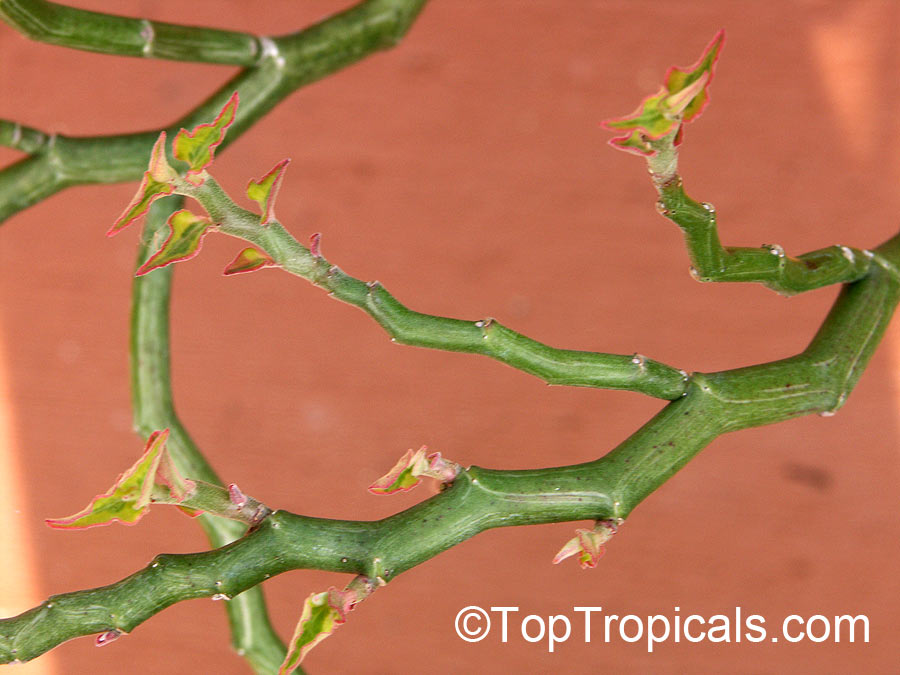
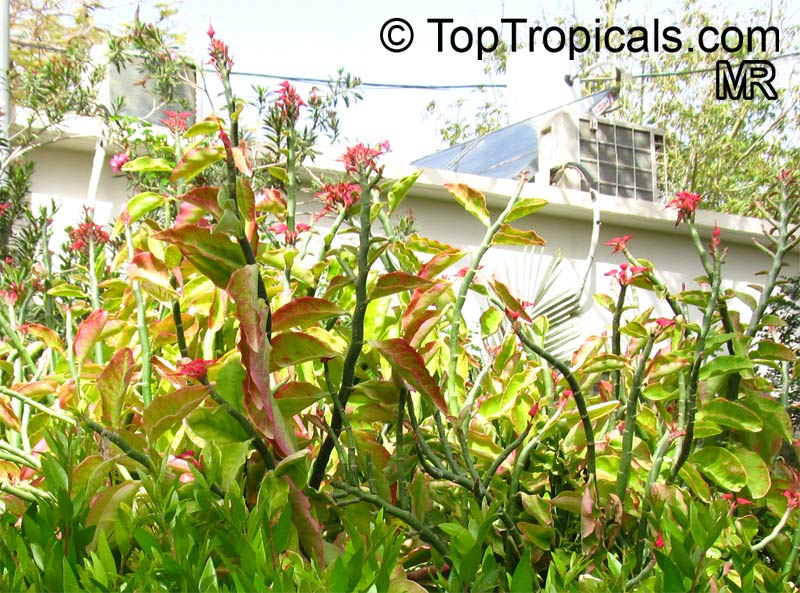
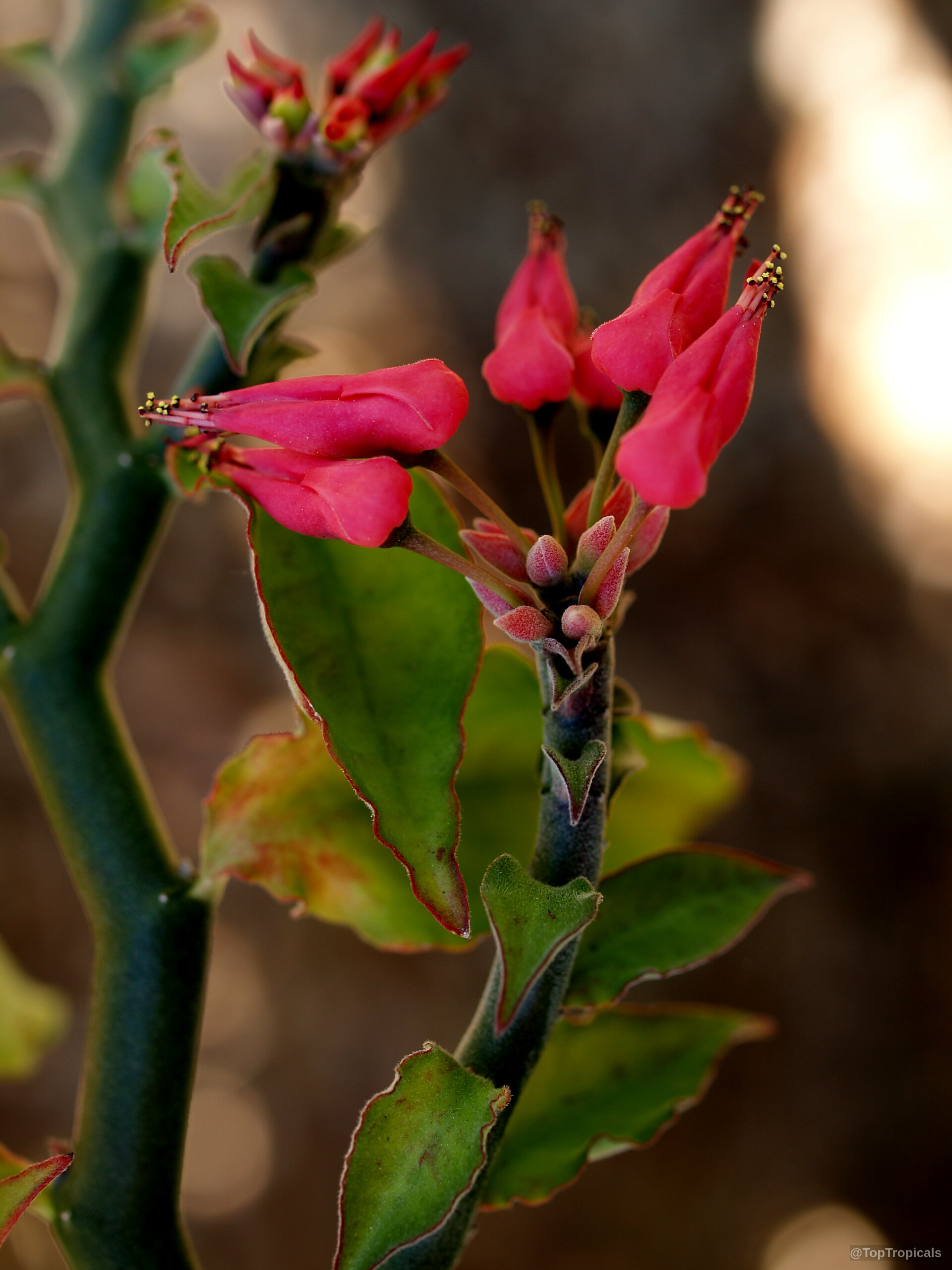
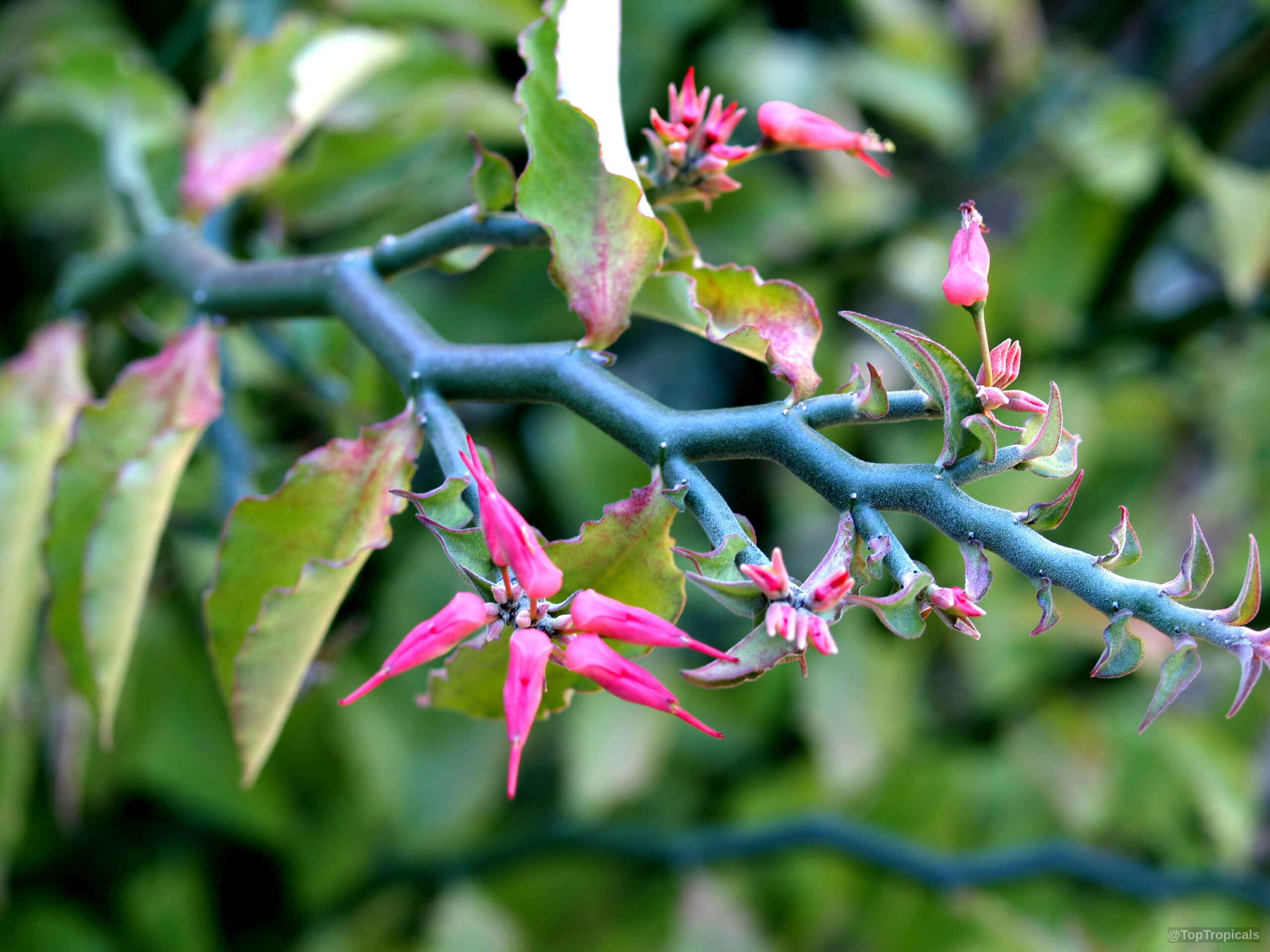
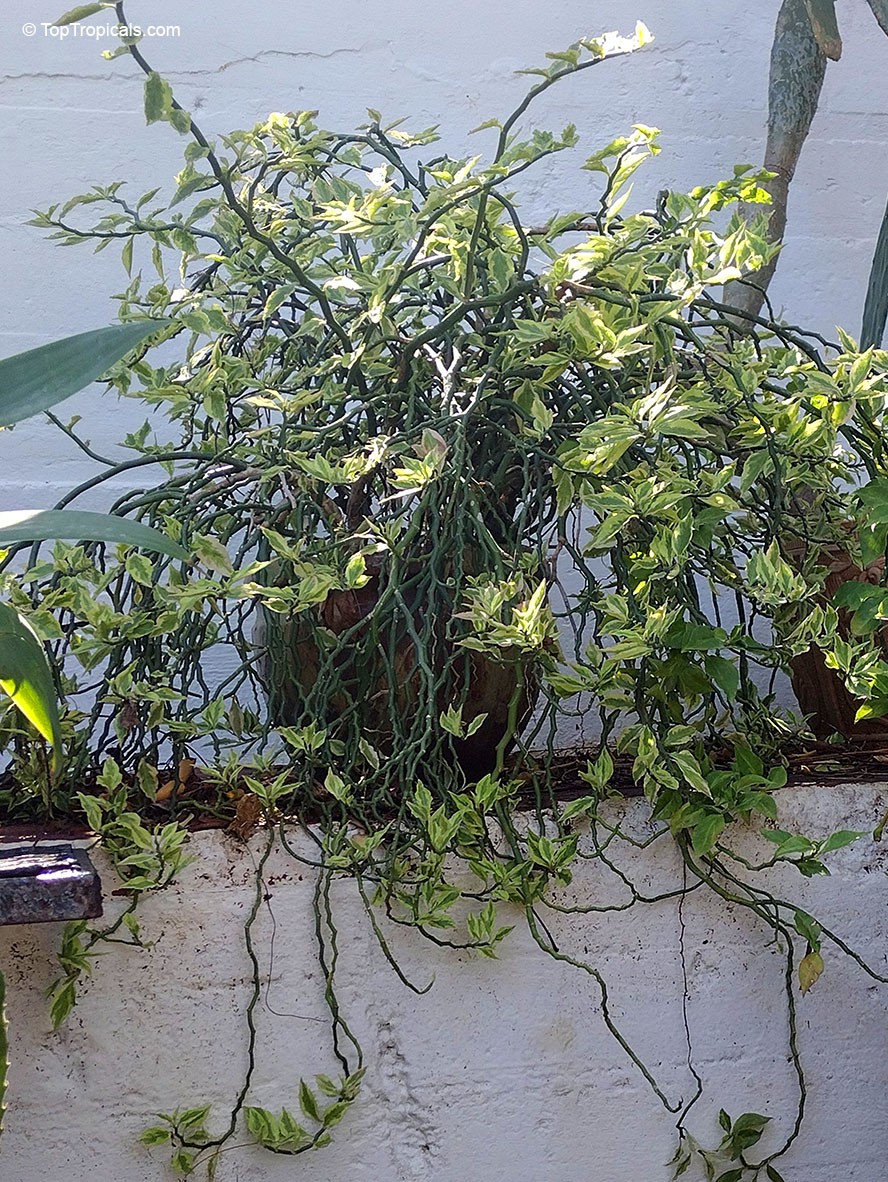
Botanical names: Euphorbia tithymaloides, Pedilanthus tithymaloides
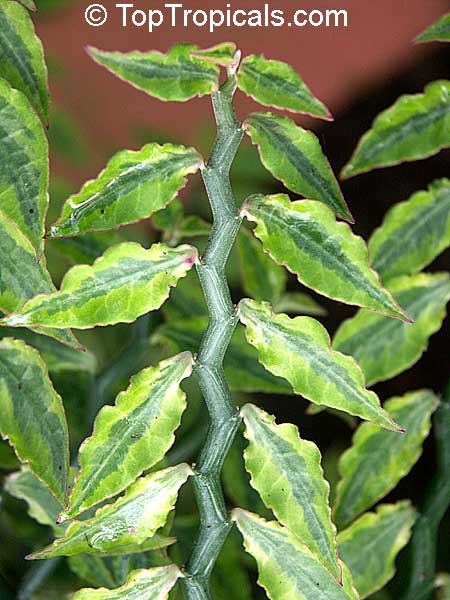
Common names: Devil's backbone, Zigzag plant, Jacob's ladder
Family: Euphorbiaceae
Origin: Tropical Americas

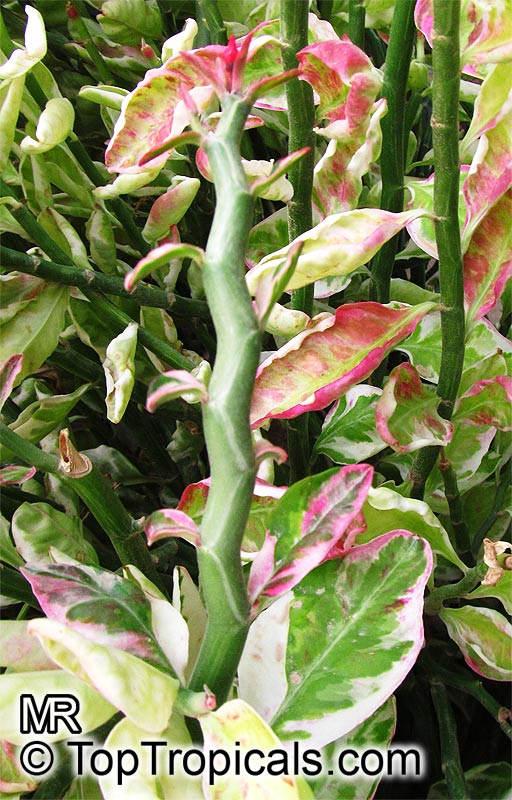
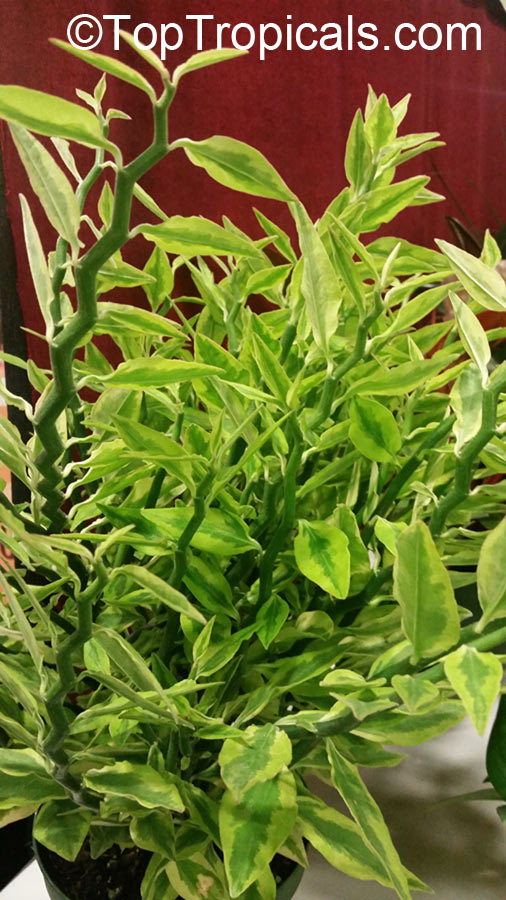
This large shrub 5-10 ft tall is native to the tropical Americas and is known for its ornamental foliage and pink flowers. Its common name is the Devil's Backbone. It is a rather irritant plant due to the presence of a milky sap. When it comes to growing care for Euphorbia tithymaloides, it is not a very demanding plant. It needs full sun during the fall and winter, and semi-shade in the summer. It is best to keep the potting mixture moist, but not too wet, especially when the room temperature is below 60F. Liquid fertilizer should be given to the plant once a month. It is recommended to use a well drained sandy mixture when planting, and a small pot. If necessary, you can change the pot size to one that is slightly bigger when the roots become crowded.
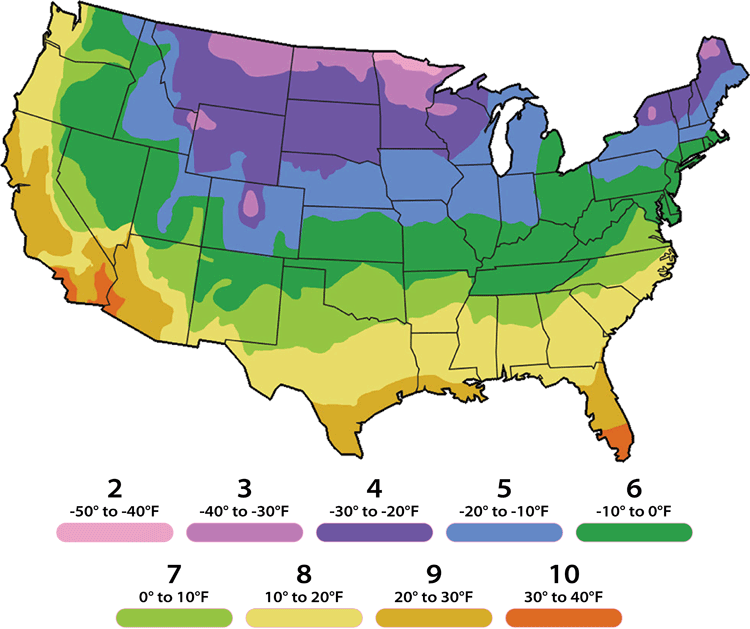
Euphorbia tithymaloides can be grown USDA Zone 9-11. In colder climate it can be grown in a pot. Be sure to bring the plant indoors during the winter in colder climates.
Overall, Euphorbia tithymaloides is a low-maintenance, hardy plant with beautiful pink flowers and ornamental foliage, making it a great addition to any home.



Recommended Fertilizer: SUNSHINE Robusta - Rapid Growth Booster
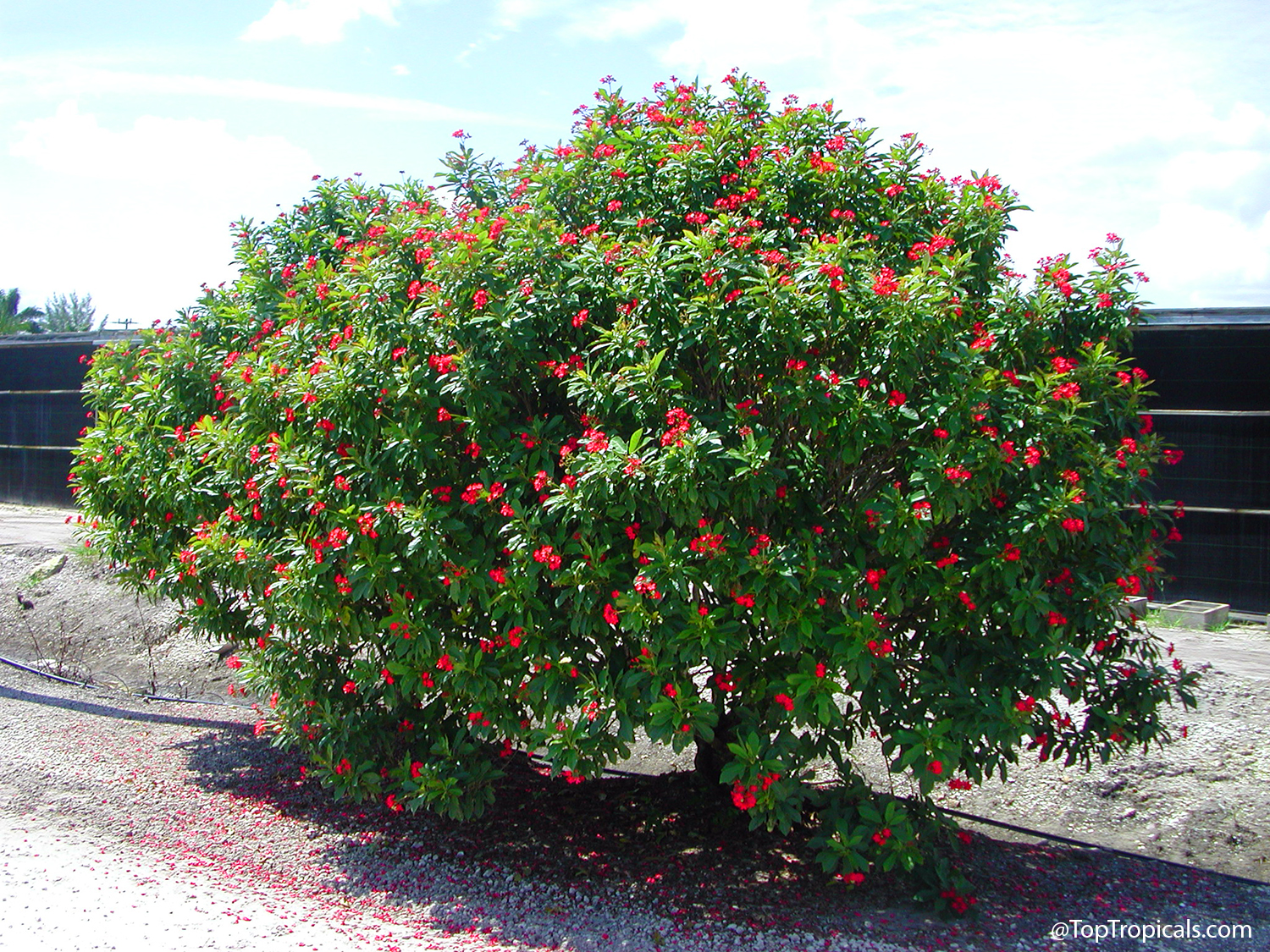
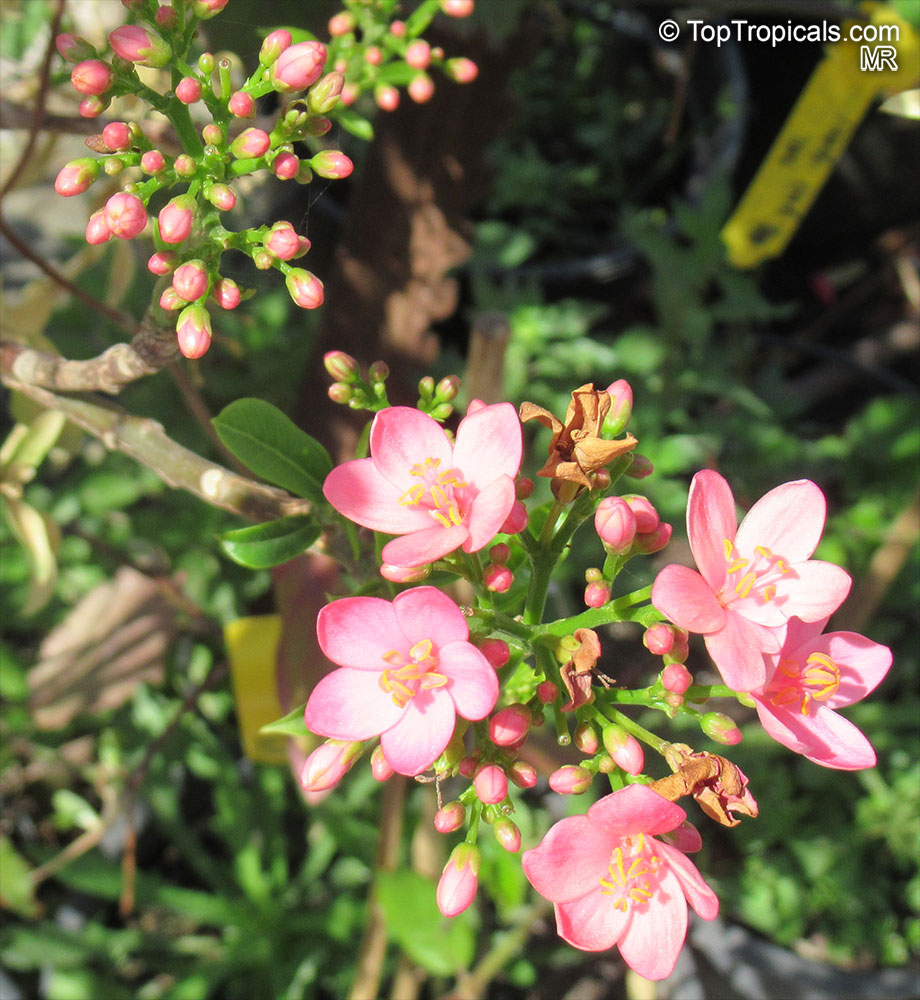
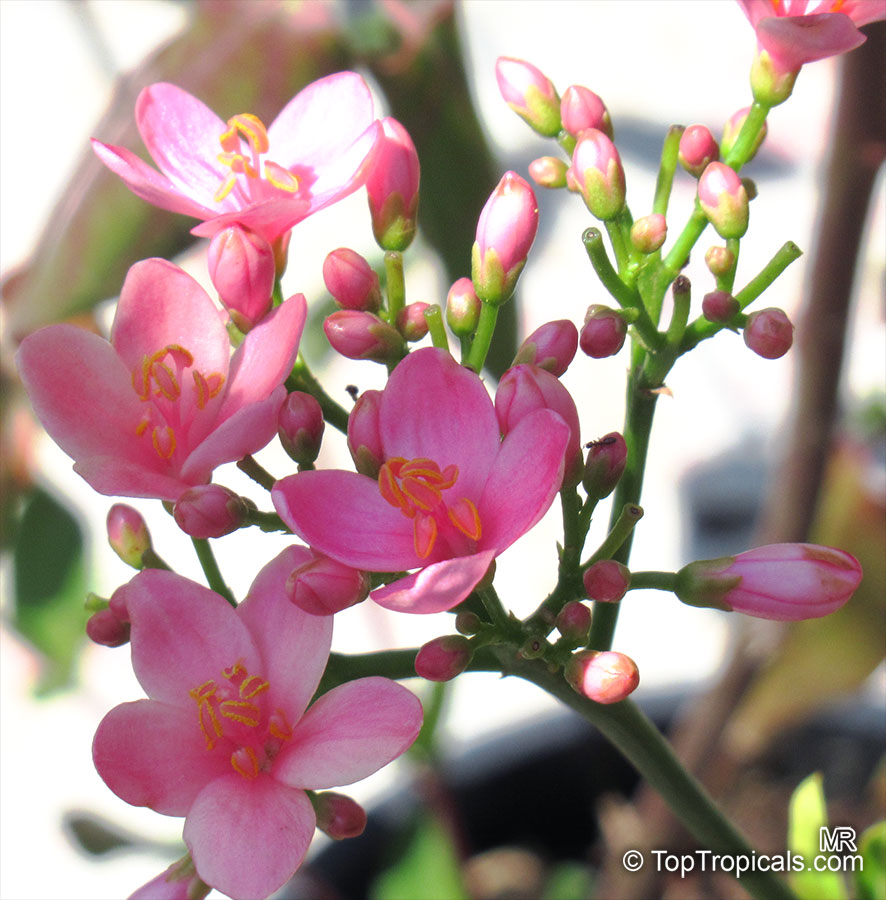
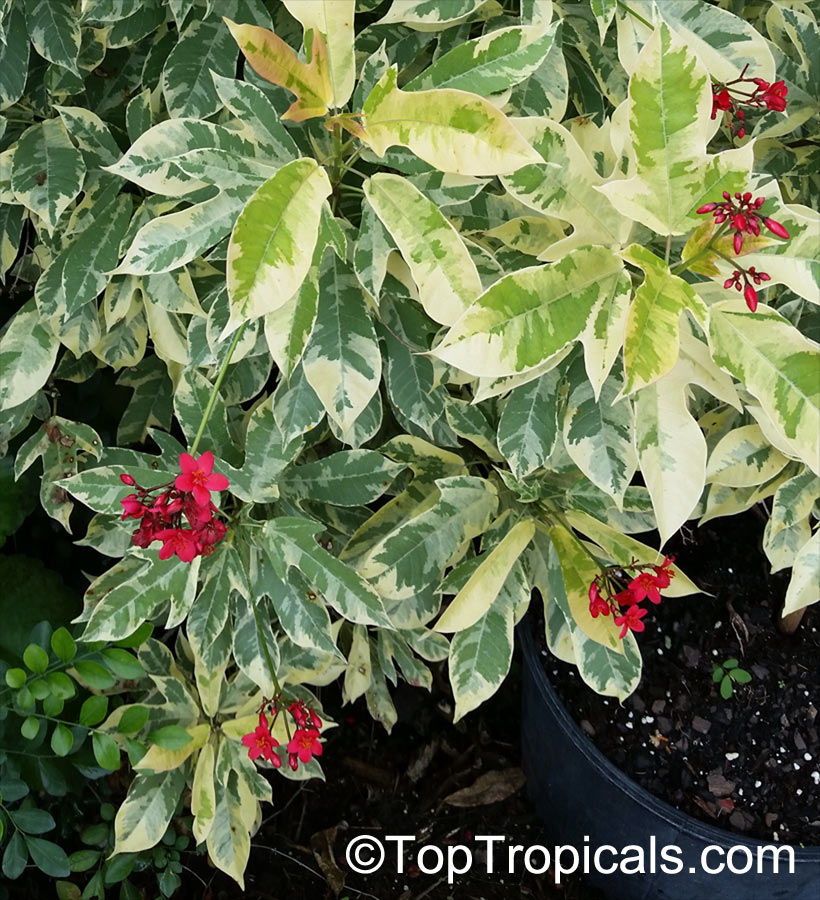
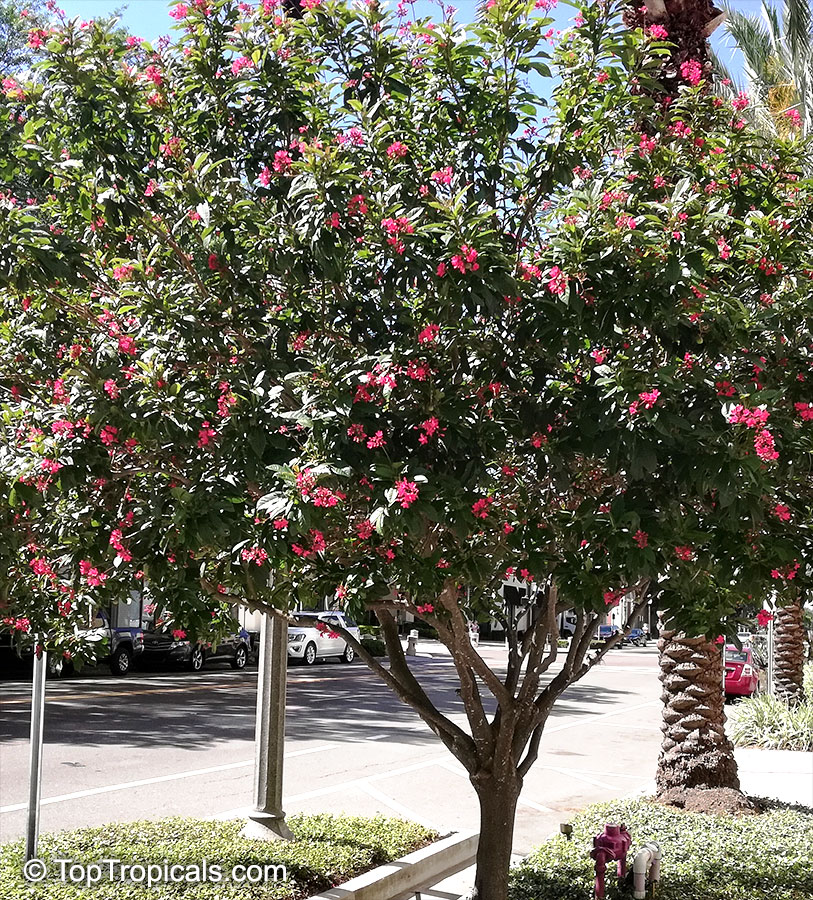
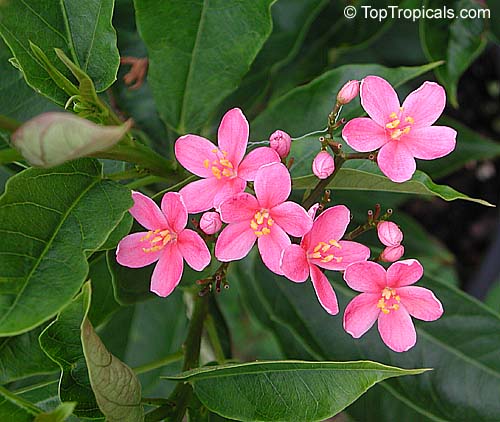
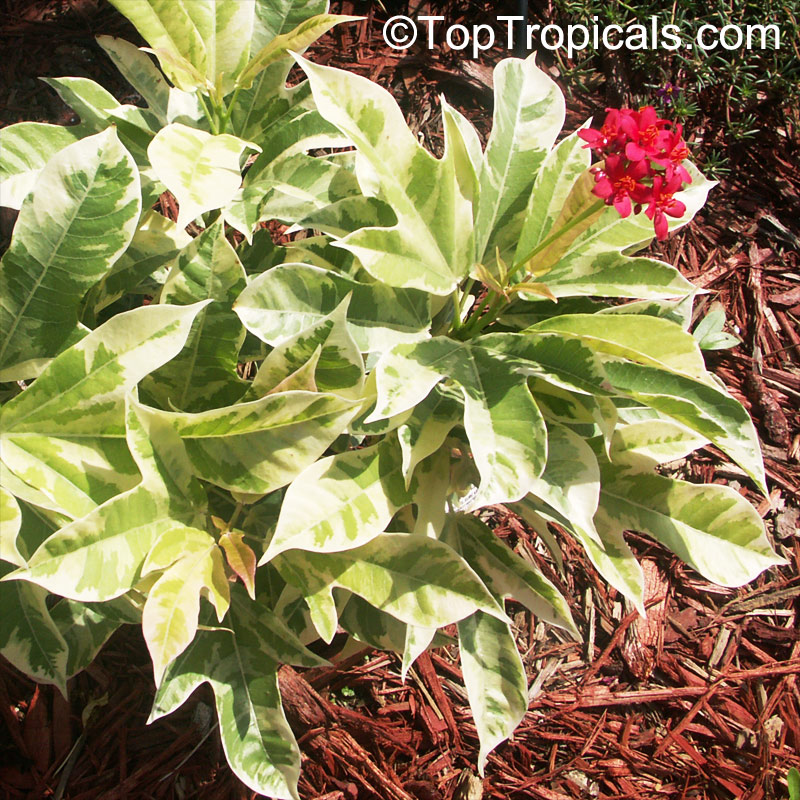
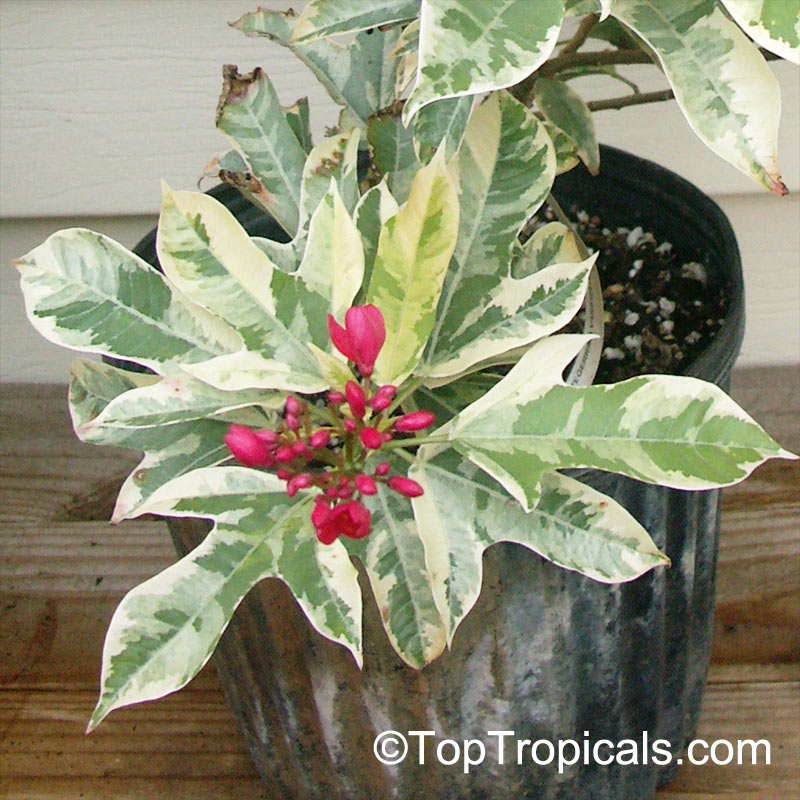
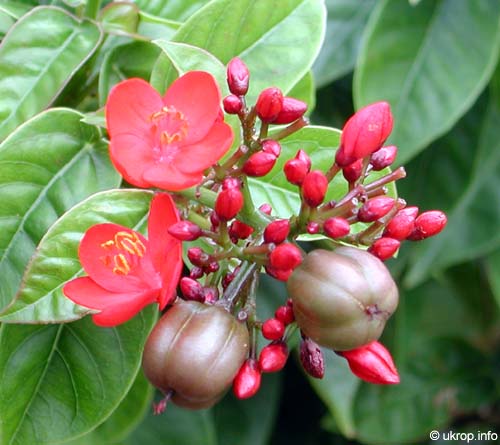
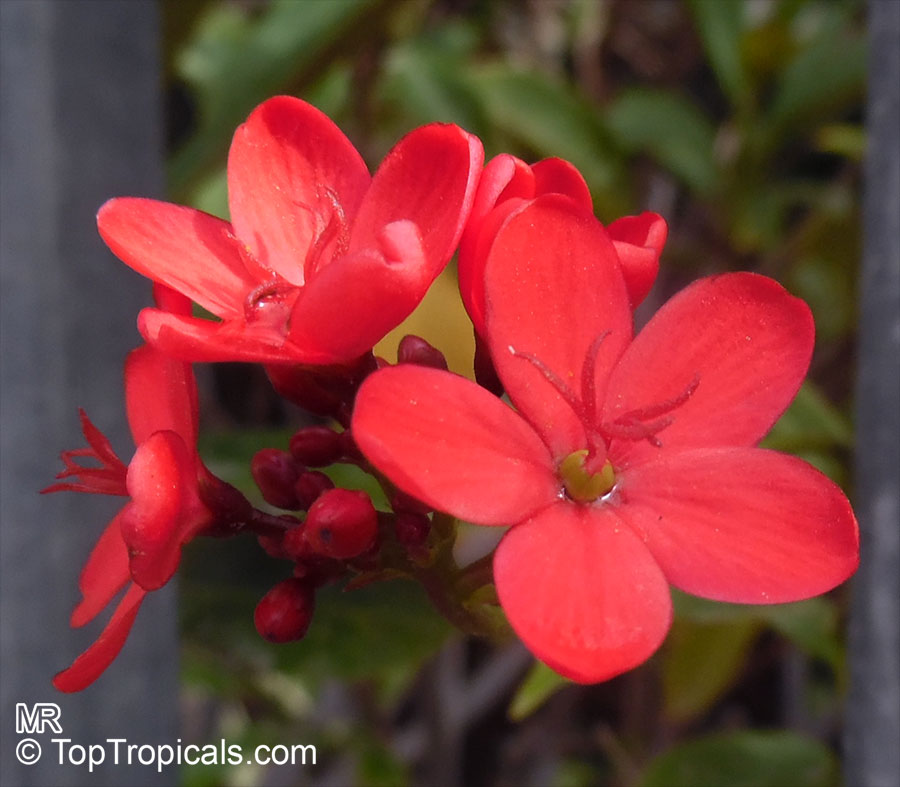
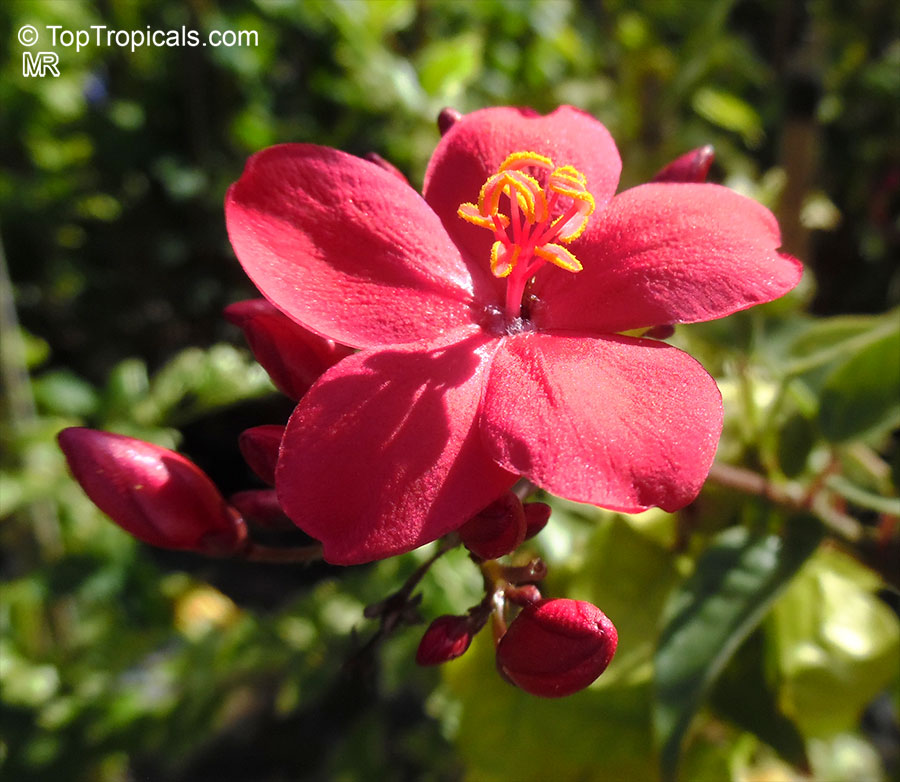
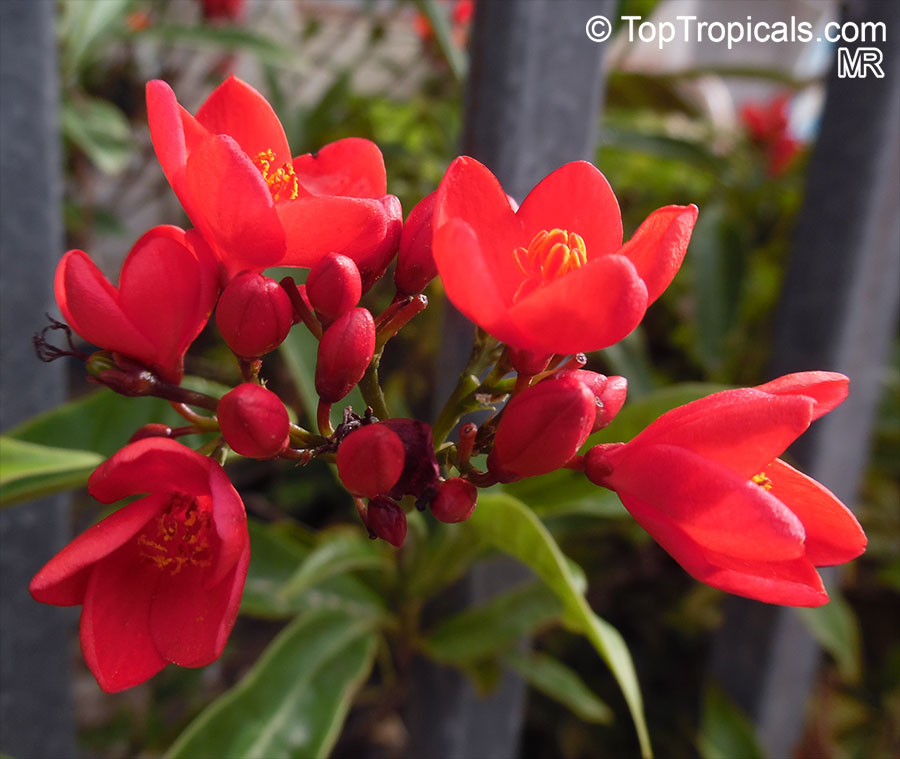
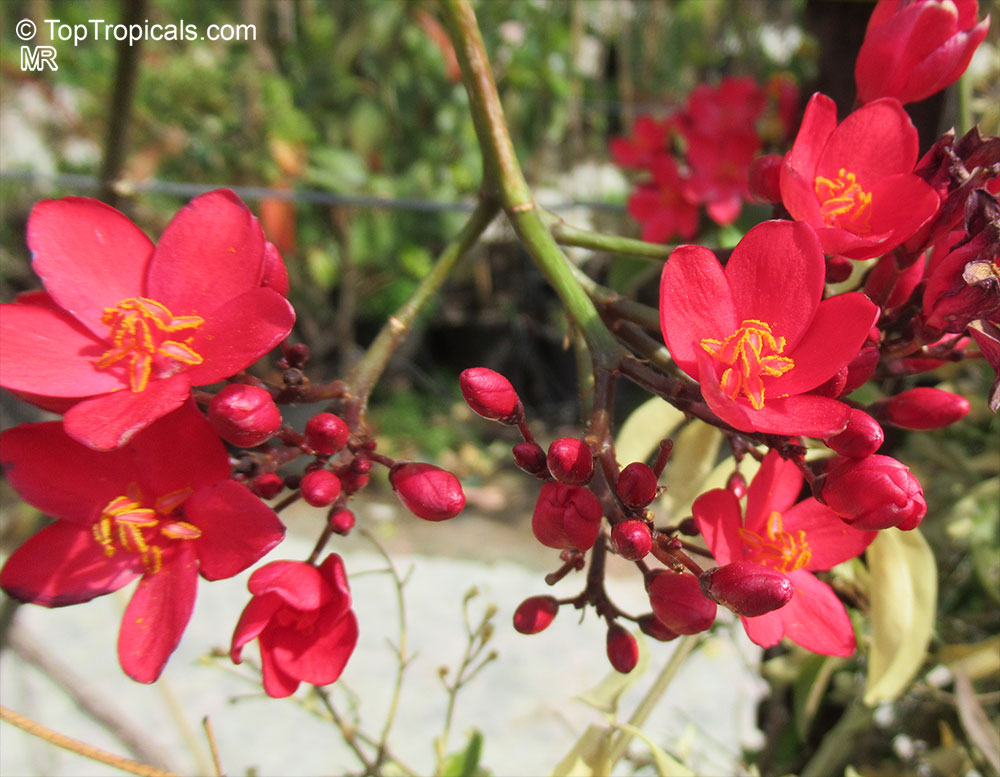
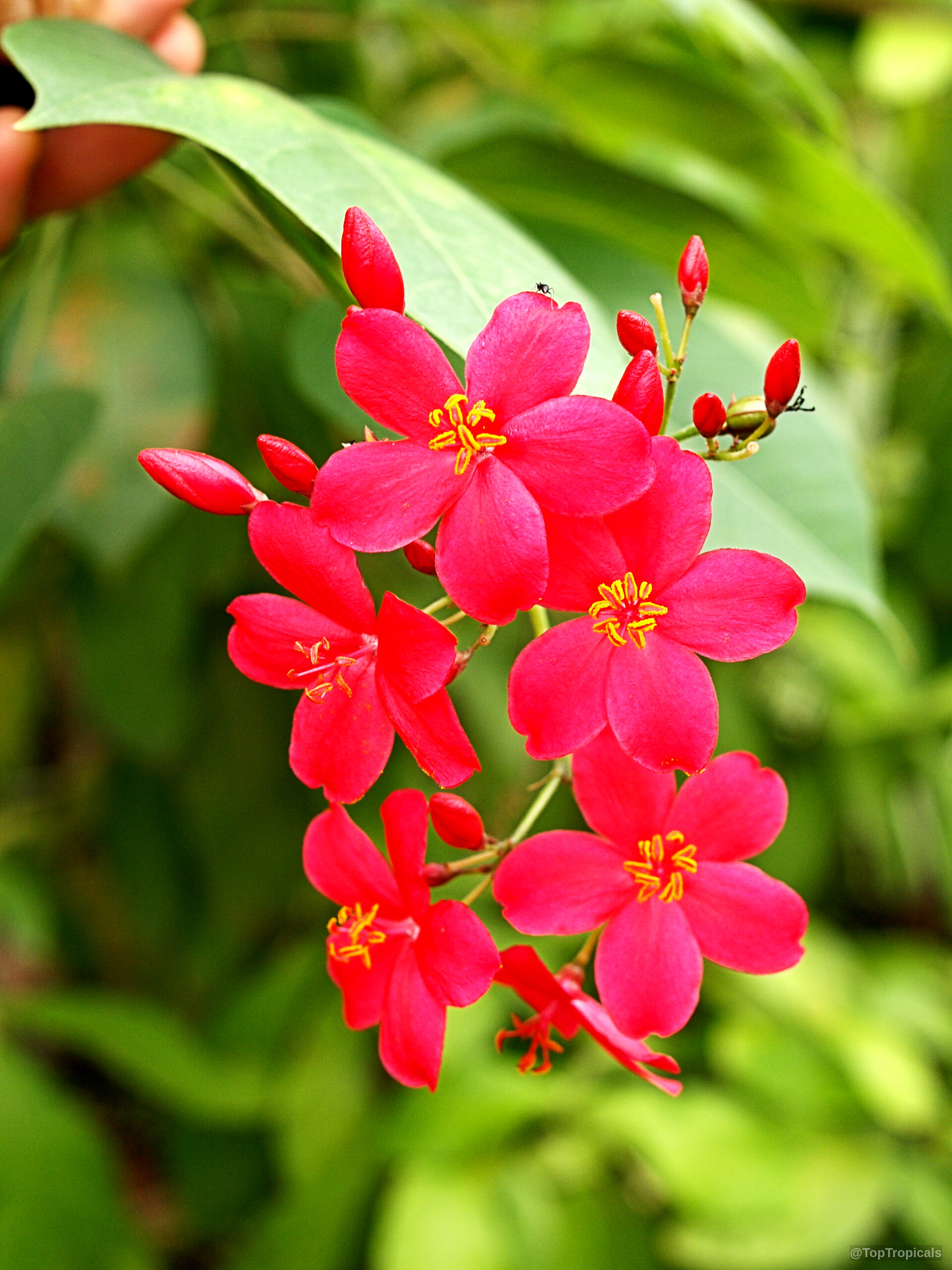
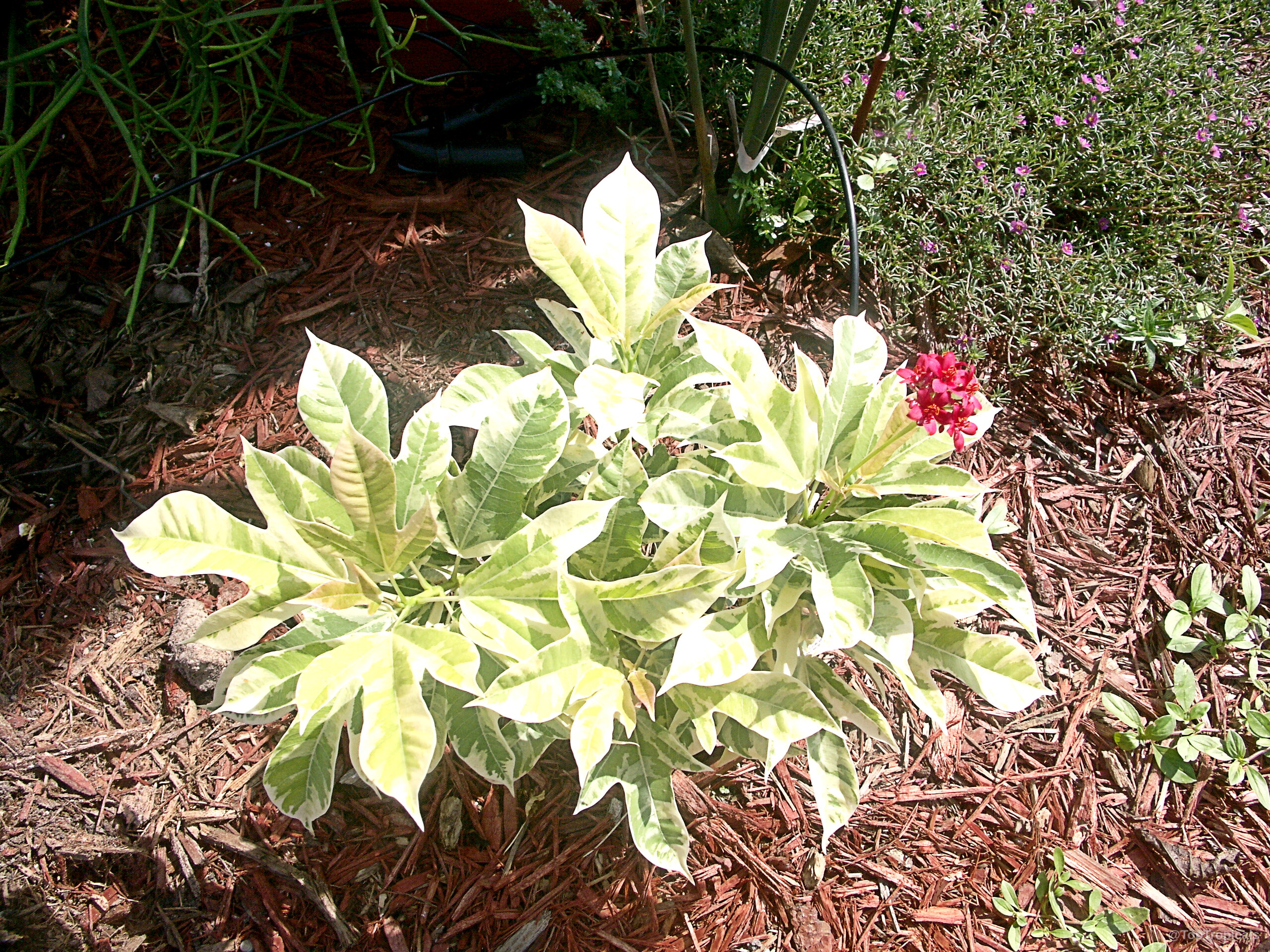
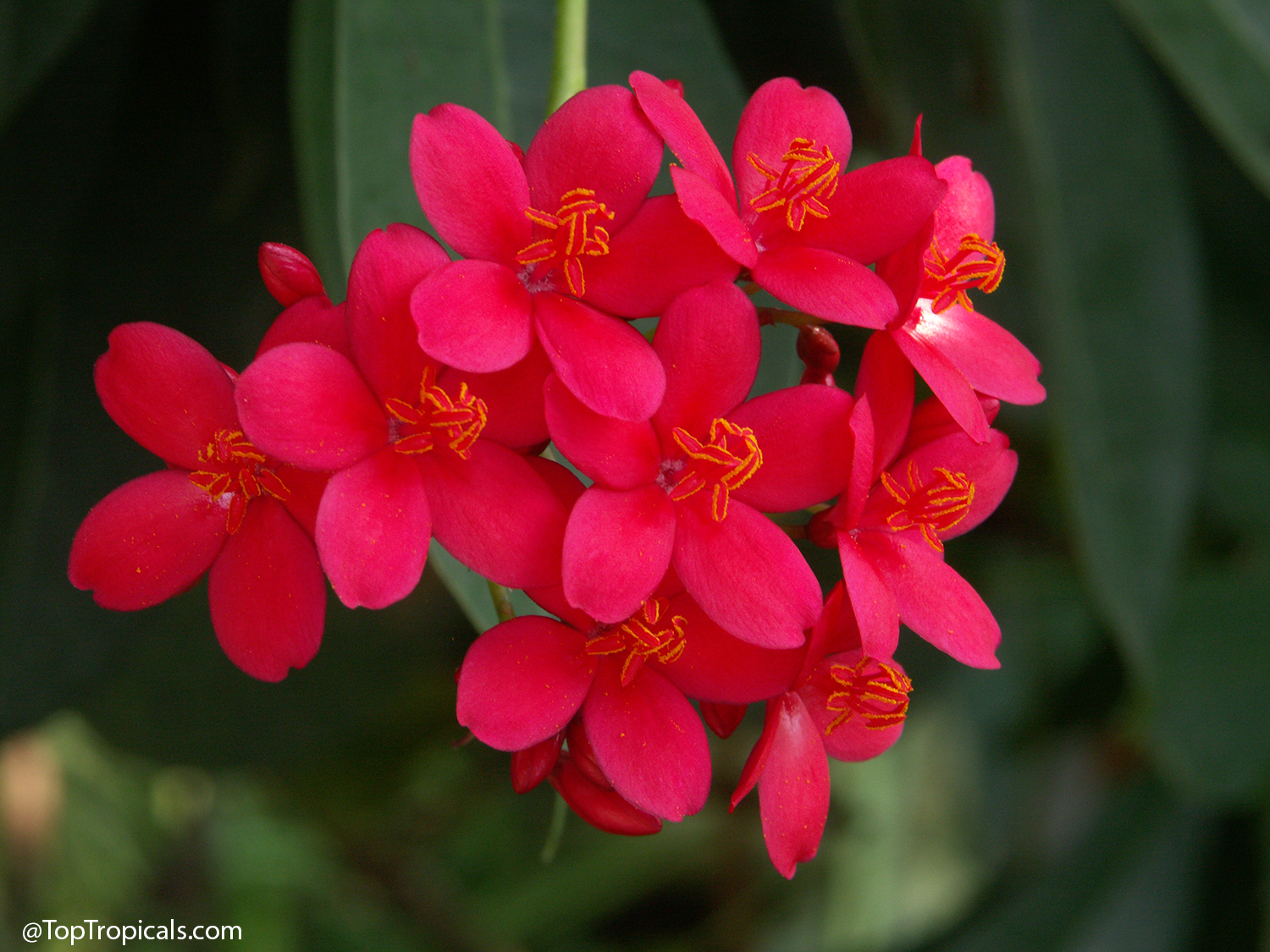
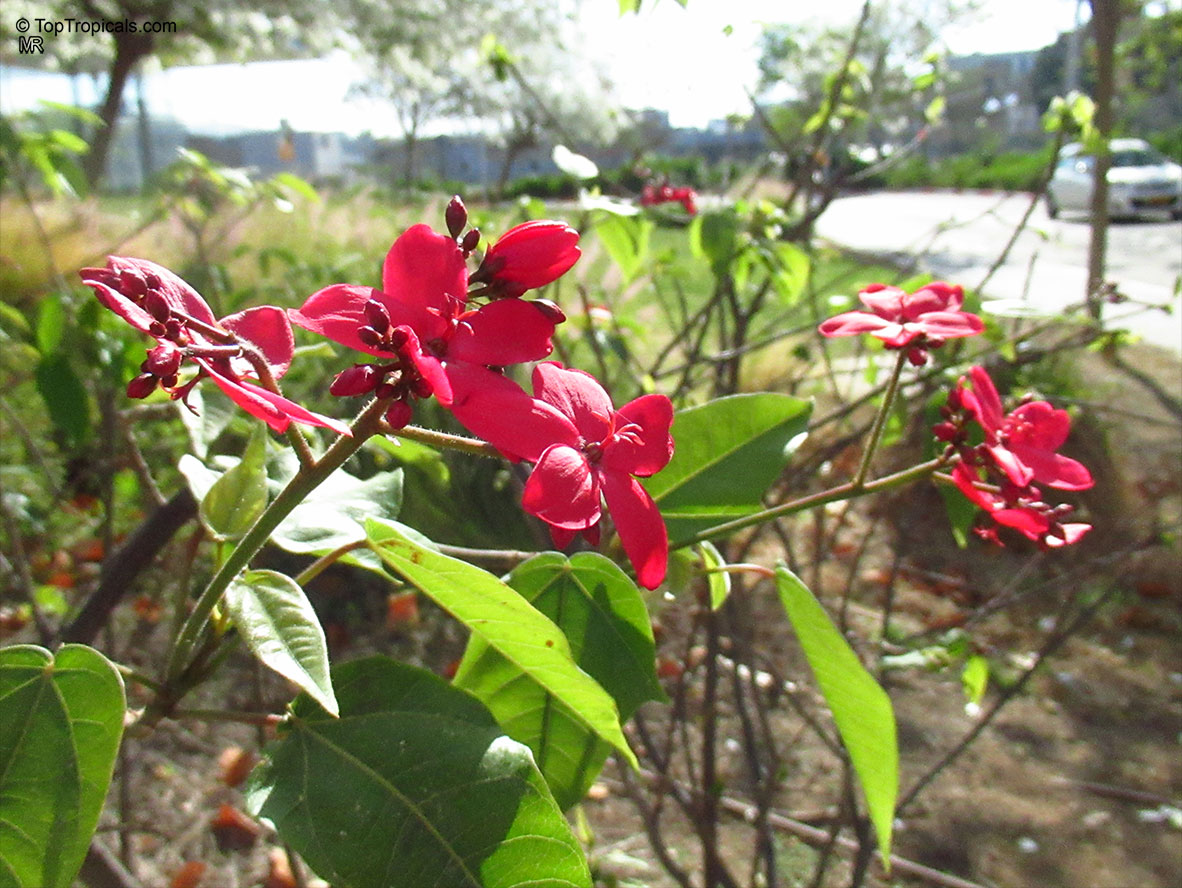
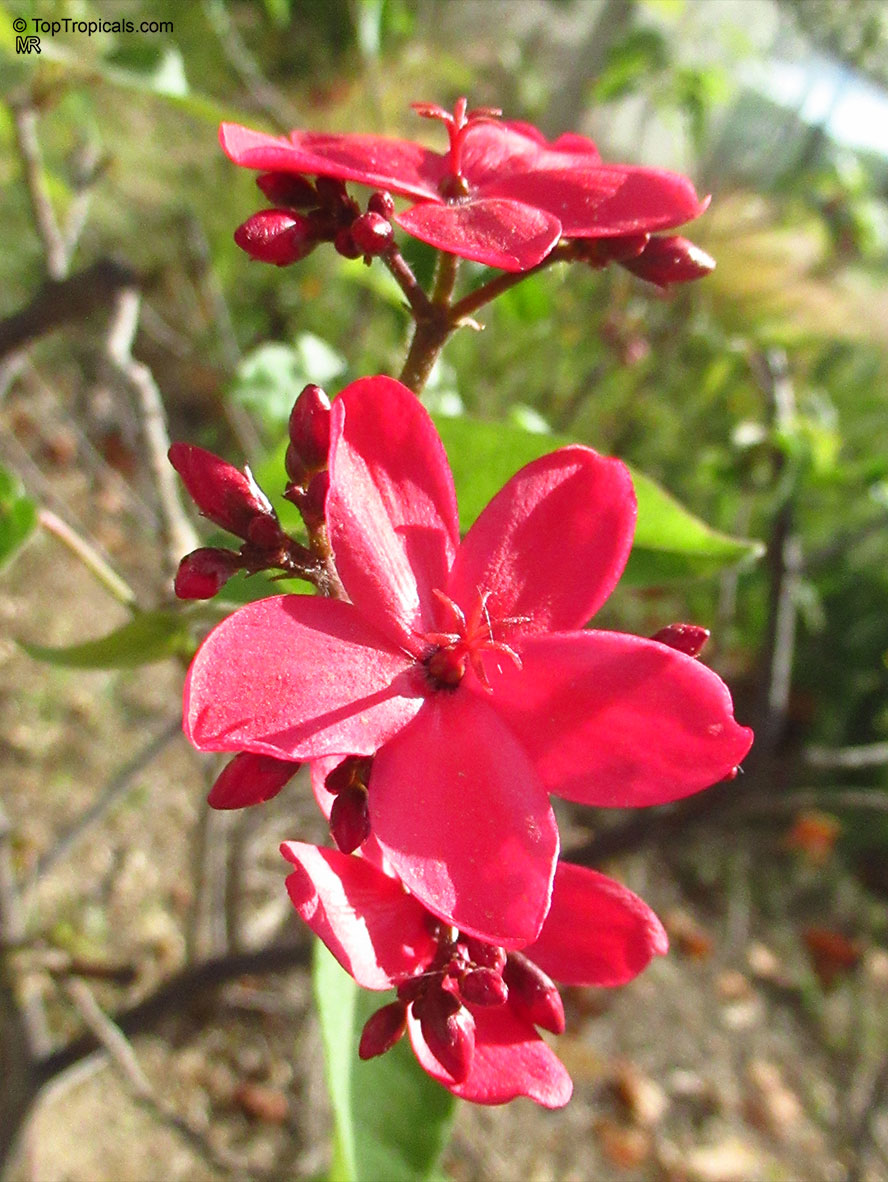
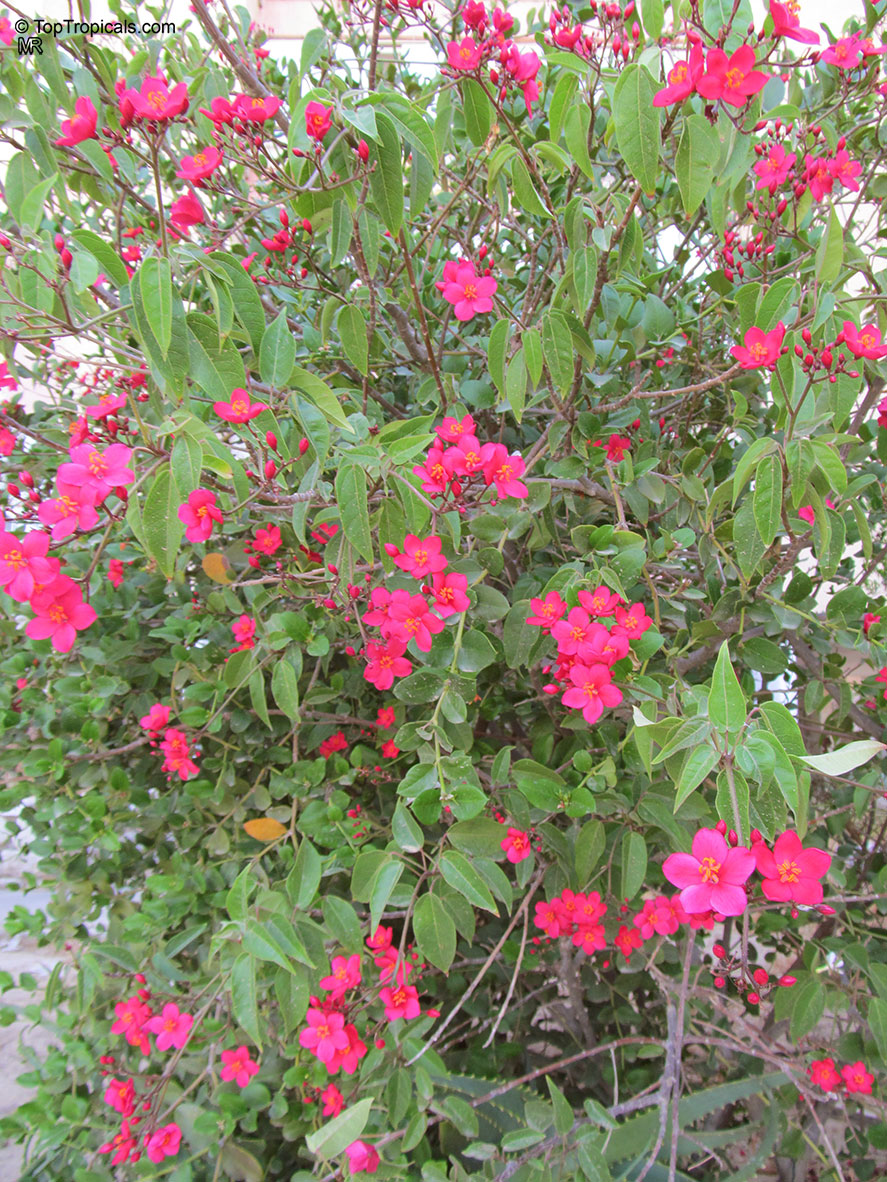
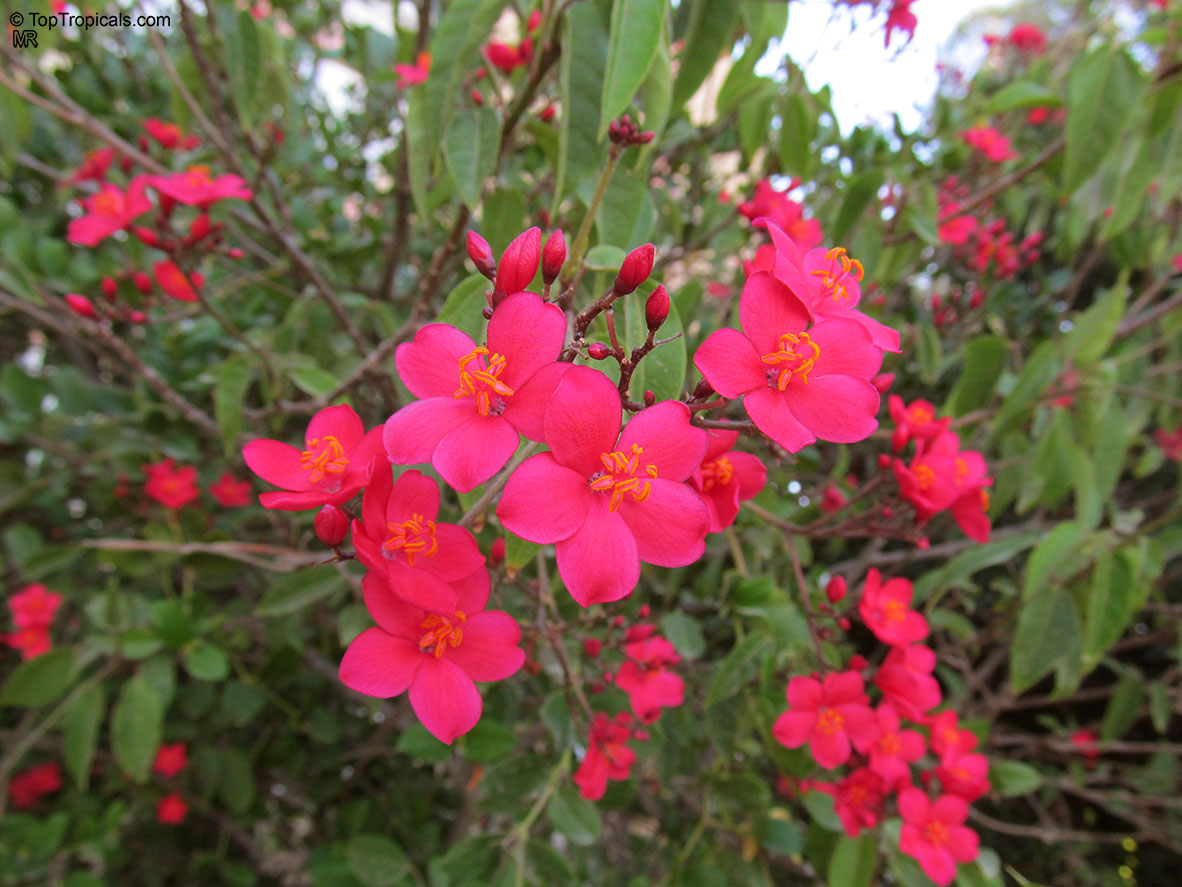
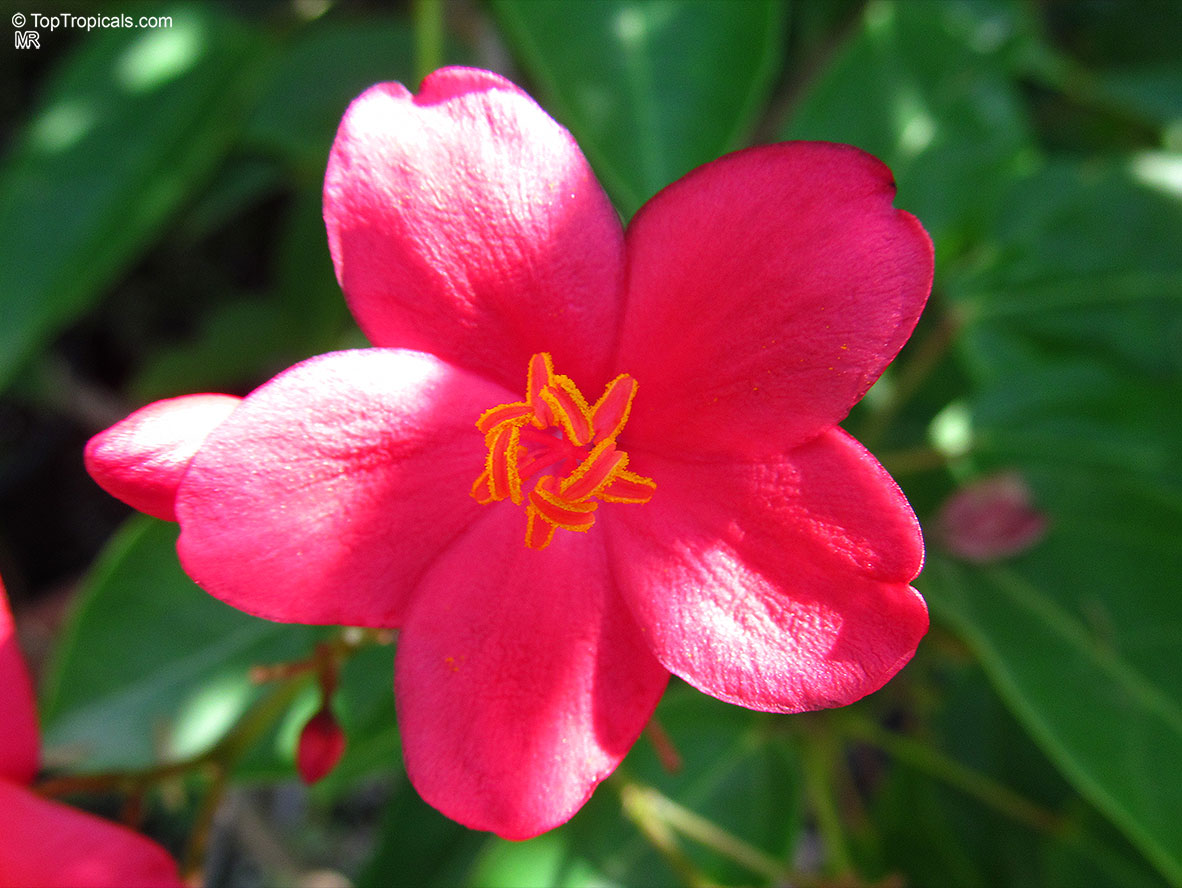
Botanical names: Jatropha integerrima, Jatropha pandurata
Common names: Peregrina, Spicy Jatropha, Coral Plant, Physic Nut
Family: Euphorbiaceae
Origin: Cuba


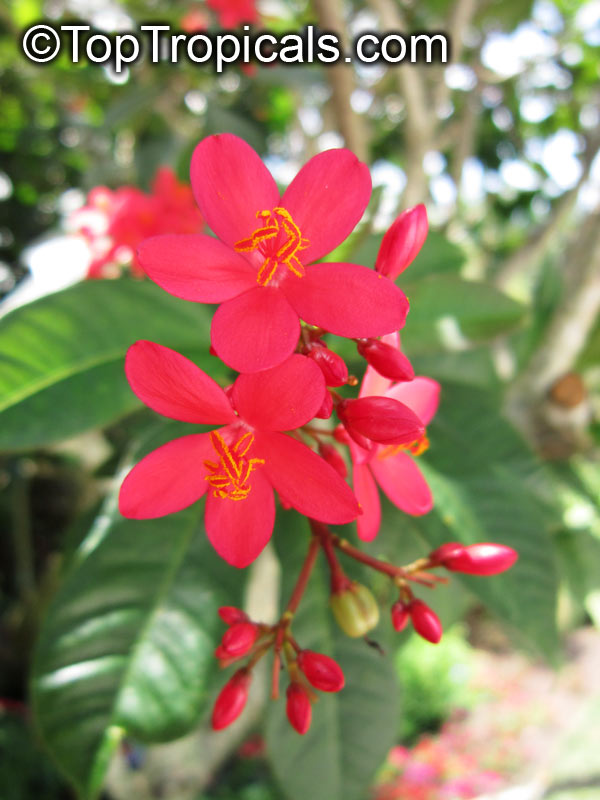
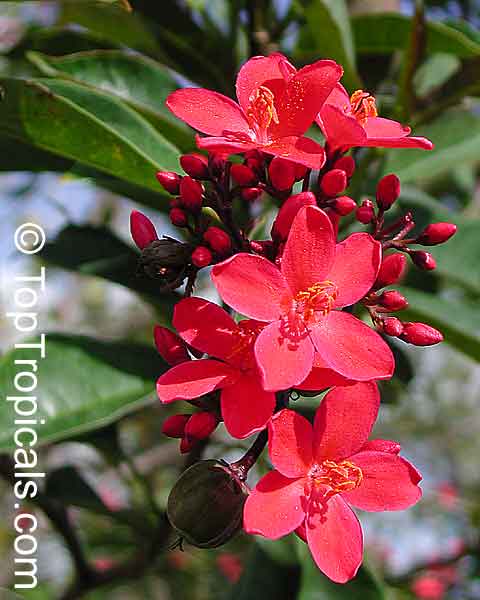
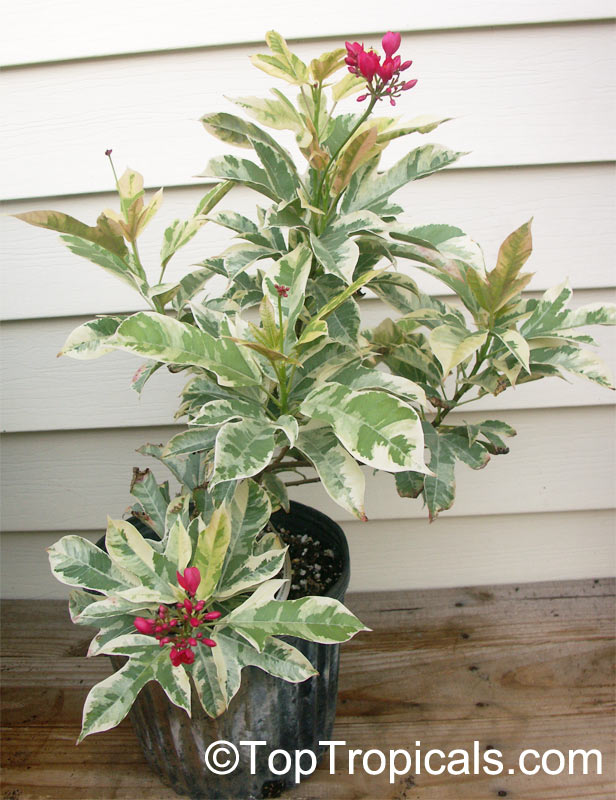
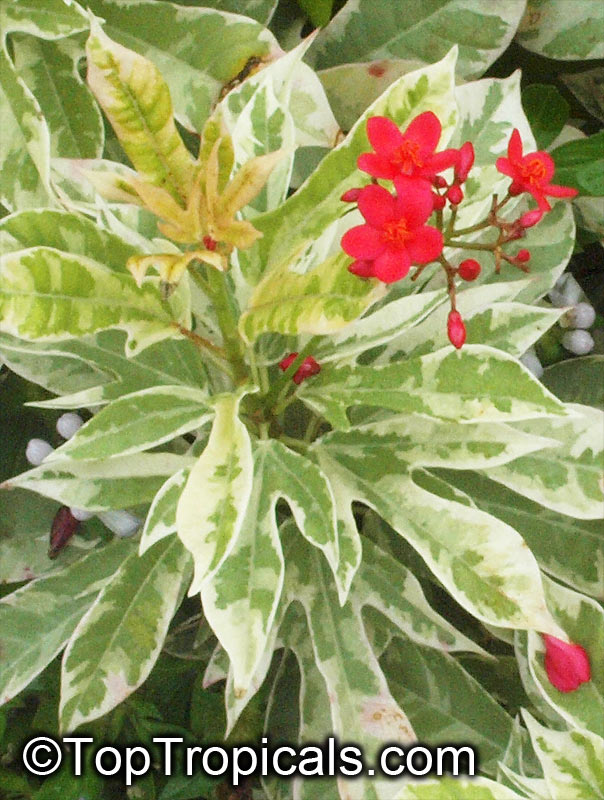
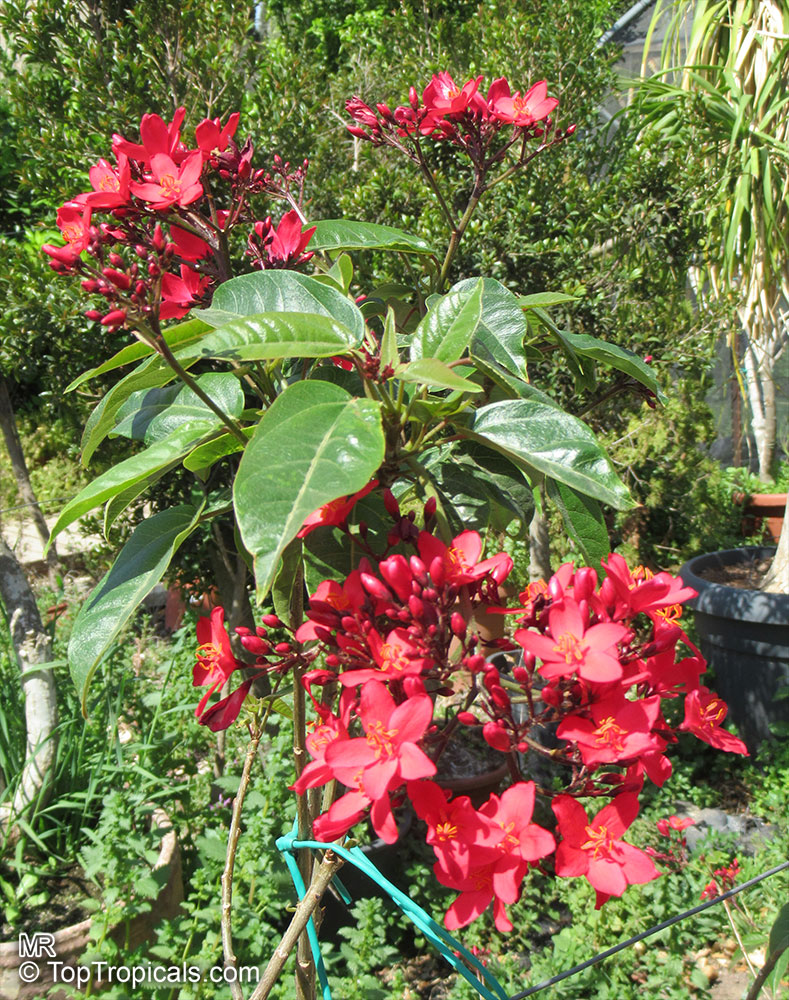
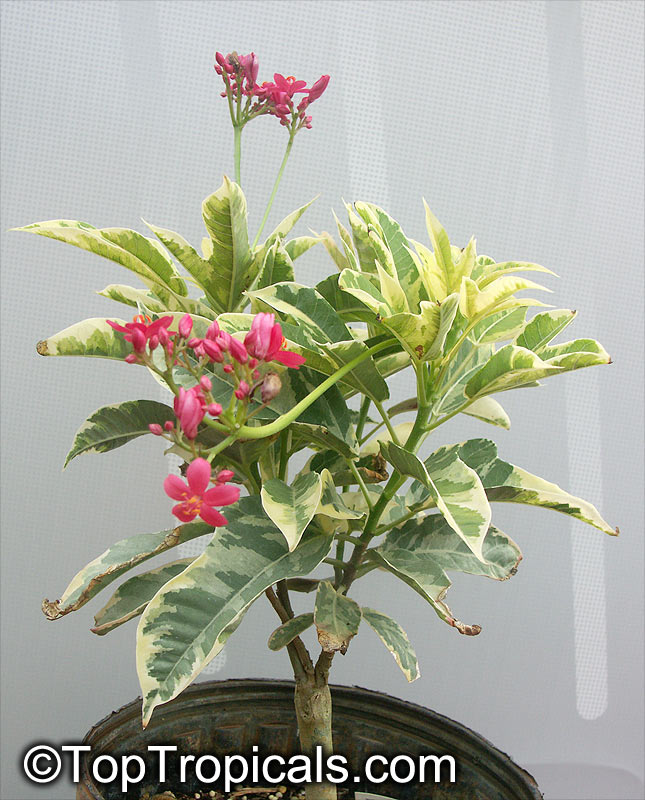
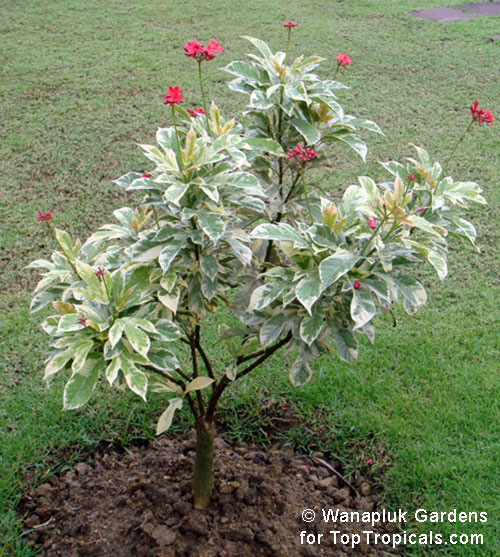
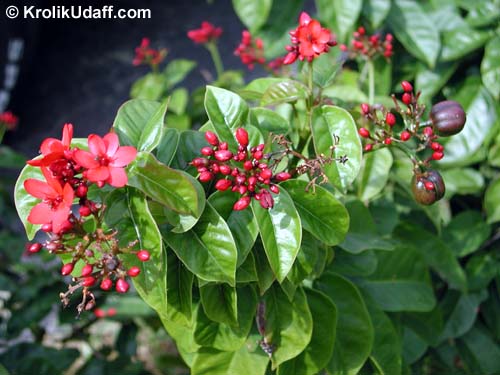
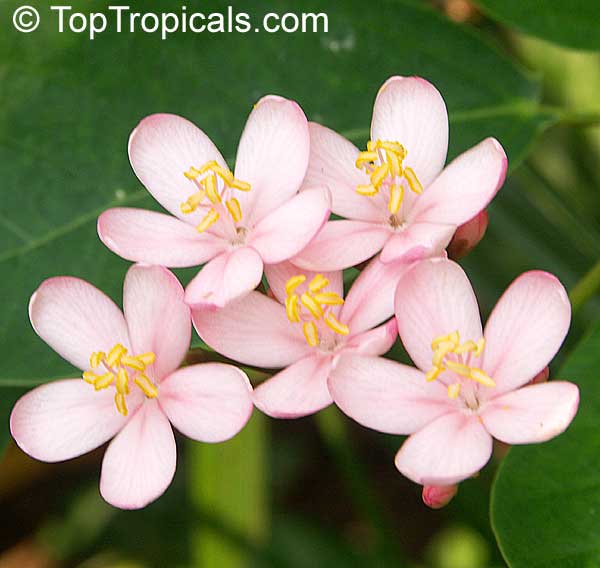
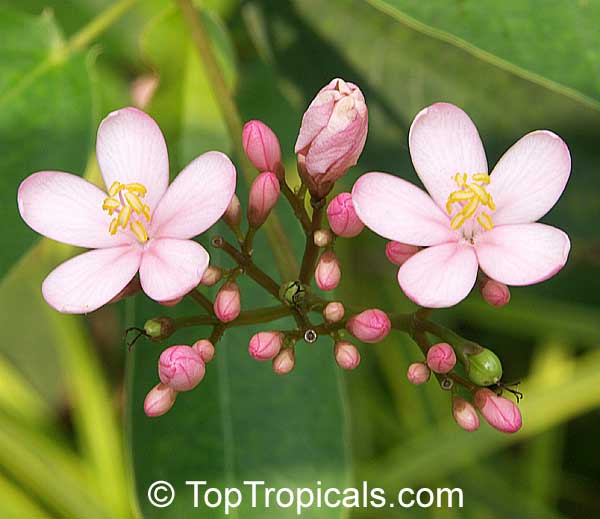
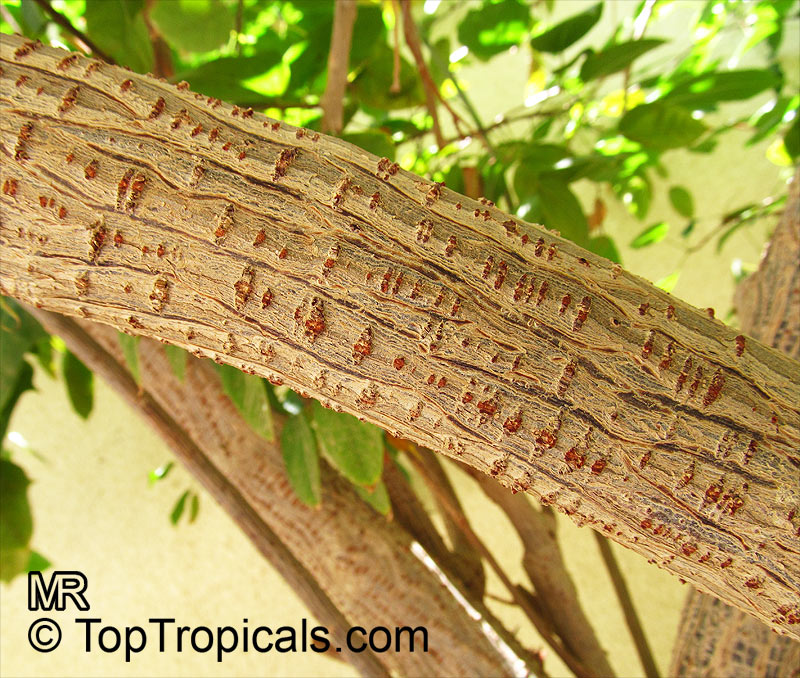
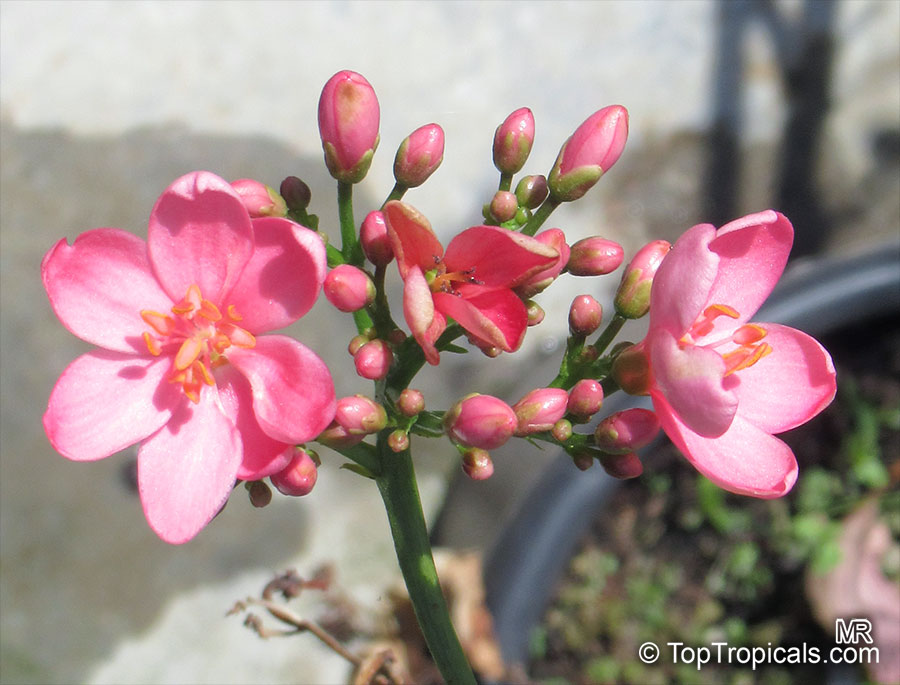
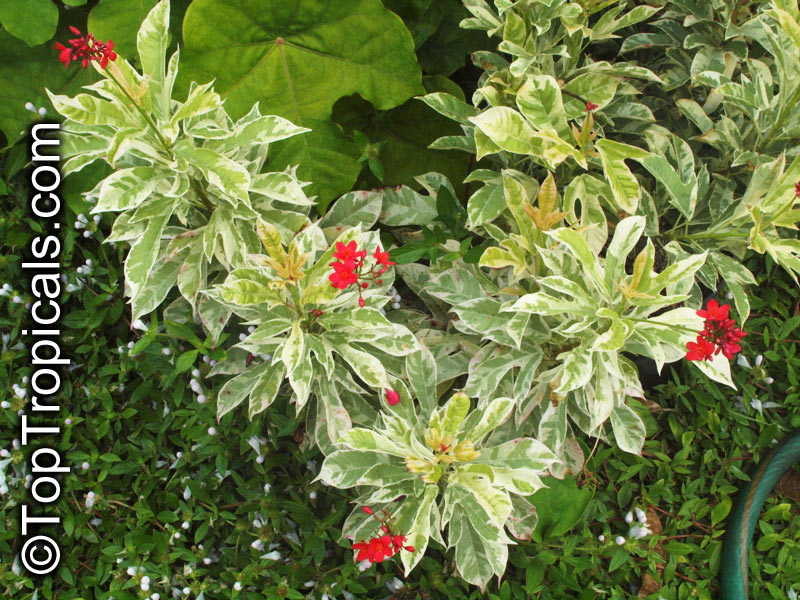
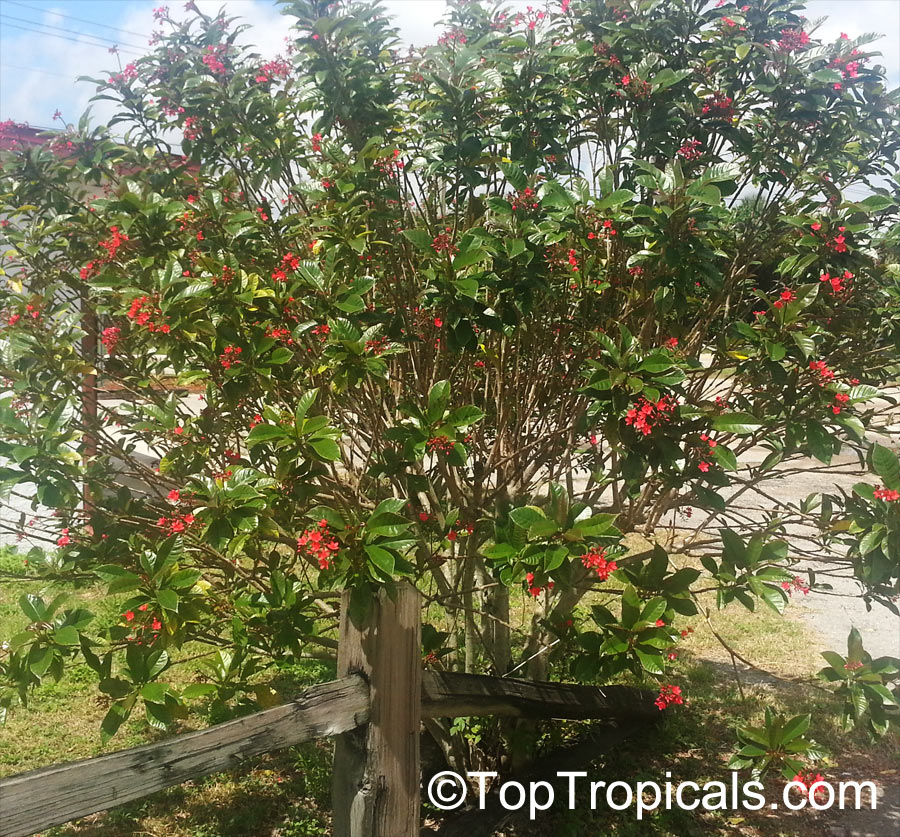
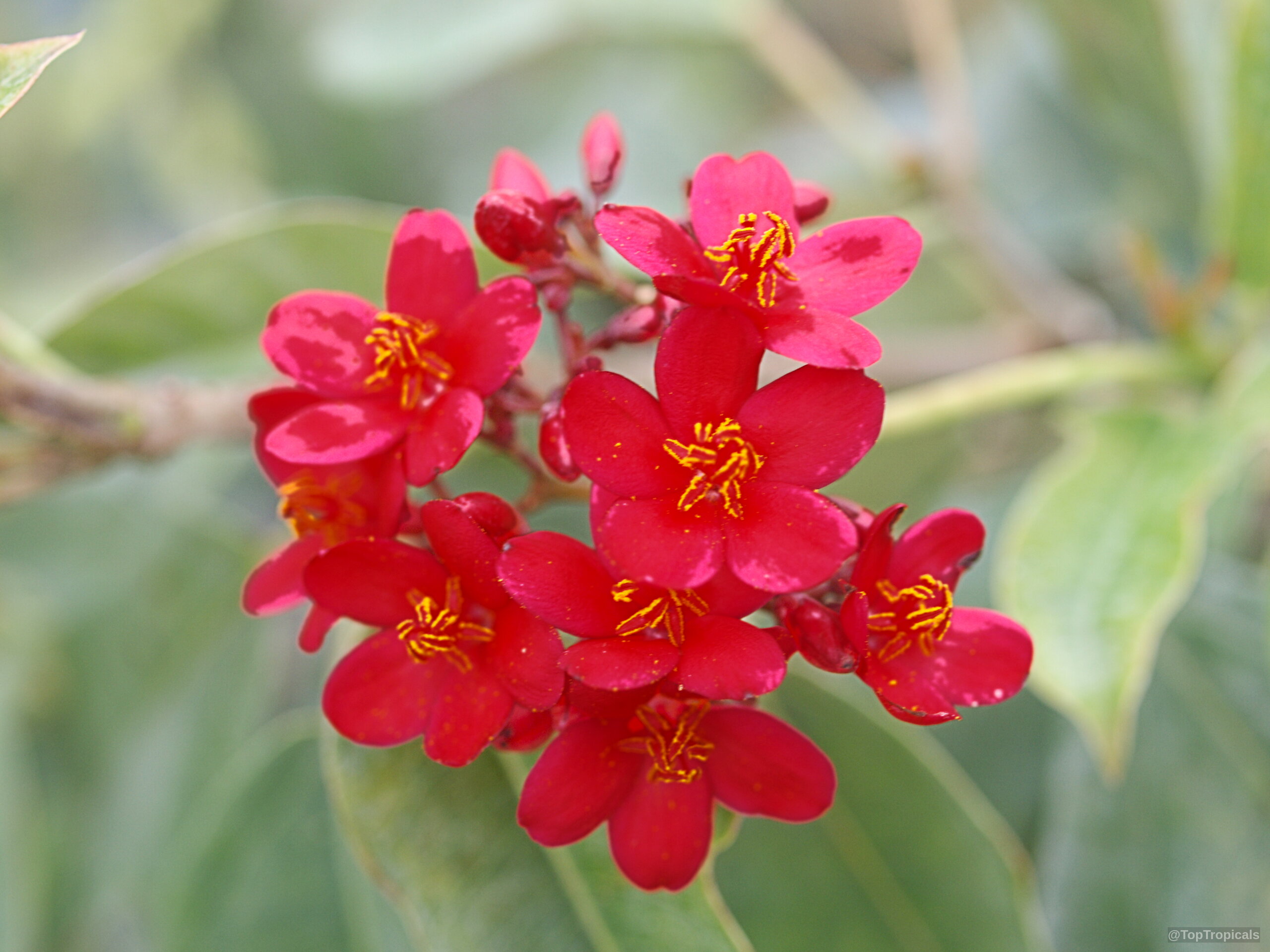
Jatropha integerrima, also known as Peregrina, is a striking plant with glossy leaves and clusters of scarlet flowers. It grows into a shrub or small tree with a rounded or narrow domed form, reaching a height of up to 15 feet and a spread of 10 feet. In cultivation, it is often smaller and may have several slender trunks, although it can be pruned to a single trunk. The leaves of Peregrina are highly variable, ranging from entire and elliptic or oval to fiddle-shaped or three-lobed. They are bronze when young and brownish on the underside. The flowers, which are about an inch across, appear in multi-flowered terminal clusters almost all year round. There is also a smaller, more compact cultivar called 'Compacta.'
Peregrina is tolerant of a wide range of soil types as long as they are well-draining. It blooms on the current year's growth, so it can be pruned at any time. It responds well to pruning and can be kept as a shrub, trained into a tree form, or used in espalier. It is also drought-tolerant and attracts butterflies and hummingbirds.
In addition to being a beautiful addition to gardens, Peregrina is also a good plant for seaside gardens due to its salt tolerance. While it can withstand temperatures down to the mid-30s for a short period of time, it is not reliably cold hardy in USDA Zone 9 and southward. In colder zones, it can be grown in a container and brought indoors during the winter. To plant Peregrina, choose a location with full sun to part shade and provide regular water. If grown in a container, use a well-draining soil mix and water regularly. When planting in the ground, enrich the soil with compost or rotted manure and mulch with a thick layer of organic material to retain moisture. Prune as needed to maintain the desired shape and size. It is important to note that Jatropha, like many euphorbias, contains a milky sap that can irritate sensitive skin and all parts of the plant are poisonous if ingested.




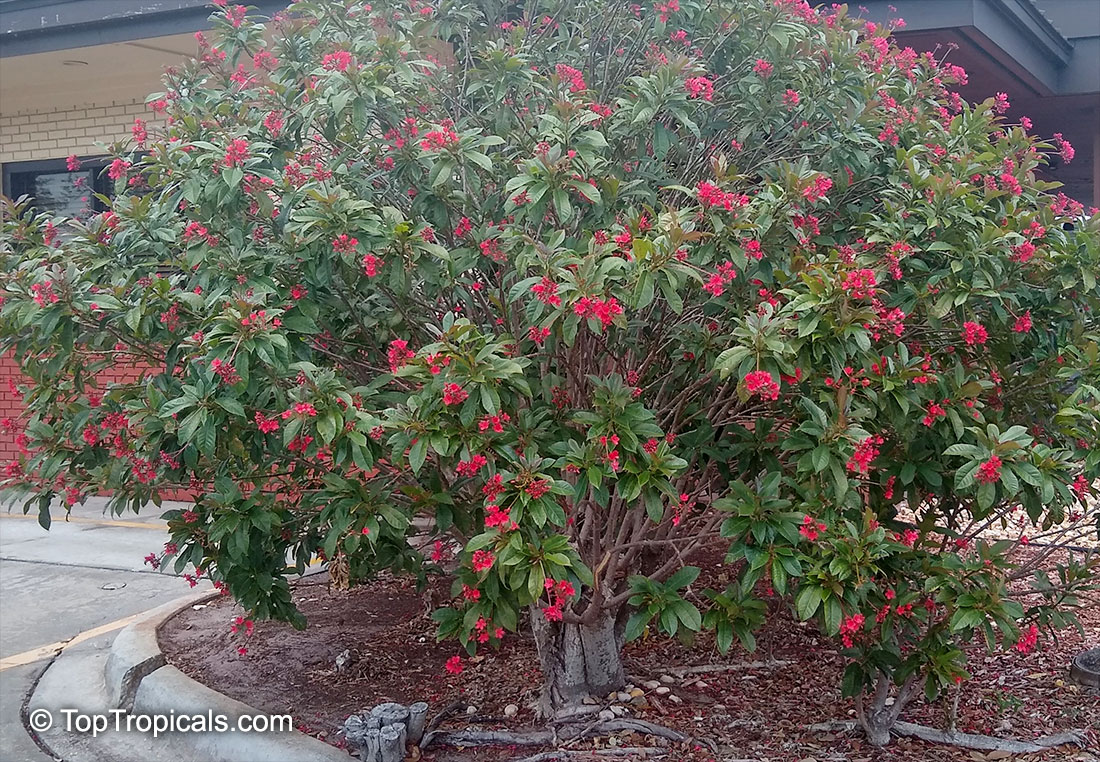
Recommended Fertilizer: SUNSHINE Megaflor - Bloom Nutrition Booster
Botanical name: Plukenetia volubilis
Common names: Sacha Inchi, Sacha Peanut, Mountain Peanut, Inca-Peanut
Family: Euphorbiaceae
Origin: Amazon Rainforest


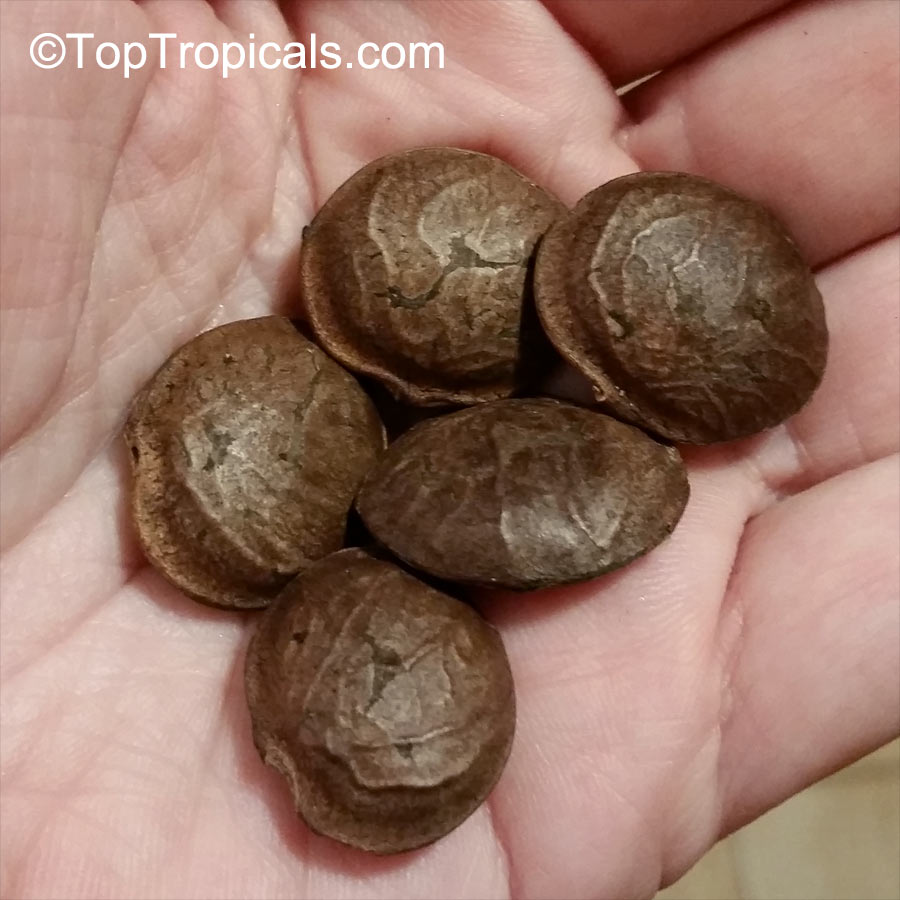
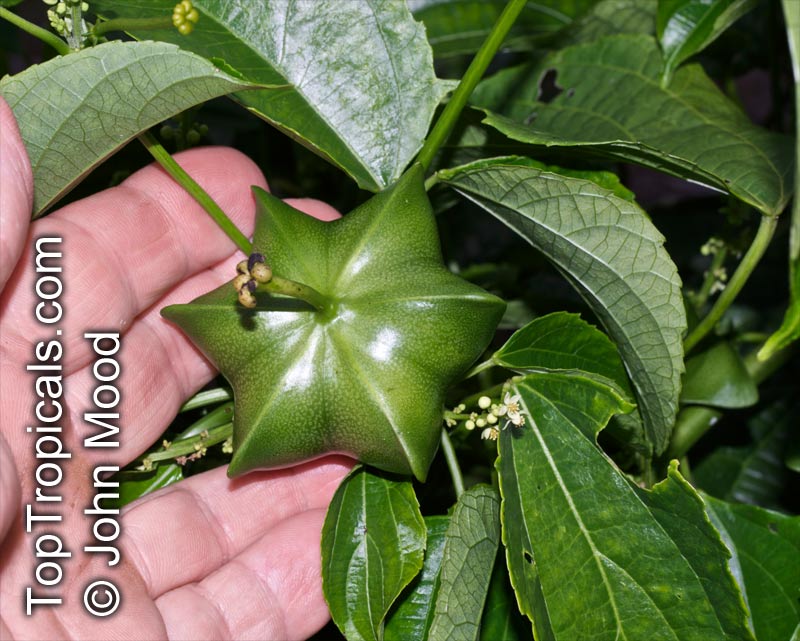
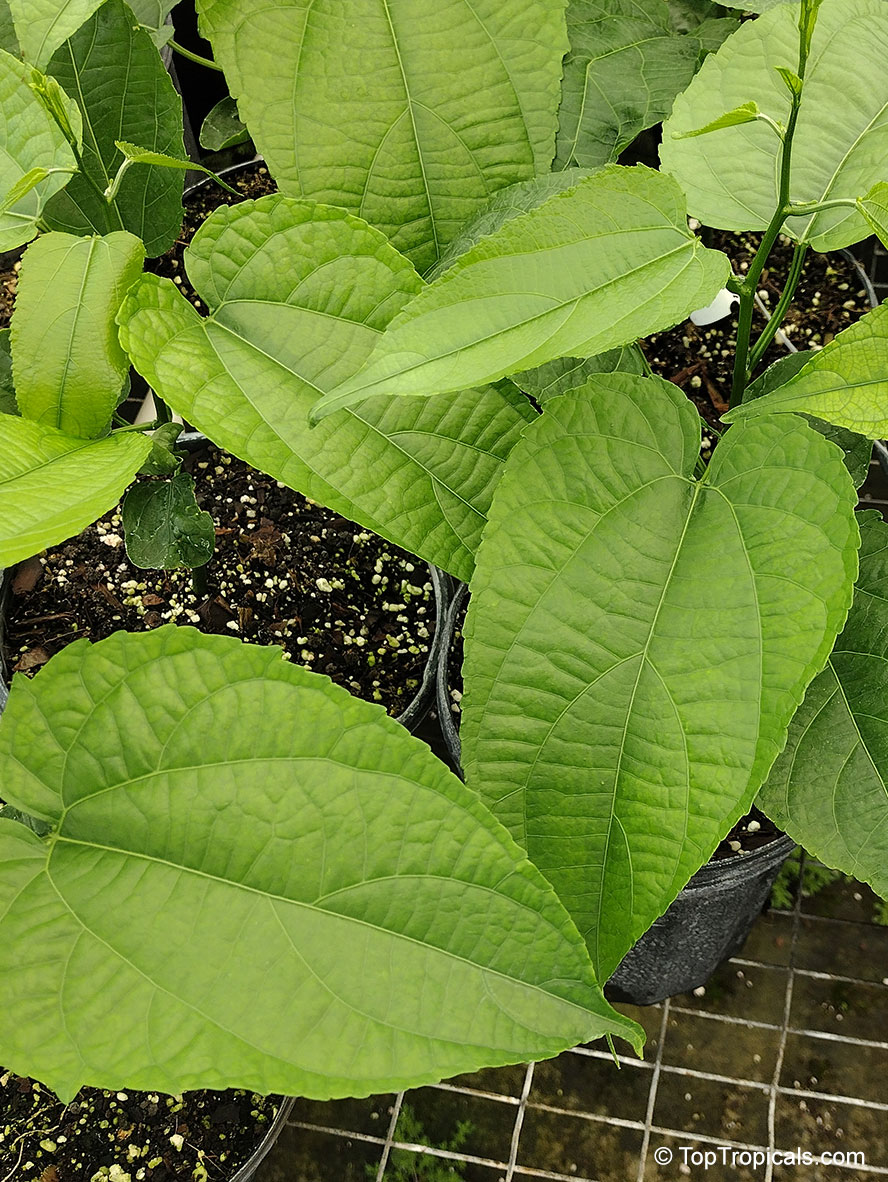
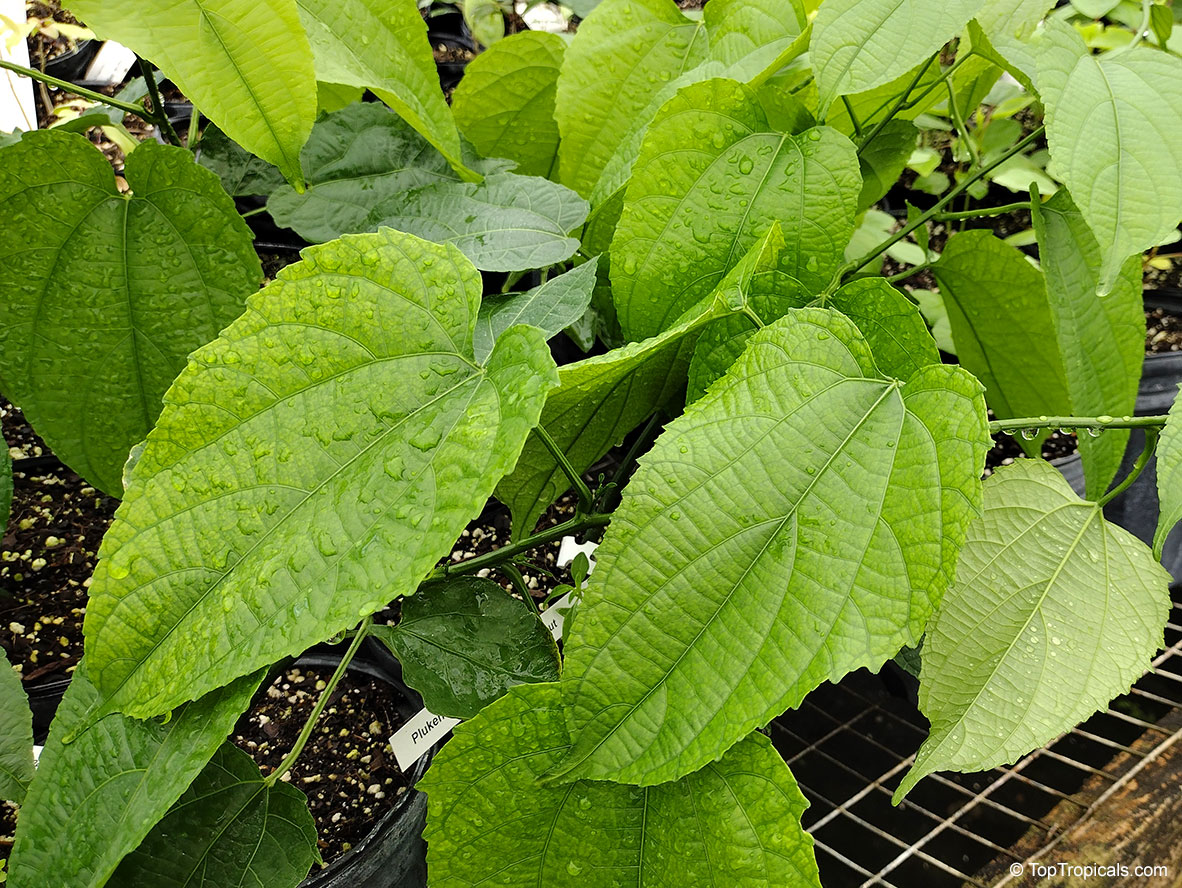
Plukenetia volubilis, commonly known as sacha inchi, sacha peanut, mountain peanut, Inca nut or Inca-peanut, is a perennial plant in the family Euphorbiaceae, having small trichomes on its leaves. It is native to much of tropical South America, as well as some of the Windward Islands in the Caribbean. The roasted seeds can be consumed as nuts, and roasted leaves chewed or made into a tea. Sacha inchi oil has a mild flavour with a nutty finish and may be appropriate for a variety of cuisines. In Peru during 2009, the humanitarian group Oxfam supported techniques for growing sacha inchi as a cash crop by indigenous groups like the Ashaninka.
he male flowers are small, white, and arranged in clusters. Two female flowers are located at the base of the inflorescence.
Sacha Inchi oil production is gaining international recognition for its taste and health properties. Raw seeds are inedible.
Recommended Fertilizer: SUNSHINE C-Cibus - Crop Nutrition Booster
SUNSHINE-Honey - sugar booster
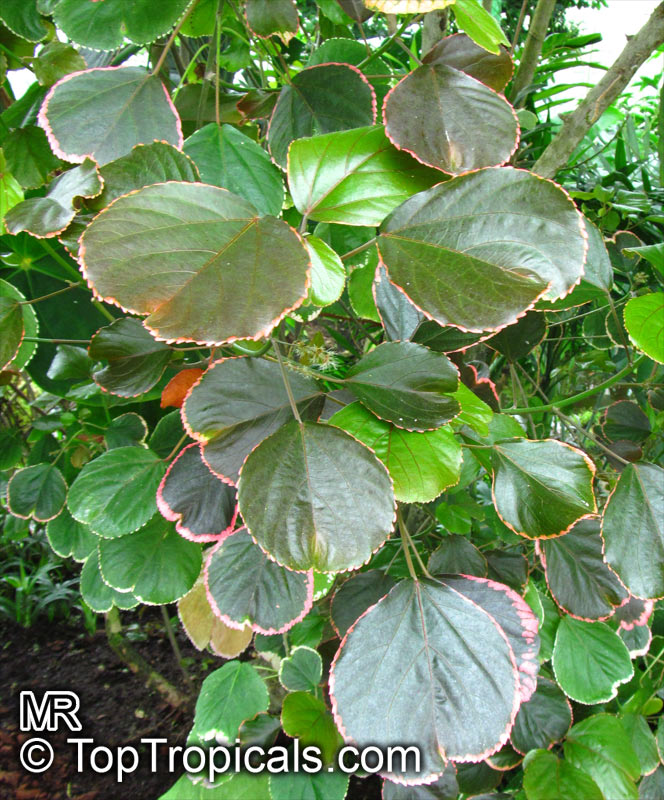
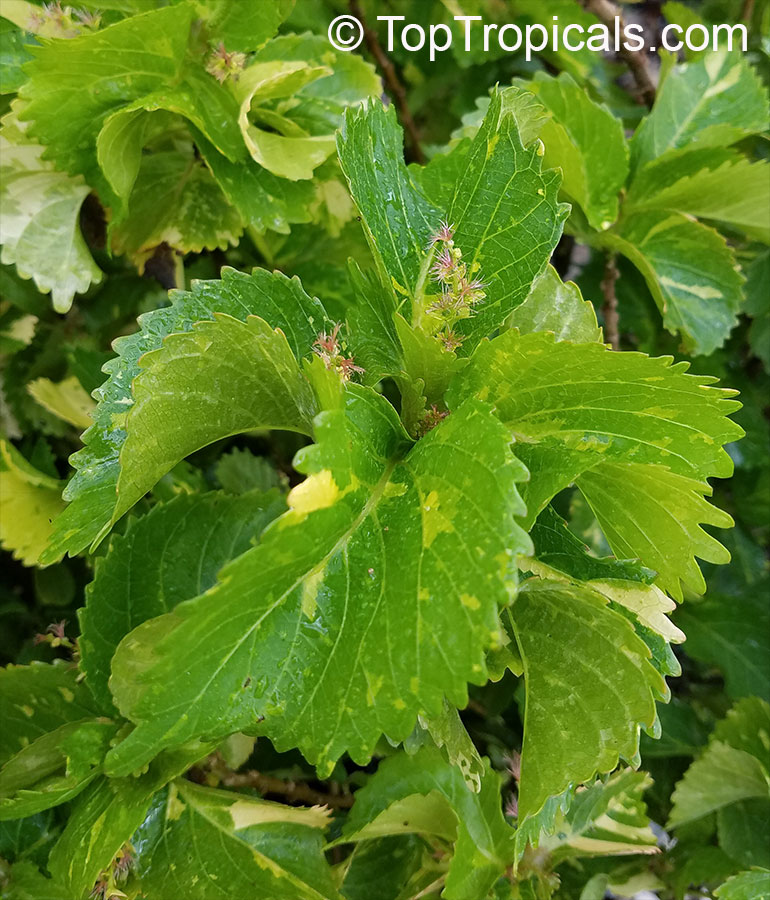
Botanical name: Acalypha godseffiana
Common names: Copper Leaf, Beefsteak Plant, Fire dragon, Jacobs coat, Match-me-if-you-can, Three-seeded Mercury
Family: Euphorbiaceae
Origin: Fiji
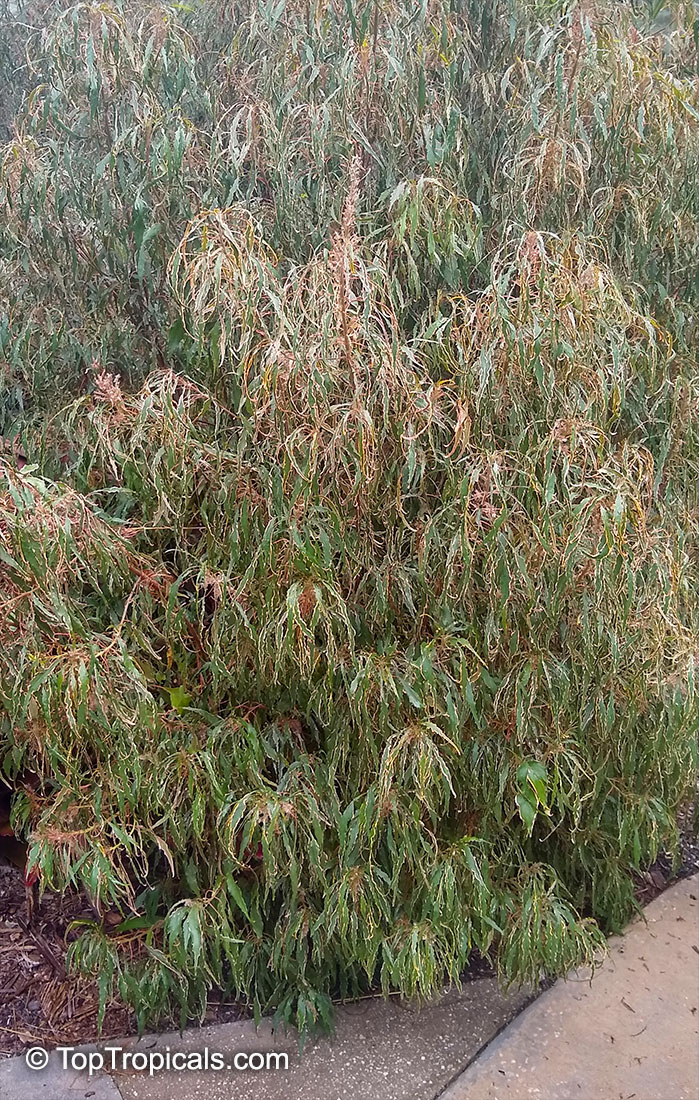
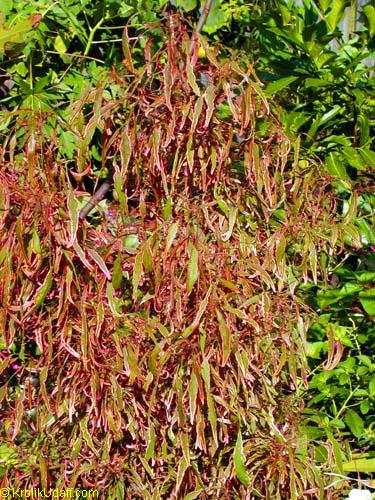
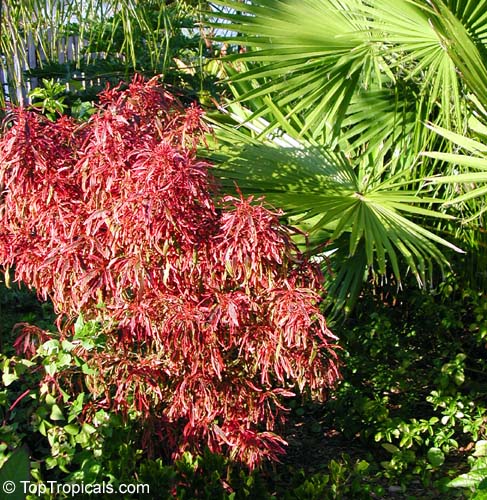
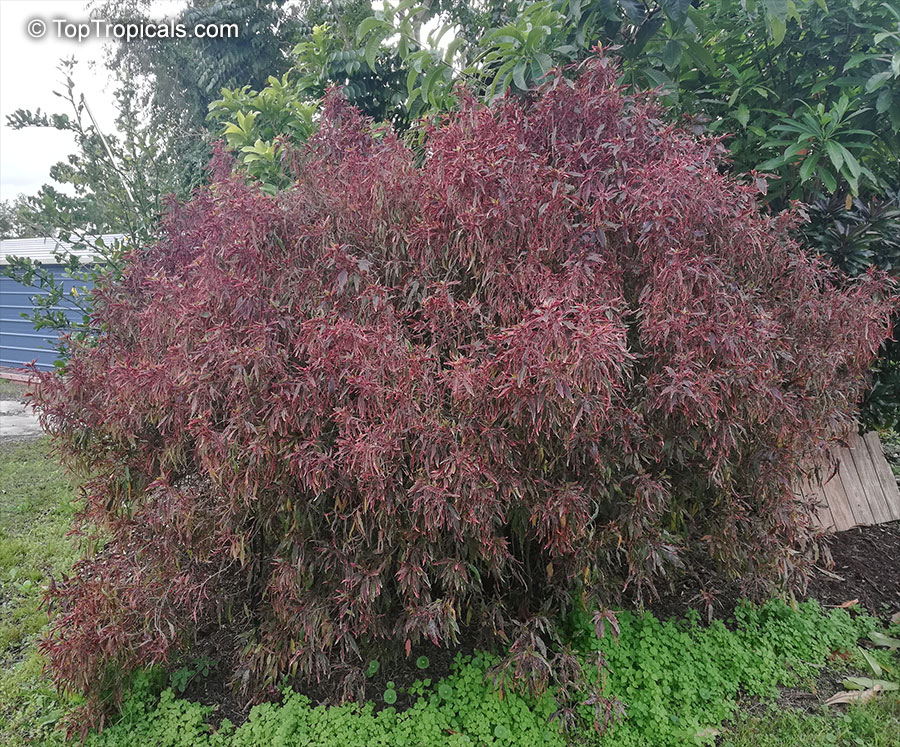
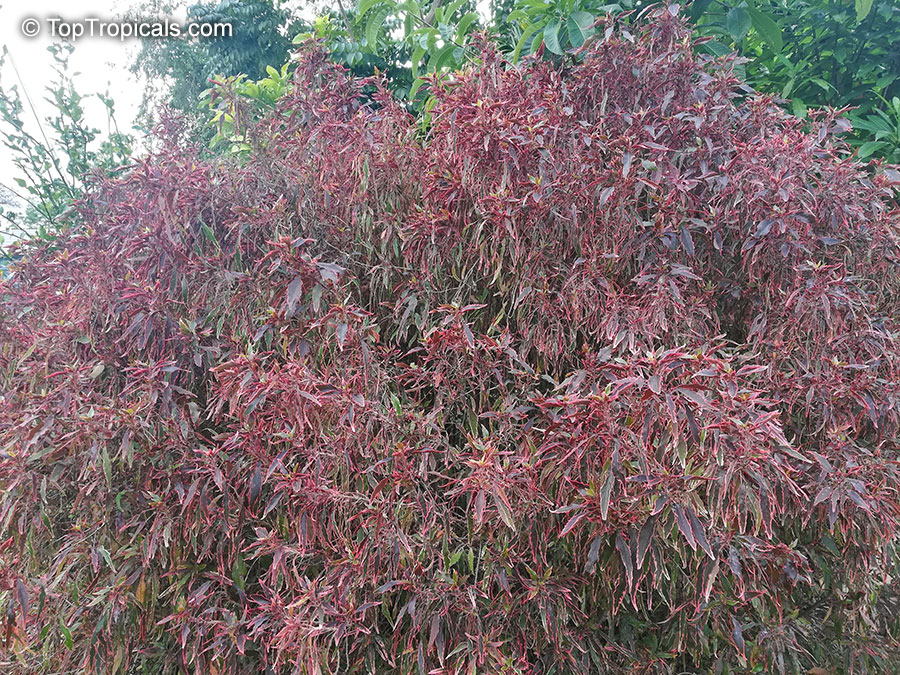
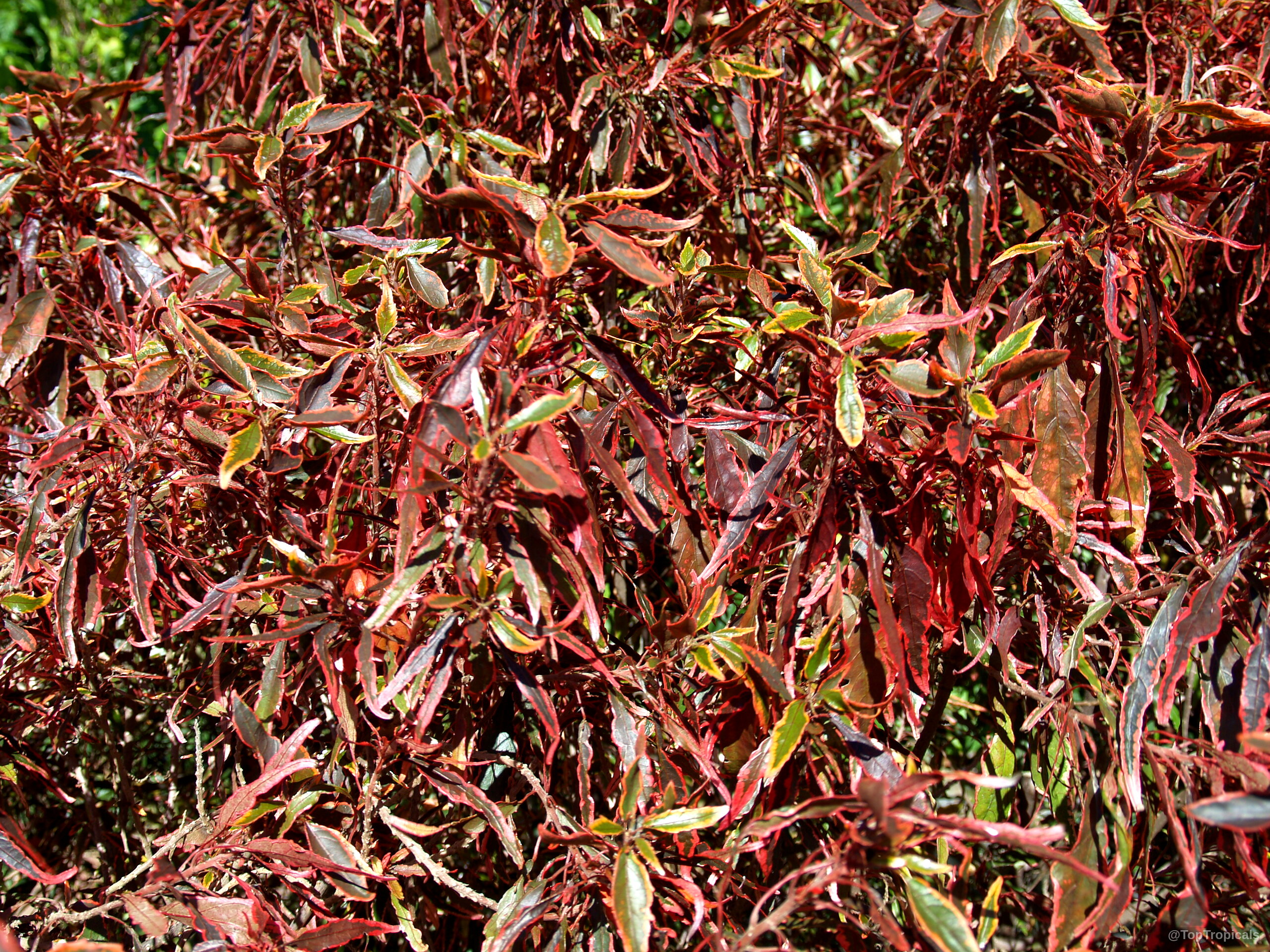
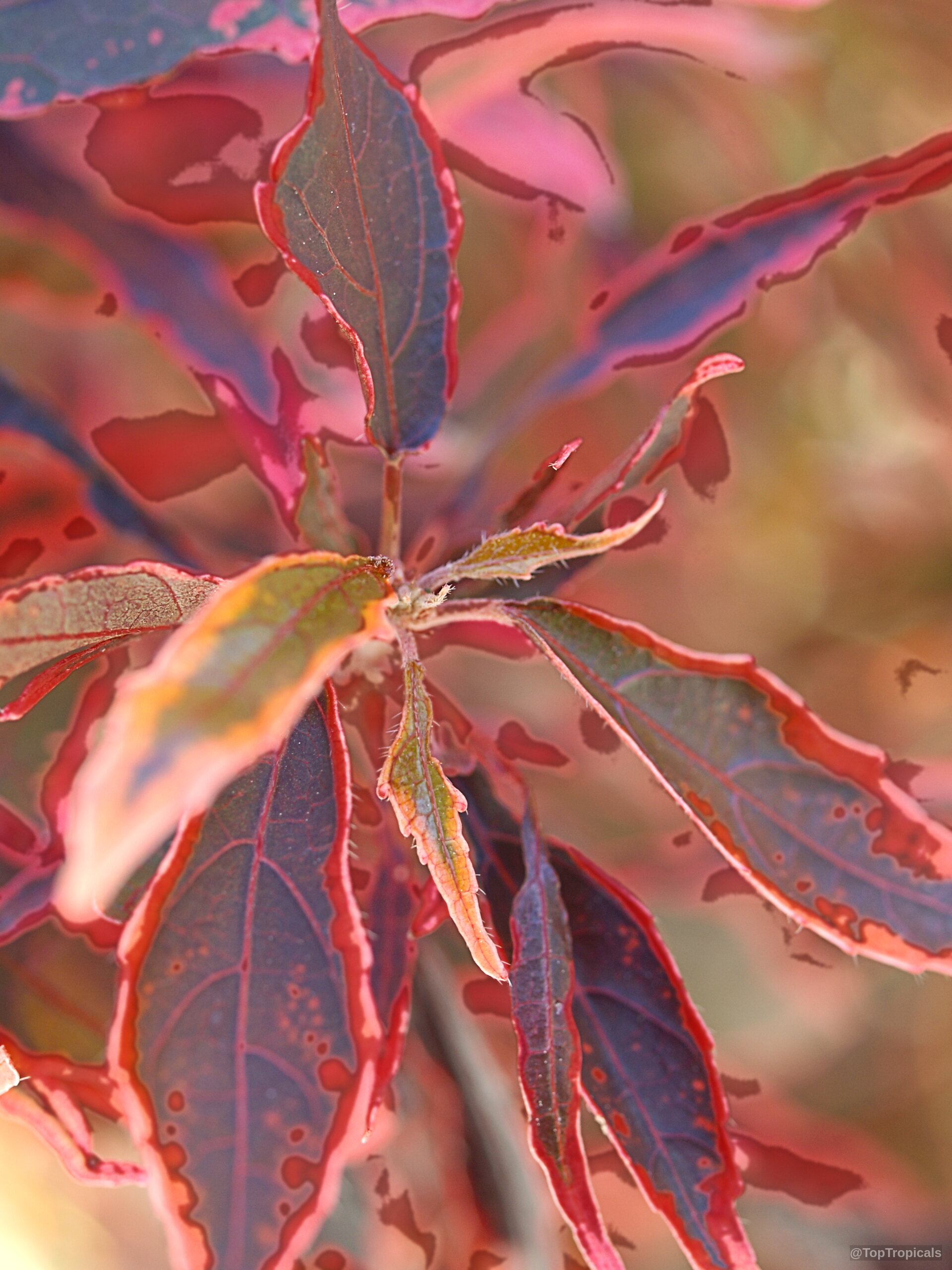
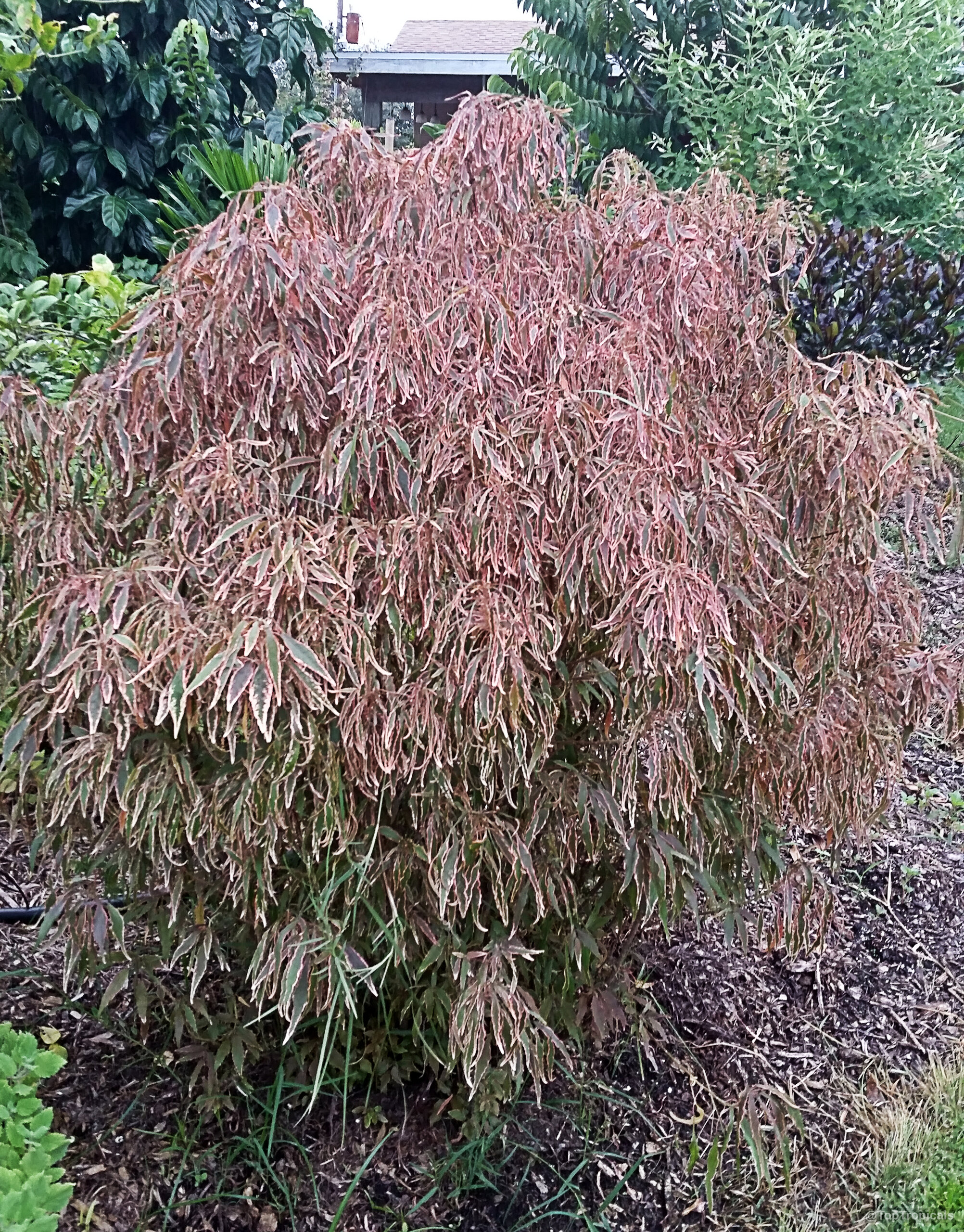
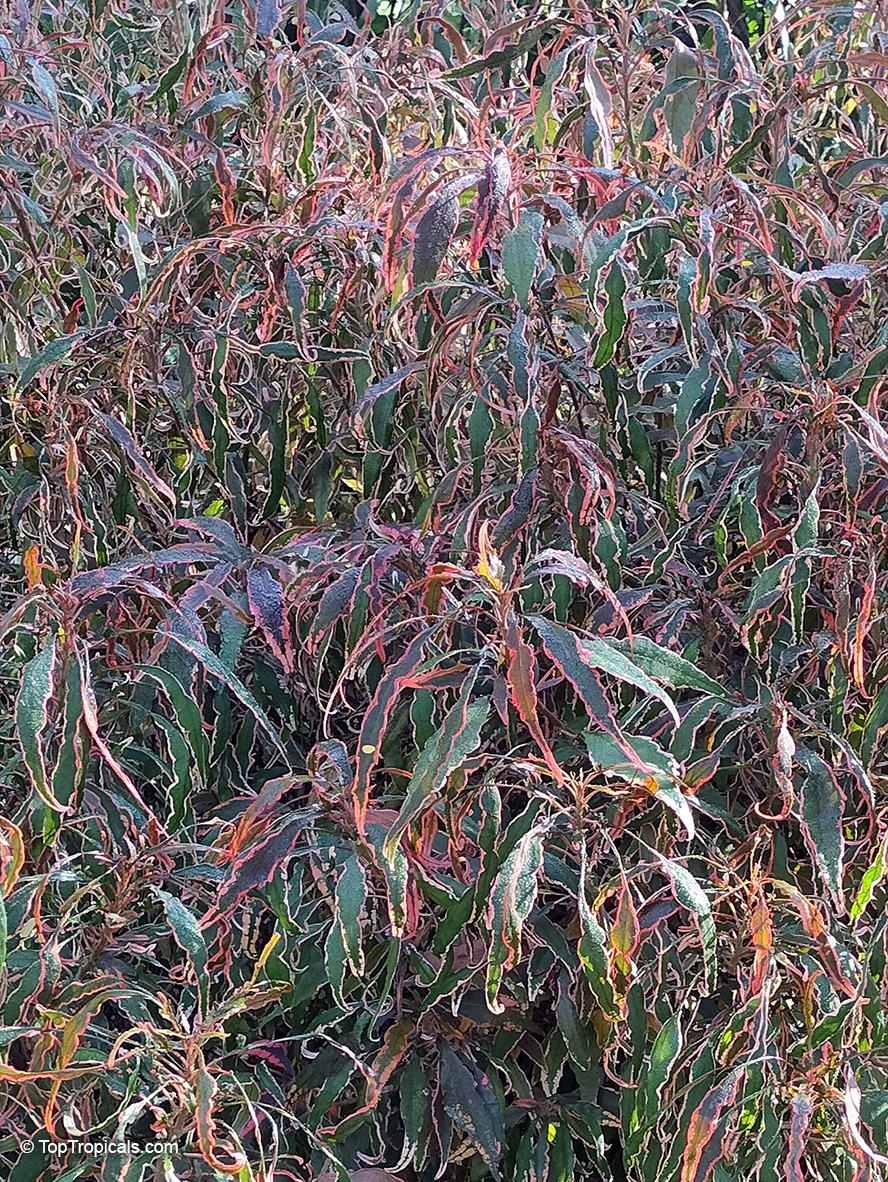
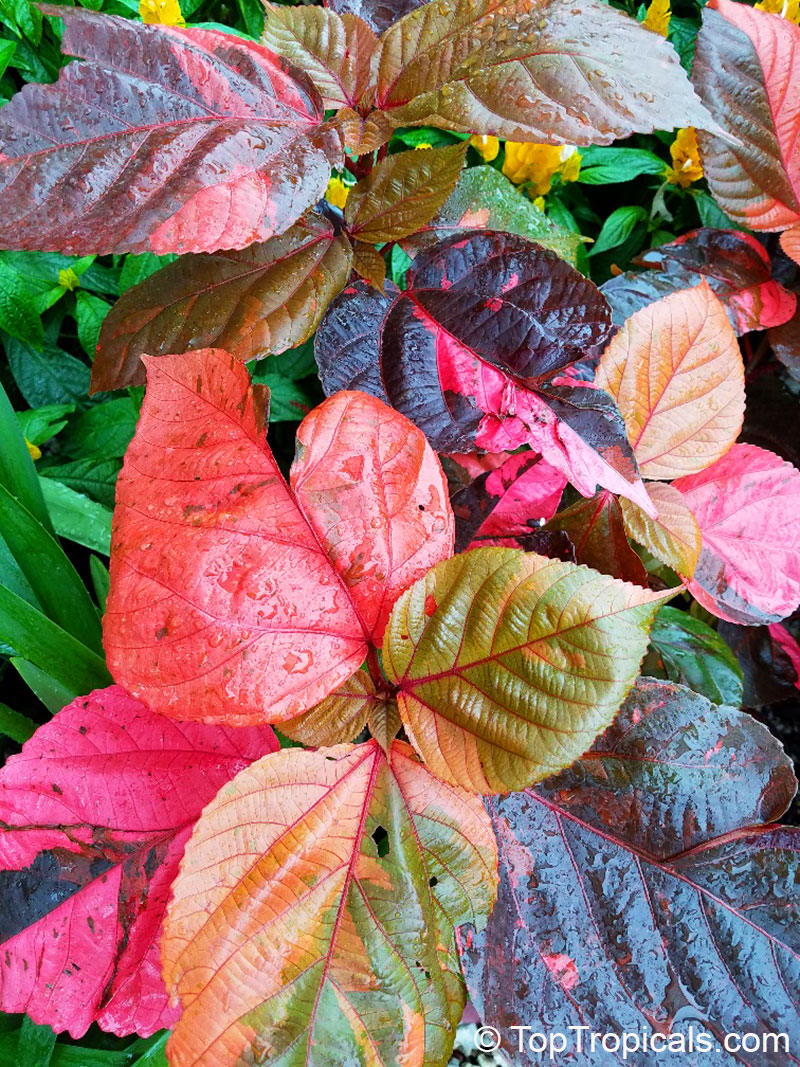
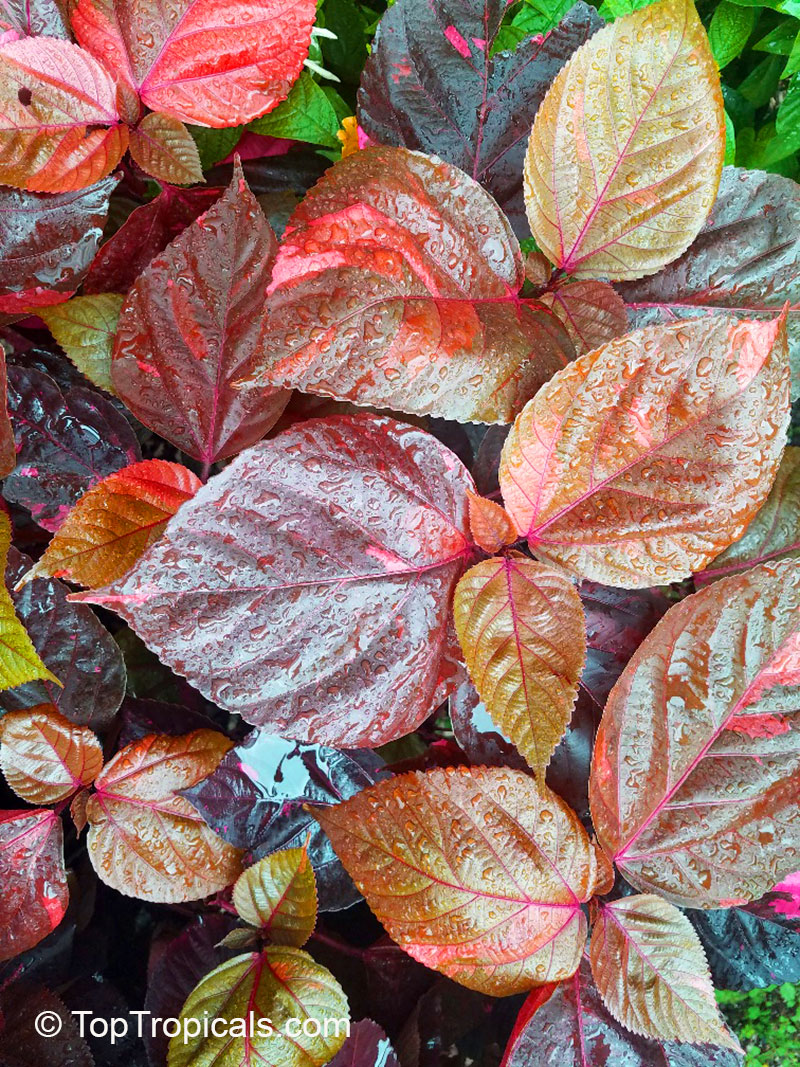
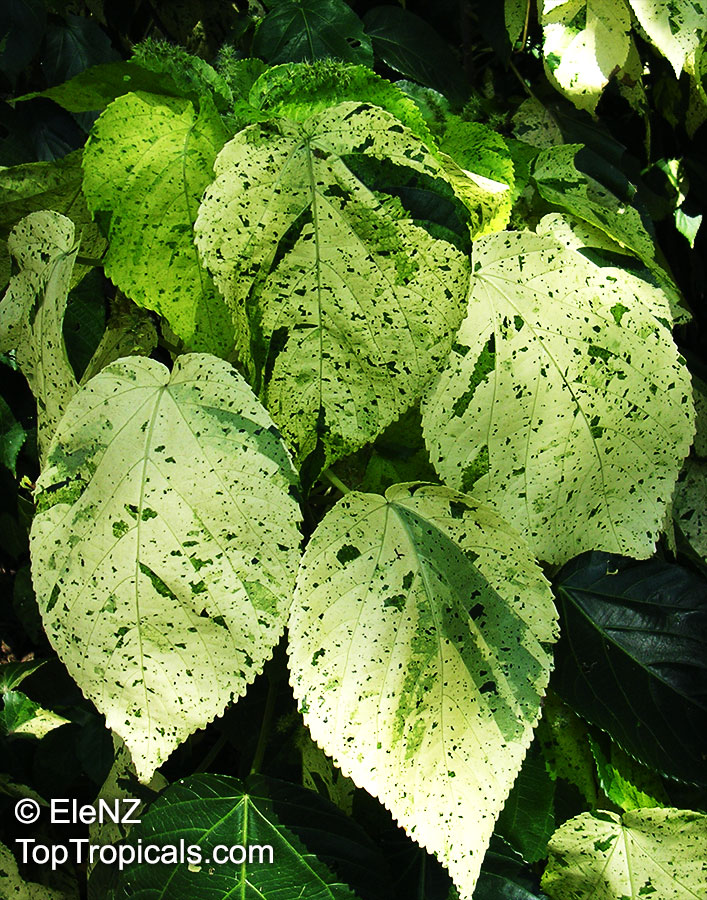
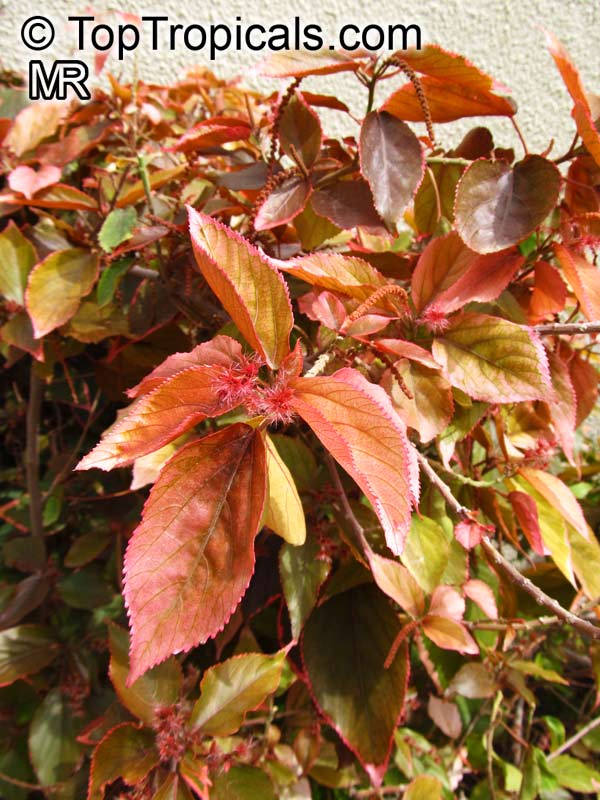
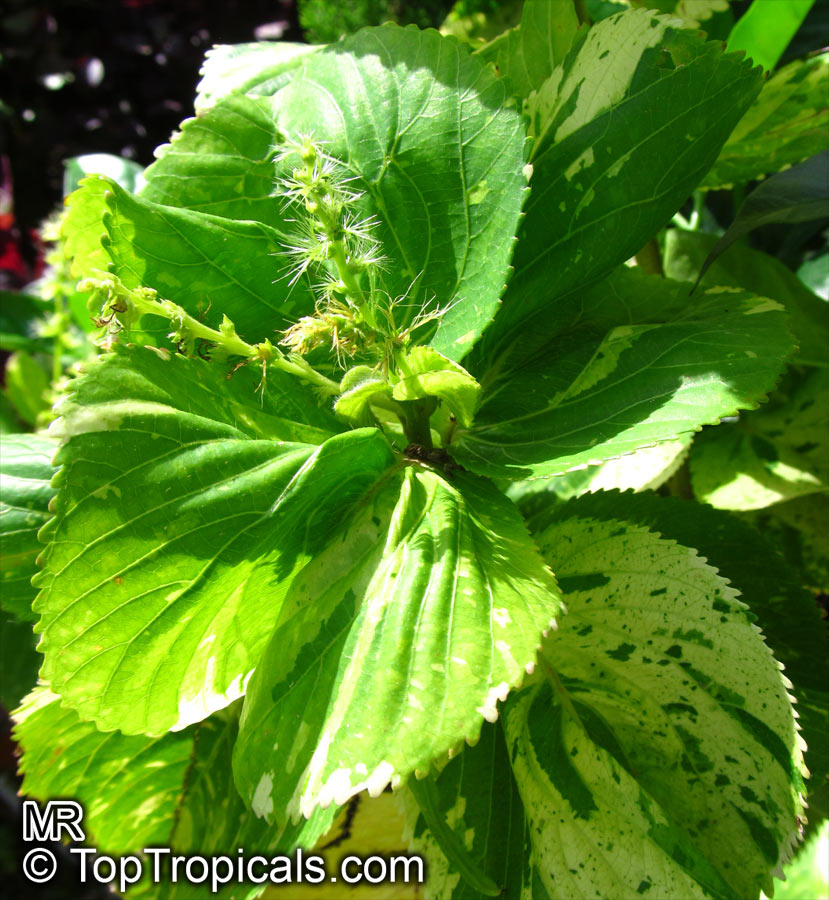
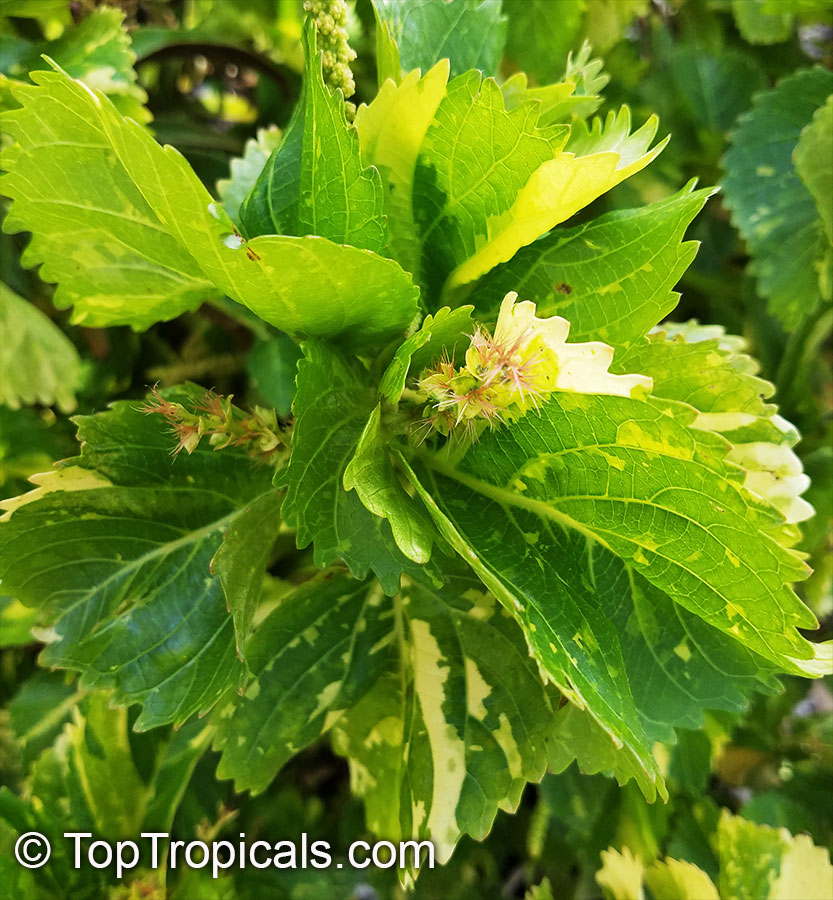
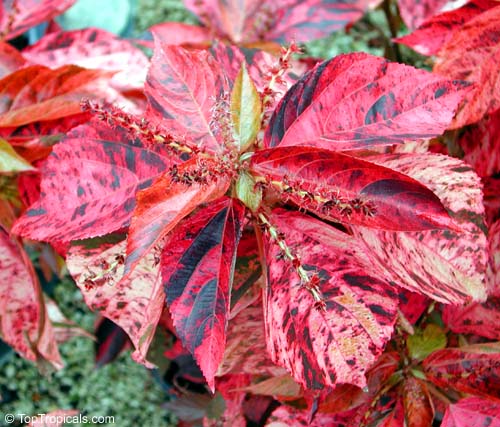
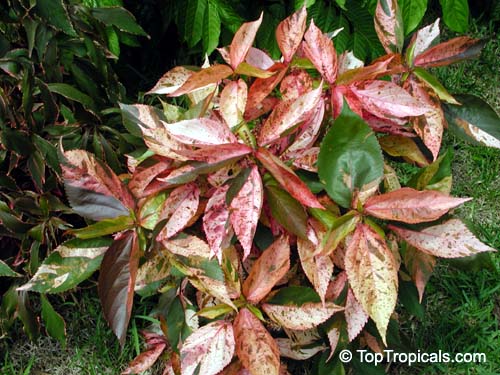
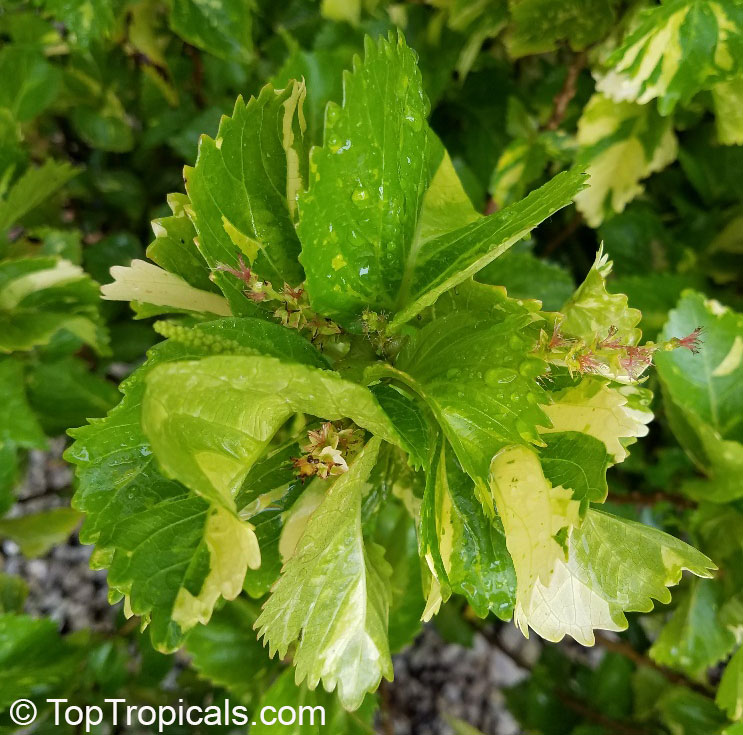
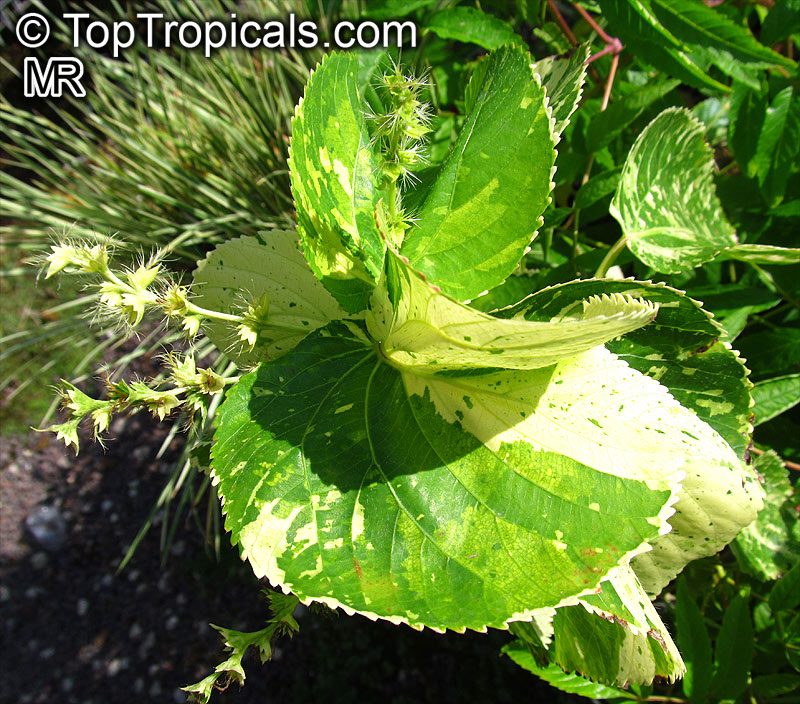
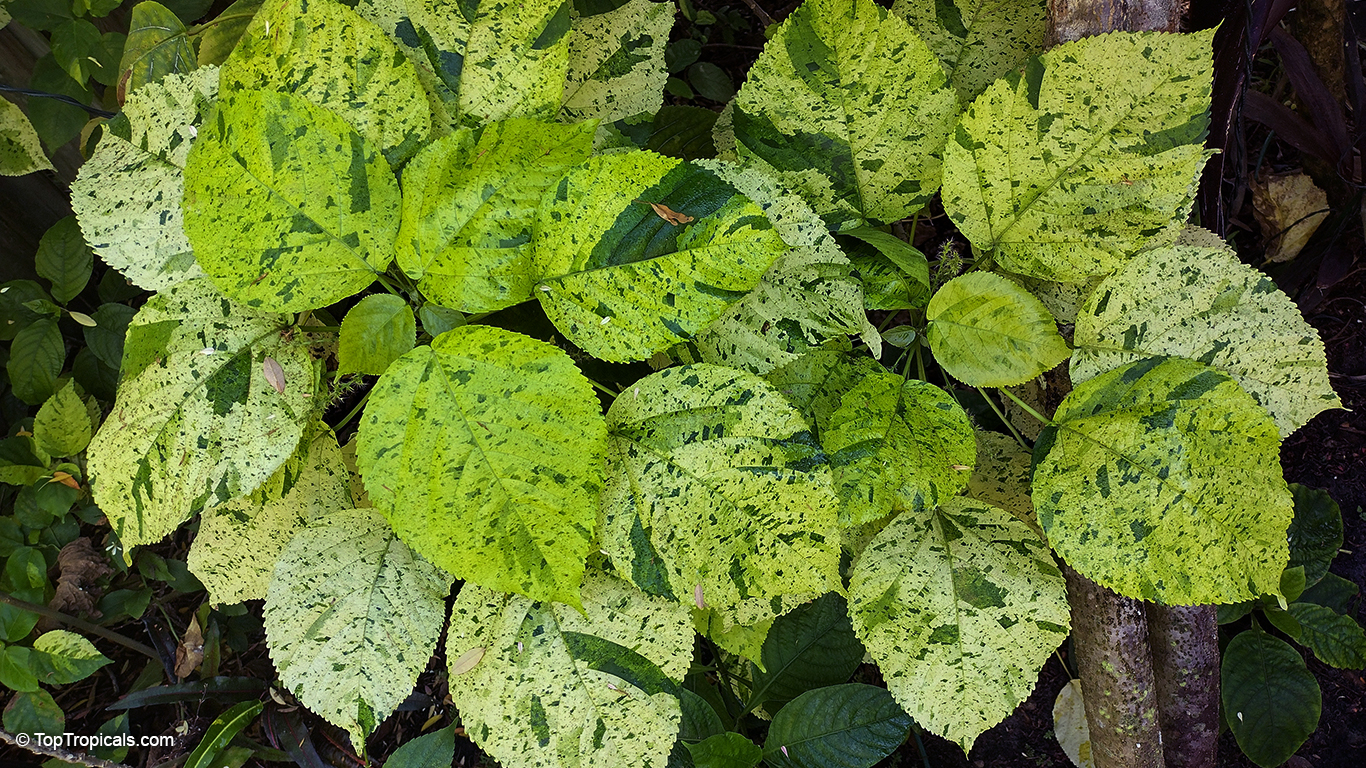
Acalypha godseffiana, also known as Copperleaf or Joseph's Coat, is a tropical shrub that is native to the East Indies and the Pacific. It is prized for its colorful and striking foliage, which ranges in shade from red and yellow to orange, bronze, copper, green, and white in full sunlight, and is mostly variegated green in the shade. The more sun it receives, the brighter the foliage will appear.
Acalypha godseffiana is a fast-growing plant that is often used as an informal hedge or massed bedding plant by tropical gardeners. It prefers full sun and well-drained soil and should be carefully pruned to prevent it from becoming leggy. When established, it is drought-tolerant and can thrive in USDA zones 9-11 in its natural habitat.
There are a number of cultivars of Acalypha godseffiana available, which come in a variety of colors such as green and white, green and yellow, red, bronze, copper, or brown. The leaves also vary in form, with some being flat and others undulating. The flowers of this plant are inconspicuous.
Acalypha godseffiana is a popular choice for tropical gardens due to its attractive foliage and easy care requirements. Just be sure to provide it with full sun and well-drained soil, and remember to prune it regularly to maintain its shape and size.



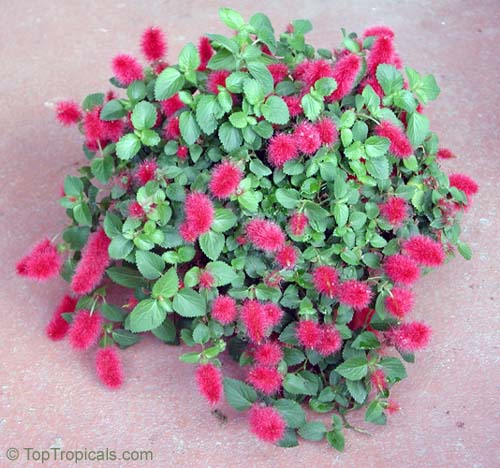
Botanical names: Acalypha hispaniolae, Acalypha pendula
Common names: Strawberry Firetails, Dwarf Cat Tails, Kitten's Tail, Trailing Acalypha, Firetail Chenille Plant
Family: Euphorbiaceae
Origin: Haiti and Dominican Republic

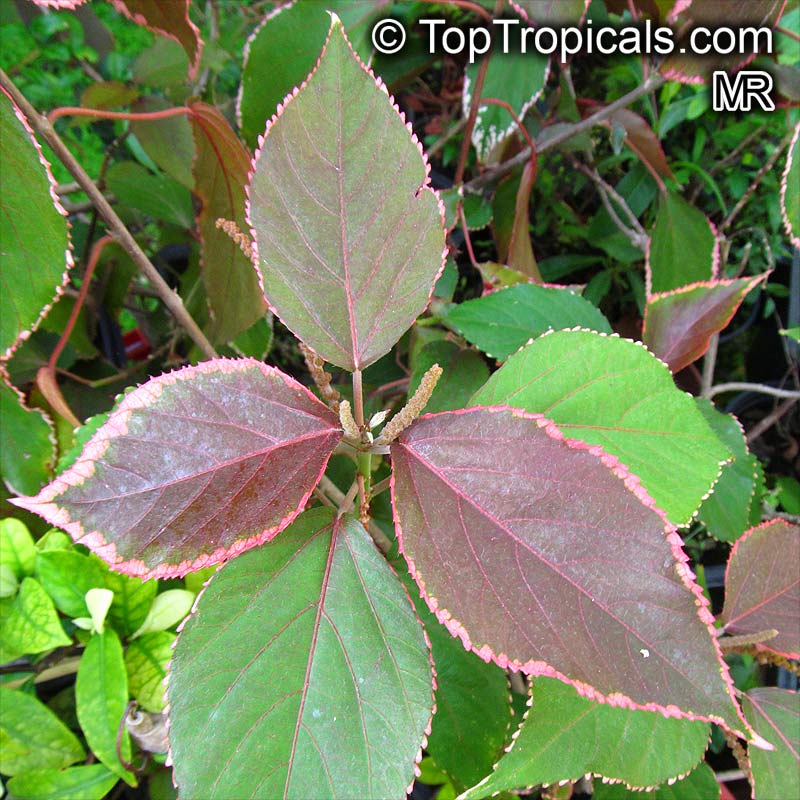
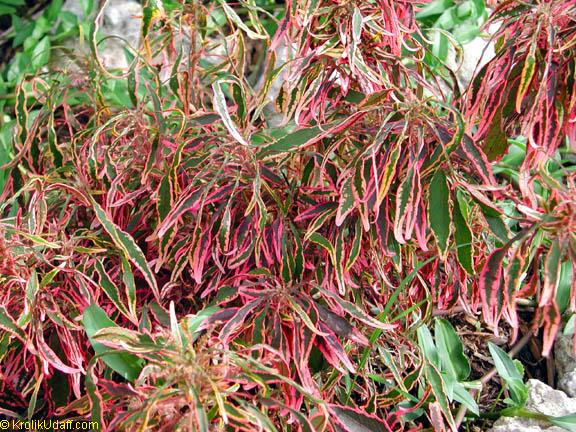
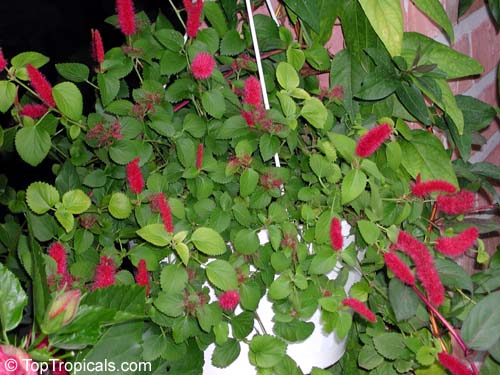
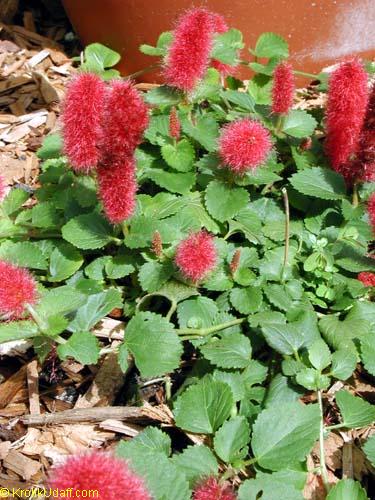
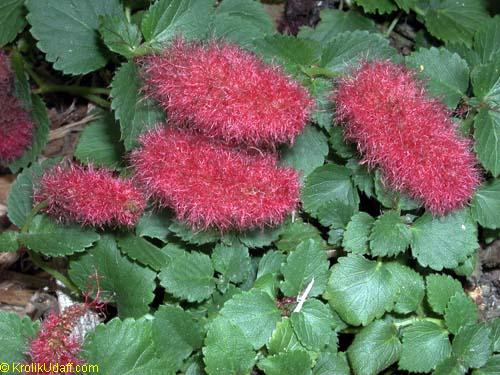
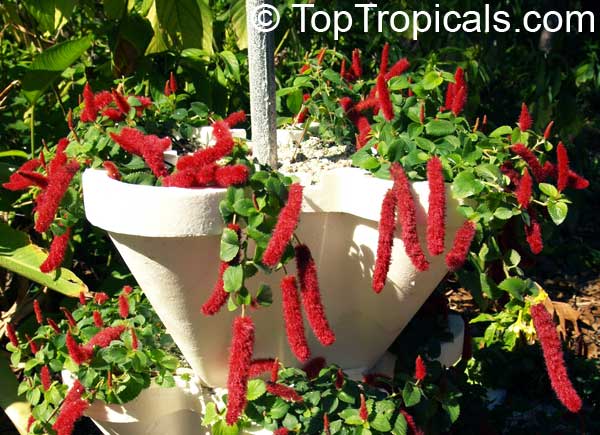
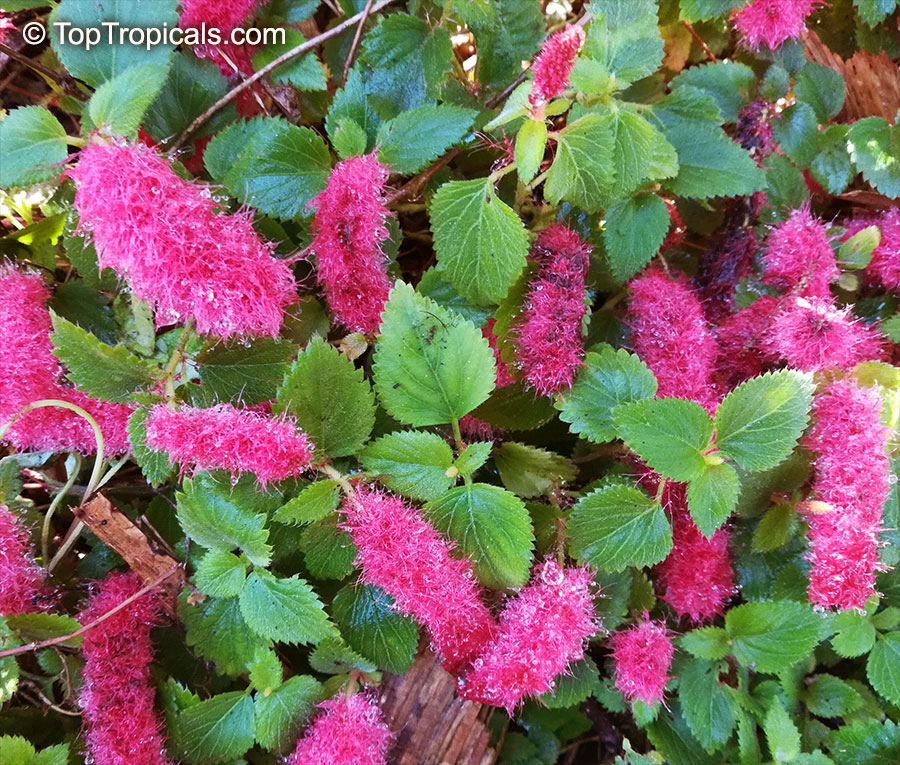
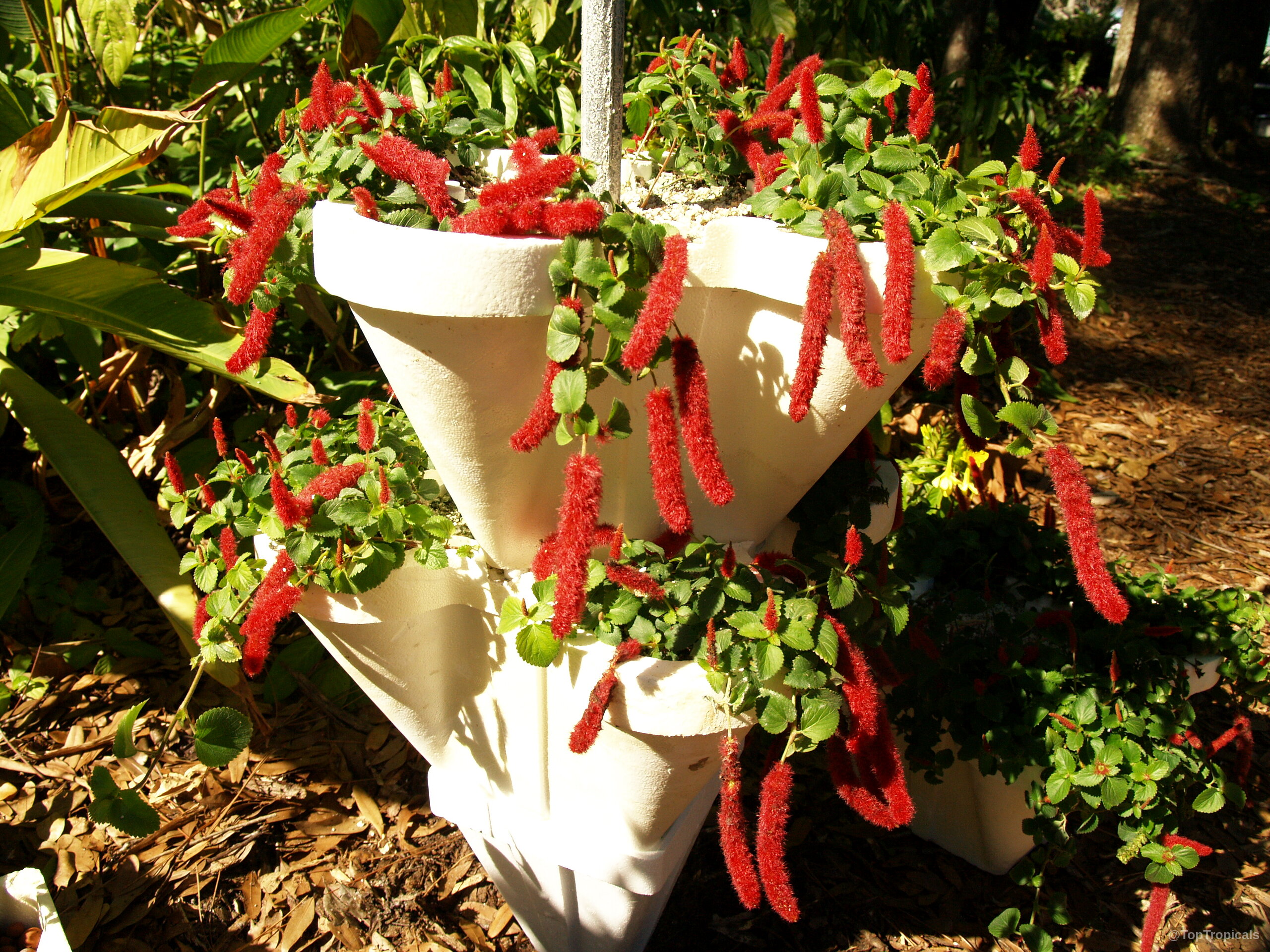
Dwarf Chenille Plant gets its common name from the fuzzy plumes of tiny, foxtail-shaped bright red flowers that trail above a thick mound of small, serrated leaves. Given enough light, this plant blooms nearly year-round! The blossoms that begin as wispy buttons and elongate into fuzzy cones. At maturity, they become 3-4" long streamers.
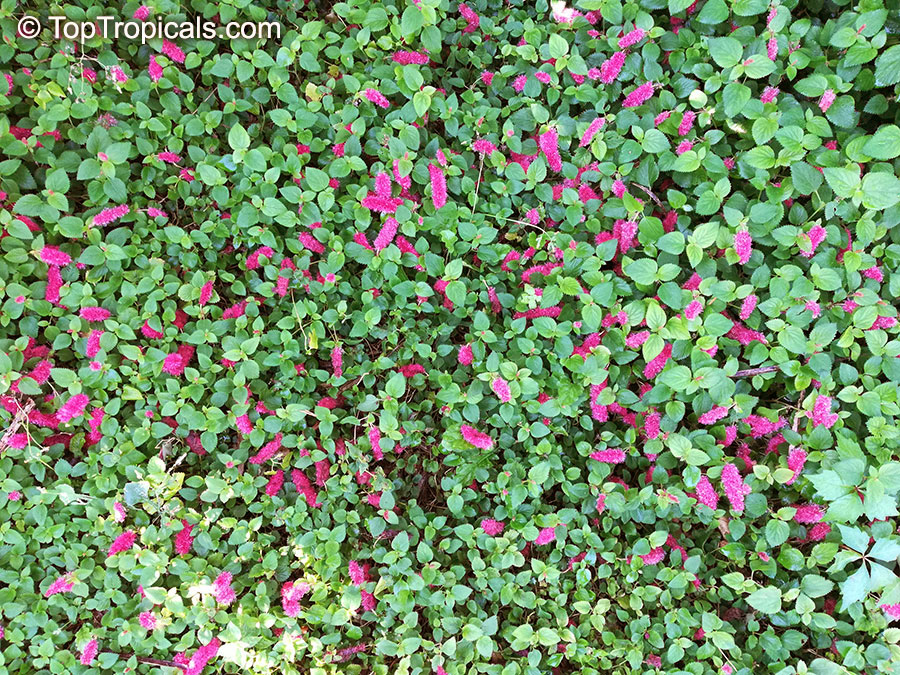
A spectacular plant for a hanging basket, container or ground cover, it is heat tolerant, great for both hot Southern landscapes or as an easy houseplant, providing bright light.
Place this unusual house plant on a pedestal stand or pot it in a hanging basket to show off those eye-catching fuzzy blooms.
This is a dwarf plant that stays small and doesn't need pruning. It's naturally bushy, so you don't have to pinch its growing tips to get it to branch out.
A favorite with children, and cats too!
Recommended Fertilizer: SUNSHINE Megaflor - Bloom Nutrition Booster
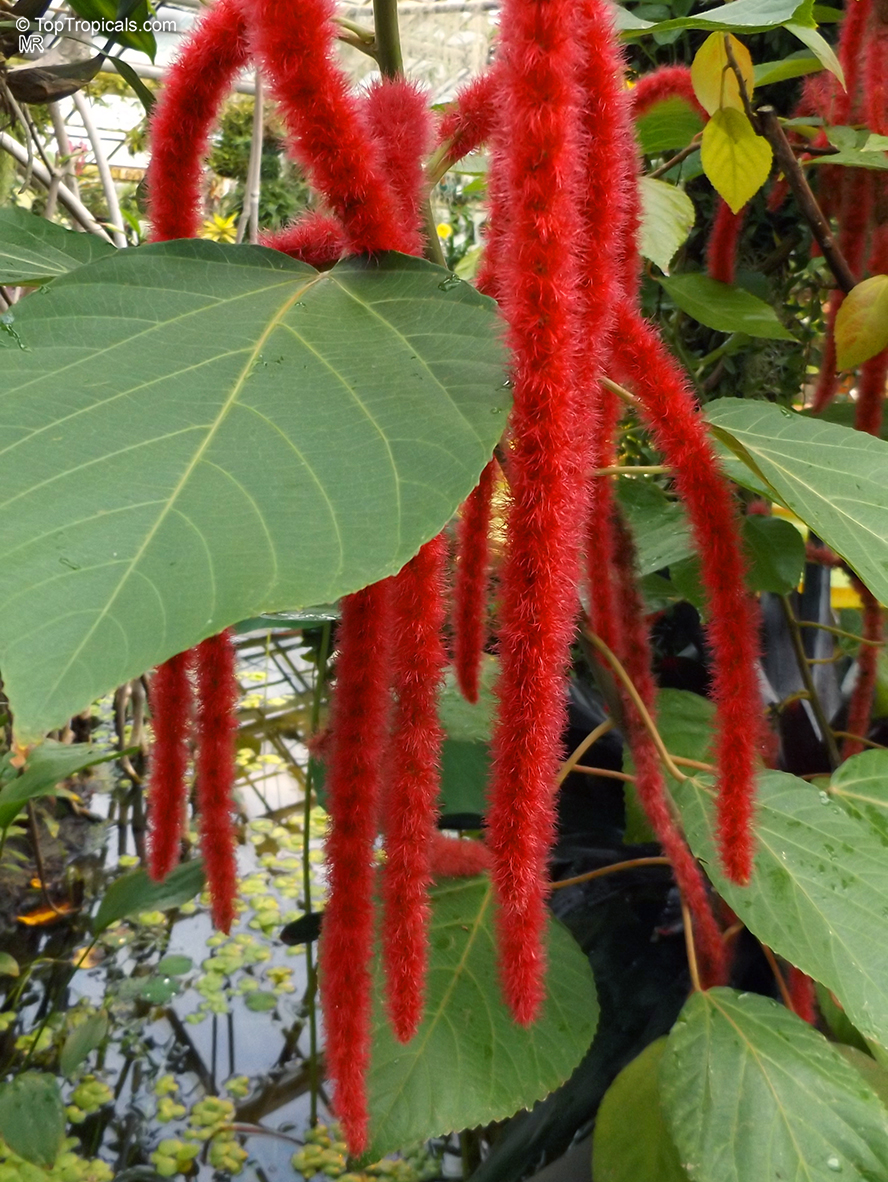
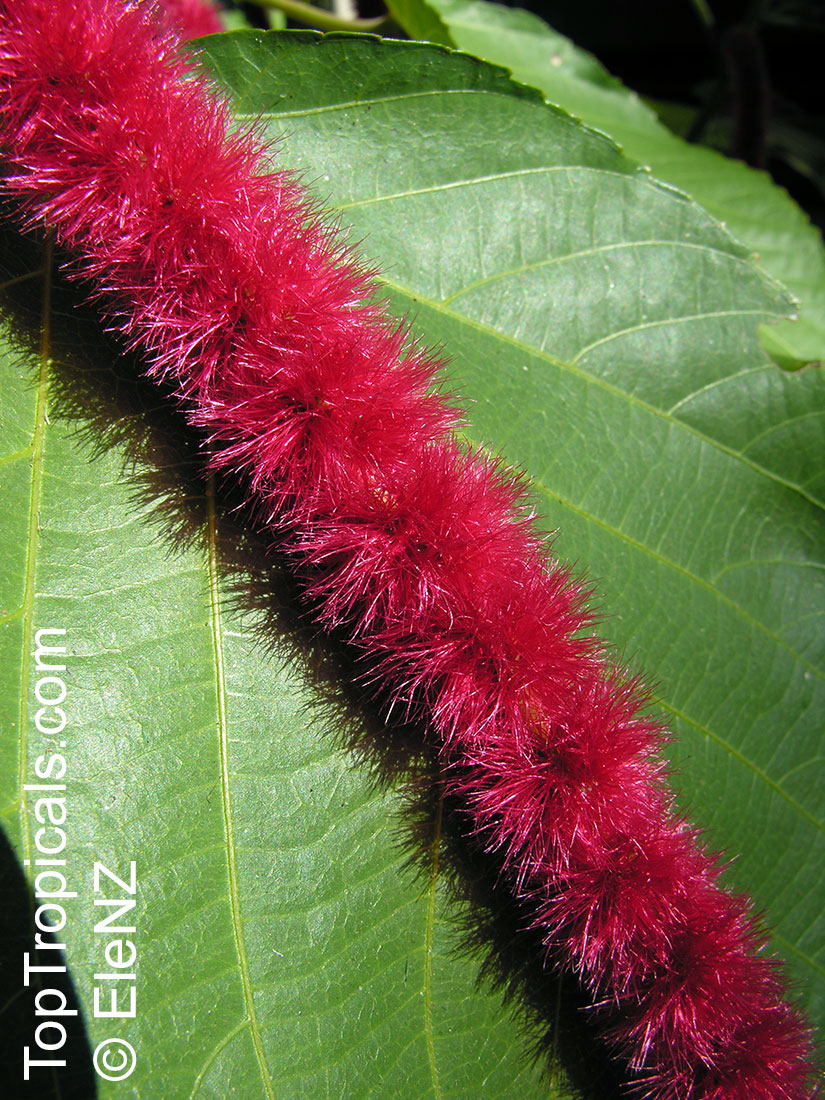
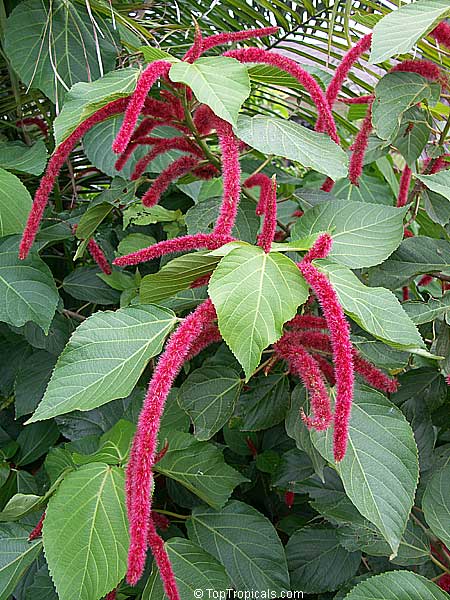
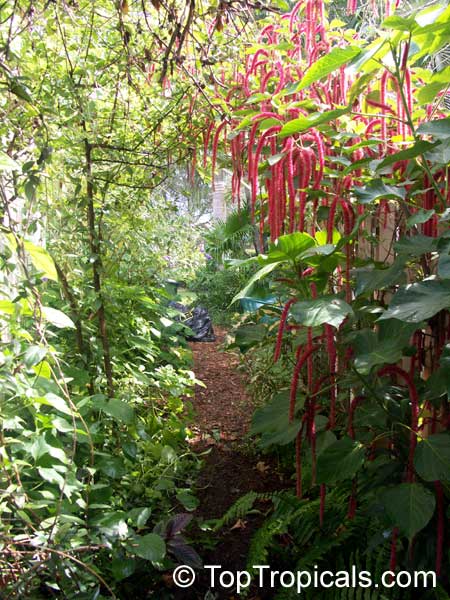
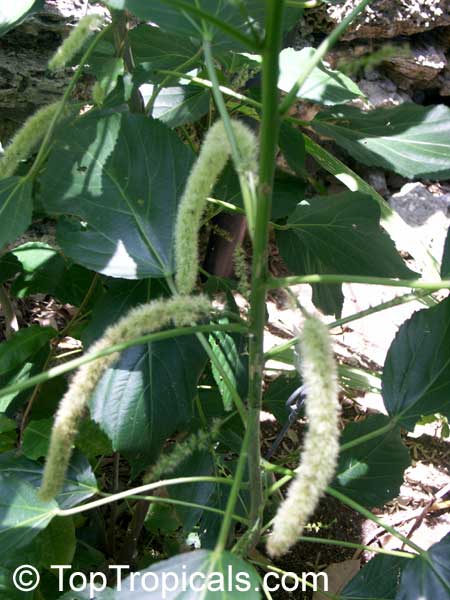
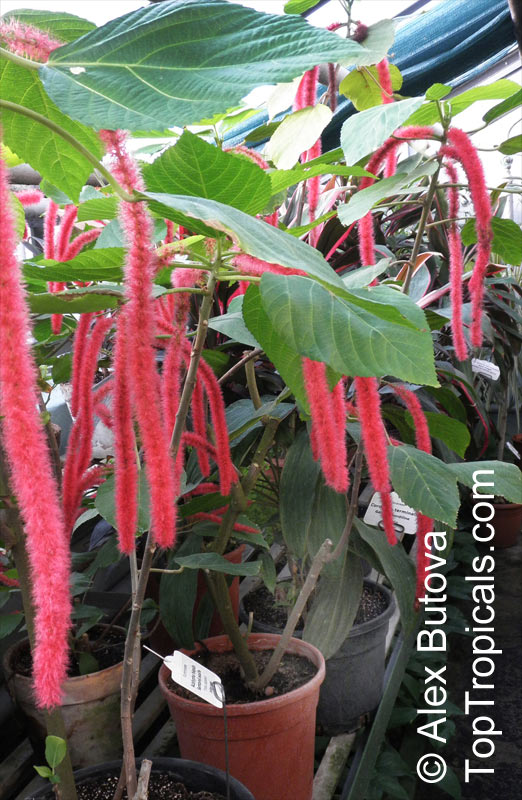
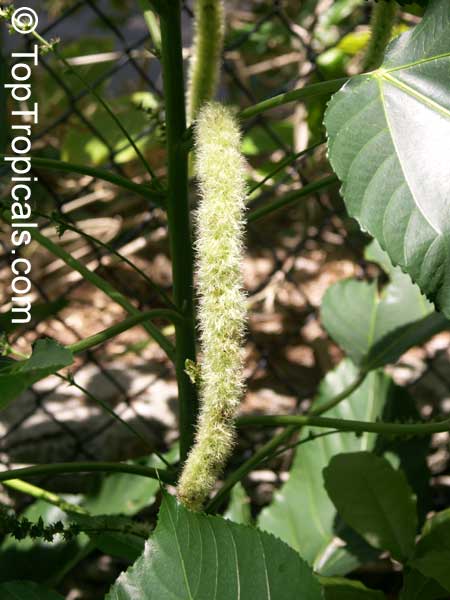
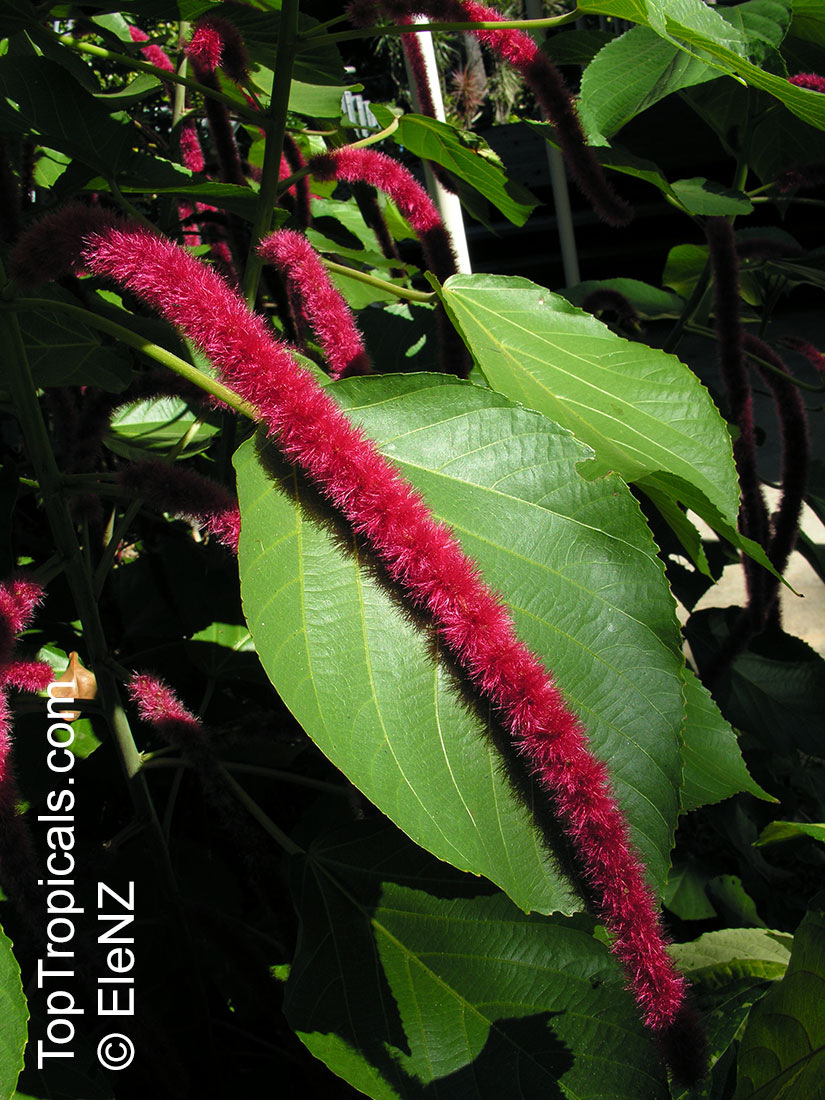
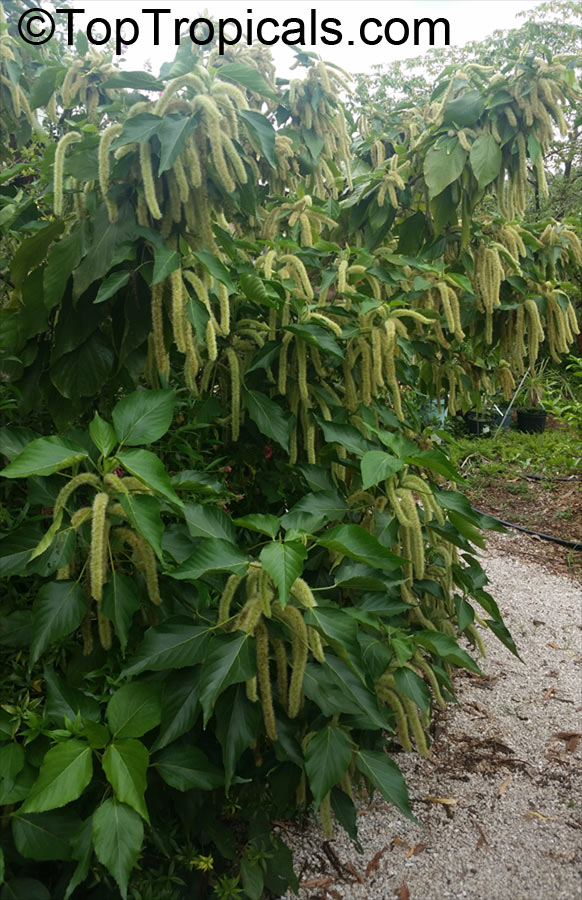
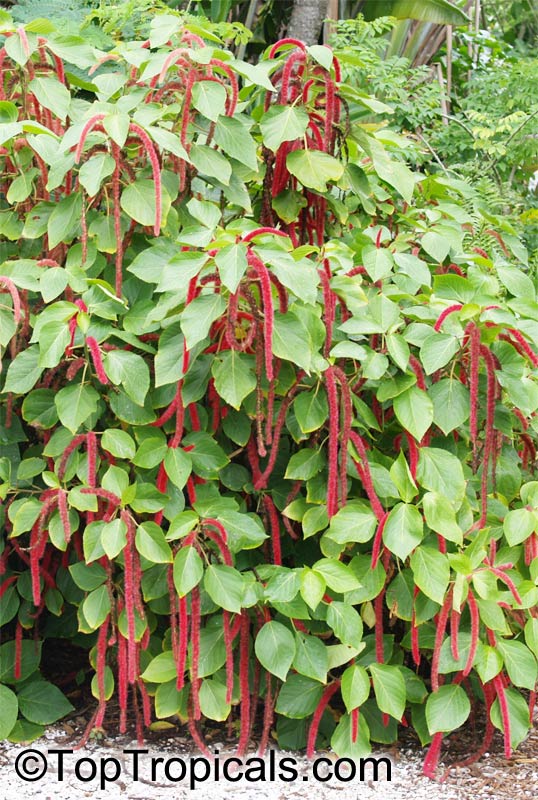
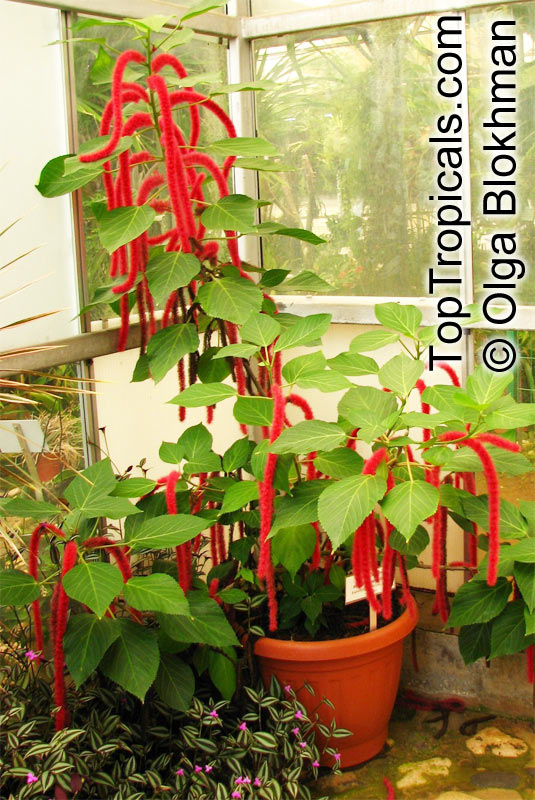
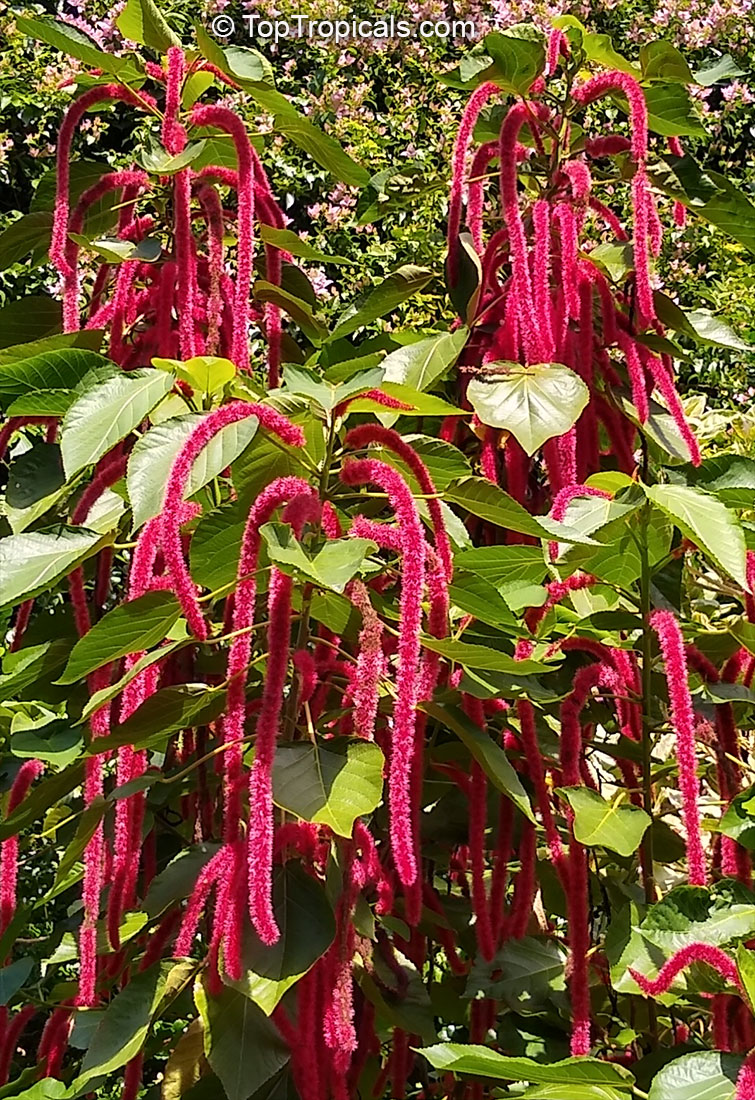
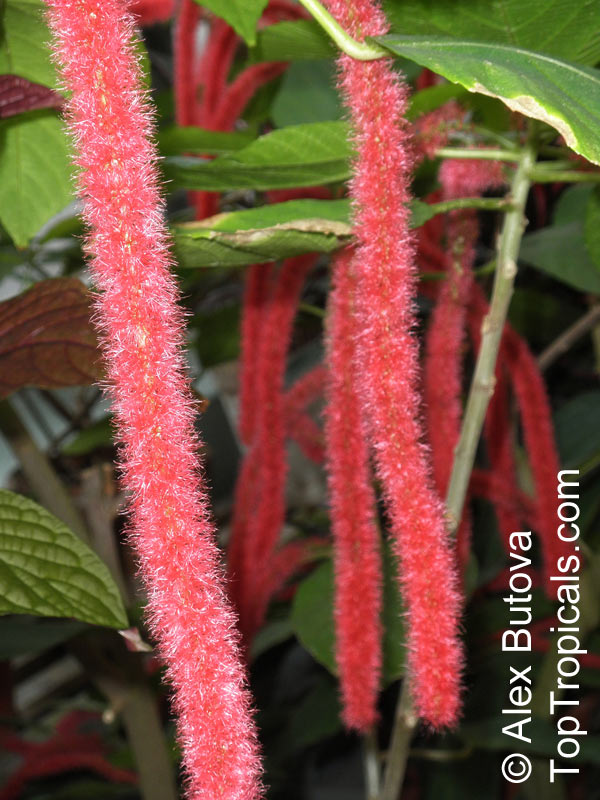
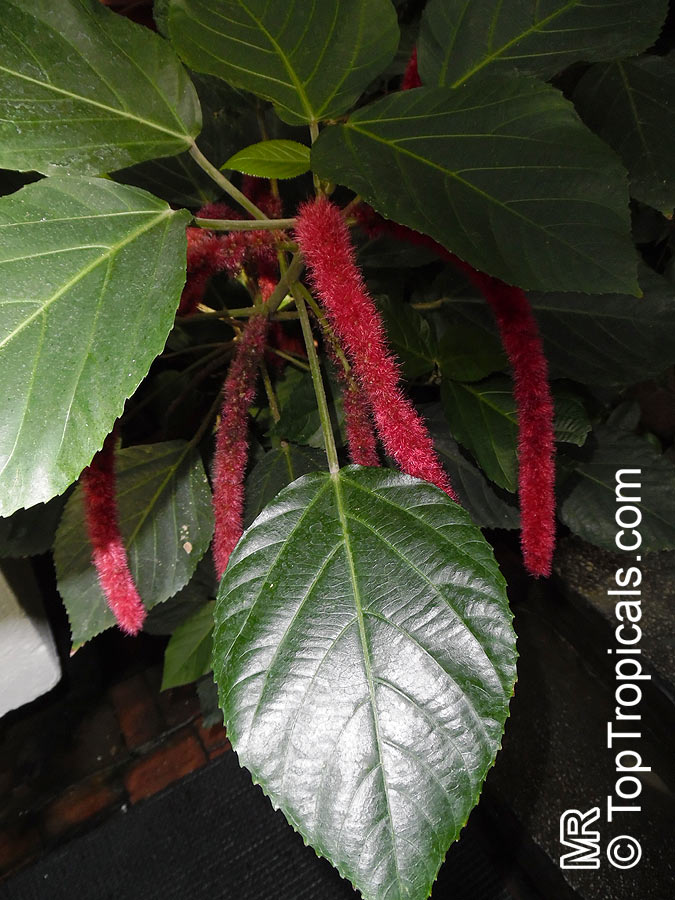
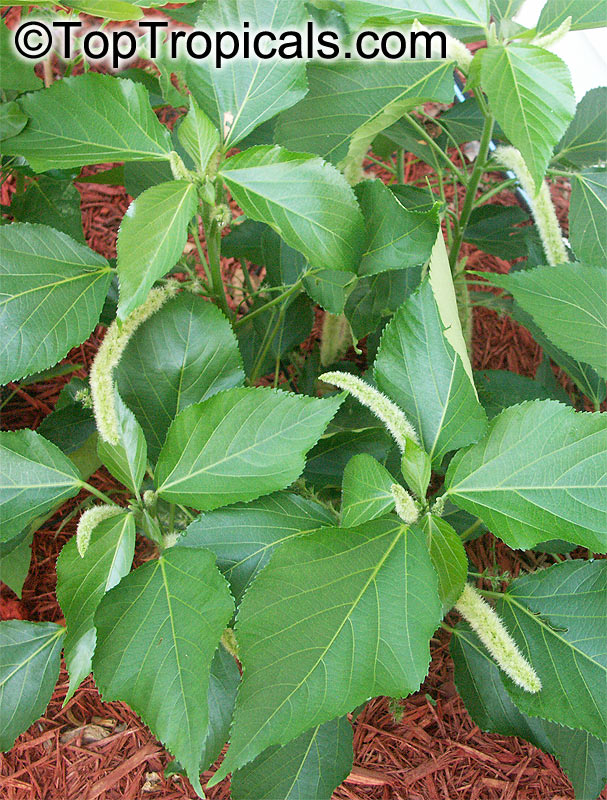
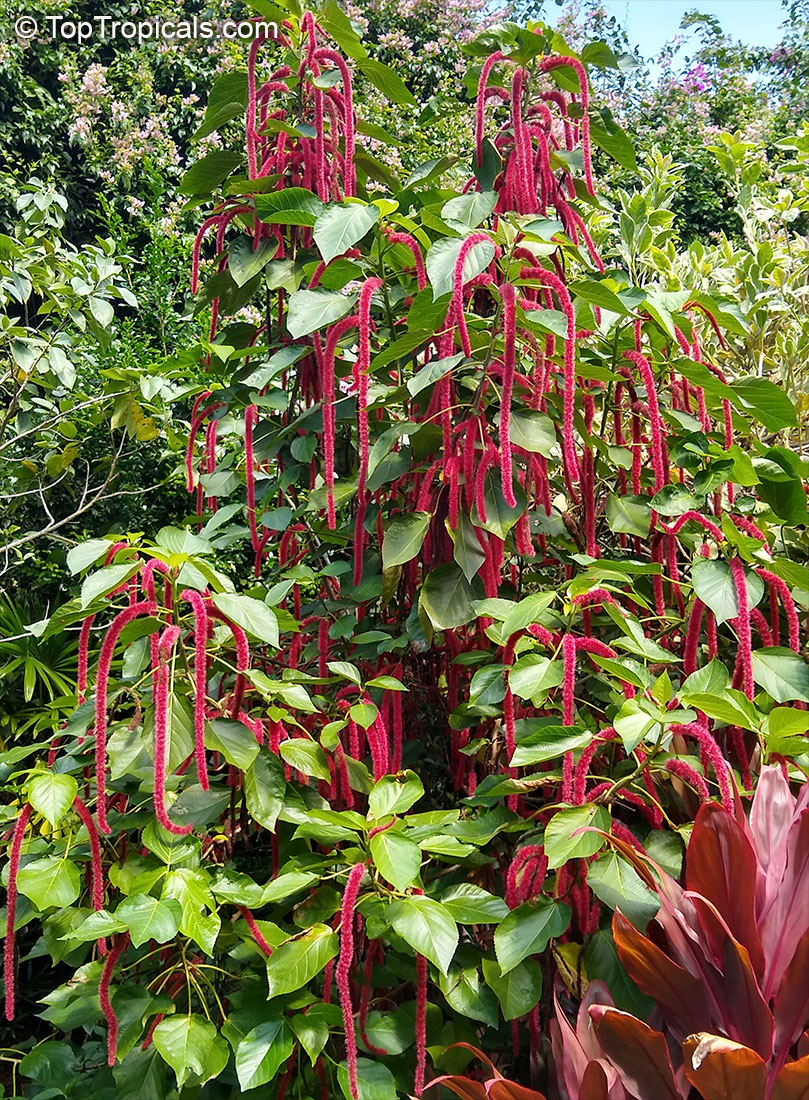
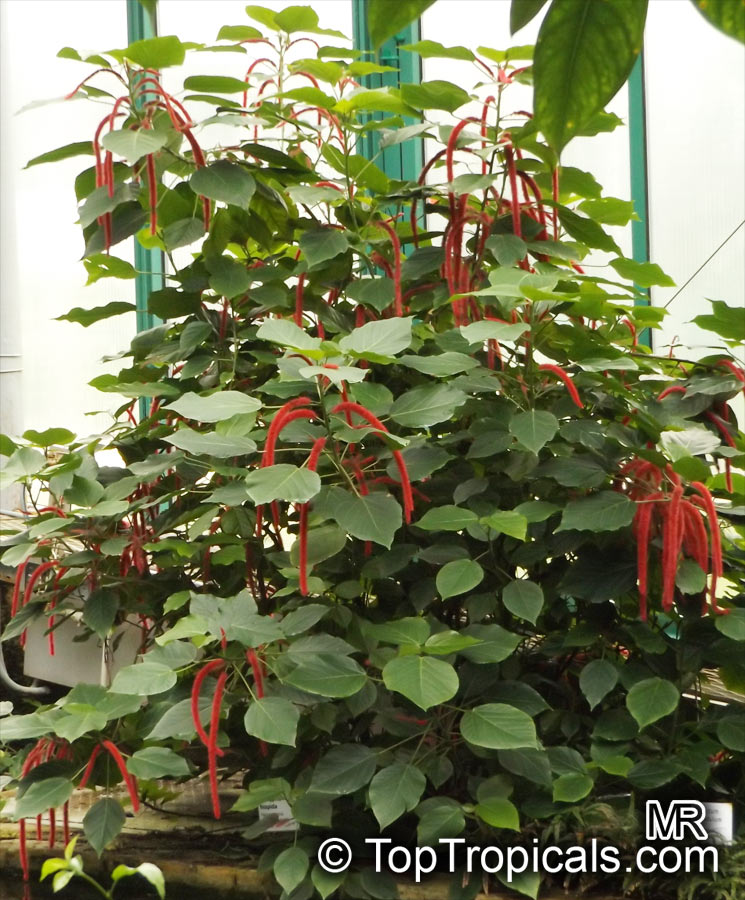
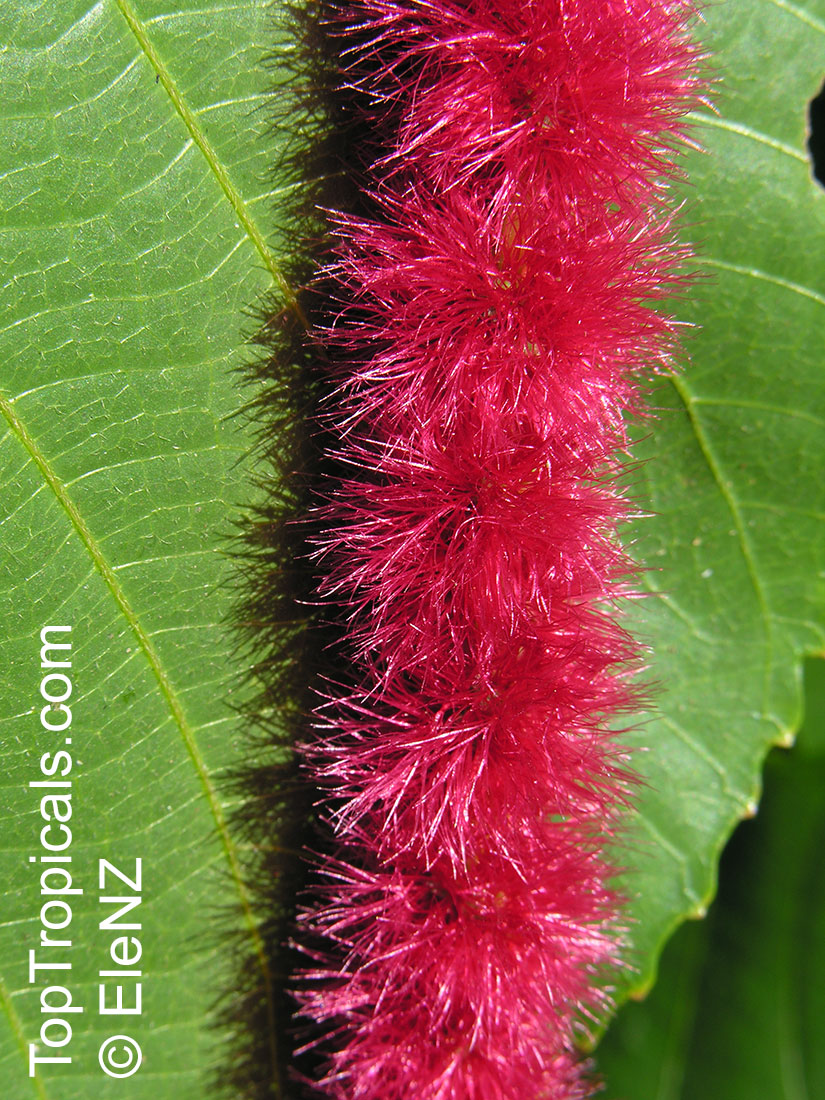
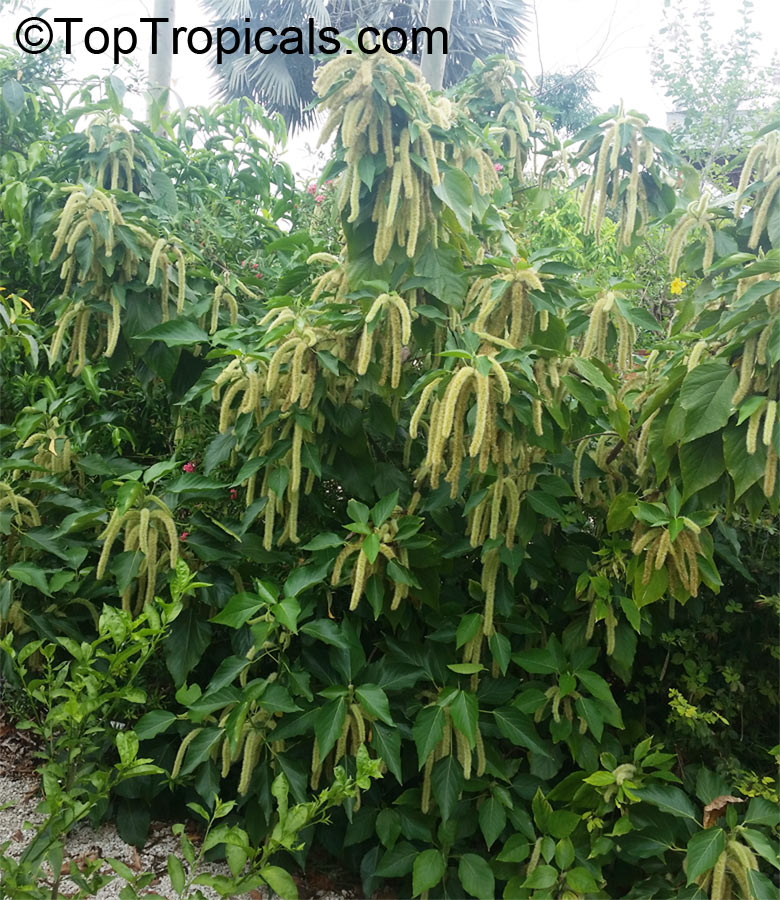
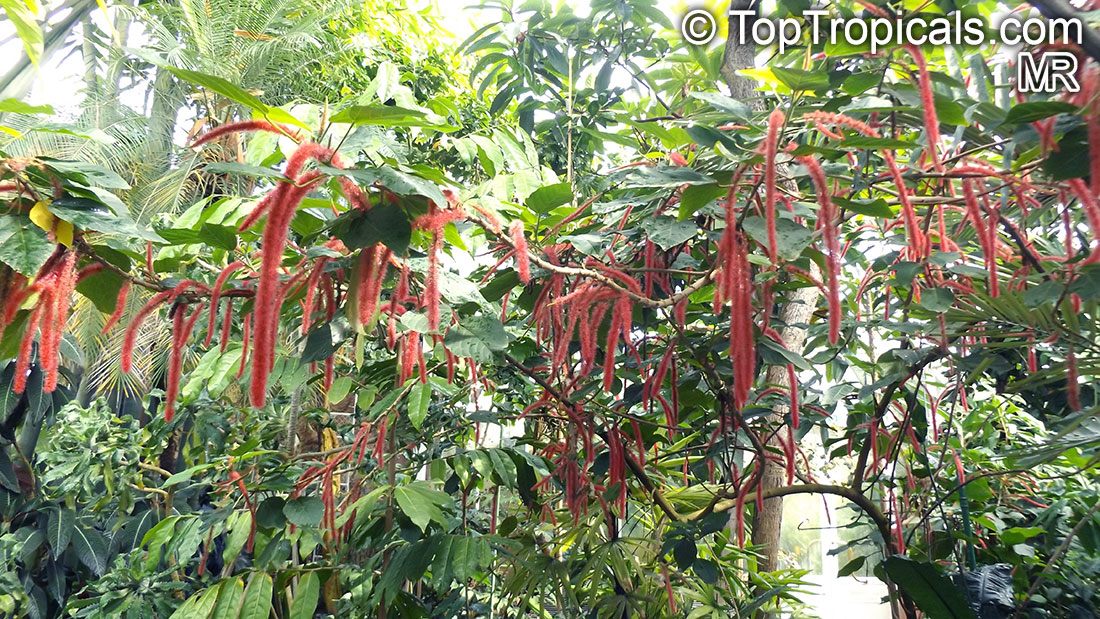
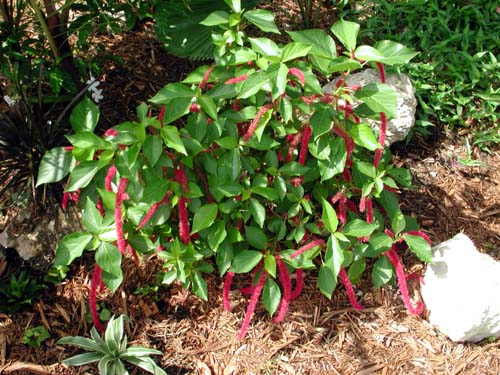
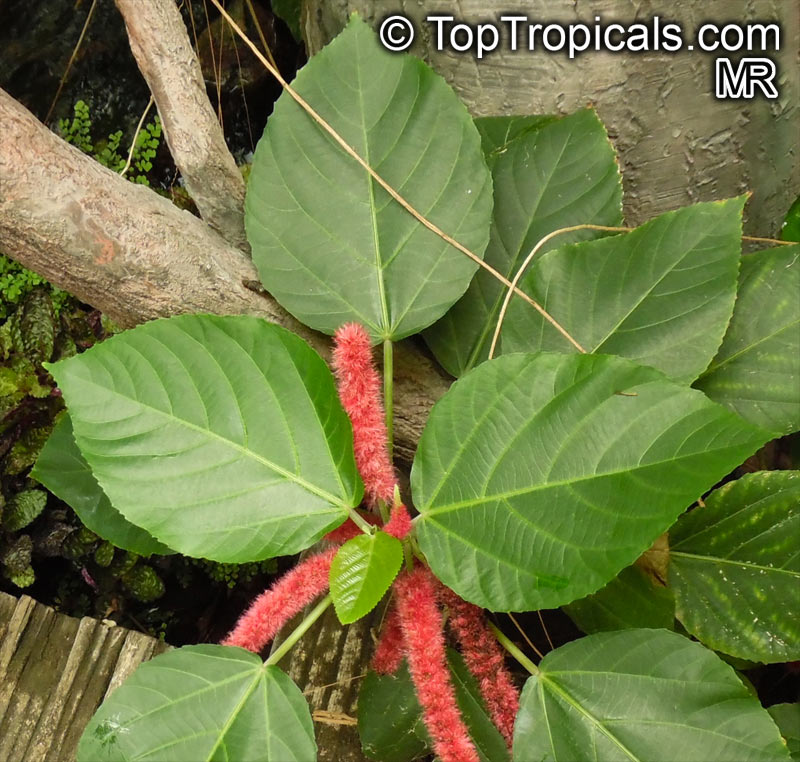
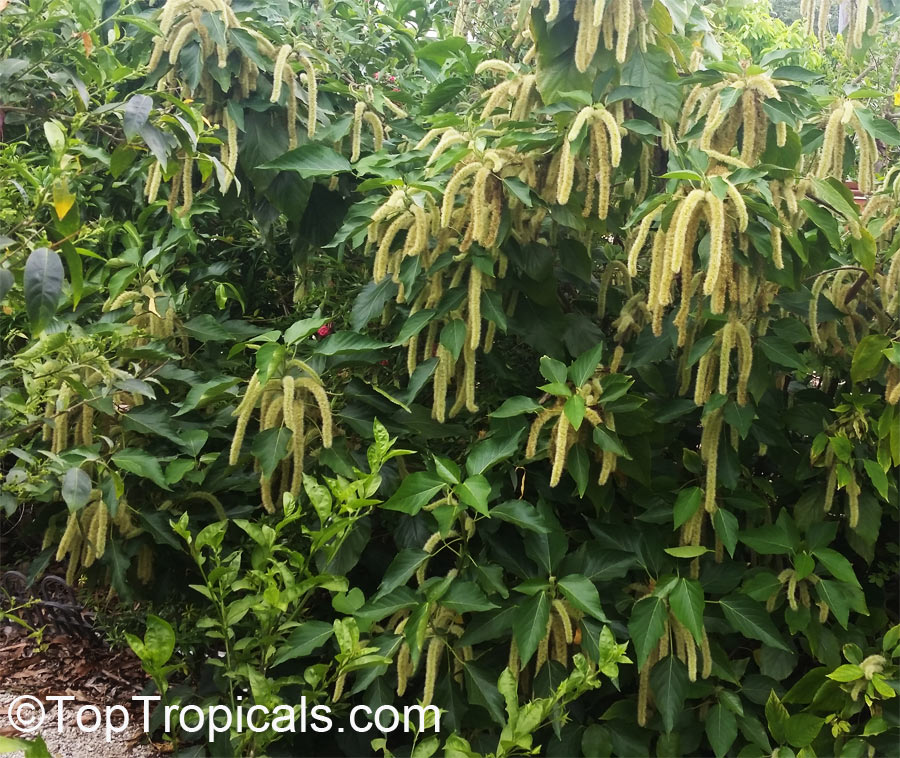
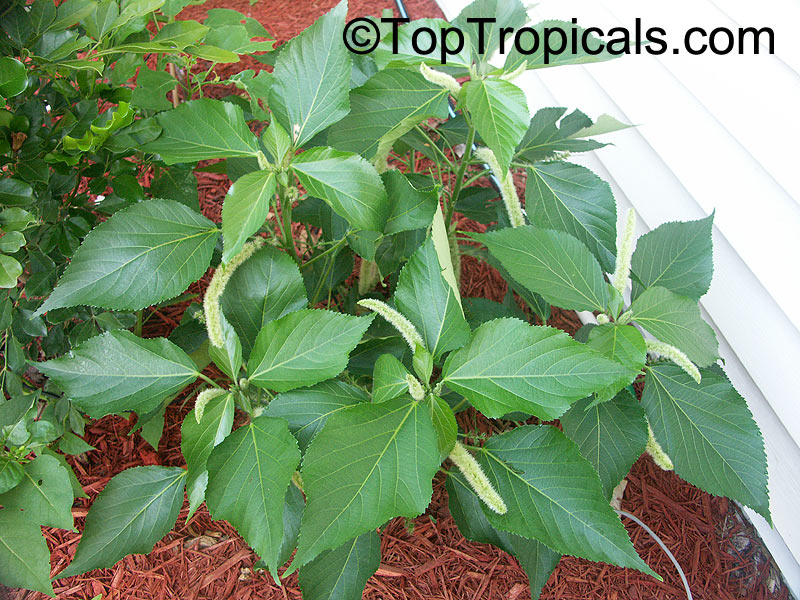
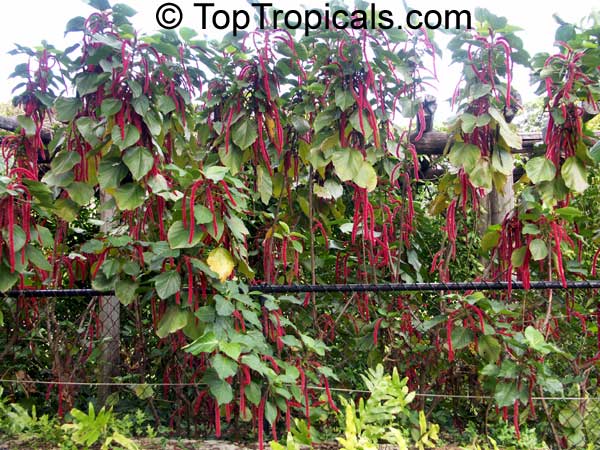
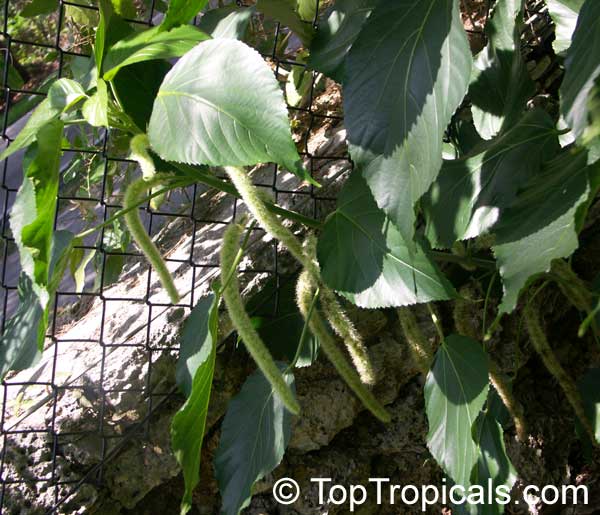
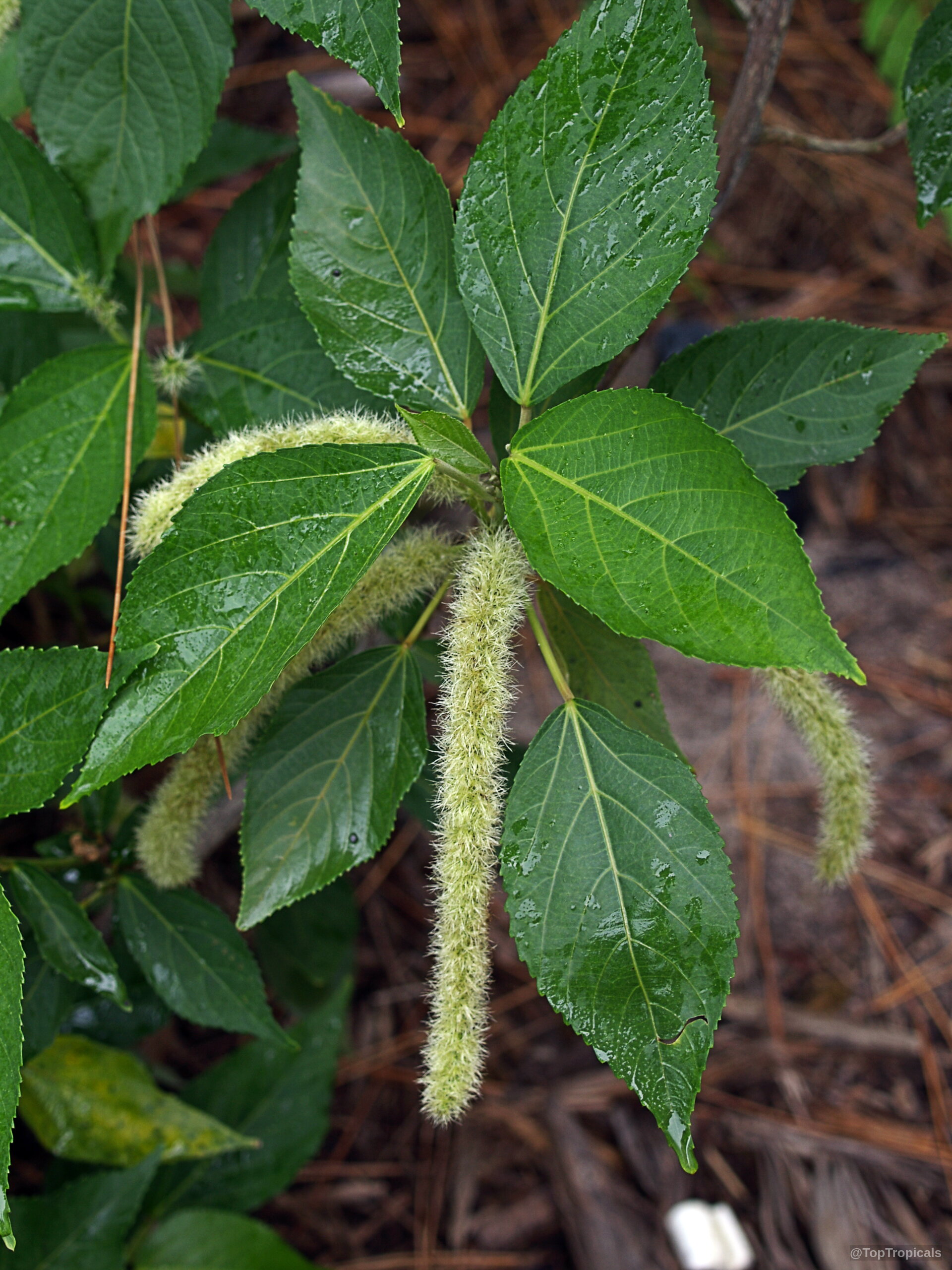
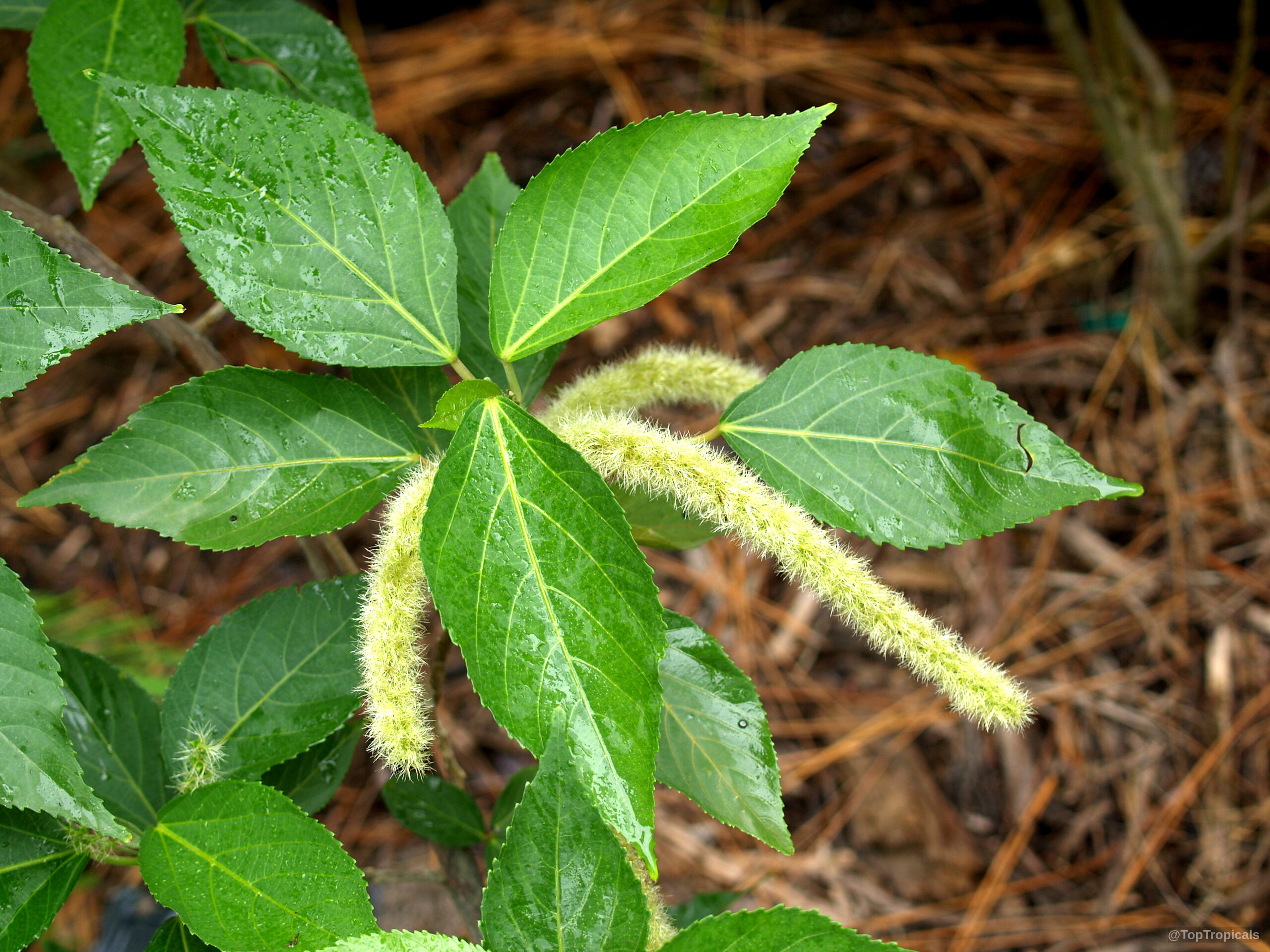
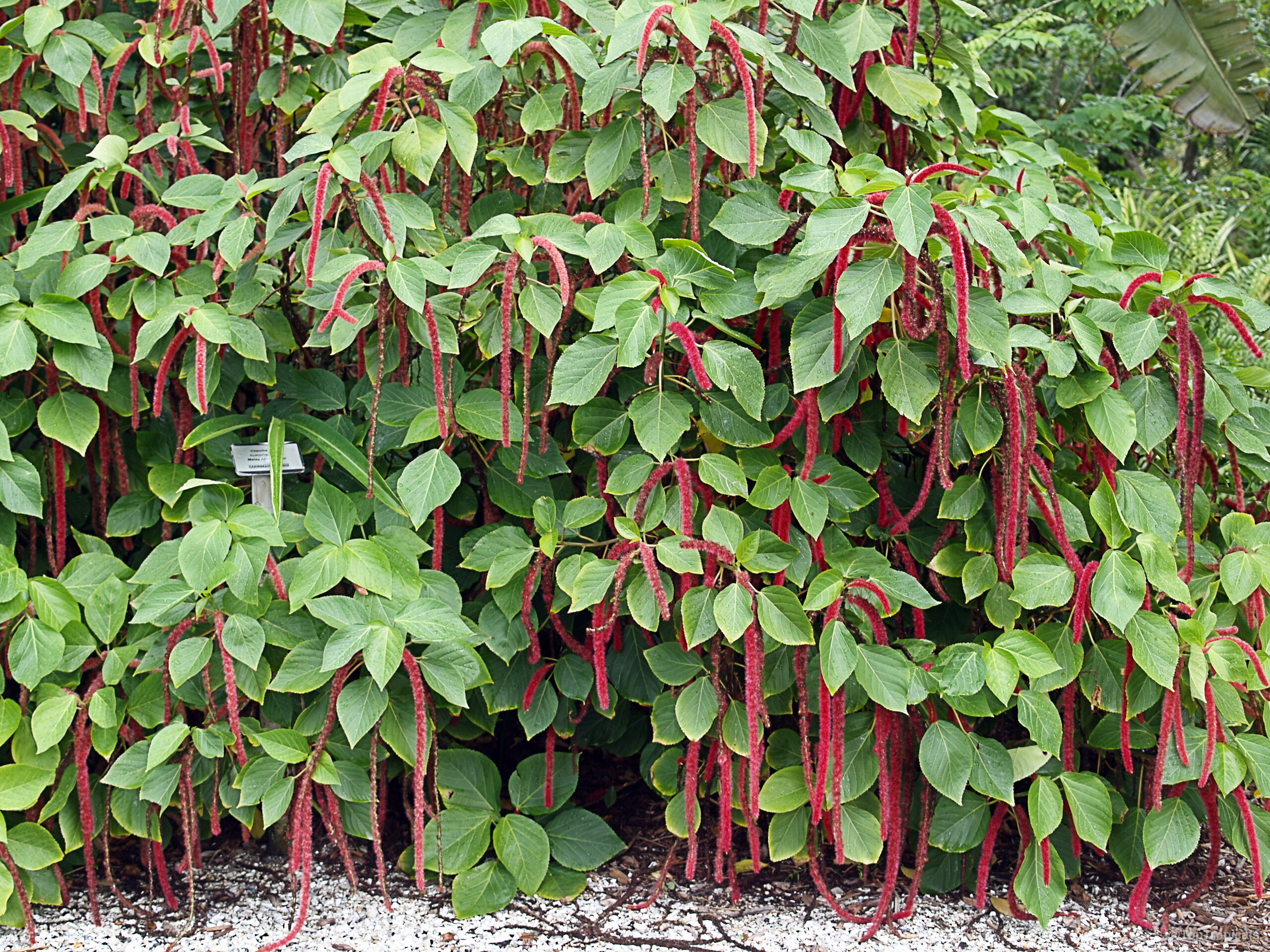
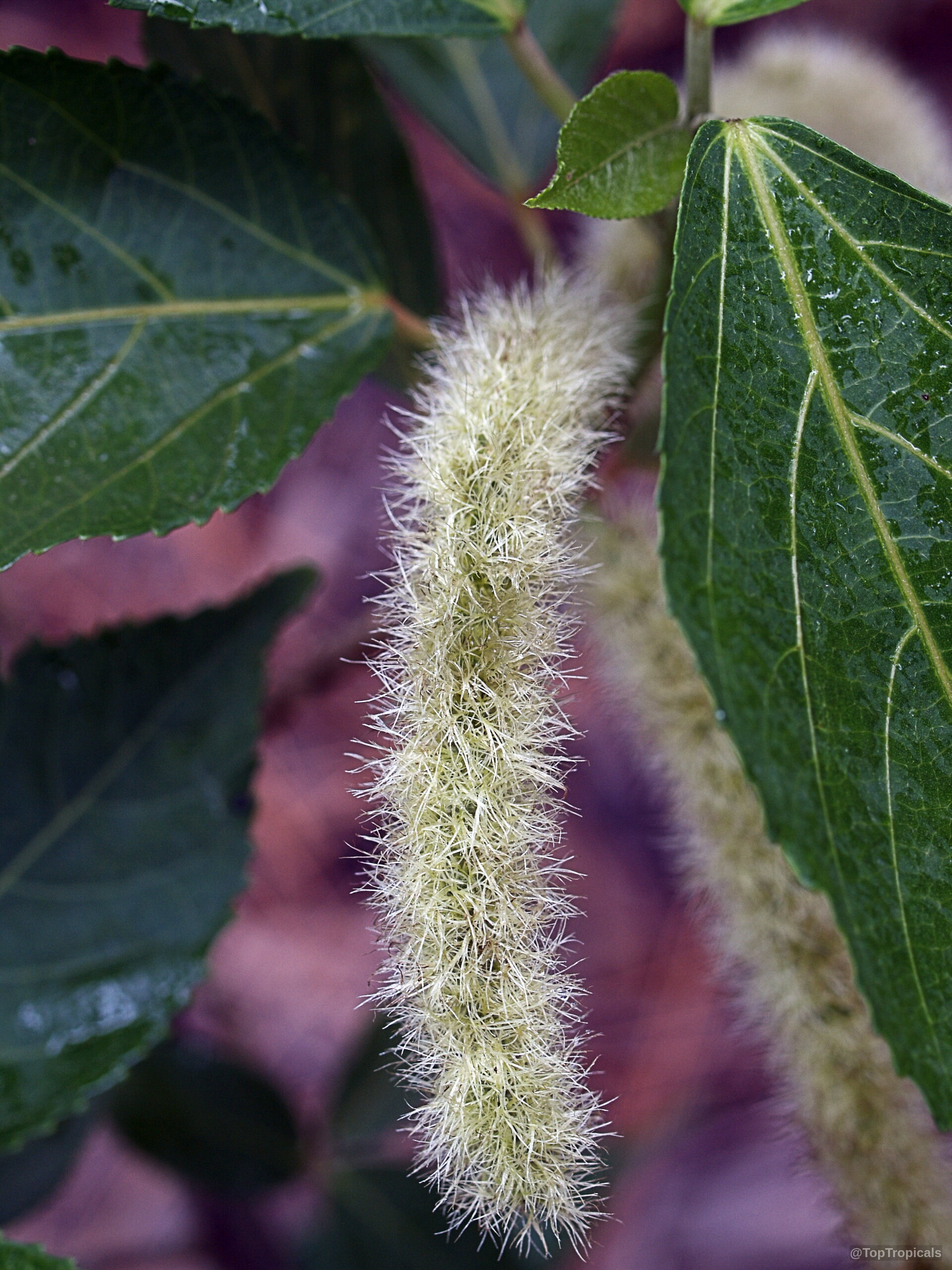
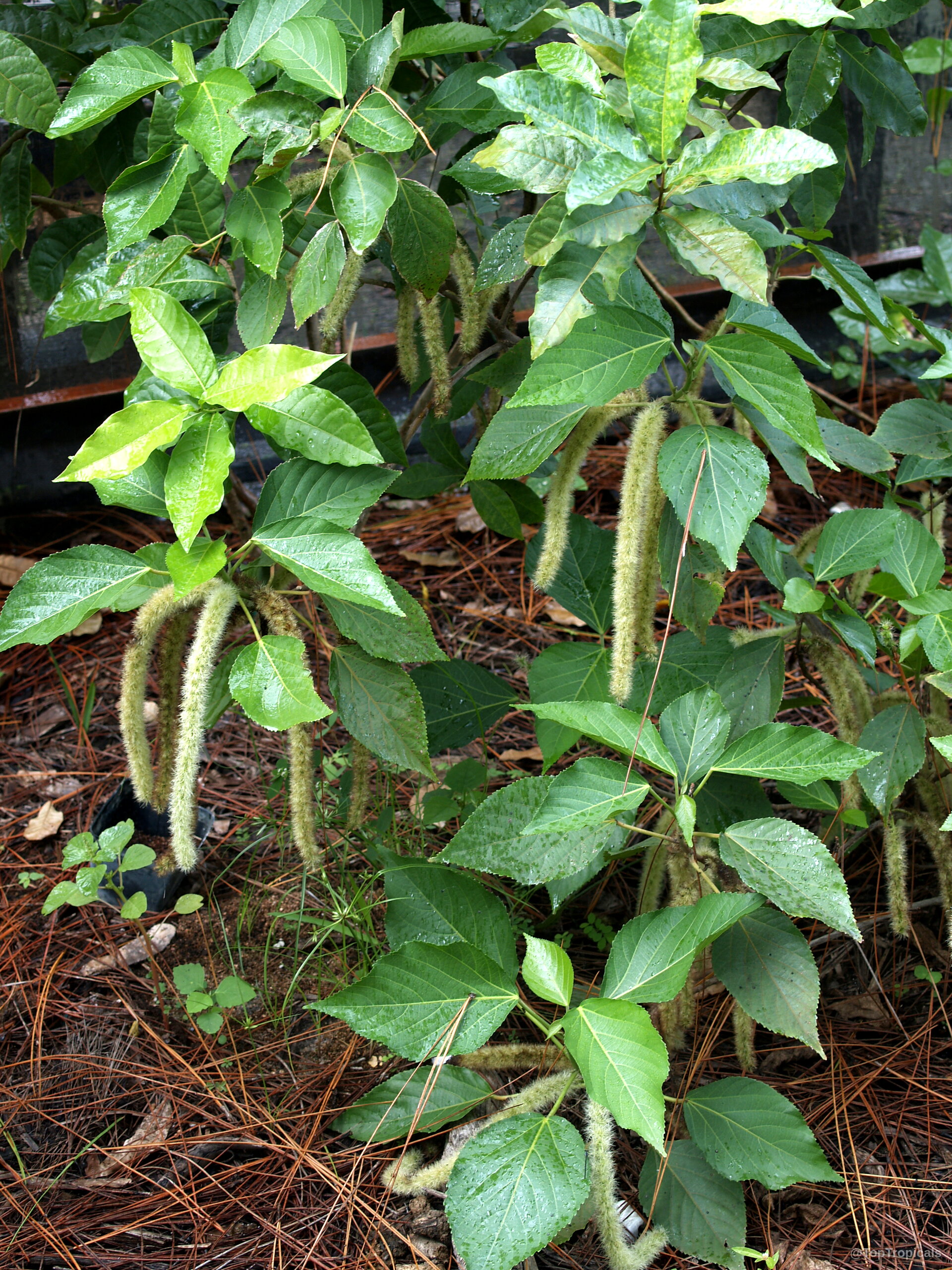
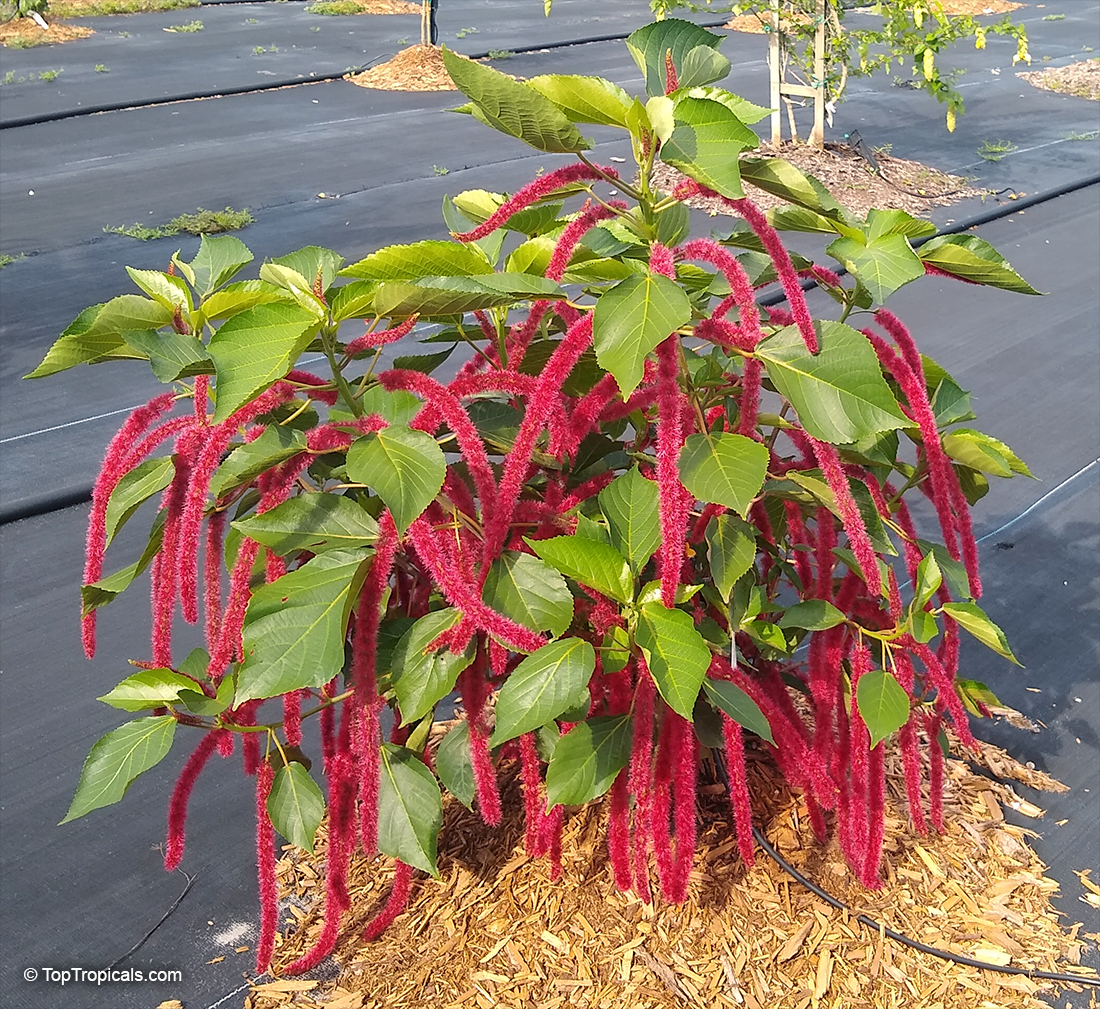
Botanical name: Acalypha hispida
Common names: Cat Tail, Chenille Plant, Red Hot Cattail, Foxtail, Red Hot Poker
Family: Euphorbiaceae
Origin: East Indies
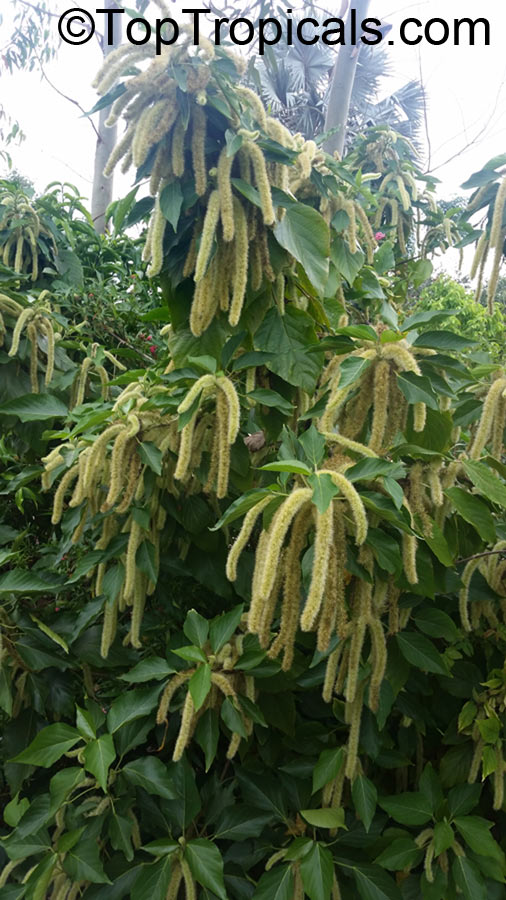
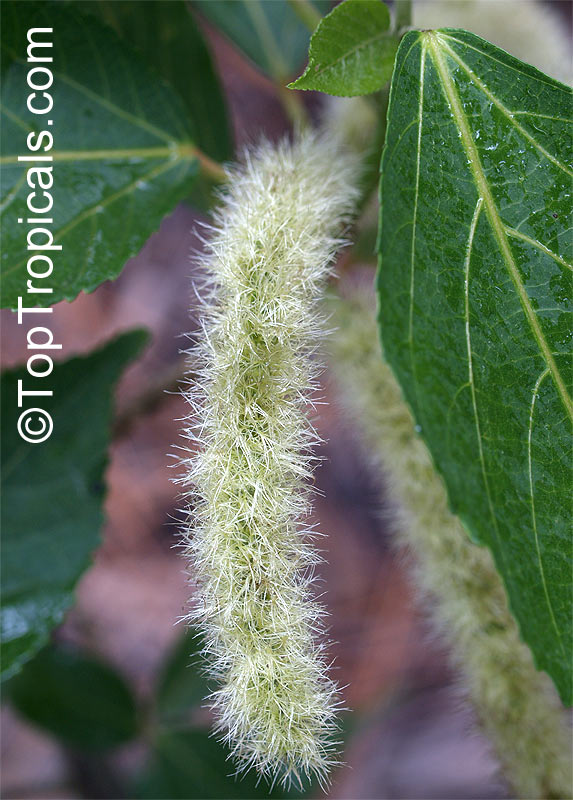
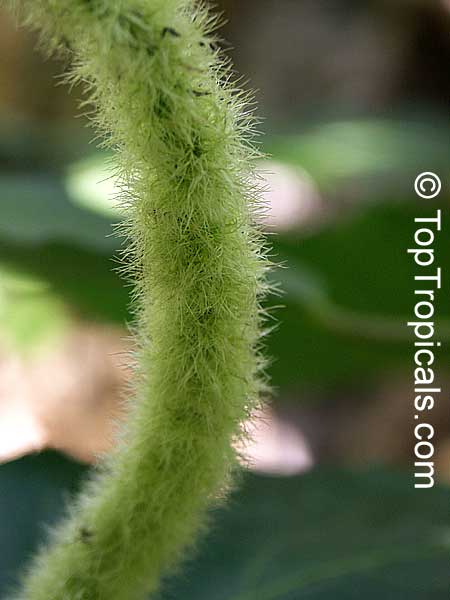
Acalypha hispida grows as a large shrub 5-10 feet tall. If trimmed, it can be grown as a hedge or even maintained at a low height shrubs. The plant produces flowers in a variety of shades, including the traditional cat tail red, as well as pink, white, off-white, and crimson or vinous colored varieties. The shrub blooms year round in warmer climates and spring through fall in cooler climates, producing masses of long, bright inflorescences that hang down and give rise to its popular name of "Cat Tails". The brightly colored pendulous tassels are extremely showy. This is a tough and versatile plant which is salt-tolerant and seaside-resistant, and can withstand temperatures down to the 30s F for a short period of time.Acalypha hispida can typically be grown in USDA Zones 9-11.
When growing Acalypha hispida in zones cooler than zone 9, the plant should be grown in a pot and brought in for the winter to a cold, but not freezing, area. The soil should be kept moist, and fertilizer should be used sparingly, but may be beneficial from April to August. Acalypha hispida should be pruned often to maintain a healthy shape and prevent overgrowth. To encourage flowering, the new growth should be trimmed during the winter months.

Recommended Fertilizer: SUNSHINE Megaflor - Bloom Nutrition Booster
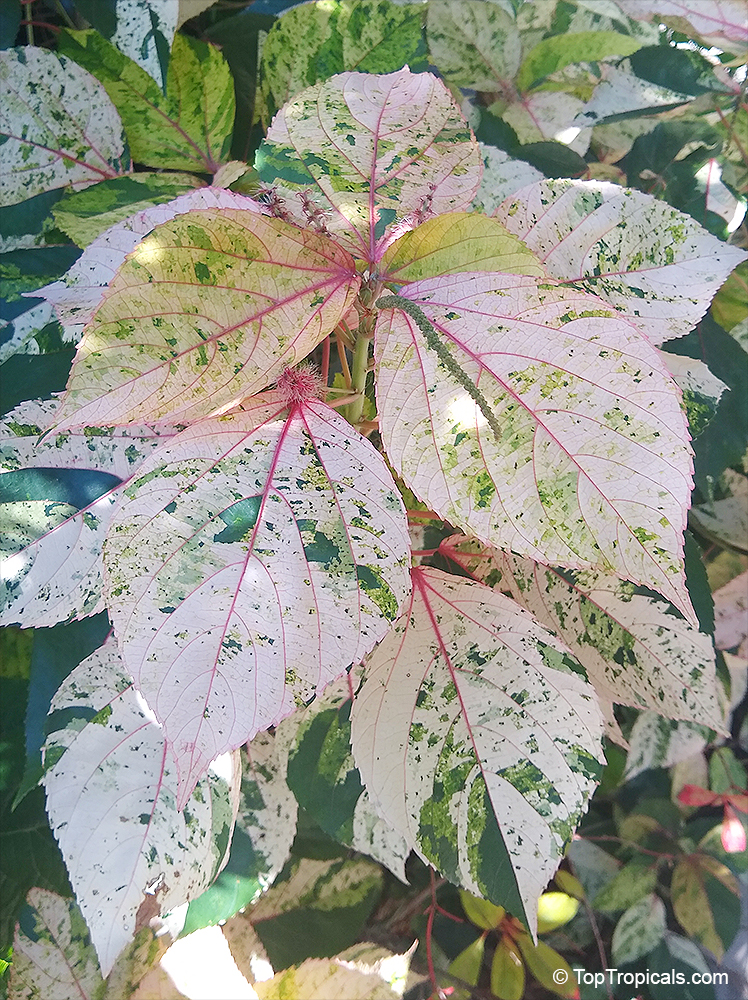
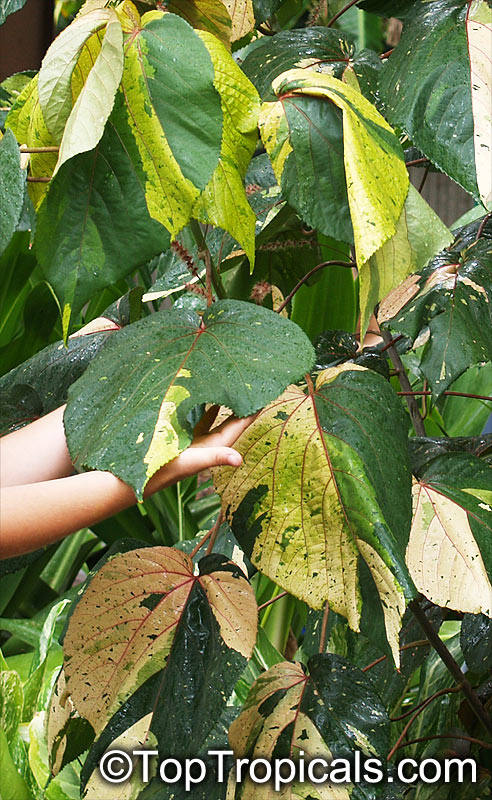
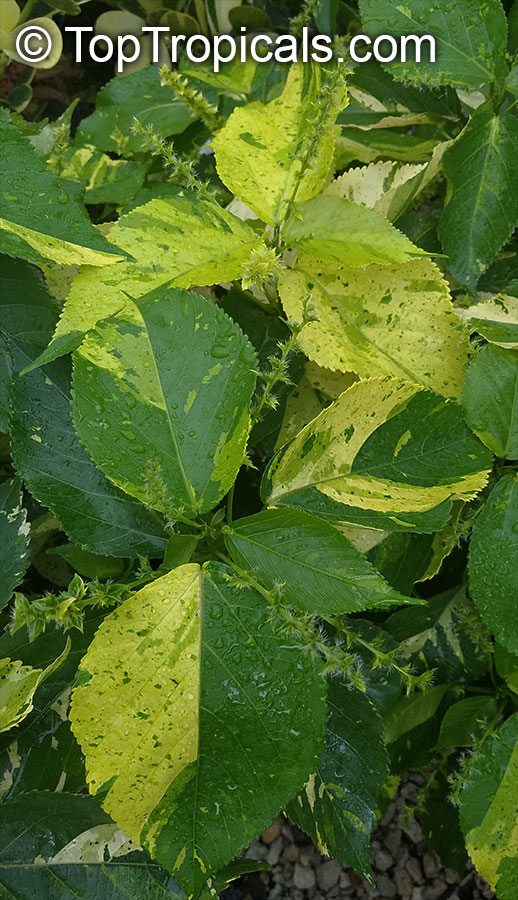
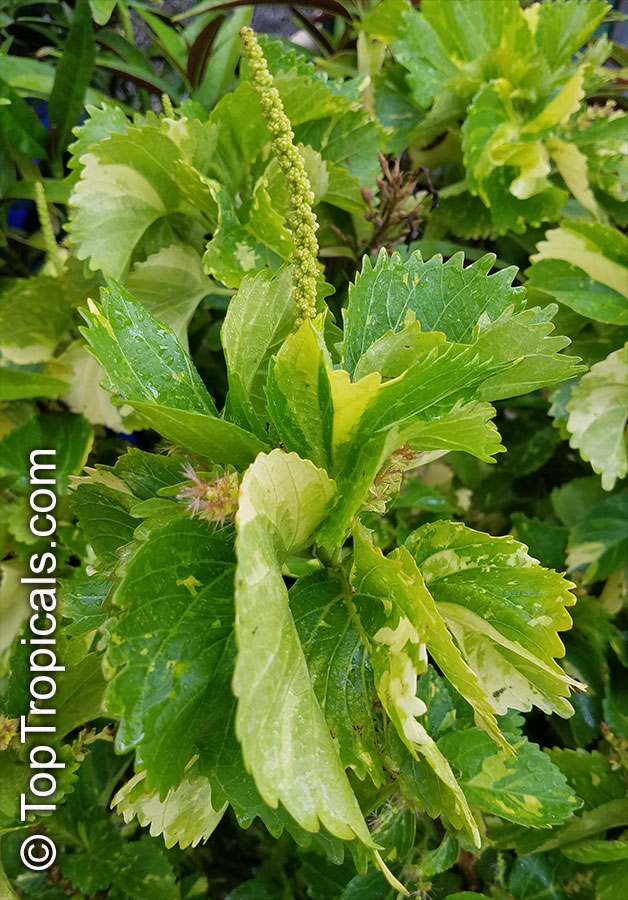
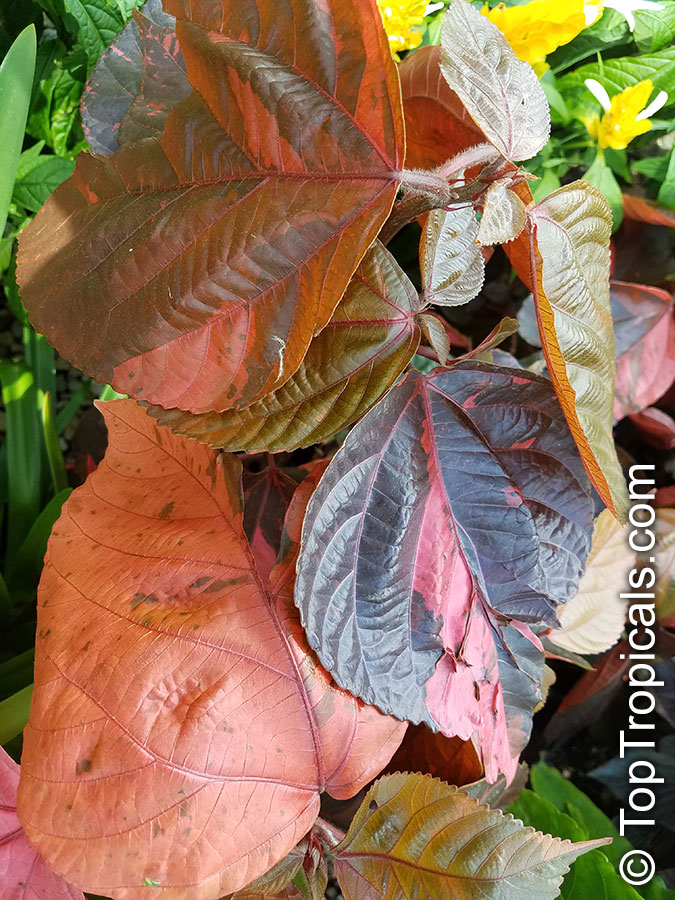
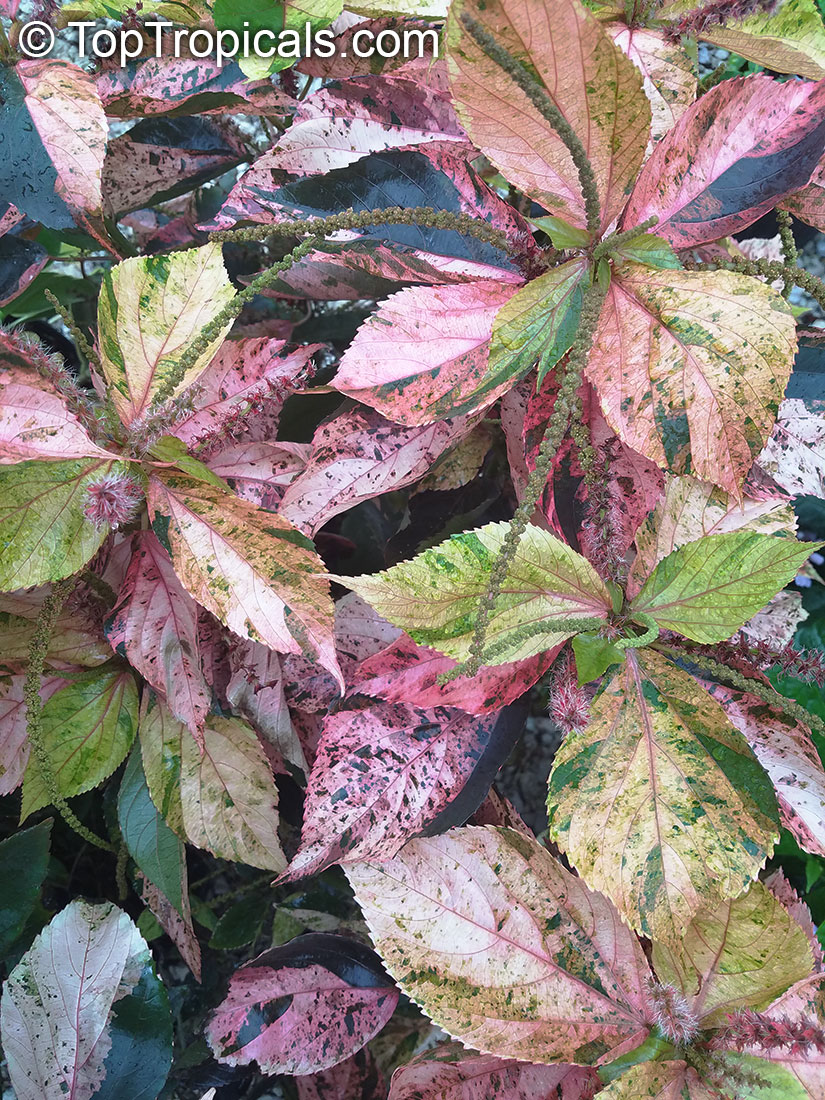
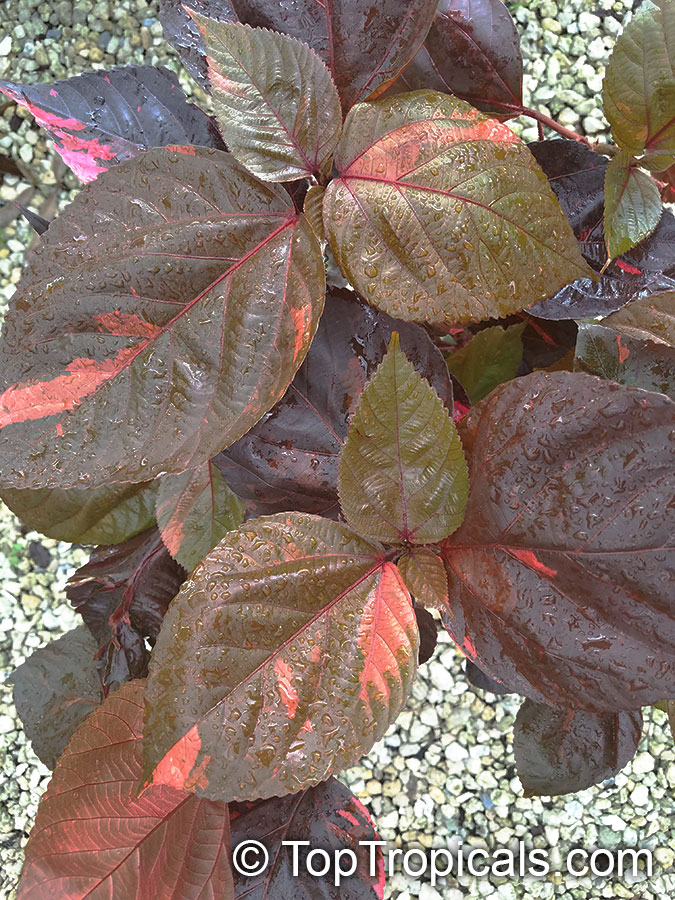
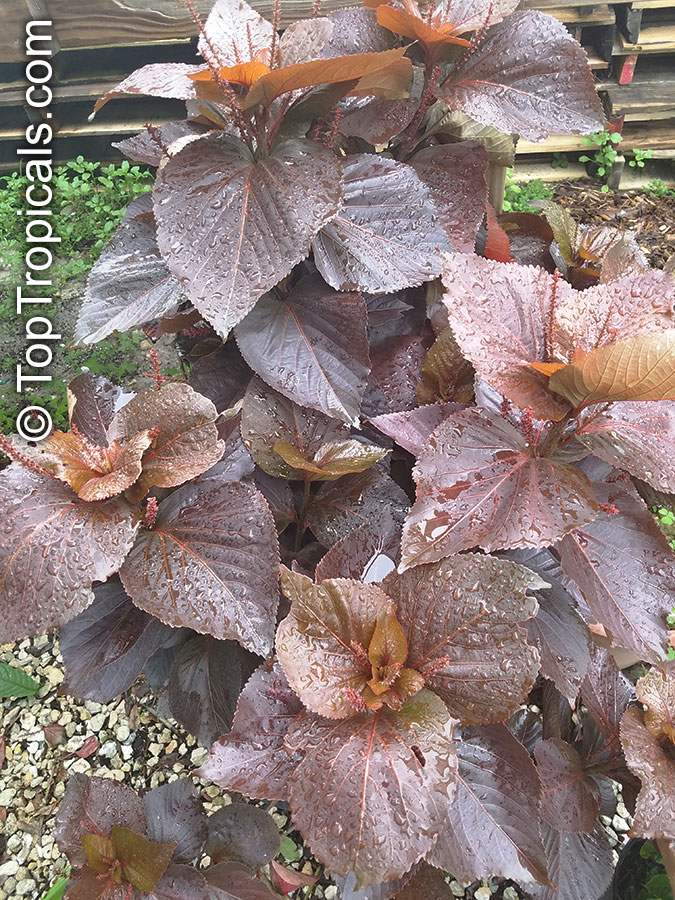
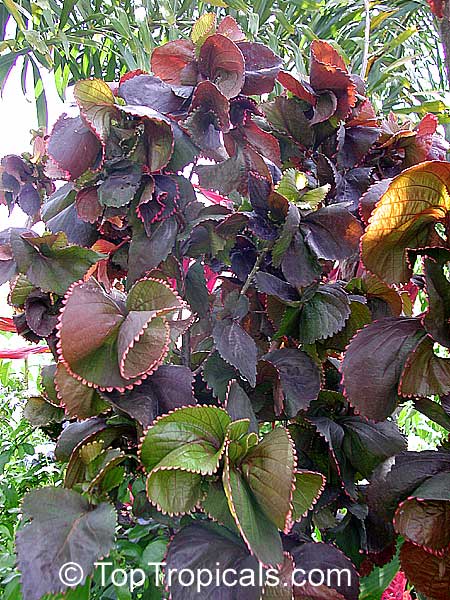
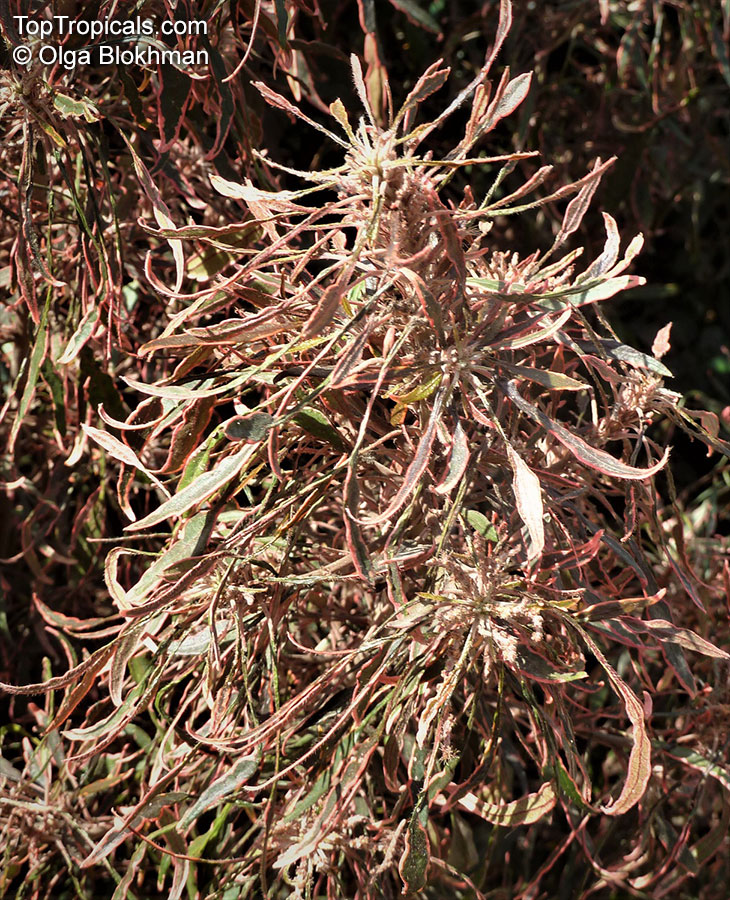
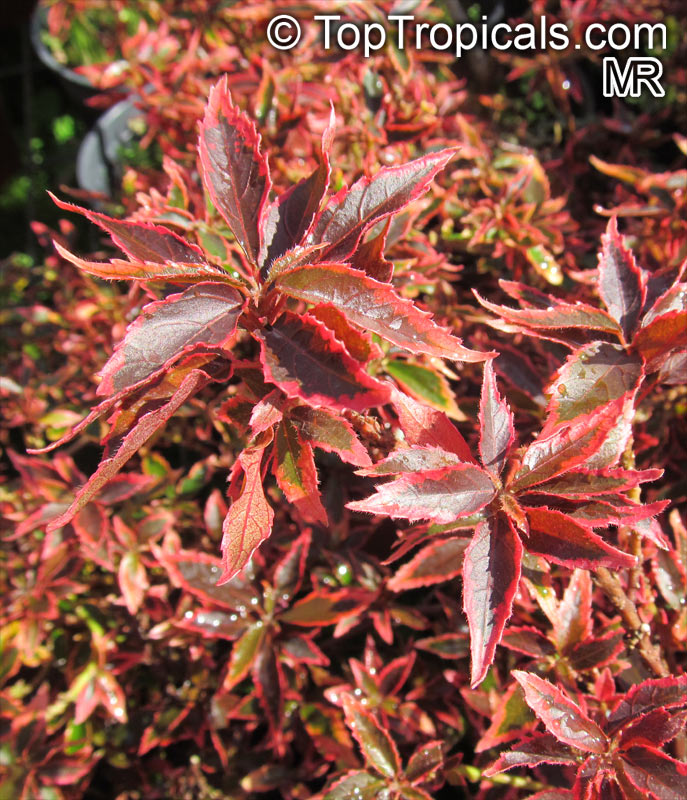
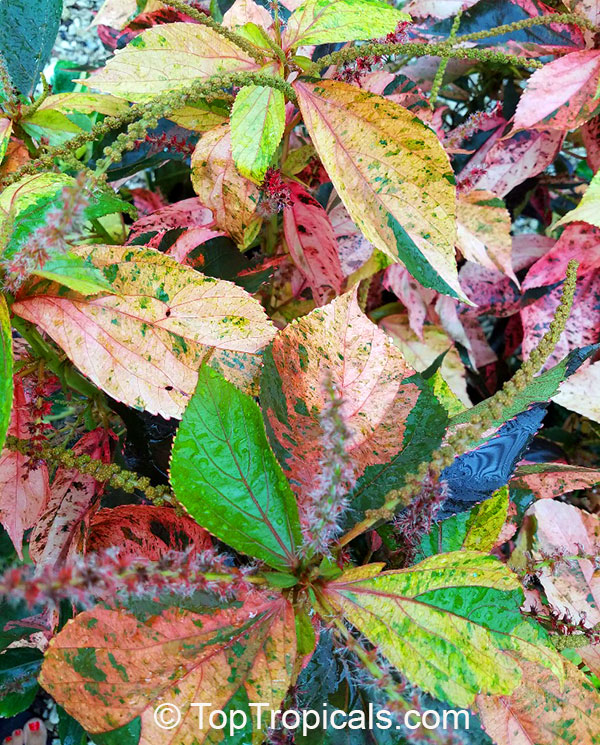
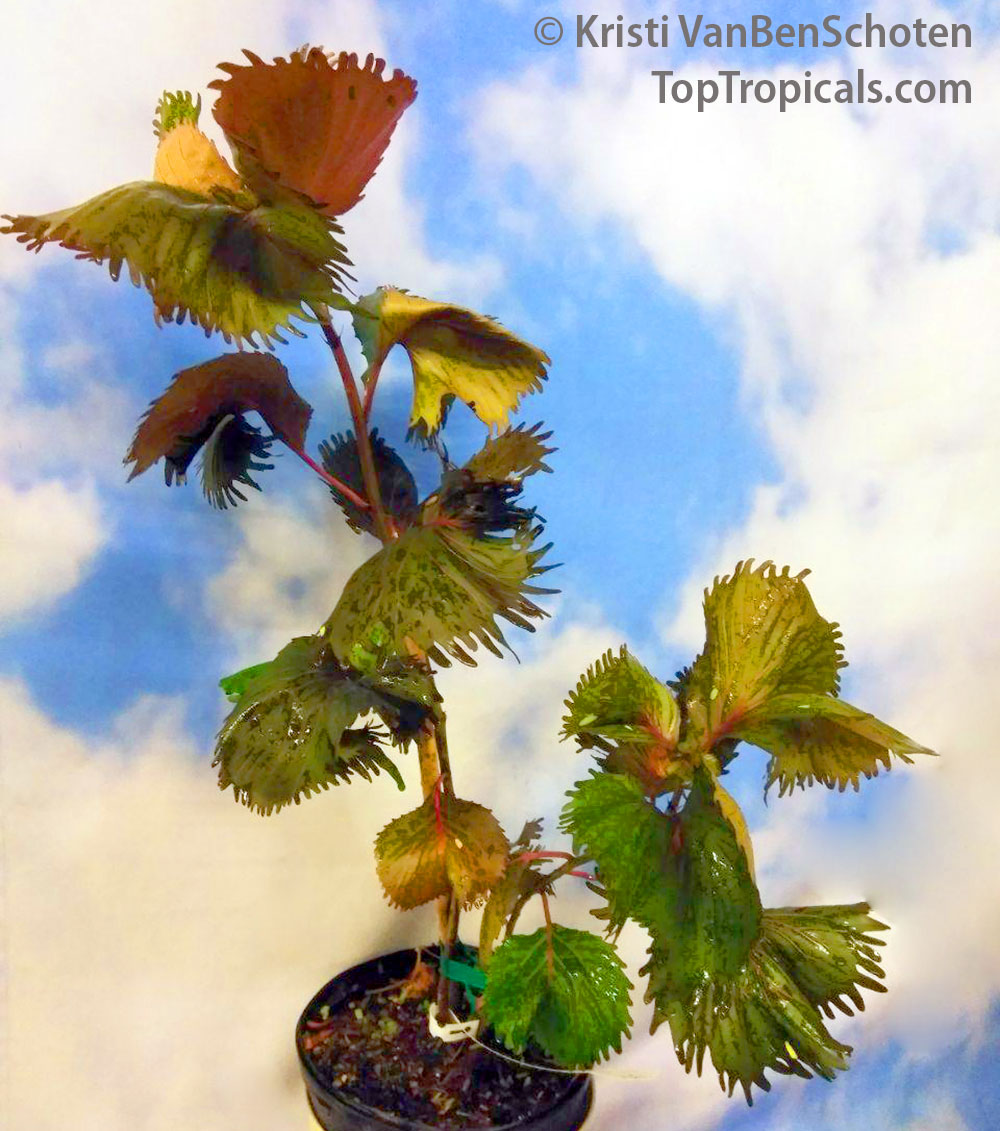
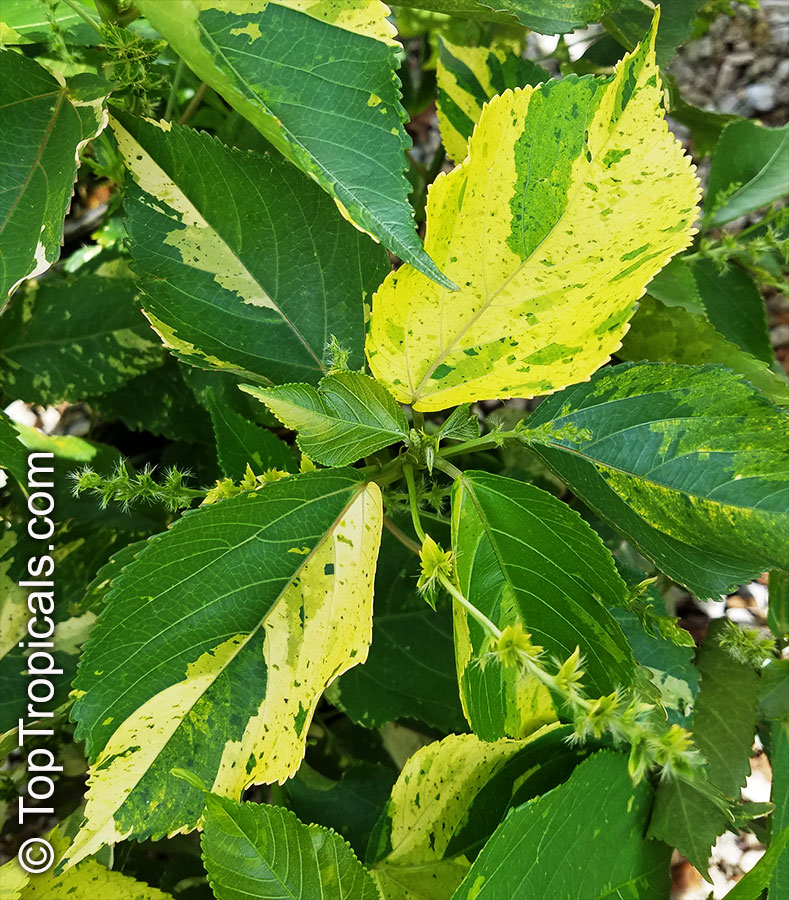
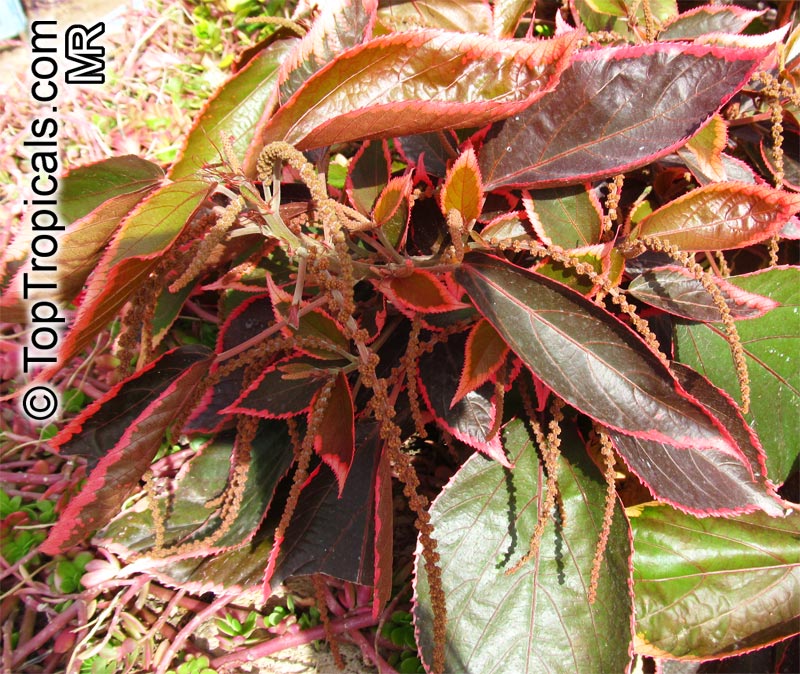
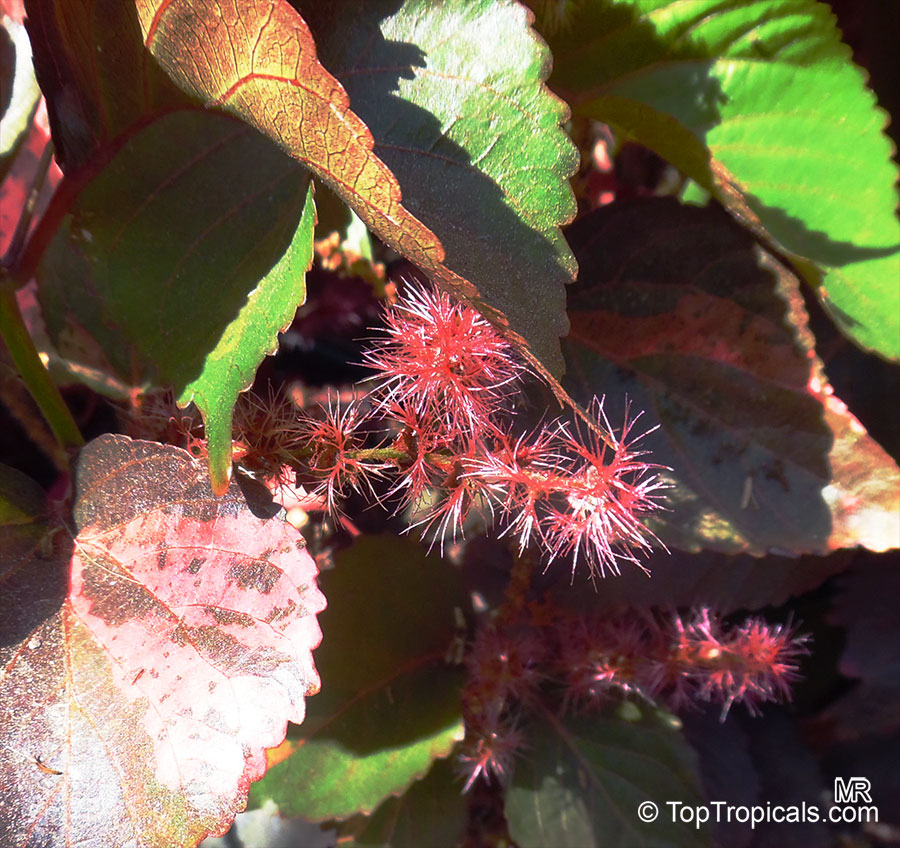
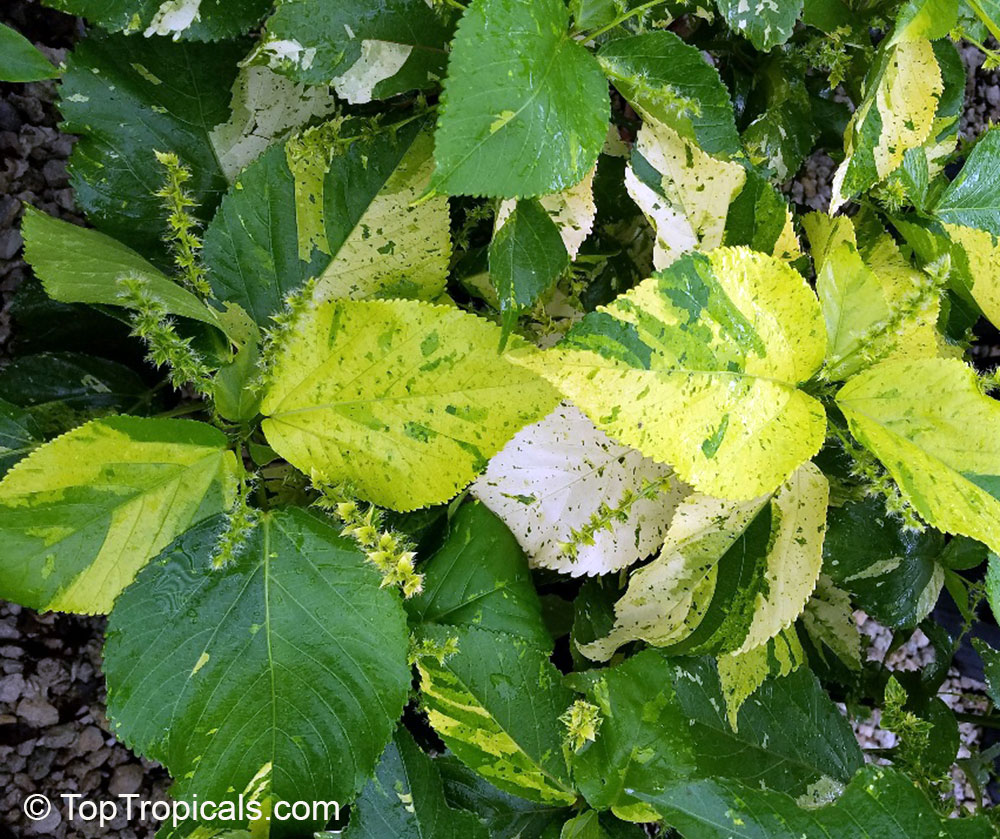
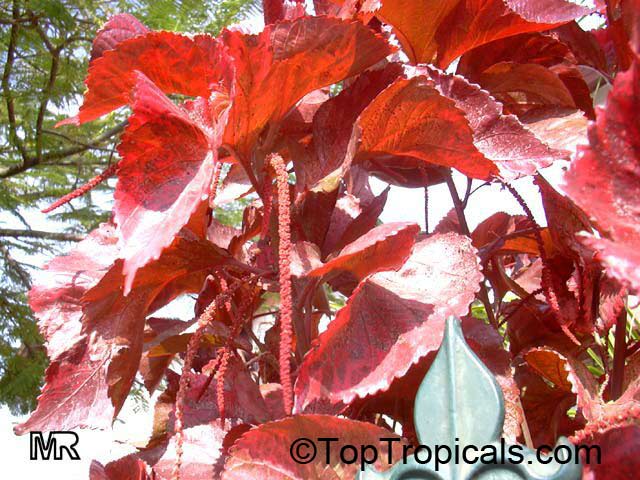
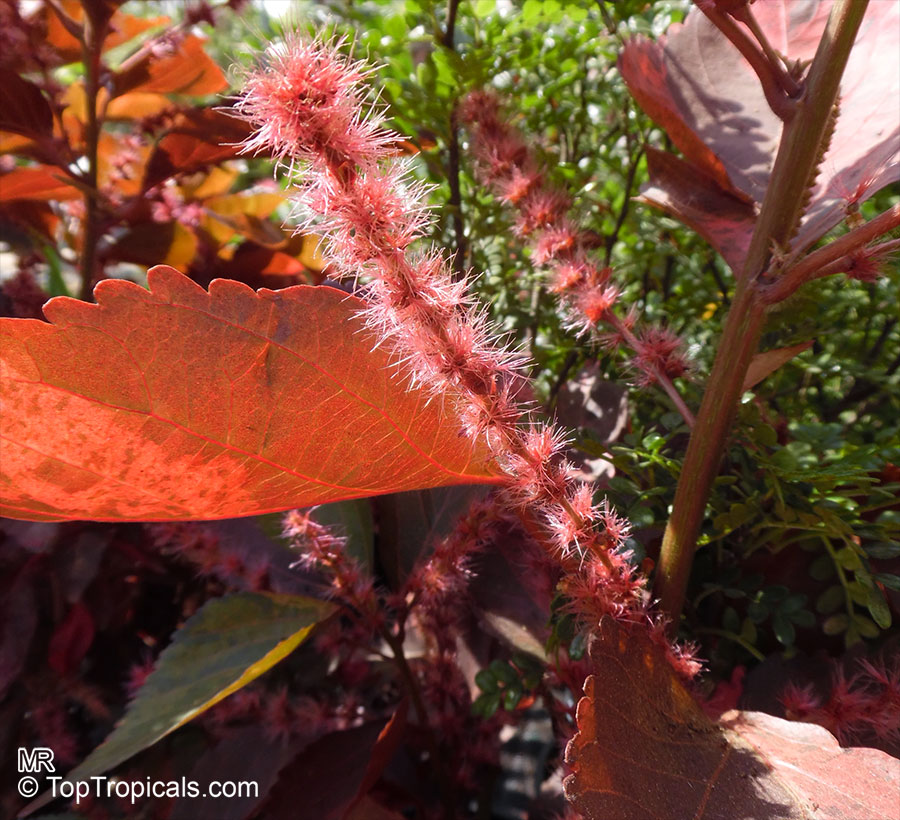
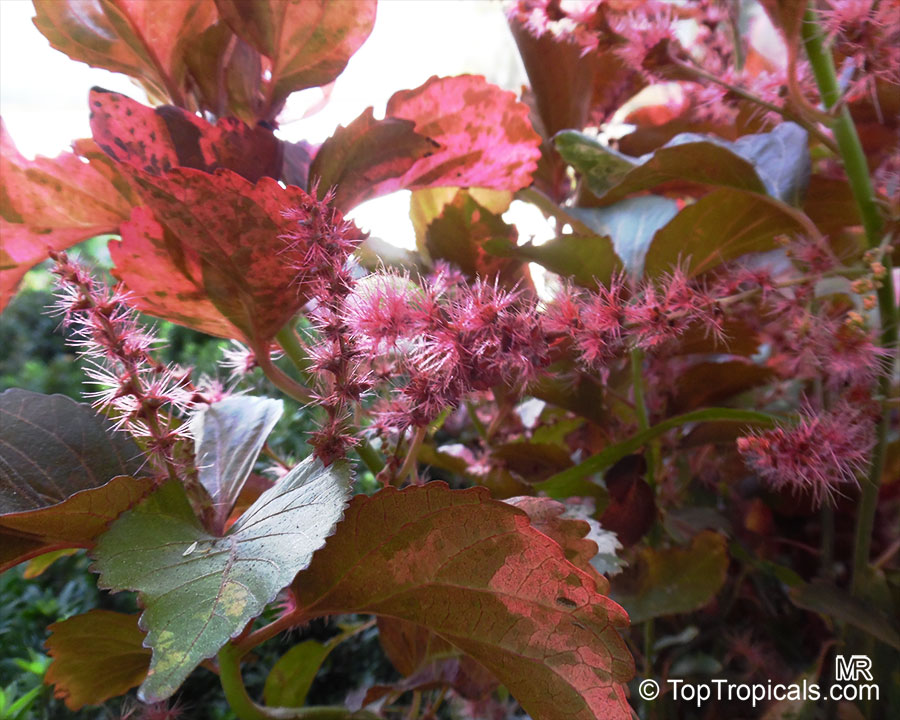
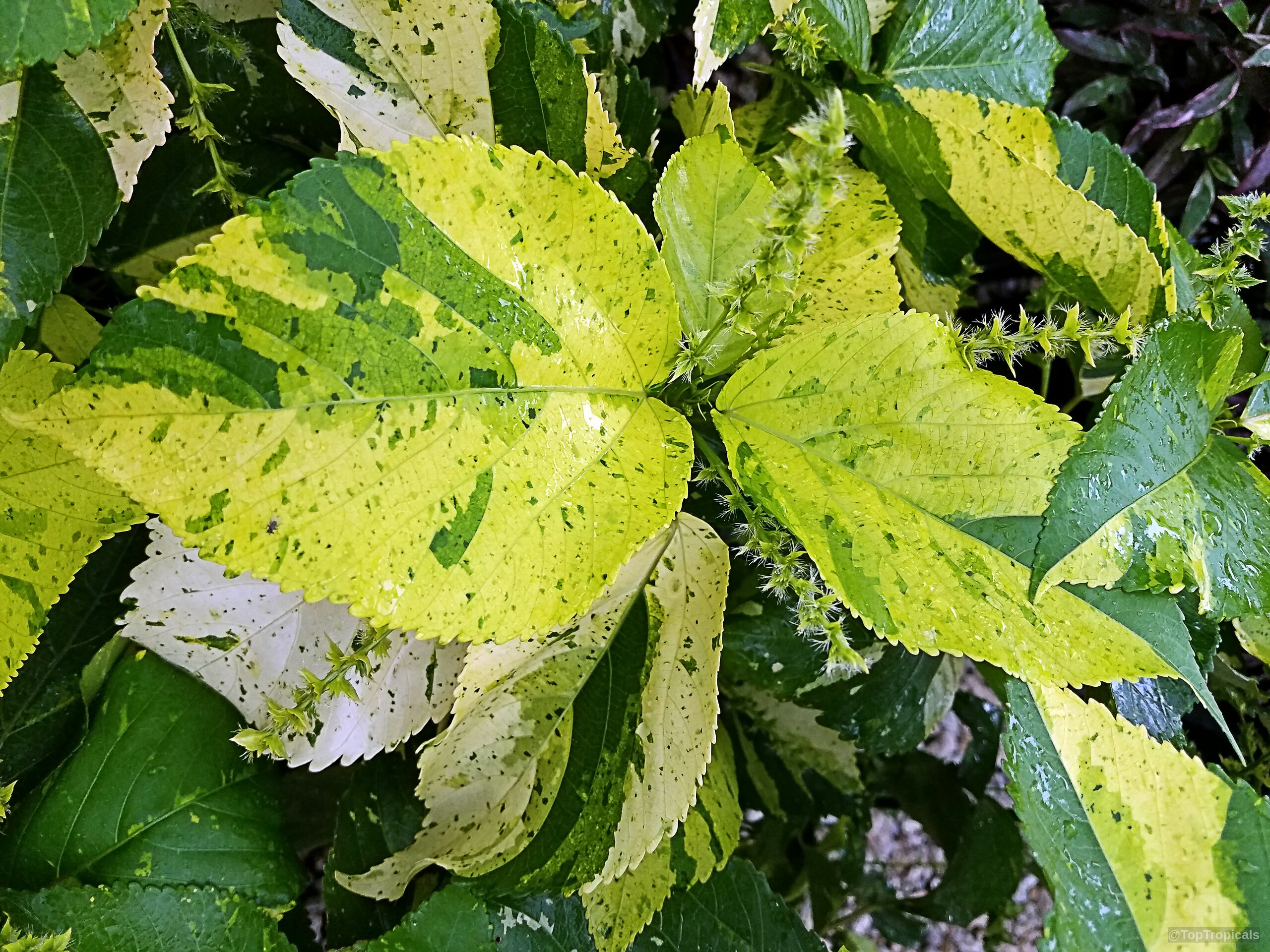
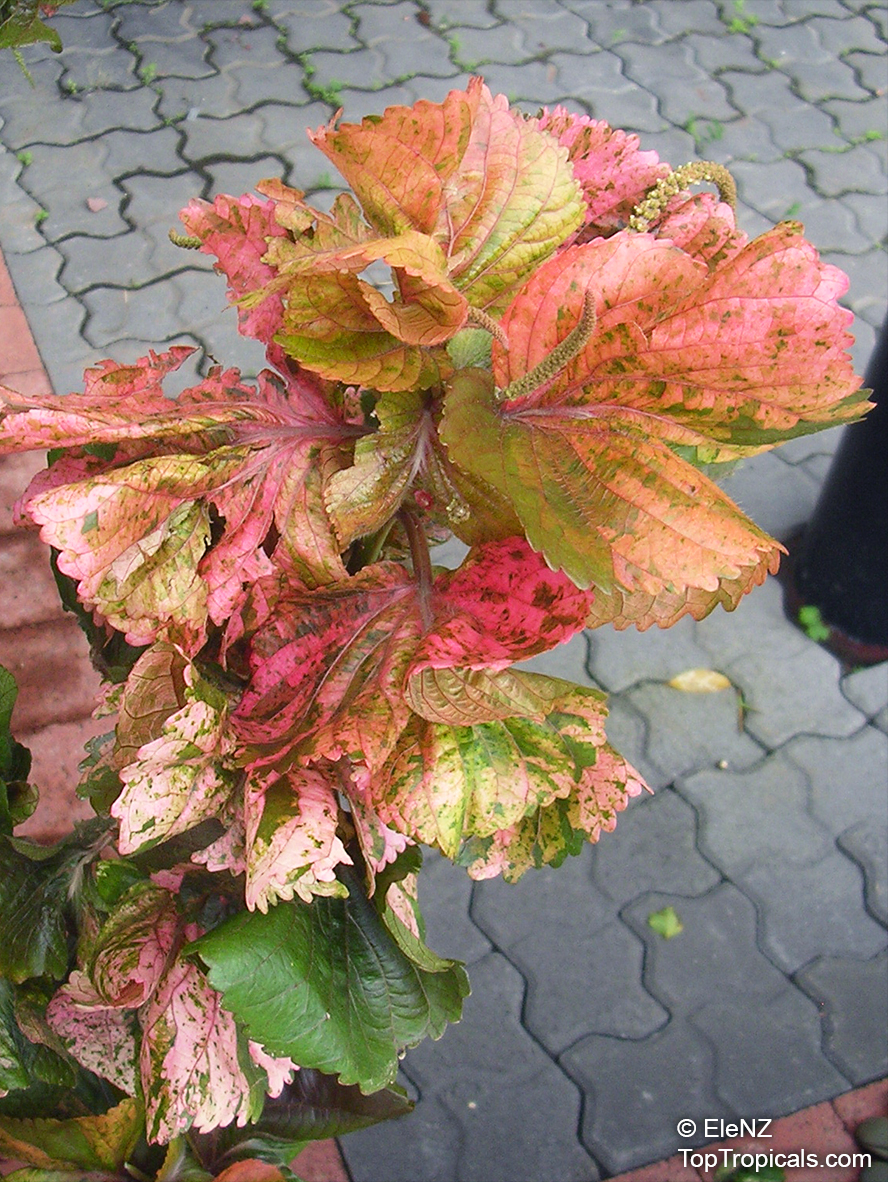
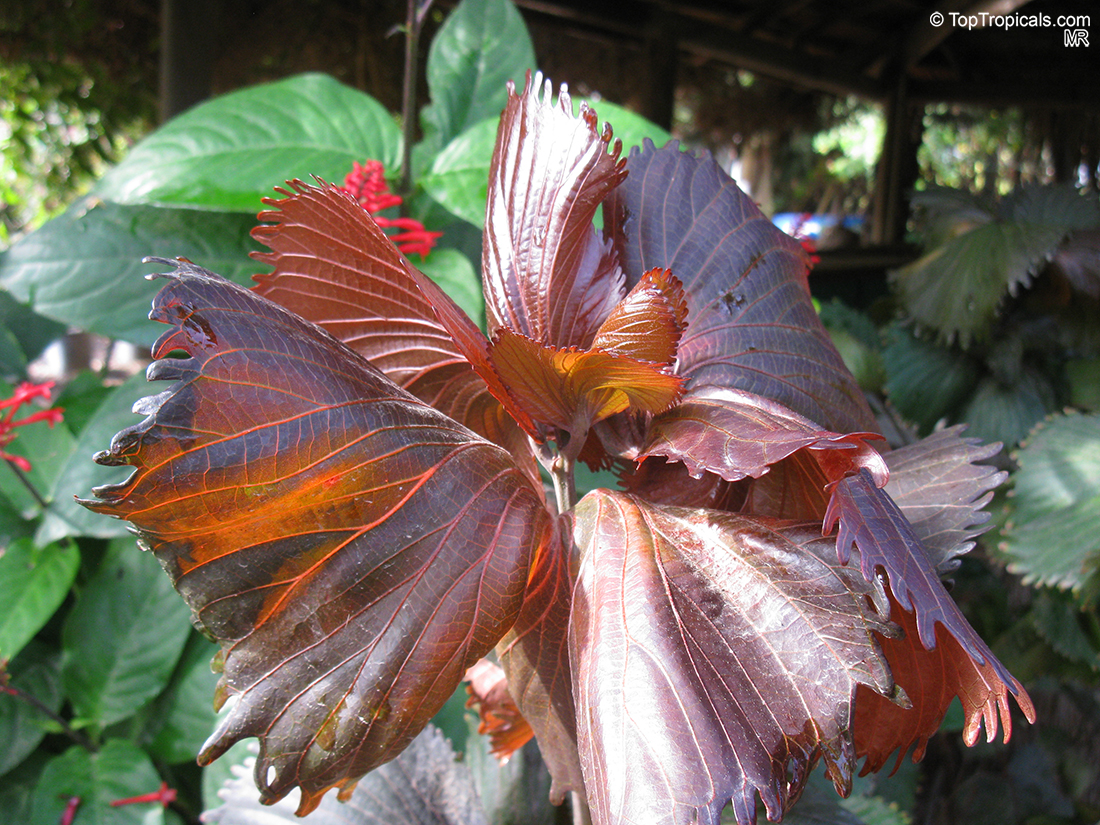
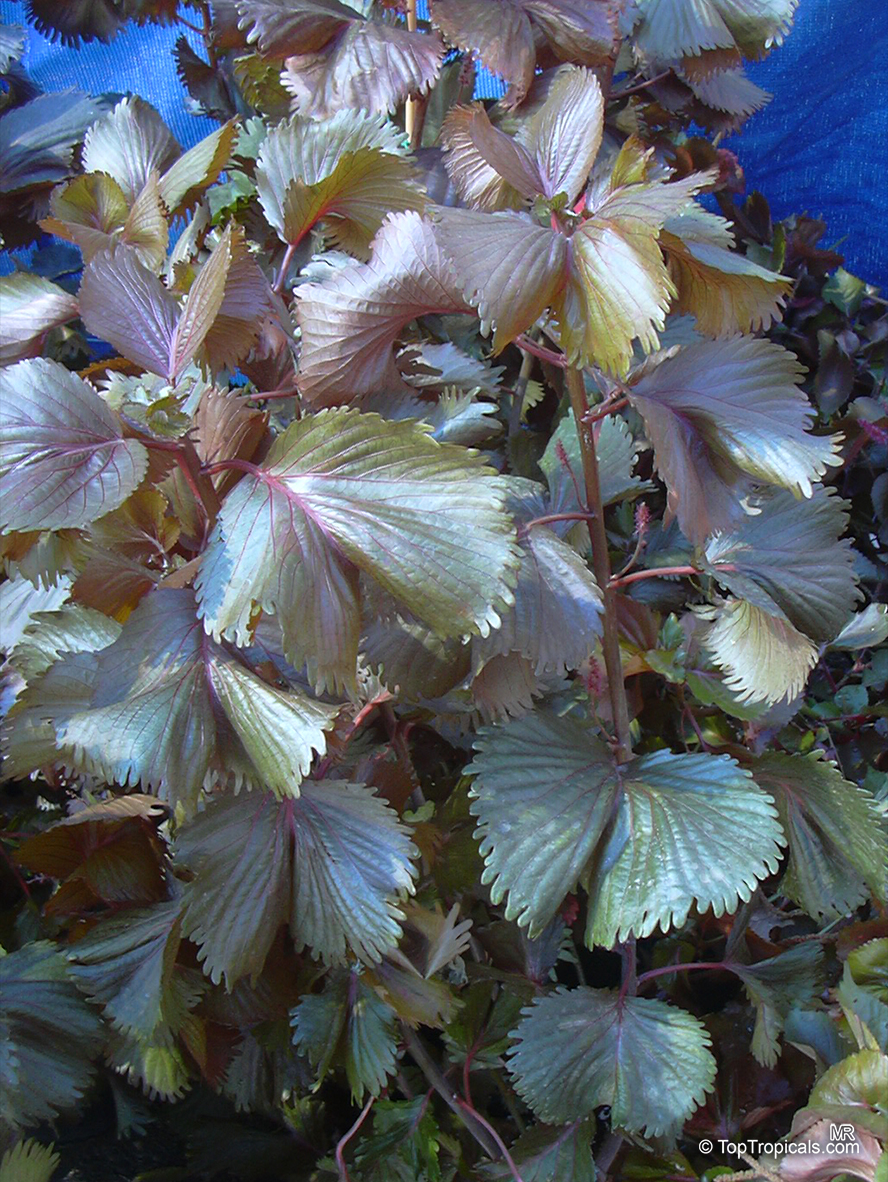
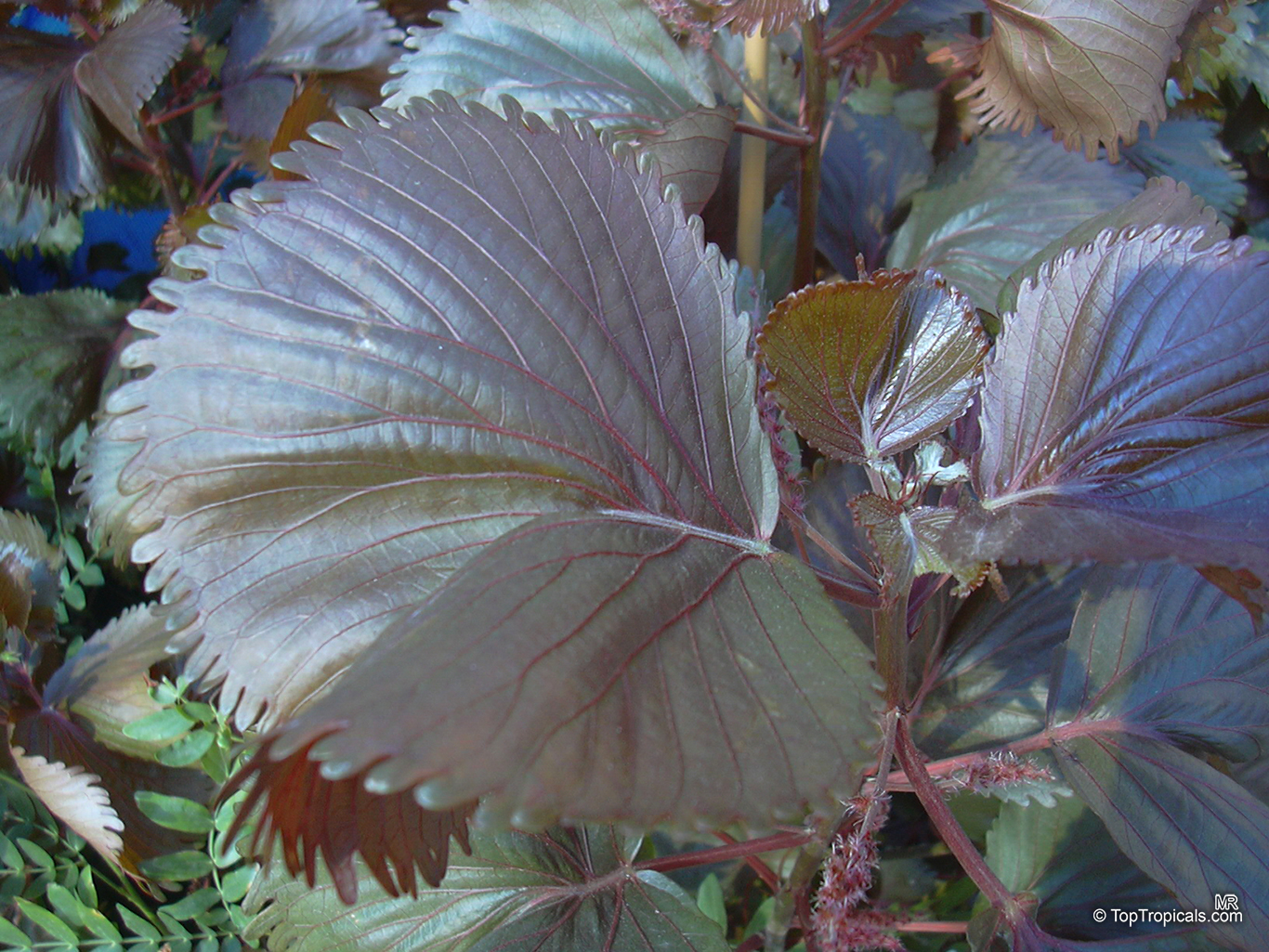
Botanical name: Acalypha wilkesiana
Common names: Fire Dragon Acalypha, Hoja de Cobre, Copper Leaf
Family: Euphorbiaceae
Origin: Fiji
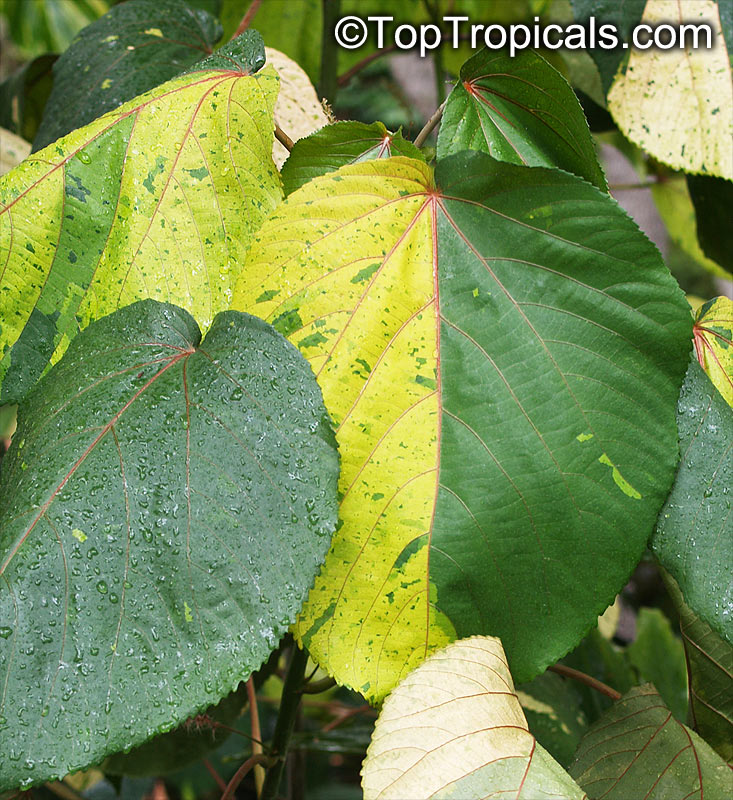
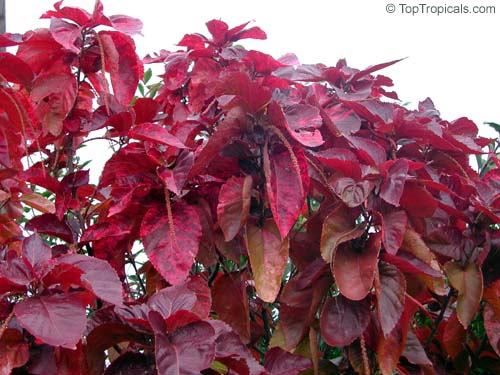
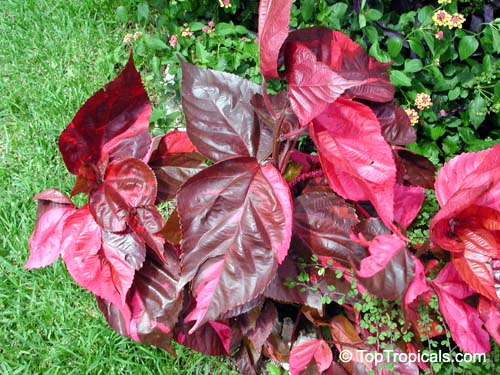
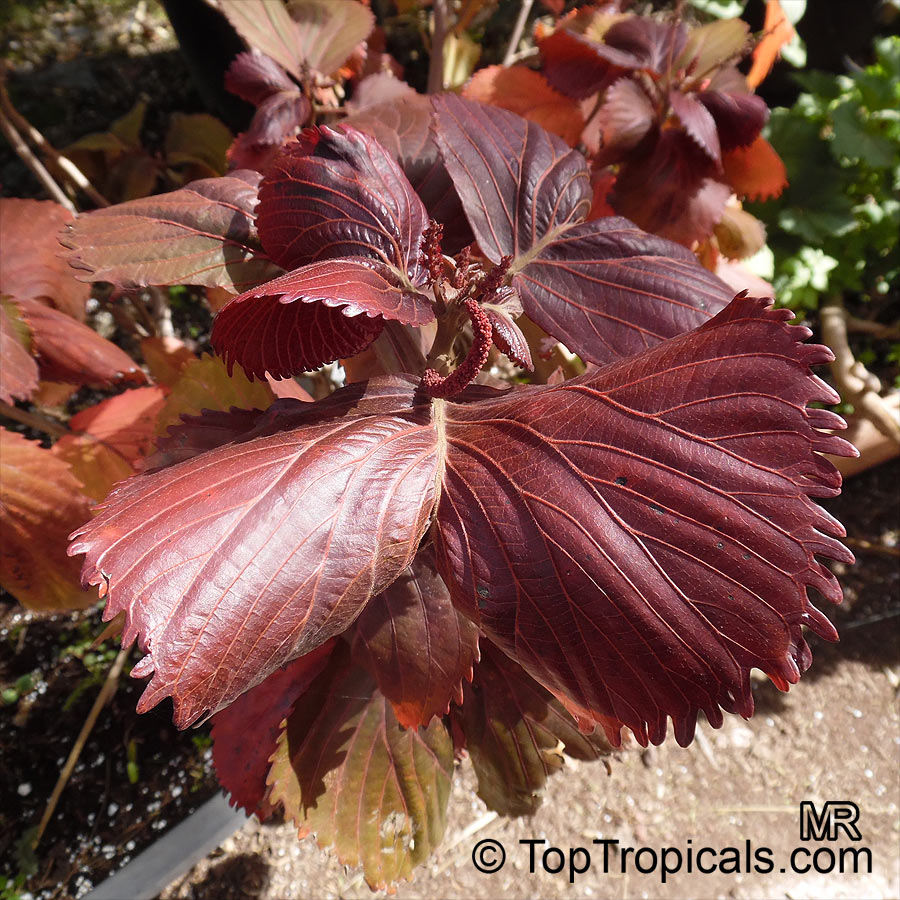
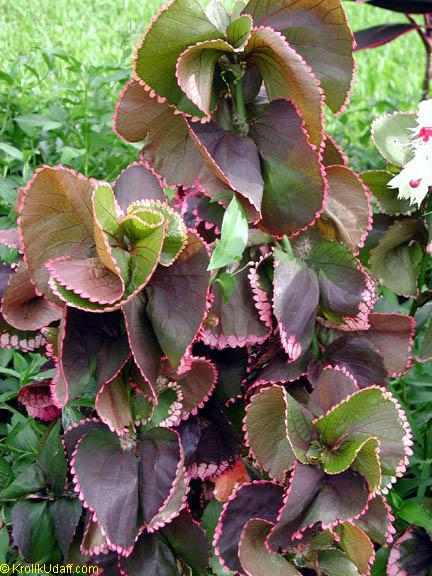
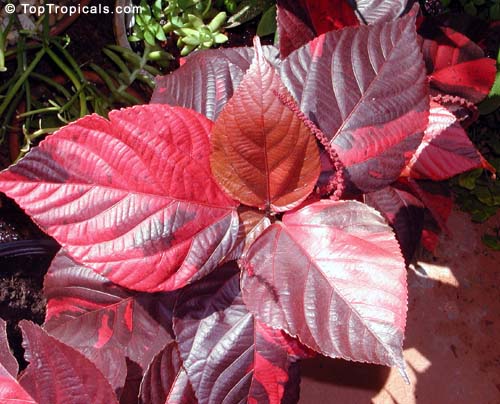
Acalypha wilkesiana (Fire Dragon Acalypha) is a large shrub, typically growing 5-10 ft tall. It produces beautiful ornamental foliage and is a great choice for tropical gardens and seaside areas thanks to its salt tolerance. The plant needs to be grown in full sun or semi-shade and will require moderate amounts of water. It is mostly grown in USDA Zones 9-11 and can be grown in cooler regions as a pot plant if provided with extra protection against cold temperatures.
When it comes to growing and caring for A. wilkesiana, the most important thing to remember is to prune it regularly. Pruning should be done at least once every six months and should involve removing any damaged or dead leaves and stems. Additionally, the plant should be provided with regular fertilization, as this will help keep it healthy and promote better growth. If growing in a pot in a cold region, it is essential to use a container that is big enough, otherwise the plant's root system won't have enough room to grow and the plant won't thrive. Furthermore, the pot should be kept moist throughout the growing season and should be brought indoors during winter months to protect it from cold temperatures.








| Next | |
Use link to repeat this search:
https://toptropicals.com/cgi-bin/garden_catalog/cat.cgi?find=Euphorbia&search_op=and&keyword_op=and&language=e&number=10
&no_change_lang=1&user=tt&sale=1&forsaleonly=1&first=0