Water, lily - Plant Encyclopedia Results (Page 6)
| Number of plants found: 59 |  | Prev | Go to page: | 1 | 2 | 3 | 4 | 5 | 6 |

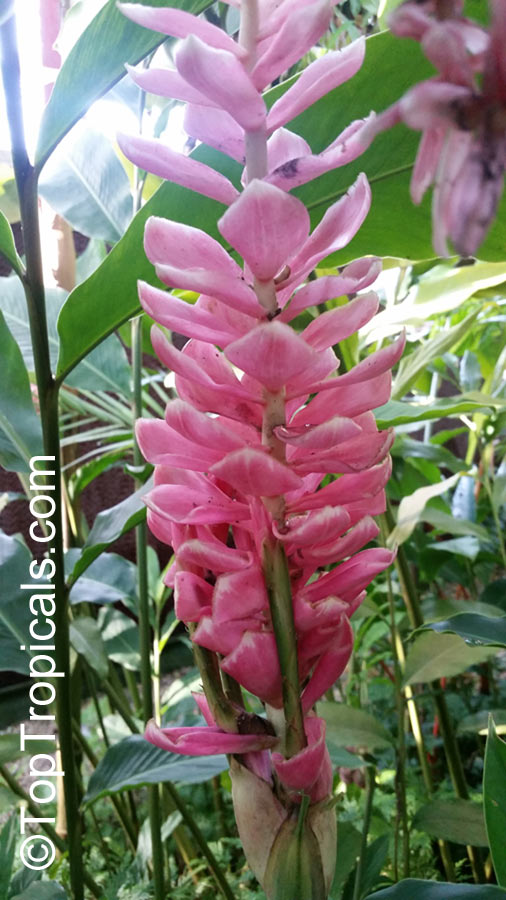
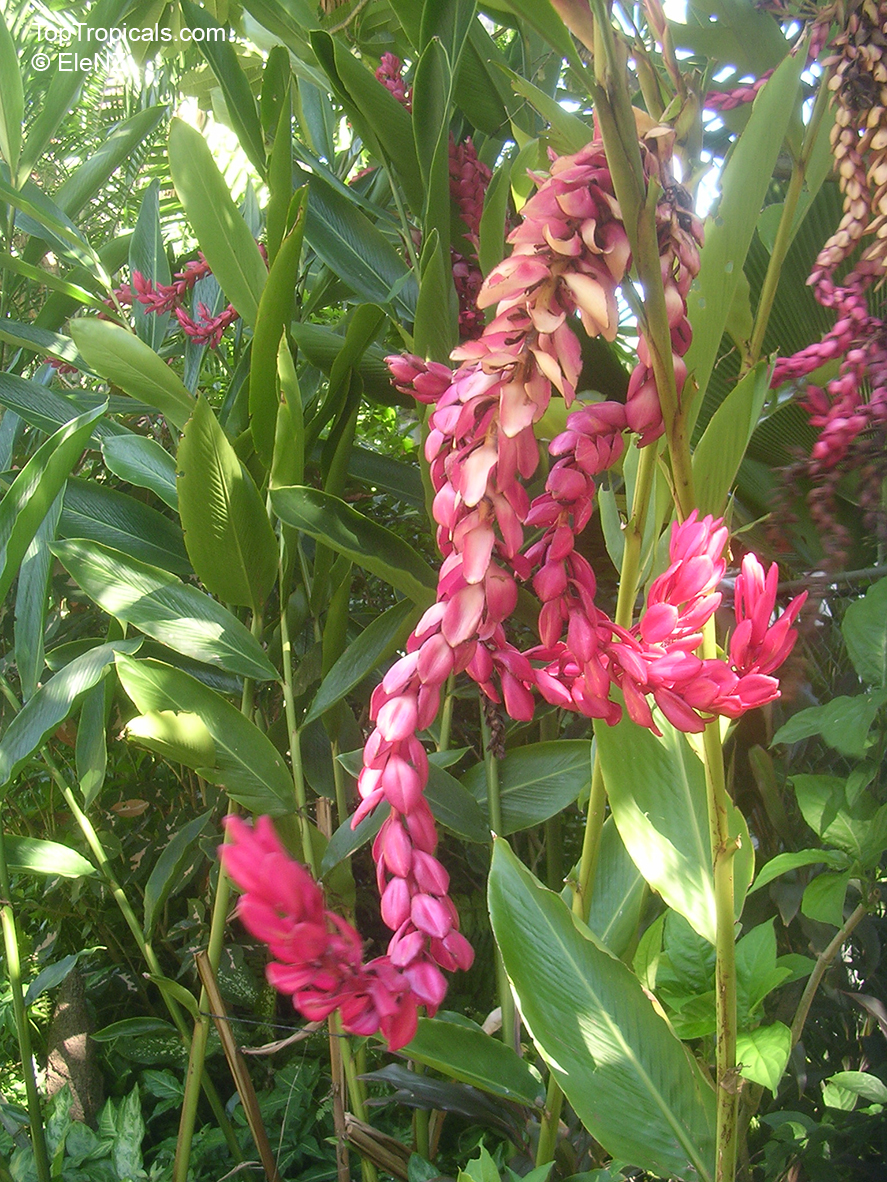
Botanical name: Alpinia henryi
Common name: Pink porcelain lily
Cultivar: Pink Perfection
Family: Zingiberaceae
Origin: Subtropical Asia
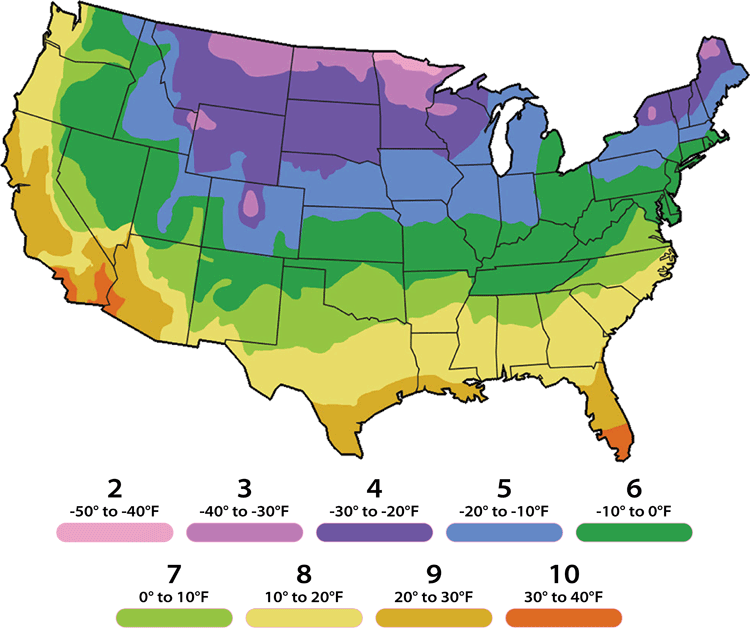
USDA Zone: 9-10


Among the best-known members of this genus is Alpinia henryi 'Pink Perfection', a large shrub or small tree reaching 5-10ft in height and 2-5ft in width. Its native habitat is Subtropical Asia, but it can be successfully grown as an ornamental in USDA zones 9-11. It's a hardy and attractive plant, with deep green, glossy foliage and an abundance of pink flowers throughout the year. In the right conditions, it can be a real show-stopper, its flowers being especially fragrant.
Caring for Alpinia henryi 'Pink Perfection' is not particularly difficult. It prefers a spot in full sun or semi-shade, in well-drained soil, and regular watering. Some mulching during the summer can help protect the roots from the heat. It can suffer from frost damage, so if you're growing it in a pot in a cold region, you should move it indoors during the winter months. Also, the plant may suffer from mealybugs, so if you notice their presence it's best to take appropriate action as soon as possible.
In general, Alpinia henryi 'Pink Perfection' is an easy-to-care-for plant that can make a wonderful addition to any garden or conservatory. With its lush foliage, abundant flowers, and heavenly fragrance, it can certainly bring a touch of the exotic and an undeniable beauty to your outdoor spaces.


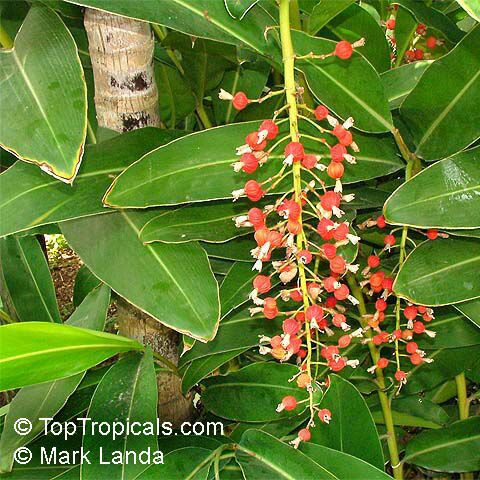
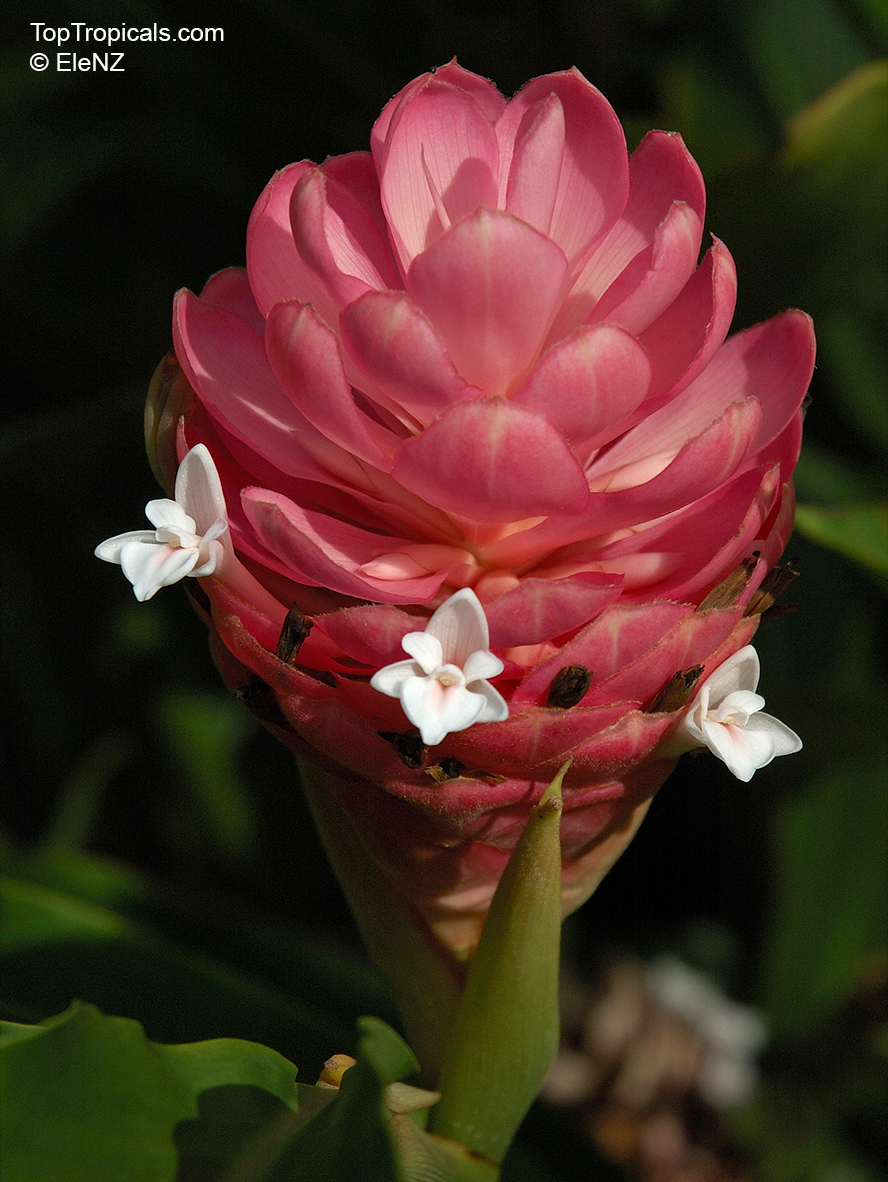
Botanical names: Alpinia nutans, Alpinia speciosa
Common names: Shell ginger, Pink porcelain lily, Narrow-Leaf Cinnamon Ginger, Shellflower, Dwarf cardamom, False cardamom
Family: Zingiberaceae
Origin: China and Japan
USDA Zone: 8-11
Cold tolerance: 20°F


The plant is quite versatile and makes for an excellent garden plant in USDA growing zones 7-9. It can either be grown as a large shrub of 5-10 feet in height or as a small shrub of 2-5 feet. Alpinia nutans requires full sun or partial shade, but prefers humid conditions and regular watering. Its stunning hot pink flowers, borne atop long flowering stems, bloom beginning in June and continue until the Fall.
It is a fairly salt tolerant plant, making it suitable for seaside areas. In cold climates, the mature plant is hardy at least to the low 30s Fahrenheit for a short time, although for best results it should be grown in a pot and stored in an area that does not freeze in the winter, such as a greenhouse or garage. Watering should be reduced in cold conditions and kept to a minimum until warm weather resumes. During the spring, the rhizome should be restrained or it will overthrow its container. Plants should be repotted in the spring if they outgrow their original container. Fertilize annually with compost or an appropriate plant food to encourage growth, and do regular pest and disease checks.
Alpinia nutans is similar to Alpinia malaccensis and Alpinia zerumbet. Alpinia nutans var. longiramosa is a synonym of Alpinia zerumbet.
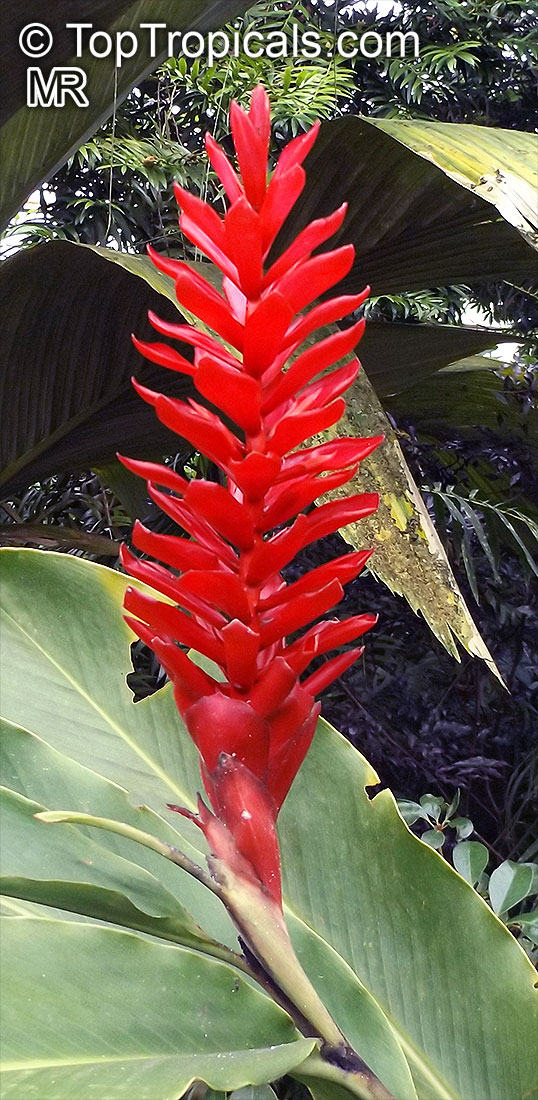
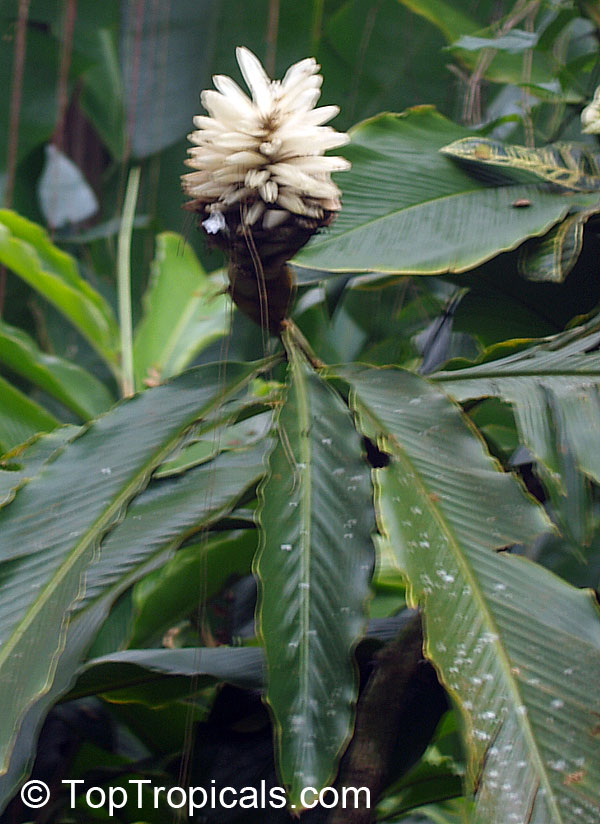
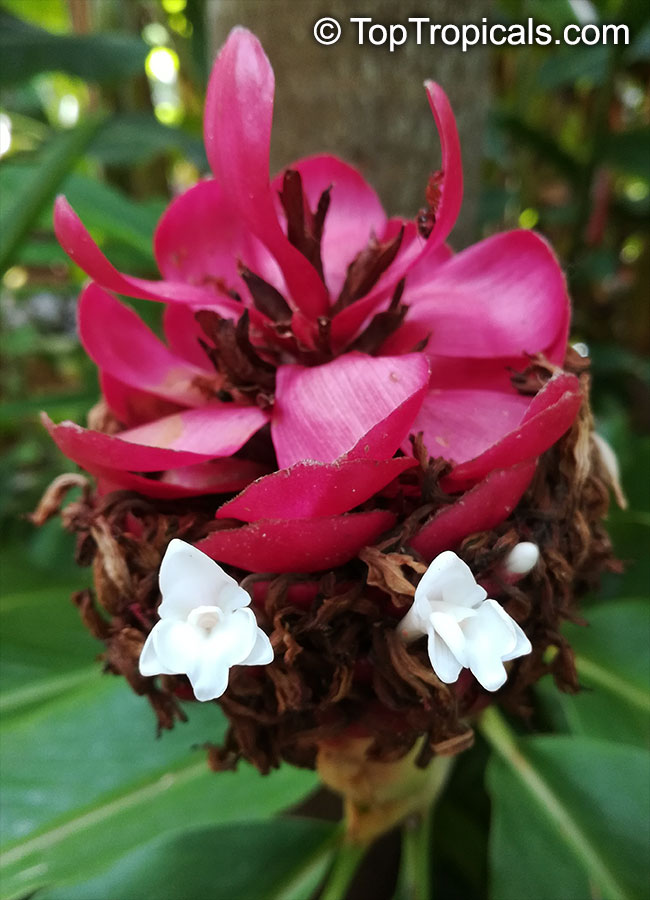
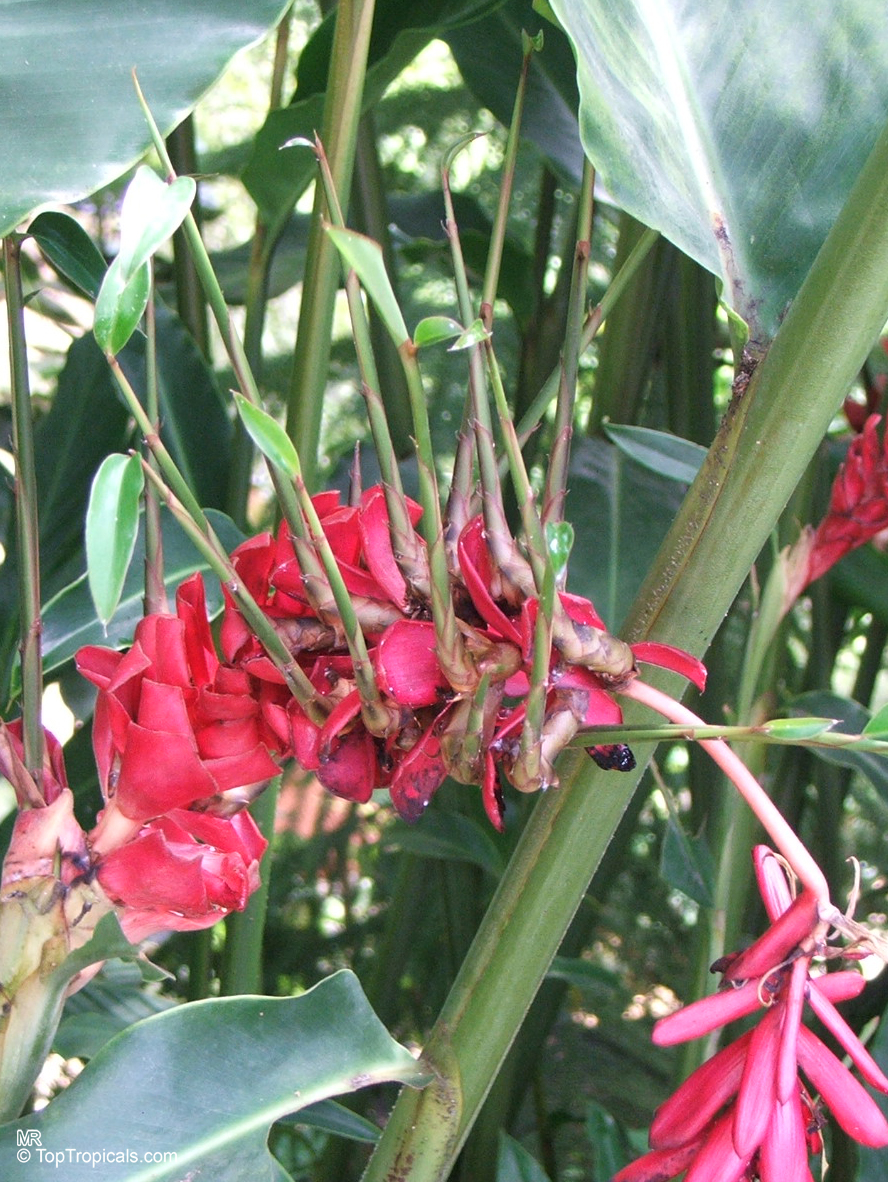
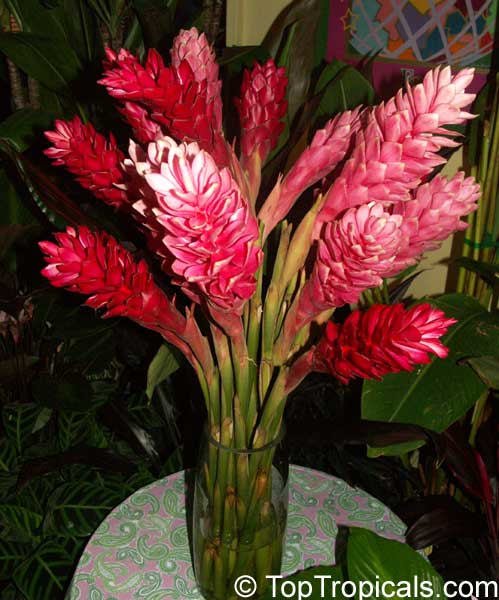
Botanical name: Alpinia purpurata
Common names: Red Ginger Lily, Ostrich Plume, Red Cone Ginger
Family: Zingiberaceae
Origin: Malay Peninsula
USDA Zone: 9-11


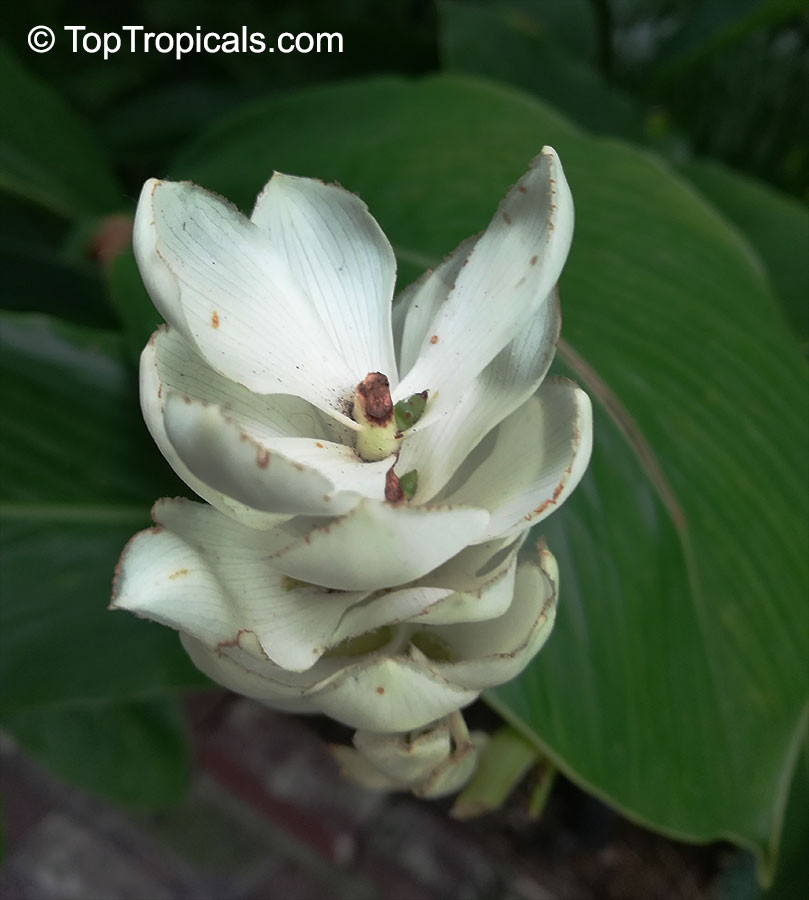
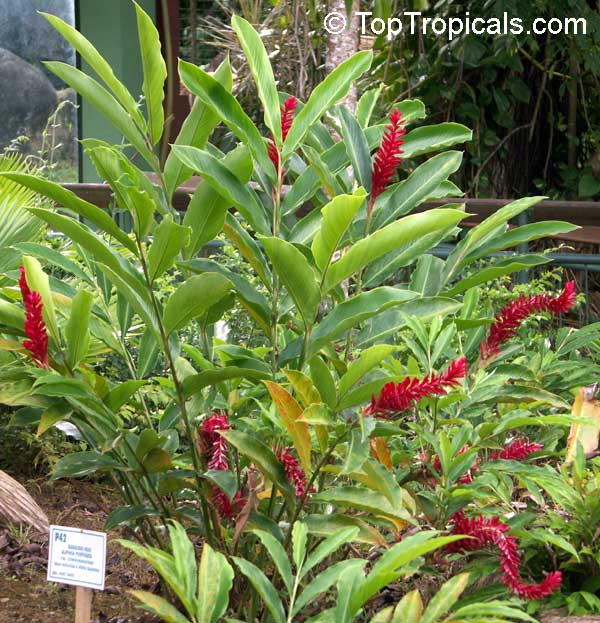
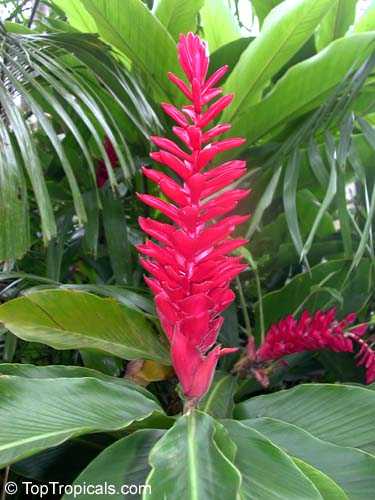
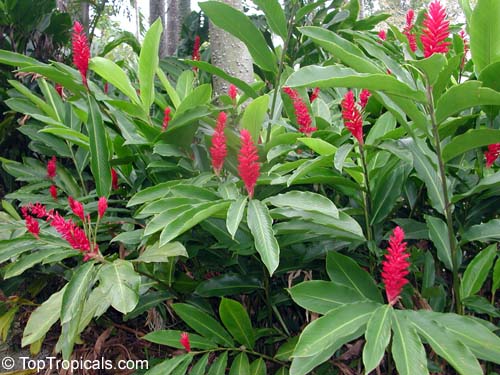
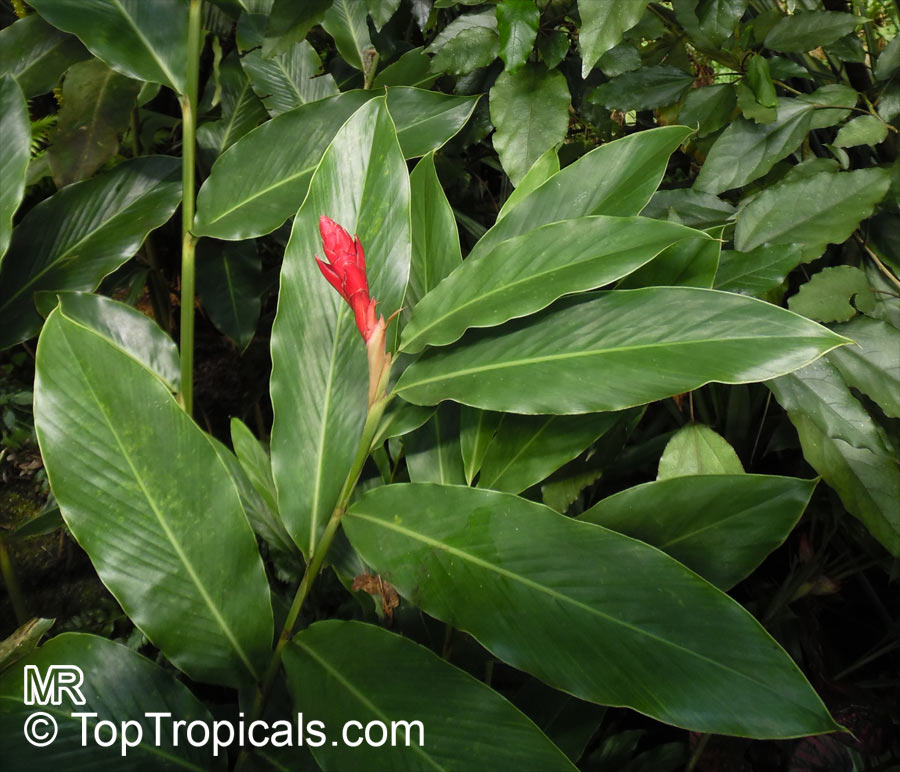
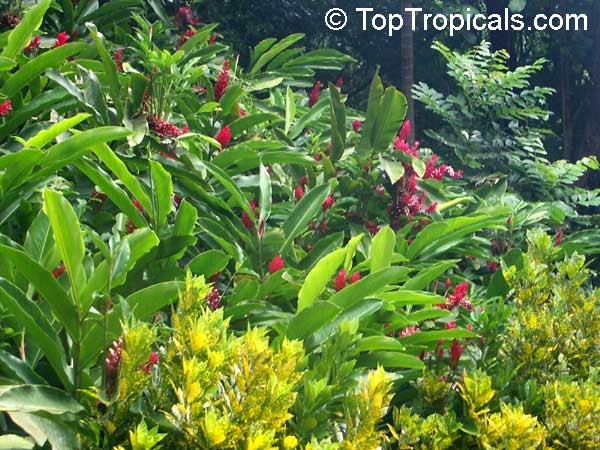
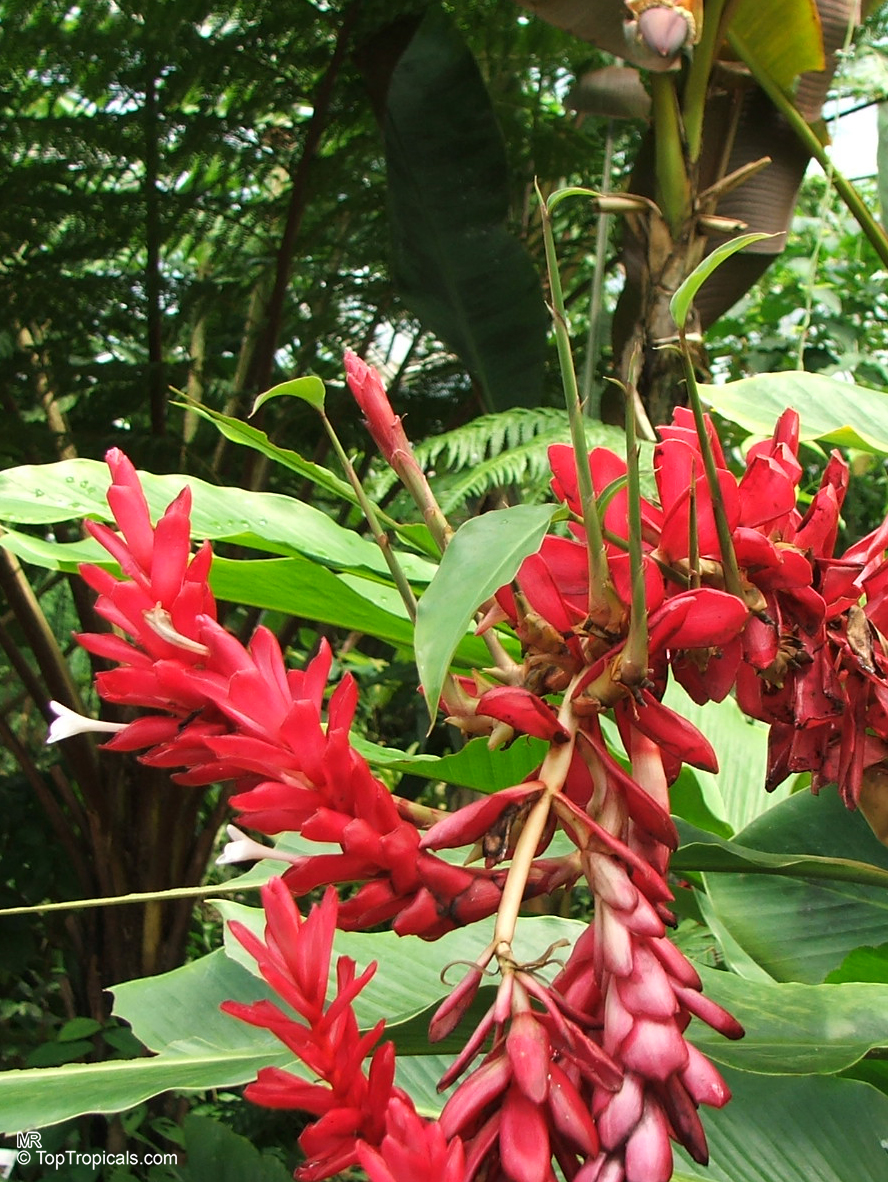
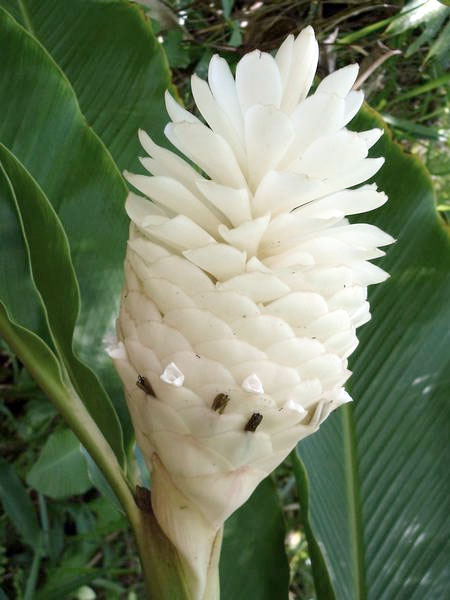
Extremely tropical looking, one of the most desirable symbols of Tropics, Alpinia purpurata, red ginger, also called ostrich plume and pink cone ginger, are native Malaysian plants with showy flowers on long brightly colored red bracts. They look like the bloom, but the true flower is the small white flower on top. Red Ginger grows in Hawaii, and many Central American nations, including Belize. It is also found in Samoa, where it is the national flower, and is locally called "teuila." It prefers partial shade and moist humid conditions, although it can tolerate full sun in some climates. It tends to like to be well watered and not left to dry out. Ginger can also be grown as a houseplant and its cut flowers can be used in arrangements. Likes a slightly acid soil. Every other year trim to ground to prevent legginess. Blooms from spring to summer if there is enough humidity.
See Article about Alpinia.








Recommended Fertilizer: SUNSHINE Robusta - Rapid Growth Booster
Recommended Fertilizer: SUNSHINE Robusta - Rapid Growth Booster

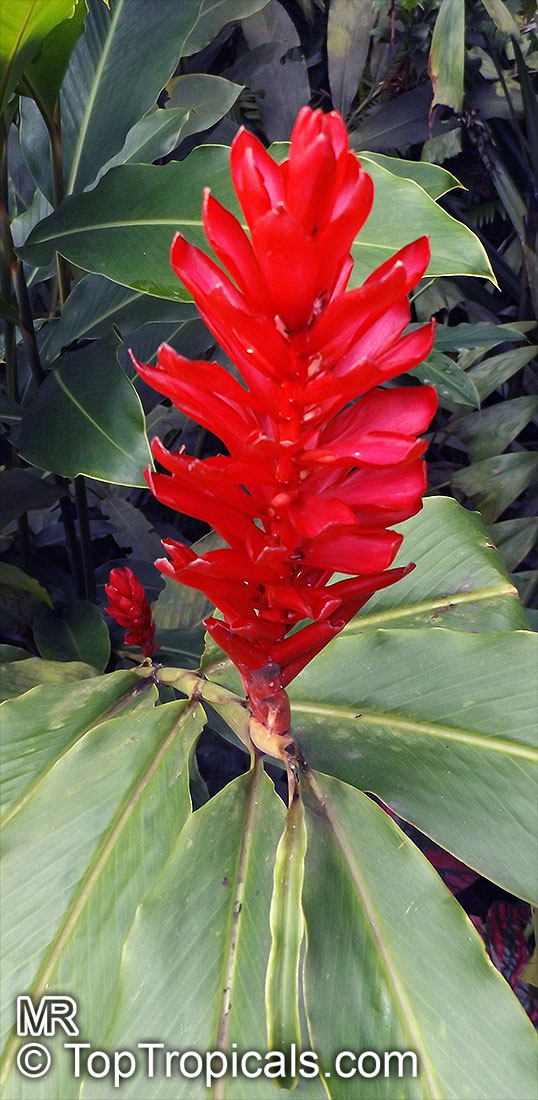
Botanical names: Canna x hybrida, Canna x generalis
Common name: Canna Lily
Family: Cannaceae
USDA Zone: 8-11


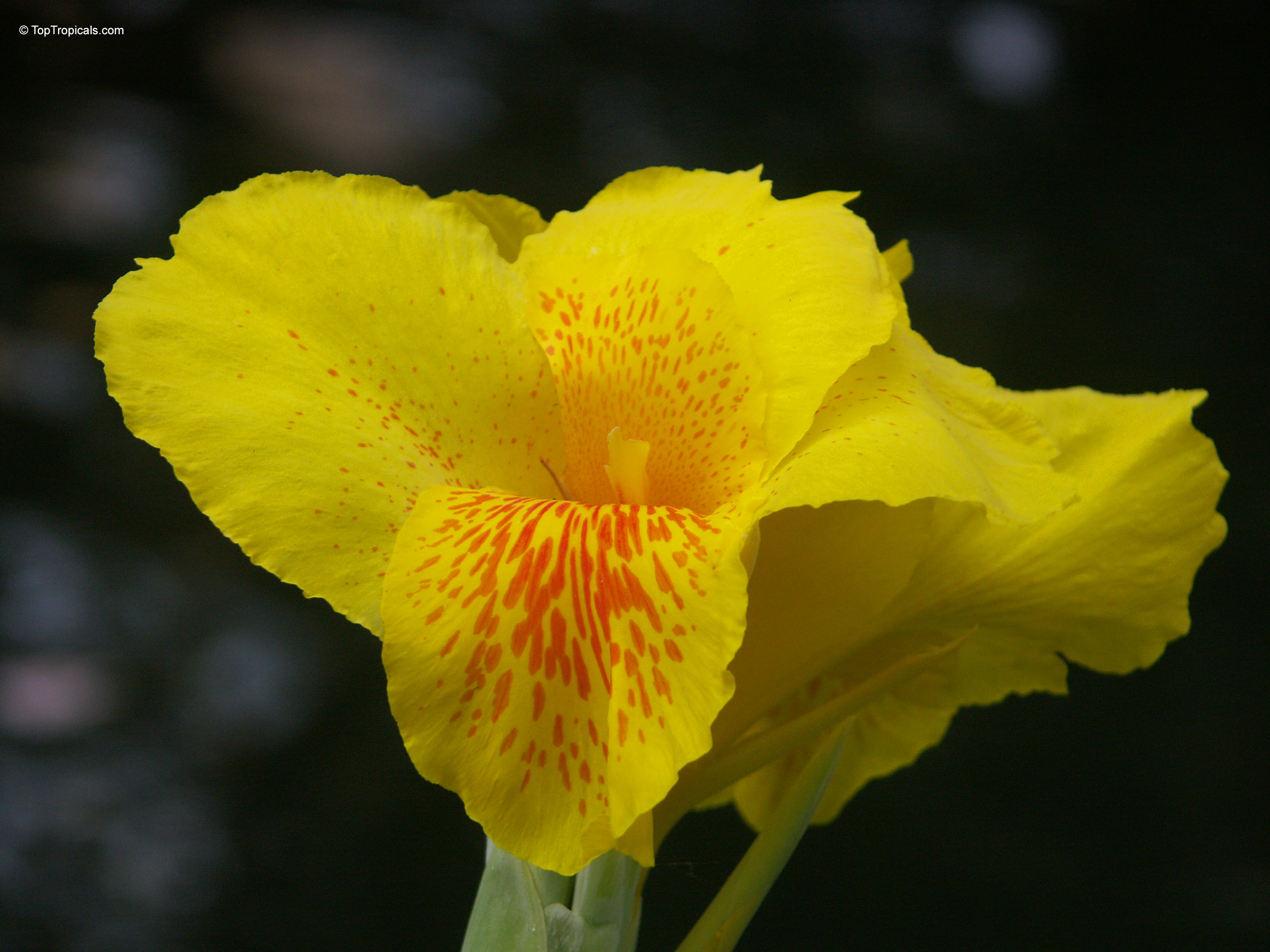
Canna x hybrida is a widely grown group of ornamental canna hybrids in the Cannaceae family, developed from crosses involving several Canna species. This group was formerly widely known as Canna x generalis, a name still frequently encountered in horticultural literature and plant catalogs. Cannas are vigorous rhizomatous perennials valued for their large, paddle-shaped leaves and showy upright flower clusters in shades of red, orange, yellow, pink, cream, and numerous bicolor combinations. Cultivars vary greatly in height, flower form, and foliage, which may be green, bronze, purple, striped, or variegated. Their bold appearance makes them staples of tropical-style gardens and warm-season displays worldwide.
Canna x hybrida grows best in full sun and fertile, moisture-retentive but well-drained soil, with regular watering and feeding during active growth. Plants flower repeatedly through the warm season and are excellent for beds, borders, mass plantings, and large containers. They are generally grown outdoors year-round in USDA Zones 8-11, although hardiness varies among cultivars and adequate winter protection may be needed near the colder end of this range. In colder climates, the rhizomes can be lifted after frost and stored dormant indoors for winter. Established clumps are easily propagated by rhizome division.




Recommended Fertilizer: SUNSHINE Robusta - Rapid Growth Booster

Botanical name: Hedychium gardnerianum
Common names: Indian Ginger, Kahili Ginger, Kahila garland-lily
Family: Zingiberaceae
Origin: India, Himalayas
USDA Zone: 8-11

Hedychium gardnerianum is an attractive small shrub, native to the countries of India and the Himalayas. It typically stands between 2 to 5 feet tall and loves the direct sunlight or semi-shade. Hedychiums also require regular watering, with moderate amounts keeping the foliage lush and the flowers blooming.
At the peak of summer, Hedychium gardnerianum blooms with beautiful, fragrant yellow and orange flowers that are sure to attract attention with their bright color and sweet scent. Butterflies and hummingbirds alike will be sure to flock to the nearby surroundings of the plant.
Though Hedychium gardnerianum is normally grown in USDA zone 8-11, the mature plants are known to be cold hardy and endure temperatures down to at least 30 degrees Fahrenheit (for a short time). In colder climates, planting in a pot and bringing indoors during the winter months is an ideal solution.
Because of its thick stems and large leaves, Hedychium gardnerianum requires a well draining, nutrient-rich soil in order to achieve its fullest potential. A thick winter mulch may also be used to cover the top growth of the plant during the cold winter months. When taken care of properly, this low maintenance and hardy shrub is sure to be an eye-catching addition to any garden or home.


Botanical names: Kaempferia angustifolia, Kaempferia undulata
Common names: Peacock Ginger, Resurrection Lily
Family: Zingiberaceae
Origin: Southeast Asia
USDA Zone: 10-11

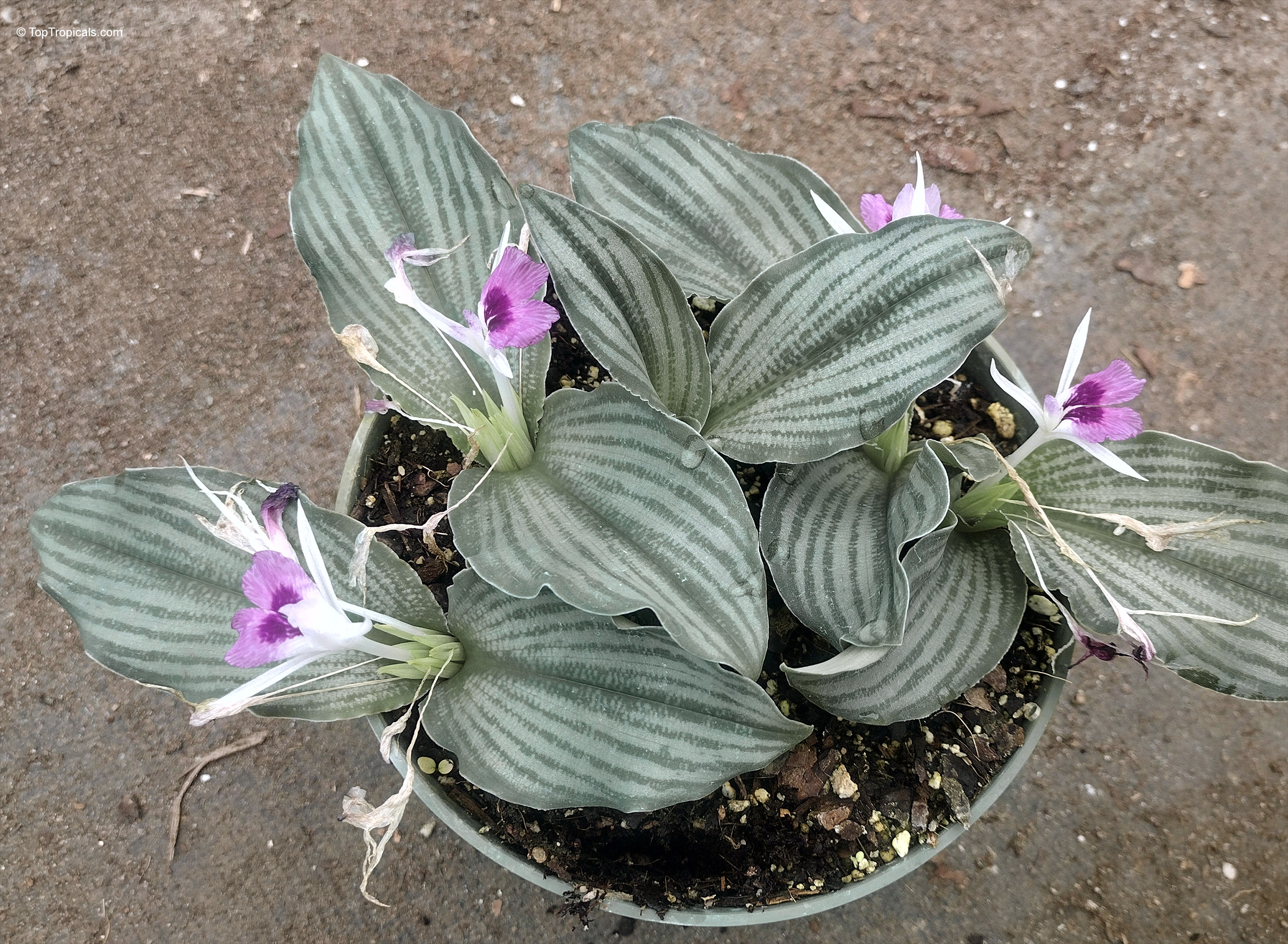
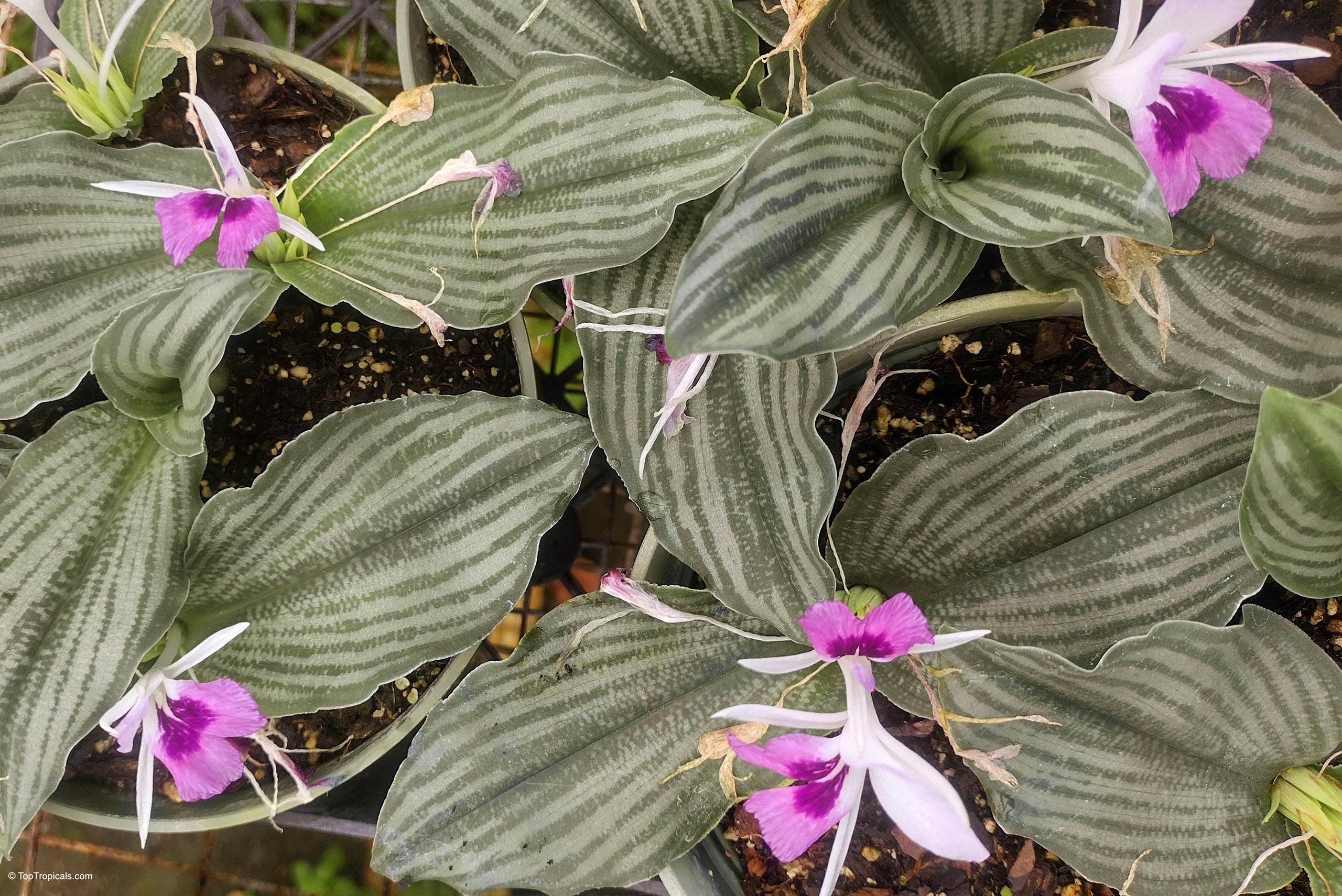
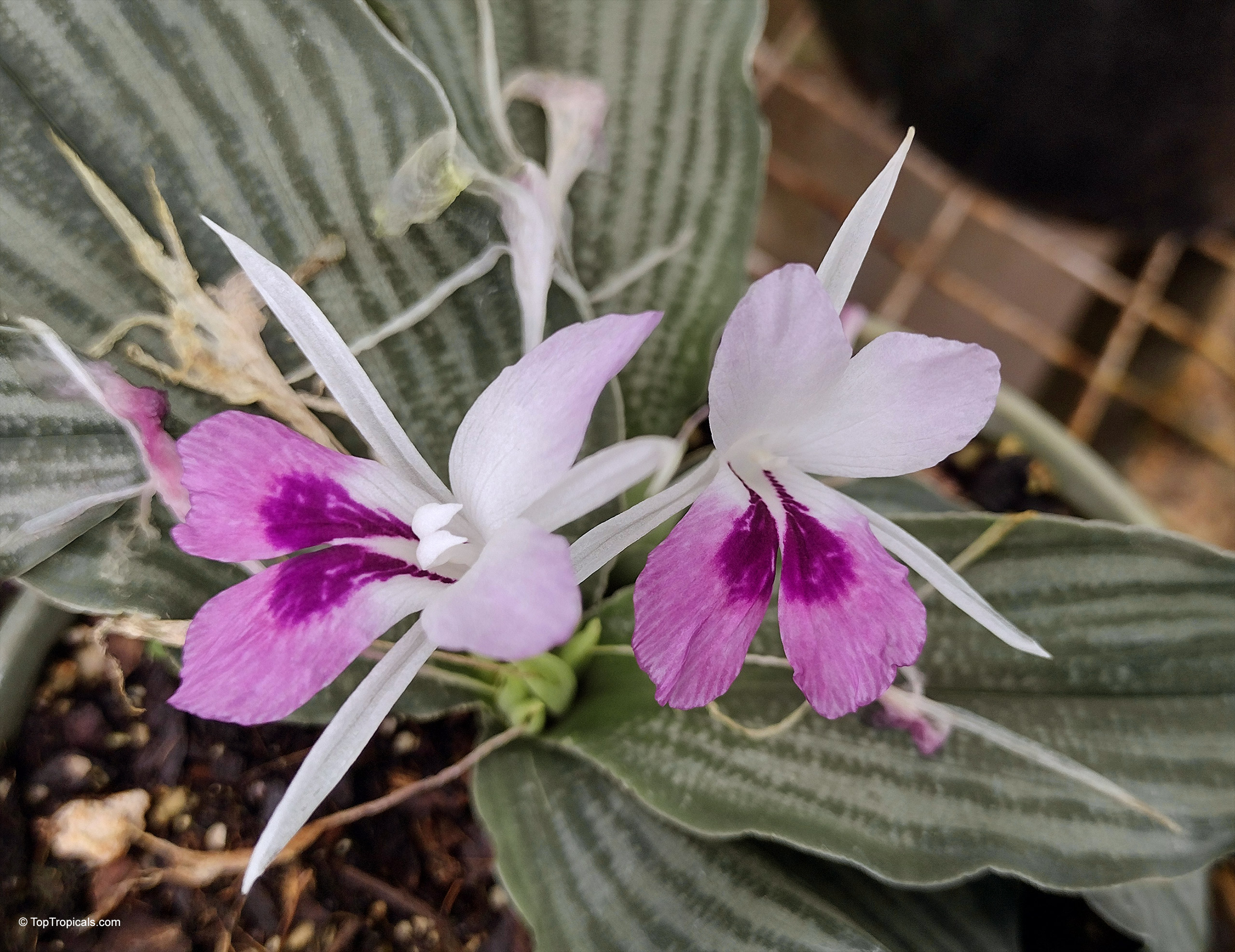
Kaempferia angustifolia is a small rhizomatous perennial in the Zingiberaceae family, native from northeastern India and Bangladesh through Myanmar and Thailand to parts of Indochina. It is a seasonally dormant forest-floor ginger, producing short leafy shoots from underground rhizomes during the rainy growing season. The narrow, lance-shaped leaves are usually arranged close to the ground and may show contrasting darker markings. Delicate white flowers emerge near the base of the plant, with a conspicuous broad, deeply divided lip often marked purple or violet toward the center. The name Kaempferia undulata has historically been applied to this species and remains a source of confusion, since the same name has also been used in different taxonomic contexts.
Kaempferia angustifolia grows best in warm conditions, partial to filtered shade, and loose, humus-rich, well-drained soil. Keep it moderately moist while actively growing, then reduce watering substantially as the foliage dies back and the rhizomes enter dormancy. It is frost-tender and is best treated as a tropical container or greenhouse plant outside approximately USDA Zones 10-11. Its compact habit makes it particularly suitable for shaded containers and small tropical plant collections.



Botanical name: Spathiphyllum sp.
Common name: Peace Lily
Family: Araceae
Origin: Central America
USDA Zone: 10-11
Cold tolerance: 40°F

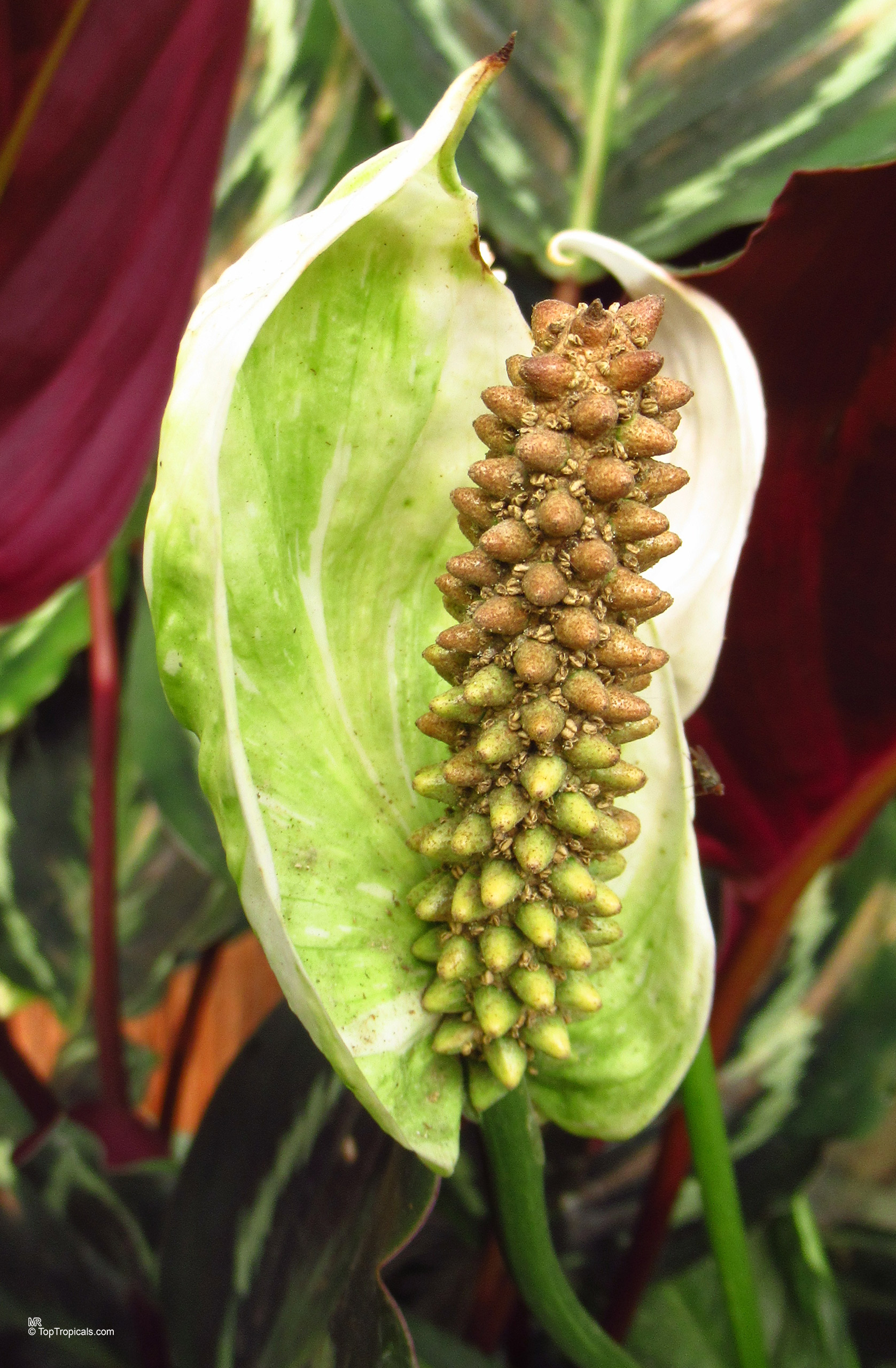
Spathiphyllum species are evergreen herbaceous plants in the arum family, native to humid tropical forests of Central and South America. They form clumps of glossy, lance-shaped leaves that arise directly from the base. The inflorescence consists of a pale spathe surrounding a central spadix, typically white when fresh and turning green with age.Spathiphyllum 'Sensation' variegated displays large cream-streaked leaves and a pale white spathe emerging from the bold tropical foliage.
Spathiphyllum is one of those adaptable plants that adjust well to different environments, which is why they are commonly used in homes, offices, restaurants, and malls. The NASA Clean Air Study identified Spathiphyllum among the top ten air-purifying plants, contributing to improved indoor air quality and reduction of so-called Sick Building Syndrome. Grow in bright, indirect light and moist, well-drained soil rich in organic matter. The plant thrives in warm, humid environments and benefits from regular watering without waterlogging. Hardy in USDA Zones 11-12. Propagation is by division of mature clumps.




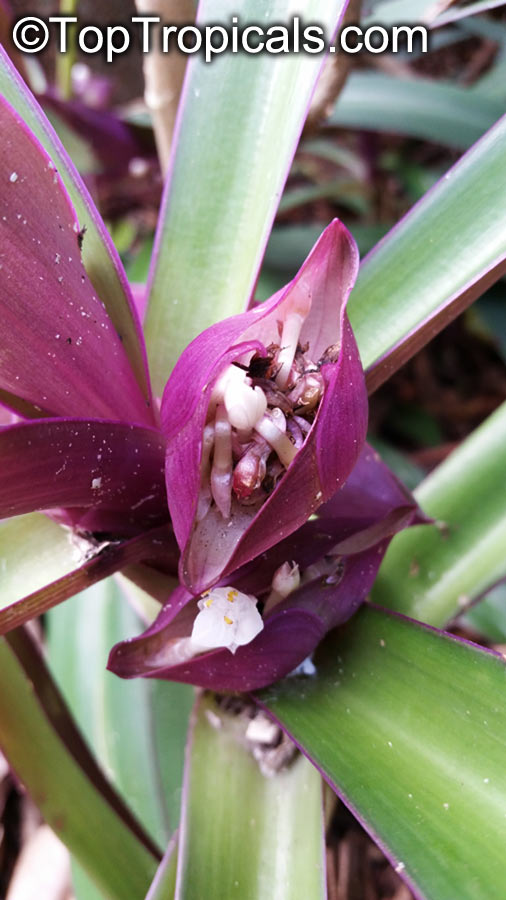
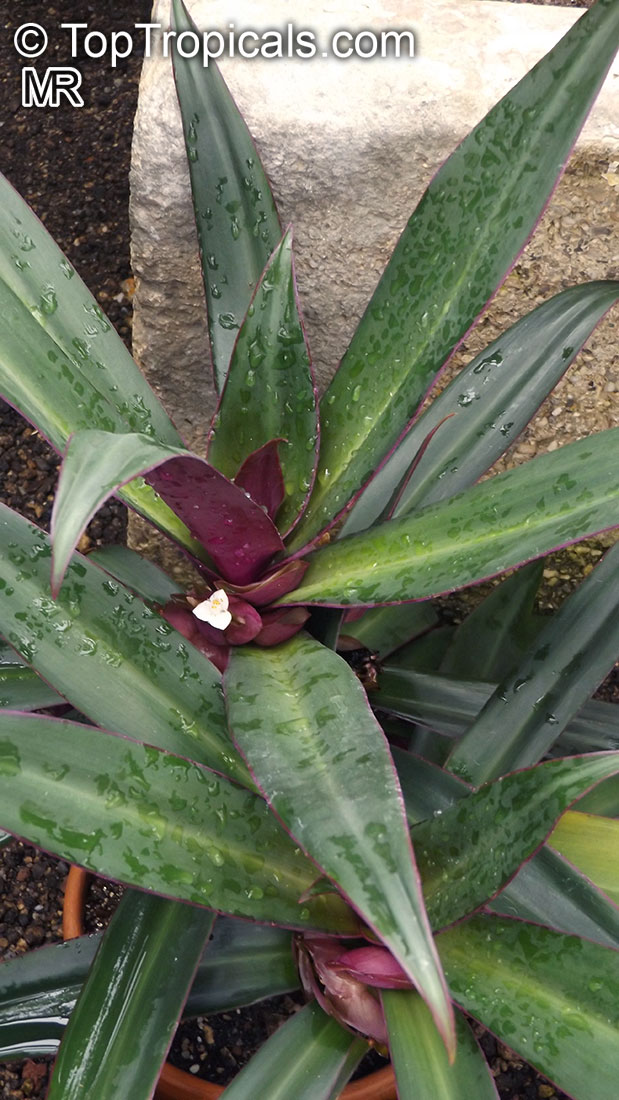
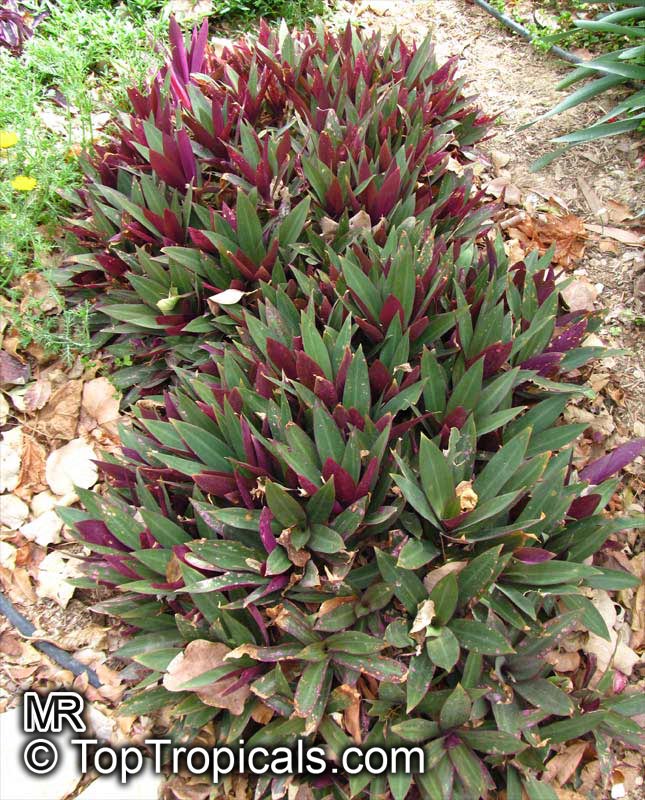
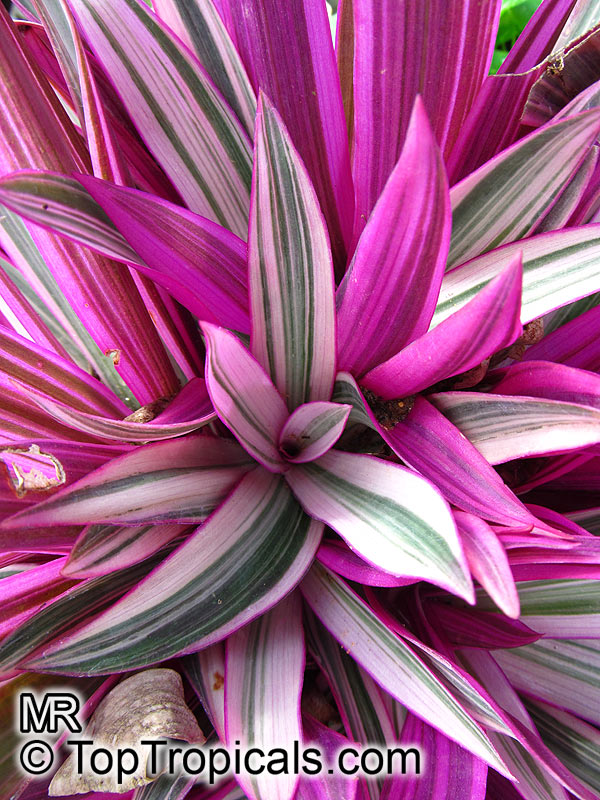
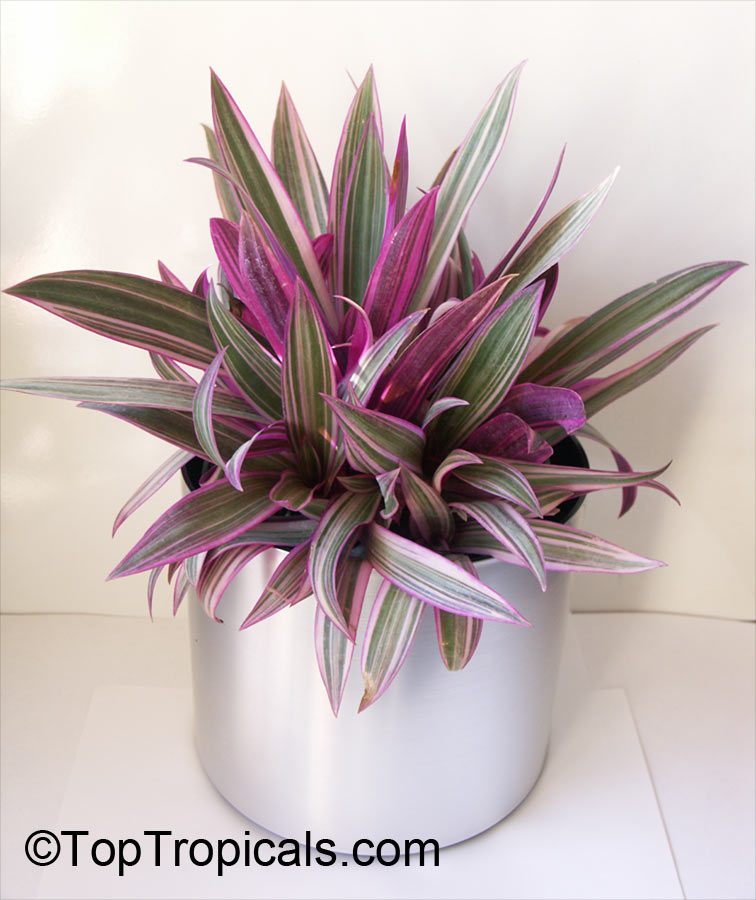
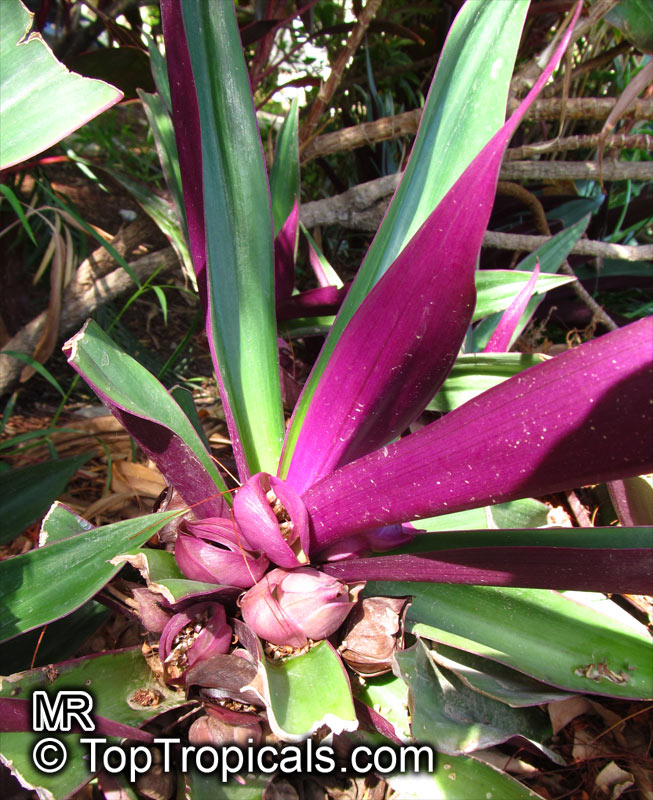
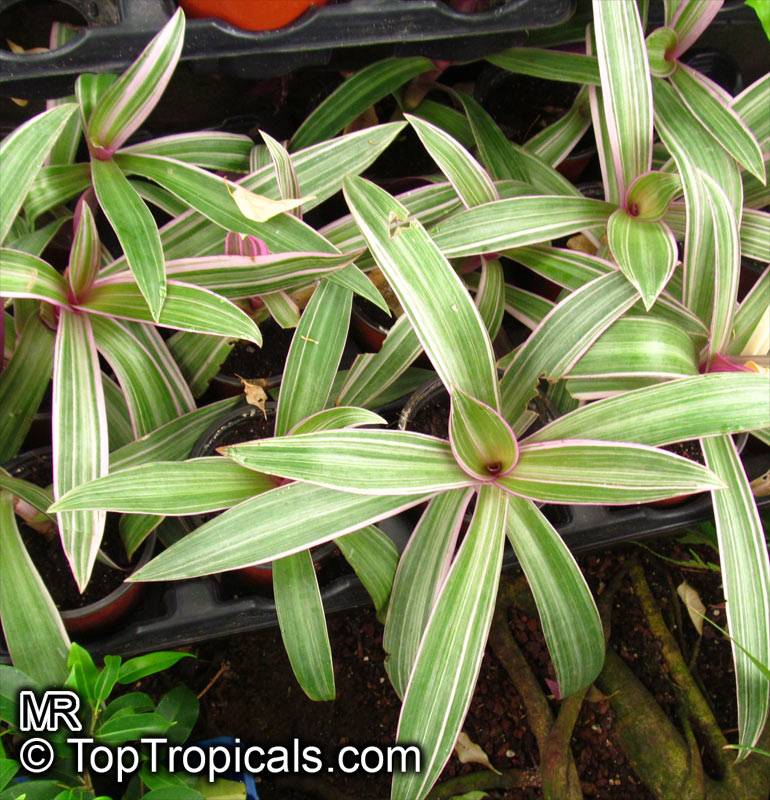
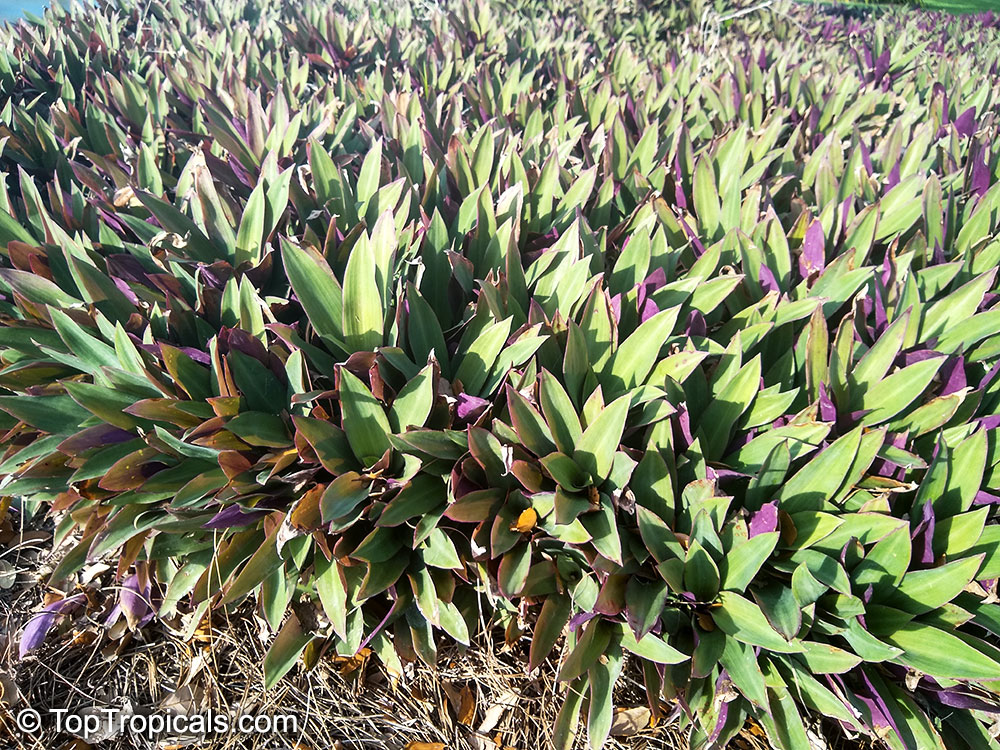
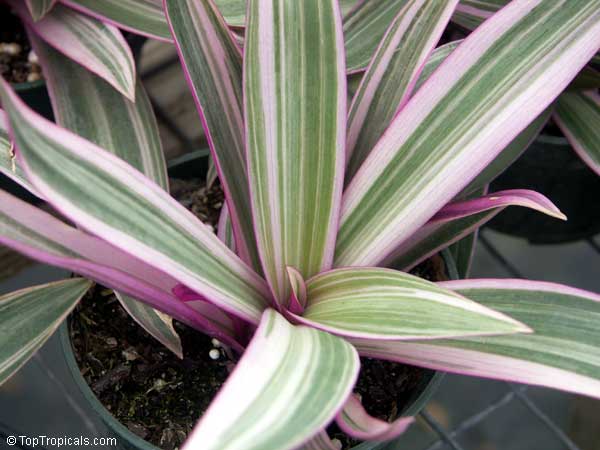
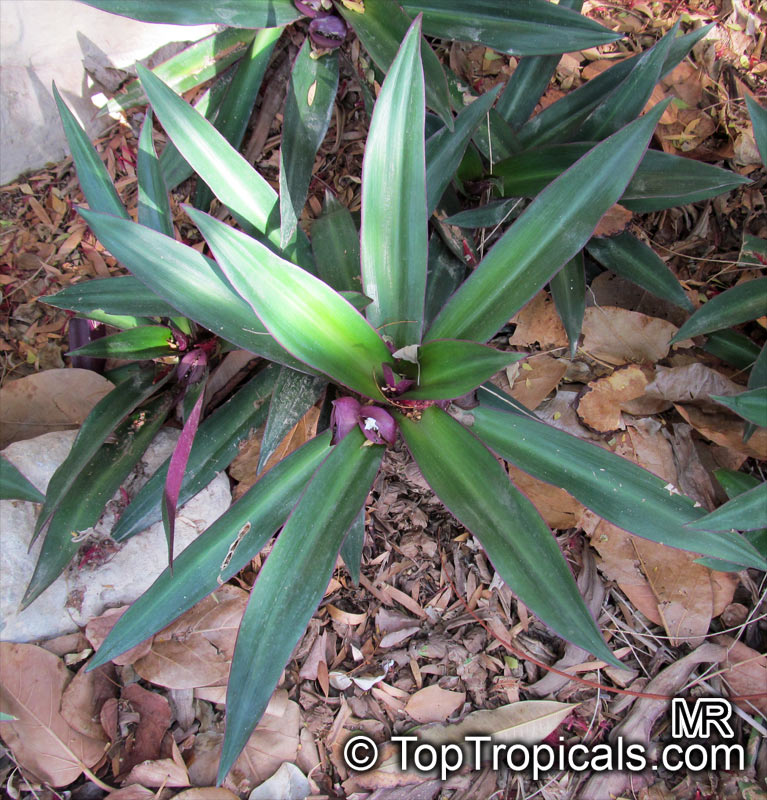
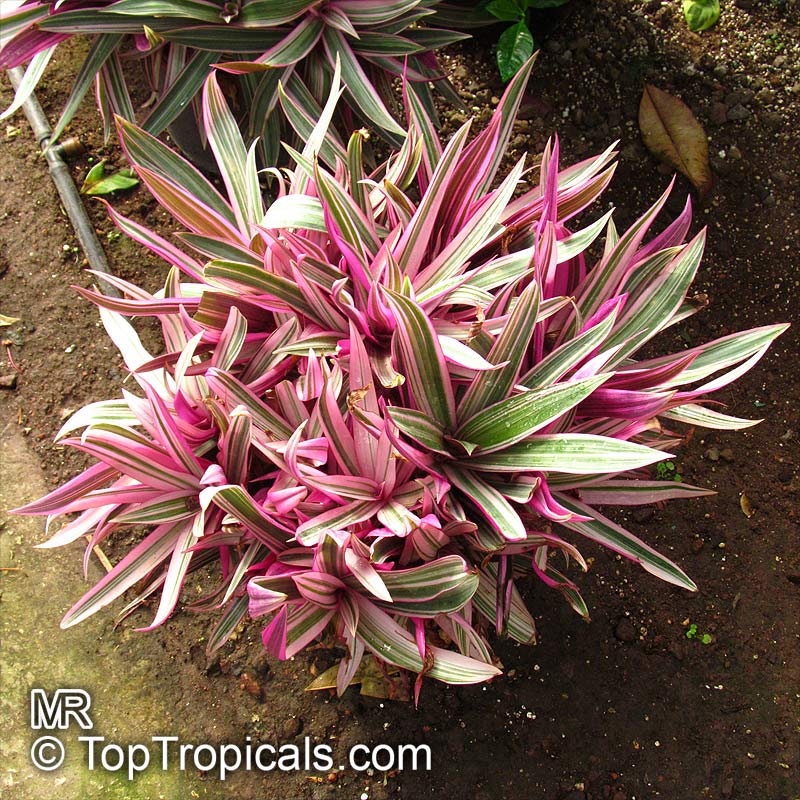
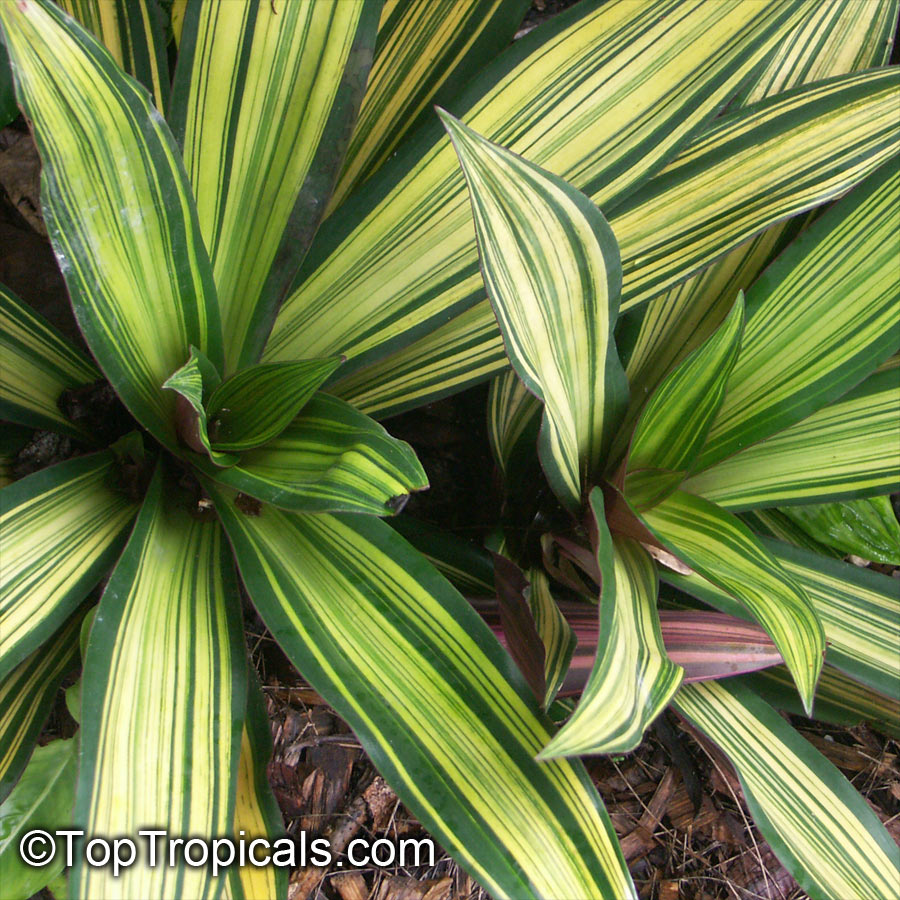
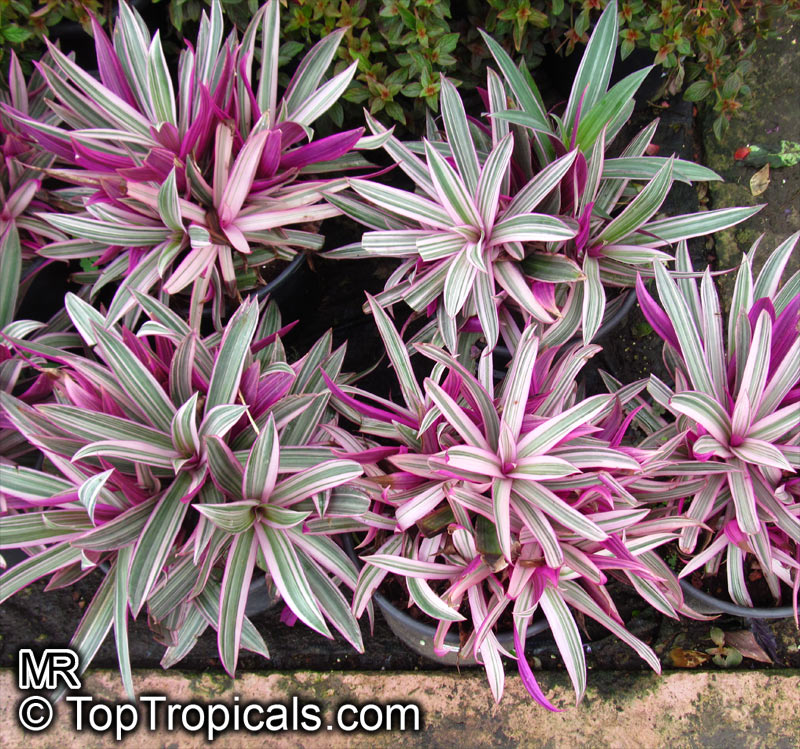
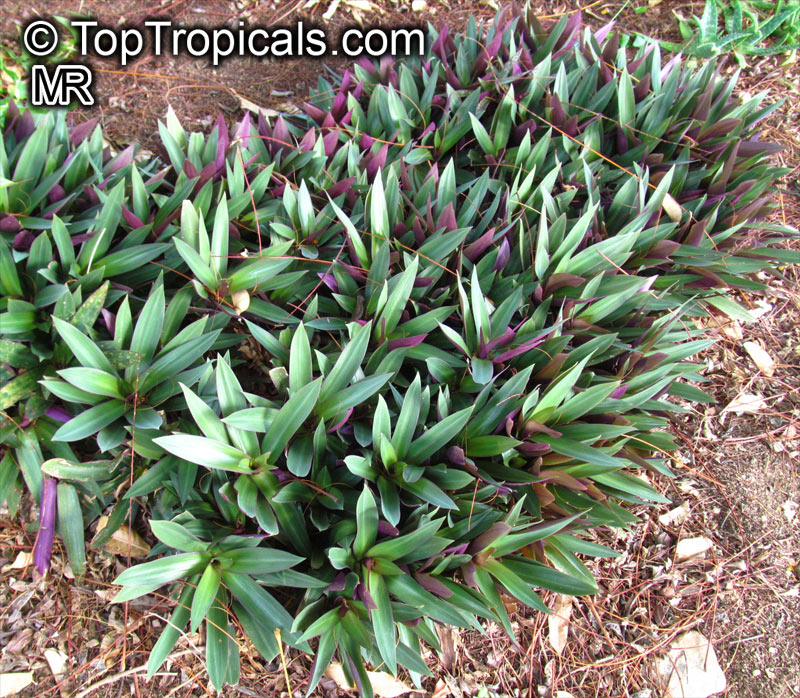
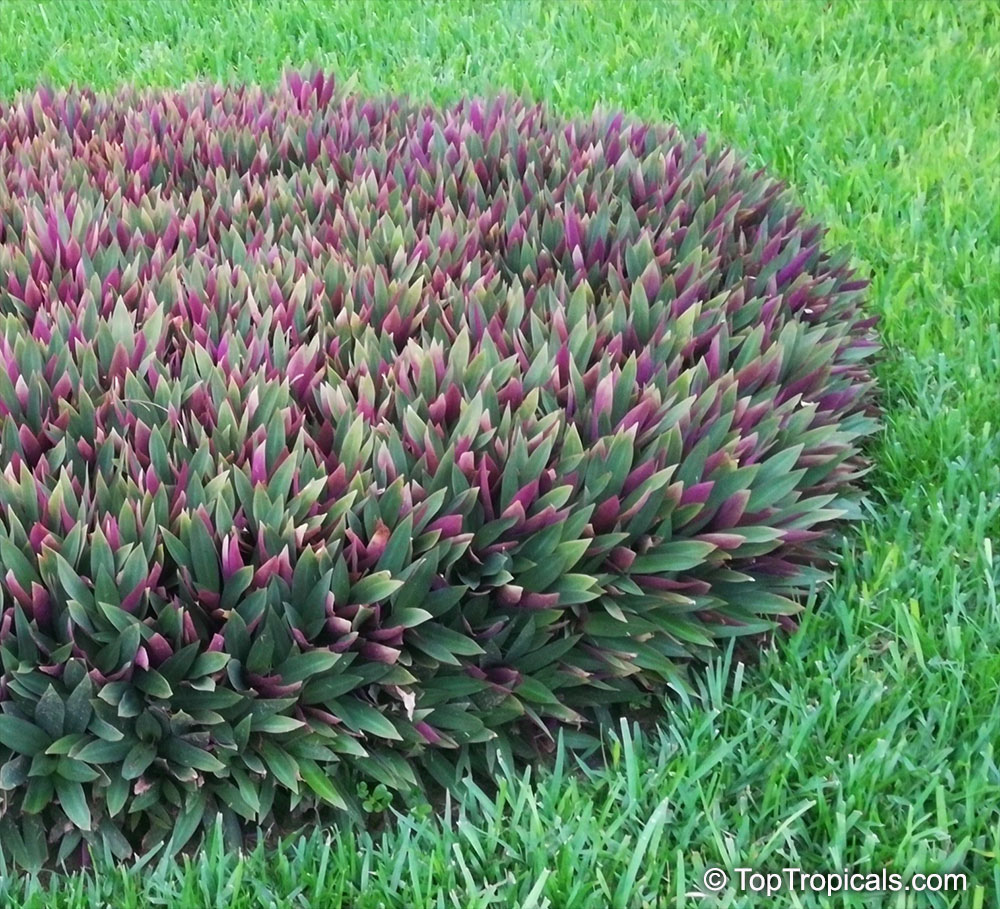
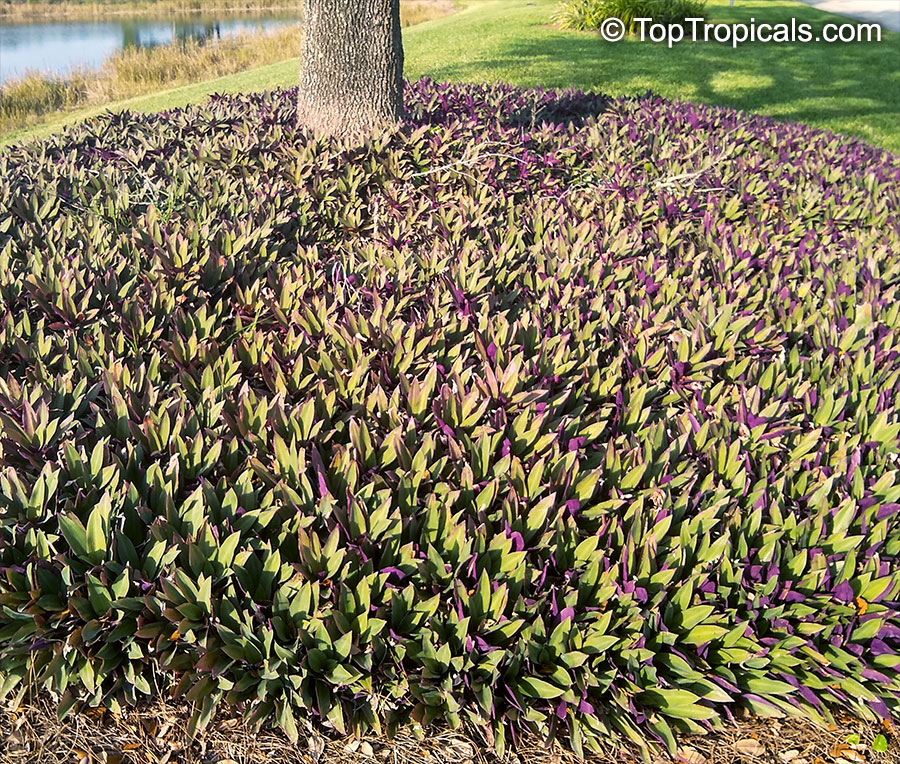
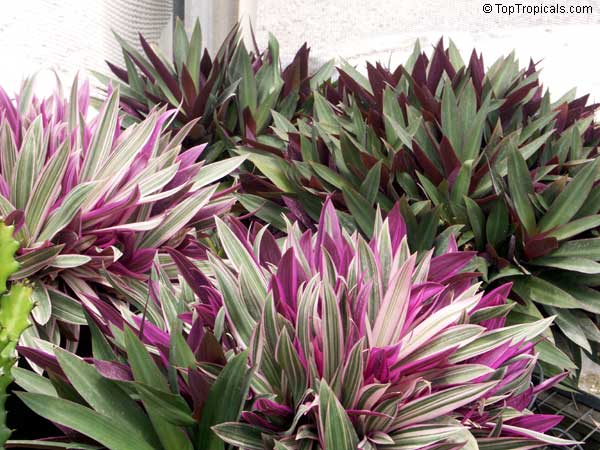
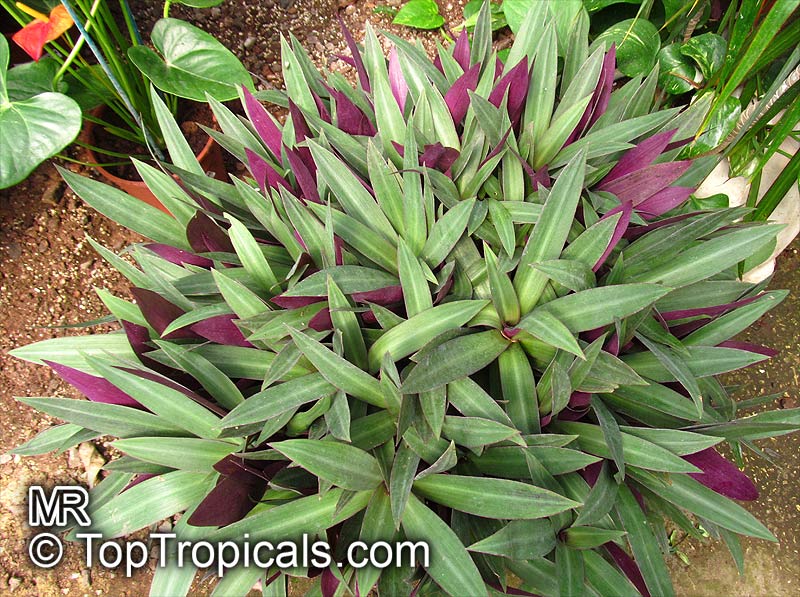
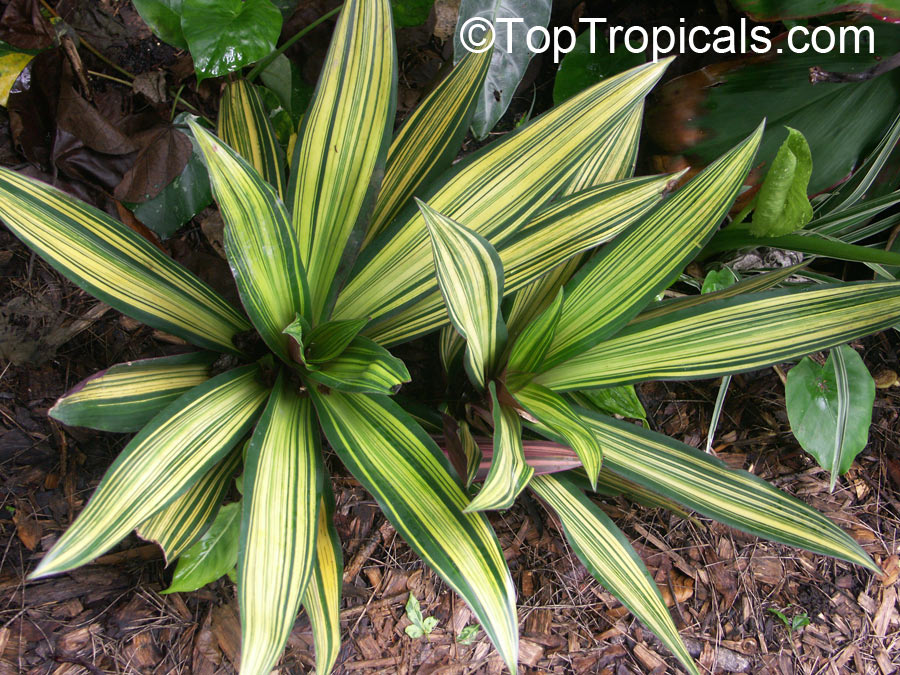
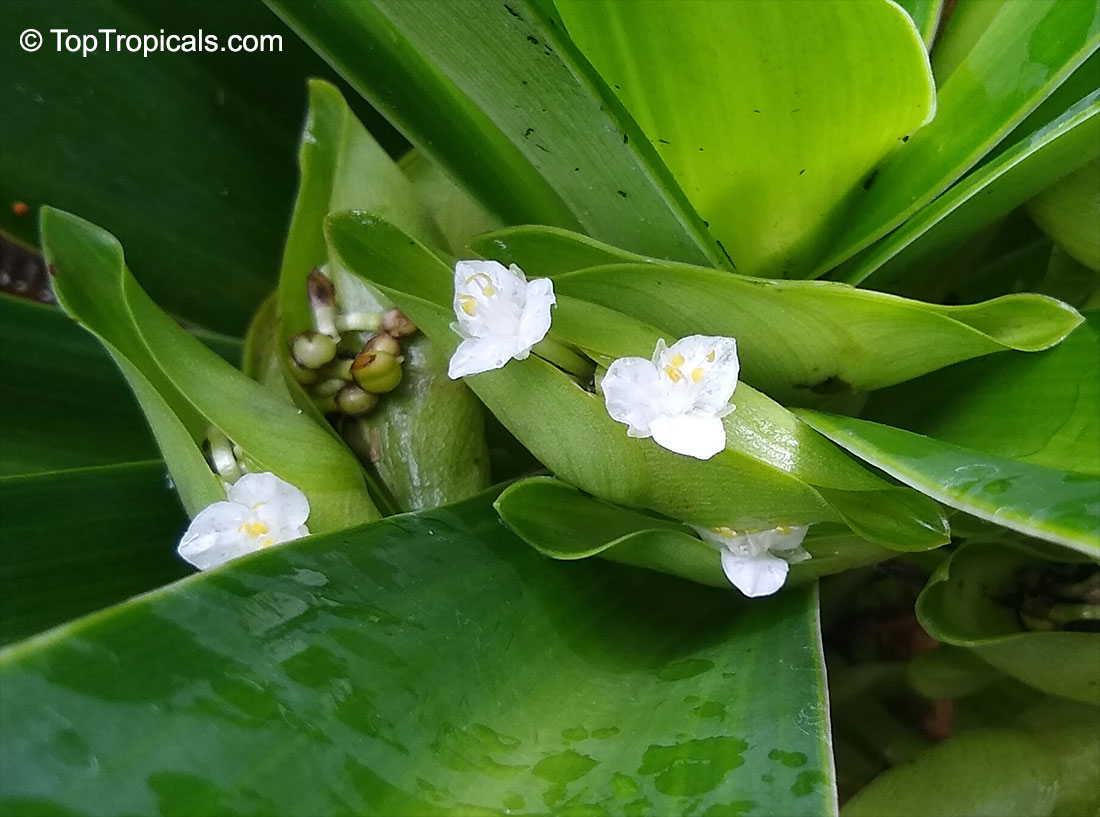
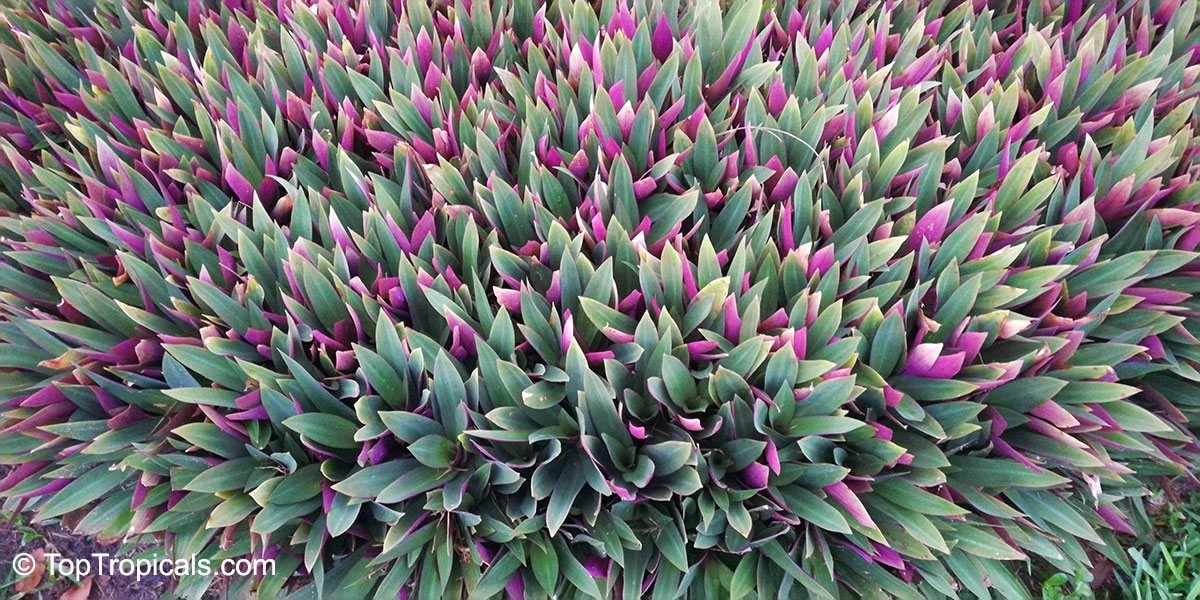
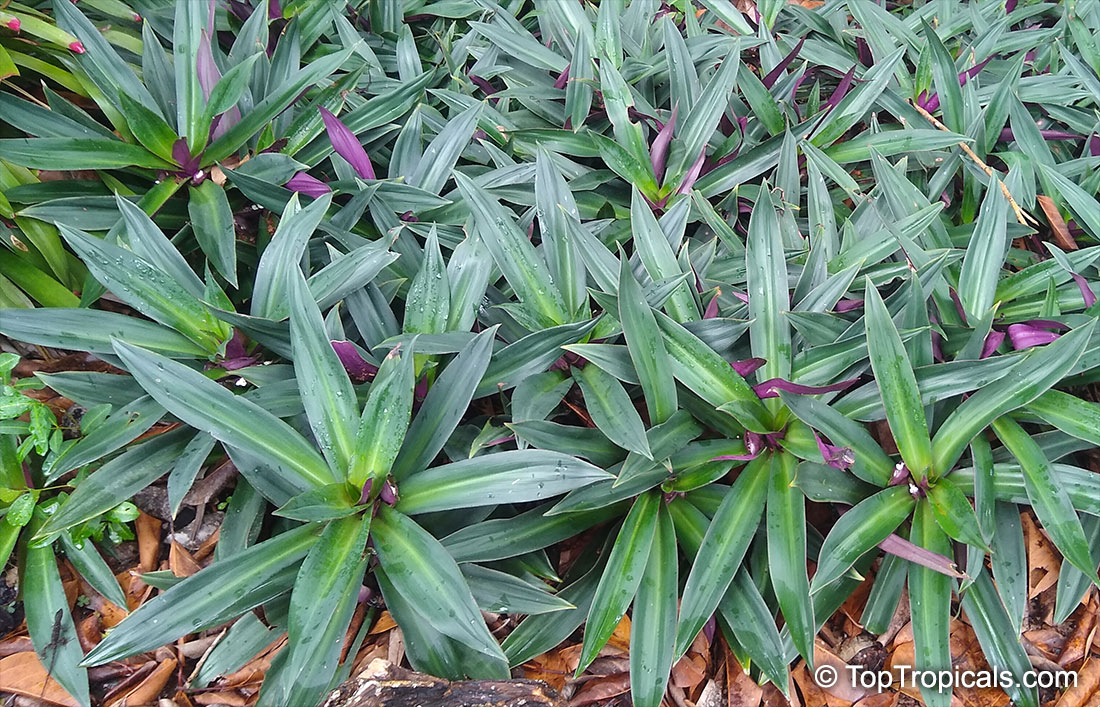
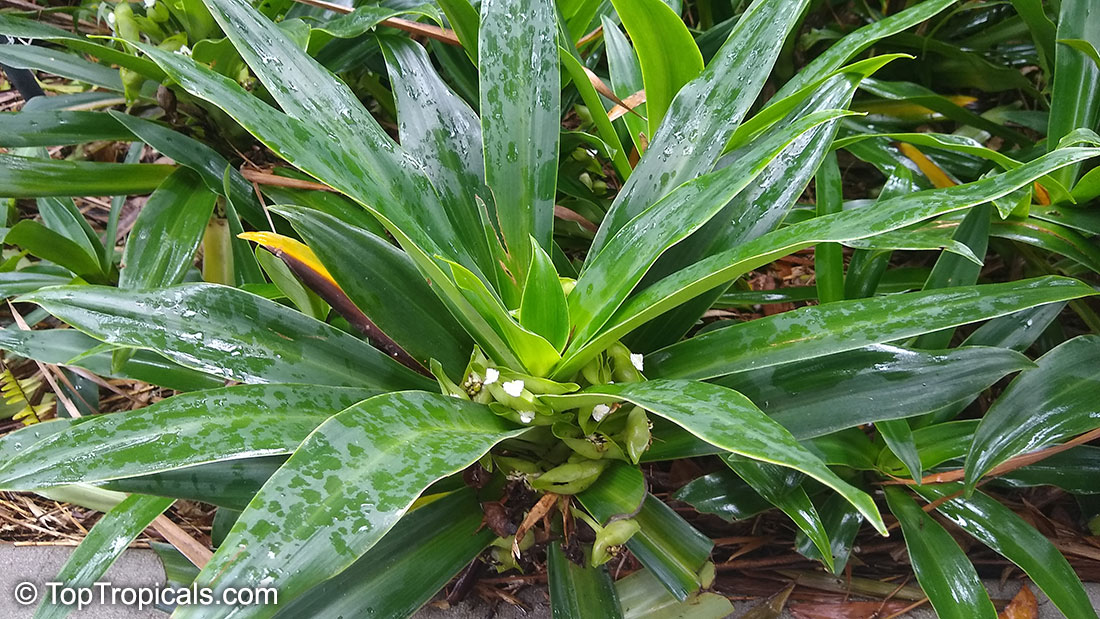
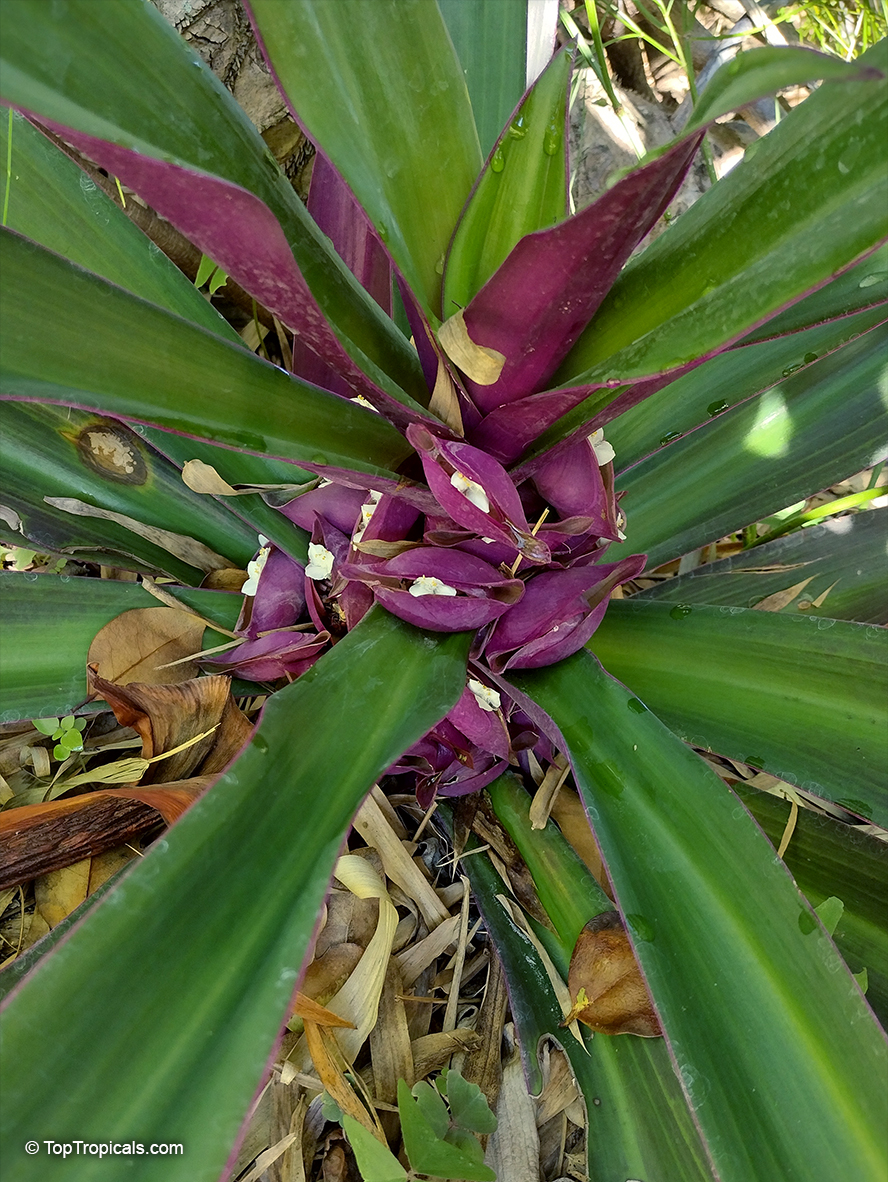
Botanical names: Tradescantia spathacea, Rhoeo spathacea, Tradescantia discolor
Common names: Boat lily, Rheo, Oyster plant, Moses-In-The-Boat
Family: Commelinaceae
Origin: West Indies and Mexico
USDA Zone: 9-12

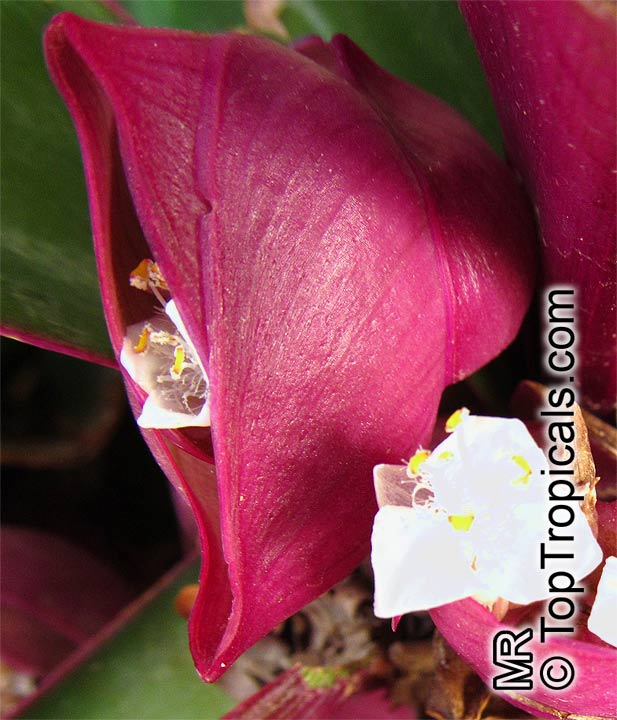
Herb with succulent stems; leaves crowded, flat, stiff, pointed, dark green above, purple to green below; flowers at base of leaves, small, white, 3-parted, held between 2 purple bracts; fruit a capsule. Can be used to make a dense groundcover, as houseplant or in interiorscape. Watery sap can cause contact dermatitis, avoid getting sap on skin.


Botanical name: Hemerocallis sp.
Common name: Daylily
Family: Xanthorrhoeaceae (Formerly:Hemerocallidaceae / Liliaceae)
Subfamily: Hemerocallidoideae
Origin: Eastern Asia and Australia
USDA Zone: 4-9
These hardy perennials have large and attractive blooms that are similar to lily flowers. Probably one of the easiest perennial flowers to grow, the daylily will tolerate most soil conditions, has few pests, is disease resistant, and can survive for fairly long periods without watering. What most people do not realise is that day lilies are actually cultivated as food crops in some countries, such as China and Japan. All parts of the plants are edible though it is the flowers that are most frequently used. Daylilies grow best when planted in full sun to partial shade. Daylilies will grow in most soil types, but like any other plant, they prefer a soil that is neither too hard or too sandy. Plants prefer a neutral to slightly acid soil and will be unhappy in very acid or alkaline soils. Be sure the place you want to plant has good drainage. Plants increase by forming new shoots from the roots. Propagation is exceedingly simple. The seed of cultivars will not usually breed true to type, the seedlings displaying a mixture of characteristics from the parents of the cultivar. Division is very easy, and this is the only way of ensuring that named cultivars remain true.


| Prev |
Use link to repeat this search:
https://toptropicals.com/cgi-bin/garden_catalog/cat.cgi?find=Water lily&search_op=and&keyword_op=and&language=e&number=10
&no_change_lang=1&user=tt&sale=1&first=0