Water, lily - Plant Encyclopedia Results (Page 4)
| Number of plants found: 59 |  | Prev | Next | 
|
Go to page: | 1 | 2 | 3 | 4 | 5 | 6 |

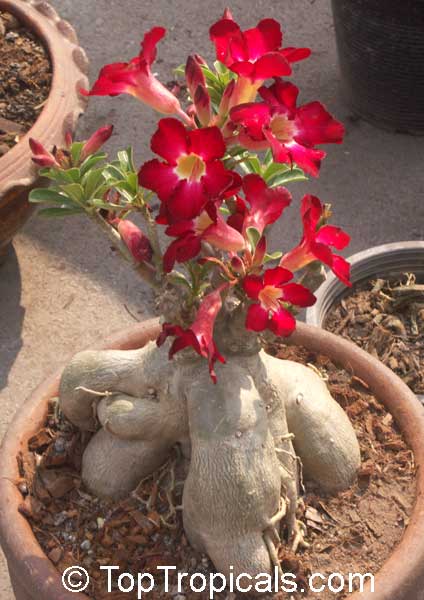
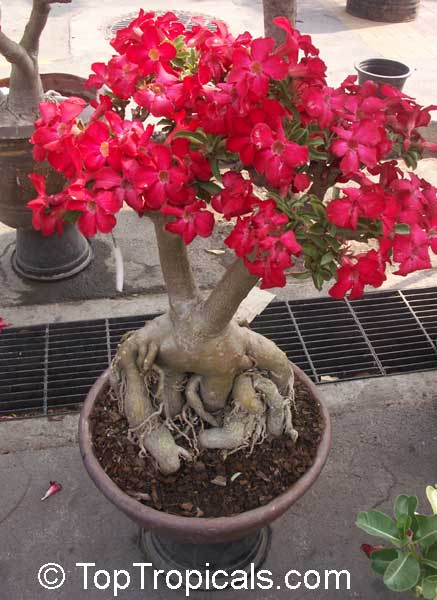
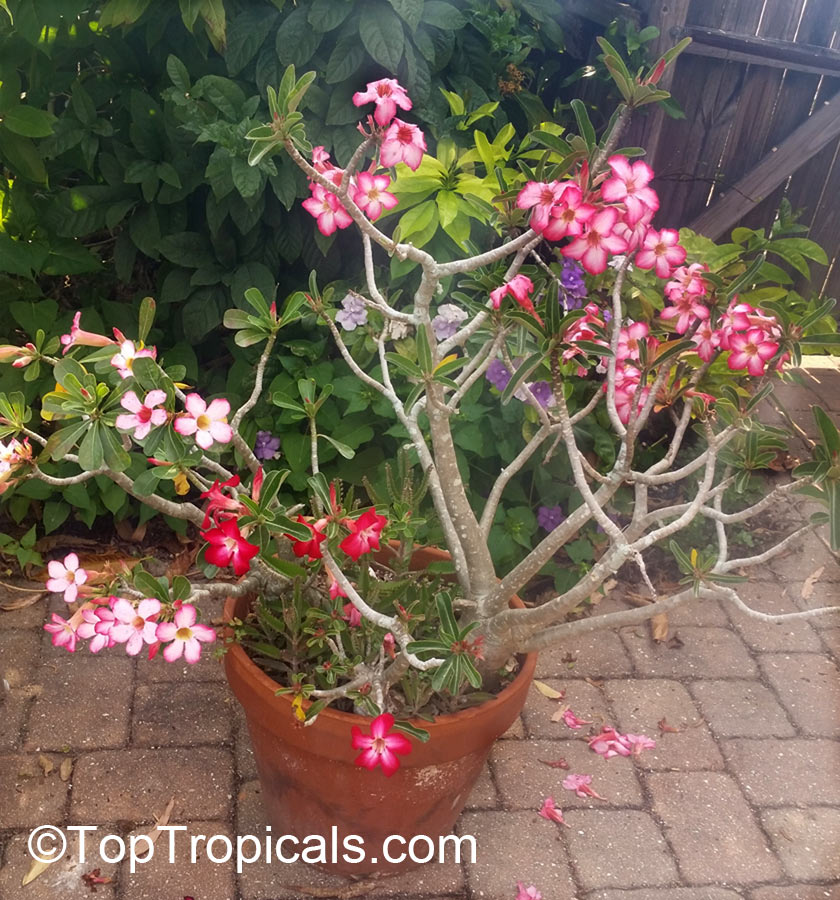
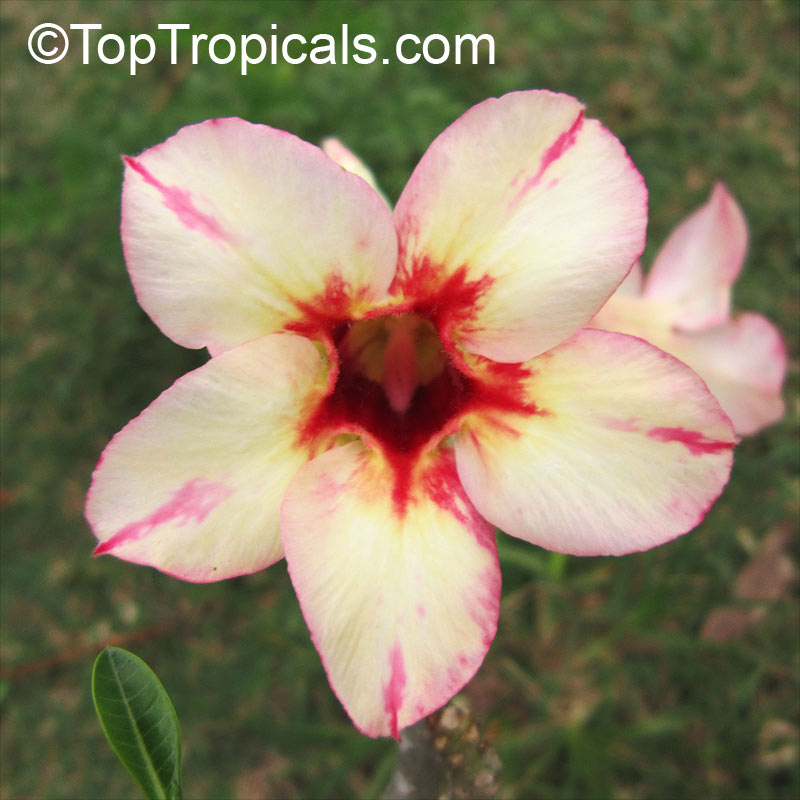
Botanical name: Adenium sp.
Common names: Desert Rose, Impala Lily, Adenium hybrids
Cultivar: Single Flower
Family: Apocynaceae

USDA Zone: 10-11


Adenium sp., commonly known as Desert Rose, refers to a group of succulent shrubs and small trees in the Apocynaceae family native to arid regions of Africa and the Arabian Peninsula. Plants develop a swollen caudex and thickened stems that store water, supporting a compact to spreading crown typically 2 to 6 ft tall in cultivation. Leaves are simple and variable in size and shape, often clustered near the tips of branches. Flowers are showy and funnel-shaped, appearing in a wide range of colors including pink, red, white, and bi-color forms, often with contrasting throats.
This group prefers full sun, excellent drainage, and a fast-draining, mineral-based soil. Water moderately during active growth, allowing the soil to dry between applications, and reduce watering during dormancy. Growth rate is moderate in warm conditions. Cold tolerance is limited, with damage likely below 40F; best suited to USDA Zones 10 to 11. Adenium species are well suited to container growing, where drainage and winter protection can be carefully controlled.See other exotic species of Adenium, photo gallery of exotic varieties and Thai Adeniums - milti-colored, multi-grafted.
See article about Adenium.
Exotic species of Adenium: Adenium swazicum, Adenium somalense, Adenium arabicum, Adenium boehmianum, Adenium multiflorum, Adenium crispum, Adenium obesum. Adeniums have many spectacular hybrids. The basic culture is very similar to orchids. A small pot with excellent drainage is a must. Adeniums do not like both over-watering or drying-out. There is a little secret of how to create a weird shape of the base: lift the plant a bit every time you re-pot the plant, so that the upper part of roots will be a little exposed. The plant will form more roots that will go down. To make your plant develop a large swollen base/trunk, you'll need a good quality fertilizer. Fetilizer requirement for swelling up trunks is also used to increase flowering. It shouldnt be too hight in nitrogen, the middle number should be the highest. Never apply fertilizer directly on roots and do not liquid feed when a plant is thirsty: always water first slightly to avoid root burn and leaf drop. Do not wet leaves. Adeniums need lots of light for heavy flowering. Most hybrids and species start blooming in the spring when the conditions are warm and days get longer, and continue blooming through the fall and winter in warmer climates. Adeniums like a neutral to hard water. Acidic water tends to sour the soil too fast and may cause root rot. Water plants preferably in the early morning, and allow them to drink up throughout the day. Watering can be done daily to every few days. Never allow your plants to sit in a saucer of water, but don't let them to dry out too often - this causes adeniums to go into early dormancy.
See photo gallery of exotic varieties and Thai Adeniums - milti-colored, multi-grafted.
See article about Adenium.










Botanical name: Amorphophallus atroviridis
Common name: Voodoo Lily
Family: Araceae
Origin: Thailand
USDA Zone: 9-10


Native to Thailand, Amorphophallus atroviridis is a small plant that typically grows to a height of 2-5 ft and prefers partial shade to semi-shade conditions. This plant has an ornamental foliage and blooms annually, displaying lovely pink or white/ off-white flowers.
This plant prefers regular to moderate water during its growth season but should be kept slightly dry during the winter months in colder regions. When it comes to plant care, it is best to grow this plant in a pot of average quality potting soil and water regularly. If you plan on cultivating this exotic plant in a cold region, it is best to bring the pot indoors during the cold season and keep it in a cool and well-ventilated place.
Amorphophallus atroviridis can be grown in USDA zones 9-11, and can be propagated by division or seed. To propagate by seed, it's best to sow the seeds in humus rich or seed starting mix and keep in warm and moist conditions for best results.
Overall, Amorphophallus atroviridis is a beautiful and unique plant that can bring a unique charm to any garden, balcony, or even a home. With beautiful pink or white/ off-white flowers and ornamental foliage, this easy to care for plant is sure to make a statement.
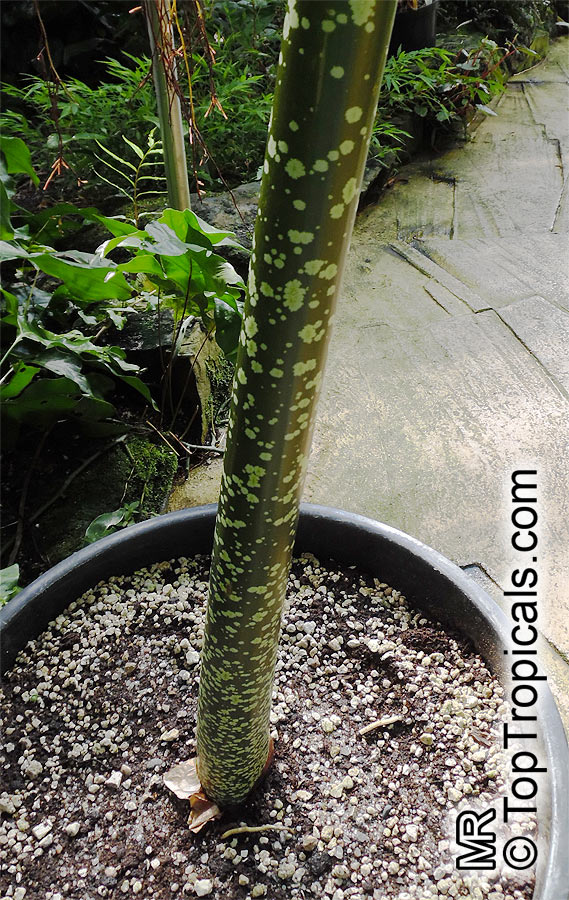
Botanical name: Amorphophallus sp.
Common names: Voodoo lily, Devils tongue, Snake Palm, Corpse flower, Elephant Foot Yam
Family: Araceae
Origin: Himalaya, India, Burma
USDA Zone: 8-11


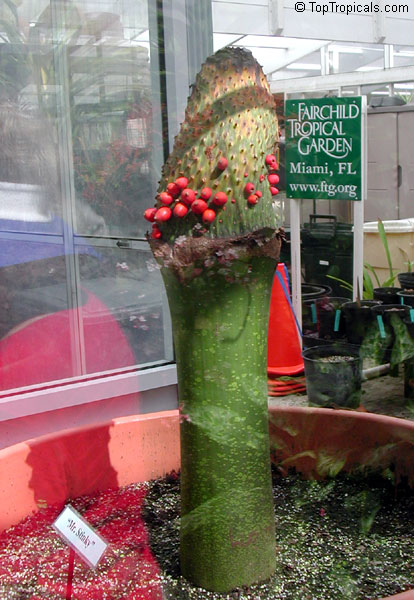
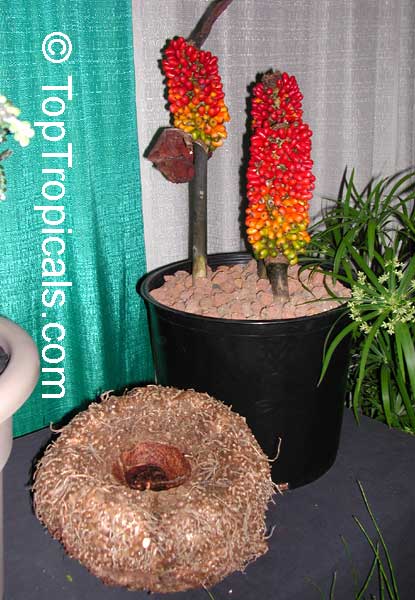
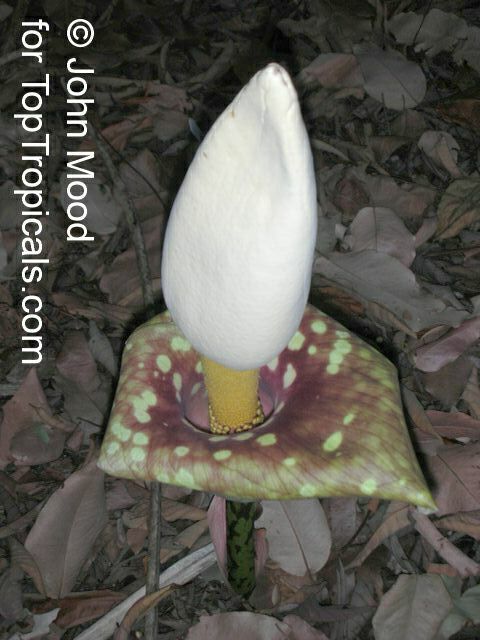
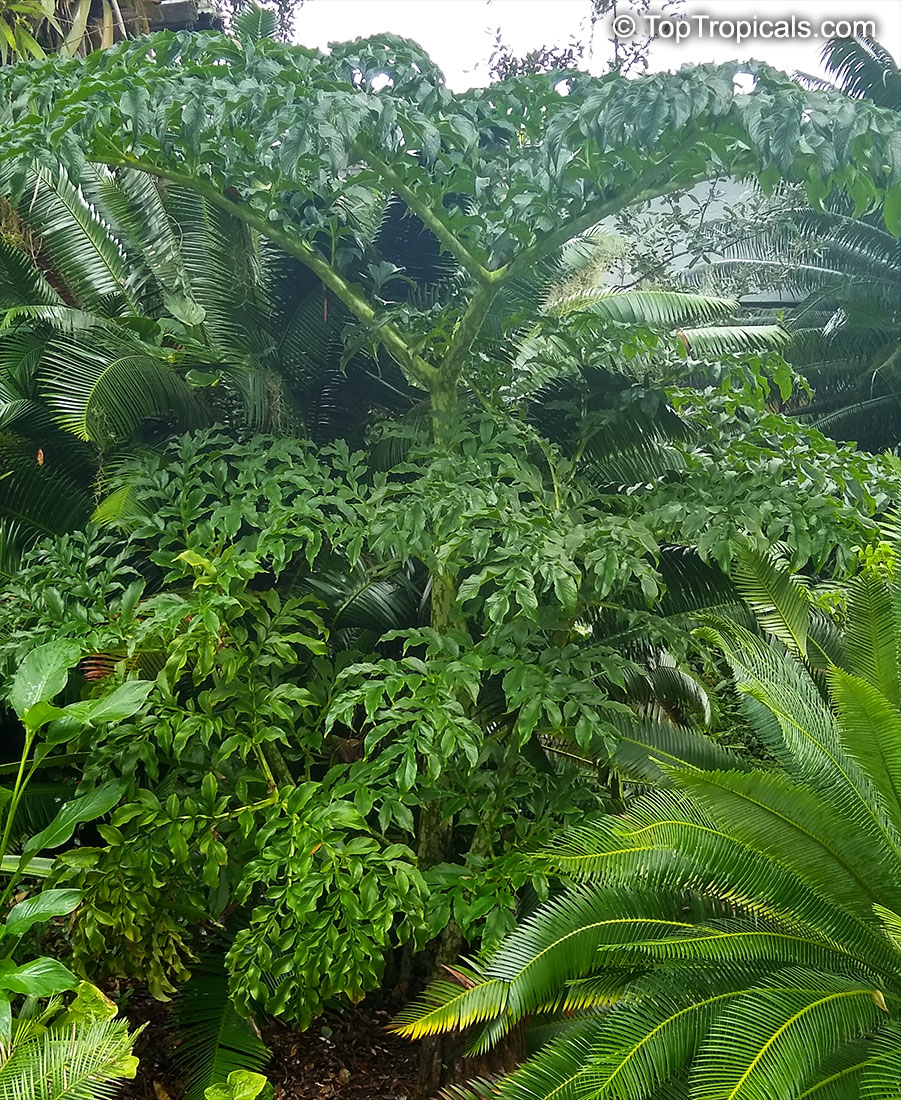
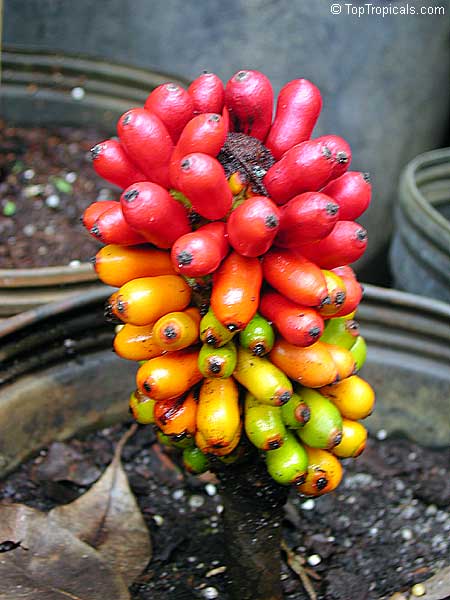
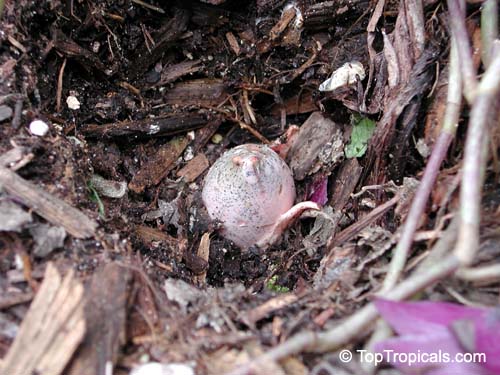
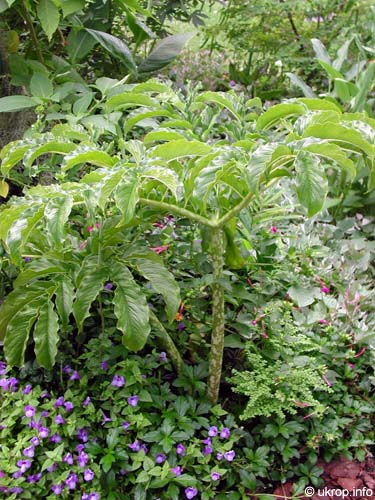
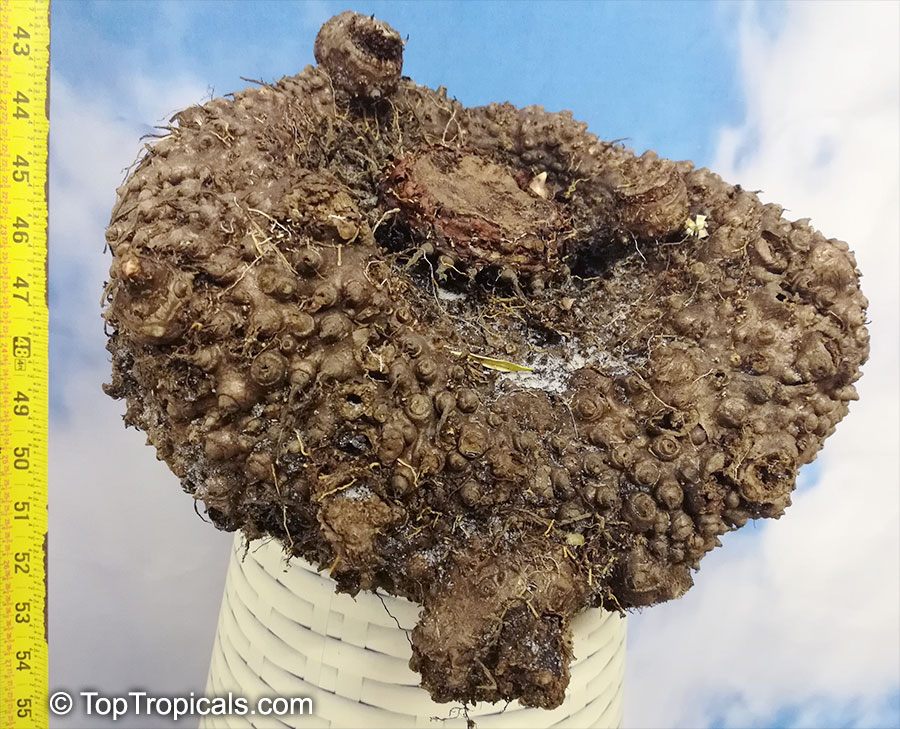
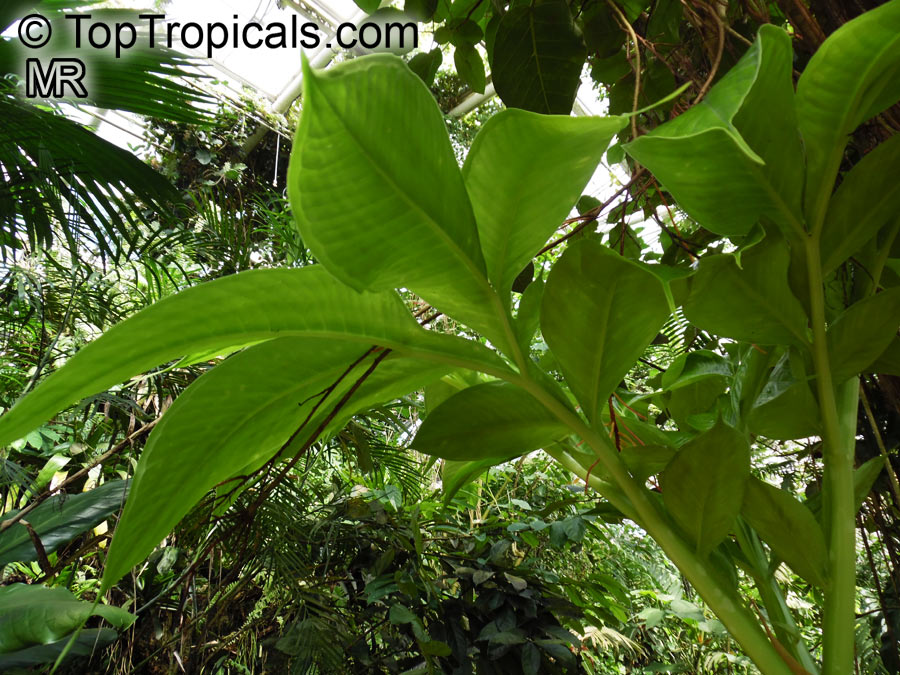
Amorphophallus species are herbs with an underground storage organ. This is usually a tuber. One single leaf emerges from the tuber, consisting of a vertical petiole (stalk) and a horizontal leaf-blade. The latter is dissected into few or numerous small leaflets. Once plants are mature an inflorescence may develop. The inflorescence may replace the leaf in one season, or develop alongside it. From winter dormant tubers emerge an umbrella like plant with beautiful speckled stems. Large flowers will emerge from mature plants in the spring. When the spathe opens the female flowers are receptive and must be pollinated that same day. The opening inflorescence emits an attractant scent. In Amorphophallus this scent has diversified considerably. In most species the scent is anything but pleasant, and reminds one of varieties of death, decay, sewage, gas and the like. A few species develop a scent that is actually pleasant to the human nose (e.g. carrot-like, anise, chocolate, fruity, lemon). After successful pollination most parts of the spathe wither and drop off, after which the individual female flowers develop into berries, containing the seeds. These berries are usually red or orange-red, but occasionally blue, white, or yellow-and- white. Amorphophallus thrives in a rich loamy soil in partial shade. Compost should consist of 2 parts loam to 1 part peat moss to 1 part sand. Keep the plant evenly moist all through the growing season. Keep dry during dormancy, keep moist during growing period. Fertilize monthly with a houseplant fertilizer. Water should be gradually withheld starting in October until the leaf withers. Store corms at a temperature above 50 degrees. They can be brought into active growth in late March. If the corms are strong enough, a blossom will soon be produced. The leaf follows soon afterwards. A. bulbifer definitely dislikes low humidity - the leaflets may partially desiccate; this seems to be more pronounced in low light. Also, in low light, the leafes become exceptionally dark green, with nicely contrasting pink margins. Such plants have to be moved to brighter light very gradually. In bright light, the leaves are bright green, with pinkish margins less pronounced. Other species: konjac, titanum, and much more...
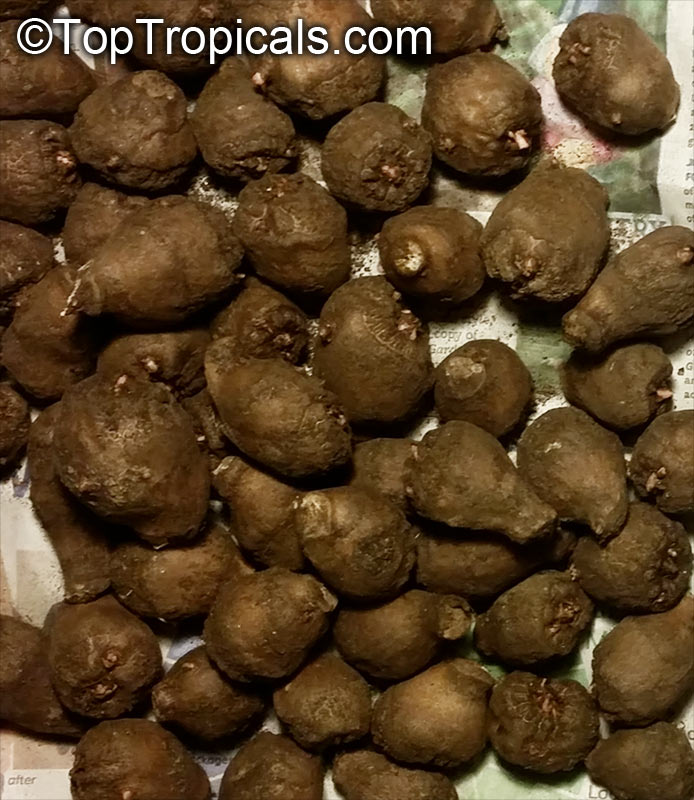
Amorphophallus konjac is one of the largest flowers, a perennial exotic Asian plant. It grows a single, elongated center called a corm and a single large leaf that wraps around it. The corm is the part of the plant that is used, as well as its tuber, which is commonly called the konnyaku potato. Amorphophallus konjac acts as a diet aid that has many benefits. Its ability to swell when mixed with water allows it to fill the stomach. It also moves through the digestive system very slowly, making the appetite feel satisfied for a longer period of time. This characteristic of Amorphophallus konjac is beneficial in treating obesity. It is one of the most exotic, bizarre flowers. Can be easily grown in a pot as a house plant. The single leaf dormant in winter, then in spring the plant shoots out a remarkable flower.

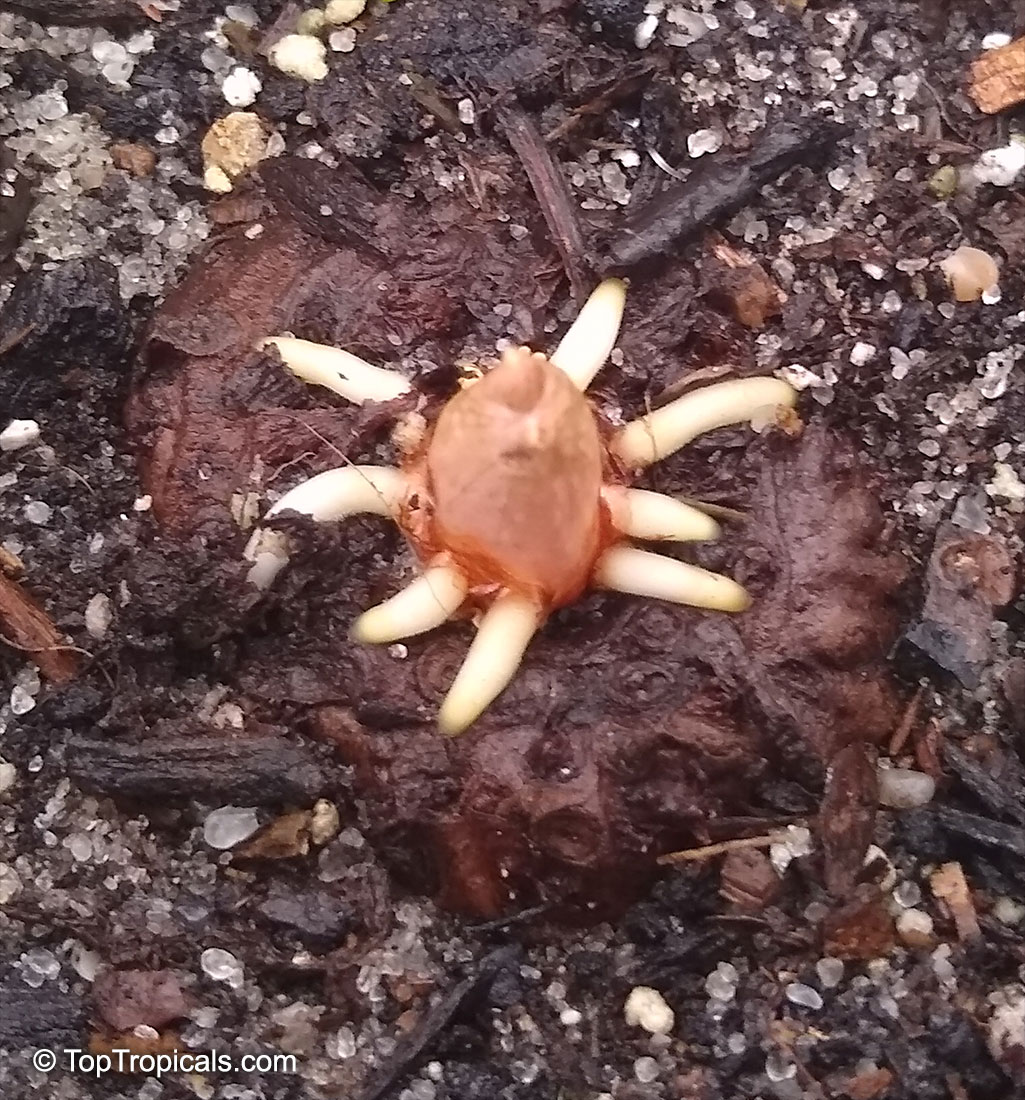

Botanical names: Arisaema tortuosum, Arum tortuosum
Common names: Whipcord Cobra Lily, Jack in the pulpit
Family: Araceae
Origin: E. Asia
USDA Zone: 7-9


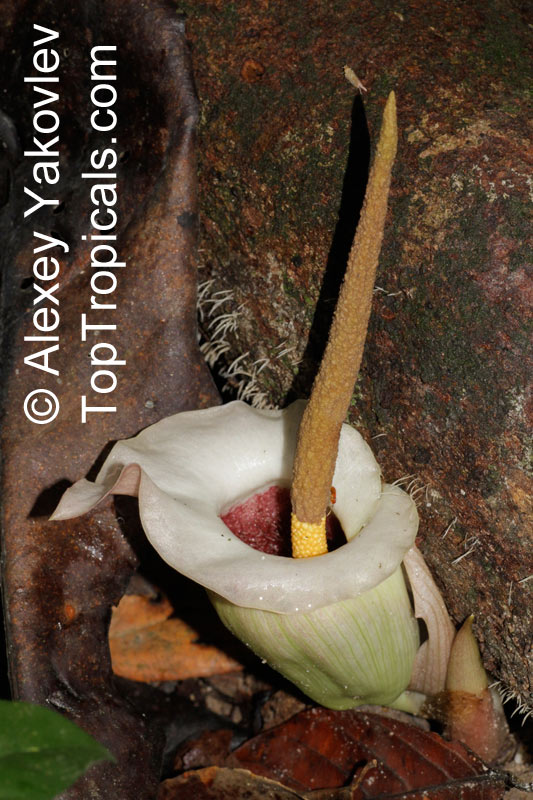
Arisaemas resemble carnivorous plants, but in fact they attract flies and other insects as pollinators, not food. Their leaves are divided into three or more leaflets. Their fascinating "flower" a pulpit-like hooded spathe enclosing a fleshy, erect spadix usually rises in spring. Scarlet berries by late summer or autumn enclose seeds that are scattered by birds and other creatures.
They prefer a rich but well drained neutral to acid soil that does not dry out in the growing season.
The plant contains calcium oxylate crystals. These cause an extremely unpleasant sensation similar to needles being stuck into the mouth and tongue if they are eaten but they are easily neutralized by thoroughly drying or cooking the plant or by steeping it in water. Tuber - it must be thoroughly dried or cooked before being eaten. The roots are buried in masses in pits until acetous fermentation takes place, they are then dug up, washed and cooked, by which means their acrimonious principles are in part dispersed.


Botanical name: Brunsvigia orientalis
Common names: Candelabra Flower, King Candelabra, Chandelier Lily
Family: Amaryllidaceae
Origin: South Africa
USDA Zone: 9-10

Native to South Africa, it is a small plant that measures 2-5 feet in height. Brunsvigia orientalis (Candelabra Flower) is ideal for Mediterranean-style gardens. This plant is incredibly attractive with its large, red, crimson, and vinous flowers. It should be planted in full sun areas and should not be overwatered as this can cause root rot. During its growth and flowering period, it will require moderate water but never allow the soil to become waterlogged.
In terms of general plant care, the soil must be well aerated. It is suitable for USDA Zone 9-1, so if you live in a cold region, it is best to grow it in a pot. When planting, make sure that the roots are not entangled and that the widest part of the bulb is above the surface of the soil. Prune regularly after flowering, preferably in spring, to promote plant growth and flowering for the following year.
The Brunsvigia orientalis is an alluring plant that is irresistible to both butterflies and hummingbirds. For gardeners looking to create a wildlife-friendly environment, this is an ideal option.1

Botanical name: Cordyline stricta
Common name: Narrow-leaved Palm Lily
Family: Asparagaceae (Formerly:Laxmanniaceae)
Subfamily: Lomandroideae
Origin: Australia
USDA Zone: 9-10

Cordyline stricta is a native Australian plant with a large shrub reaching heights of 5 to 10 feet tall. It has ornamental foliage with colors of green, yellow and light purple, adding a touch of brightness to any garden. The blooms of Cordyline stricta create a dramatic display of colors which range from blue to lavender to purple. The flowers are small and showy, with drooping panicles in the spring.
Cordyline stricta is a hardy plant and can be grown in the USDA Zone 9 to 11. It prefers moist soils in semi shade and is able to tolerate long periods of dryness once established. As a container plant, Cordyline stricta is easy to care for and can be kept indoors for an extended period of time. It is a moderately drought tolerant plant and prefers moderate water during the summer as well as an occasional deep soak in the winter.
When growing Cordyline stricta in a pot, care must be taken to ensure it is kept in the right environment. Depending on the region, the plant is likely to experience some winter chill, but it requires a frost-free environment to survive and thrive. In colder regions, the container should be moved to a sheltered spot away from direct winds and the pot should be insulated to reduce the chance of cold damage. Additionally, the soil should be kept moist in the winter and receive enough light to keep the foliage healthy and green.


Botanical name: Crinum sp.
Common name: River Lily
Family: Amaryllidaceae
Origin: Australia, tropical Asia, South Africa
USDA Zone: 8-11


Crinum is a fascinating genus of the large and equally captivating Amaryllidaceae family. Larger in stature than most other species of Amaryllidaceae, most crinums are suitable as landscape plants in or near water features while most of the smaller species can be successfully cultivated even in a small garden.
Throughout the world Crinum species have been used traditionally to cure ailments and diseases. Phytochemical analysis yielded more than 150 different isoquinoline or Amaryllidaceae alkaloids and some of the most noted effects are analgesic, anticholinergic, antitumour and antiviral. Recently, galanthamine has been registered as an acetylcholinesterase inhibitor, which is an important approach in treating Alzheimer's disease. Since the alkaloids are highly toxic, use of Crinum species is not recommended for the novice, as a large dose could easily be fatal.
Most species will grow well in any soil to which plenty of compost has been added. Plants grow best in full sun but will tolerate light shade and will thrive in a wet part of the garden.


Botanical names: Disocactus phyllanthoides, Nopalxochia phyllanthoides, Phyllocactus phyllanthoides
Common names: Pond Lily Cactus, Deutsche Kaiserin,
Family: Cactaceae
Origin: Mexico
USDA Zone: 9-11
Cold tolerance: 25°F

Disocactus ackermanni, also called the Red Orchid Cactus, puts on a jaw-dropping show with huge, blazing red flowers that can reach 6 inches wide! It's a cactus that acts nothing like one - and then bursts out in flowers the size of your hand.
It blooms from spring through summer and steals the spotlight every time. The plant grows like a lush, green fern with flat stems that drape and cascade like a living chandelier.
It may be a cactus, but it loves water and shade - more diva than desert. Native to the tropical forests of Mexico, this epiphyte thrives in a hanging basket and turns heads wherever it grows.
Why do collectors search for it? Because it's rare, eye-catching, and just plain fun to grow. No spines, no drama - just bold flowers and easy charm. This is one of those plants that visitors always ask about. If you're a collector, it's not a want - it's a need. In cultivation, it has been confused with Disocactus jenkinsonii, a hybrid between D. phyllanthoides and D. speciosus.


Botanical name: Eucharis grandiflora
Common name: Amazon Lily
Family: Amaryllidaceae (Formerly:Amaryllidaceae / Liliaceae)
Subfamily: Amaryllidoideae
Origin: South America
USDA Zone: 9-10
Large, sweet scented white flowers. Ideal for potting. Likes heavy feeding and plenty of water. Amazon lilies don't like to be disturbed, so keep them in the same pot for several years.


Botanical name: Gloriosa sp.
Common names: Glory Lily, Climbing Lily, Flame Lily
Family: Colchicaceae (Formerly:Colchicaceae / Liliaceae)
Origin: Uganda
USDA Zone: 9-10


Gloriosa sp. is a native of Uganda and an excellent choice for a groundcover or low-growing 2ft vine or creeper. It can also be grown as a small shrub, reaching 2-5 feet in height. It requires full sun or semi-shade for optimal growth and likes a moderate amount of water. The flowers of this plant are extraordinary and consist of luscious red and crimson hues with a vinous quality, as well as yellow and orange varieties. The flowers are sure to easily draw the attention of butterflies, hummingbirds and other pollinators.
Gloriosa sp. is vigorous, fast-growing and is suited to USDA Zones 9-11. If you live in a cooler climate and would like to keep it as a houseplant, growing it in a pot with ample drainage is ideal. As the plant is quite toxic and even poisonous if ingested, it is best to keep it away from pets and young children. When grown indoors, keep the soil slightly moist and allow the light to reach the glorious flowers for a beautiful display. If the temperature drops in winter when growing the plant outside, a thick layer of mulch is recommended for protection against cold and frost.
Overall, Gloriosa sp. is an easy-care plant that is sure to draw attention with its eye-catching colorful flowers. With the right care, it provides plenty of beauty and is sure to be a beloved addition to your home.


| Prev | Next | |
Use link to repeat this search:
https://toptropicals.com/cgi-bin/garden_catalog/cat.cgi?find=Water lily&search_op=and&keyword_op=and&language=e&number=10
&no_change_lang=1&user=tt&sale=1&first=0