Irritating plant - Plant Encyclopedia Results
| Number of plants found: 204 | Next | 
|
Go to page: | 1 | 2 | 3 | 4 | 5 | Last |
Botanical name: Adenanthera pavonina
Common names: Red Sandalwood, Coral Bean Tree, Saga, Sagaseed Tree, Red-bead Tree, Raktakambal, Kokriki
Family: Fabaceae
Subfamily: Caesalpinioideae
Origin: India
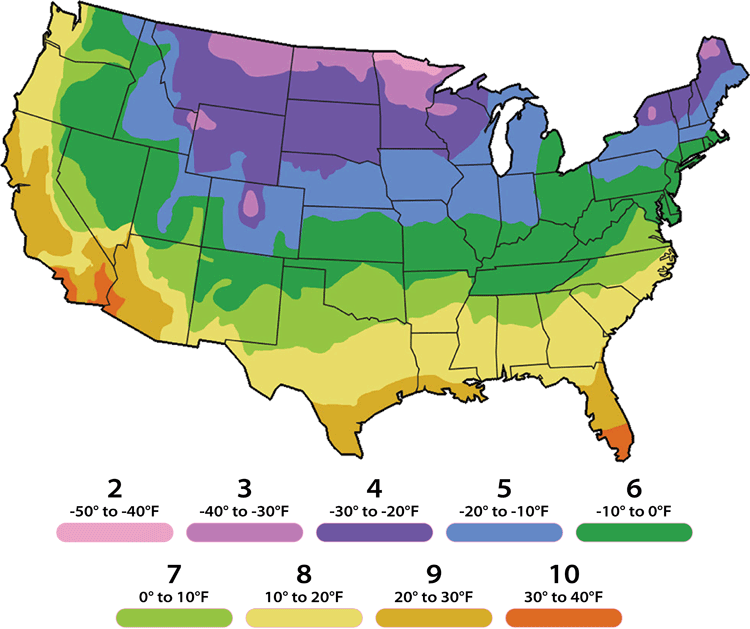
Hardiness: 35°F


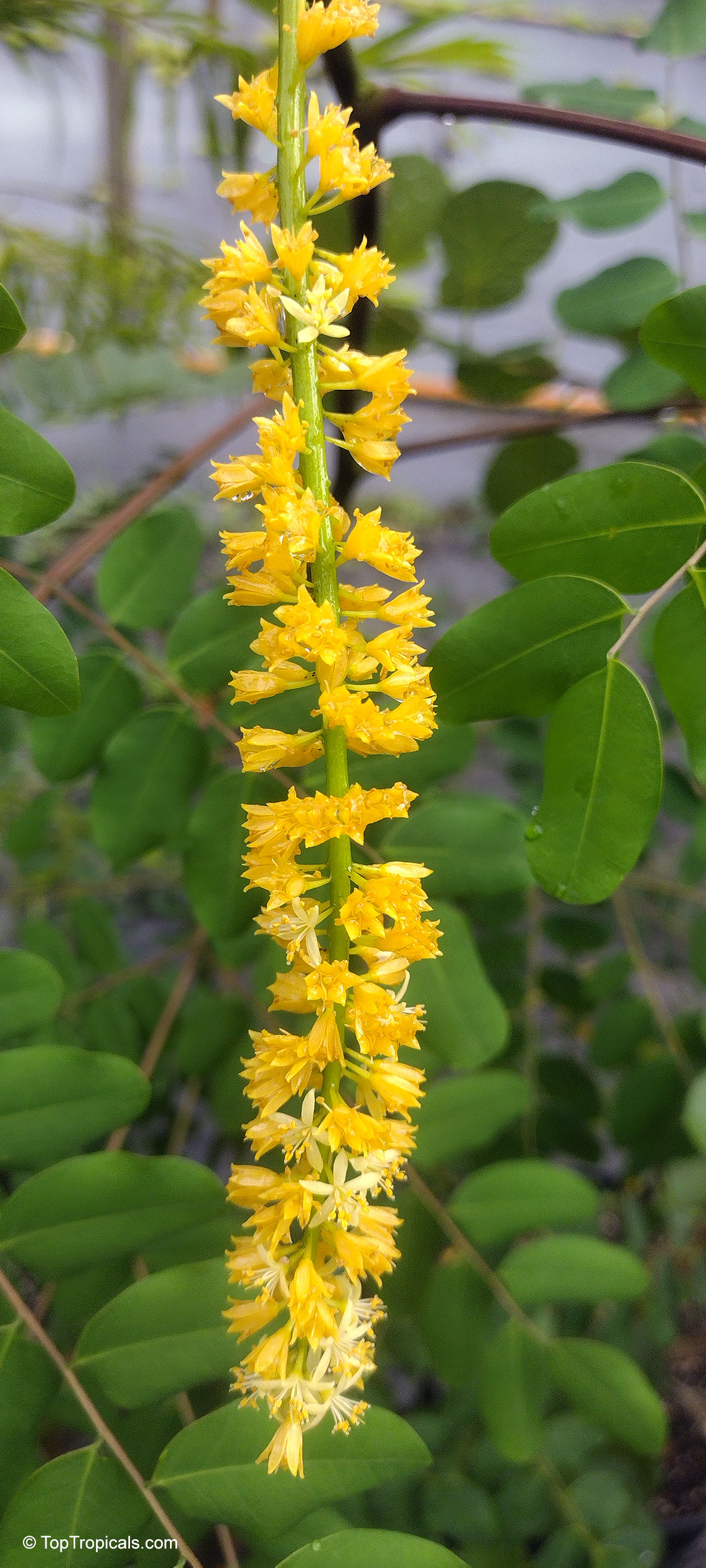
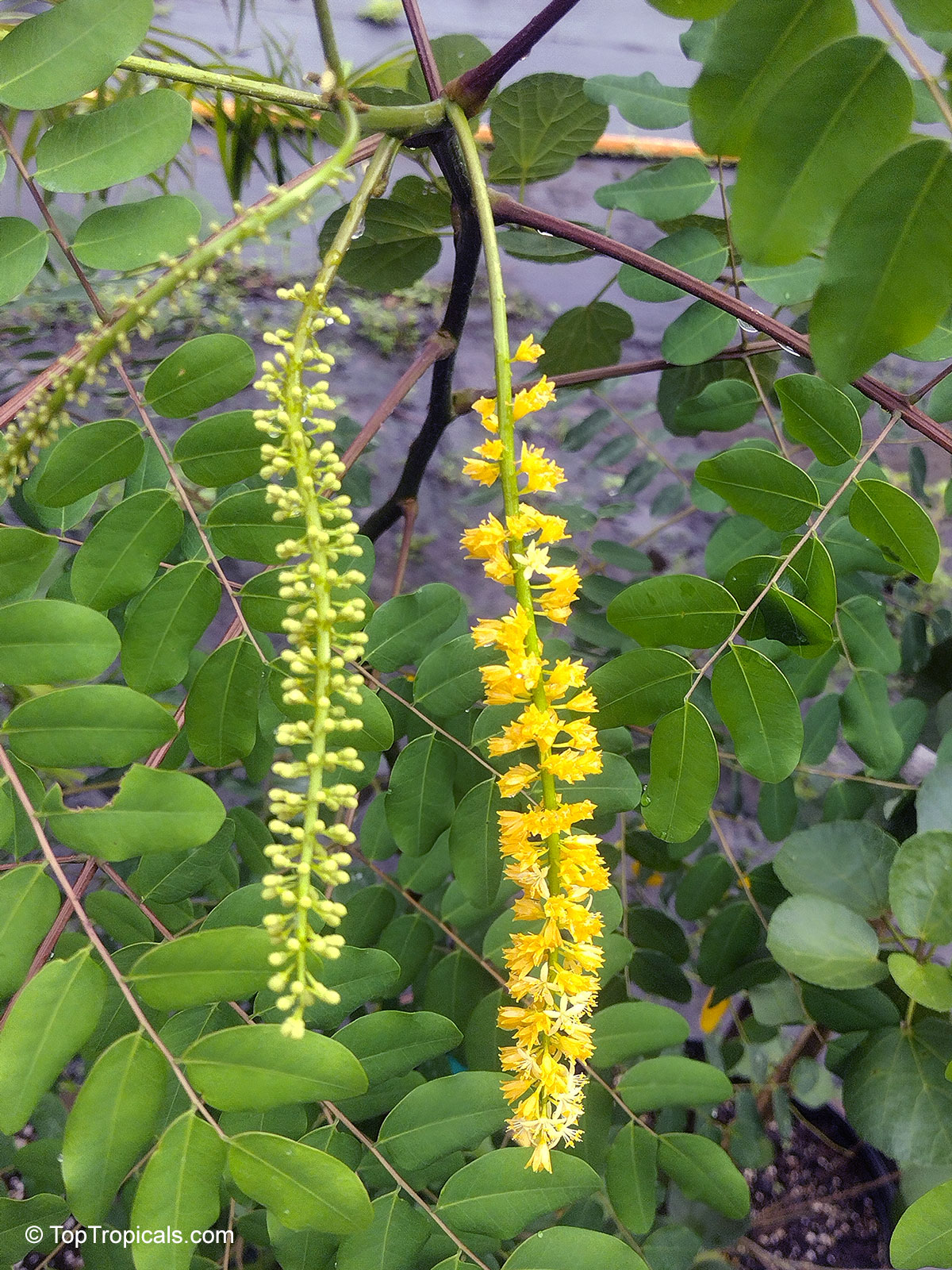
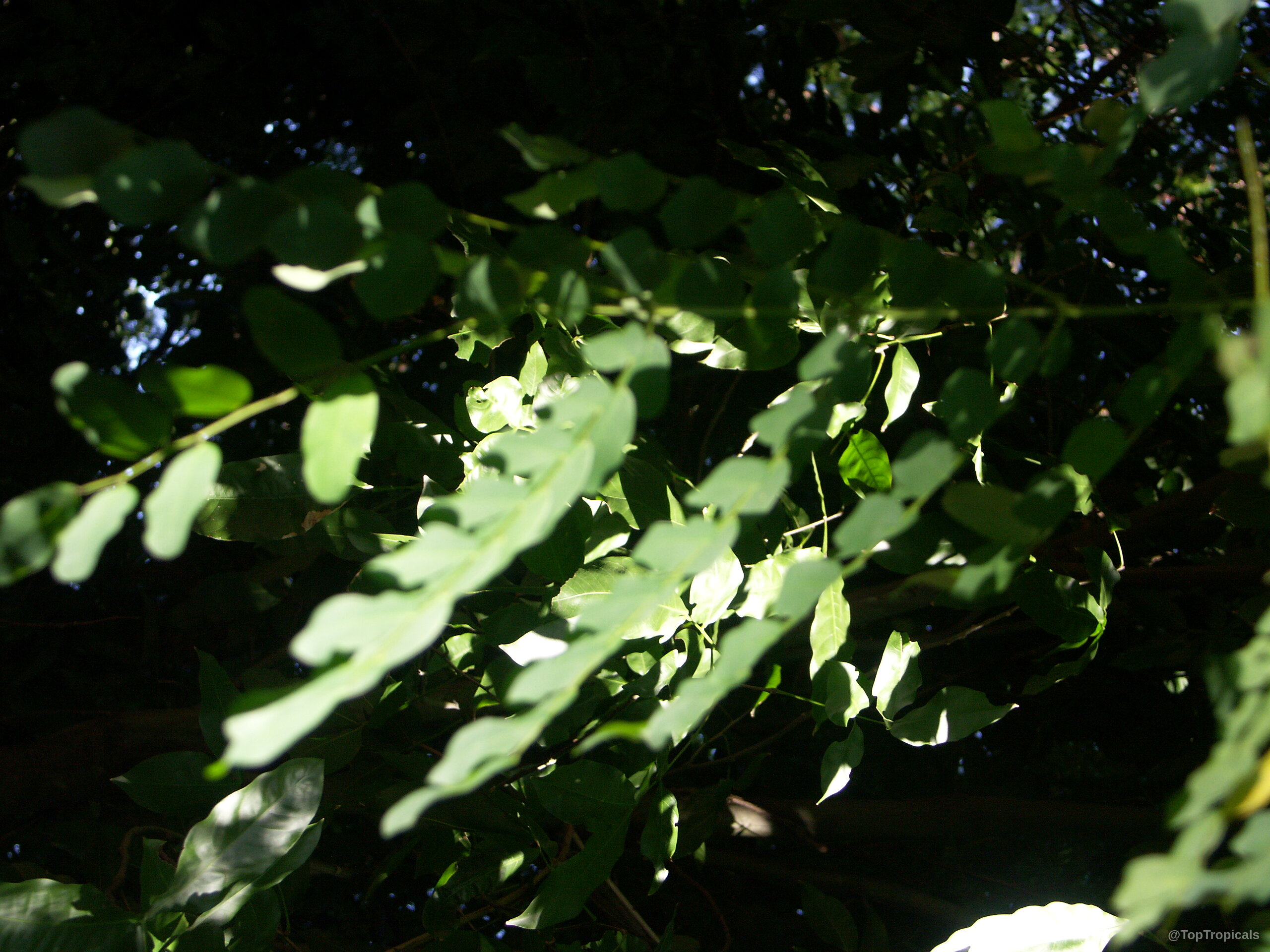
A medium-sized tree up to 15 m high, Adenanthera pavonina is native to India and Malaysia. It has been planted extensively throughout the tropics as an ornamental and has become naturalized in many countries.
The tiny flowers are said to smell vaguely like orange blossoms.
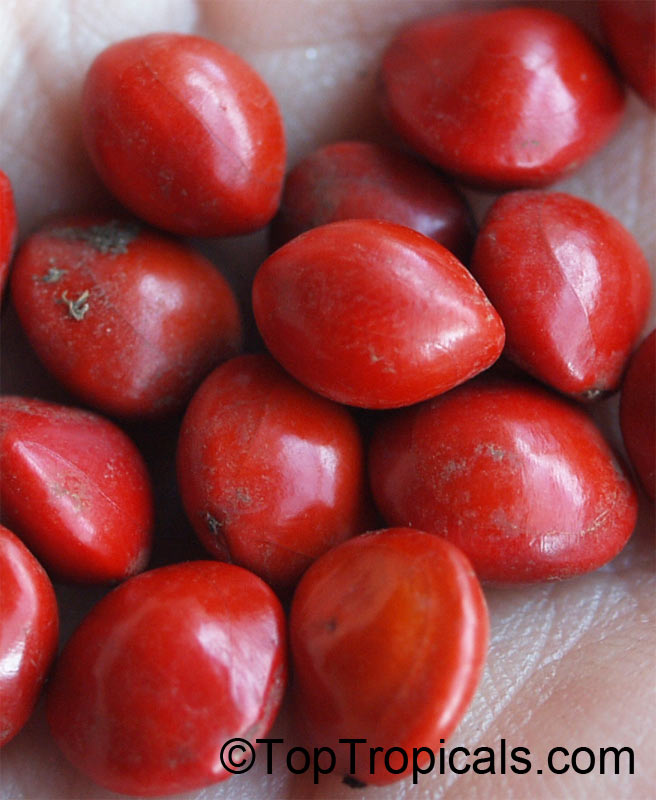
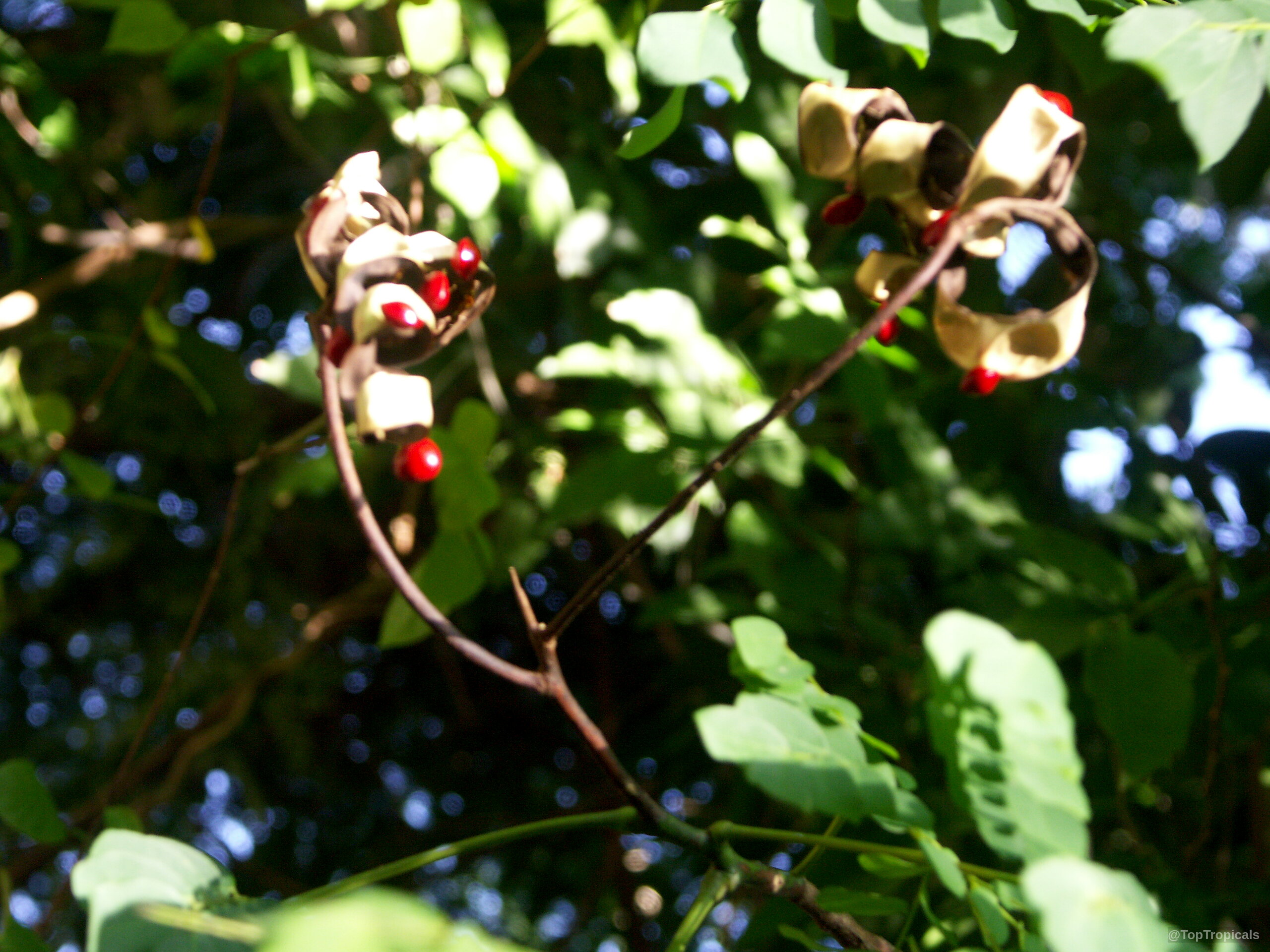
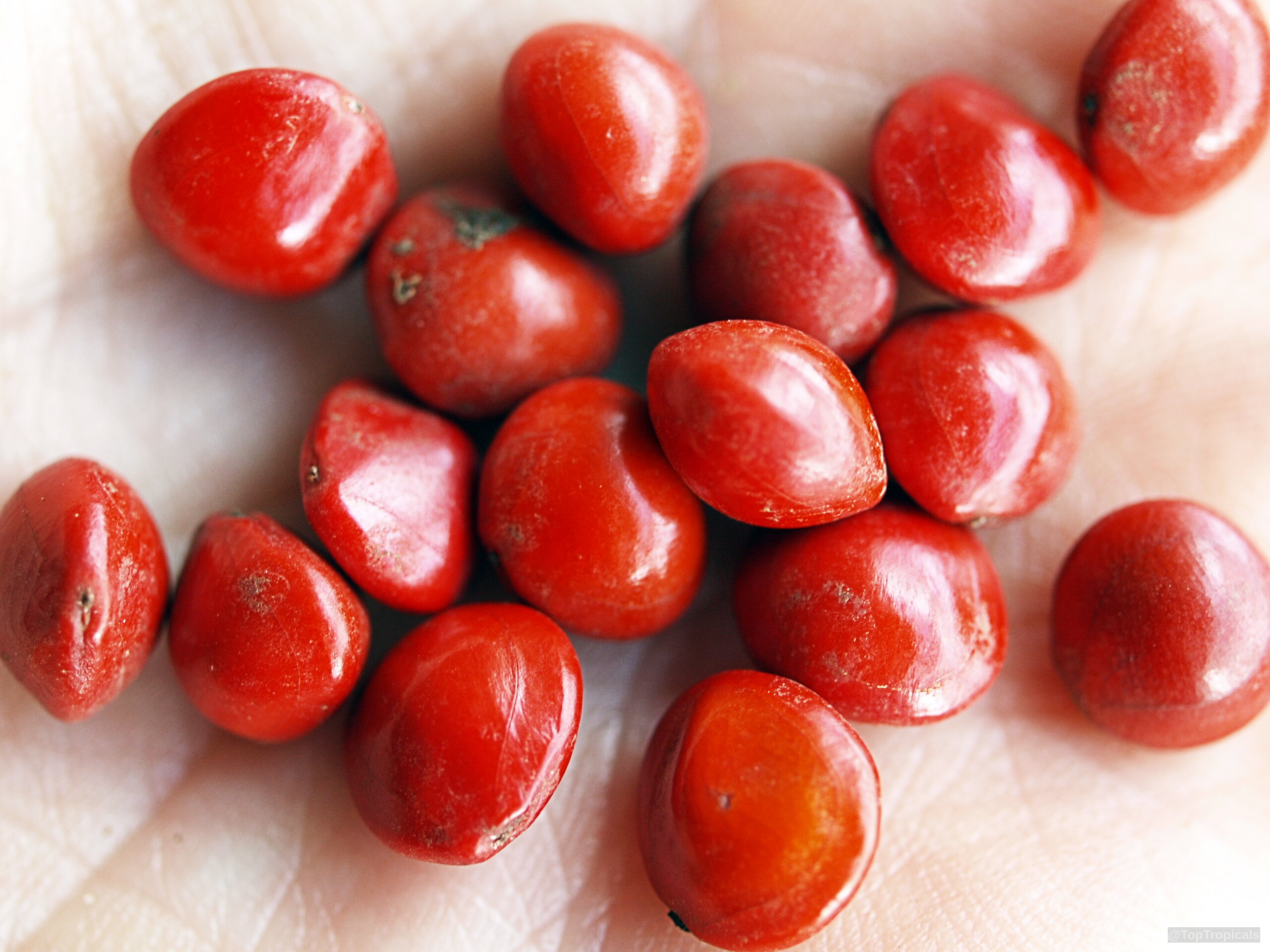
The slender flattened pods become twisted as they split open at maturity to release up to 12 brilliant red, lens - shaped, extremely hard seeds. The ripened pods stay on the tree for some time. The seeds are used in necklaces and ornaments, as beads in jewellery, leis and rosaries. They were also used in ancient India for weighing gold. The seeds are curiously similar in weight. Four seeds make up about one gramme. In fact the name "saga" is traced to the Arabic term for "goldsmith".
In Malaysia and Indonesia, the trees provide shade and planted as "nurse trees" in coffee, clove and rubber plantations.
Although the raw seeds are toxic, when cooked they are edible: are roasted, shelled and then eaten with rice in Java, Indonesia. In Melanesia and Polynesia people call it the "food tree". The seeds are said to taste like soy bean. The young leaves can be cooked and eaten, but usually only during famine.
The hard reddish wood of the red sandalwood tree is used for cabinet making. A red dye, obtained from the wood, is used by Brahmins to mark religious symbols on their foreheads. A red powder made from the wood is used as an antiseptic paste. In Ancient Indian medicine, the ground seeds are used to treat boils and inflammations. A decoction of the leaves is used to treat gout and rheumatism. The bark was used to wash hair.
Plant seeds 1" deep in otting mix, keep warm, damp and in bright light. Scarify to expedite germination.
Ordering seeds info
RECOMMENDED SUPPLIES:
Seed Germination Mix #3, professional grade
SUNSHINE-Epi - Seeds and cuttings booster
SUNSHINE Bombino - Young Plant Booster
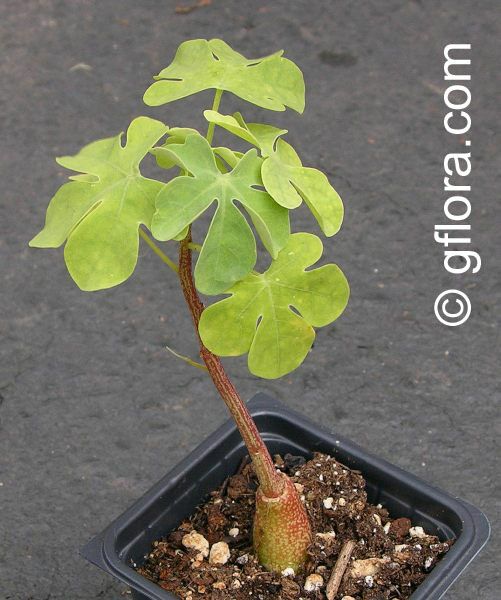
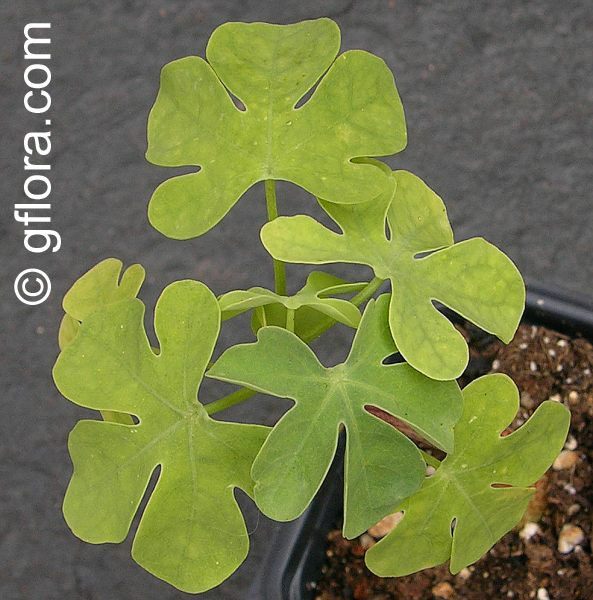
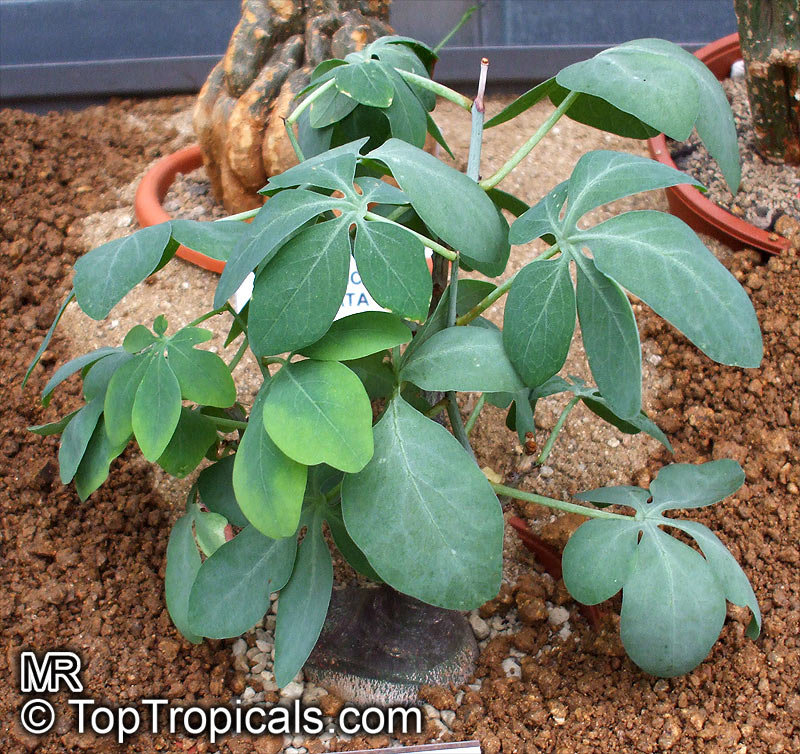
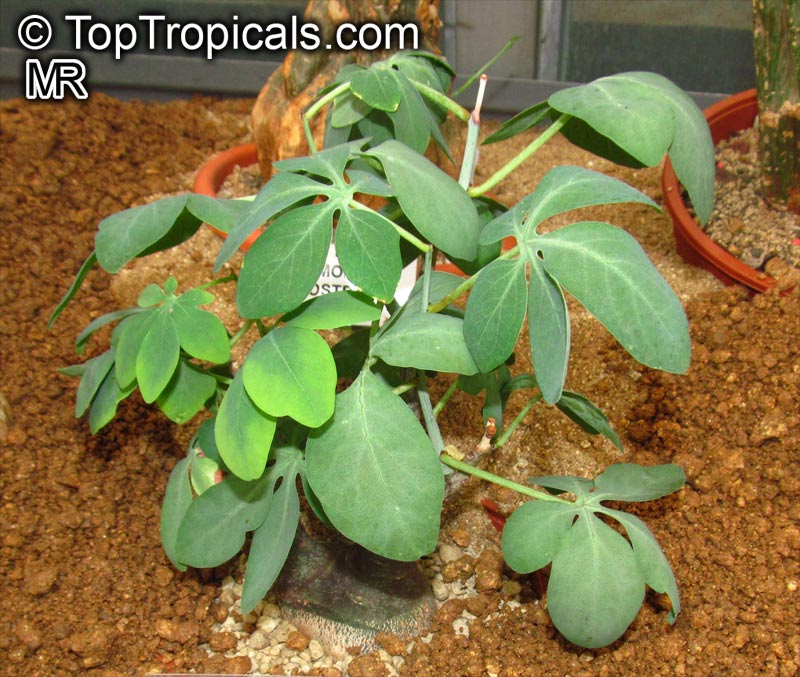
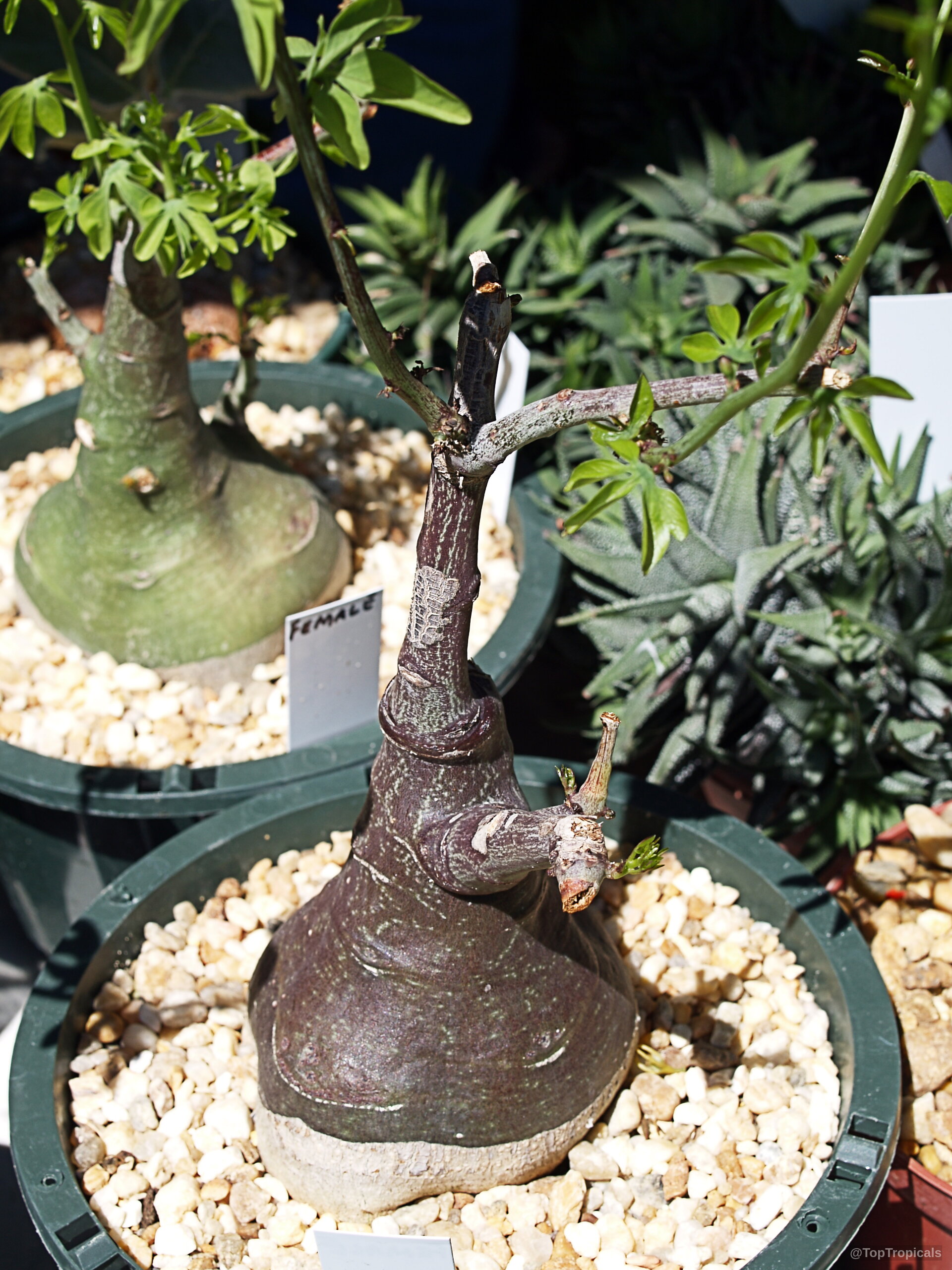
Botanical name: Adenia glauca
Common name: Adenia
Family: Passifloraceae
Origin: Southern Africa, Botswana


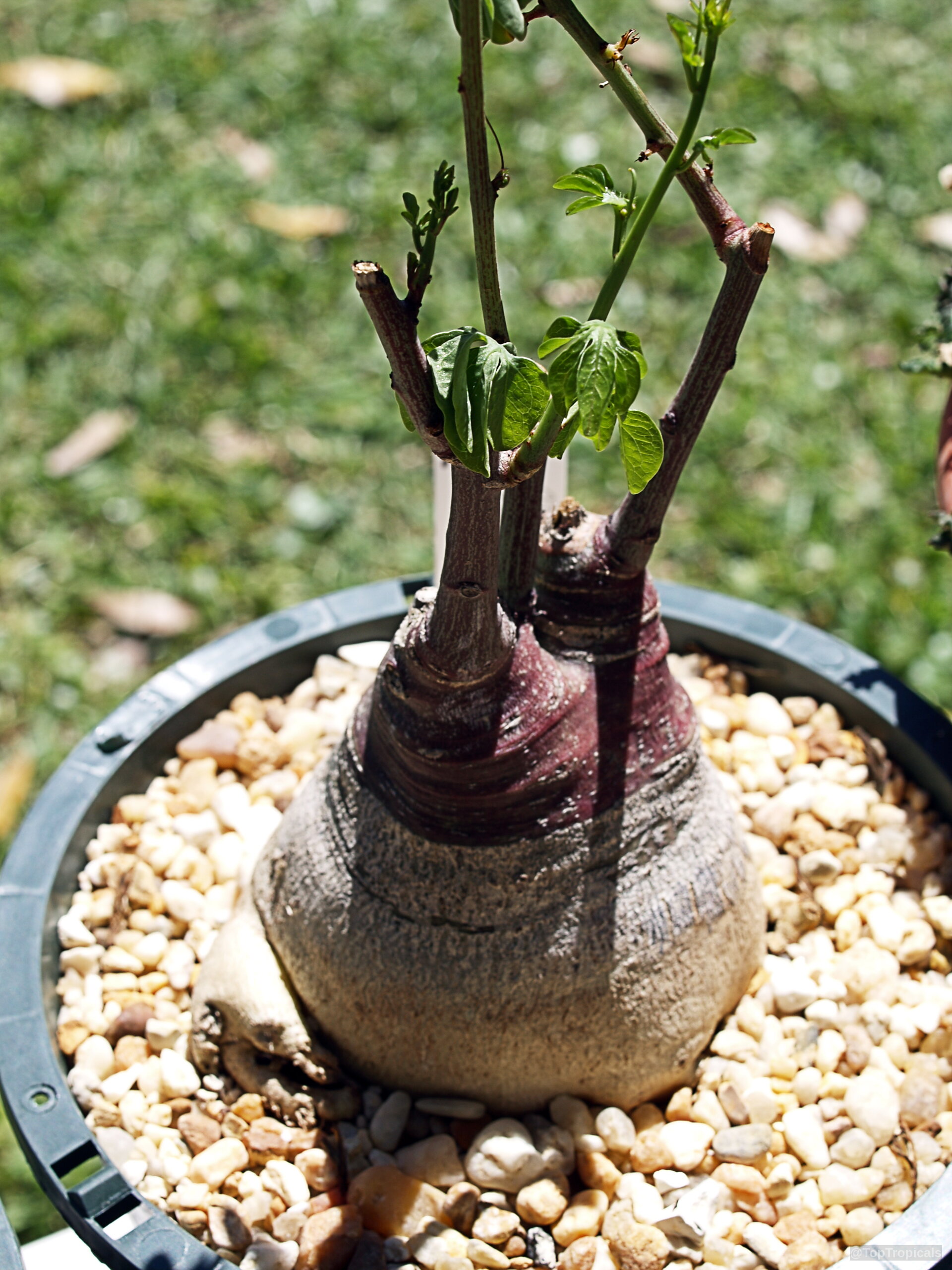
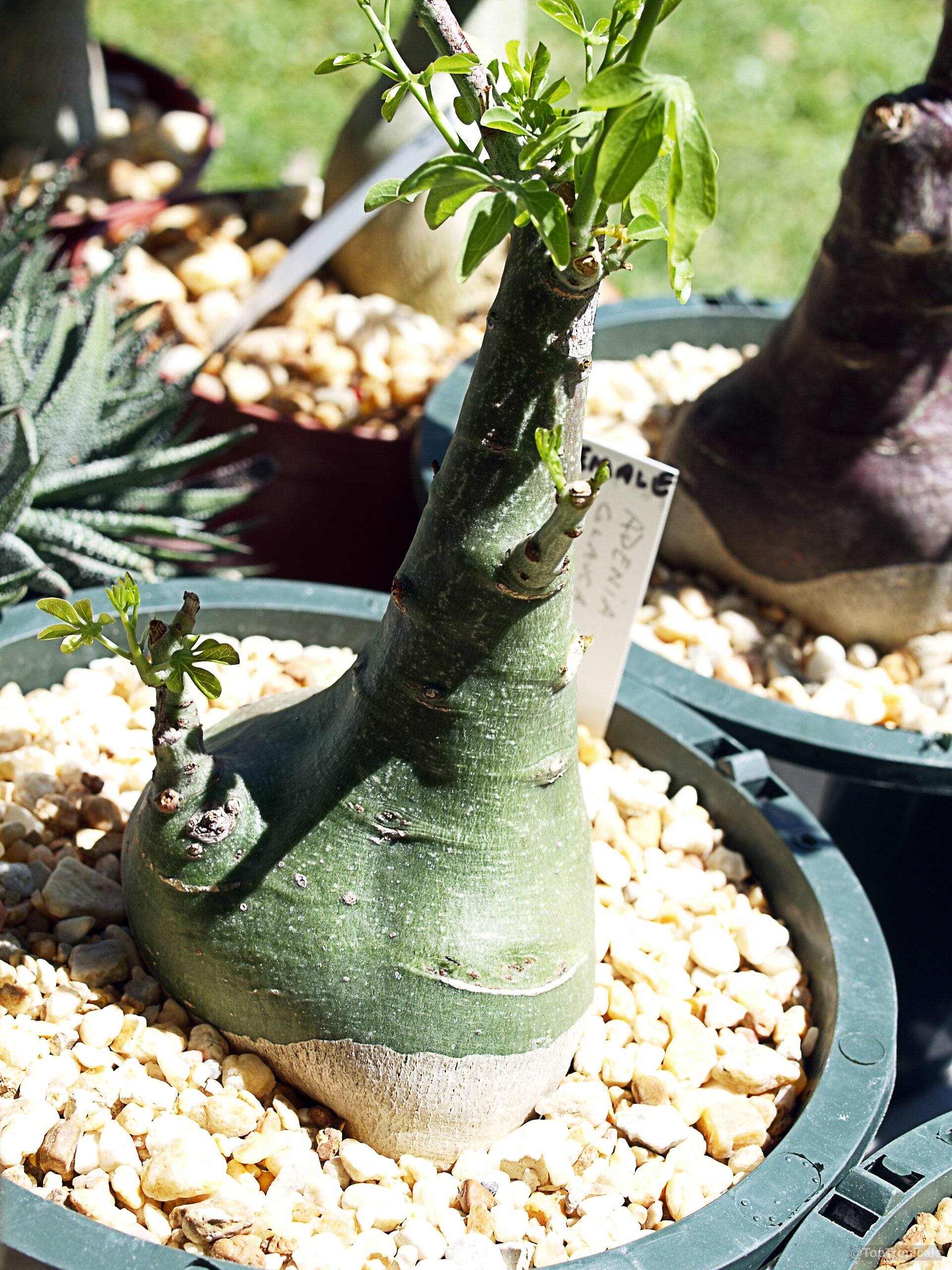
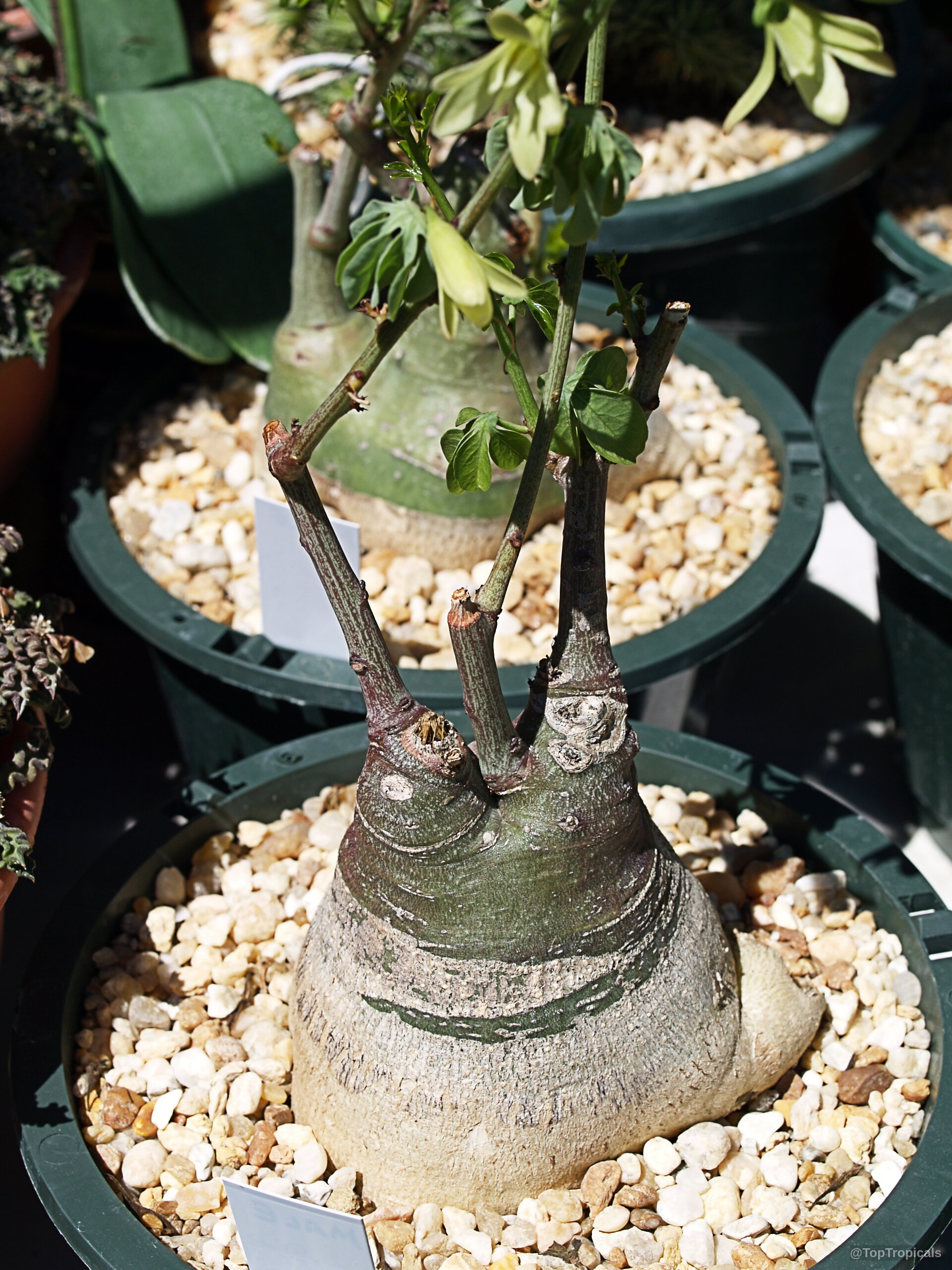
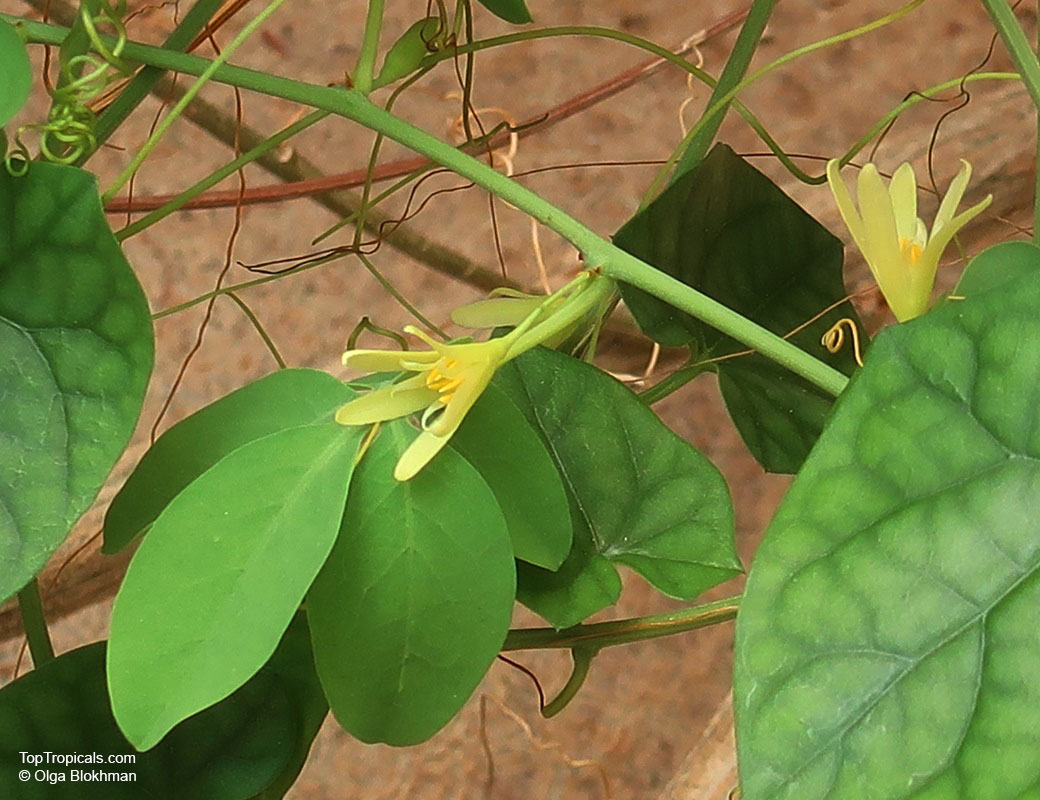
This is a mature plant, it has a very thick, green caudex. The flowers are lemon colored, and are sweetly scented.
Botanical name: Adenium arabicum
Common name: Desert Rose
Family: Apocynaceae
Origin: Arabia and East Africa


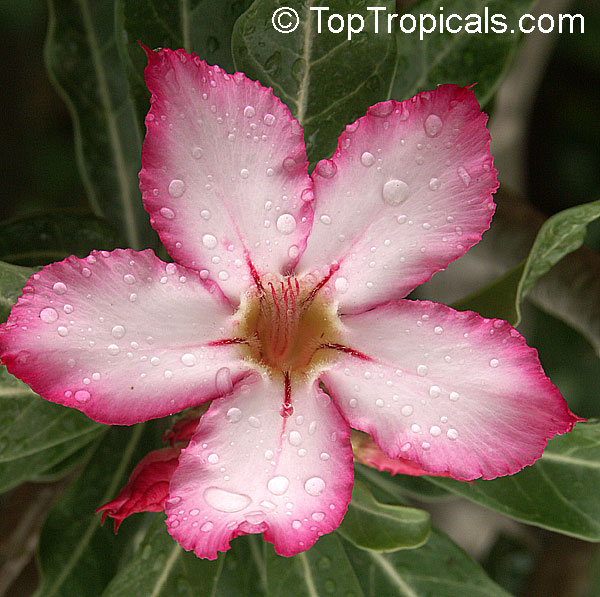
Growing to a height of about 4-5ft, this succulent plant is a member of the same family as Plumeria. Its swollen, often twisted trunk is pale gray. The leaves are glossy and club-shaped, and the flowers, which appear almost continuously, are trumpet-shaped, and range from white and bright pink to crimson red. It exudes a highly toxic sap which in some places is used as a poison for arrows. Adenium is not generally grown in moist tropical gardens but is often seen as a decorative pot plant; it may also be used in rock gardens. It needs full sun and a well-drained potting mixture. Exotic multi-color varieties can be grafted on the same plant. See other exotic species of Adenium, photo gallery of exotic varieties and Thai Adeniums - milti-colored, multi-grafted. More info about Adenium
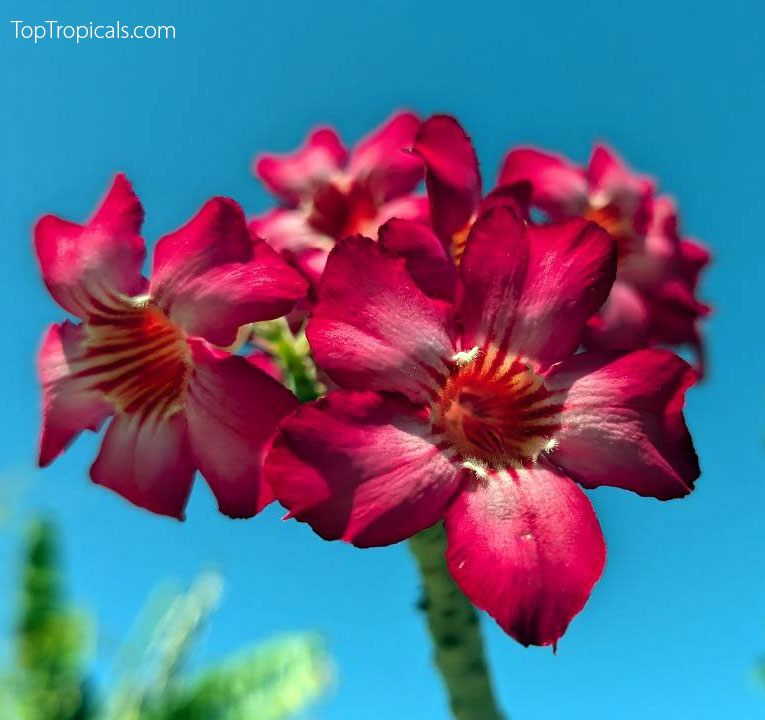
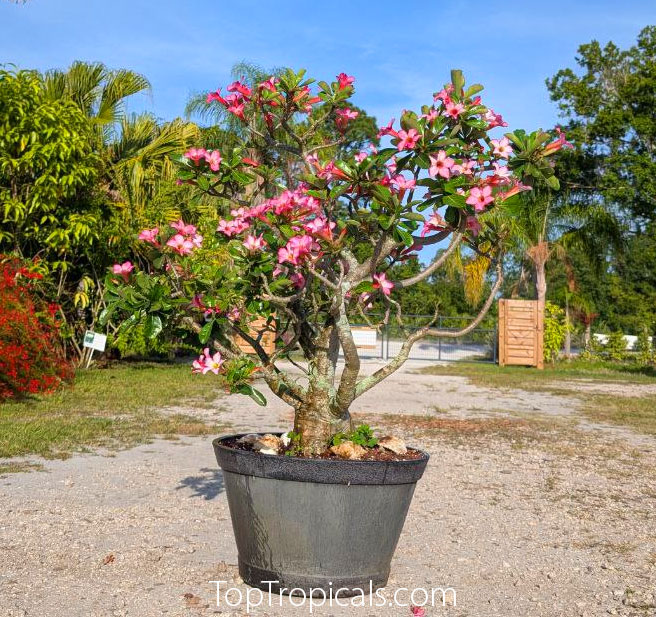
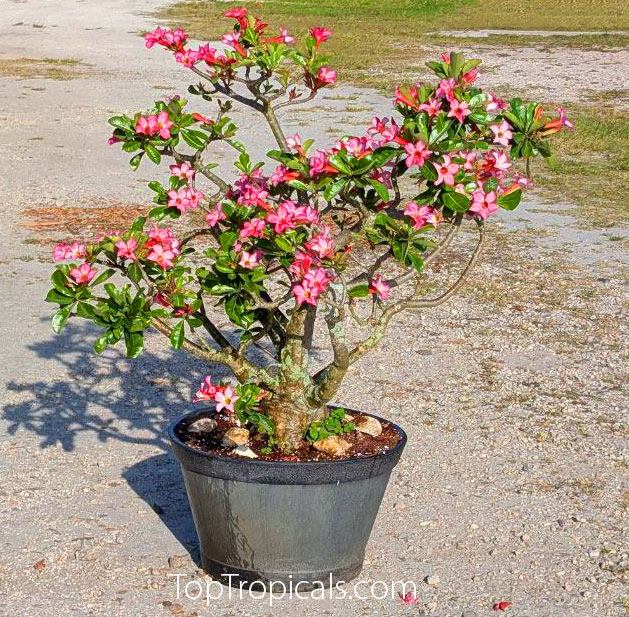
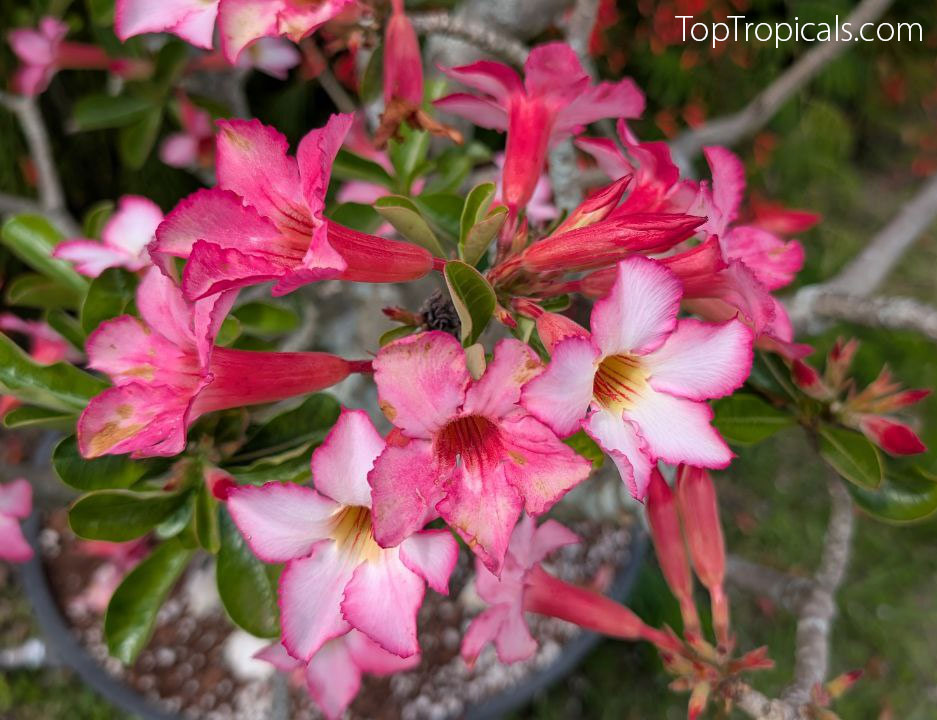
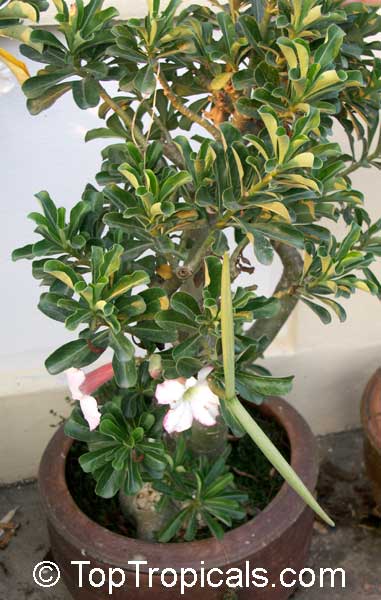
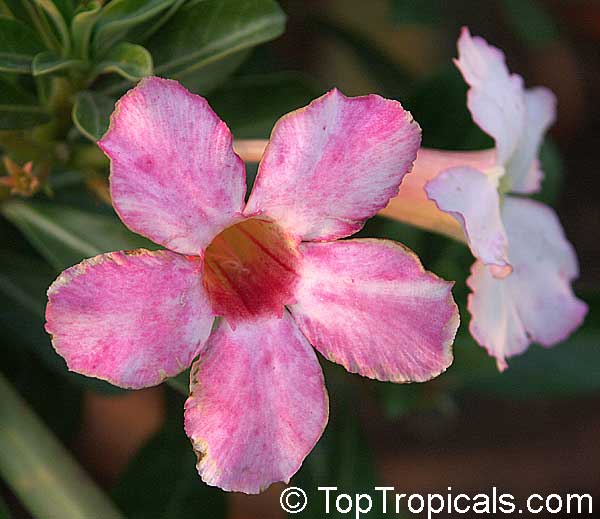
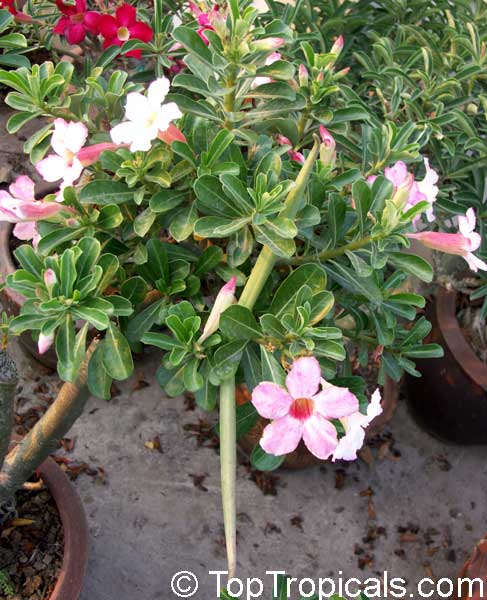
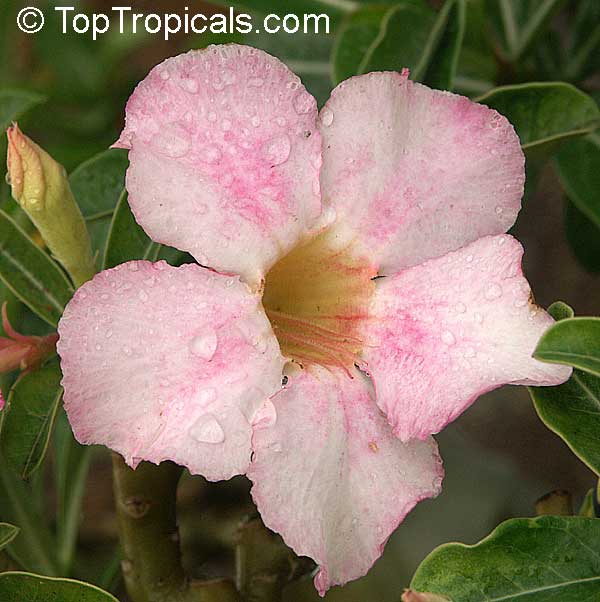
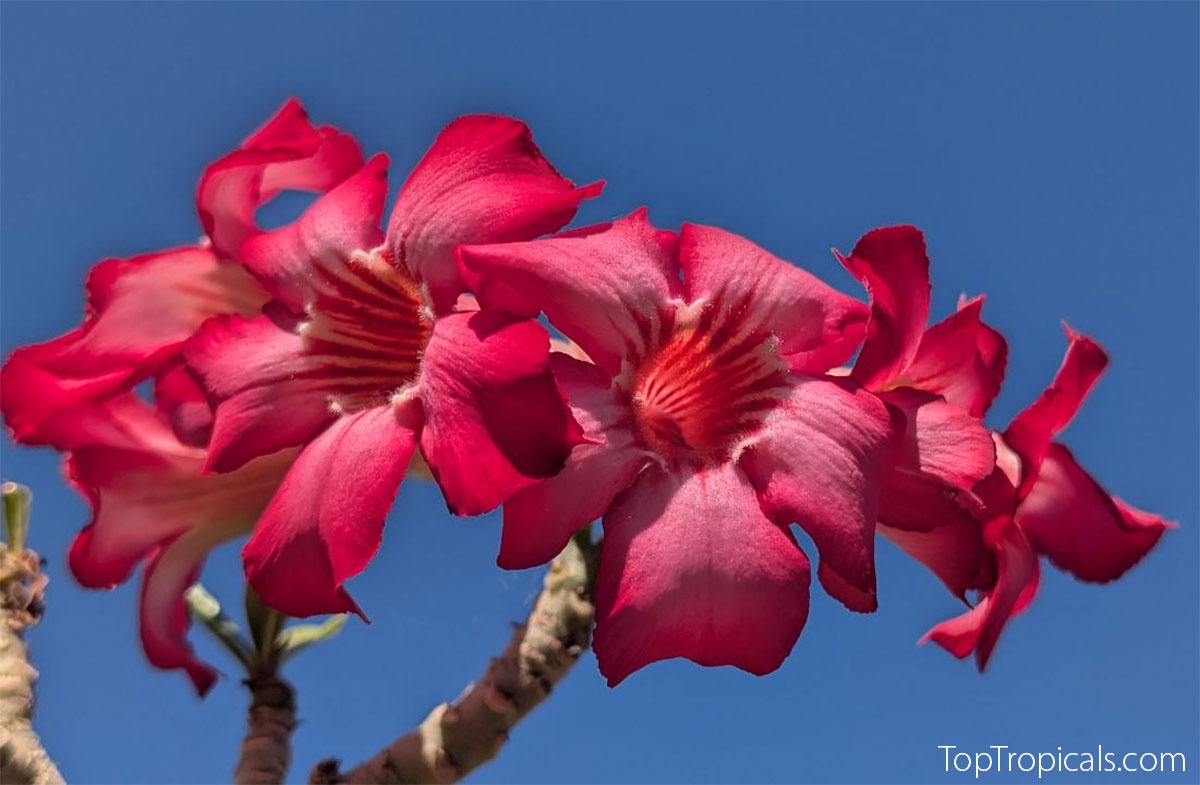
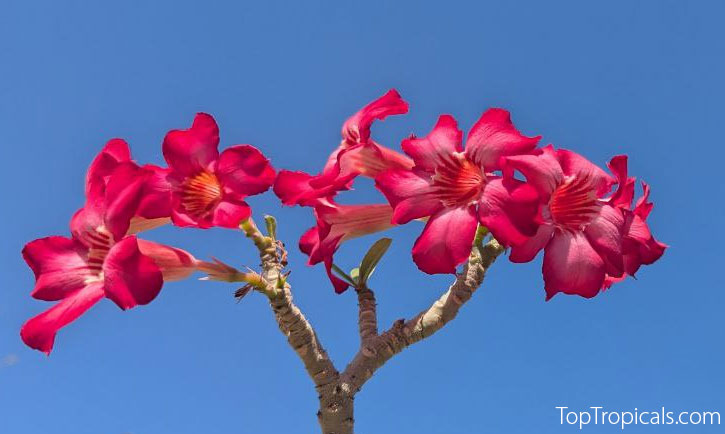
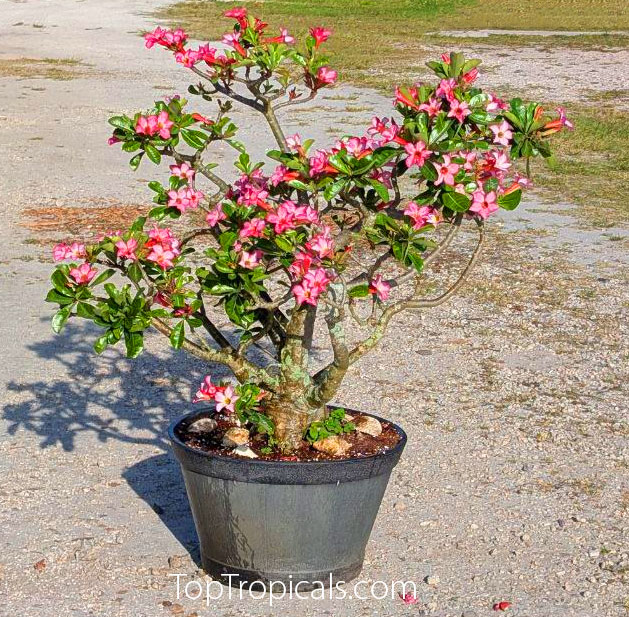

See picture of the actual size of plants for sale (sizes vary).
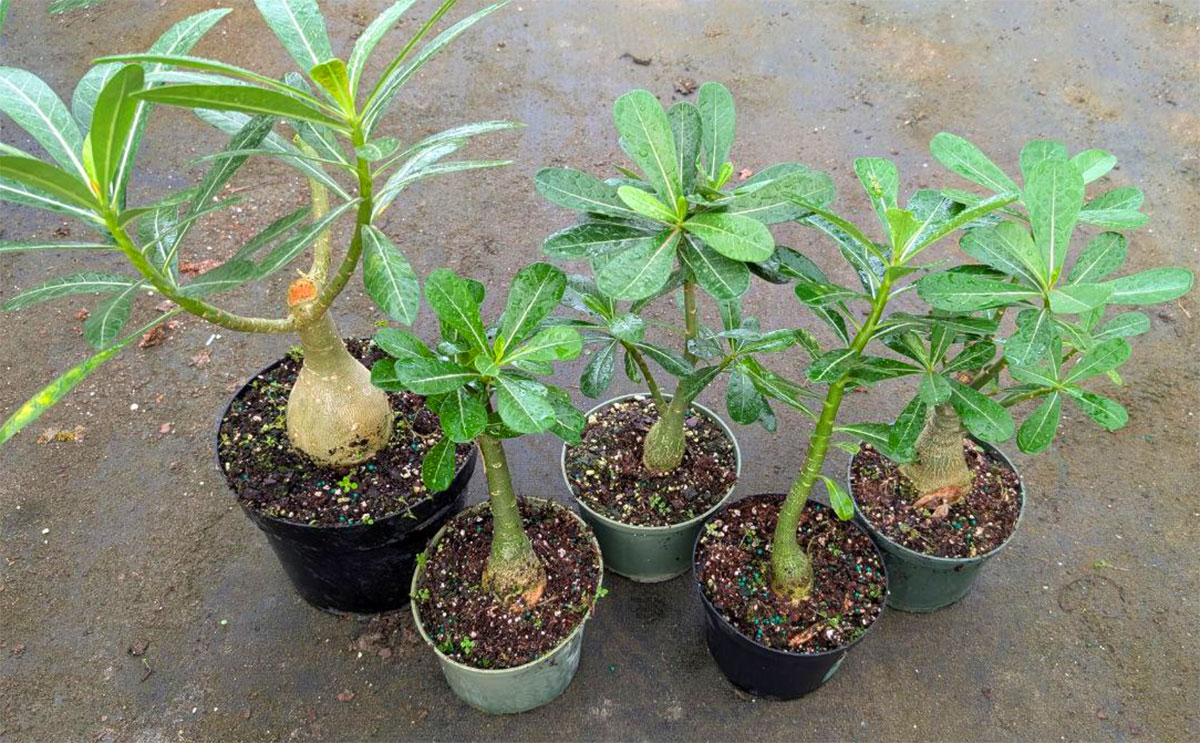
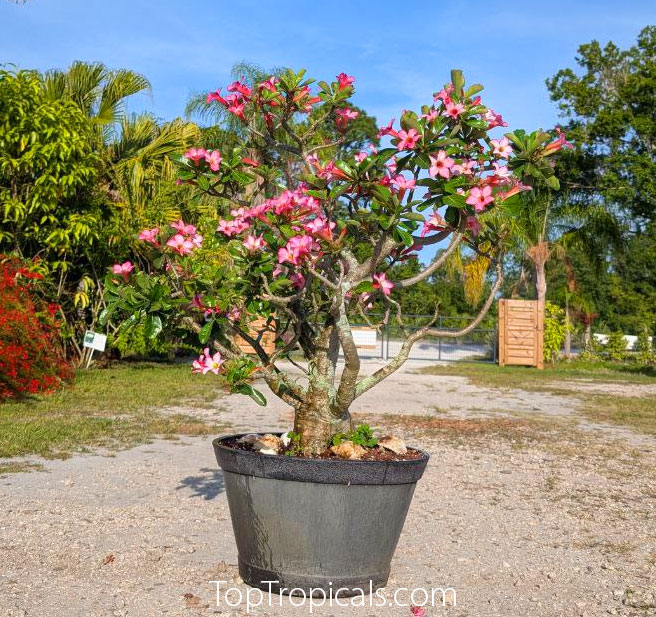
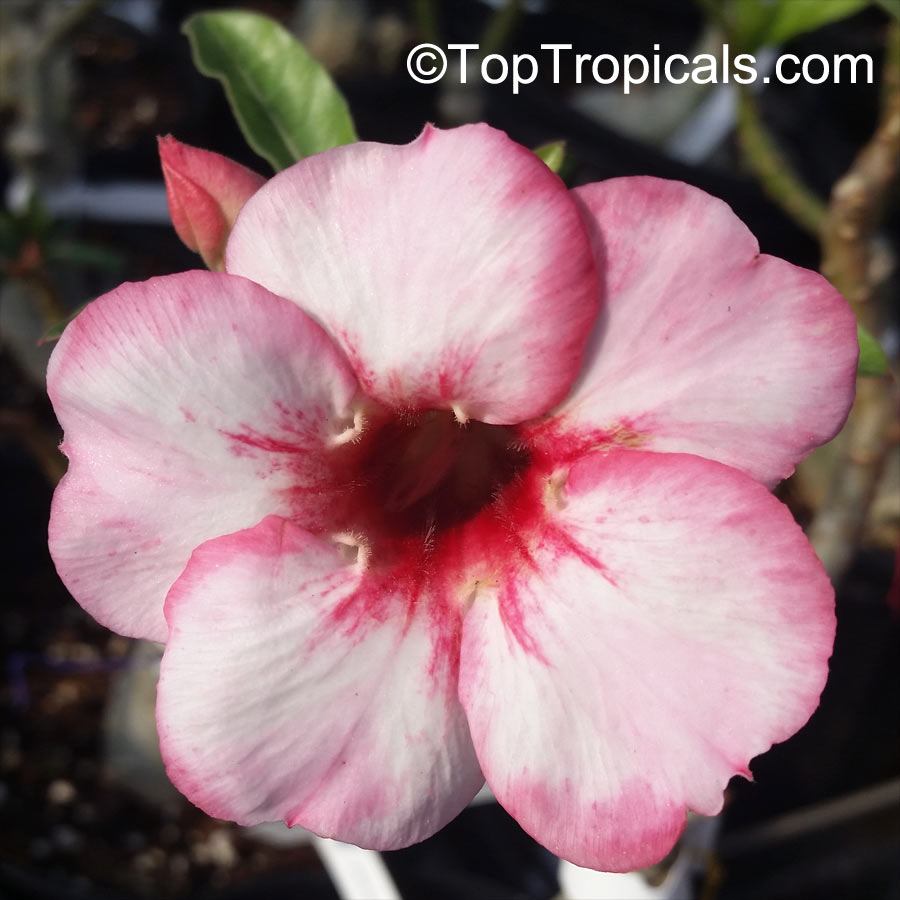
See picture of the mature plant in 5 gal pot (4 years old) and picture of flower. The plants we have for sale are 2 years old, in 1-3 gal pots, with large caudex, some already bloomed!
Recommended Supplies: SUNSHINE Megaflor - Bloom Nutrition Booster
SUNSHINE-Epi - Caudex booster
Adenium Soilless Mix
Botanical name: Adenium boehmianum
Common name: Desert Rose
Family: Apocynaceae
Origin: Arabia and East Africa
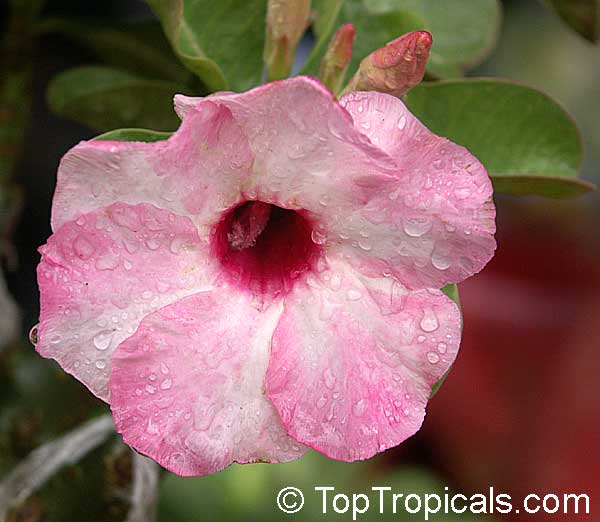
Growing to a height of about 4-5ft, this succulent plant is a member of the same family as Plumeria. Its swollen, often twisted trunk, is pale grey. The leaves are glossy, and club-shaped and the flowers, which appear almost continuously, are trumpet-shaped and range from white and bright pink to crimson red. It exudes a highly toxic sap that in some places,is used as a poison for arrows. Adenium is not generally grown in moist tropical gardens but is often seen as a decorative pot plant; it may also be used in rock gardens. It needs full sun and a well-drained potting mixture. Exotic multi-color varieties can be grafted on the same plant. See other exotic species of Adenium, photo gallery of exotic varieties and Thai Adeniums - milti-colored, multi-grafted. More info about Adenium

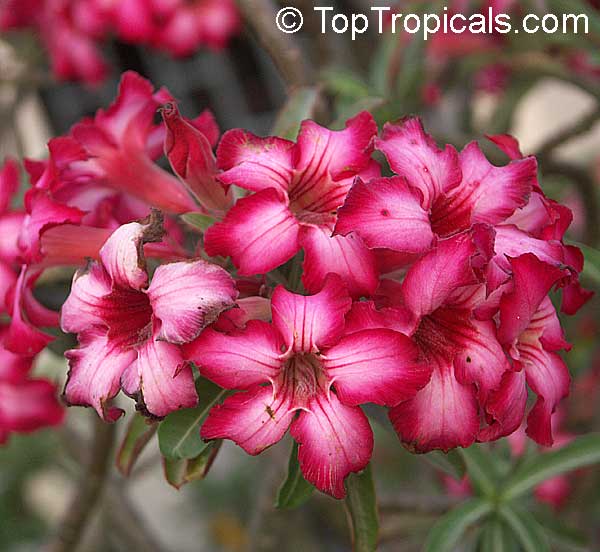
Botanical name: Adenium multiflorum
Common name: Desert Rose
Family: Apocynaceae
Origin: Arabia and East Africa
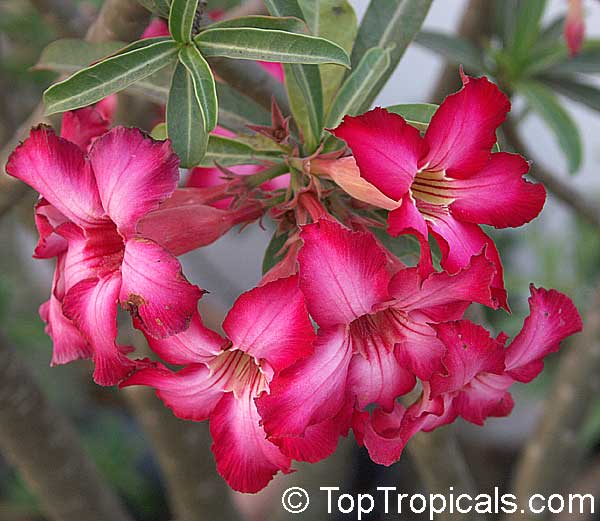
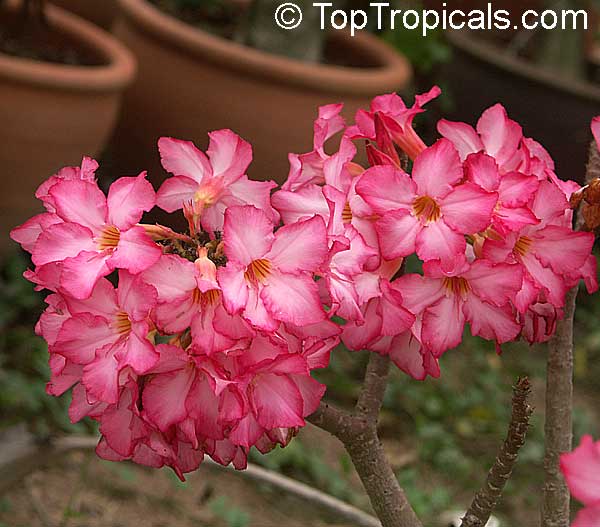
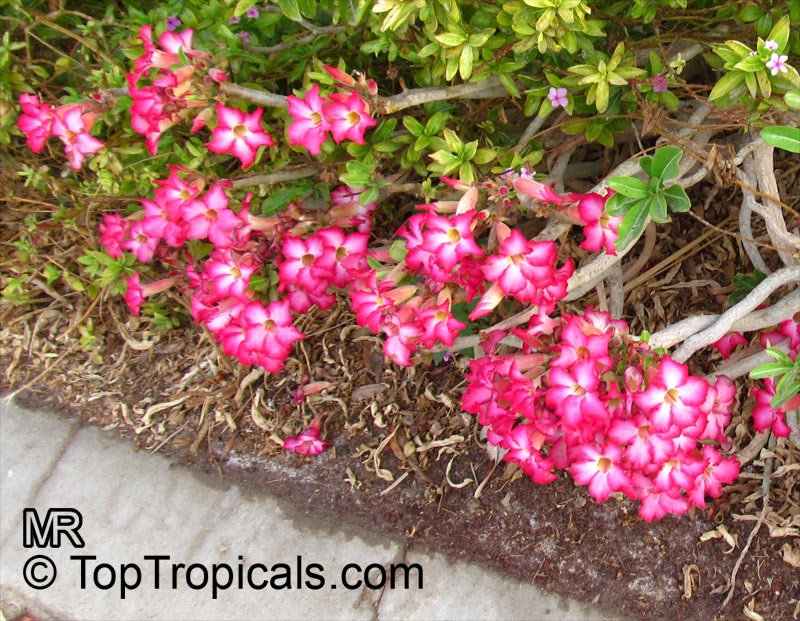
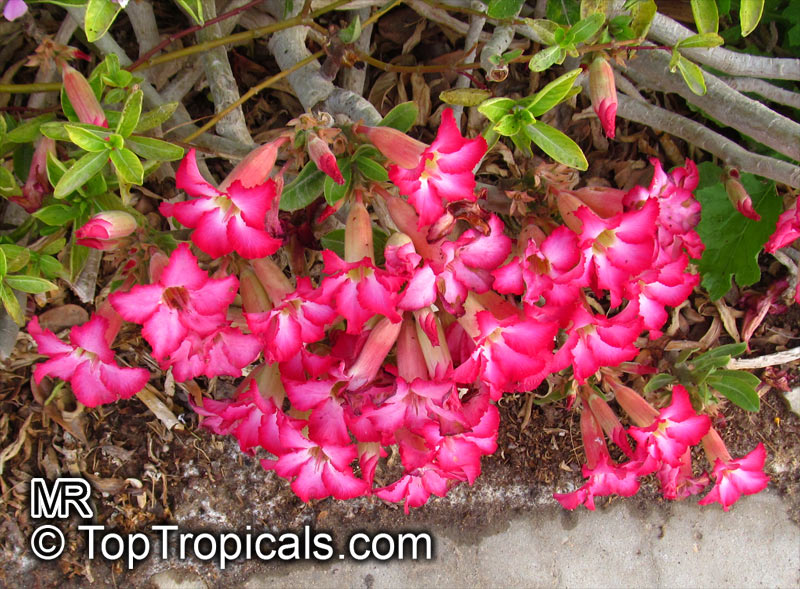
Growing to a height of about 4-5ft, this succulent plant is a member of the same family as Plumeria. Its swollen, often twisted trunk, is pale grey. The leaves are glossy and club-shaped. The flowers appear almost continuously, are trumpet-shaped, and range from white and bright pink to crimson red. It emits a highly toxic sap which in some places is used as a poison for arrows. Adeniums are not generally grown in moist tropical gardens but are often seen as a decorative pot plant; they may also be used in rock gardens. They need full sun and a well-drained potting mixture. Exotic multi-color varieties can be grafted onto the same plant. See other exotic species of Adenium, photo gallery of exotic varieties and Thai Adeniums - milti-colored, multi-grafted.
See article about Adenium.

| Next | |
Use link to repeat this search:
https://toptropicals.com/cgi-bin/garden_catalog/cat.cgi?search_op=and&keyword_op=and&language=e&number=5&no_change_lang=1
&v1=ppp&user=tt&sale=1&first=0