Ethnomedical plant - Plant Encyclopedia Results

Number of plants found: 1016     Next    Go to page:  1  2  3  4  5  Last  

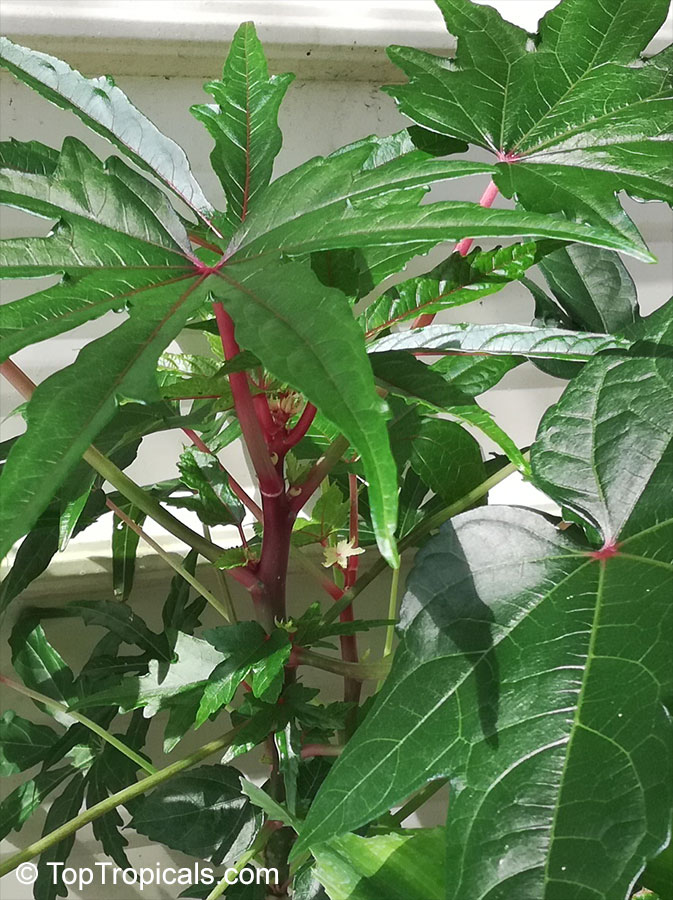
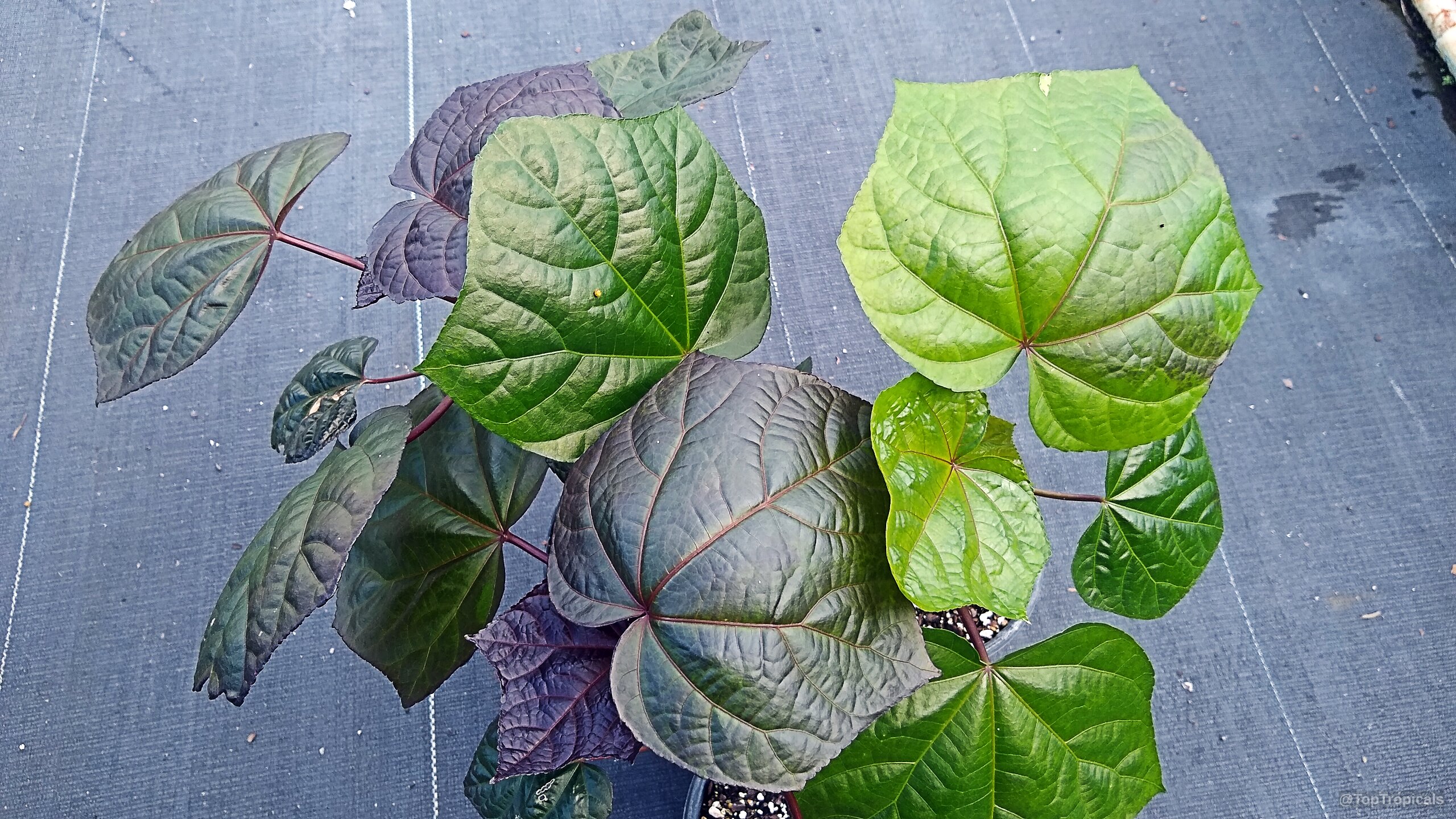
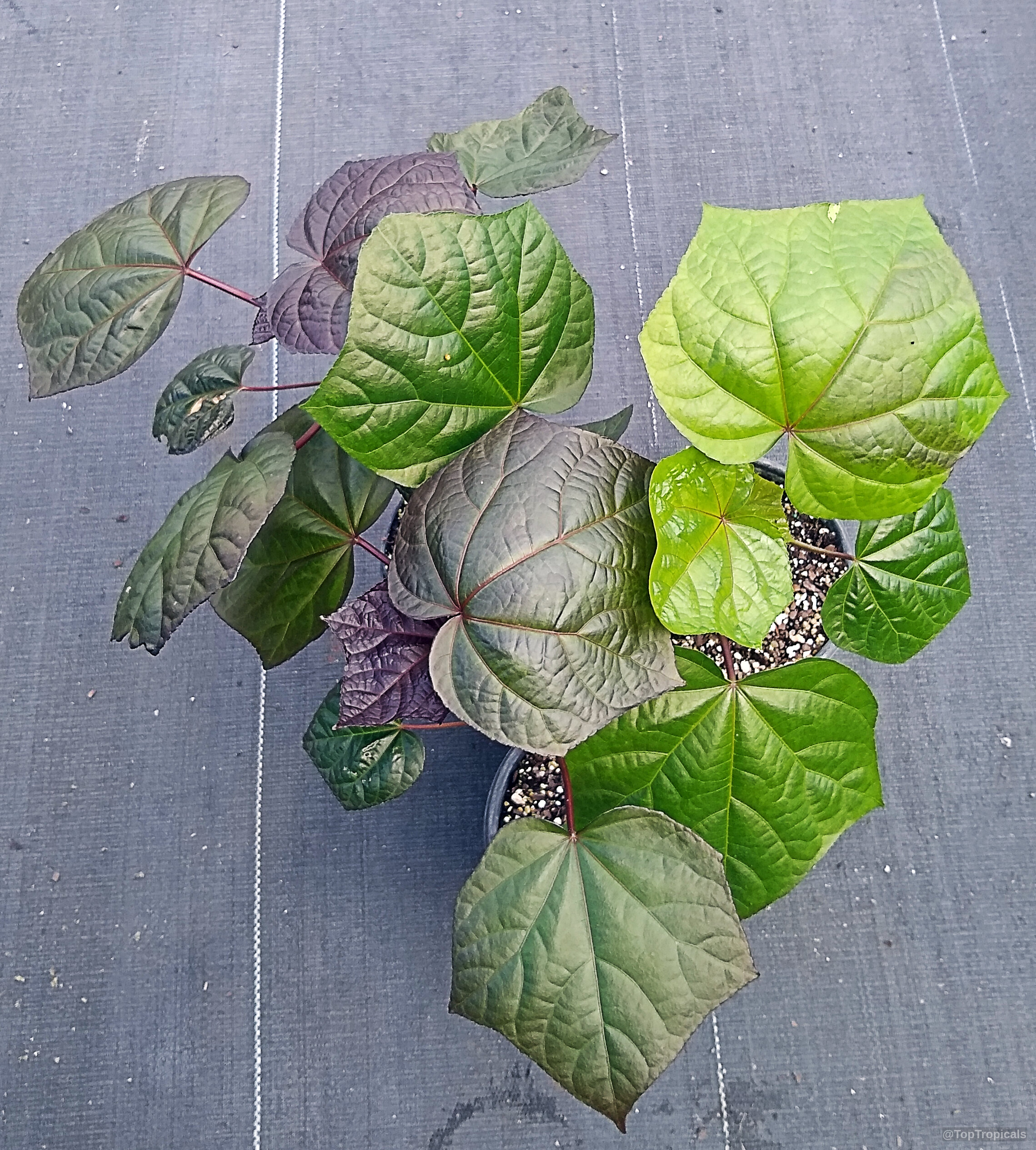
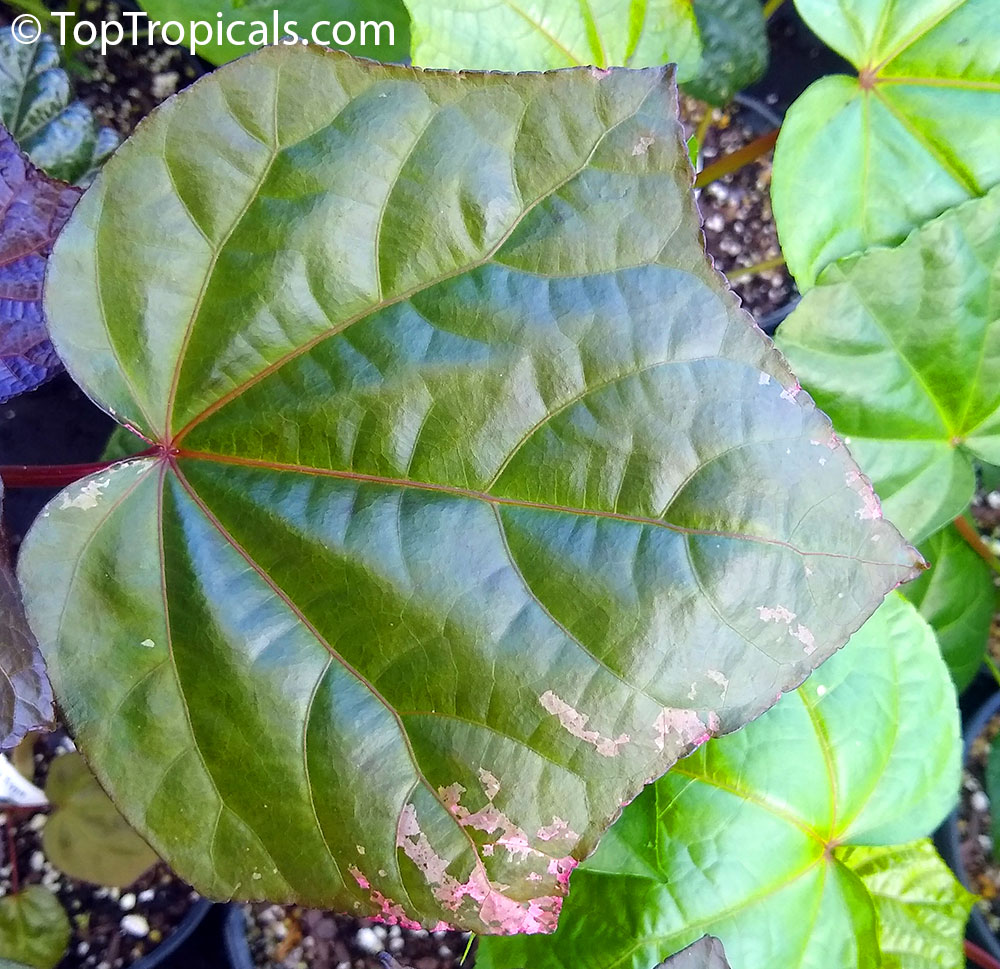
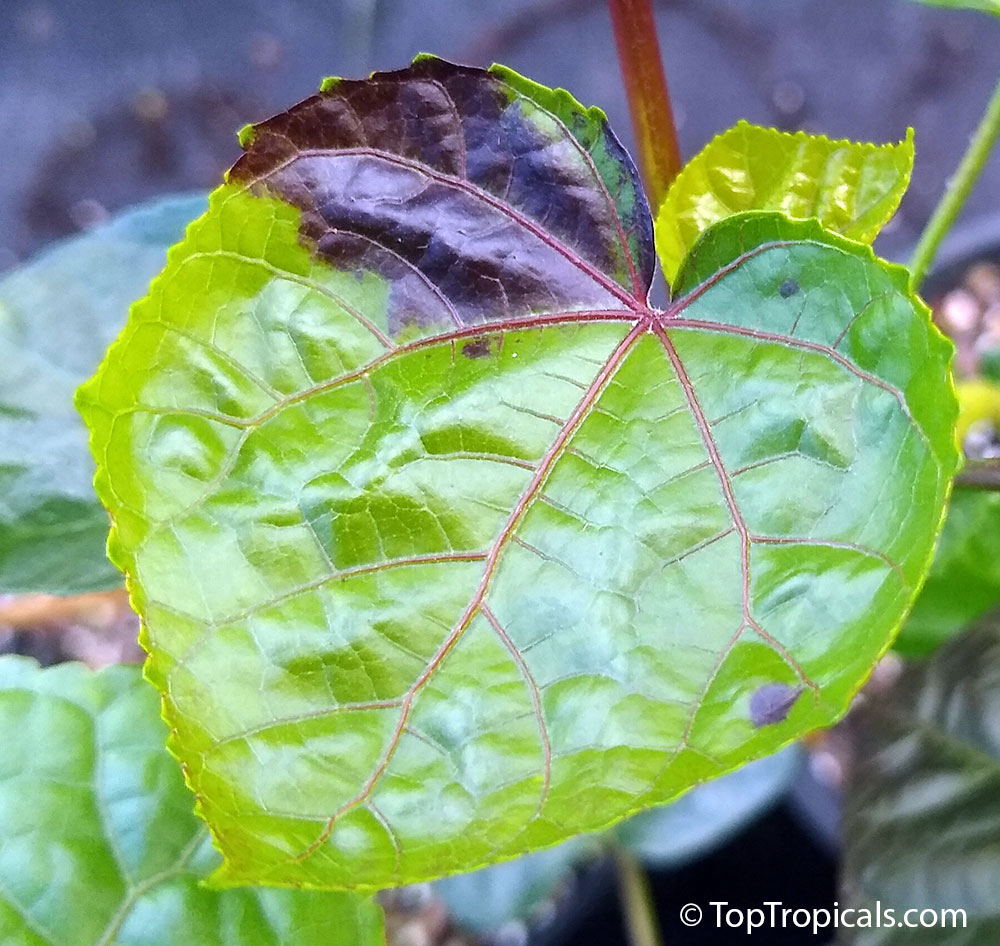
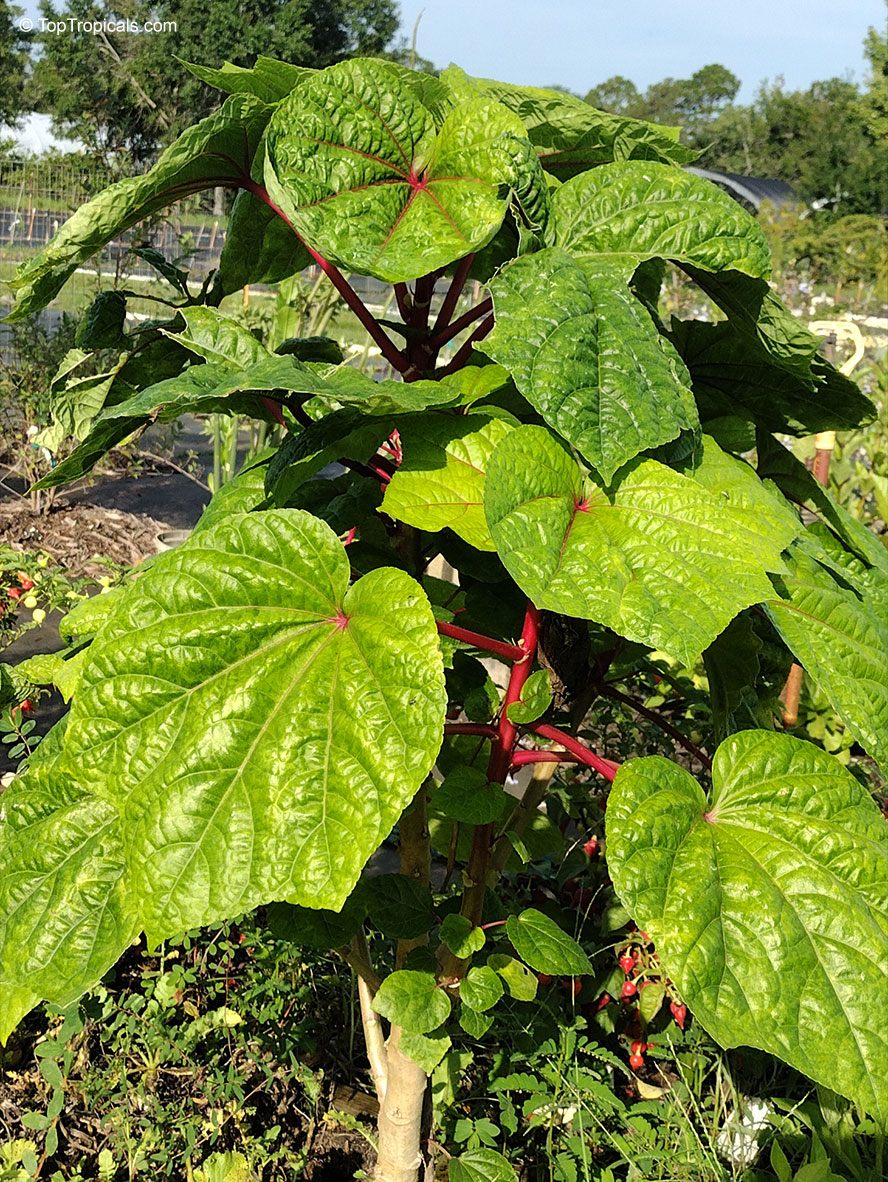
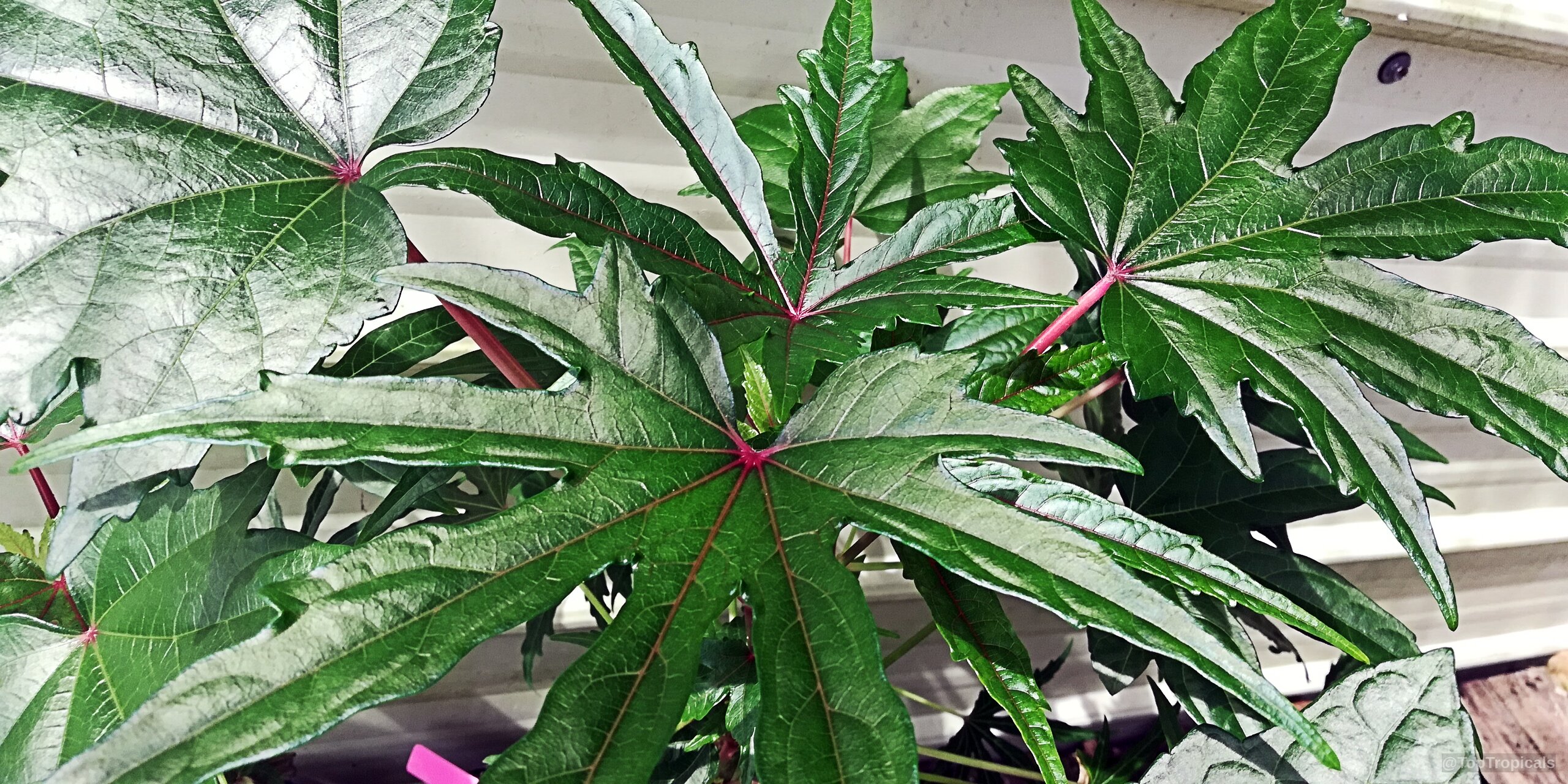
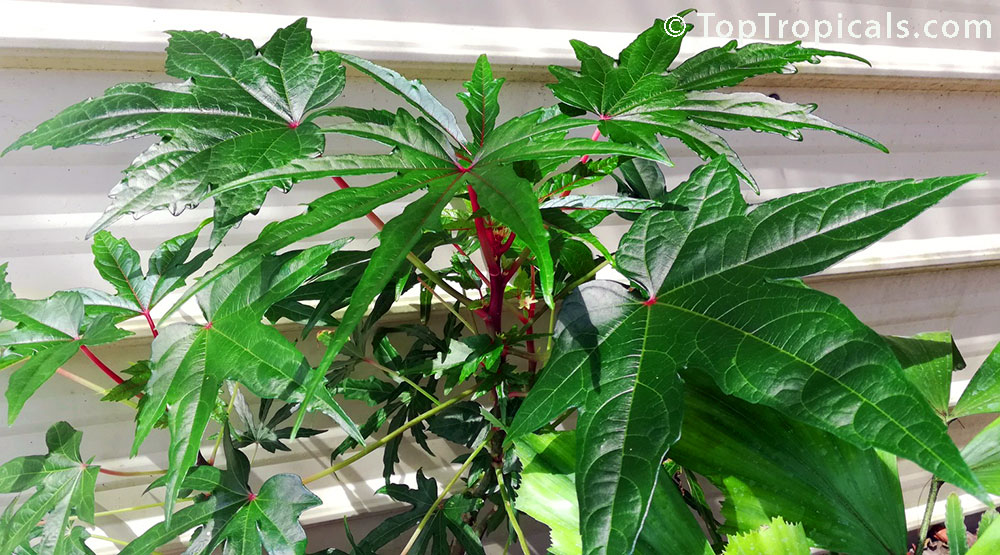
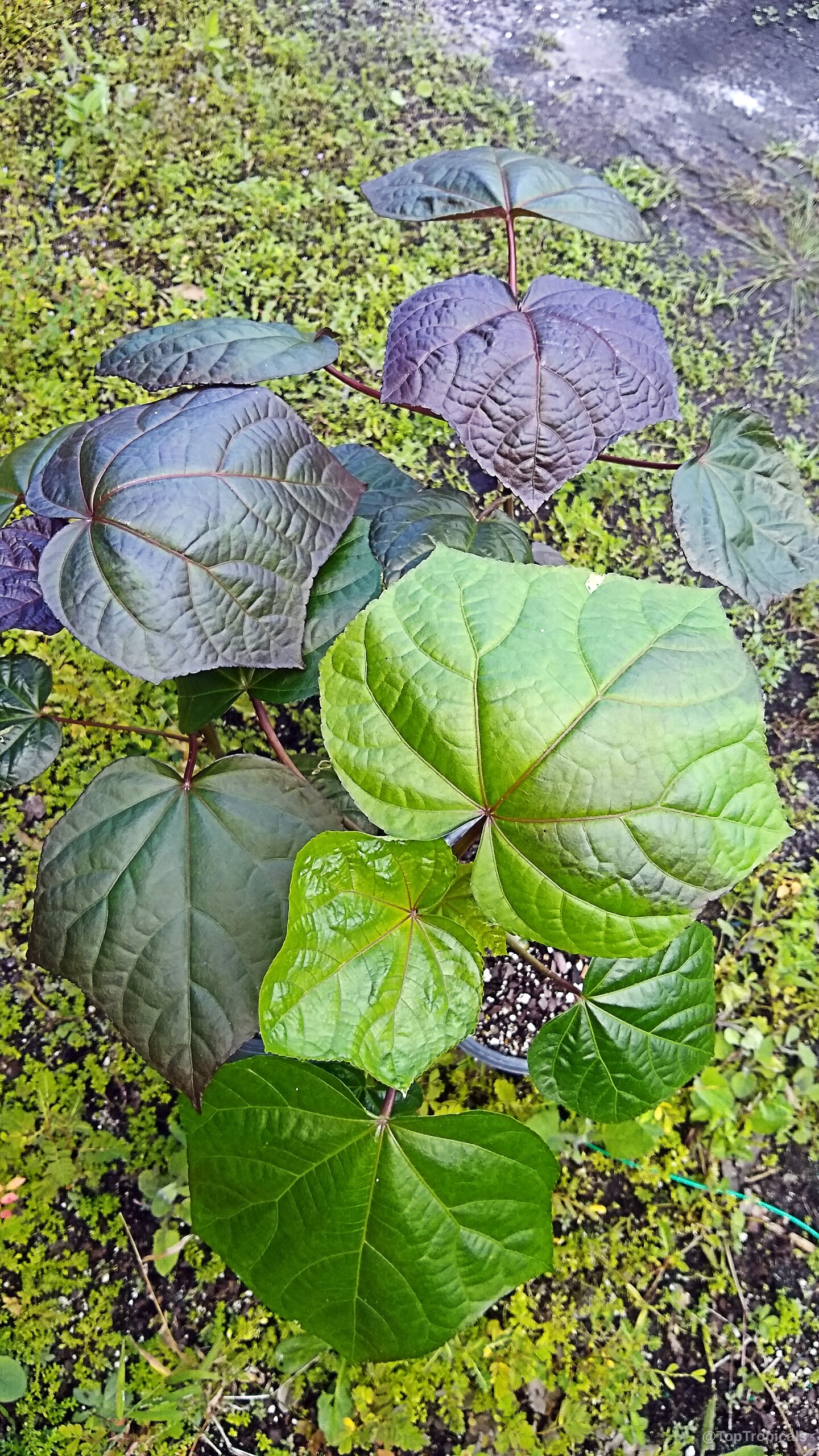
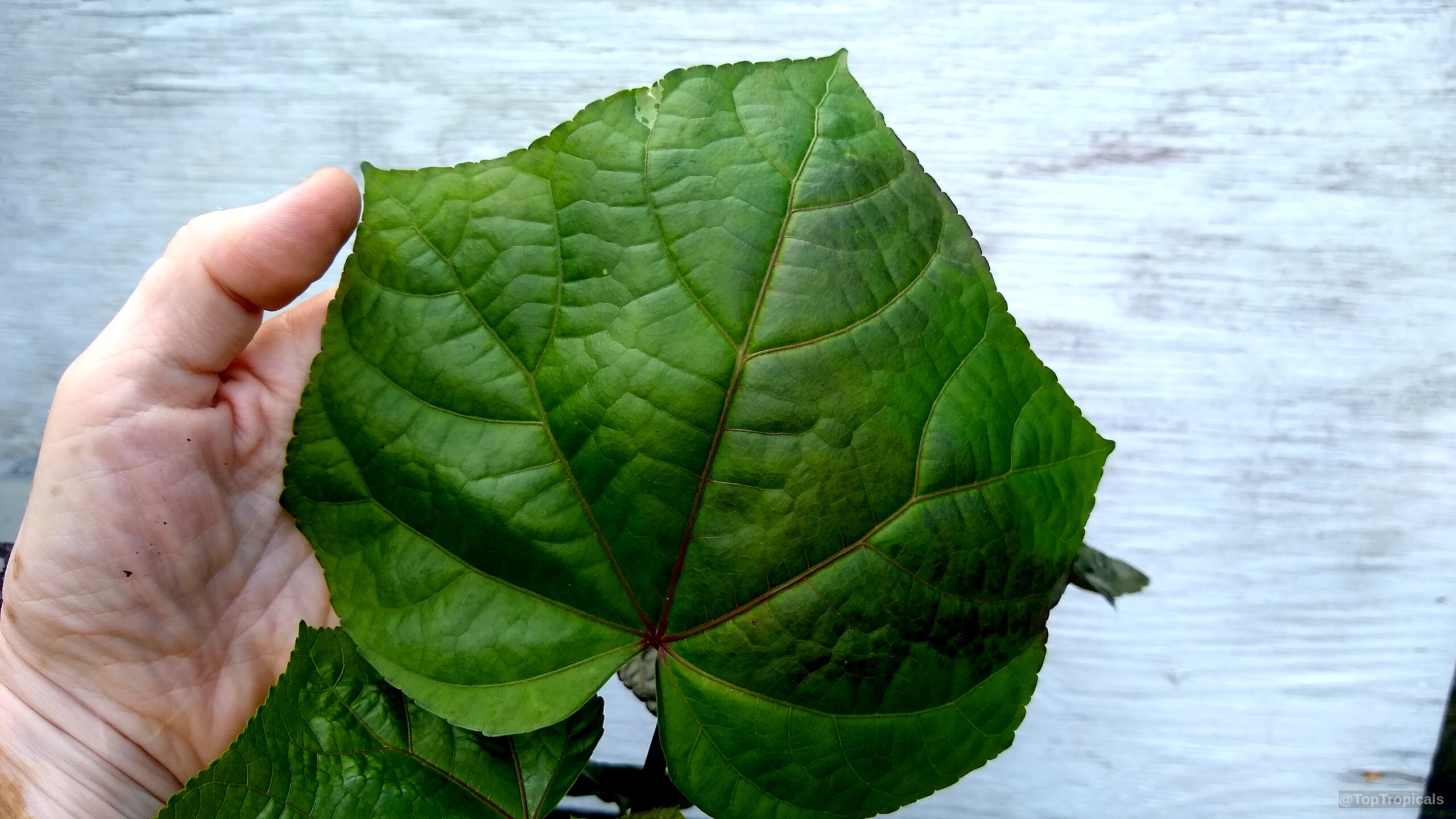
Abelmoschus manihot (South Sea Salad Tree) with dark green leaves and red stems plant
Abelmoschus manihot (South Sea Salad Tree) with deep green foliage and distinct red stems visible

Botanical name: Abelmoschus manihot

Common names: South Sea Salad Tree, Bele tree, Sunset Muskmallow, Sunset Hibiscus, Hibiscus Manihot

Family: Malvaceae

Origin: Southeast Asia
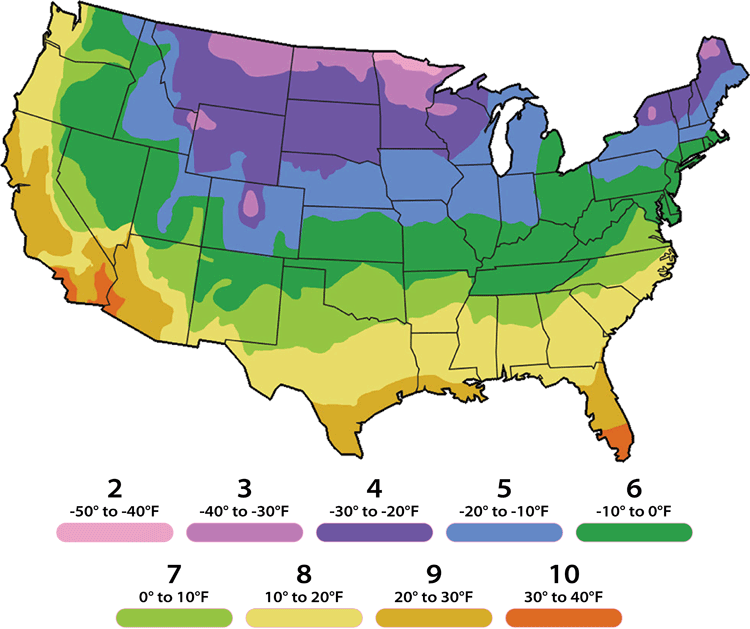
Hardiness: 20°F

USDA Plant Hardiness MapLarge shrub 5-10 ft tallFull sunWatering: Regular. Let topsoil dry slightlyYellow, orange flowersWhite, off-white flowersPlant attracts butterflies, hummingbirdsSpice or herb plantEthnomedical plant.
Plants marked as ethnomedical and/or described as medicinal, are not offered as medicine but rather as ornamentals or plant collectibles.
Ethnomedical statements / products have not been evaluated by the FDA and are not intended to diagnose, treat, cure, or prevent any disease. We urge all customers to consult a physician before using any supplements, herbals or medicines advertised here or elsewhere.Subtropical plant. Mature plant cold hardy at least to 30s F for a short time

Its palmate leaves are highly dissected with five to nine deep lobes. The largest, widest leaves form at the base of the plant, where there may be some small side branches. The blooms (4-5" in diameter) are pale yellow with a dark maroon to purple center eye, and emerge from the terminal end of a central flowering stalk.It is easily propagated from cuttings, easy to cultivate, relatively disease-resistant and even is considered to be of medicinal value. It is widely planted either along borders of gardens or as an intercrop throughout many traditional gardens in the tropics. A nice flowering addition to the vegetable garden.

Link to this plant:
https://toptropicals.com/catalog/uid/abelmoschus_manihot.htm

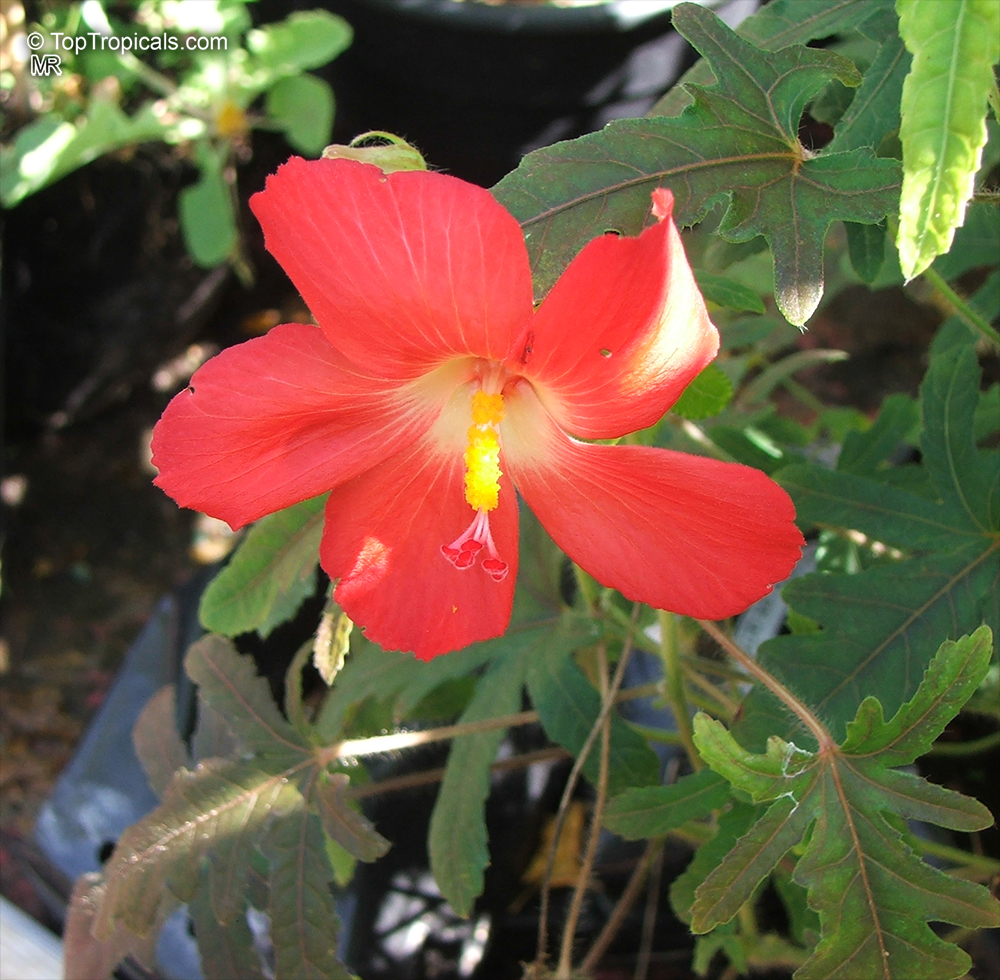
Abelmoschus moschatus (Musk Mallow) red flower close up against green foliage on the branch
Abelmoschus moschatus (Musk Mallow) red flower with yellow center amidst jagged, dark green textured foliage

Botanical names: Abelmoschus moschatus, Hibiscus abelmoschus

Common name: Musk Mallow

Family: Malvaceae

Origin: South East Asia

USDA Plant Hardiness MapLarge shrub 5-10 ft tallSemi-shadeFull sunWatering: Moderate. Water when top soil feels dryWatering: Regular. Let topsoil dry slightlyYellow, orange flowersRed, crimson, vinous flowersEdible plantEthnomedical plant.
Plants marked as ethnomedical and/or described as medicinal, are not offered as medicine but rather as ornamentals or plant collectibles.
Ethnomedical statements / products have not been evaluated by the FDA and are not intended to diagnose, treat, cure, or prevent any disease. We urge all customers to consult a physician before using any supplements, herbals or medicines advertised here or elsewhere.Subtropical plant. Mature plant cold hardy at least to 30s F for a short time

Valued as an ornamental plant, due to its colorful and attractive flowers. The leaves are alternate, rough, hairy, heart-shaped or 3-5 lobed with serrated margins. Flowers are Hibiscus-like.

Cultivated for aromatic oil from seeds. Young leaves, shoots, and unripe seedpods are cooked as a vegetable.


Link to this plant:
https://toptropicals.com/catalog/uid/abelmoschus_moschatus.htm

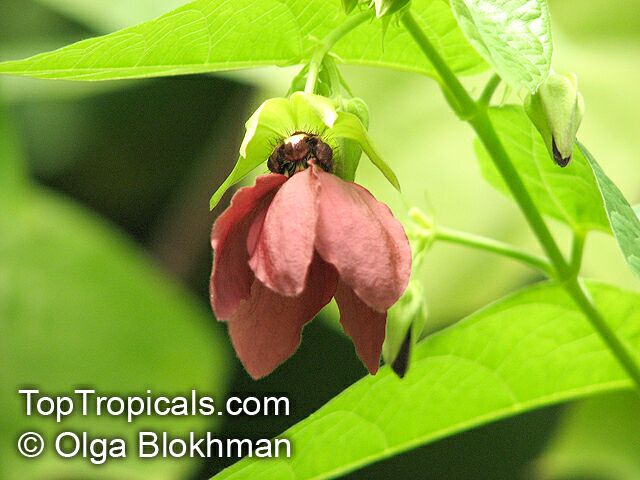
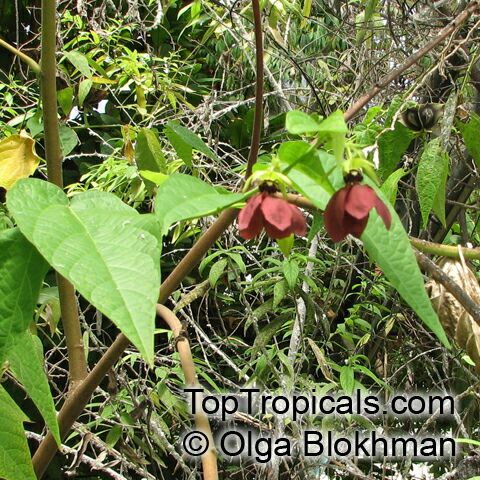
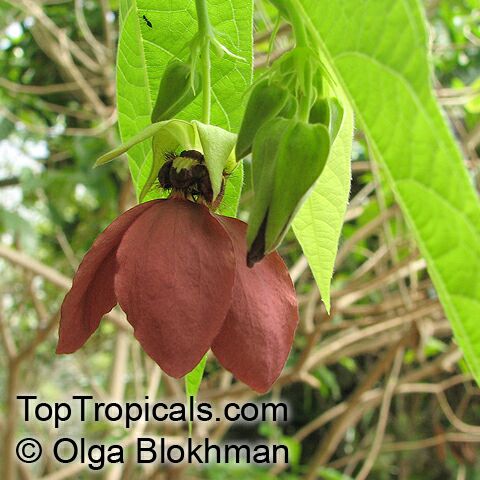
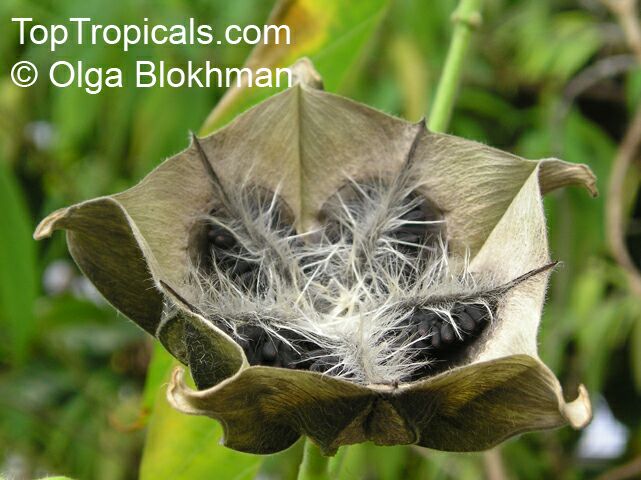
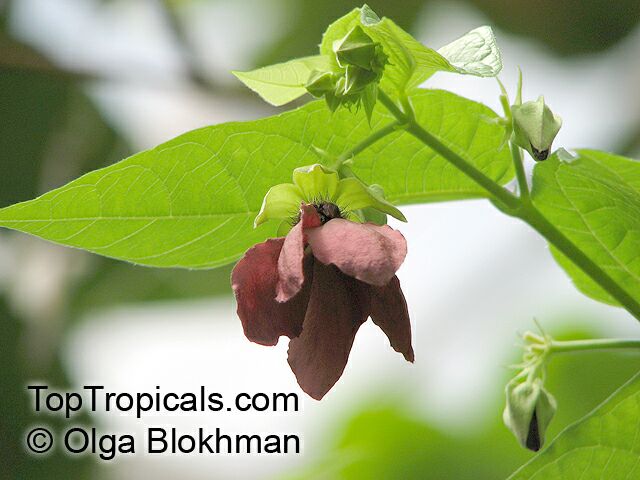
Abroma augusta (Devil Cotton) burgundy flower close up with green leaves attached to plant
Abroma augusta (Devil Cotton) burgundy flower hanging with green leaves and closed buds nearby.

Botanical name: Abroma augusta

Common name: Devil Cotton

Family: Malvaceae

Subfamily: Sterculioideae

Origin: Tropical Asia

USDA Plant Hardiness MapLarge shrub 5-10 ft tallSmall tree 10-20 ftSemi-shadeFull sunWatering: Regular. Let topsoil dry slightlyRed, crimson, vinous flowersUnusual colorEthnomedical plant.
Plants marked as ethnomedical and/or described as medicinal, are not offered as medicine but rather as ornamentals or plant collectibles.
Ethnomedical statements / products have not been evaluated by the FDA and are not intended to diagnose, treat, cure, or prevent any disease. We urge all customers to consult a physician before using any supplements, herbals or medicines advertised here or elsewhere.

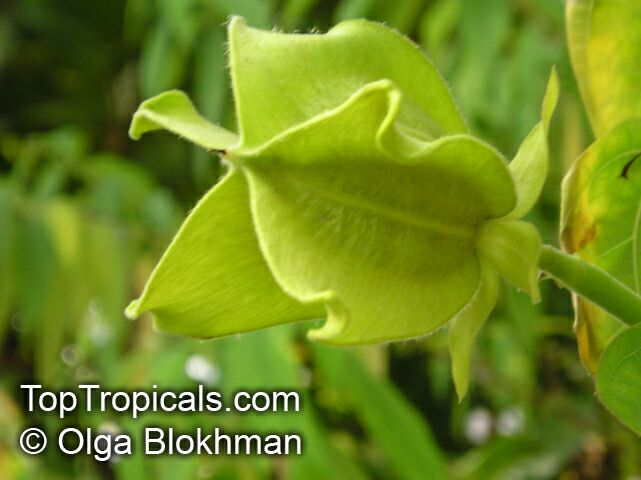
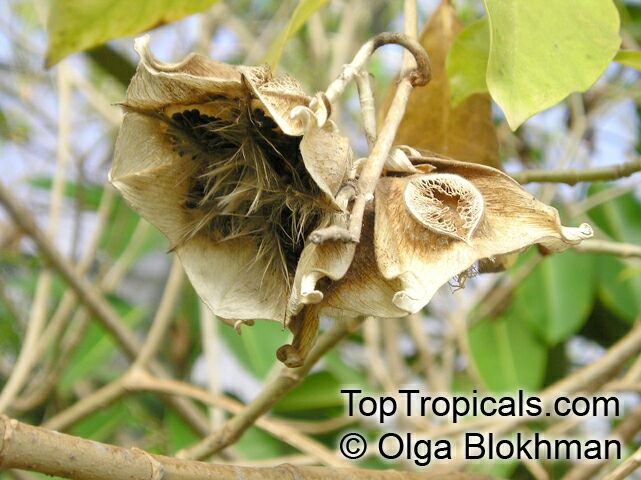
The leaves have an oblong shap.The seeds are contained in a cotton-like envelope. Dark, maroon flowers are formed in terminal panicles. The leaves and stems are covered with soft, bristly hairs that are extremely irritating to the touch.

Link to this plant:
https://toptropicals.com/catalog/uid/abroma_augusta.htm

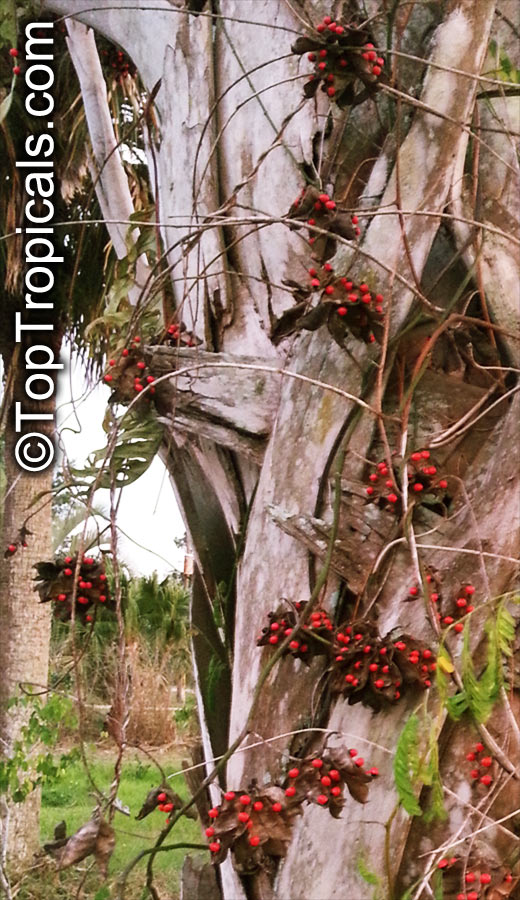
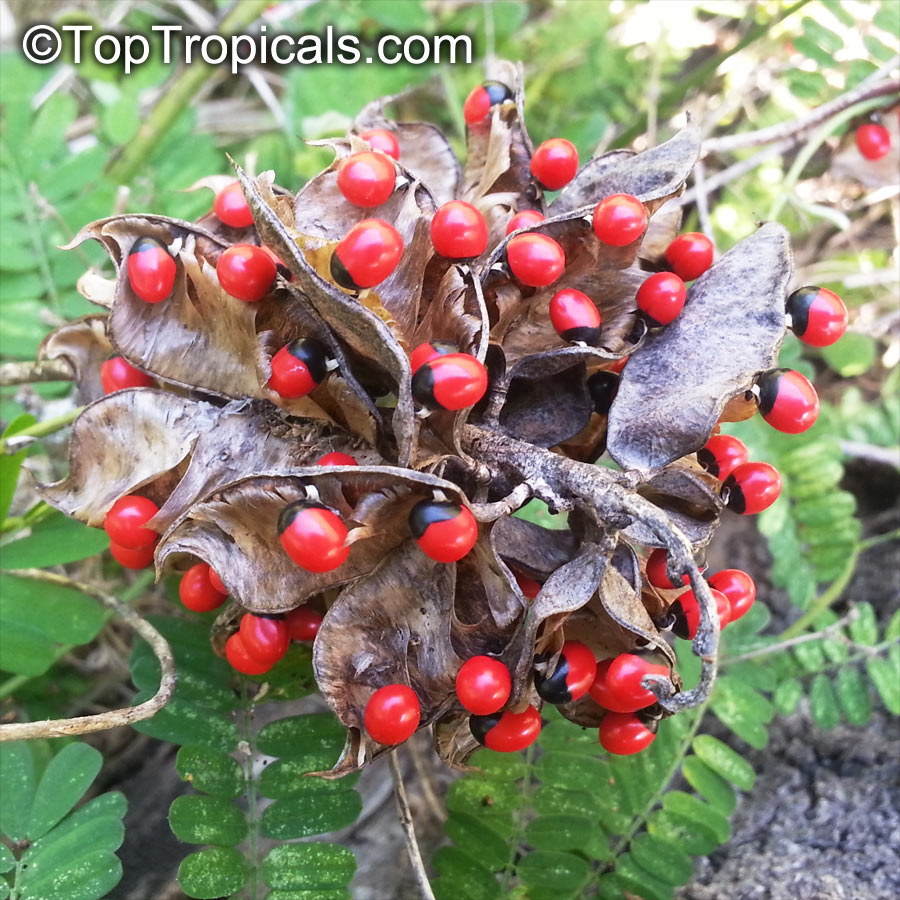
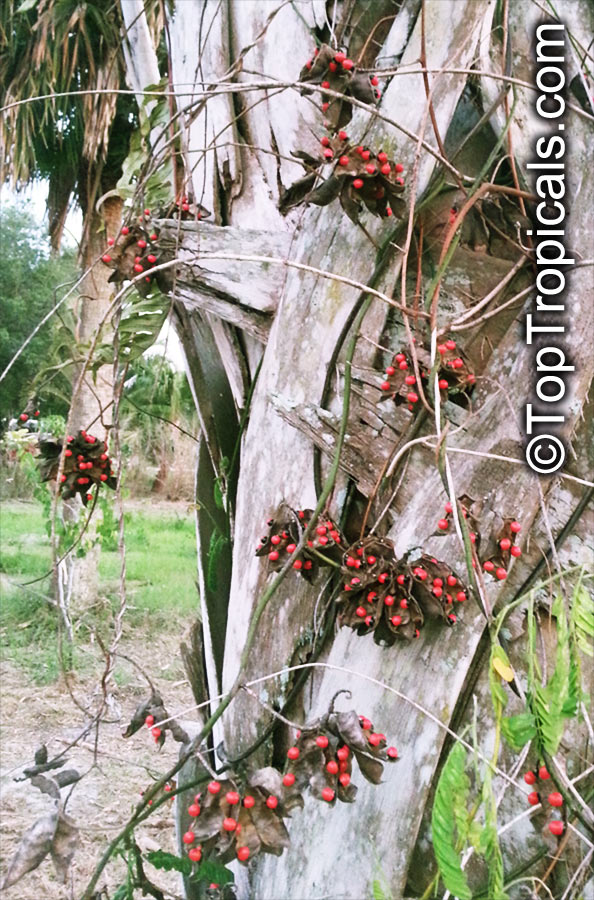
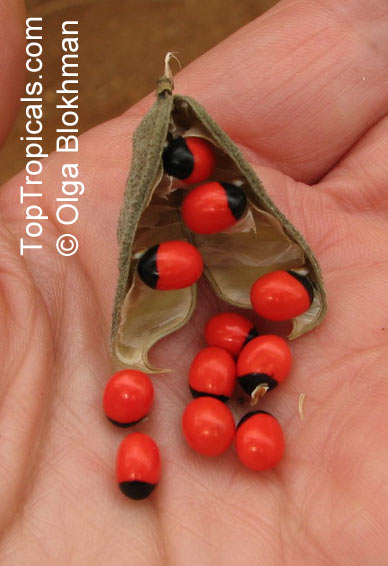
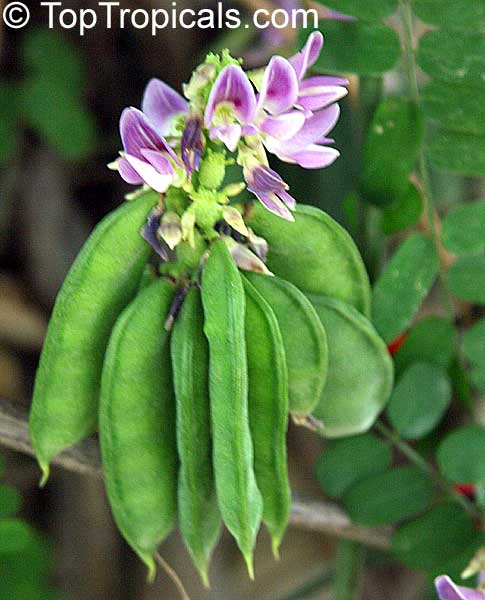
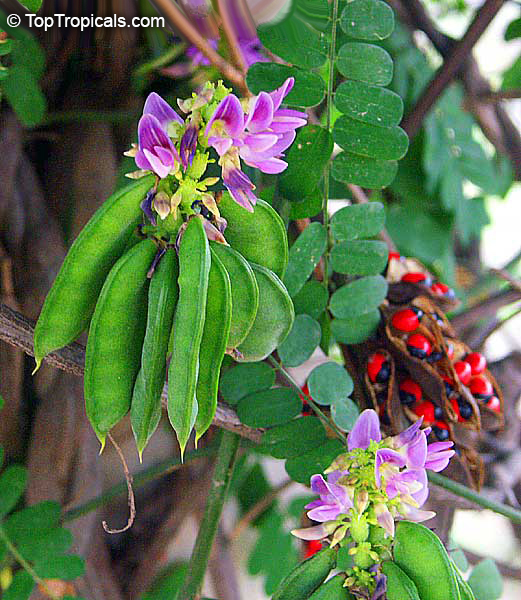
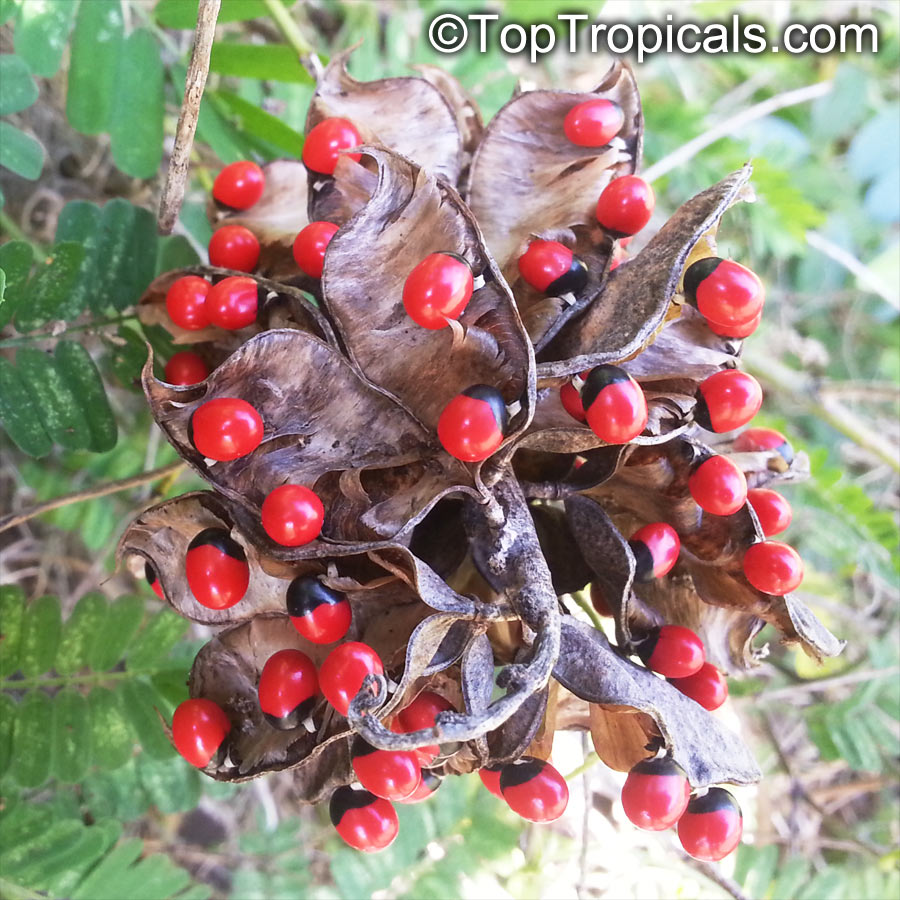
Abrus precatorius (Buddhist rosary bead) red fruit on climbing vine stems against rough tree bark
Abrus precatorius (Buddhist rosary bead) reveals red fruit pods clinging to dry textured tree bark surface.

Botanical name: Abrus precatorius

Common names: Buddhist rosary bead, Rosary pea vine, Carolina muida, Deadly crab's eye, Lucky bean, Prayer beads, Weather plant, Wild liquorice

Family: Fabaceae

Subfamily: Faboideae

Origin: India, Sri Lanka, Thailand

USDA Plant Hardiness MapVine or creeper plantFull sunWatering: Moderate. Water when top soil feels dryBlue, lavender, purple flowersPink flowersToxic or PoisonousEthnomedical plant.
Plants marked as ethnomedical and/or described as medicinal, are not offered as medicine but rather as ornamentals or plant collectibles.
Ethnomedical statements / products have not been evaluated by the FDA and are not intended to diagnose, treat, cure, or prevent any disease. We urge all customers to consult a physician before using any supplements, herbals or medicines advertised here or elsewhere.

Abrus precatorius has small pretty purple flowers located at the end of the stalks. Fruits are short, inflated pods, splitting open when mature to reveal the round; hard and shiny seeds which are scarlet, but black at the base. Seeds contain abrin, one of the most toxic plant poisons known.
Link to this plant:
https://toptropicals.com/catalog/uid/abrus_precatorius.htm

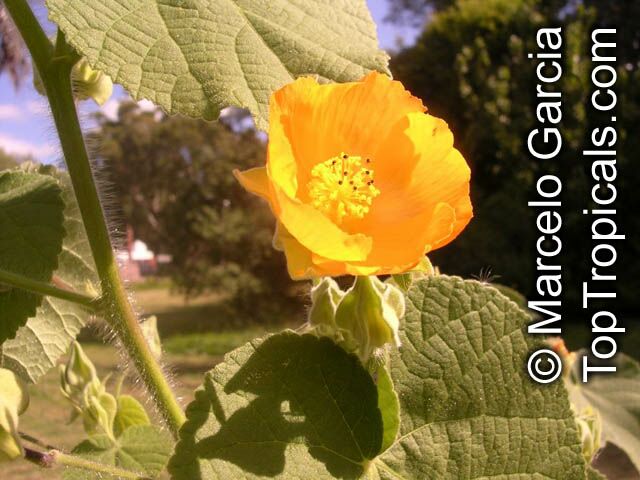
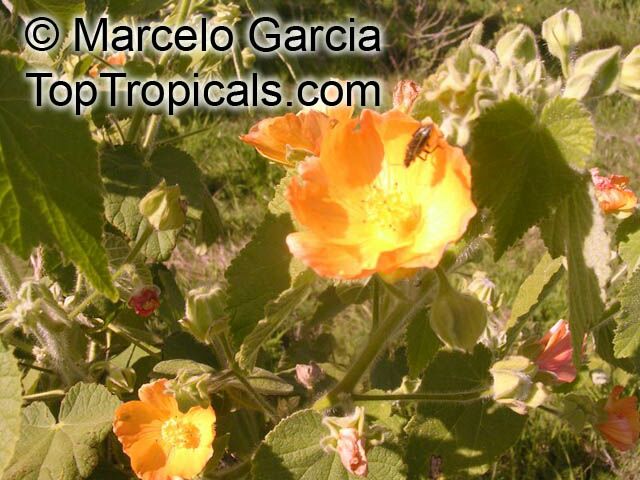
Abutilon grandifolium (Hairy Indian Mallow) orange flower close up on a green plant branch.
Abutilon grandifolium (Hairy Indian Mallow) orange flower sitting atop fuzzy green leaves on a branch.

Botanical names: Abutilon grandifolium, Sida grandifolia

Common names: Hairy Indian Mallow, Hairy Abutilon

Family: Malvaceae

Origin: South America
USDA Plant Hardiness MapLarge shrub 5-10 ft tallFull sunWatering: Moderate. Water when top soil feels dryYellow, orange flowersEthnomedical plant.
Plants marked as ethnomedical and/or described as medicinal, are not offered as medicine but rather as ornamentals or plant collectibles.
Ethnomedical statements / products have not been evaluated by the FDA and are not intended to diagnose, treat, cure, or prevent any disease. We urge all customers to consult a physician before using any supplements, herbals or medicines advertised here or elsewhere.

Abutilon grandifolium (Hairy Indian Mallow) orange flower close up with green leaves on stem
Abutilon grandifolium (Hairy Indian Mallow) orange flower with a small insect resting near green leaves.


Link to this plant:
https://toptropicals.com/catalog/uid/abutilon_grandifolium.htm
 
Next


Use link to repeat this search:
https://toptropicals.com/cgi-bin/garden_catalog/cat.cgi?search_op=and&keyword_op=and&language=e&number=5&no_change_lang=1
&v1=med&user=tt&sale=1&first=0