Rosaceae - Plant Encyclopedia Results
| Number of plants found: 64 | Next | 
|
Go to page: | 1 | 2 | 3 | 4 | 5 | Last |
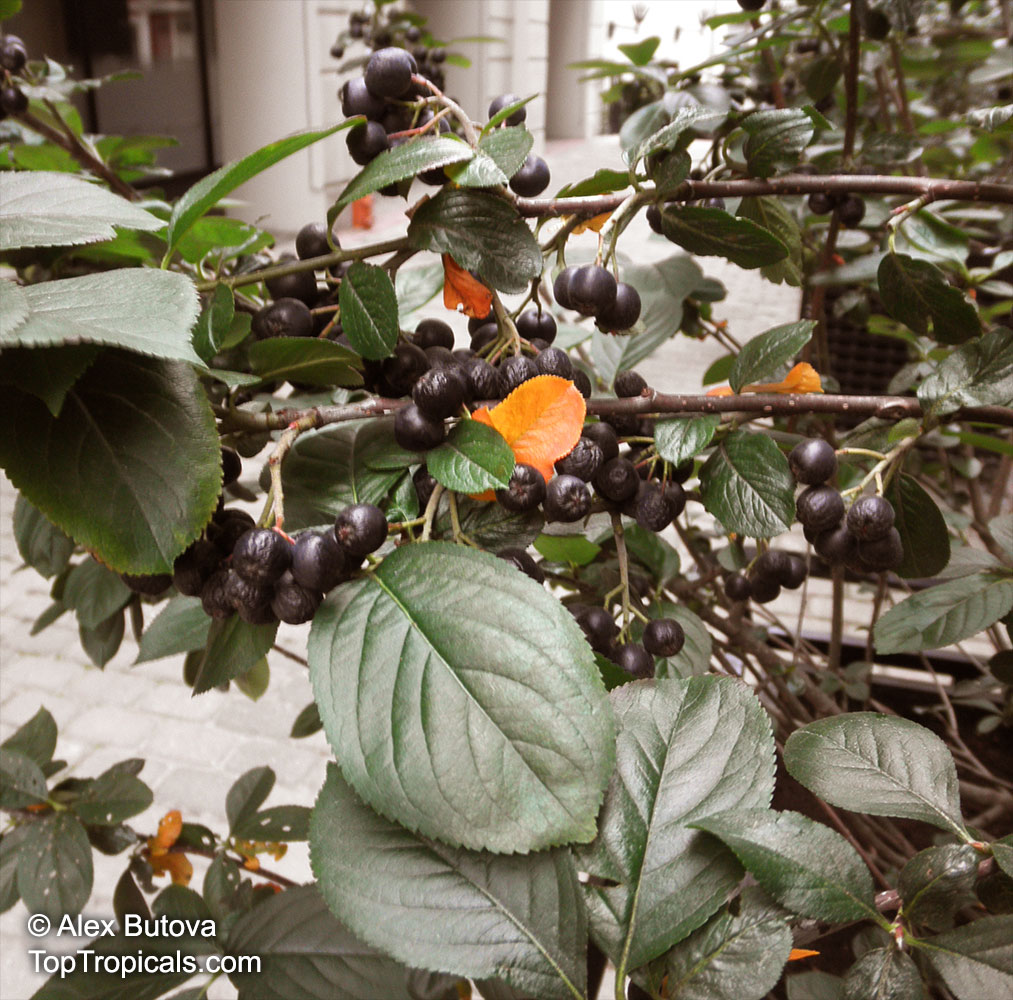
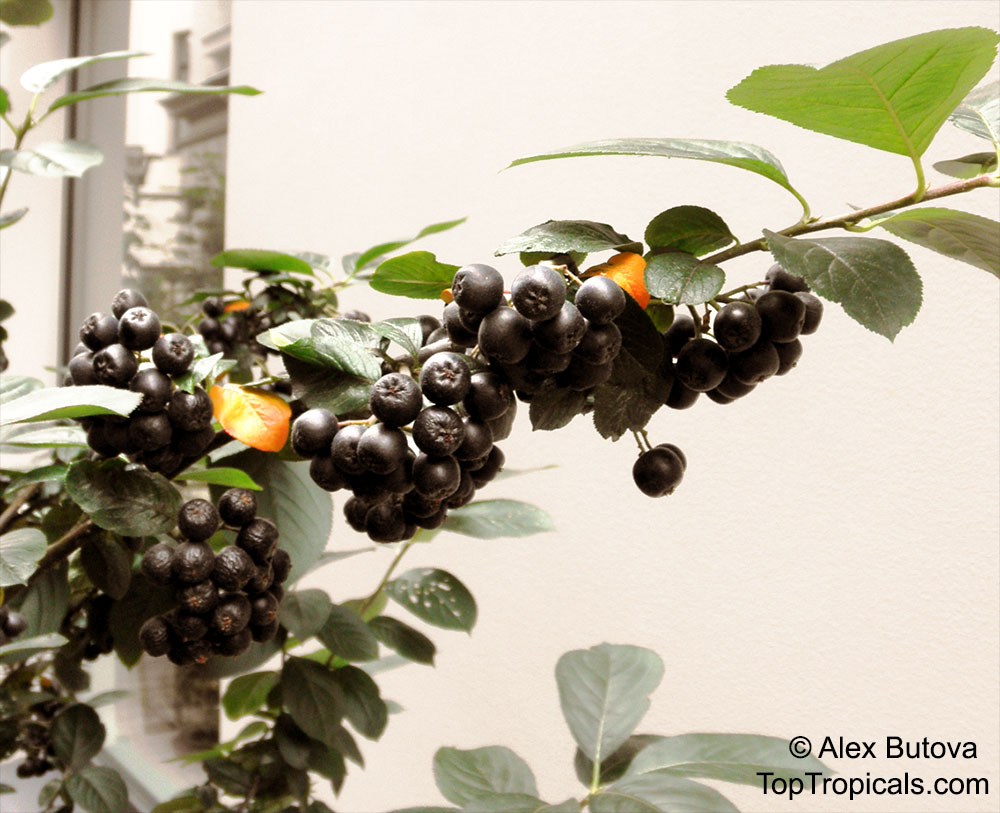
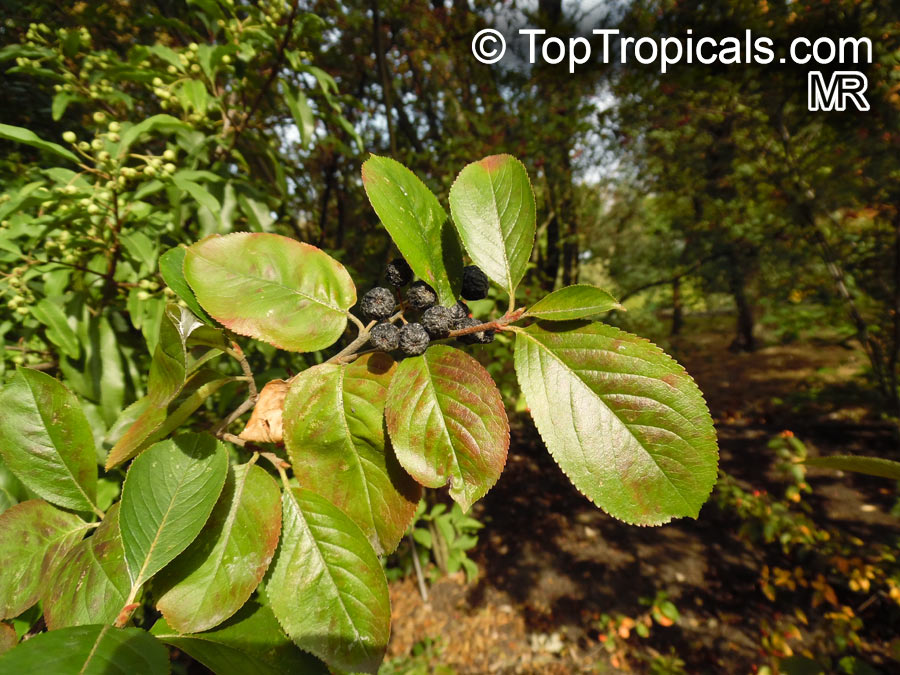
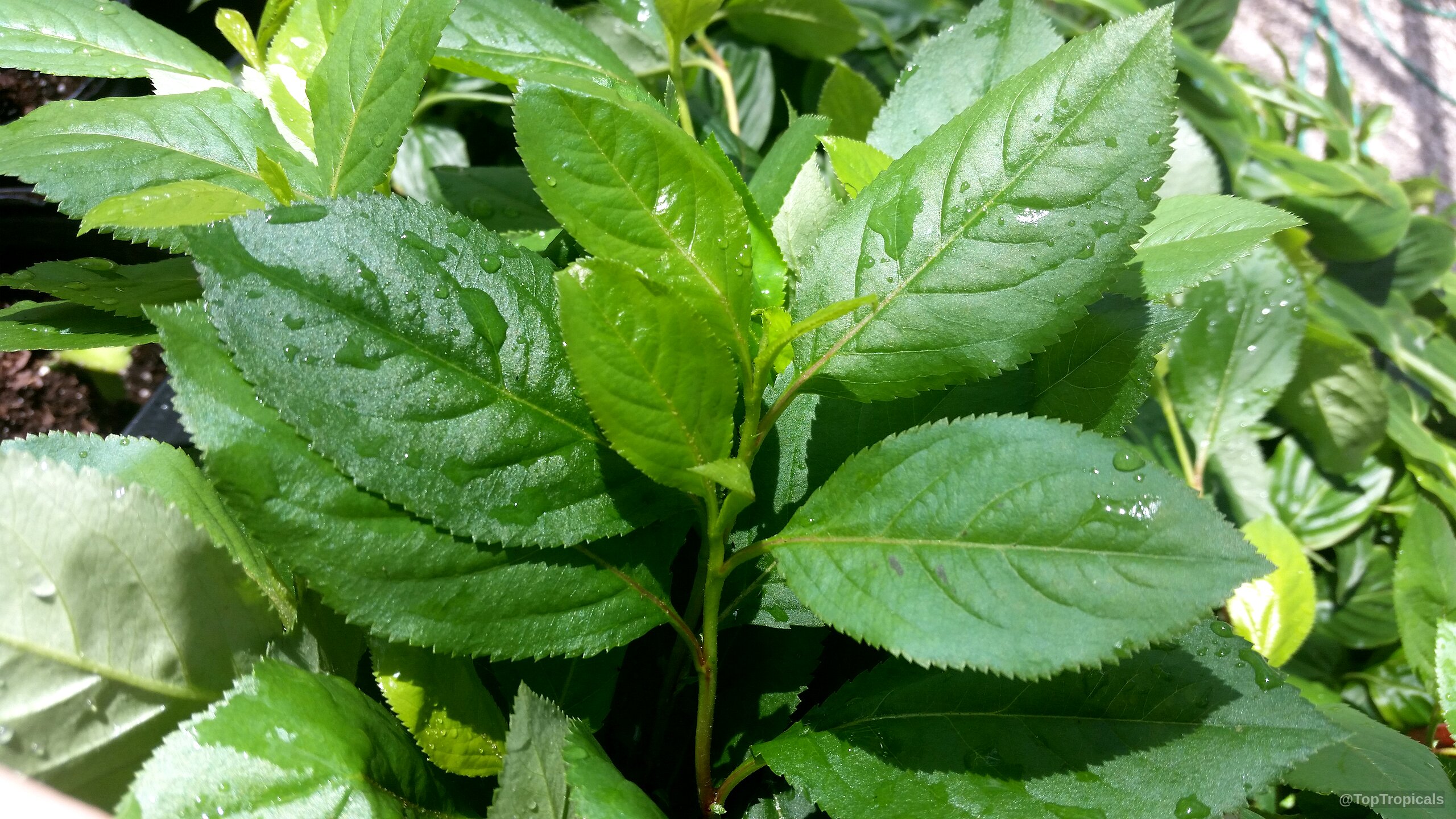
Botanical name: Aronia melanocarpa
Common name: Chokeberry
Family: Rosaceae
Origin: North America


Native to eastern North America and most commonly found in wet woods and swamps, Aronia is also naturalized in Europe.
Chokeberries are cultivated as ornamental plants and as food products. The sour berries can be eaten raw off the bush, but are more frequently processed. They can be found in wine, jam, syrup, juice, soft spreads, tea, salsa, chili starters, extracts, beer, ice cream, gummies and tinctures. The name "chokeberry" comes from the astringency of the fruits, which create a sensation making one's mouth pucker.
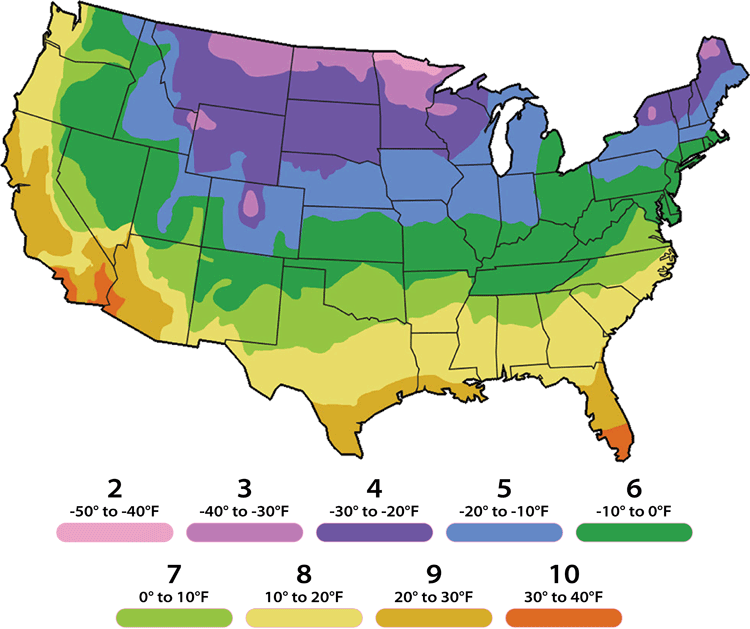
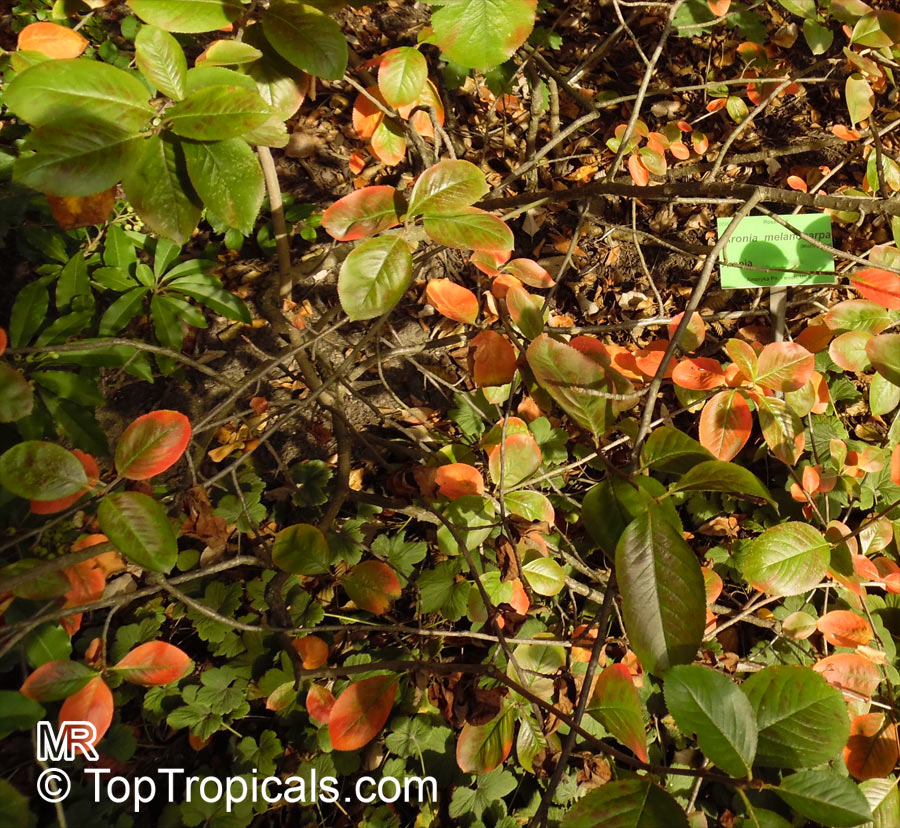
Cultivar Viking was selected in Europe for use in orchards but gardeners quickly discovered it's many attributes as a landscape plant. Masses of fragrant, white flowers bloom in spring a bit earlier than the species. Gorgeous red fall colors and extra large berries follow the glossy summer foliage. Persistent, purplish black berries are high in nutrients and can be used for pies and jellies or left on the shrub to provide food for birds and other wildlife. The berries can persist into spring feeding the first returning robins. Viking is self-fertile, so you need plant only one for a full crop of berries. It needs no pruning, is quite drought-tolerant once established in your garden, and as a native shrub, has proven remarkably resistant to pests and diseases. In other words, it is utterly trouble-free and very, low maintenance. USDA hardiness zone 3-9.
Aronia berries are harvested in September and October. Enjoy them in an array of foods as they are rich in vitamins. One of the true super fruits, they are high in antioxidants with huge health benefits. This fruit is used in Eastern Europe in holistic medicine for lowering blood pressure. Fruit should be consumed with caution as excessive amount can cause significant blood pressure drop.
See article: Cold hardy Aronia and its Superfruit: a Magic gift from the Native Americans

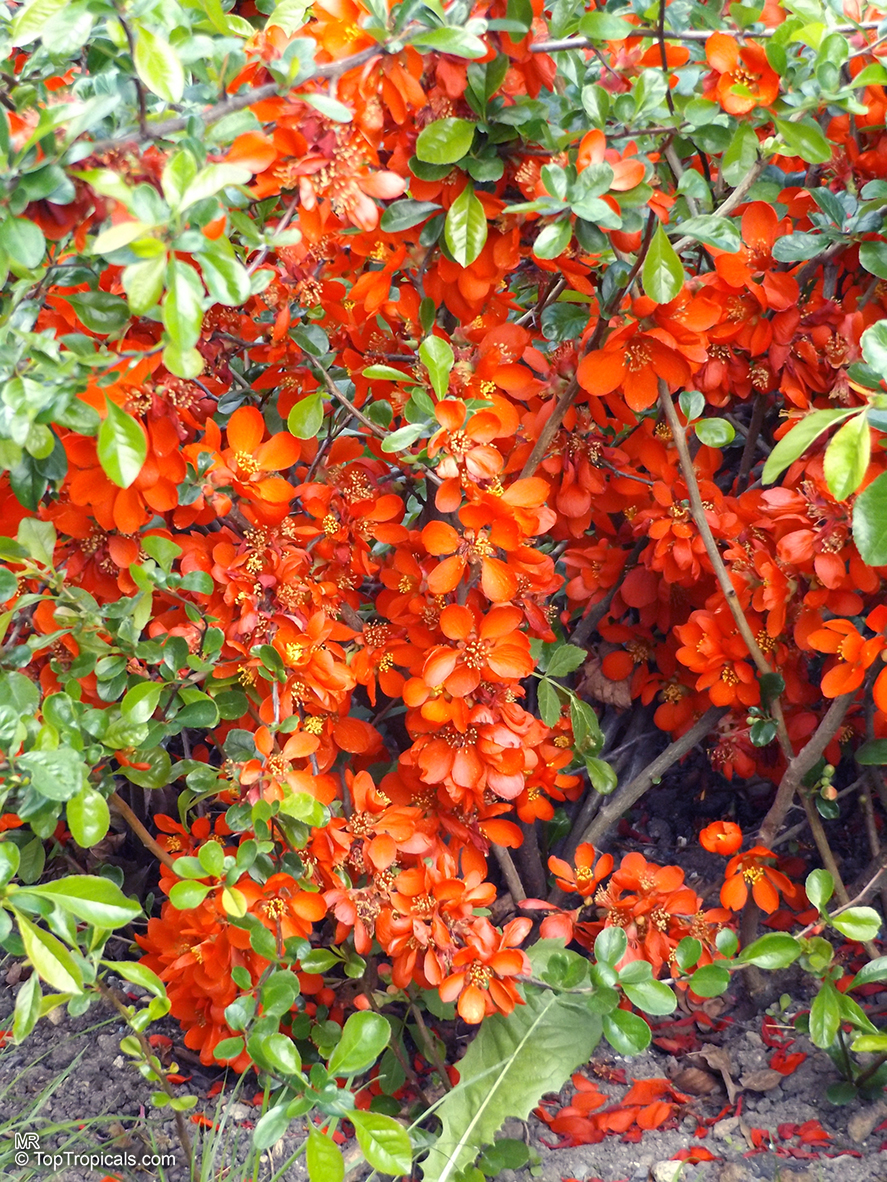
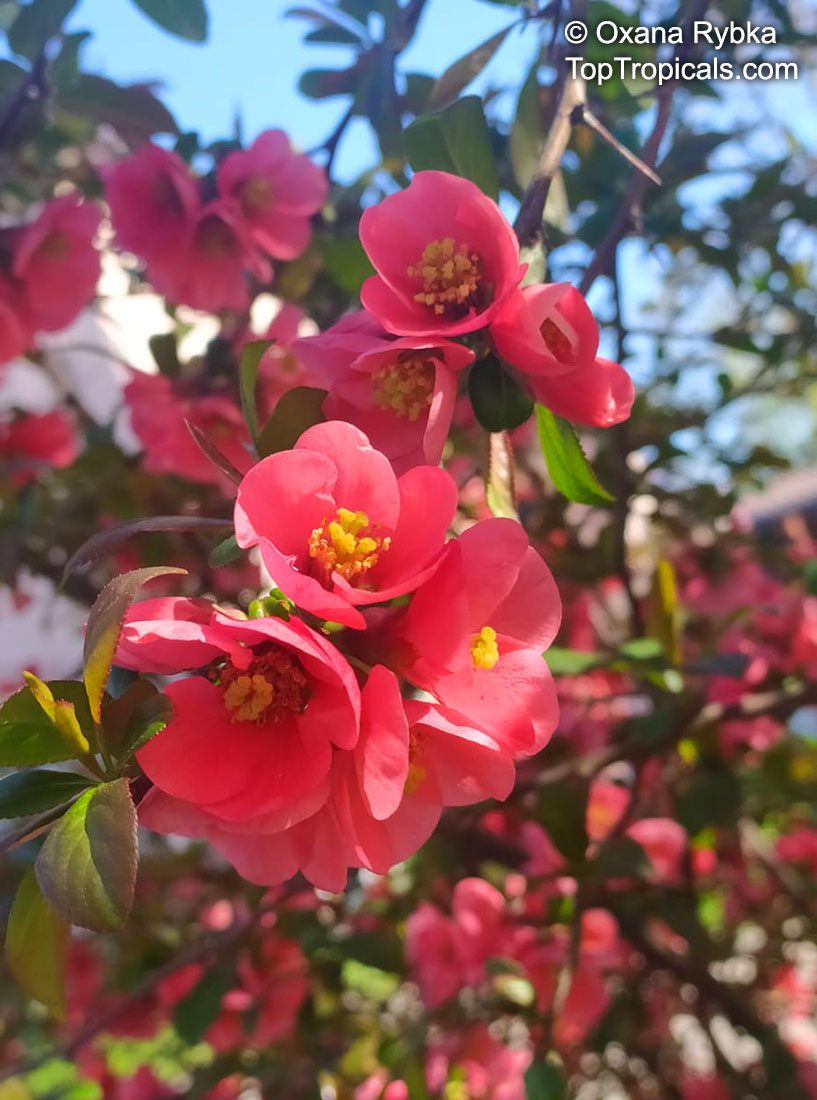
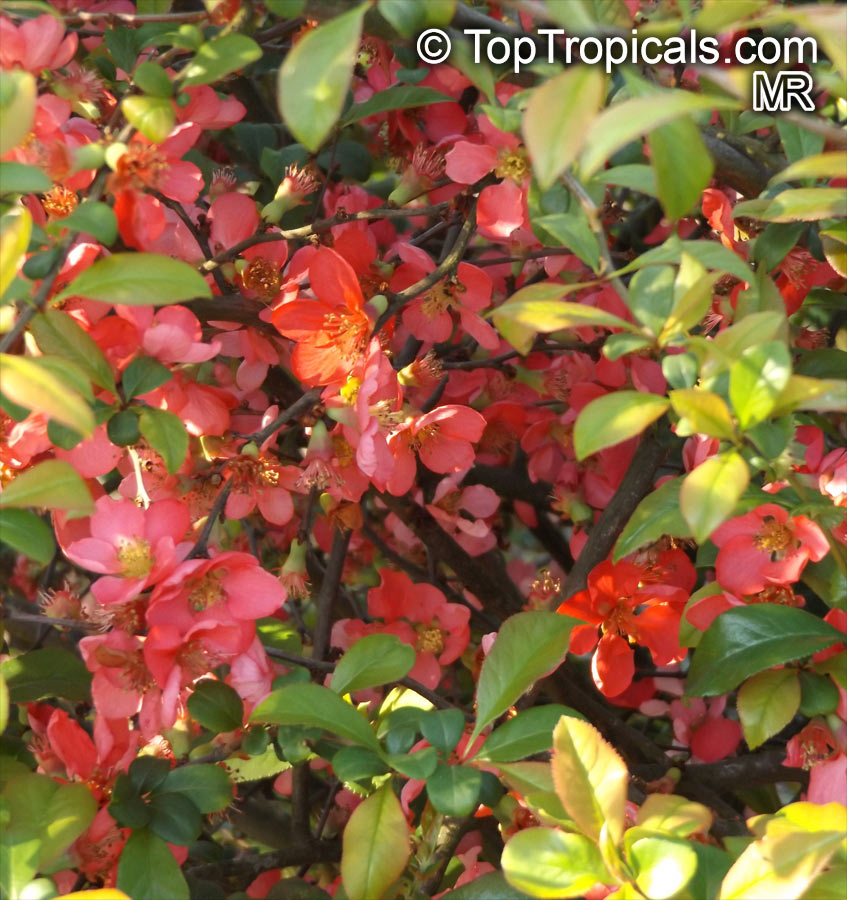
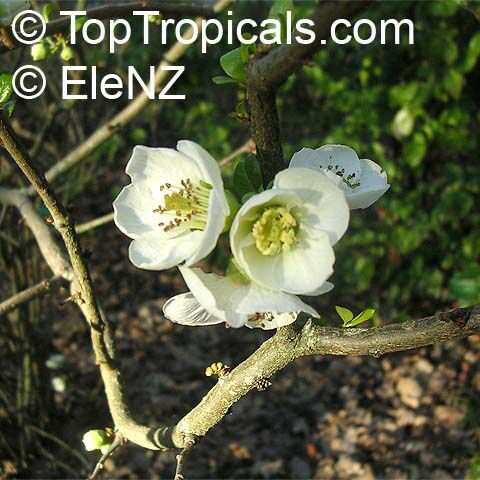
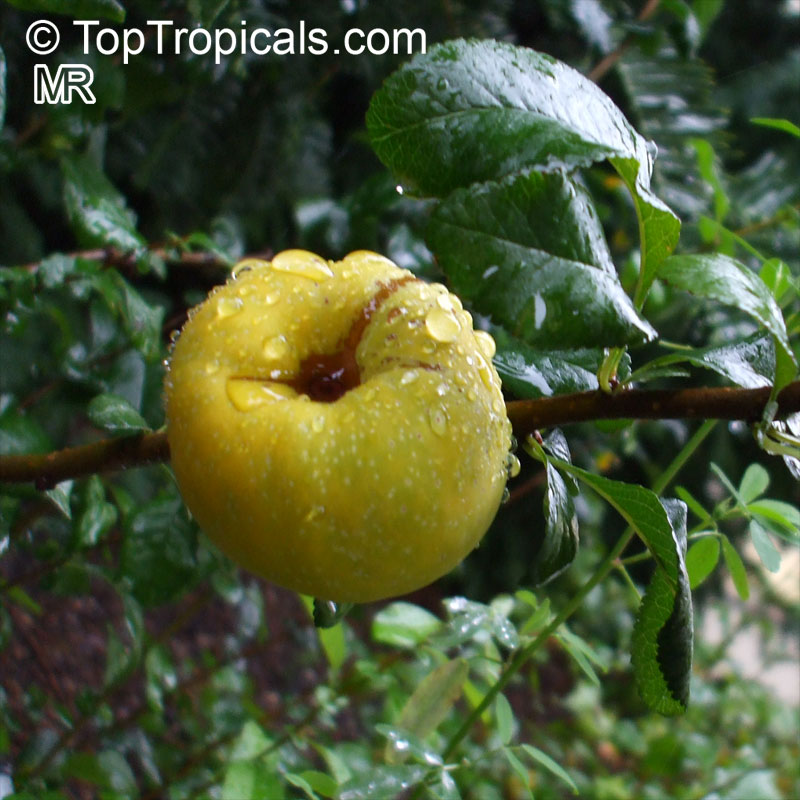
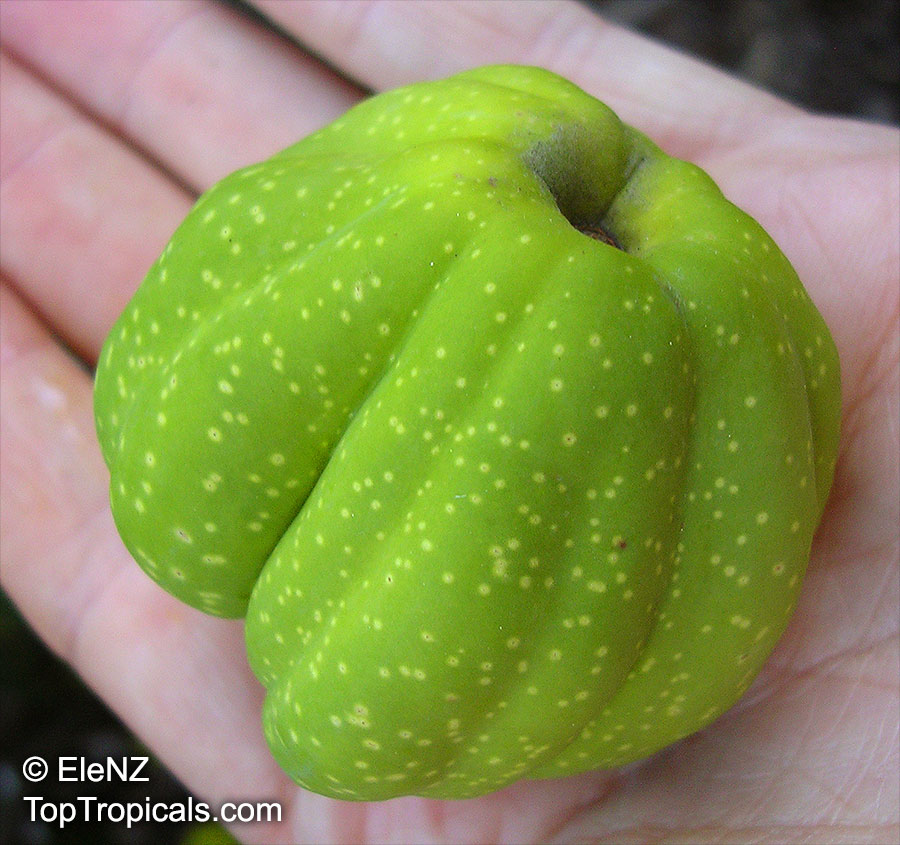
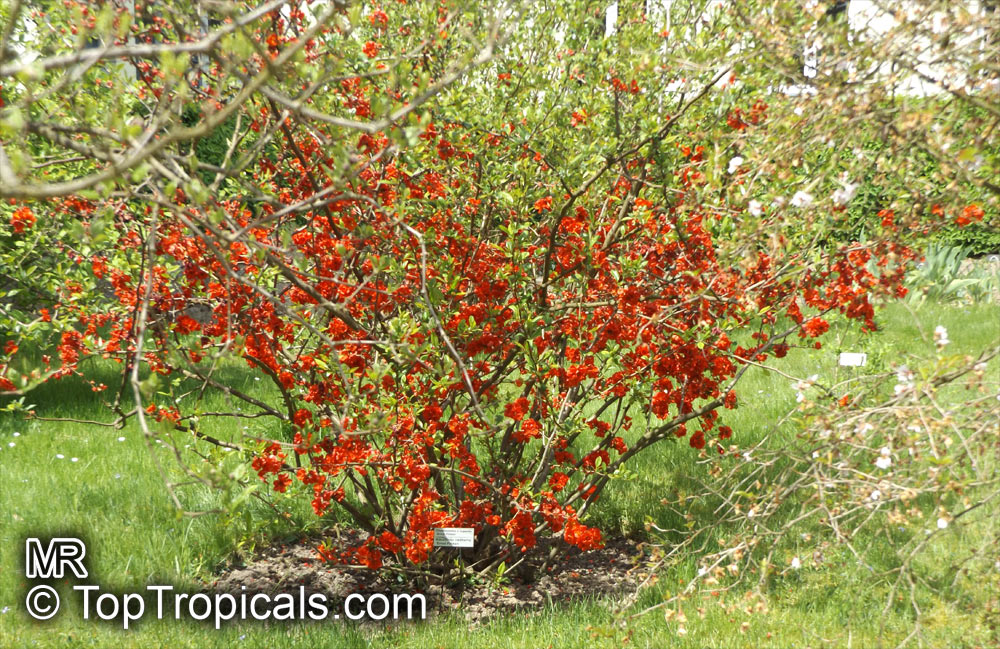
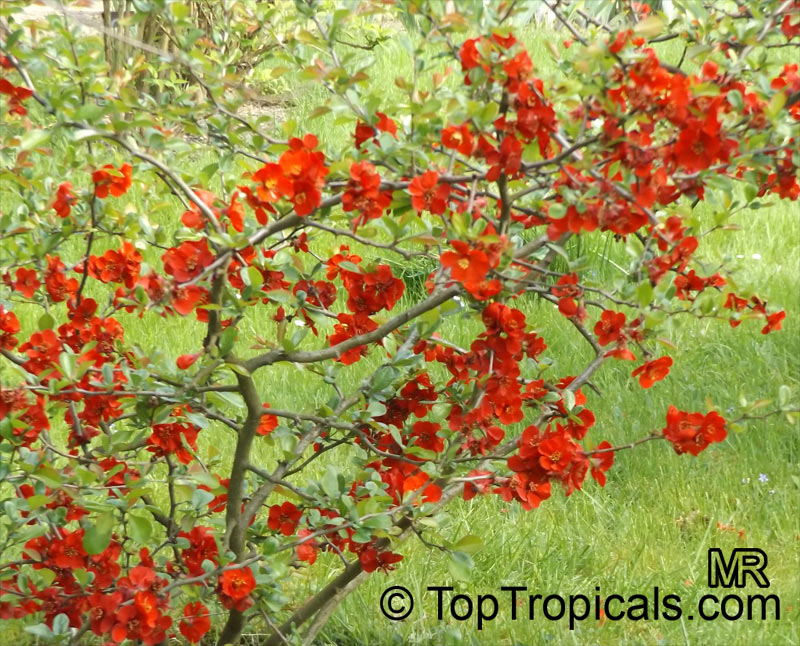
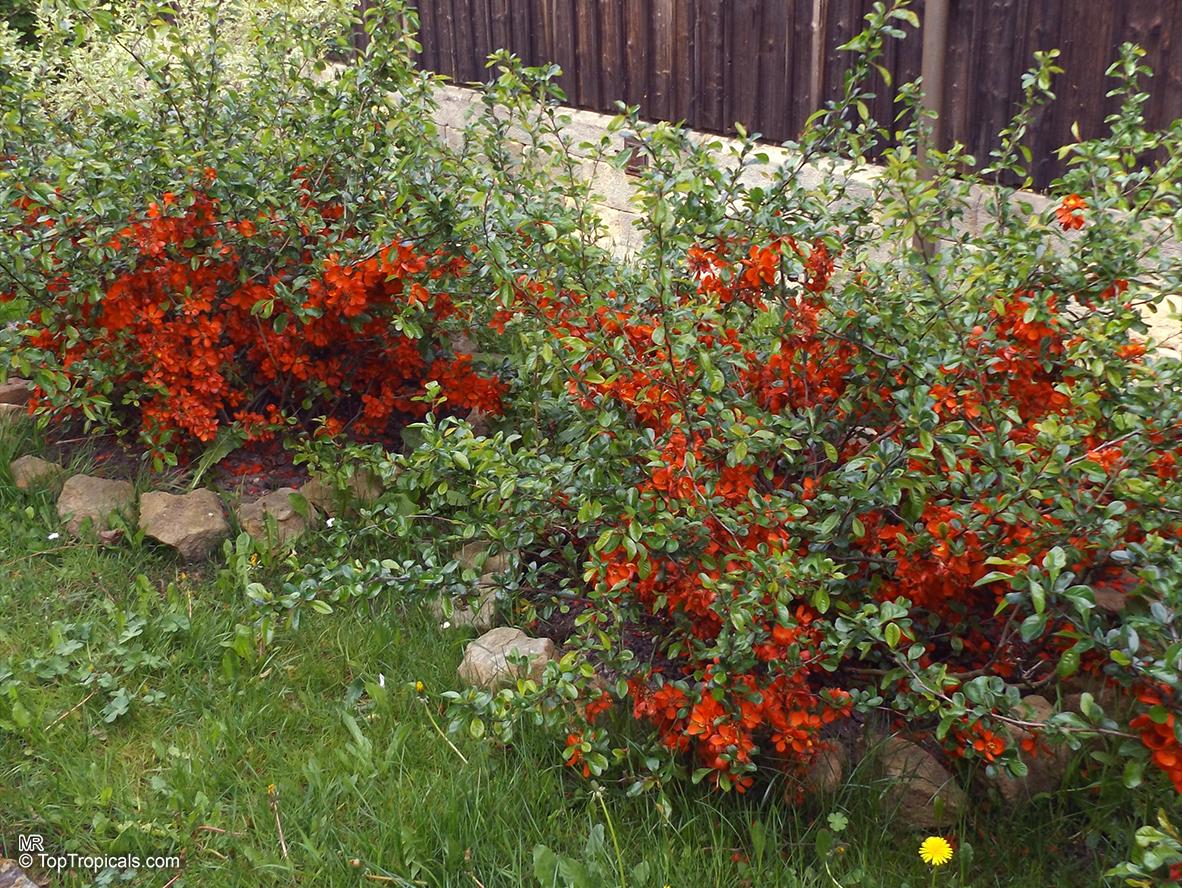
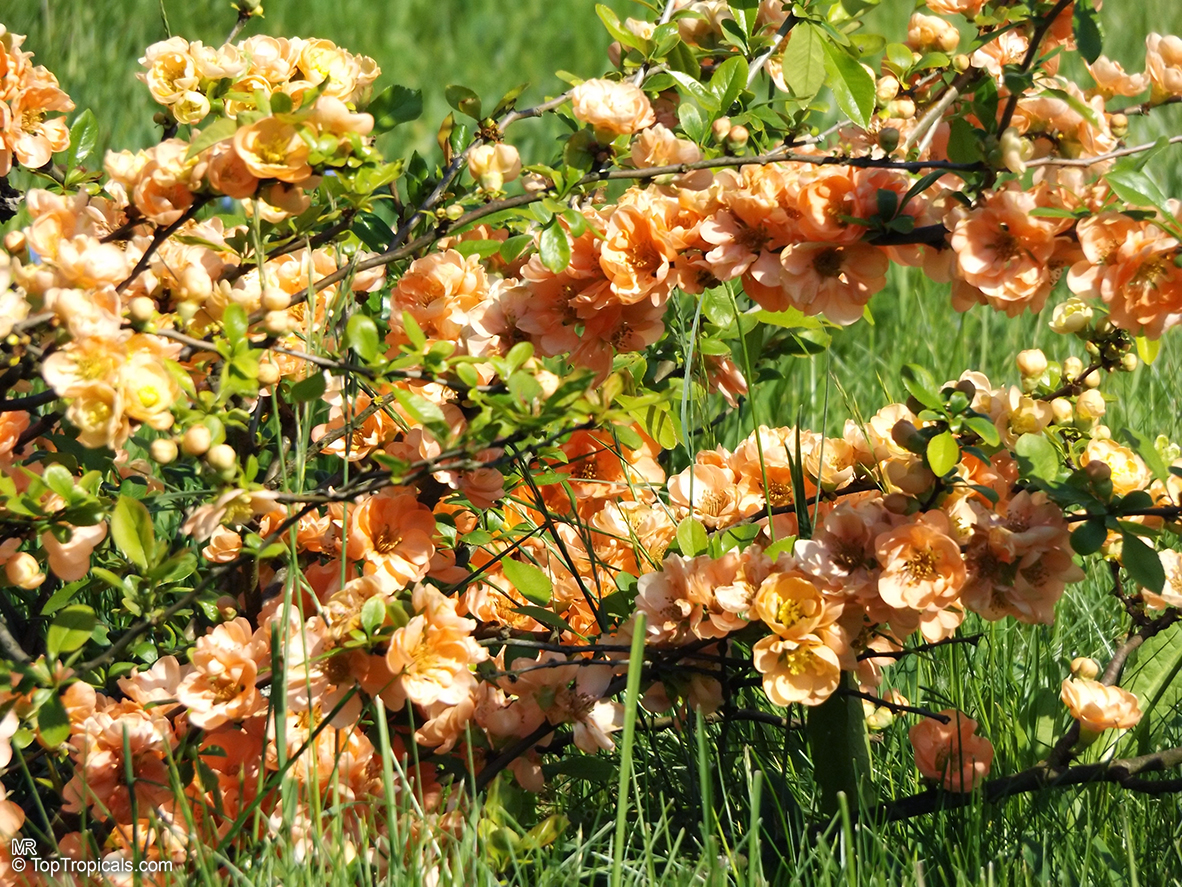
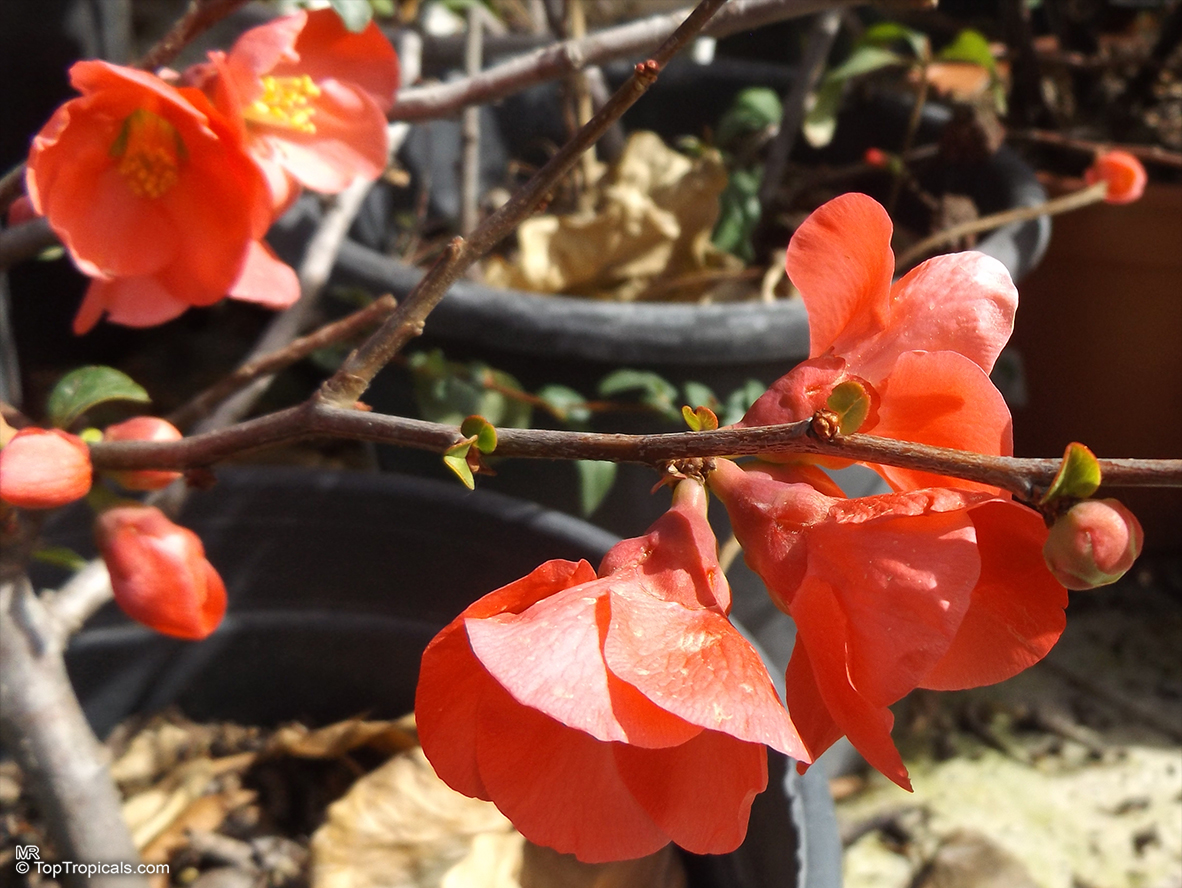
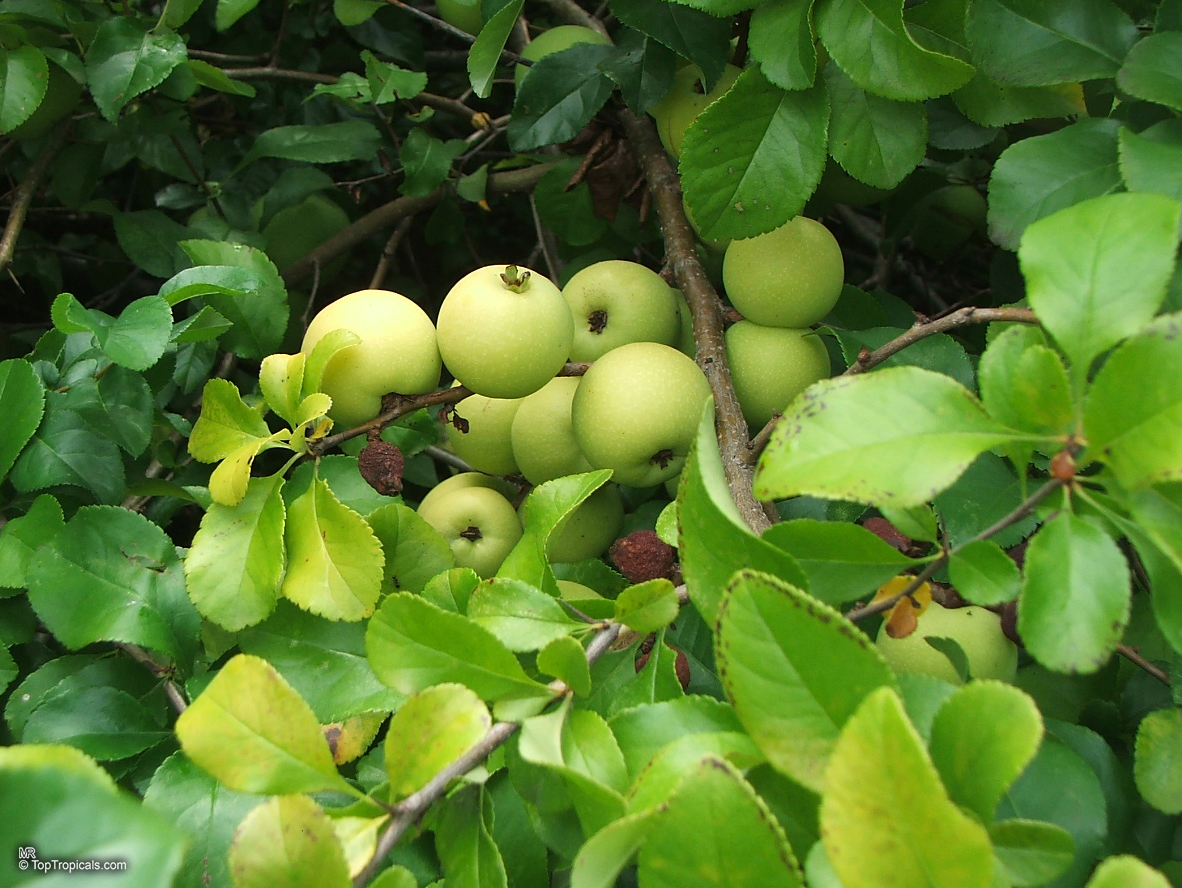
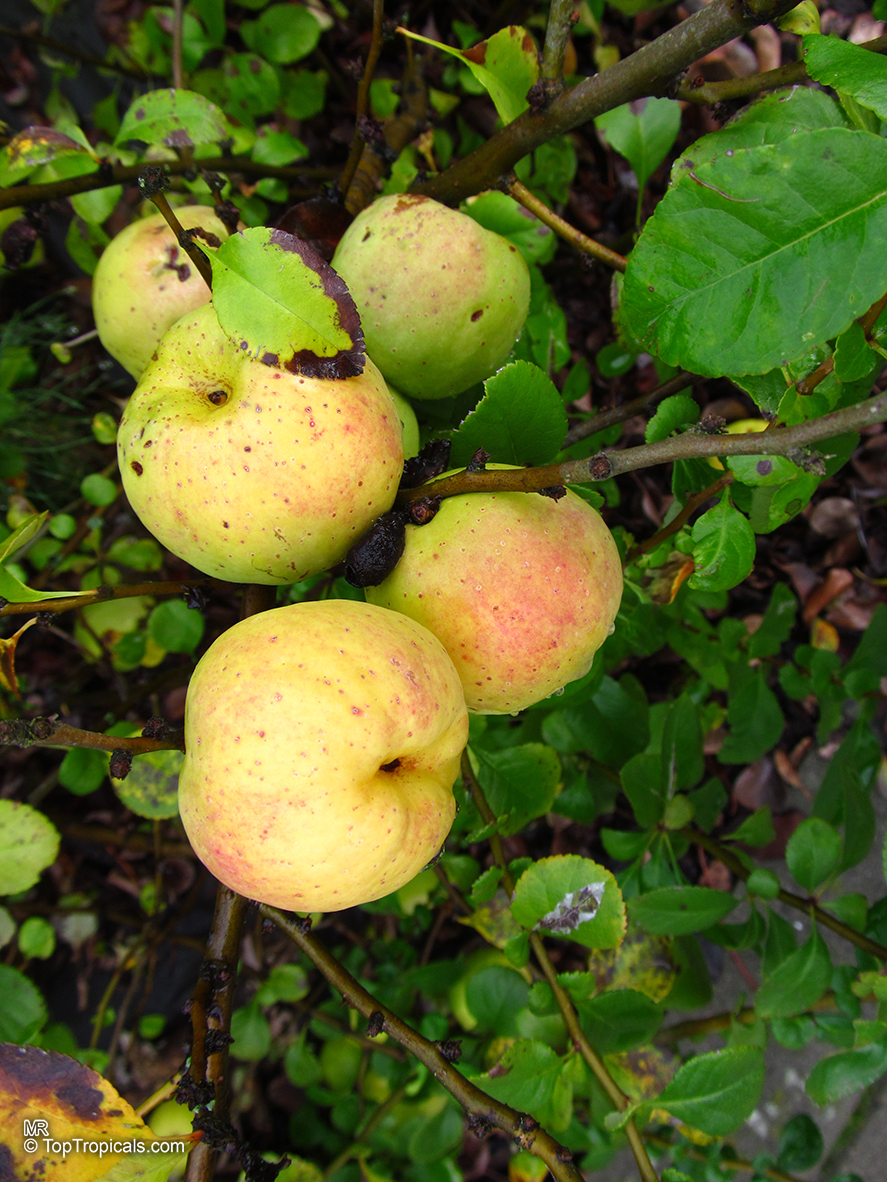
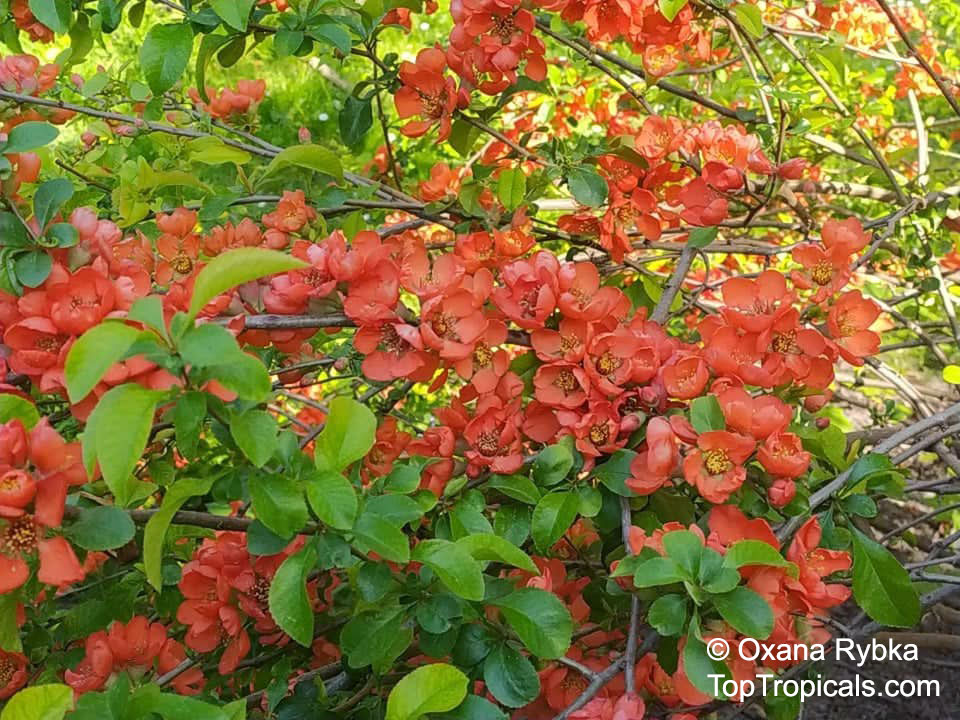
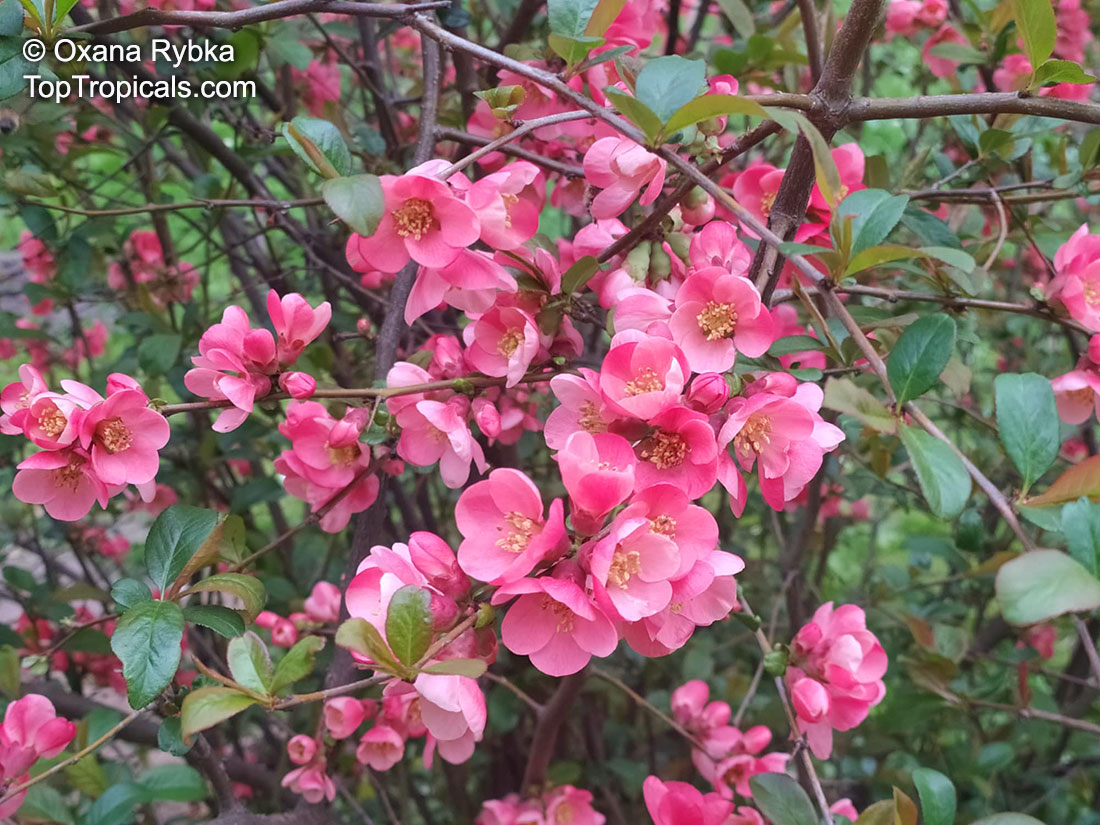
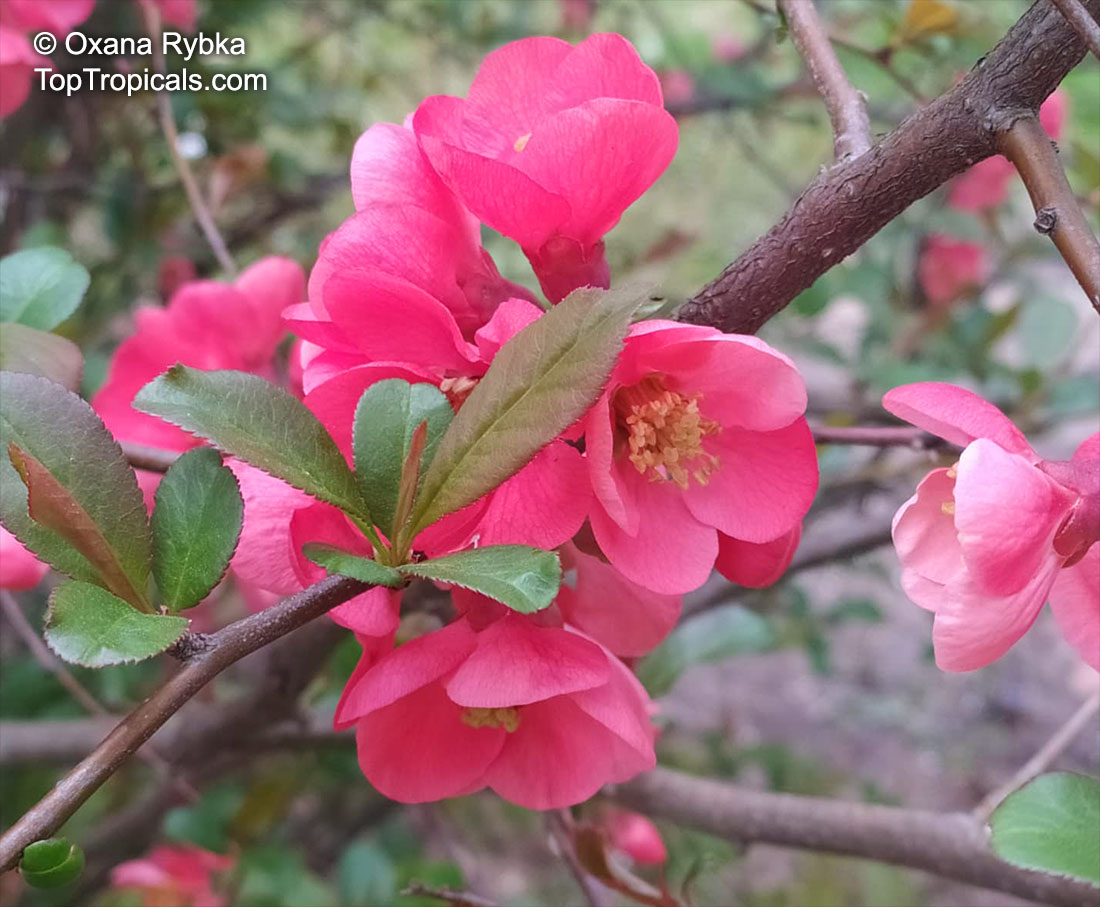
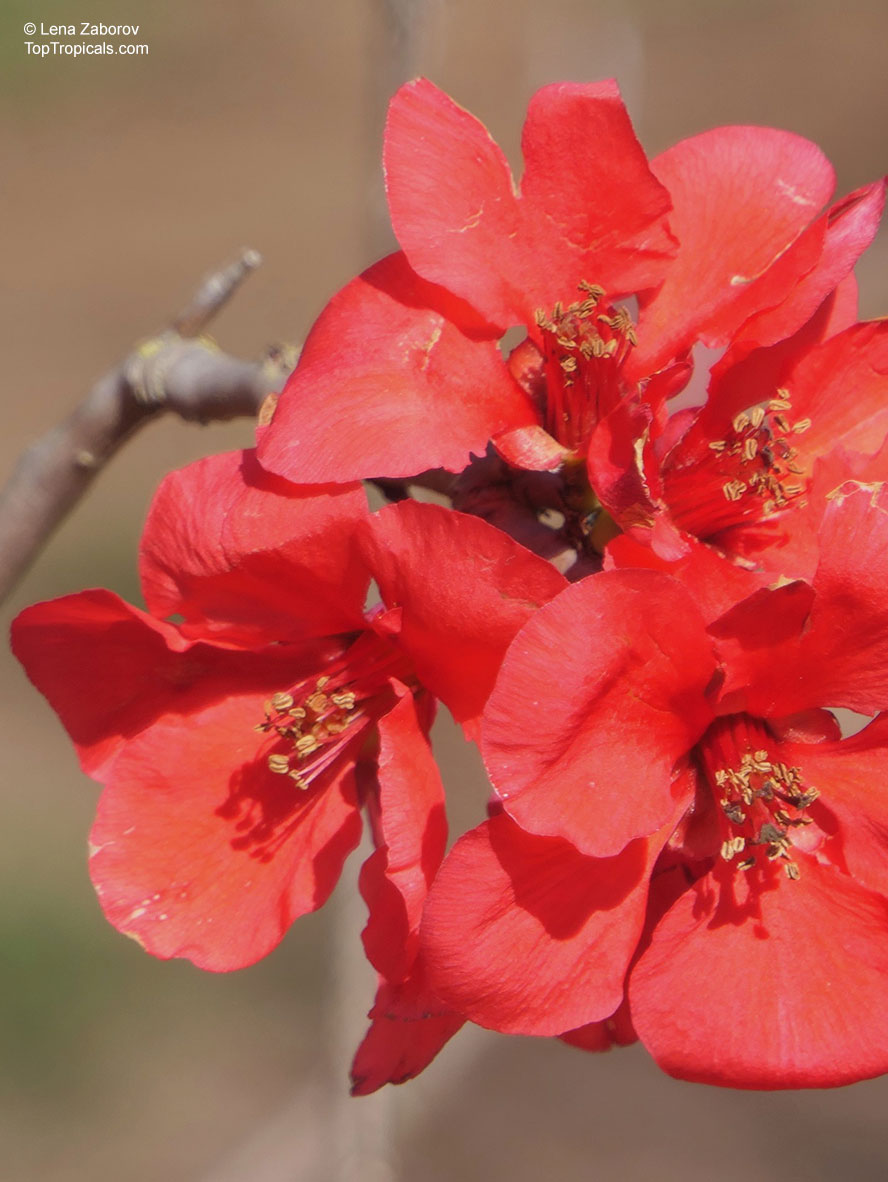
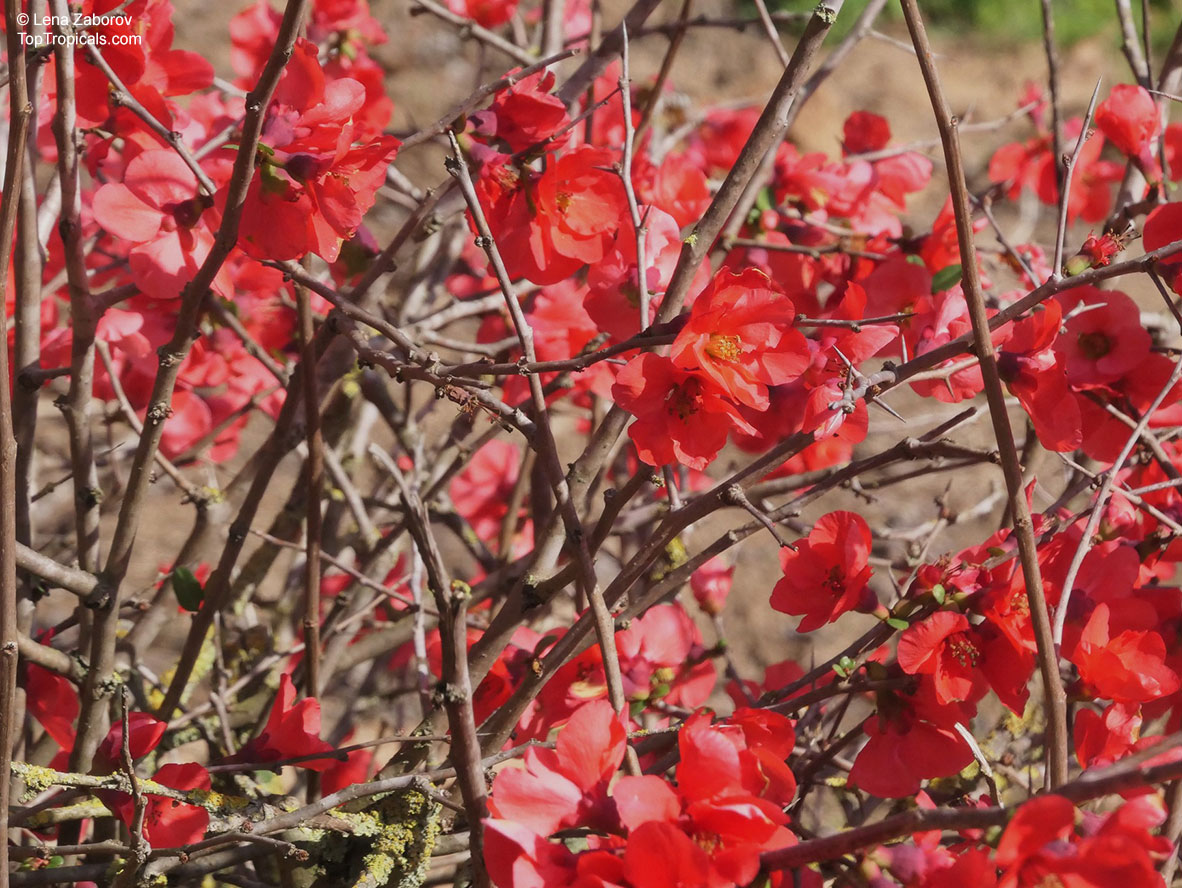
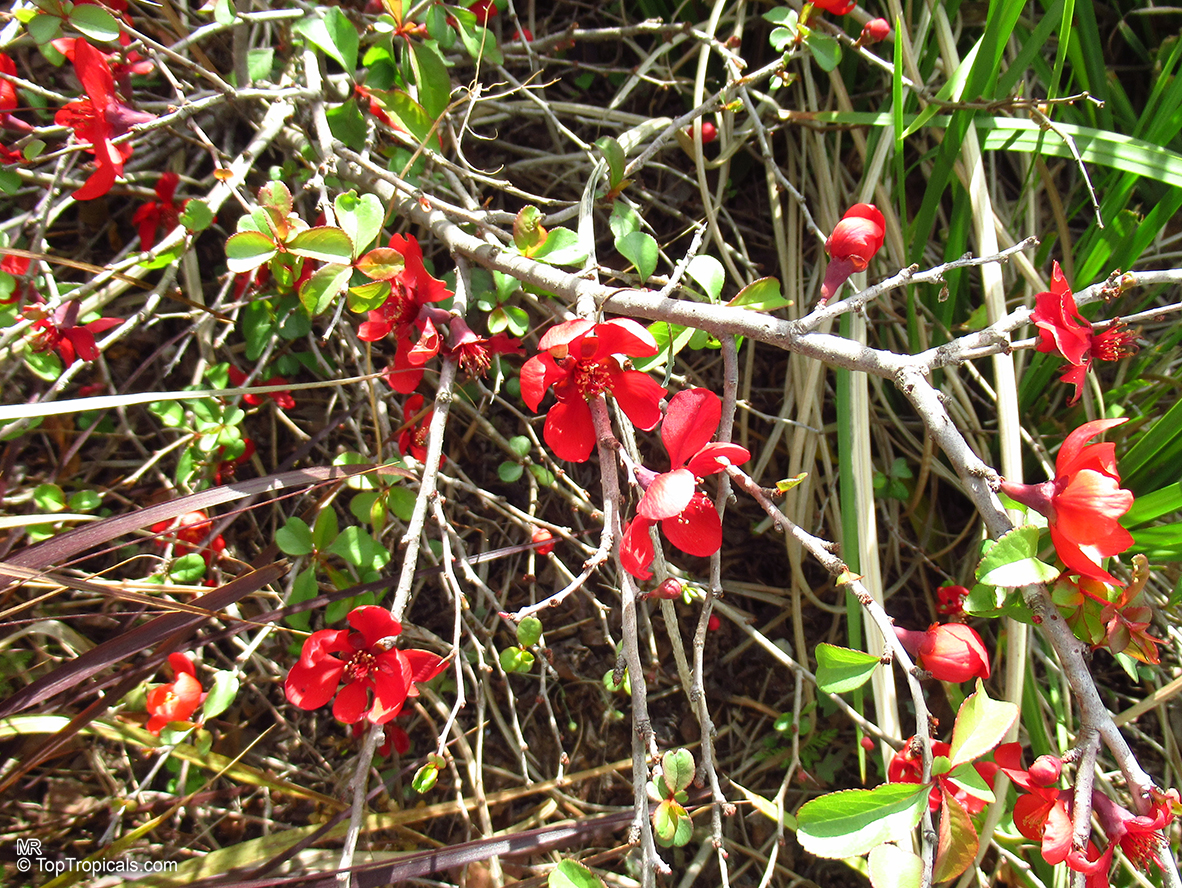
Botanical name: Chaenomeles sp.
Common names: Flowering quince, Dwarf quince
Family: Rosaceae
Origin: eastern Asia


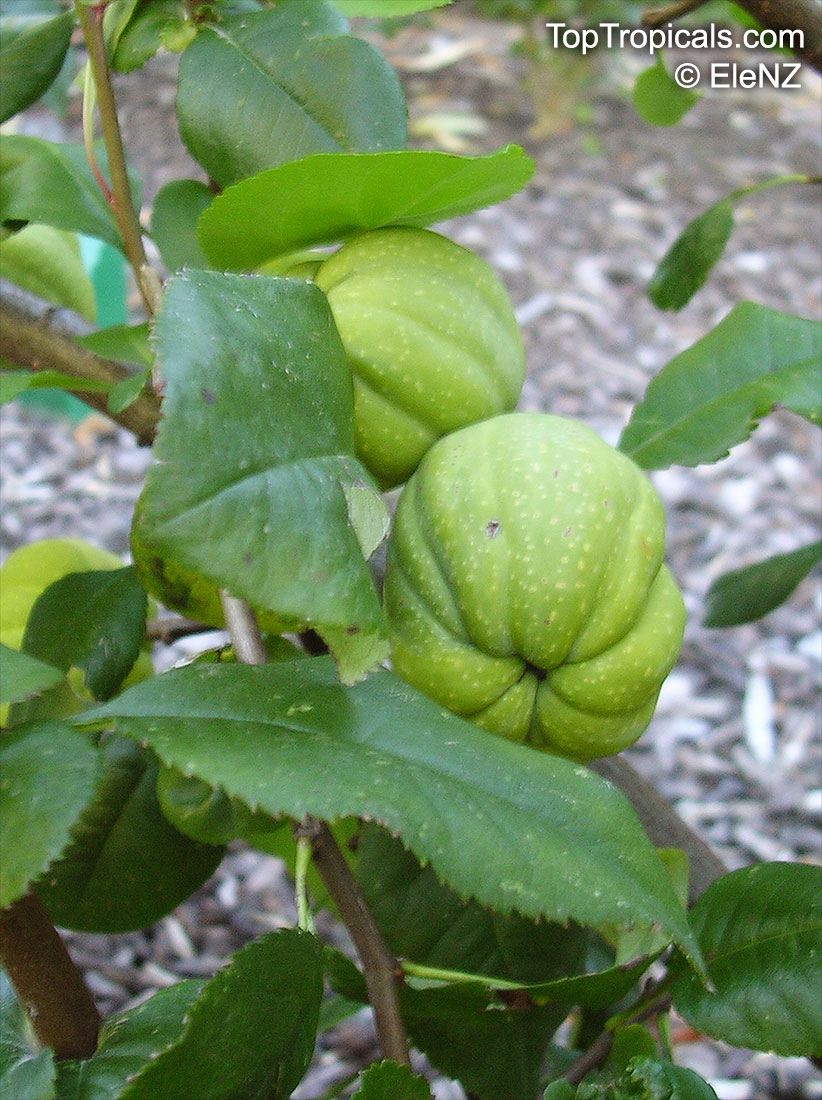
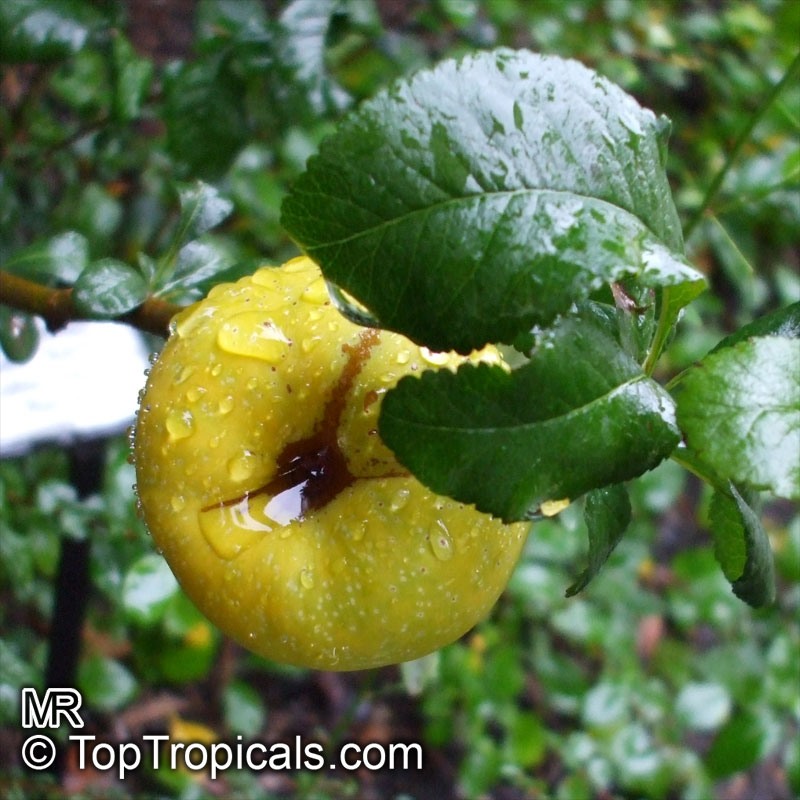
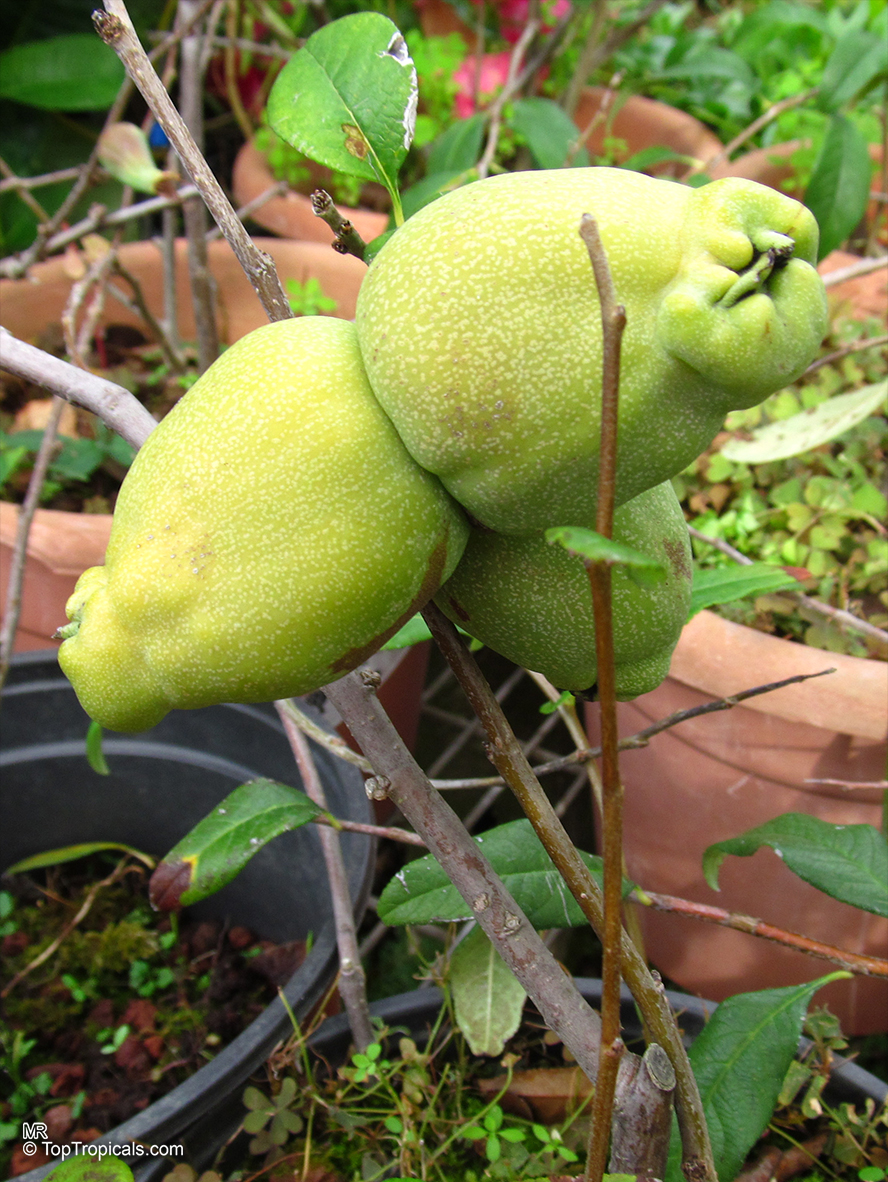
This group consists of three hardy, deciduous shrubs from eastern Asia, commonly known as Flowering Quinces. These thorny shrubs are suitable for growing against walls, in borders and standing alone. Flowering Quinces are easily grown and are valued for their saucer-shaped blossoms, which may be red, pink, orange, or white and are followed by large, fragrant fruits. Flowering Quinces can be grown in shady areas, though they flower best in sunny positions. They can be grown in well-drained, friable soil.
The fruit is apple-shaped and about 4cm in diameter.
Very harsh and acid raw but fragrant when cooked, imparting a strong pleasant flavor to jams and jellies.
The rich aromatic juice, as tart as a lemon, is squeezed and used for culinary purposes.

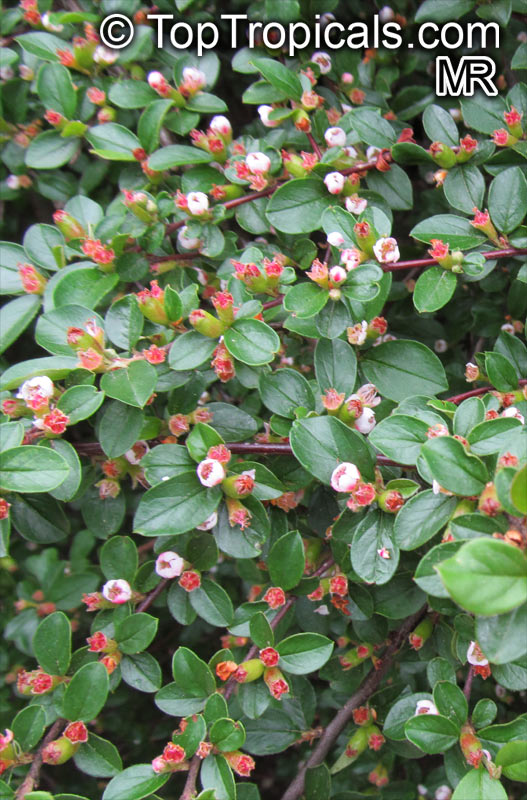
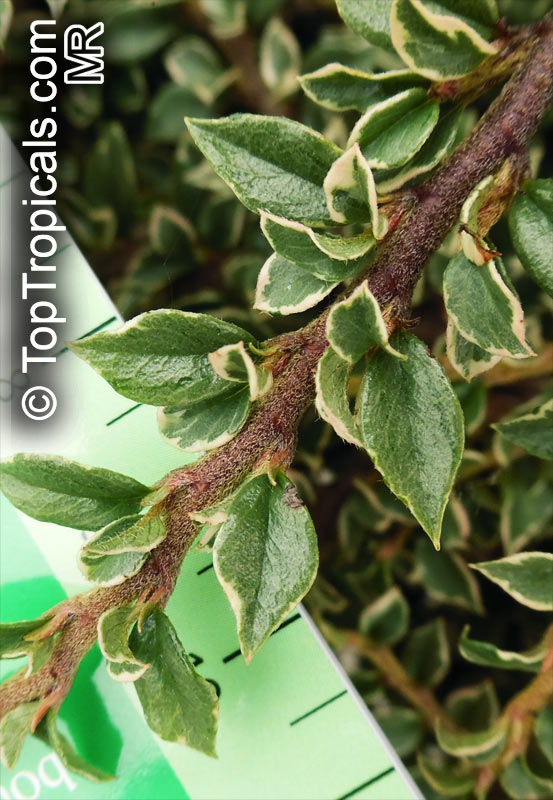
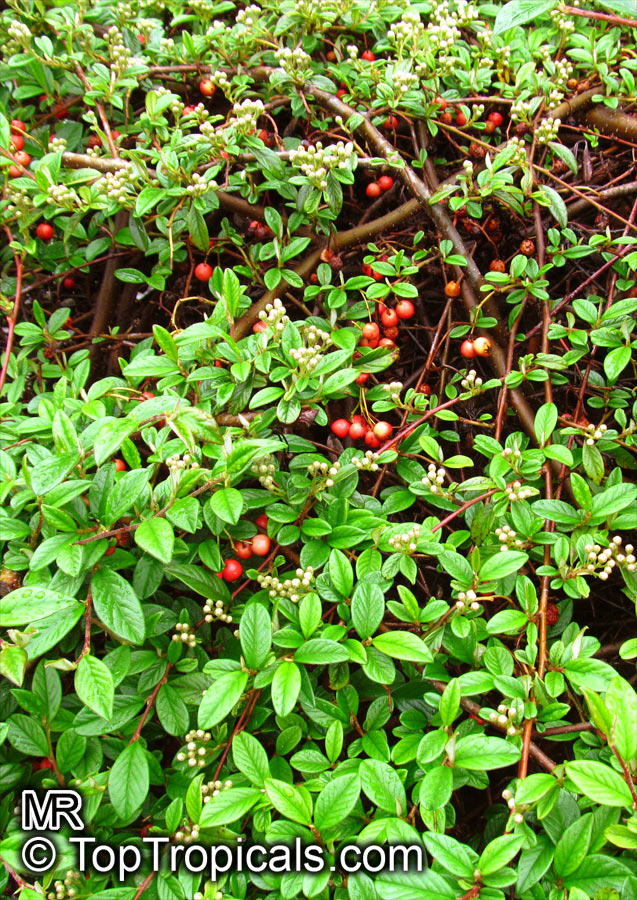
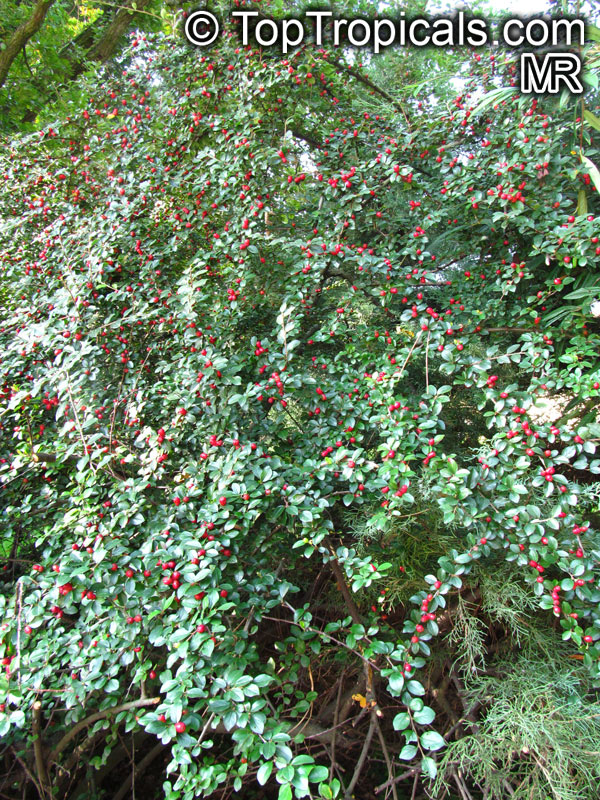
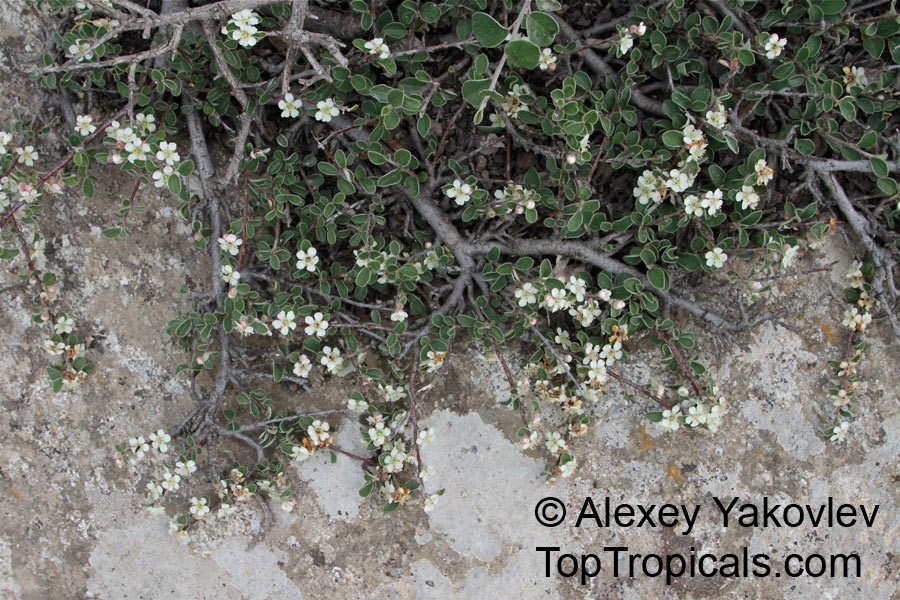
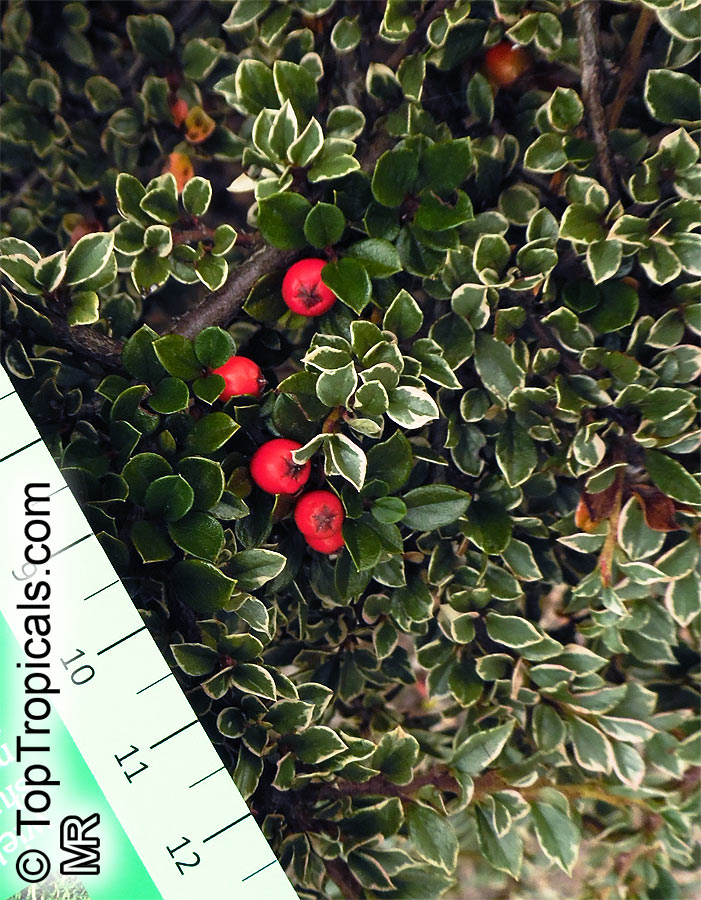
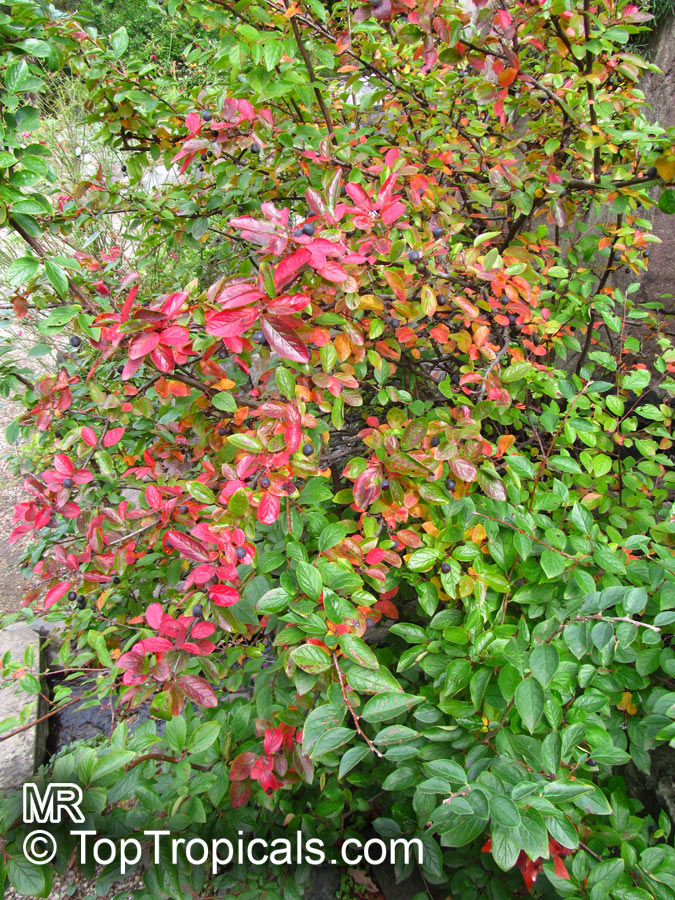
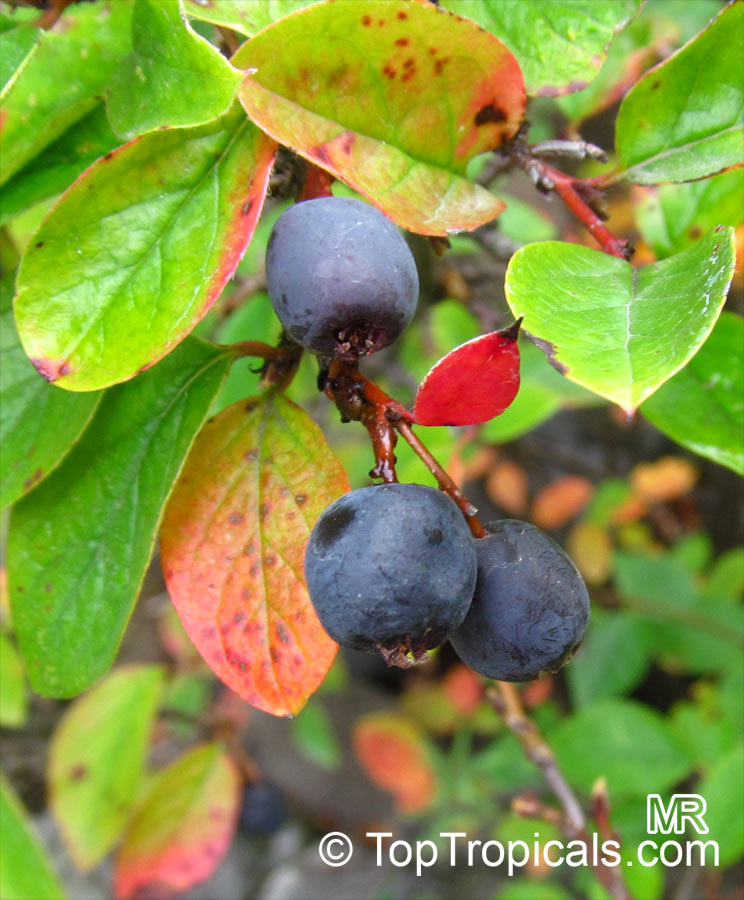
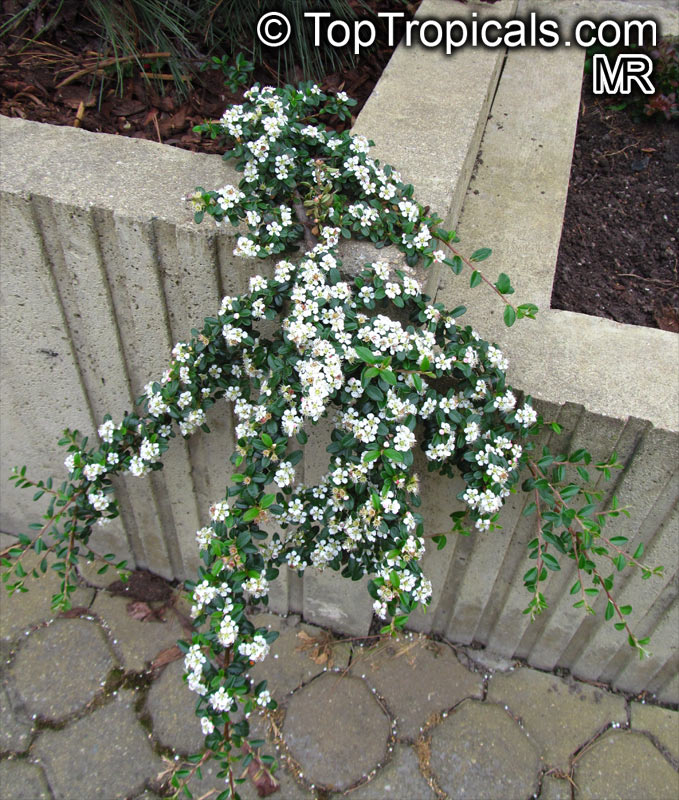
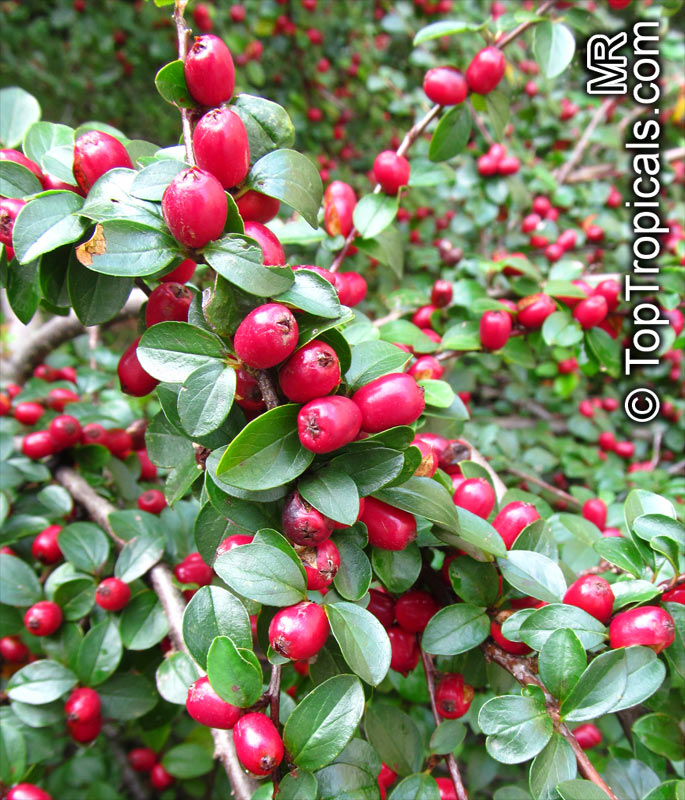
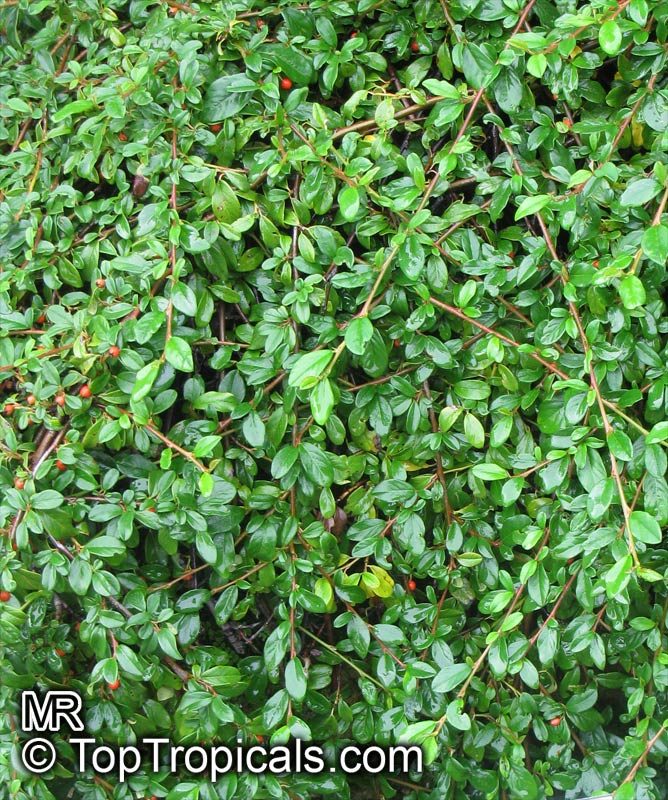
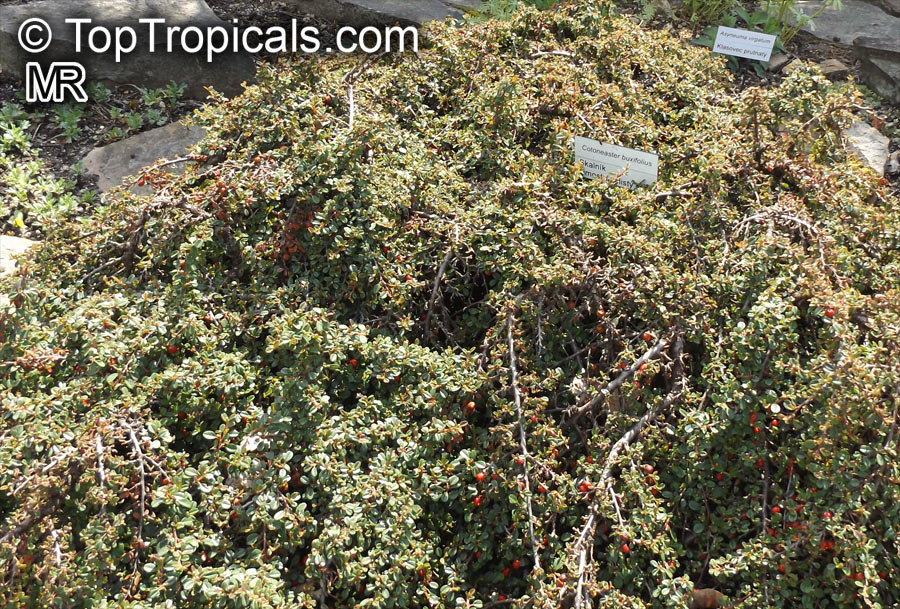
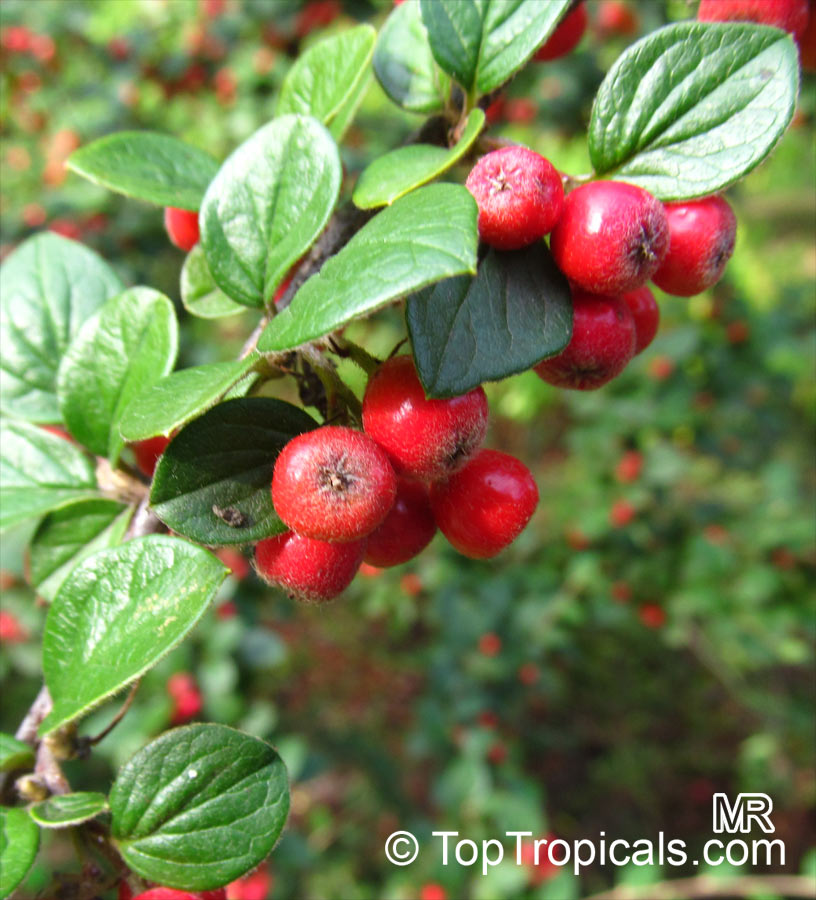
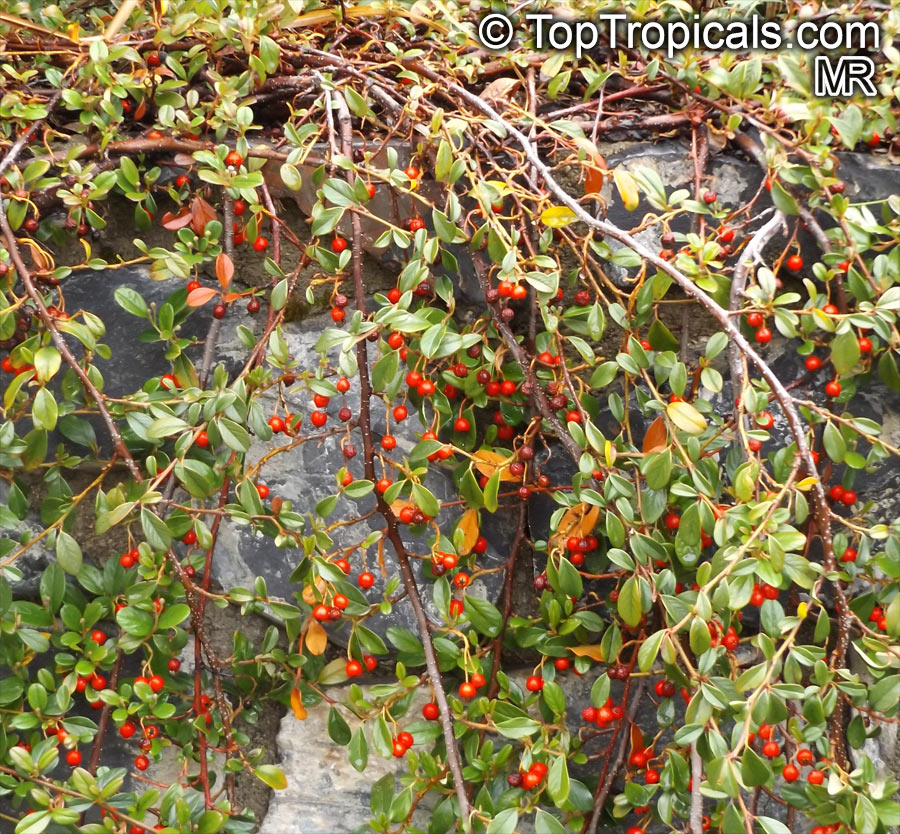
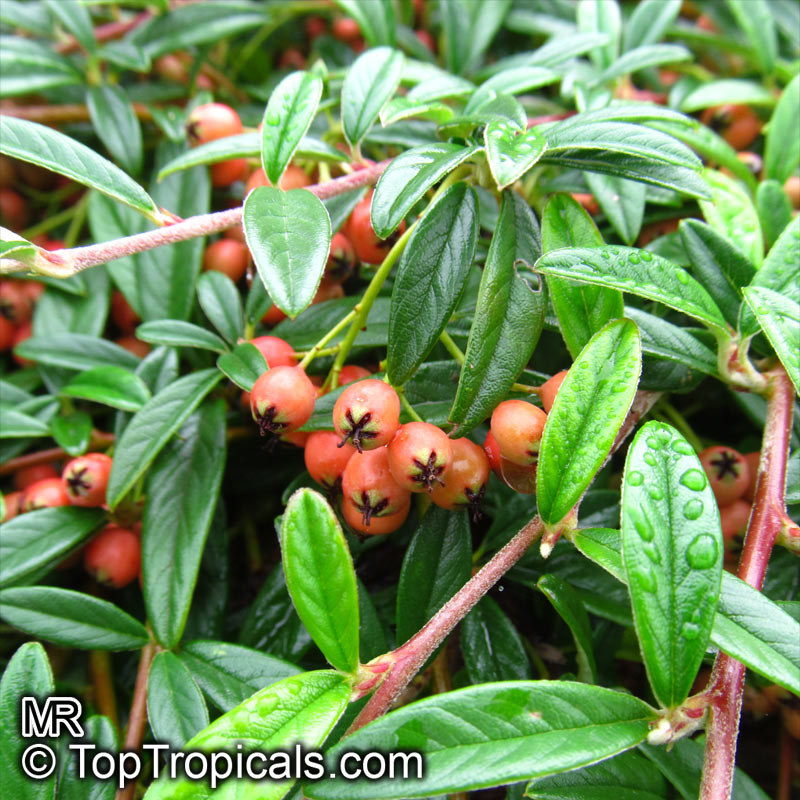
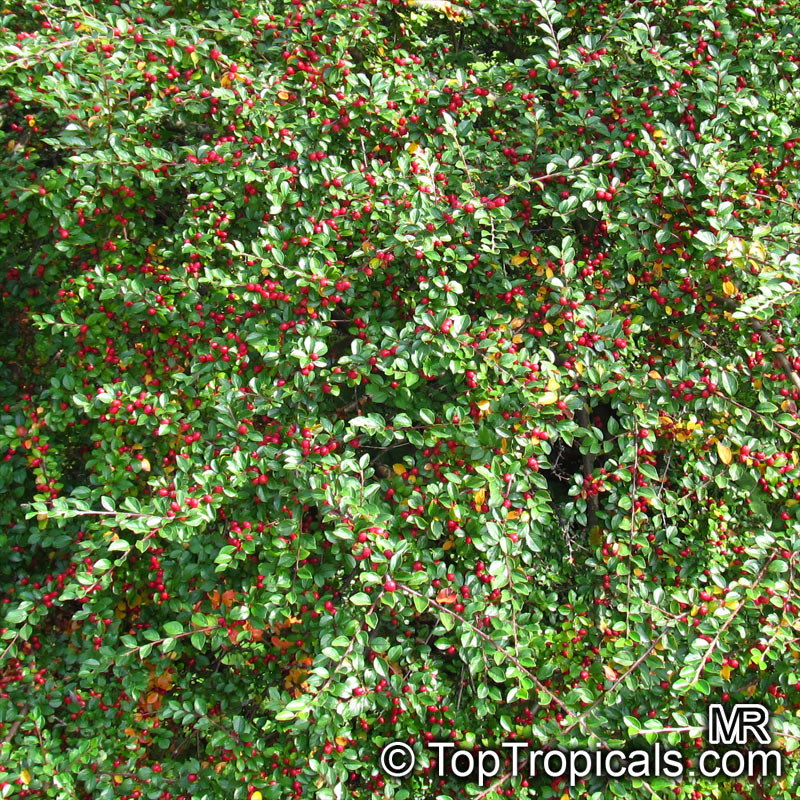
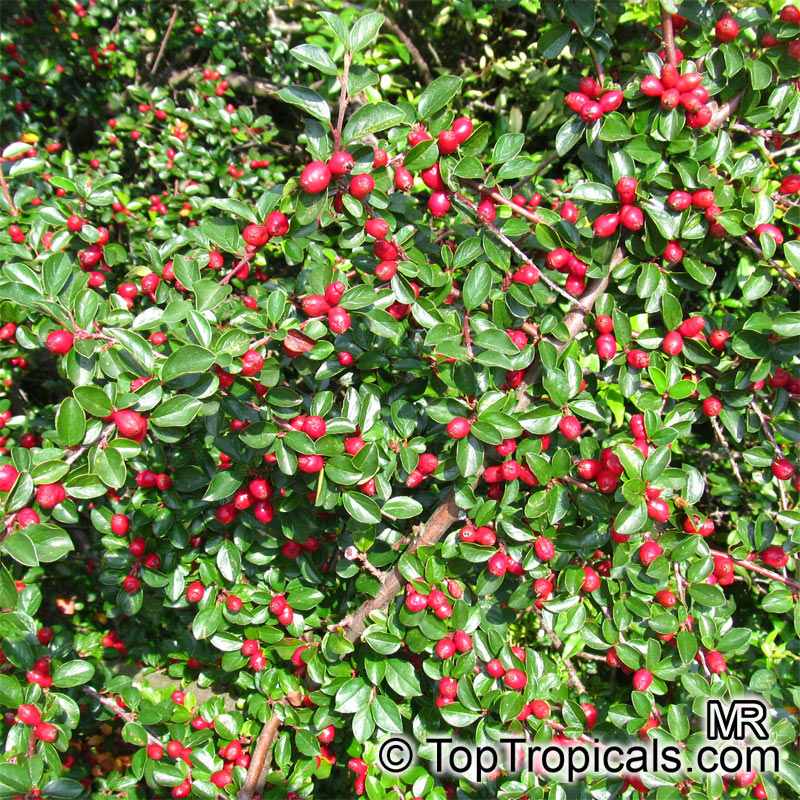
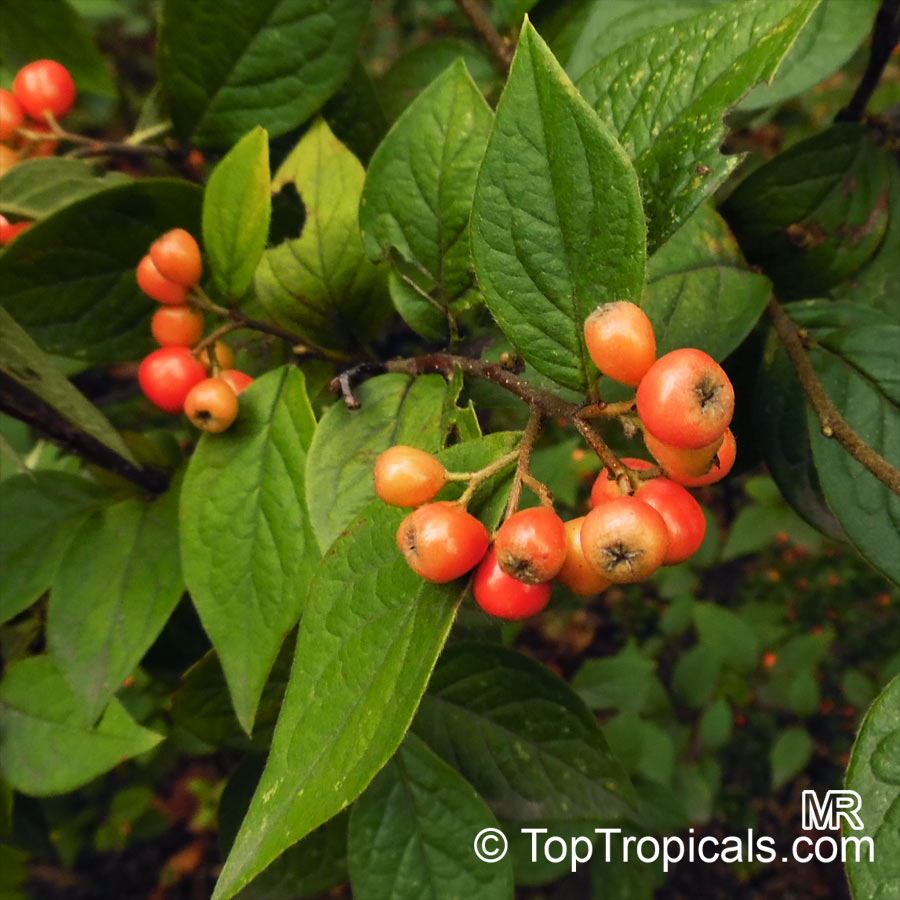
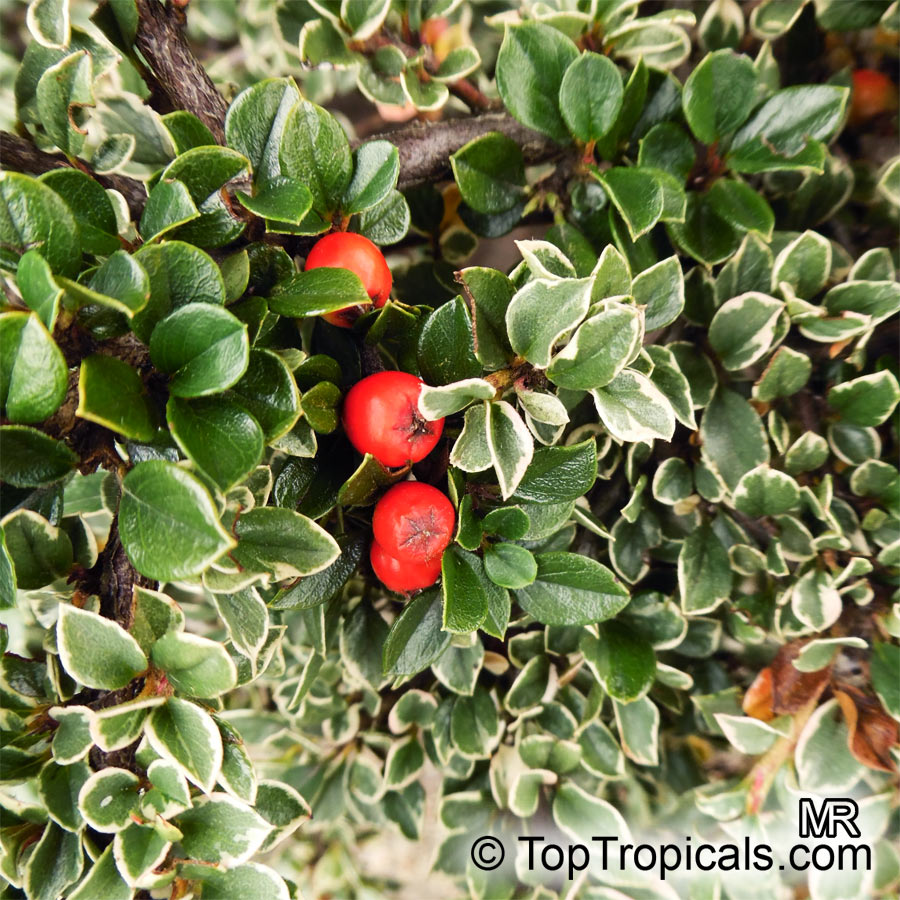
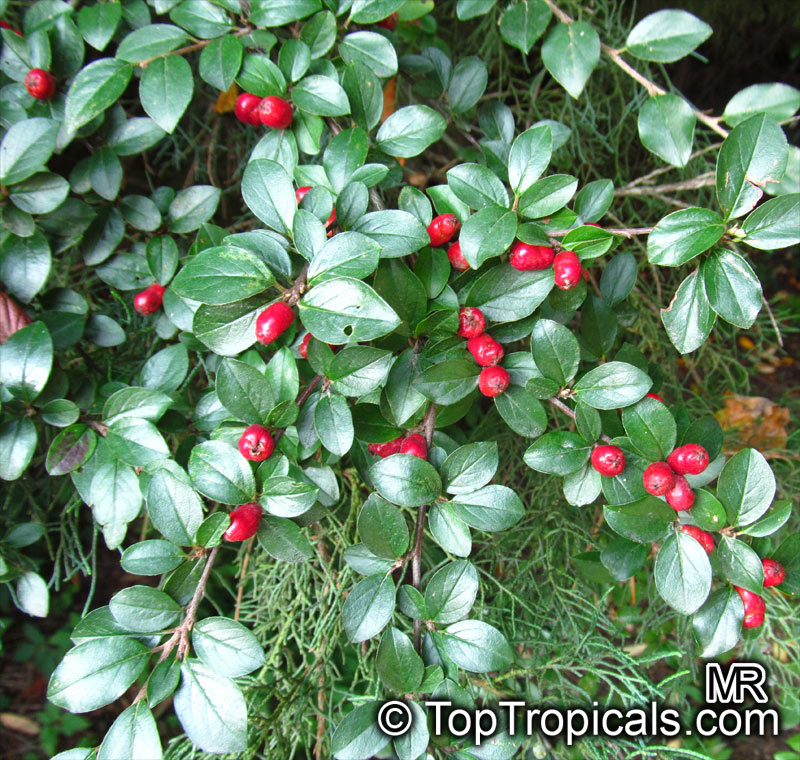
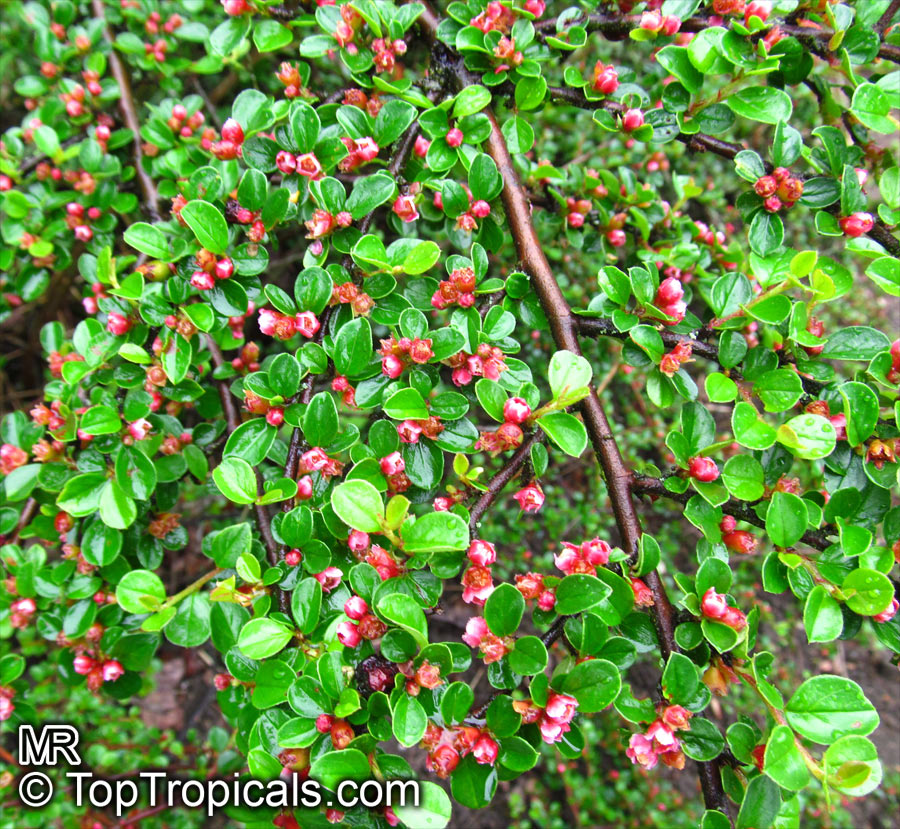
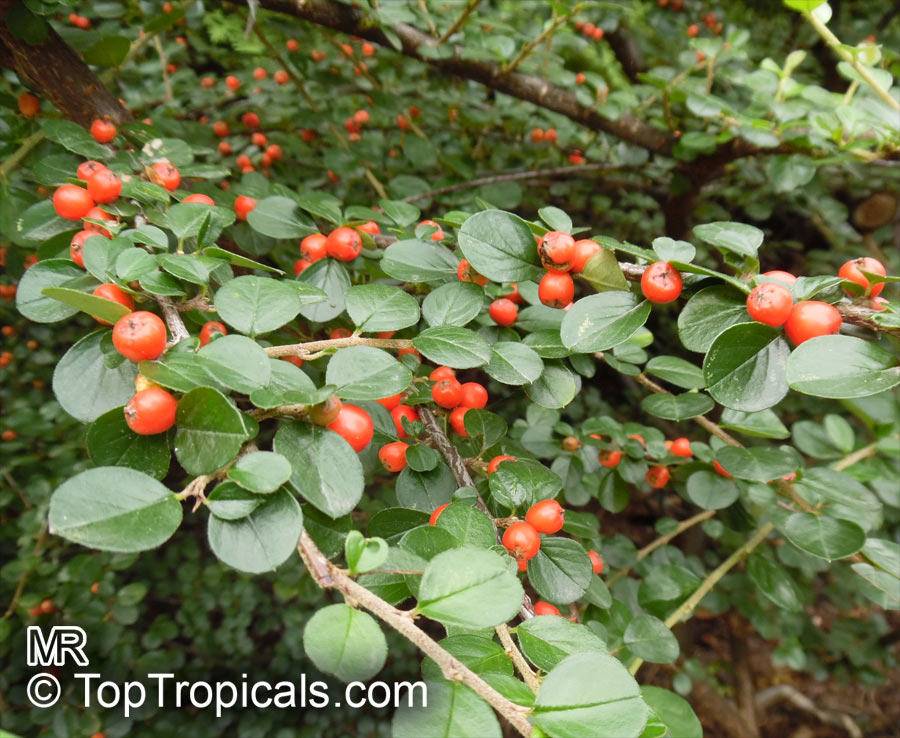
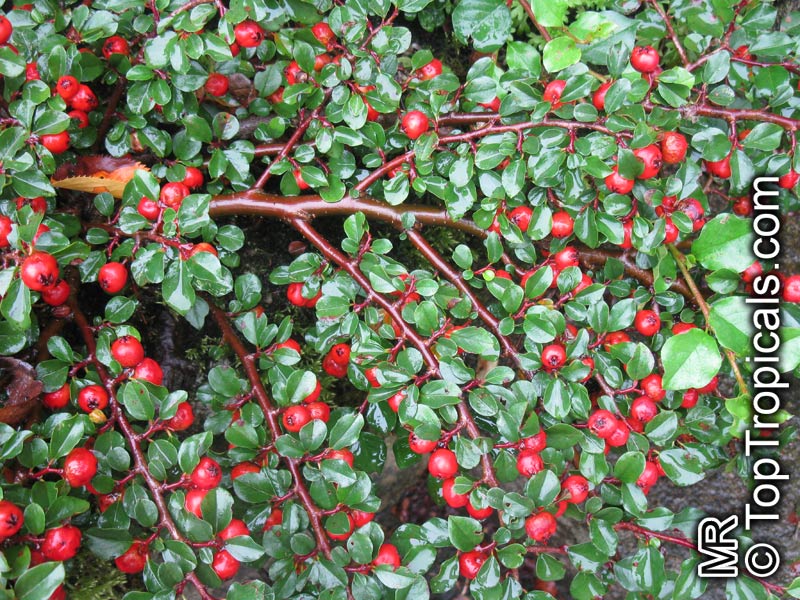
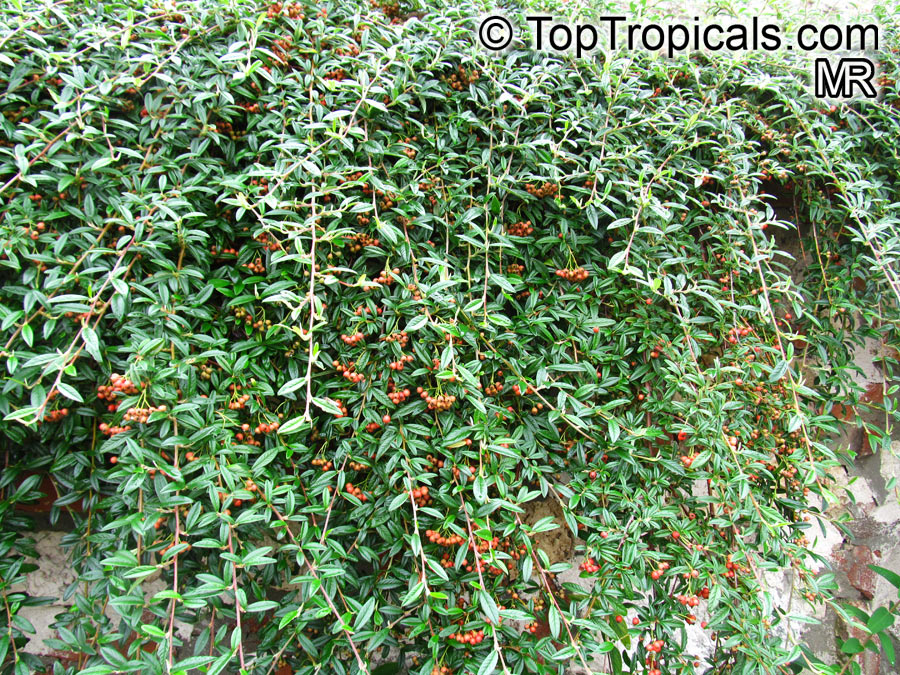
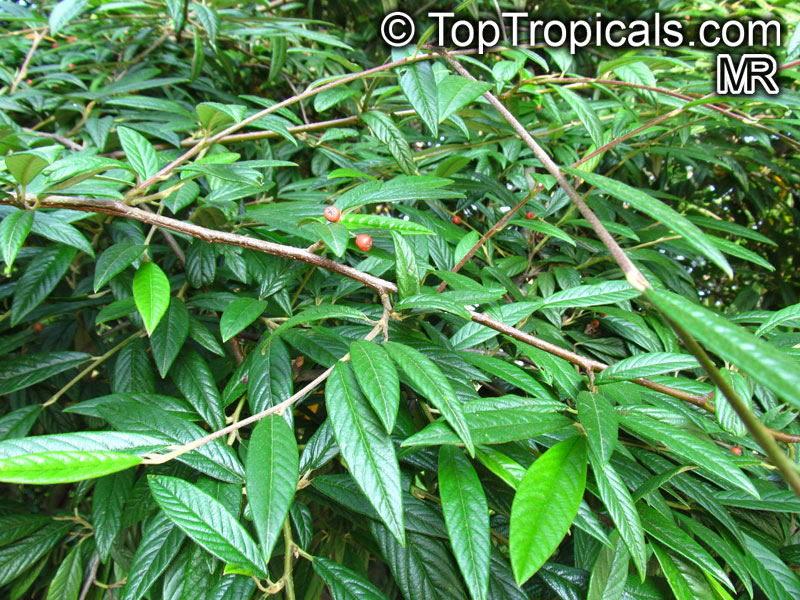
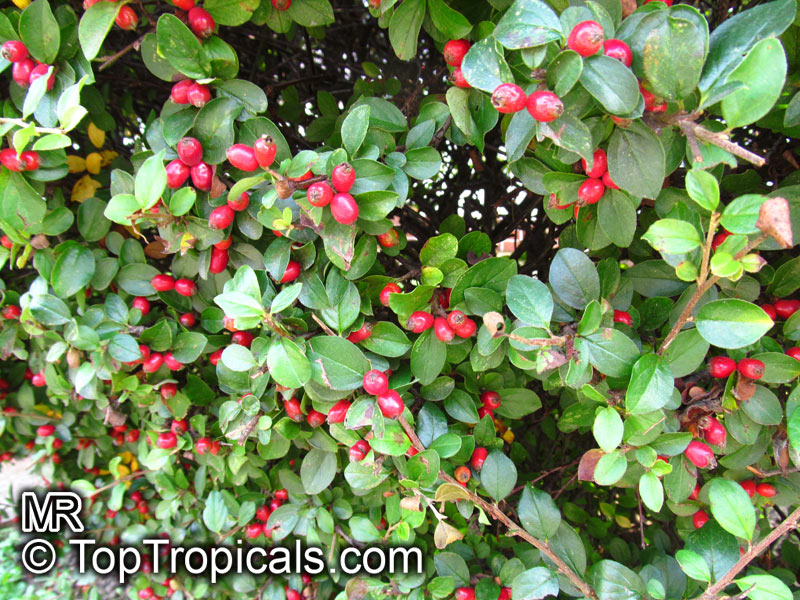
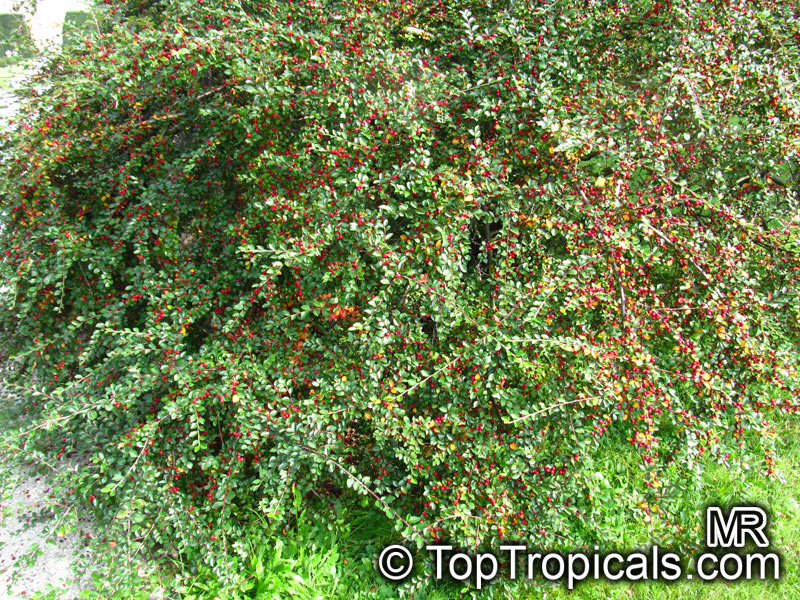
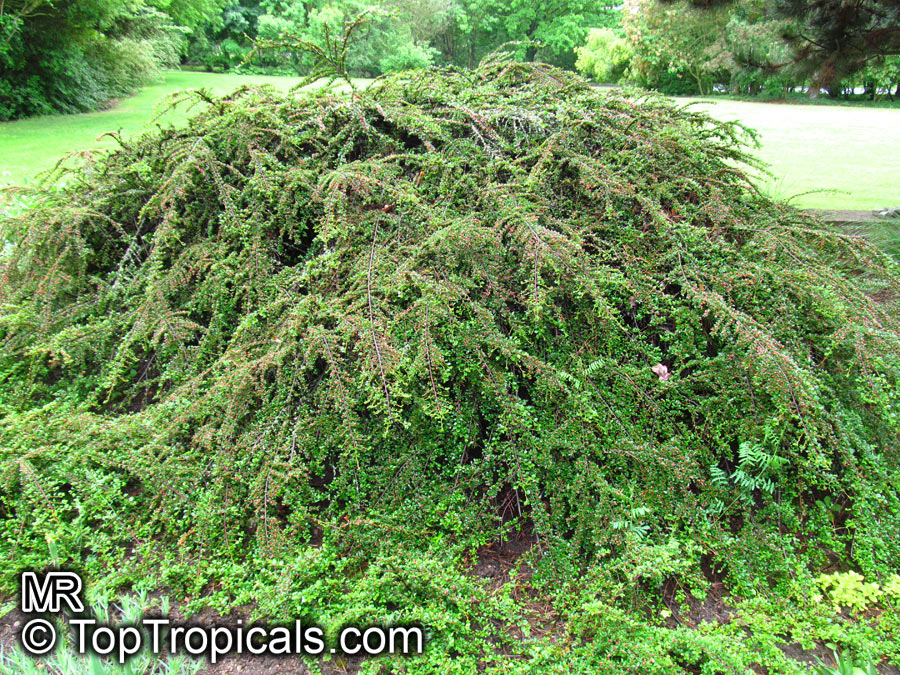
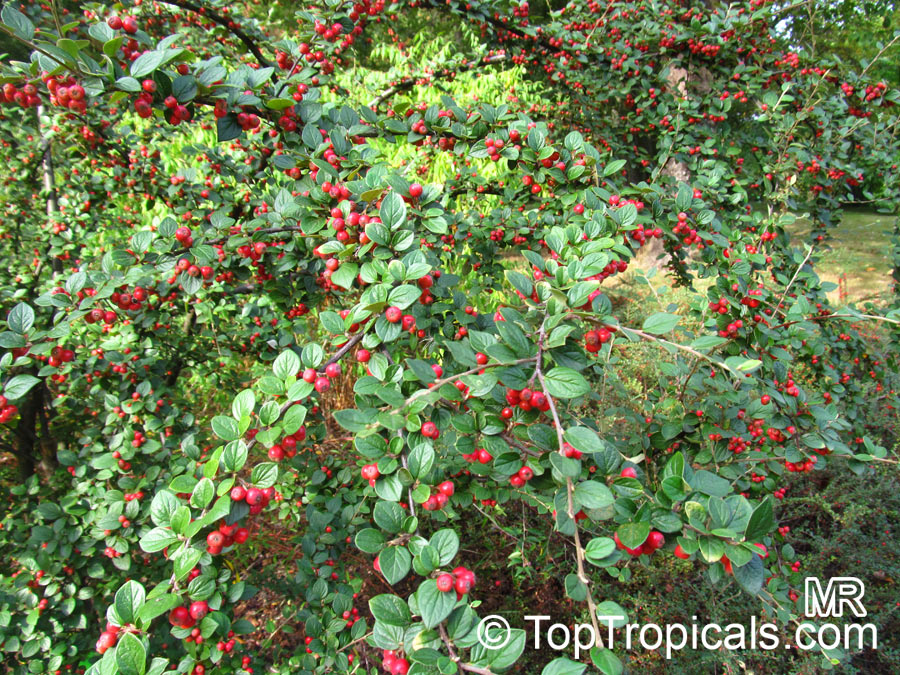
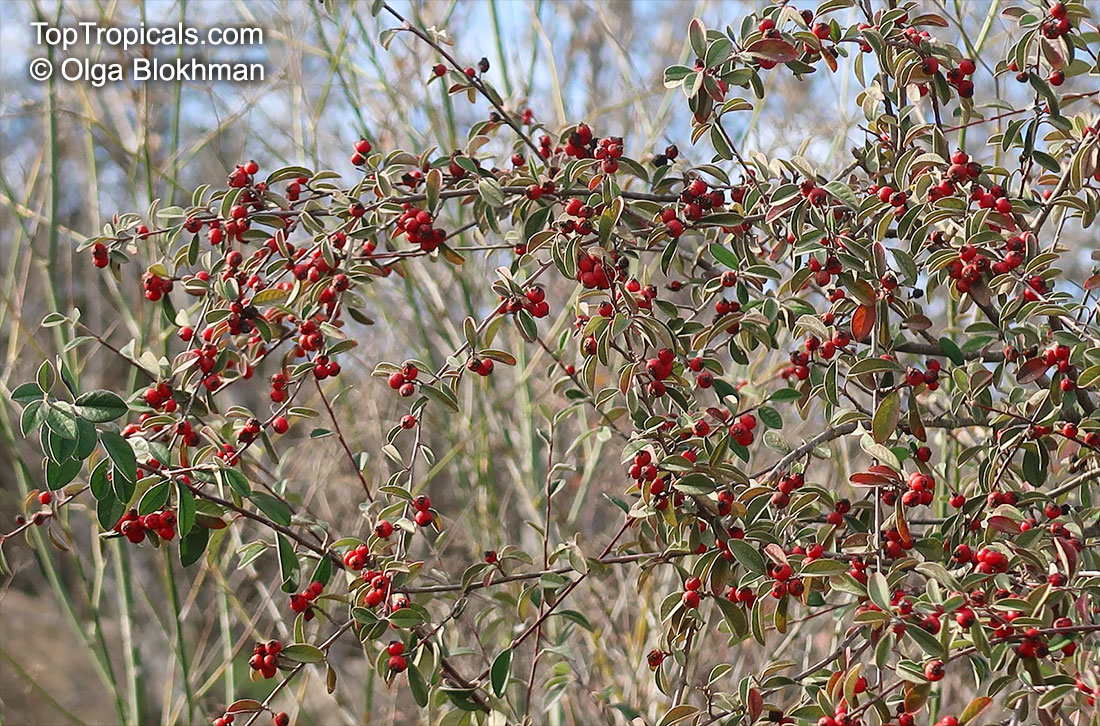
Botanical name: Cotoneaster sp.
Common name: Cotoneaster
Family: Rosaceae

Cotoneasters are very popular garden shrubs, grown for their attractive habit and decorative fruit.
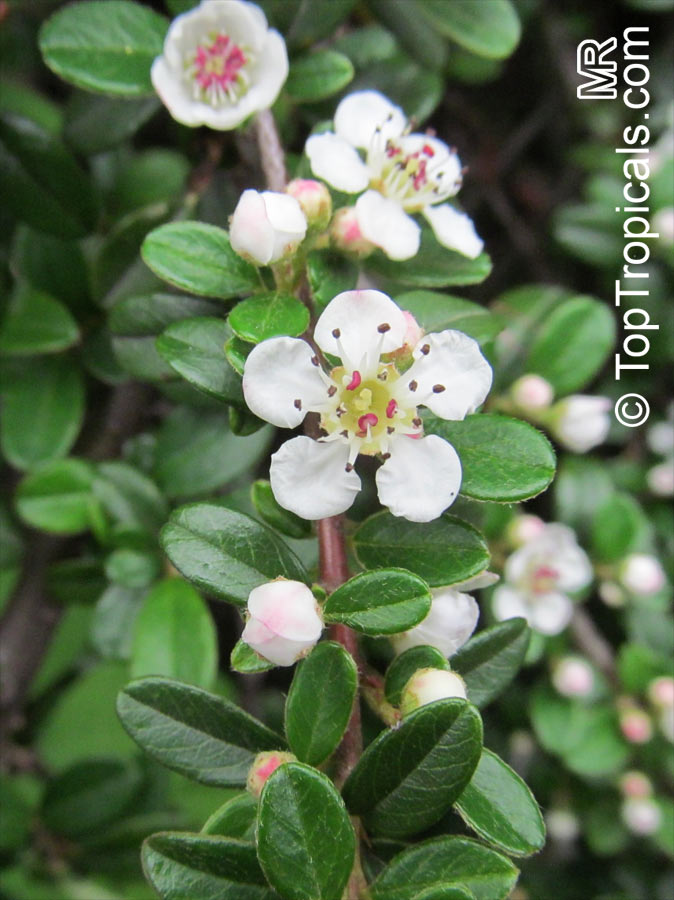
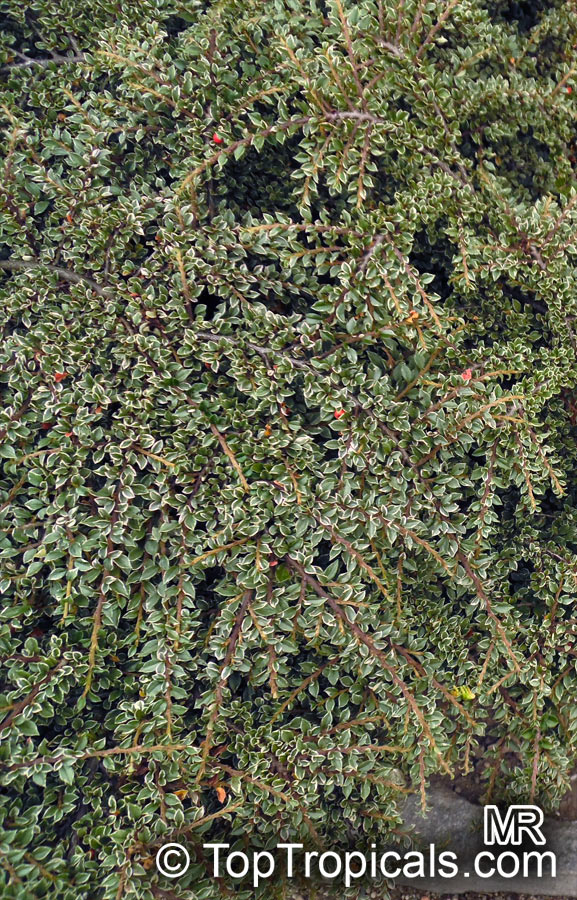
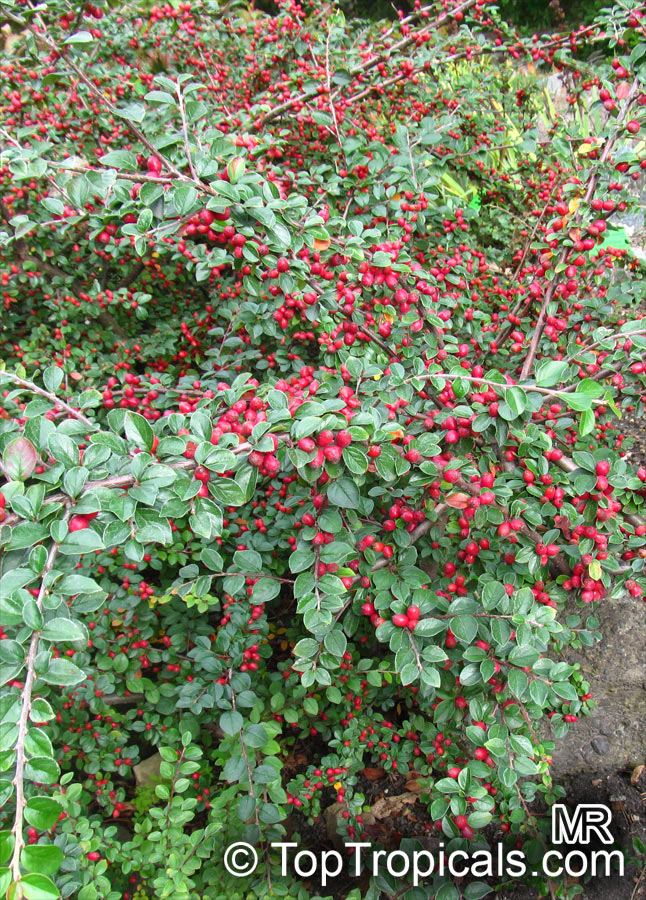
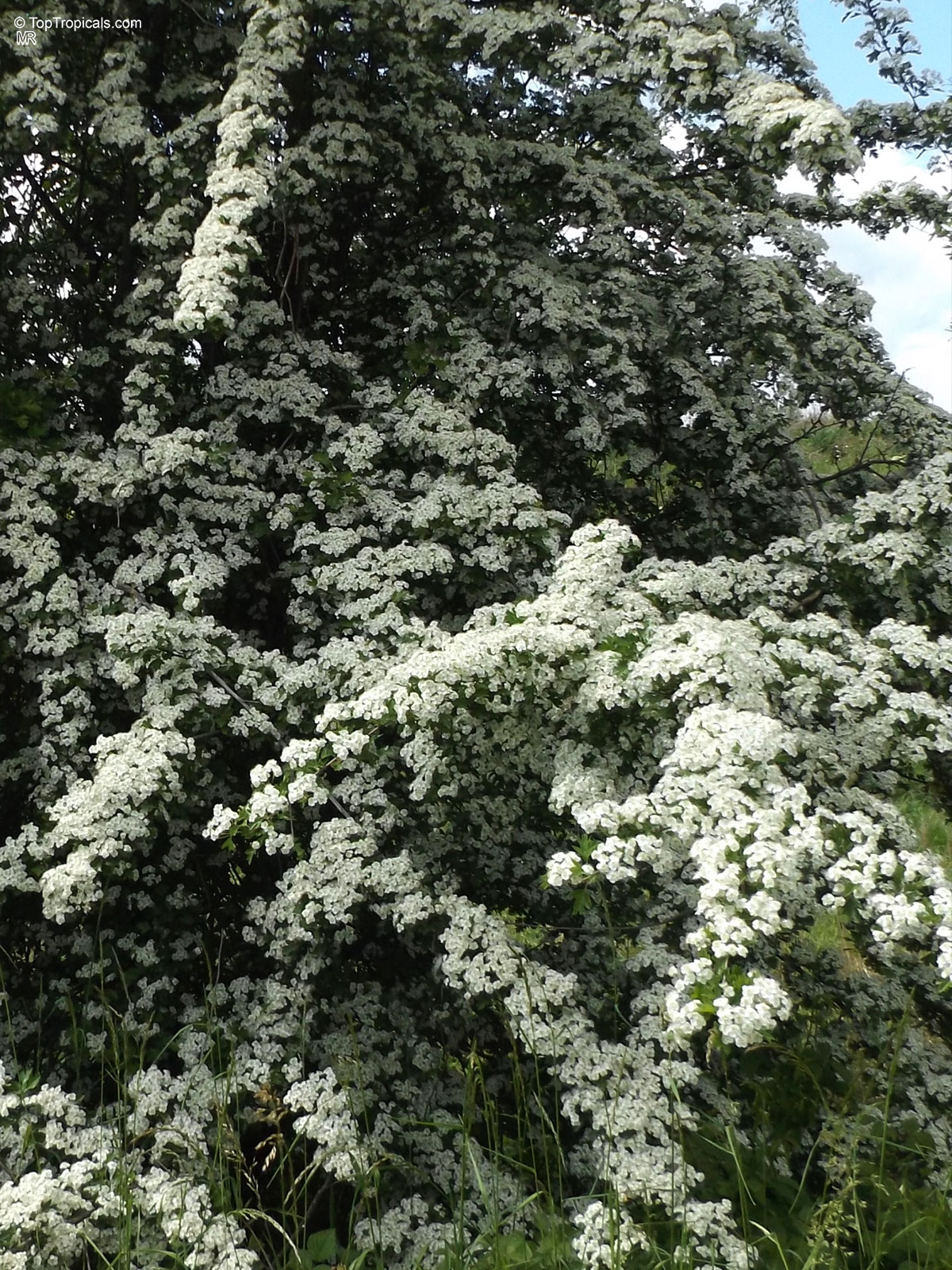
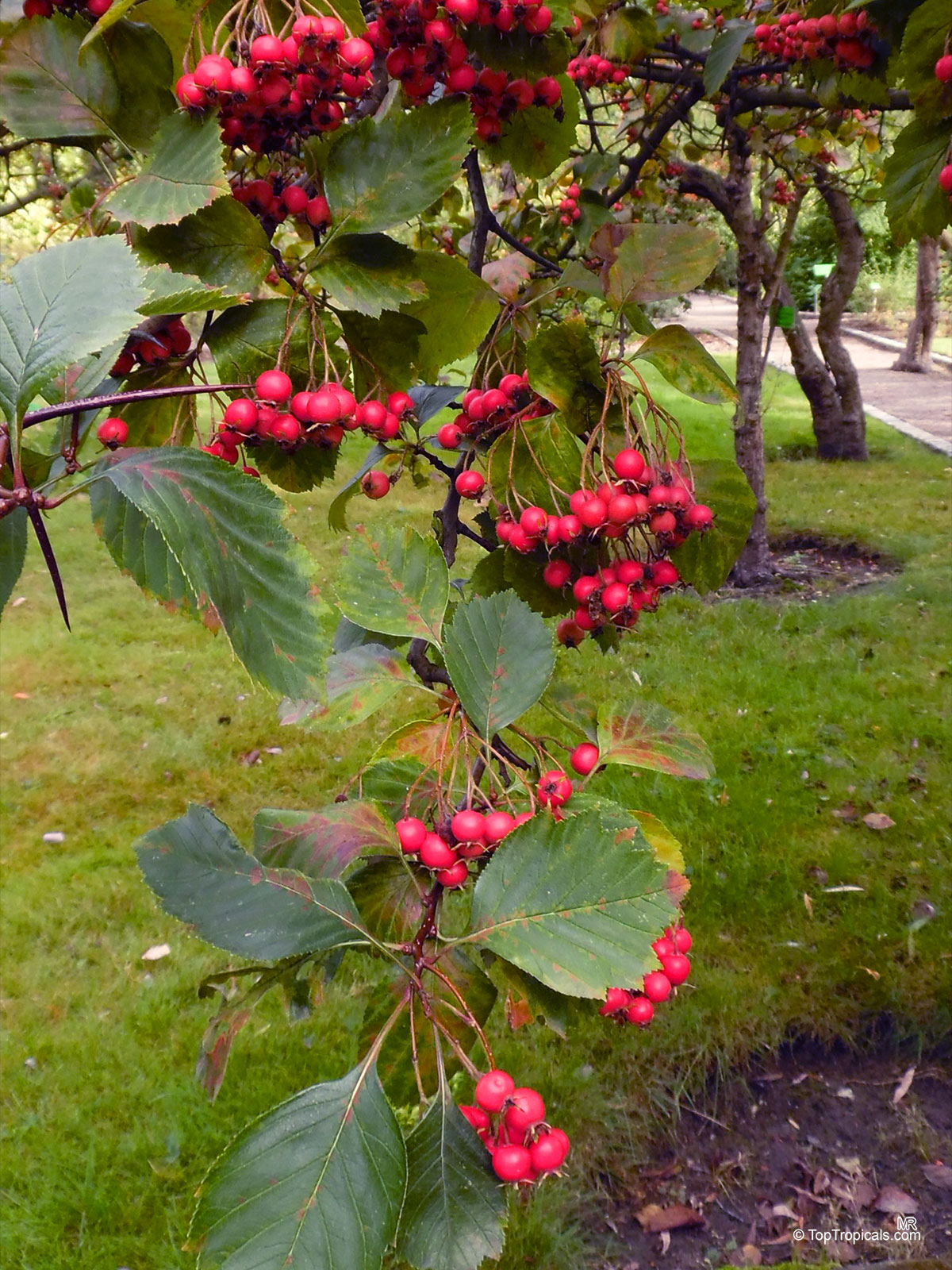
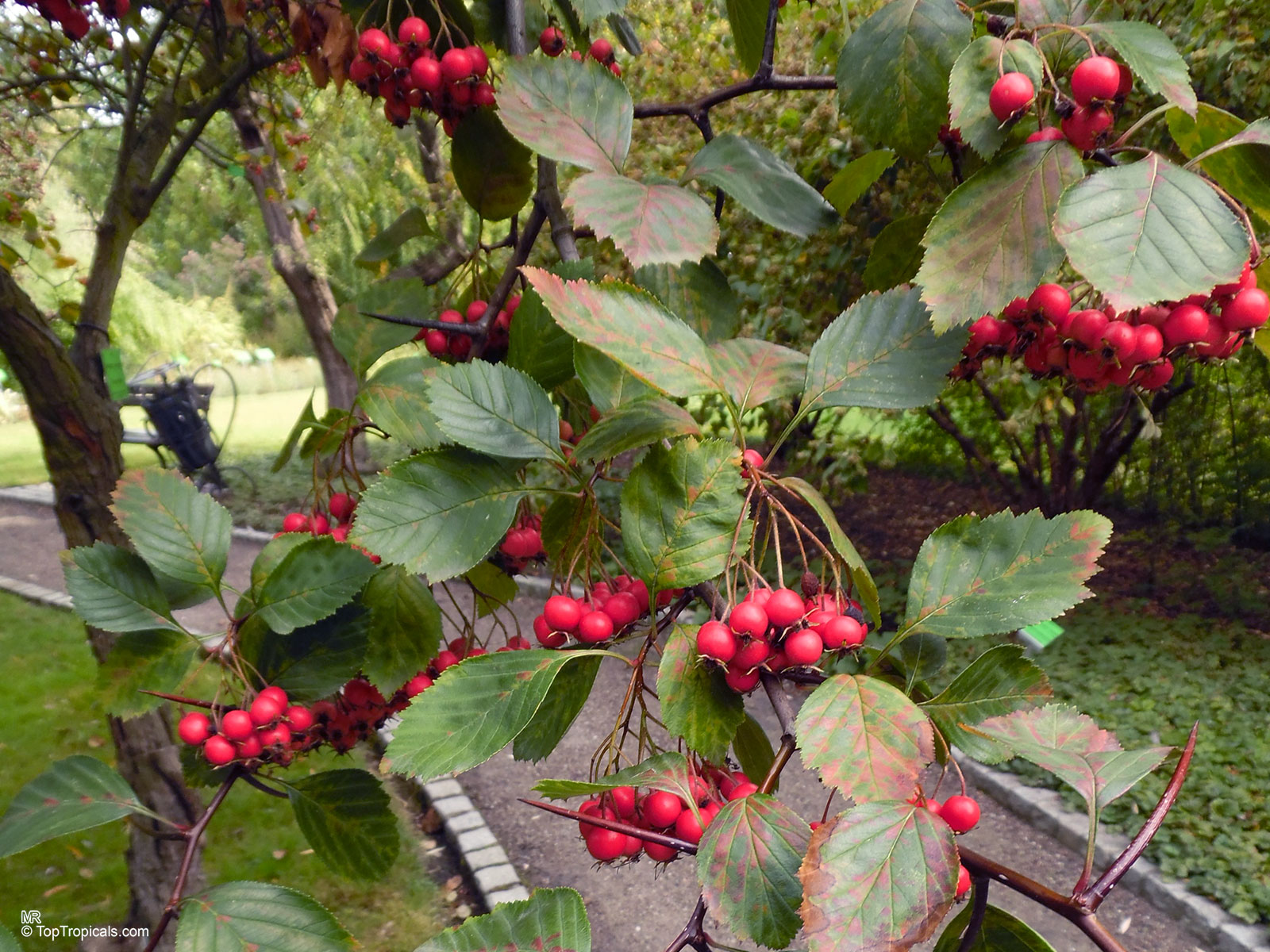
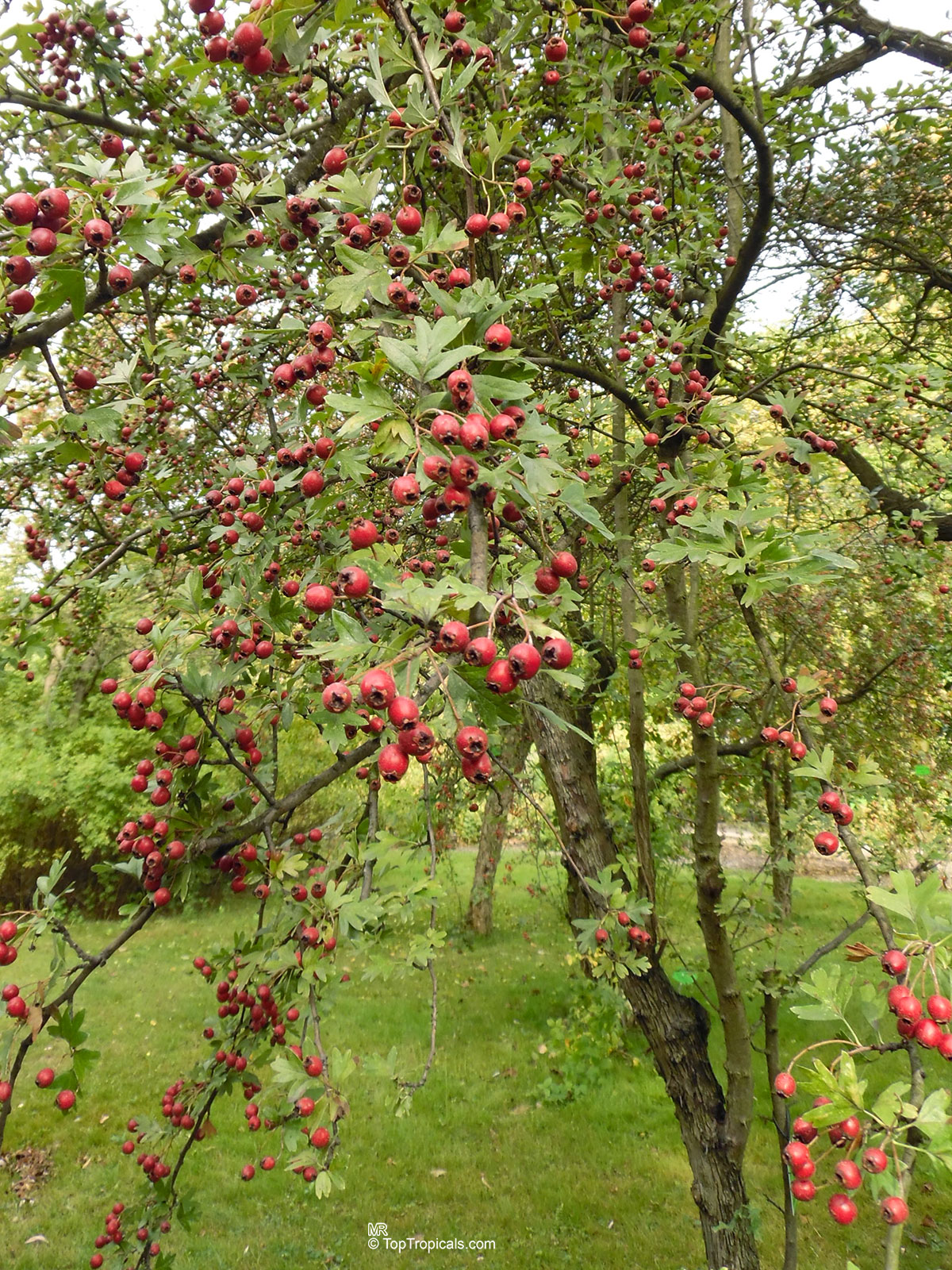
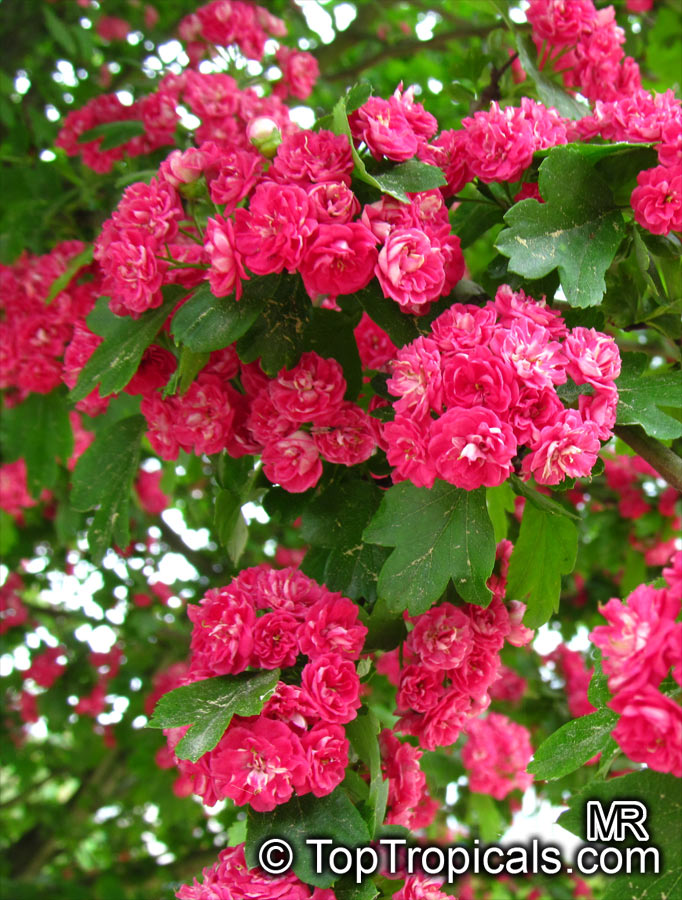
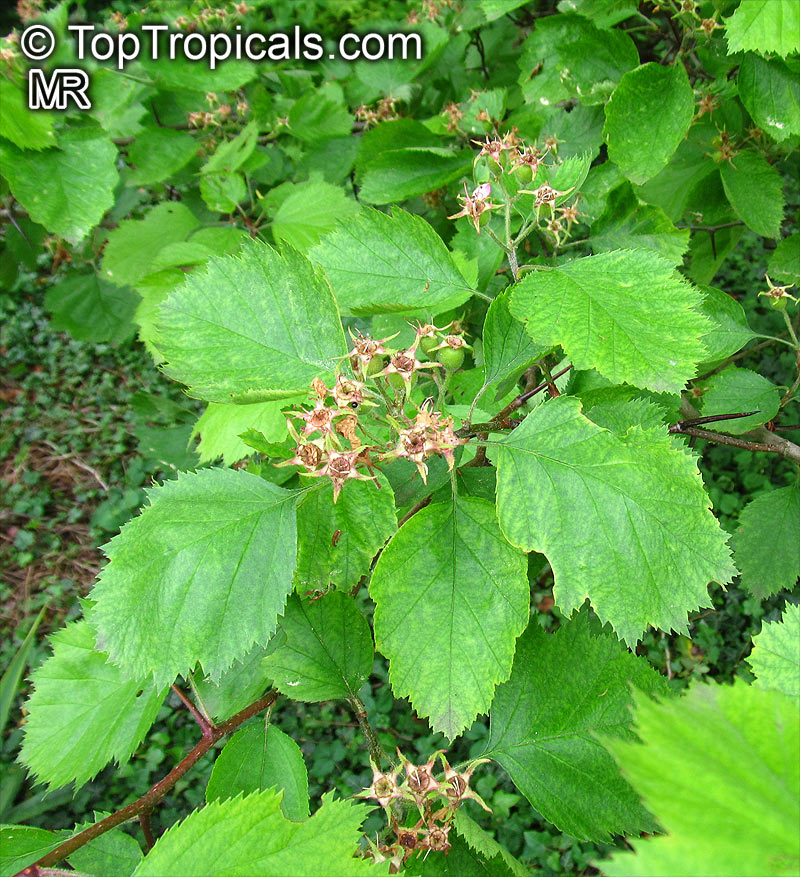
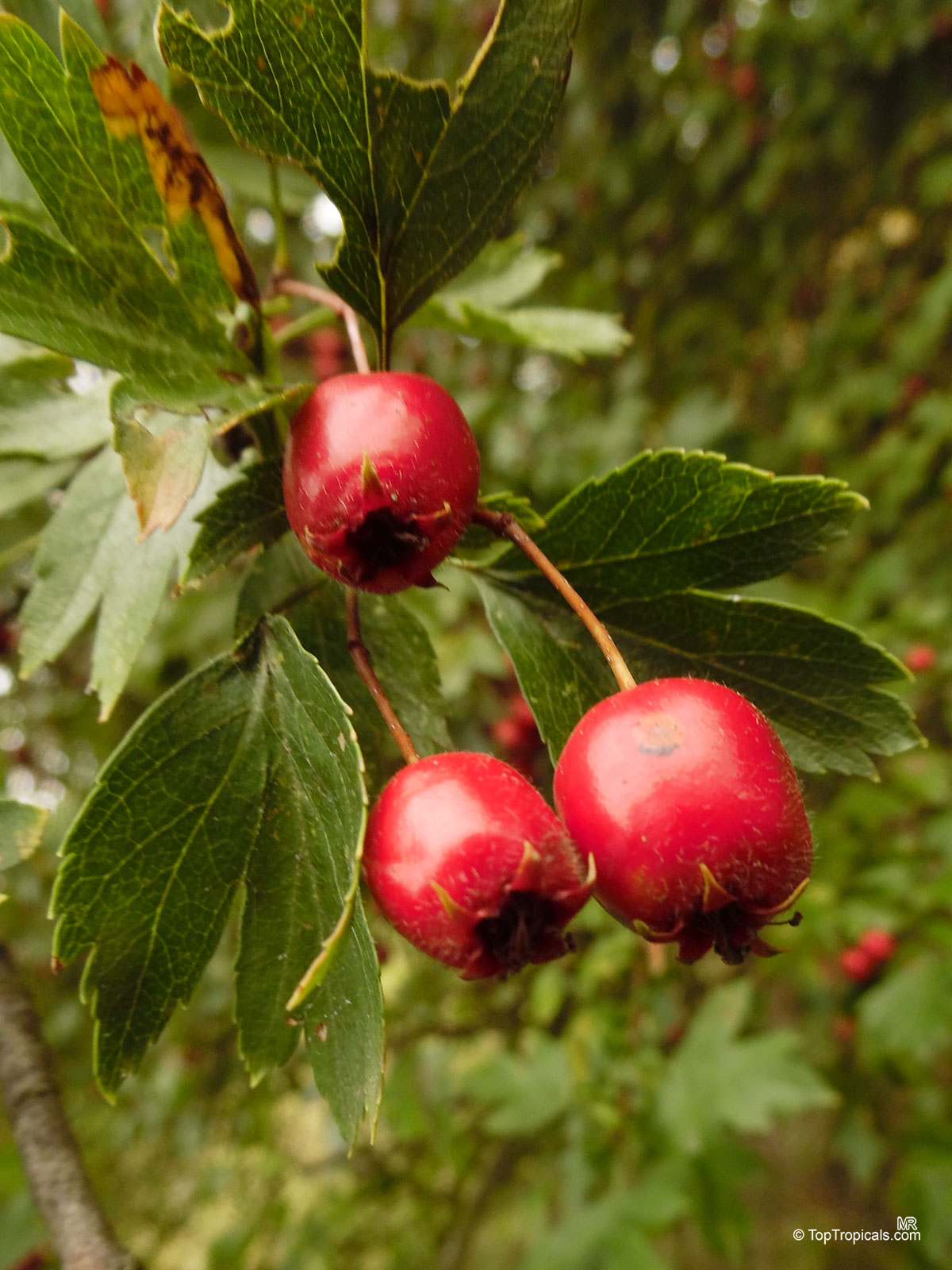
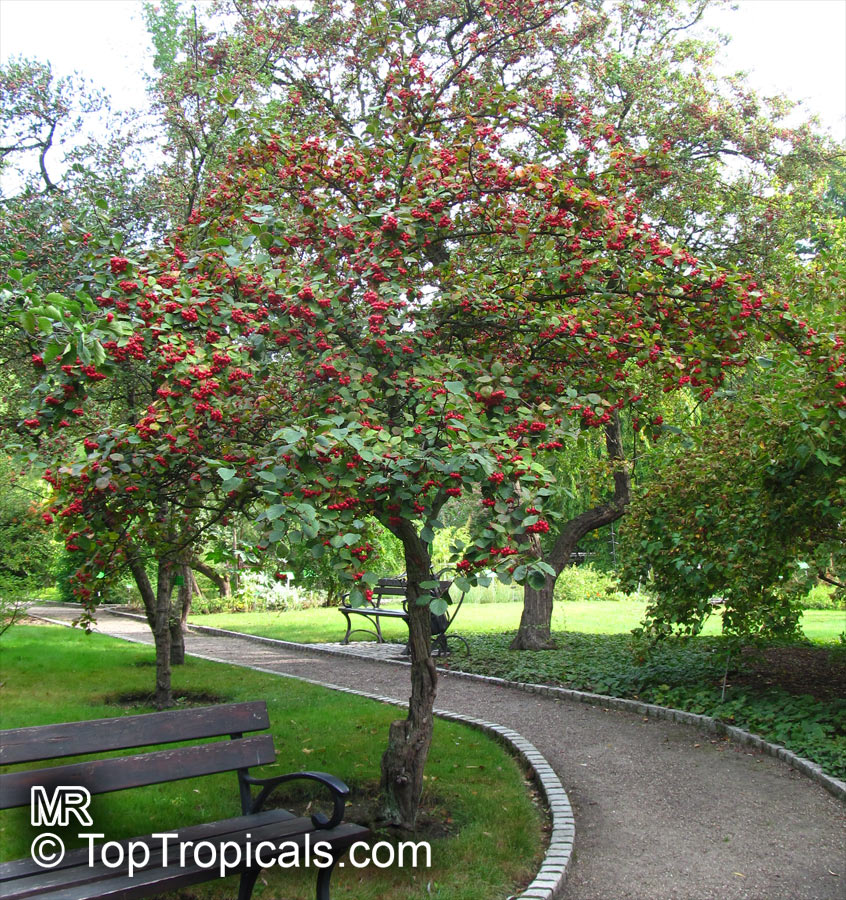
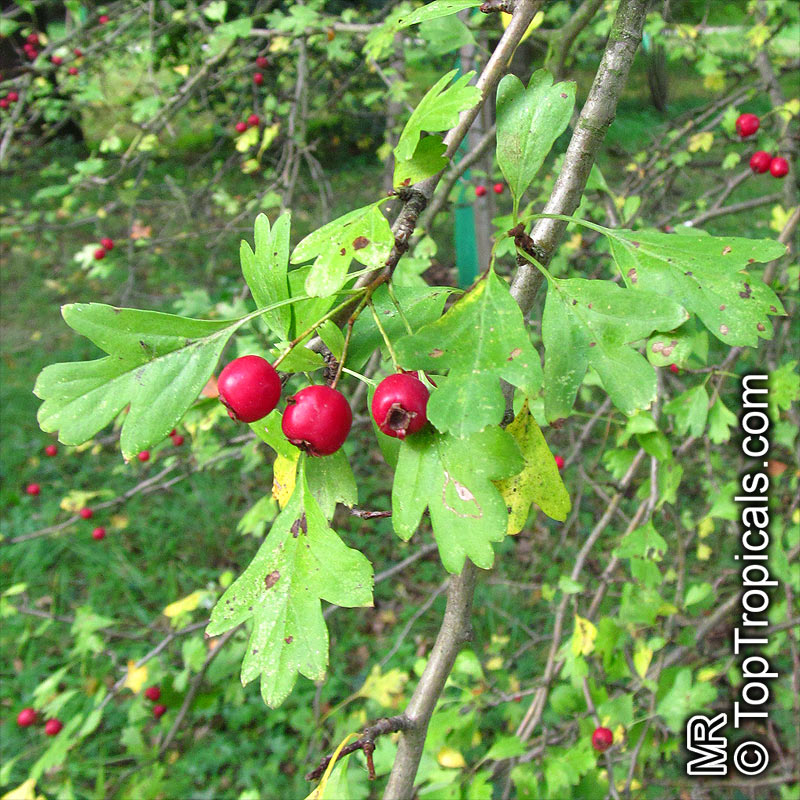
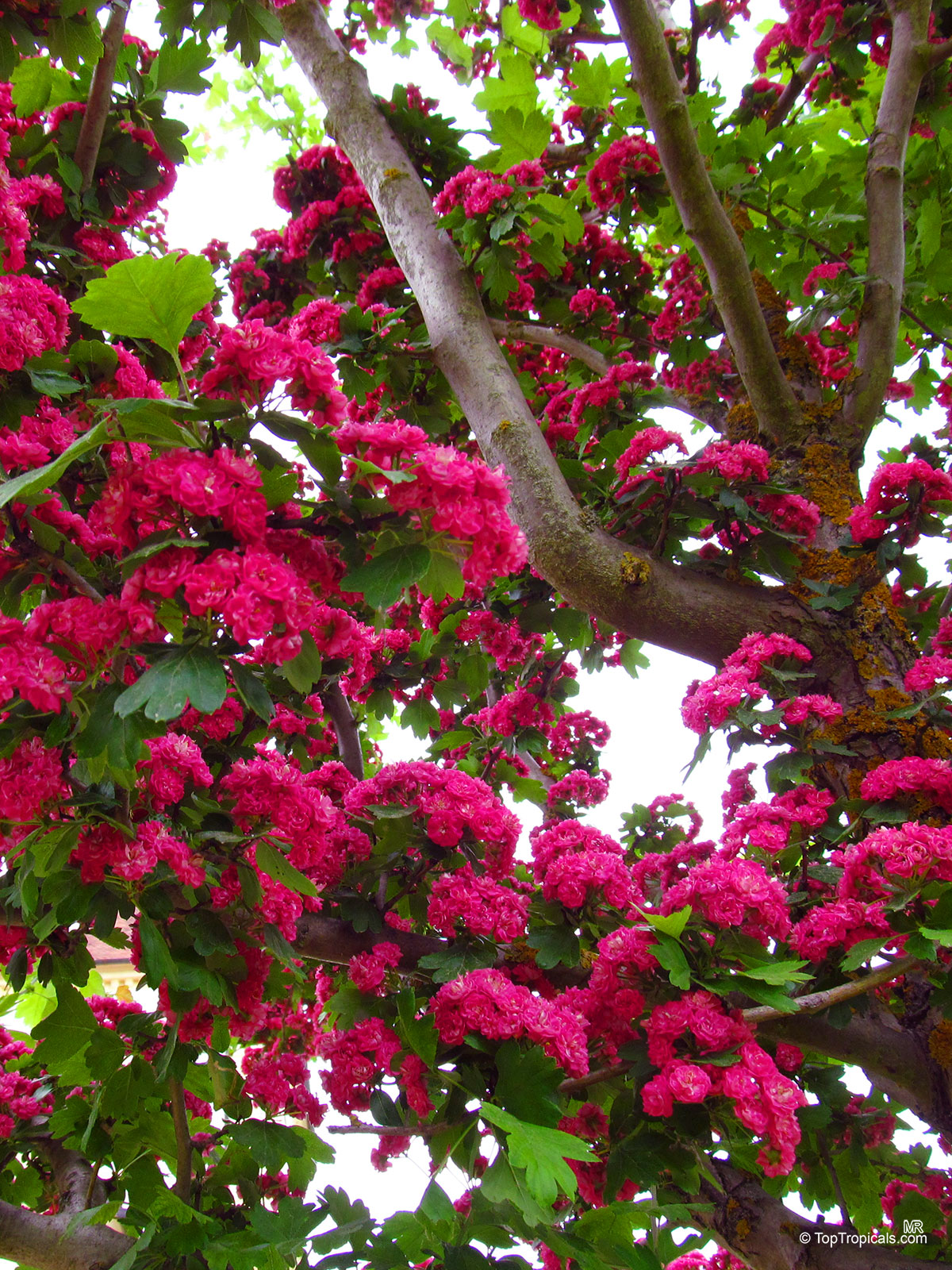
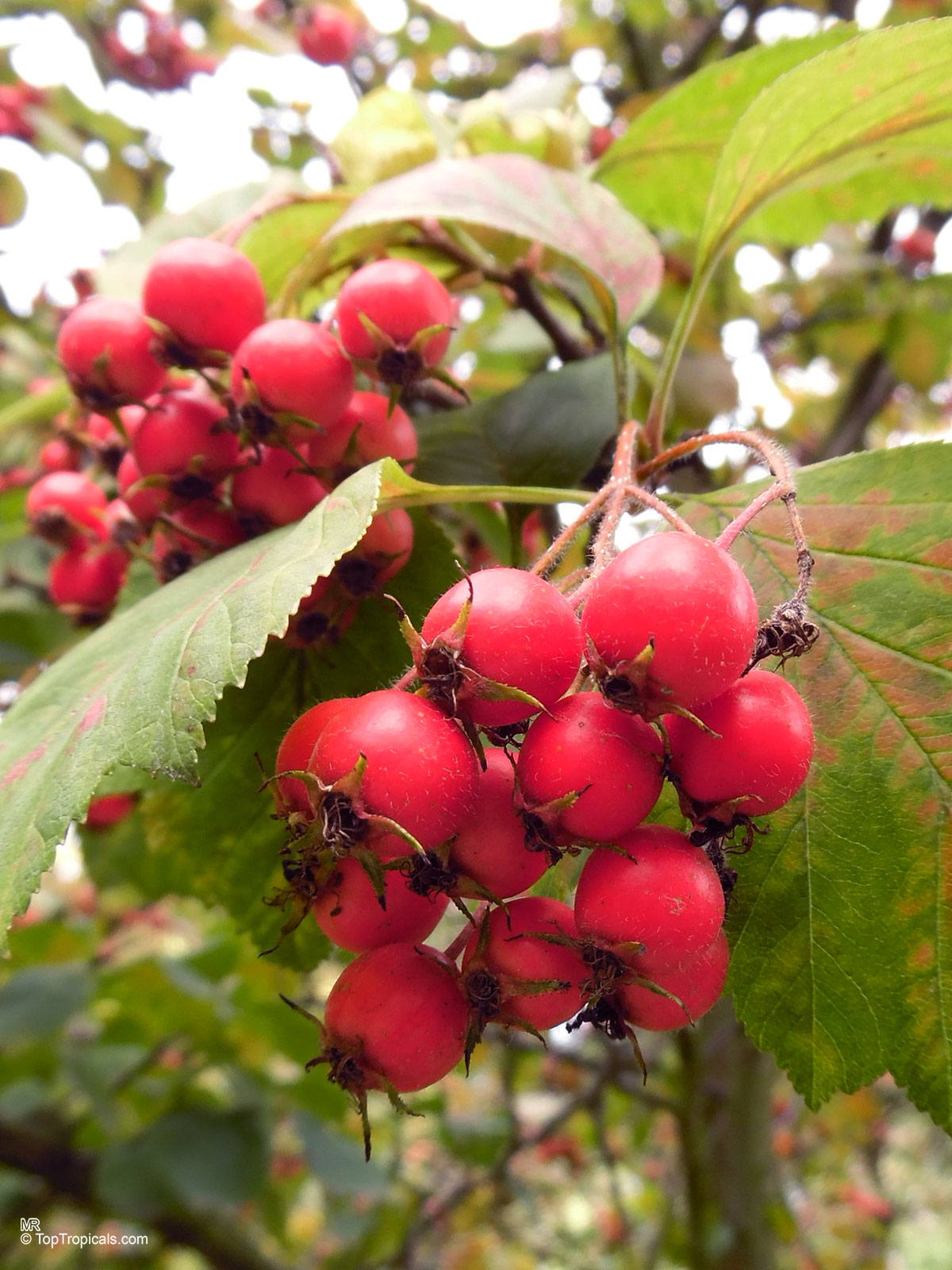
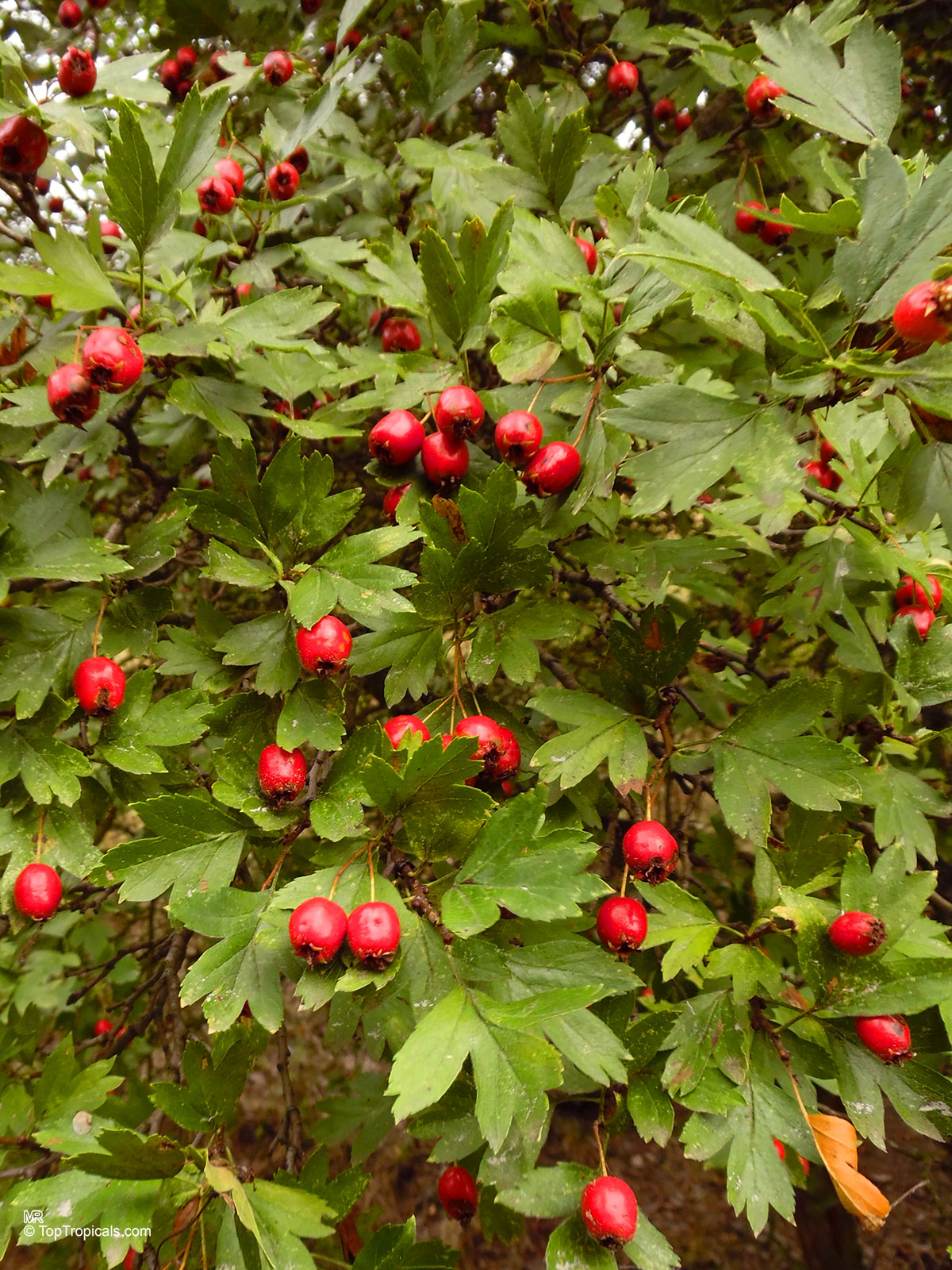
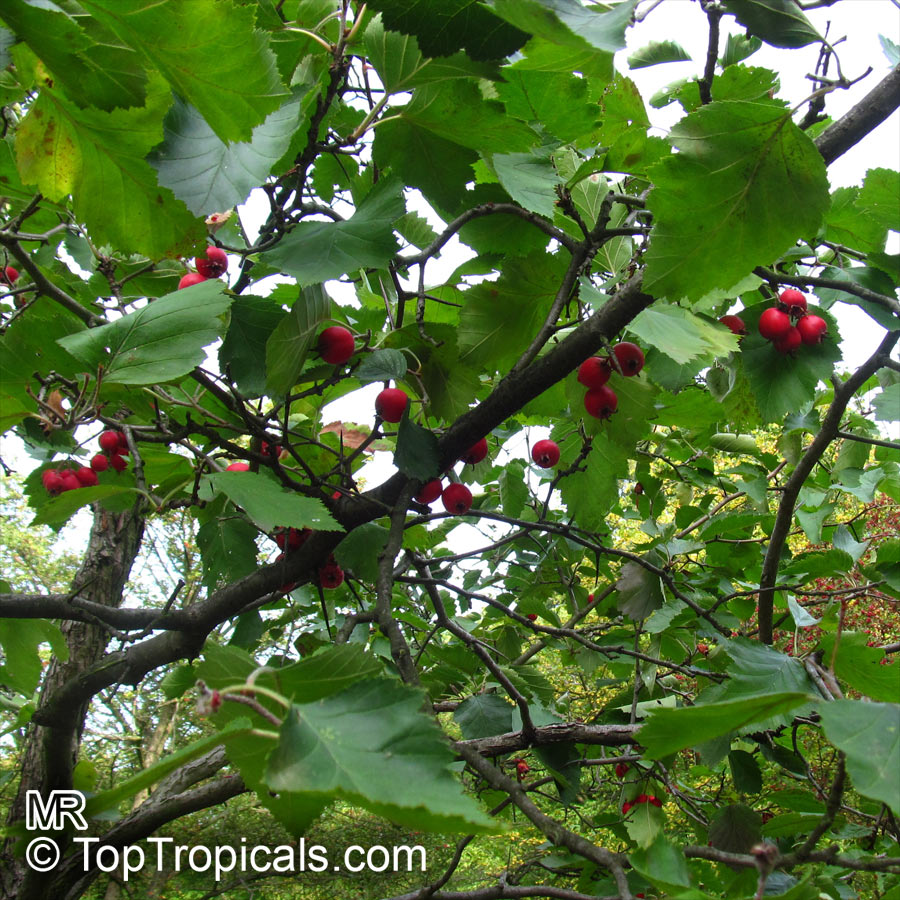
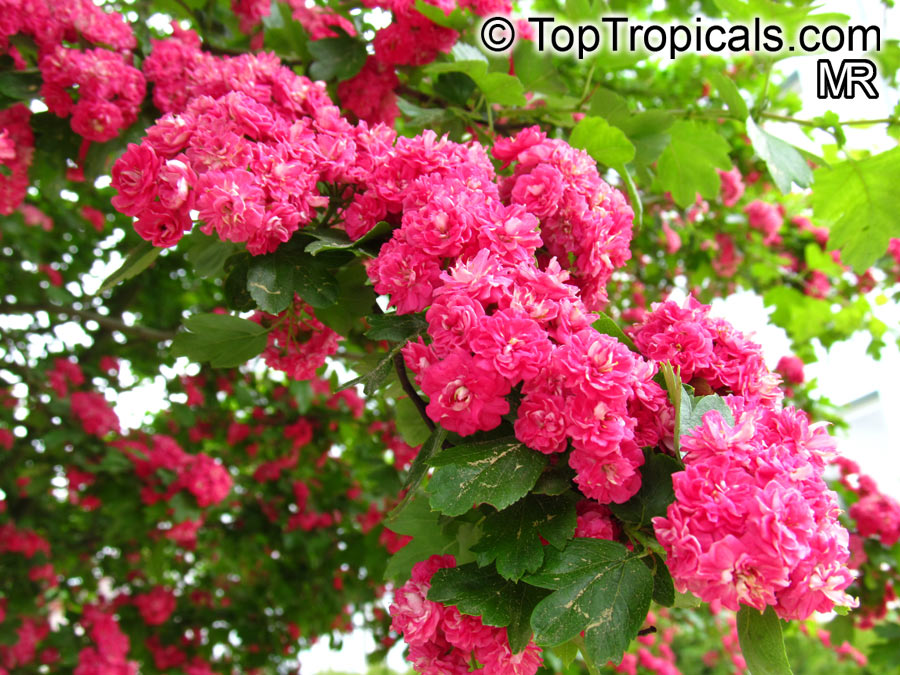
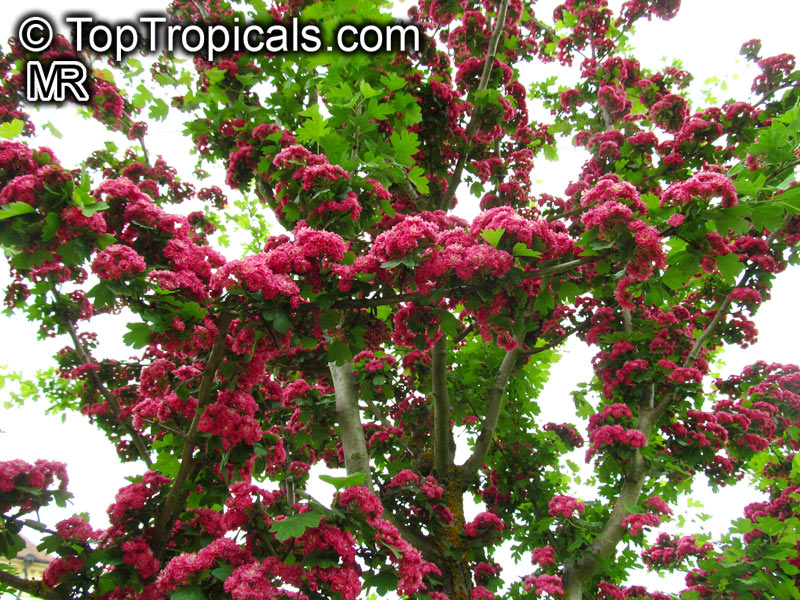
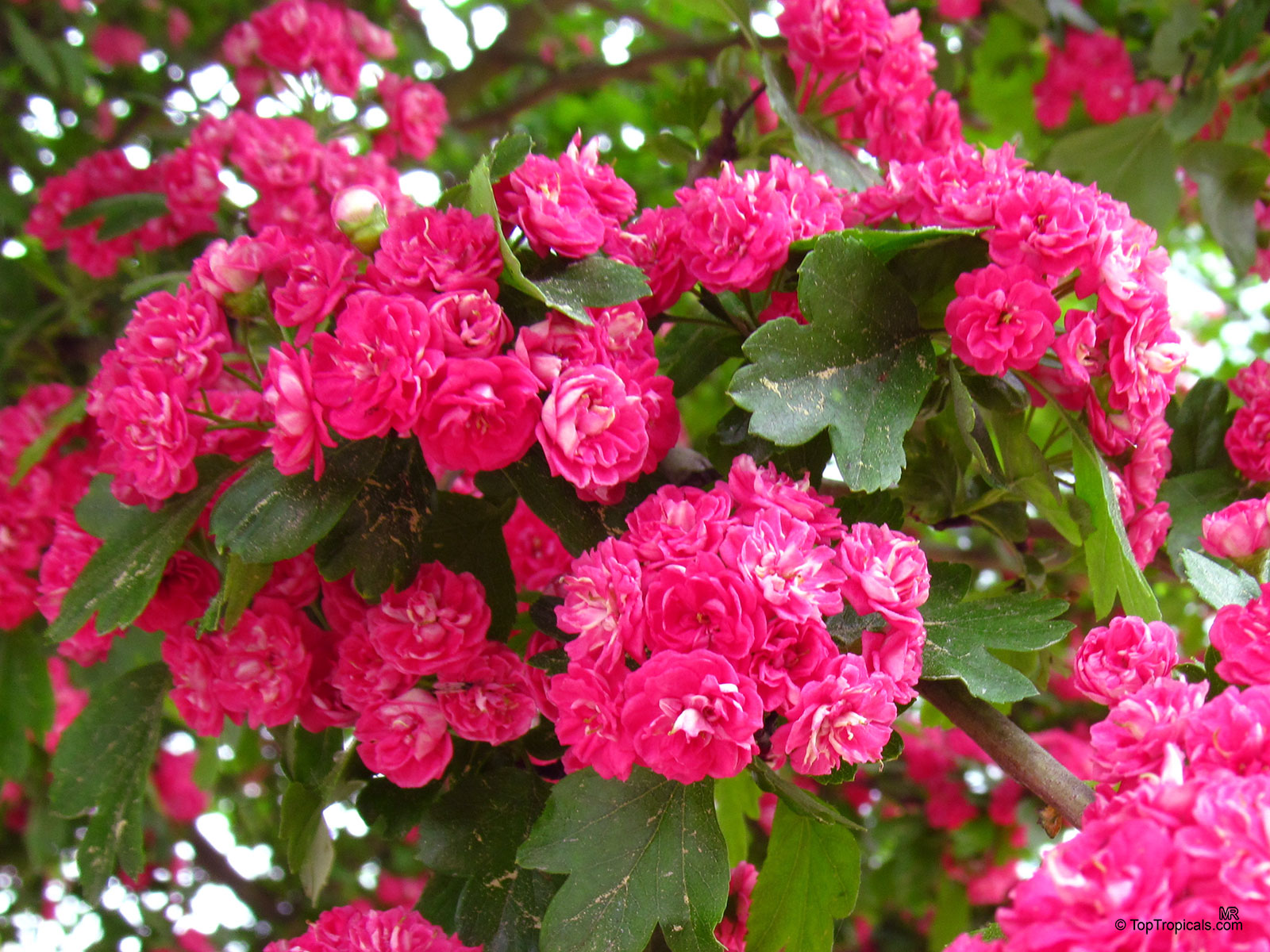
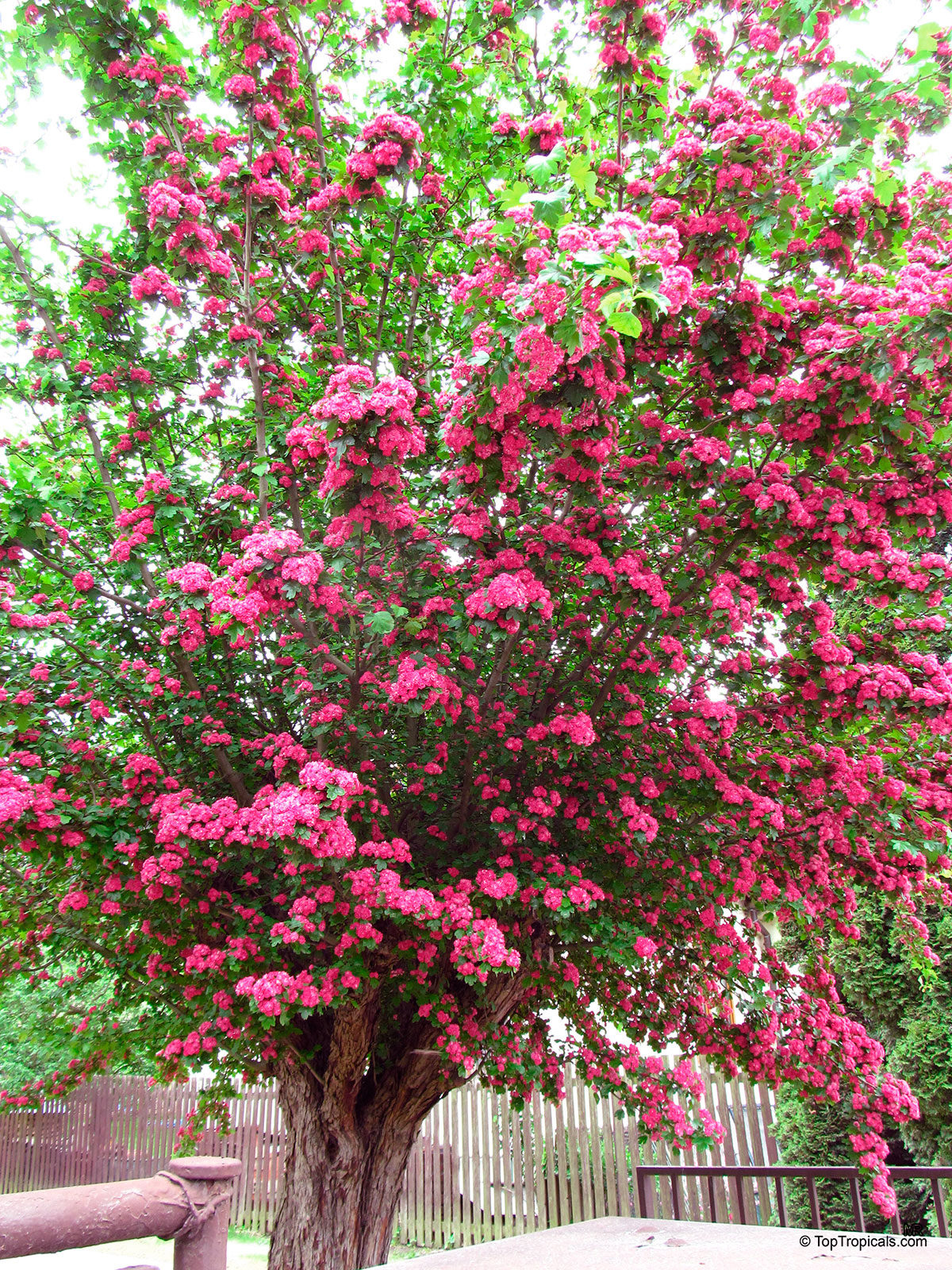
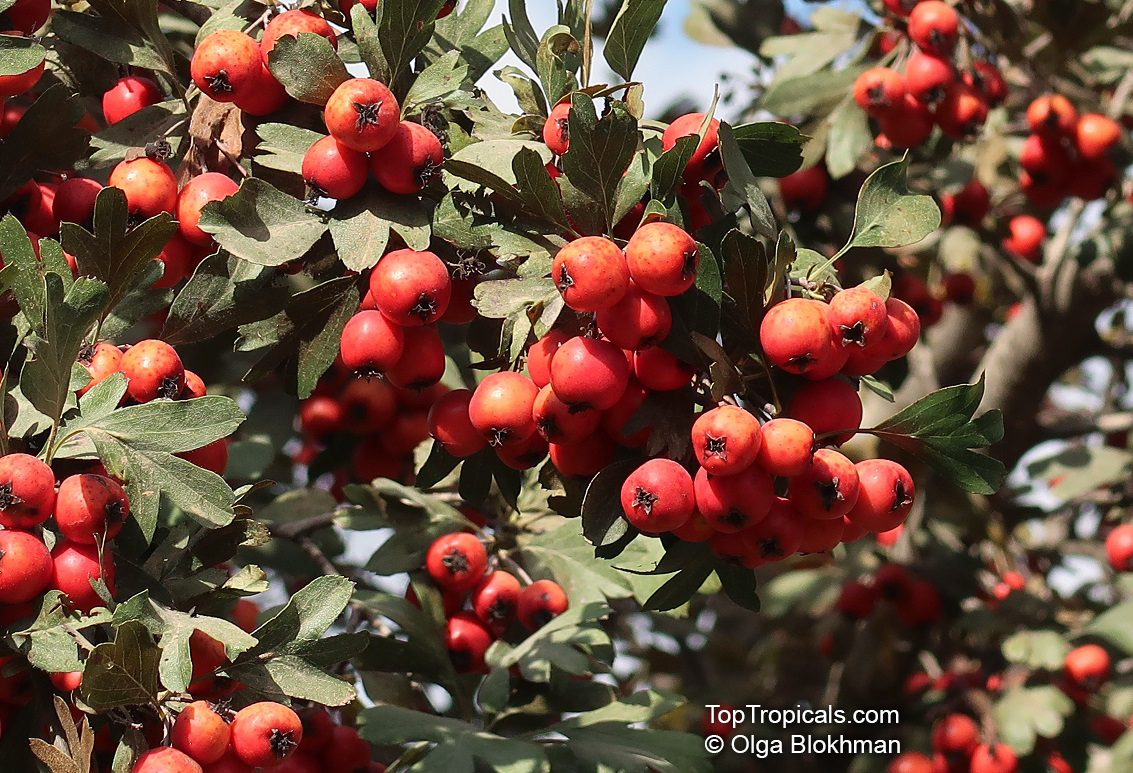
Botanical name: Crataegus sp.
Common names: Blackthorn, Cockspur, Hawthorn, Washington Thorn
Family: Rosaceae


Hawthorns are frost-hardy, robust, deciduous tree, most of which are compact enough even for quite small gardens.
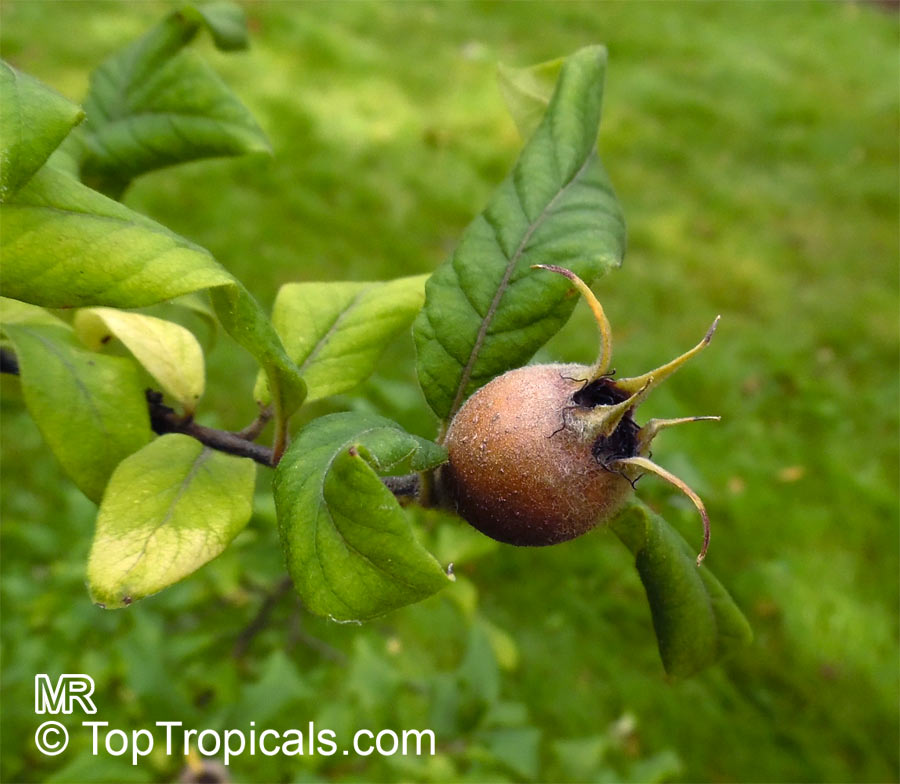
+Crataegomespilus is the generic name applied to graft-chimeras between the genera Crataegus and Mespilus.

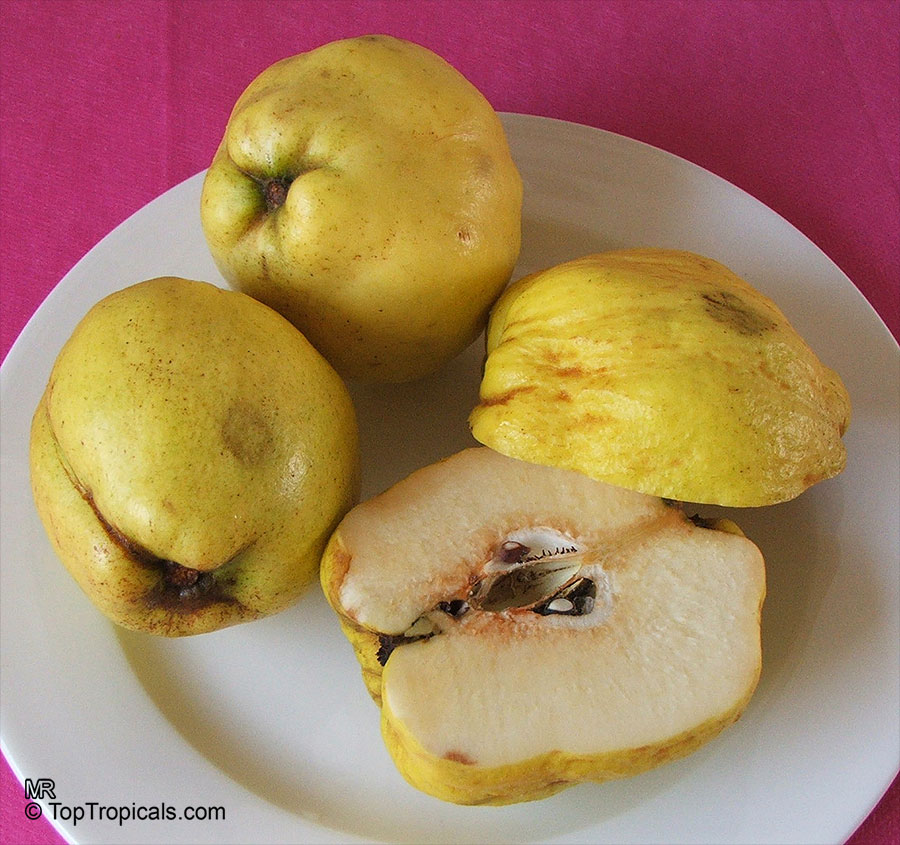
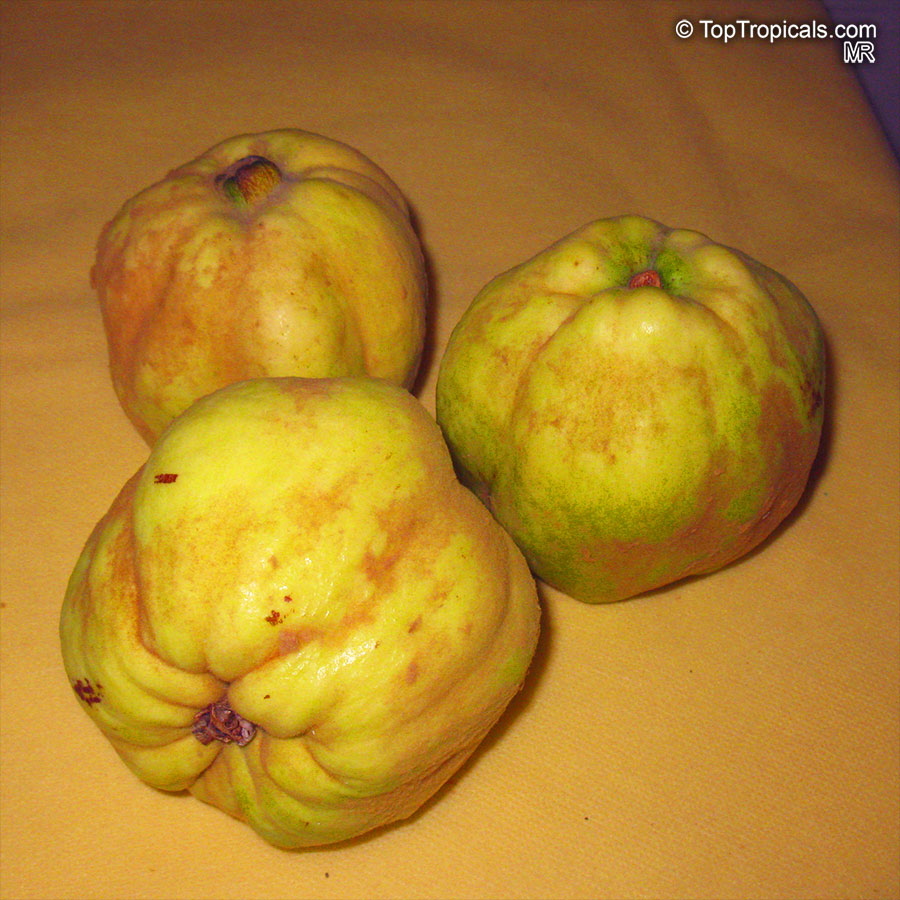
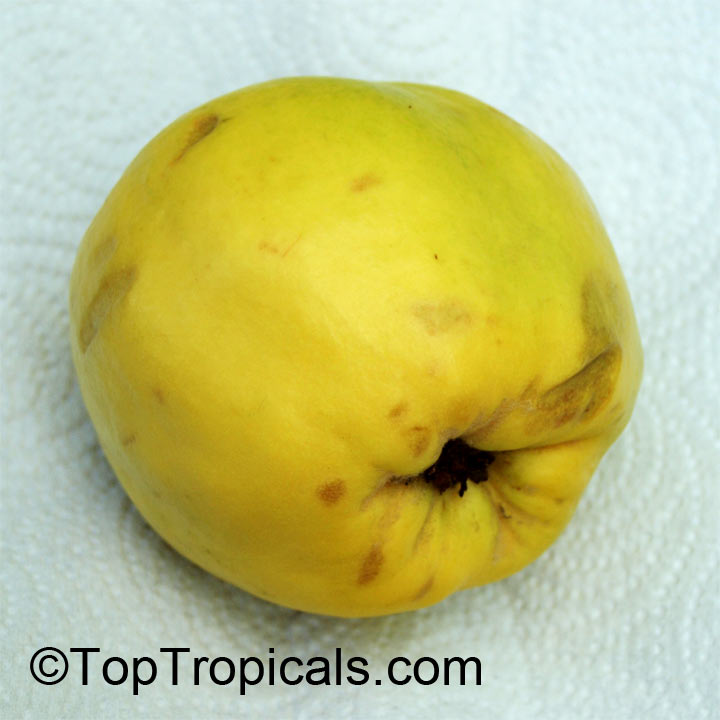
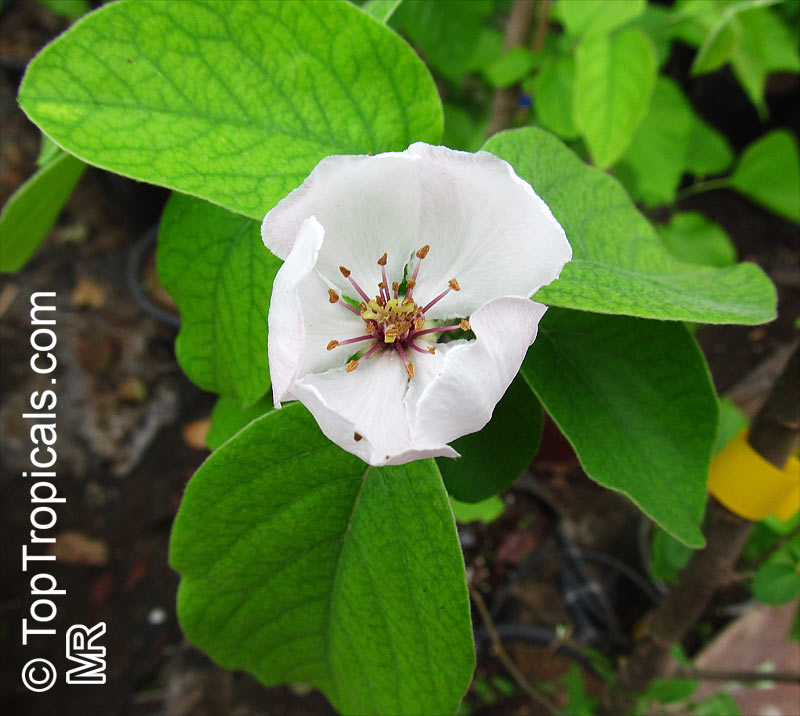
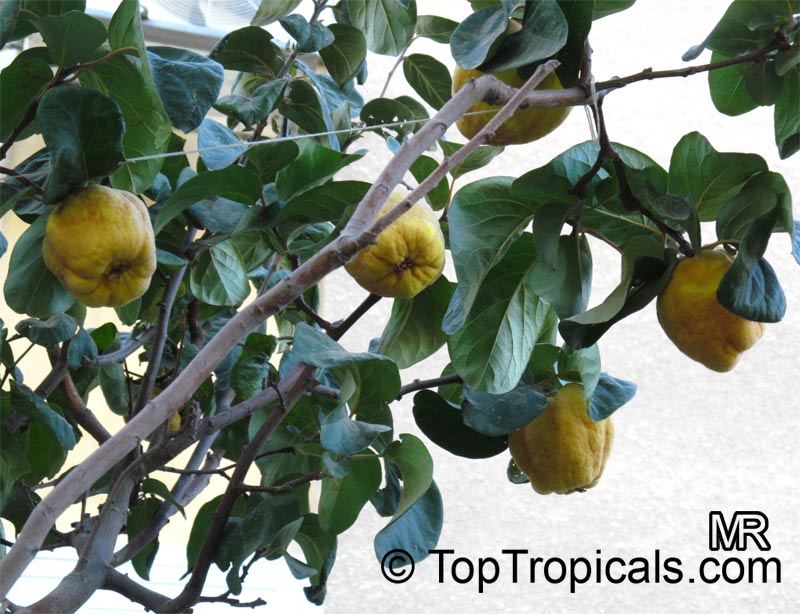
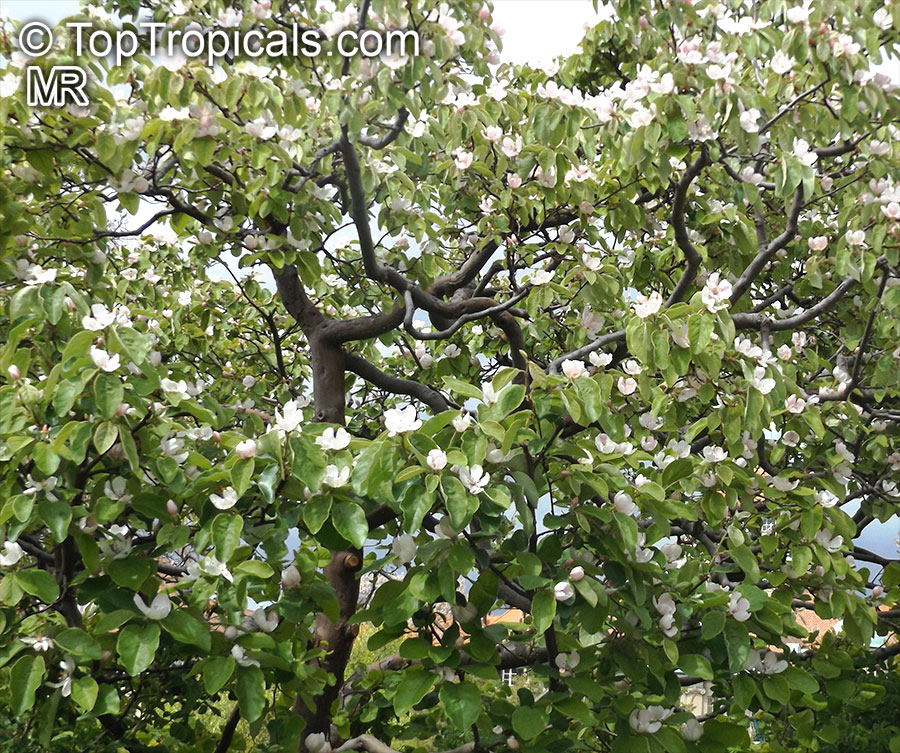
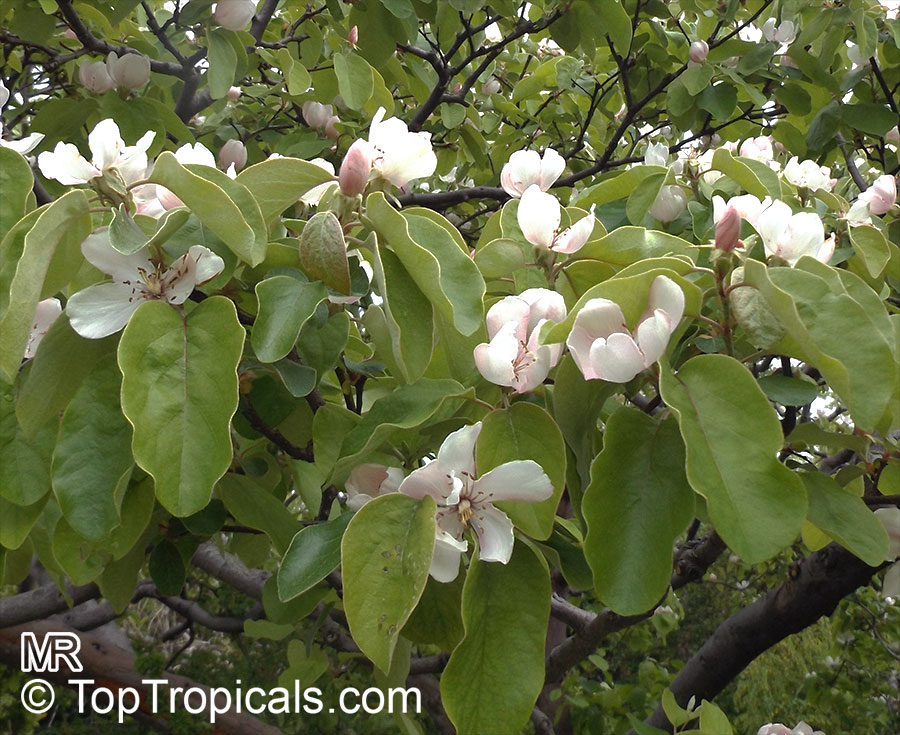
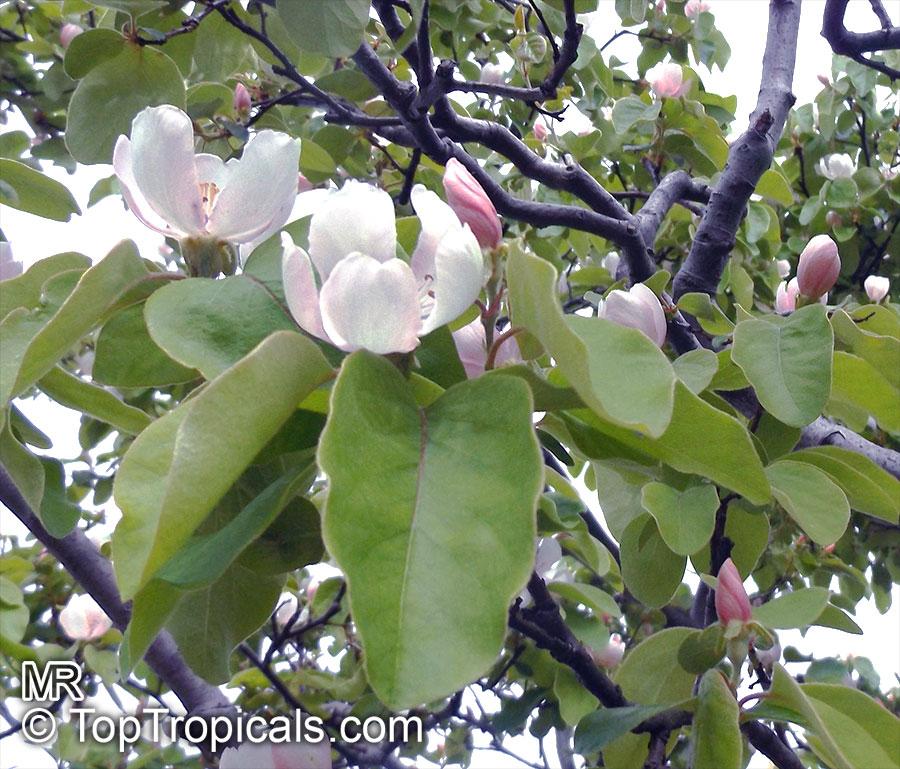
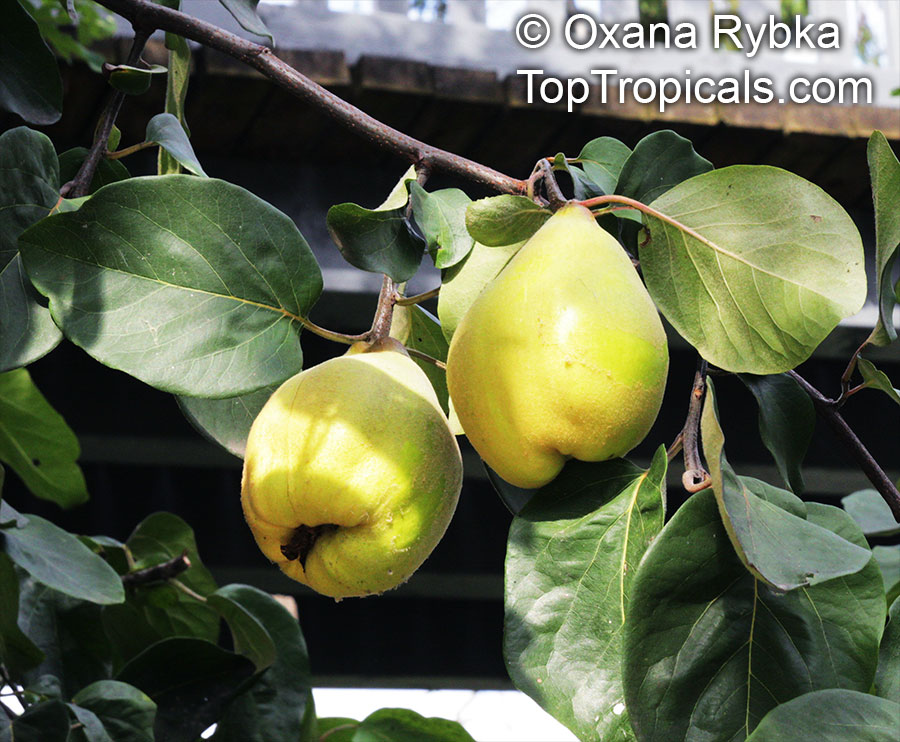
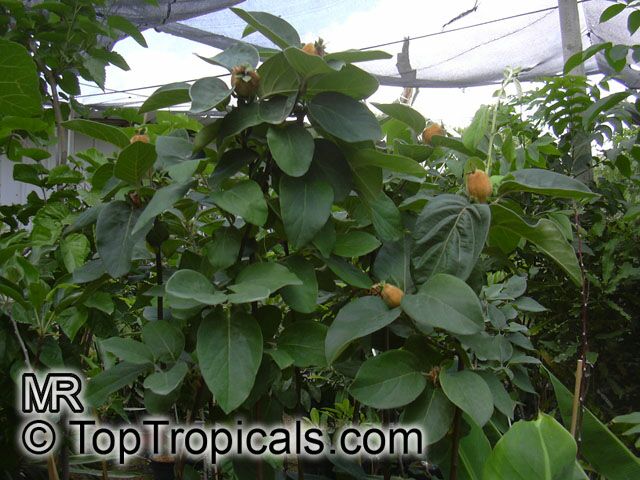
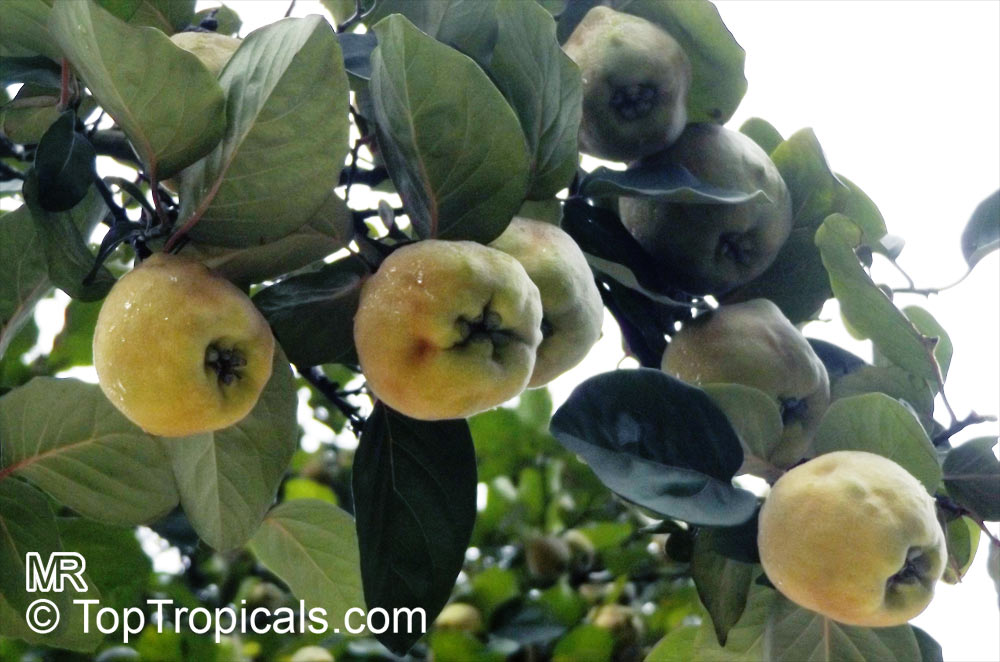
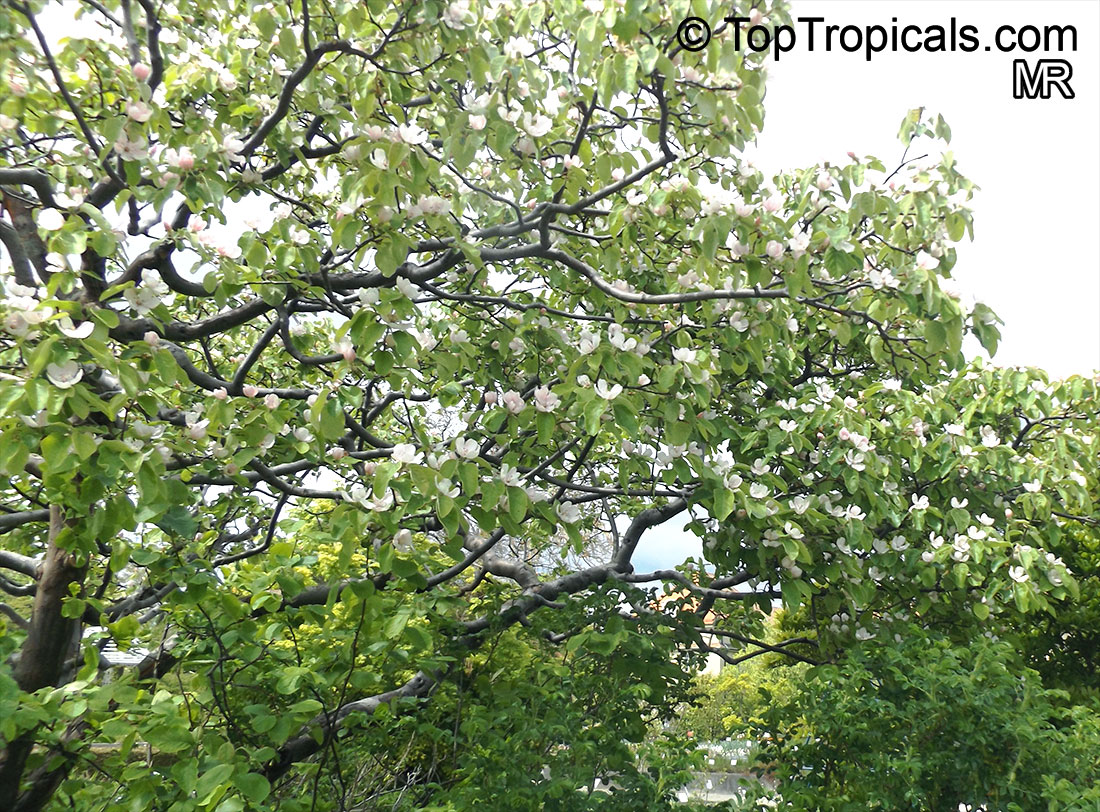
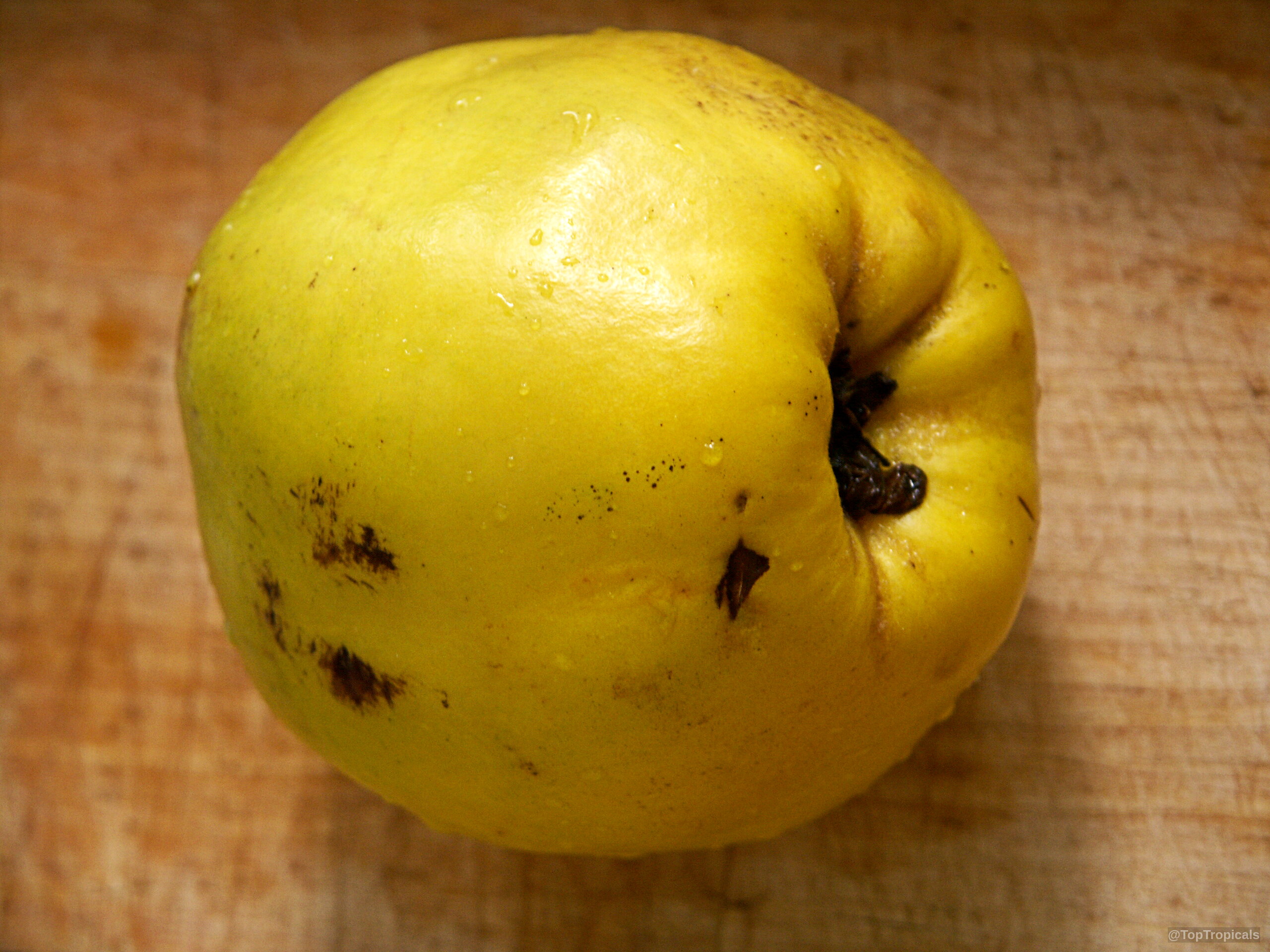
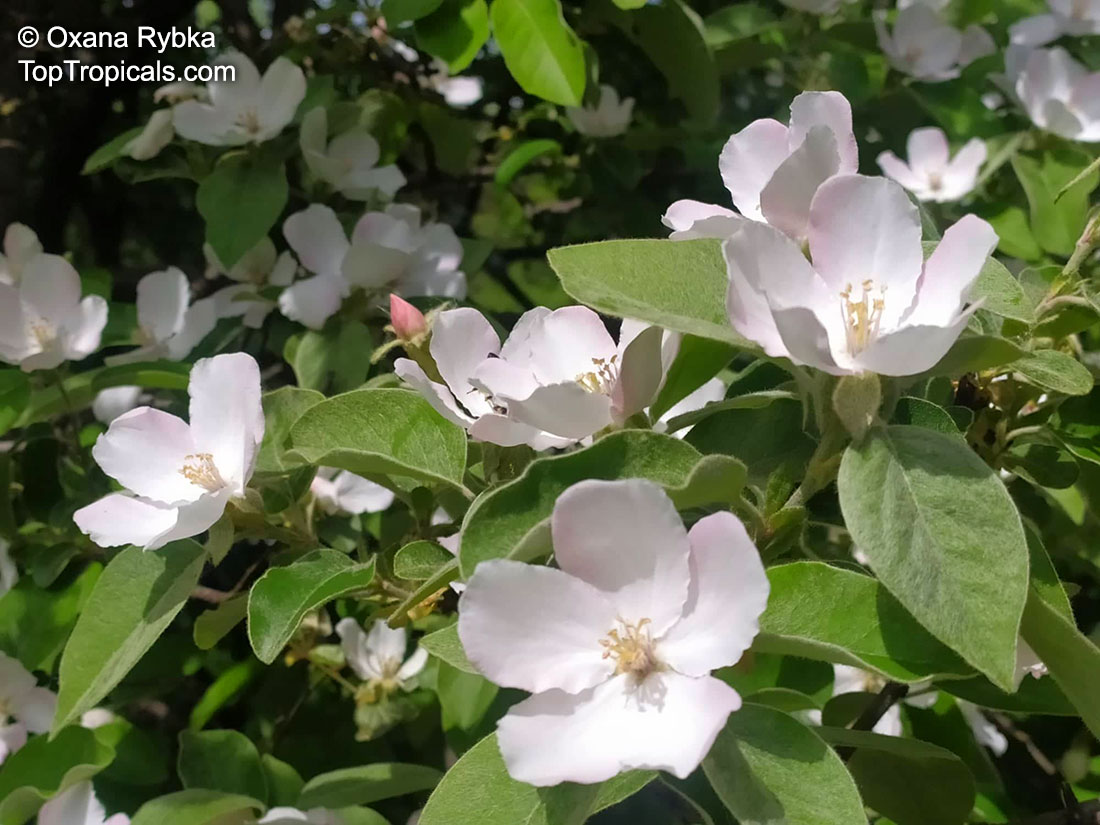
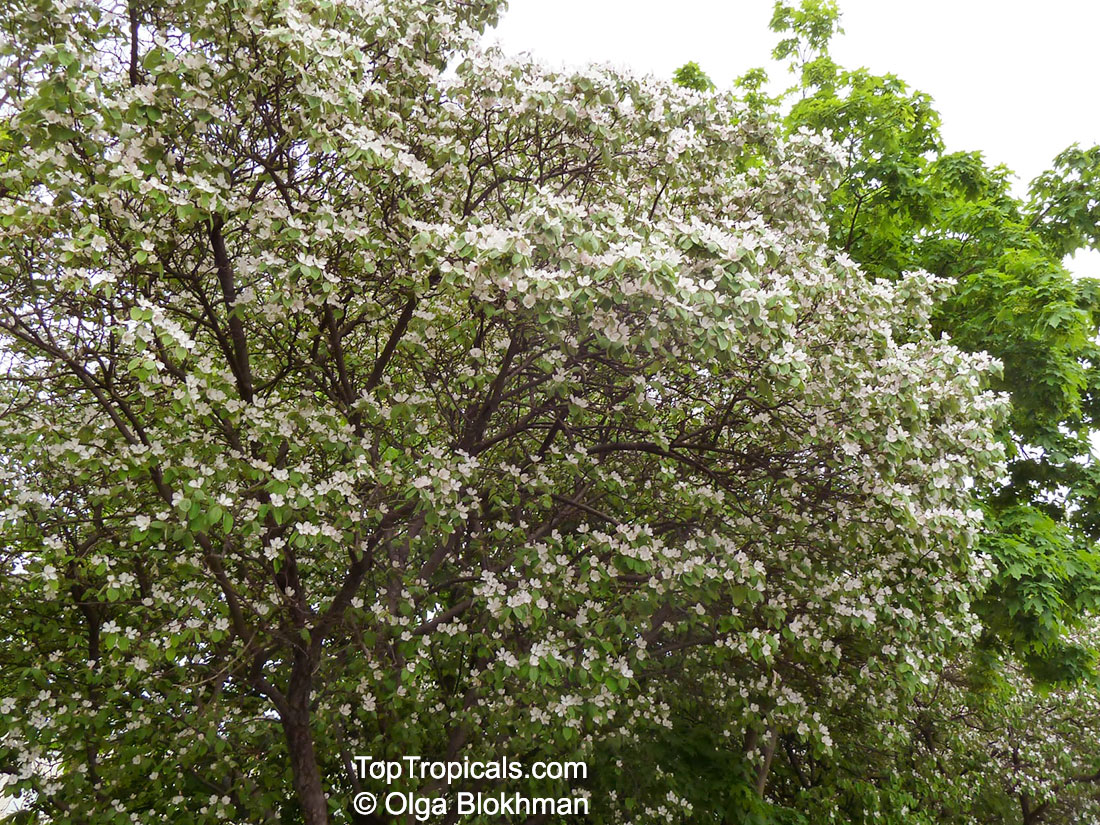
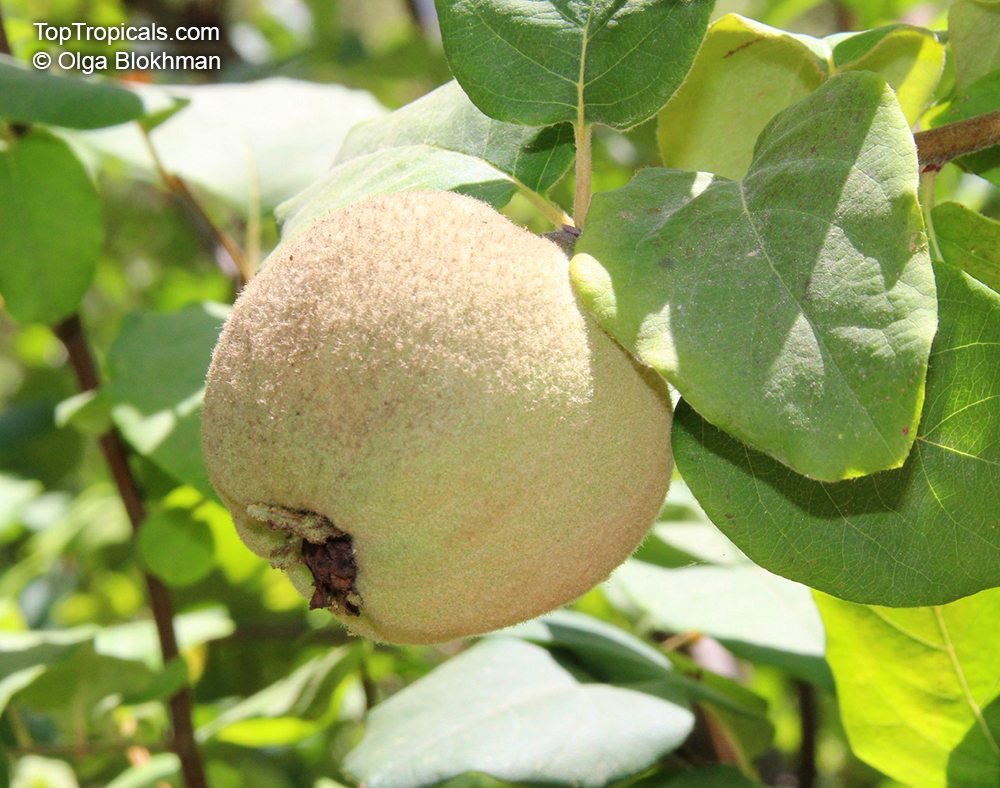
Botanical name: Cydonia oblonga
Common name: Quince
Family: Rosaceae
Origin: Southwest Asia
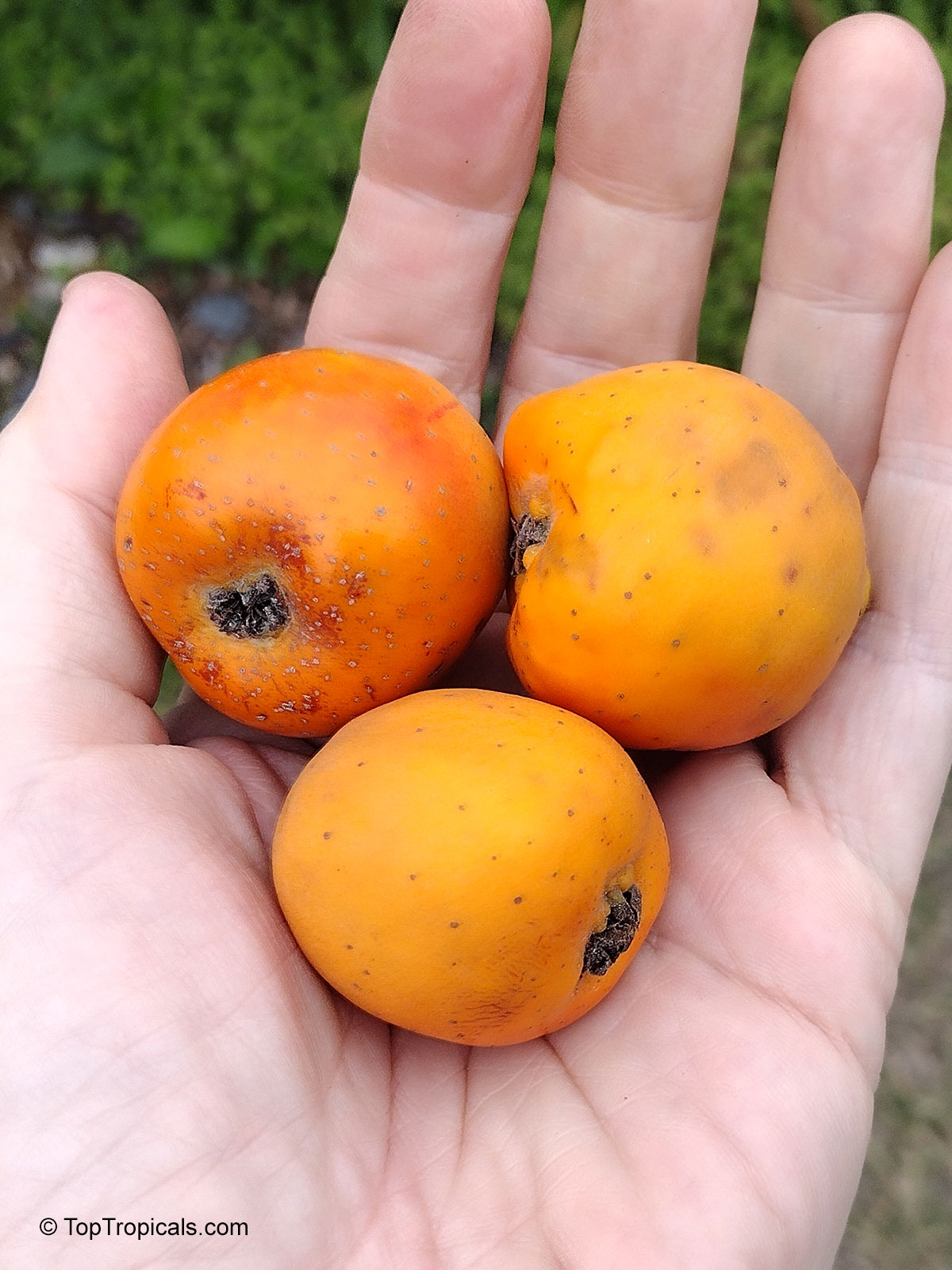
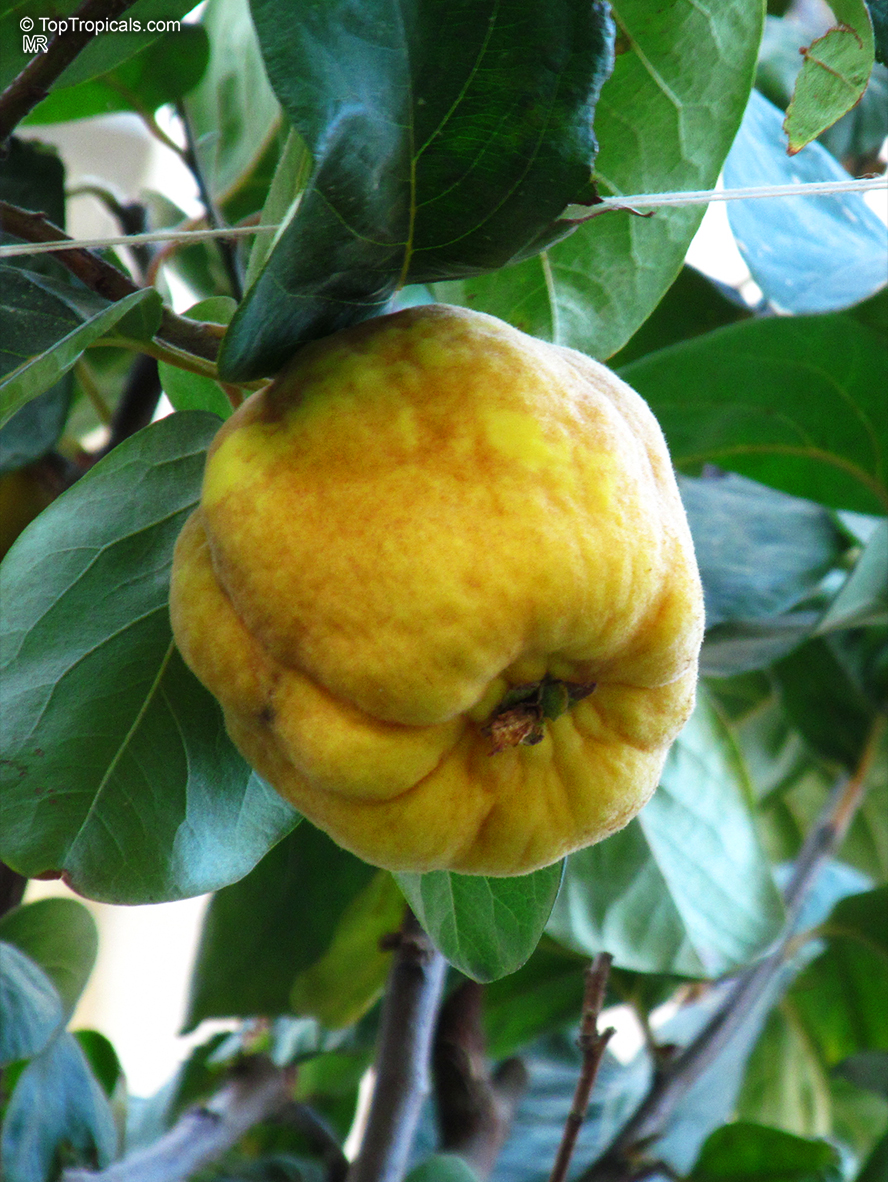
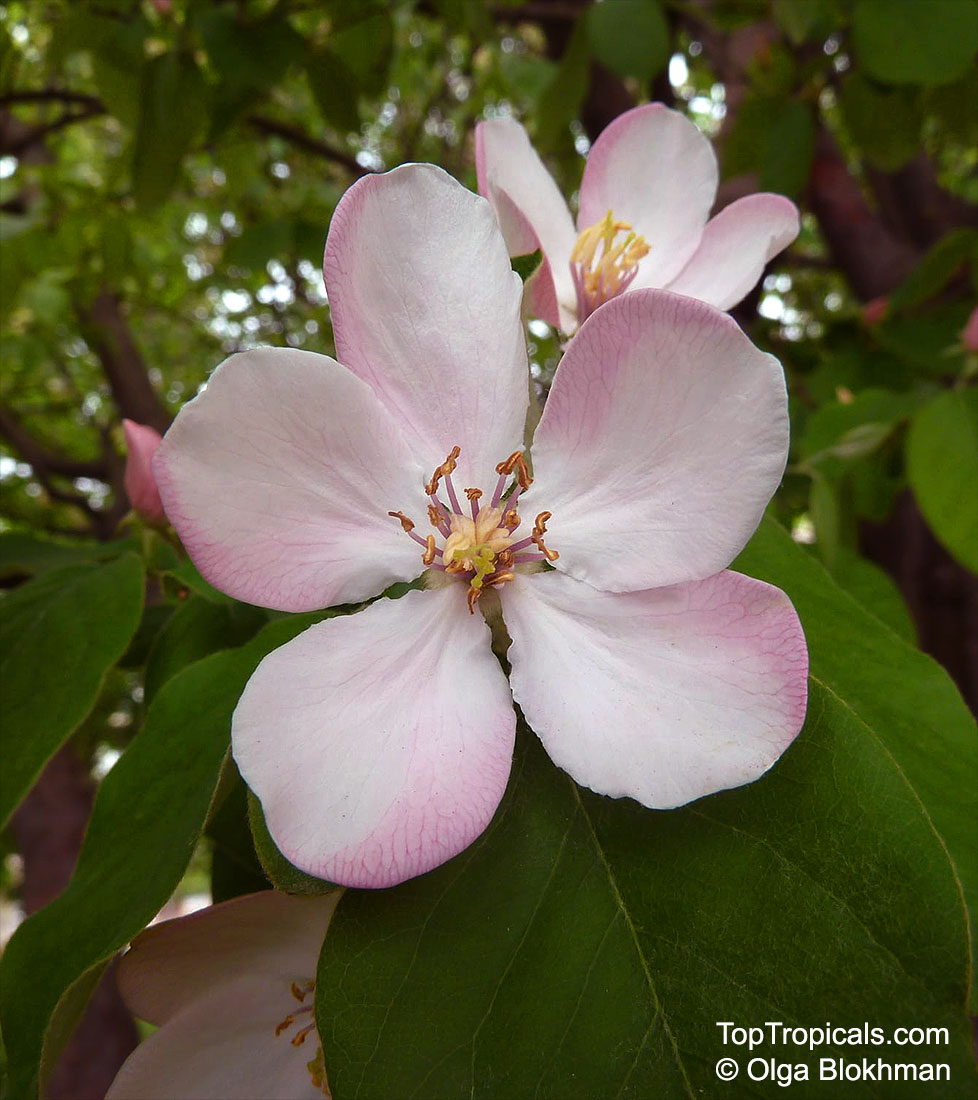
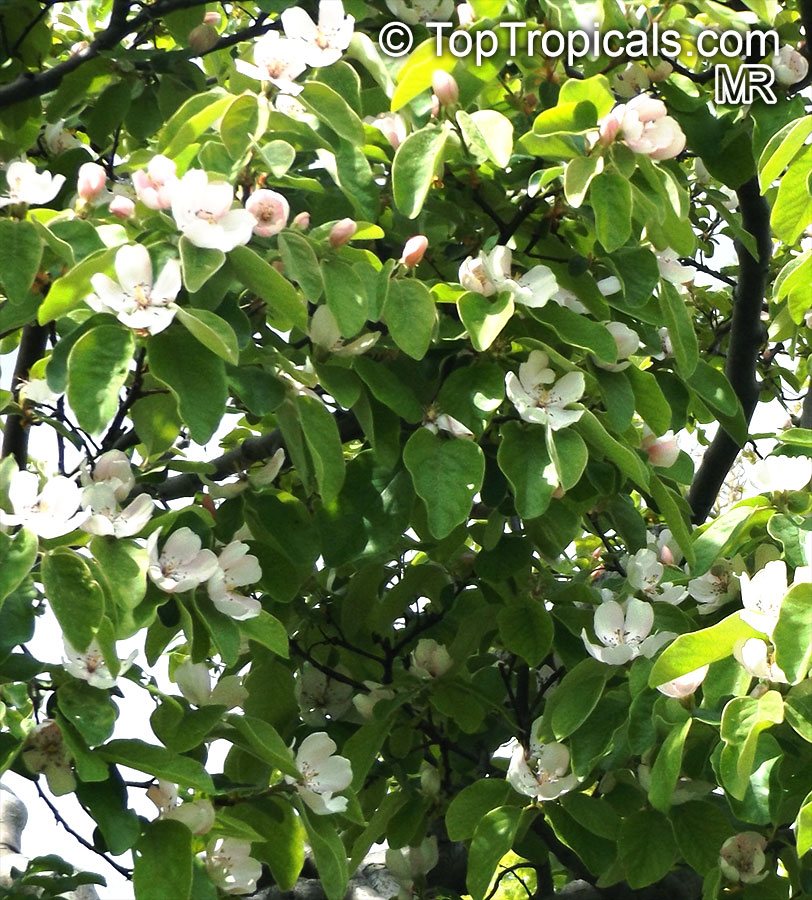
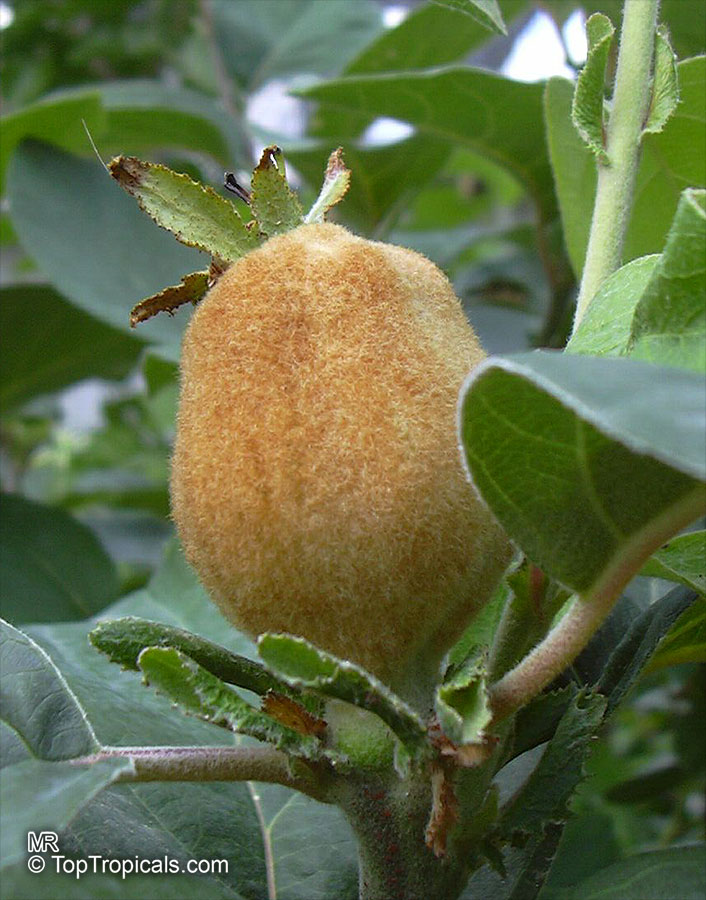
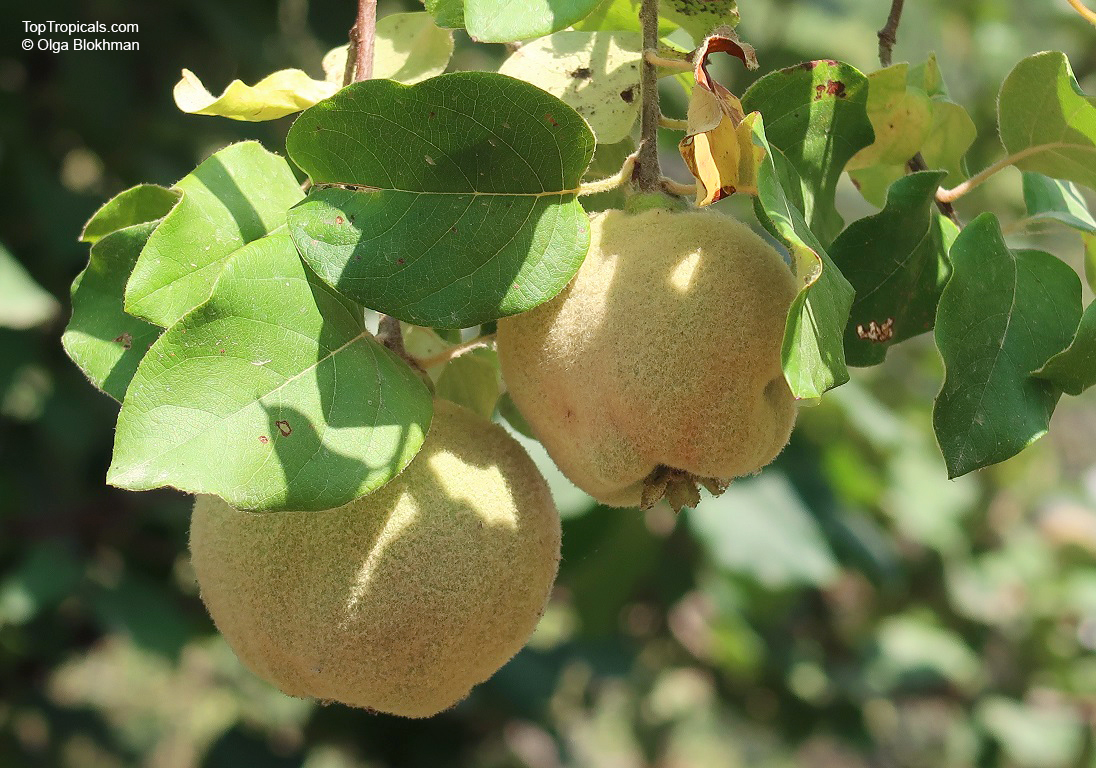
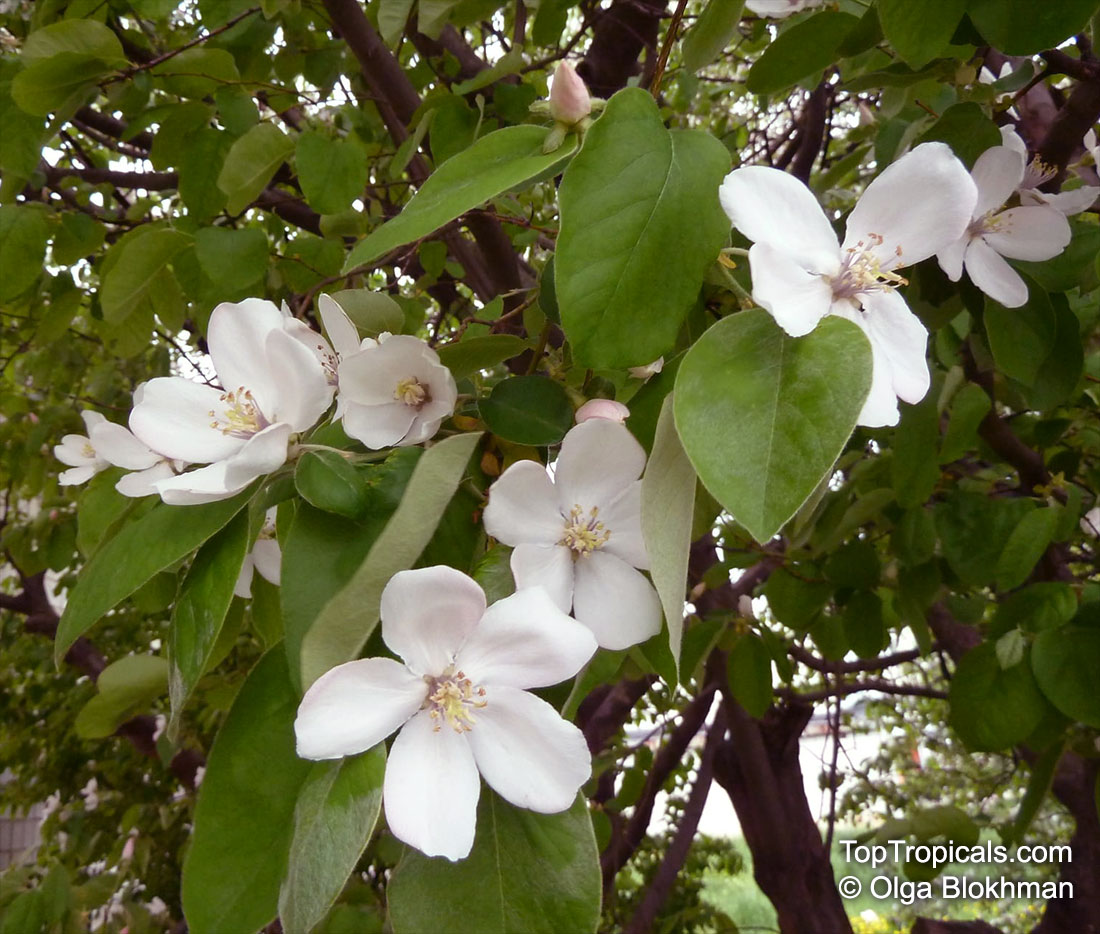
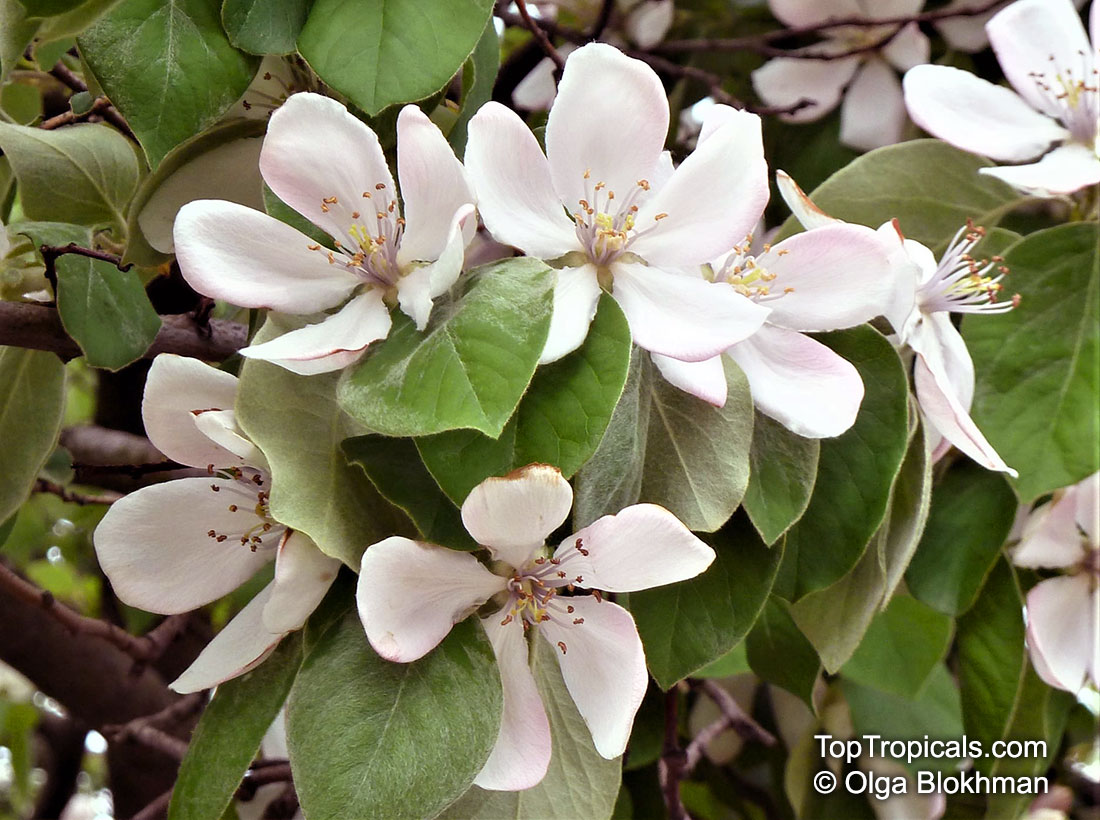
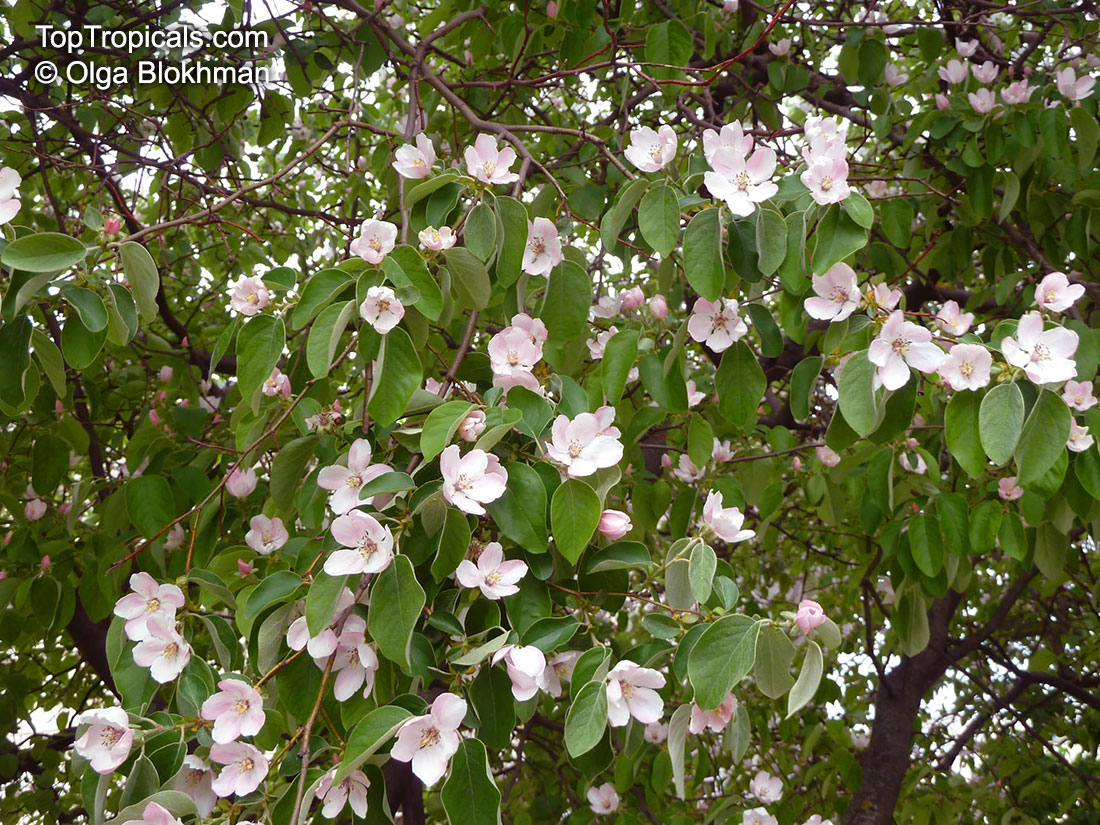
The quince is a deciduous thornless shrub or small tree, 13-20 ft high, with crowded gnarled branches and a low crooked habit. Young branchlets are covered with a pale greyish wool. Fruits are light golden-yellow, green or orange, usually pear shaped and very fragrant.
Quinces contain high levels of pectin. They are used to make jam, jelly, or they may be peeled, then roasted, baked or stewed. Quinces have long been used as a herbal medicine, they are also used in the cosmetic industry and for medicinal cosmetics.

| Next | |
Use link to repeat this search:
https://toptropicals.com/cgi-bin/garden_catalog/cat.cgi?find=Rosaceae&search_op=and&keyword_op=and&language=e&number=5
&no_change_lang=1&user=tt&sale=1&first=0