Portulacaria afra (Elephant's Food)
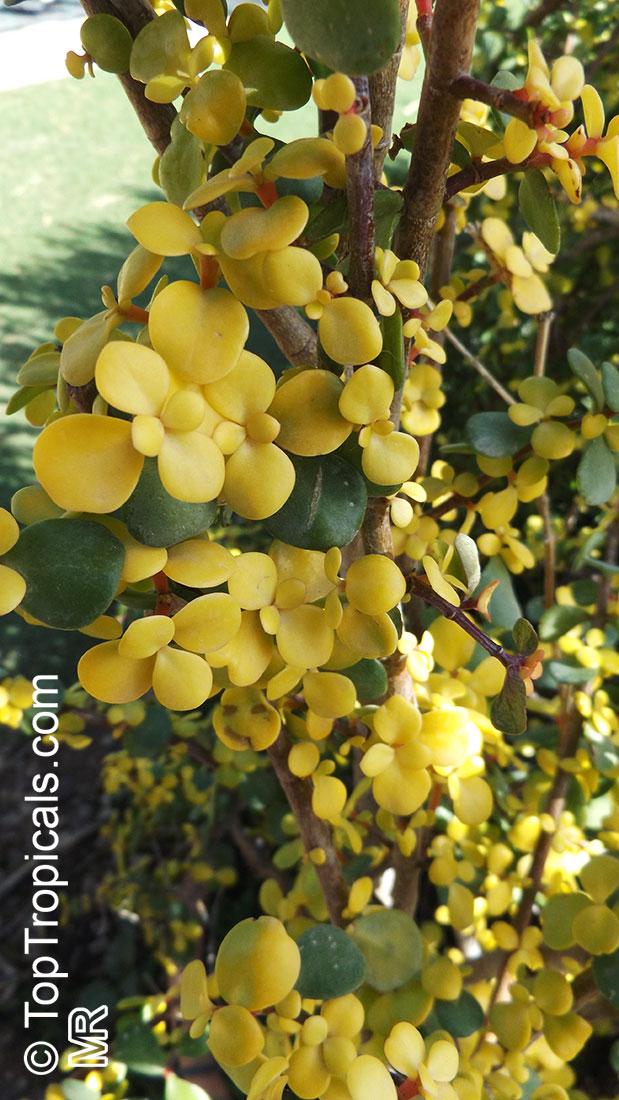
Botanical name: Portulacaria afra
Common names: Elephant's Food, Elephant Bush, Baby Jade, Crassula Portulacaria
Family: Didiereaceae (Formerly:Portulacaceae)
Subfamily: Portulacarioideae
Origin: South Africa


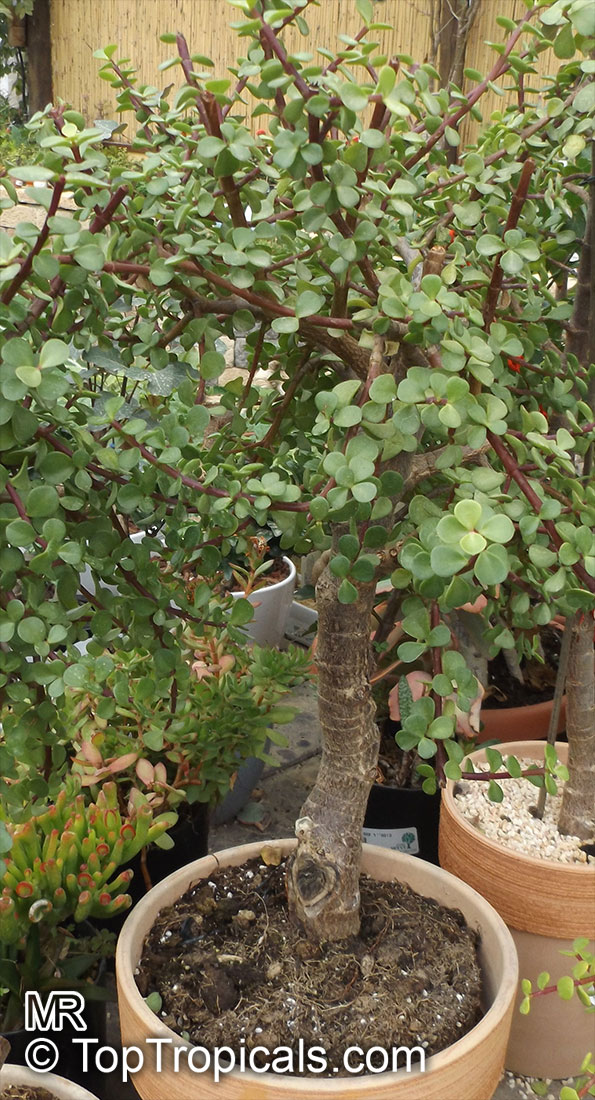
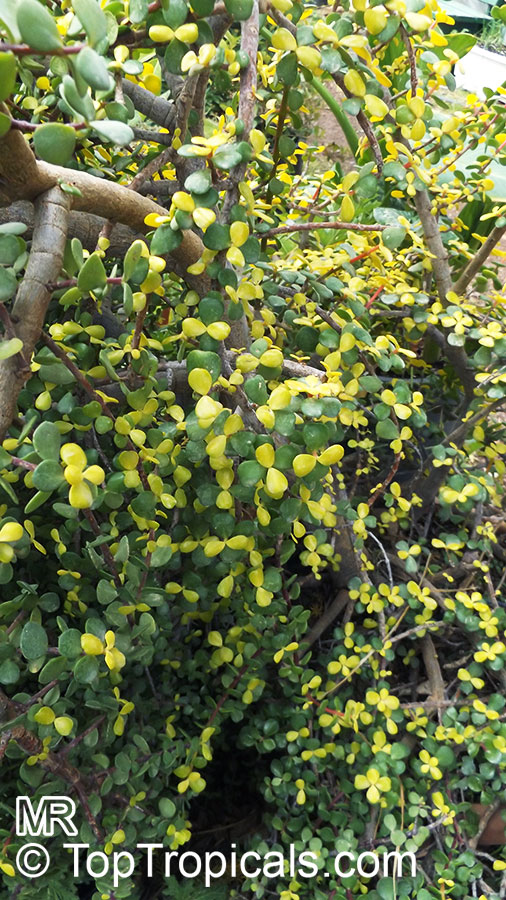
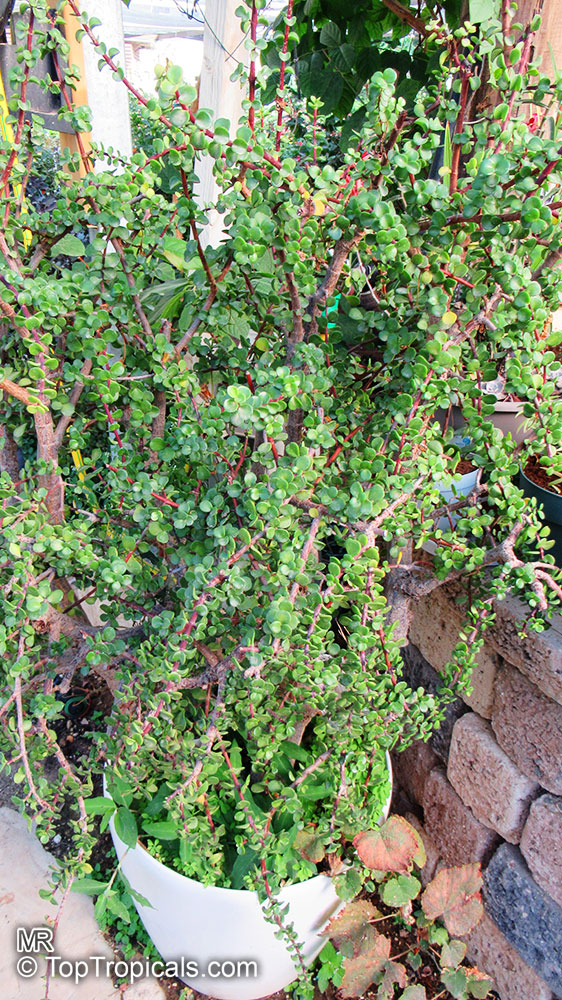
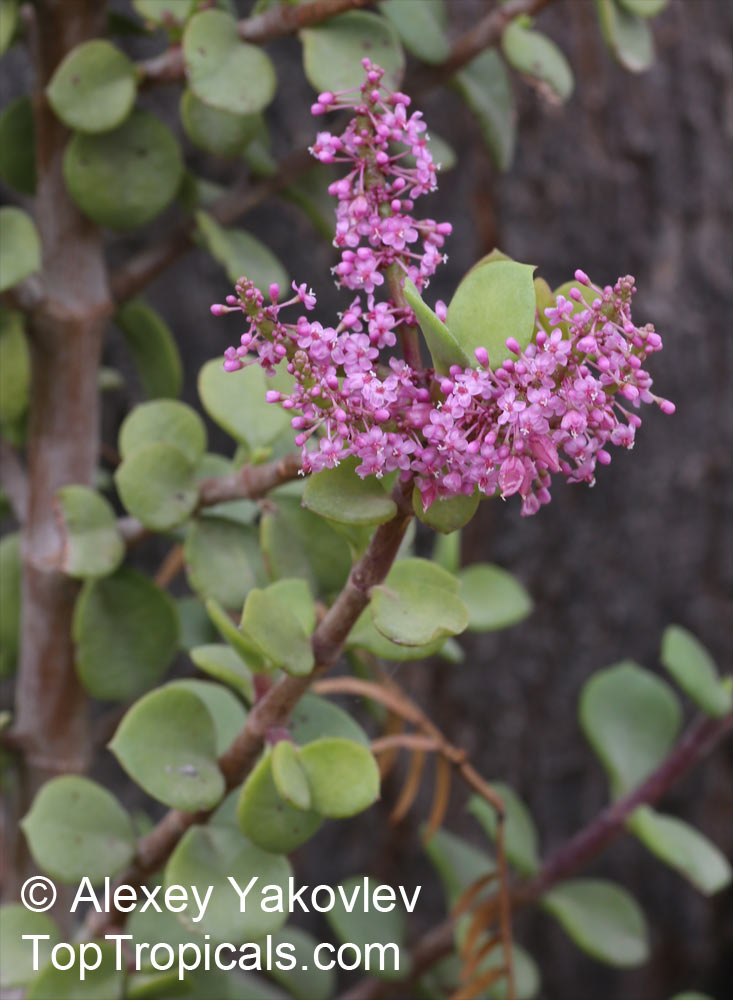
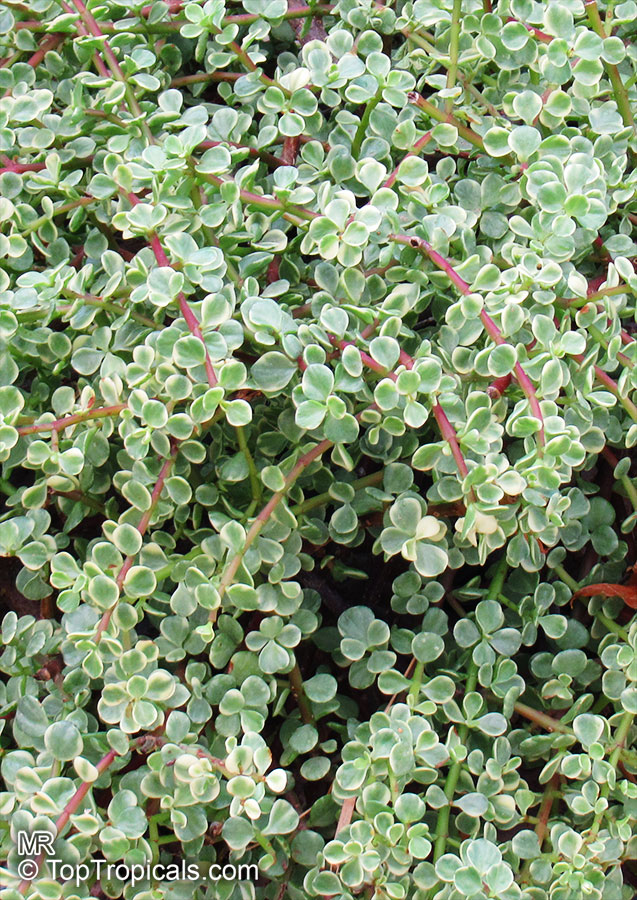
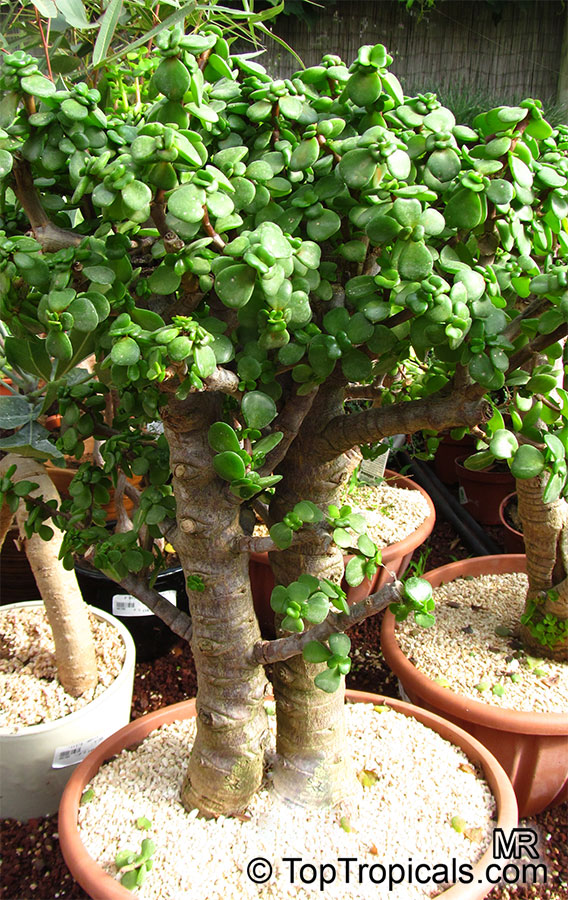
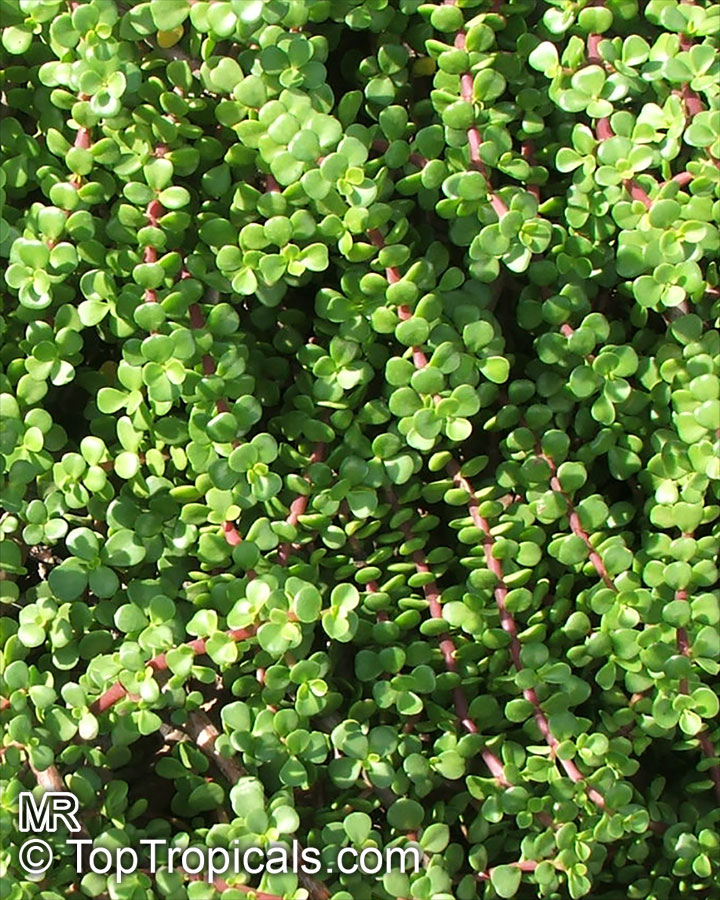
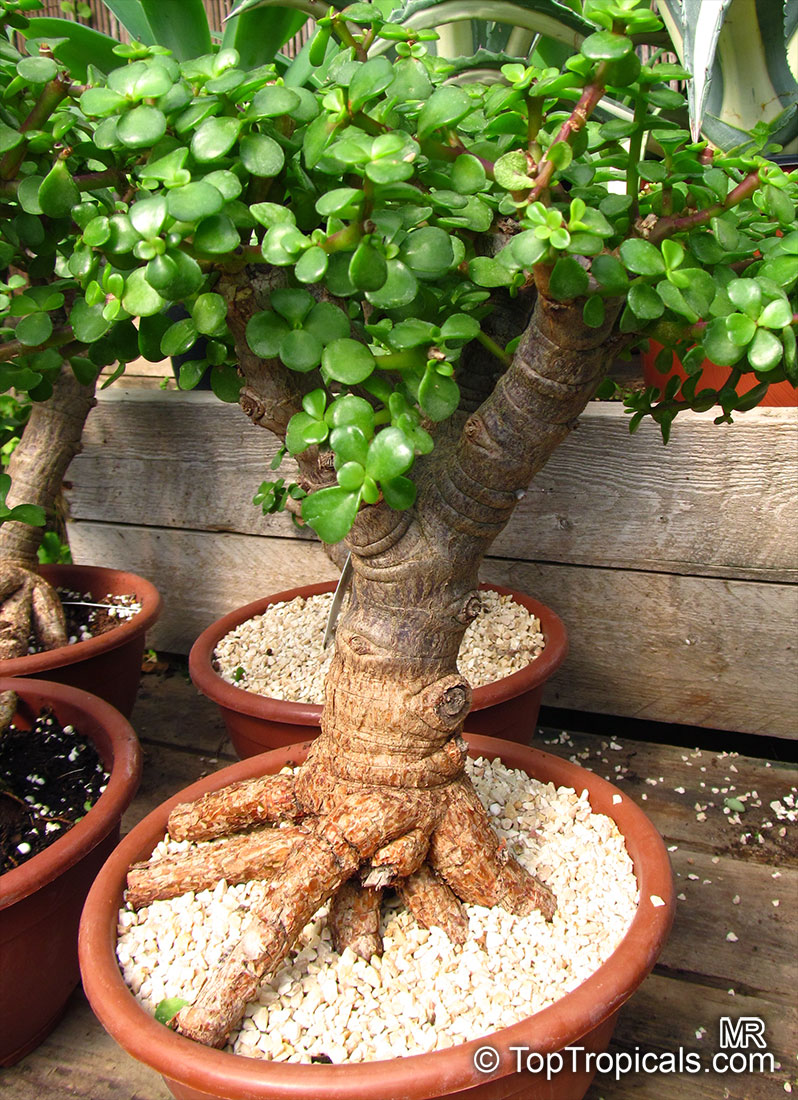
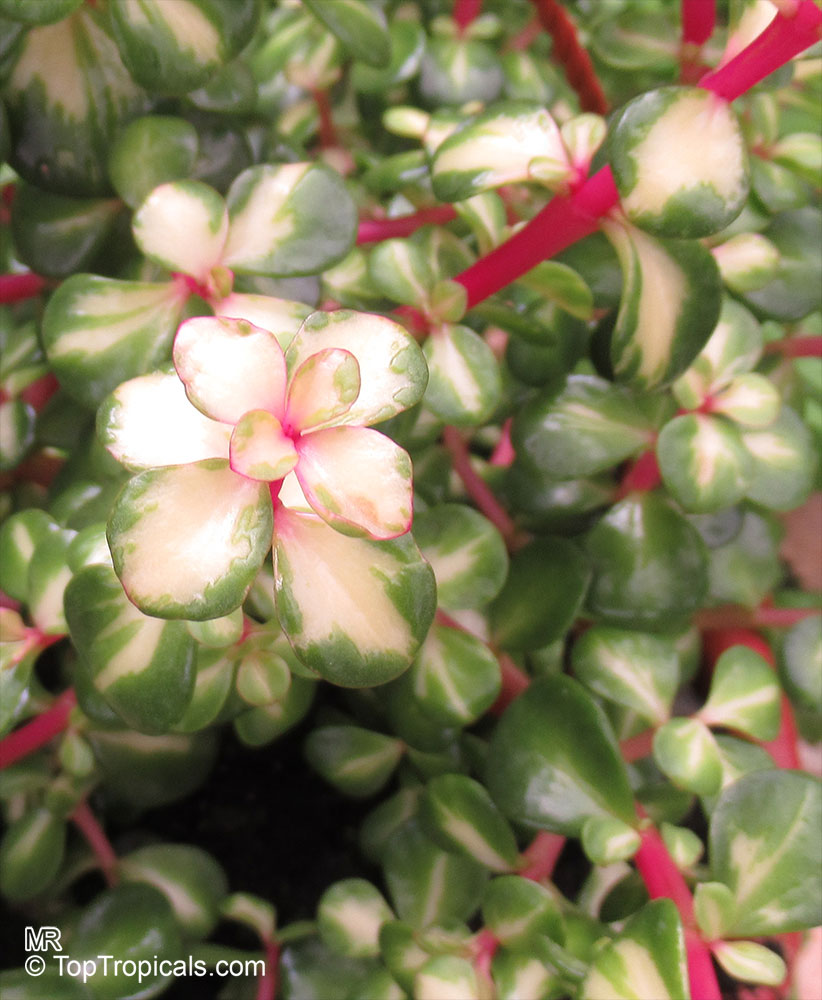
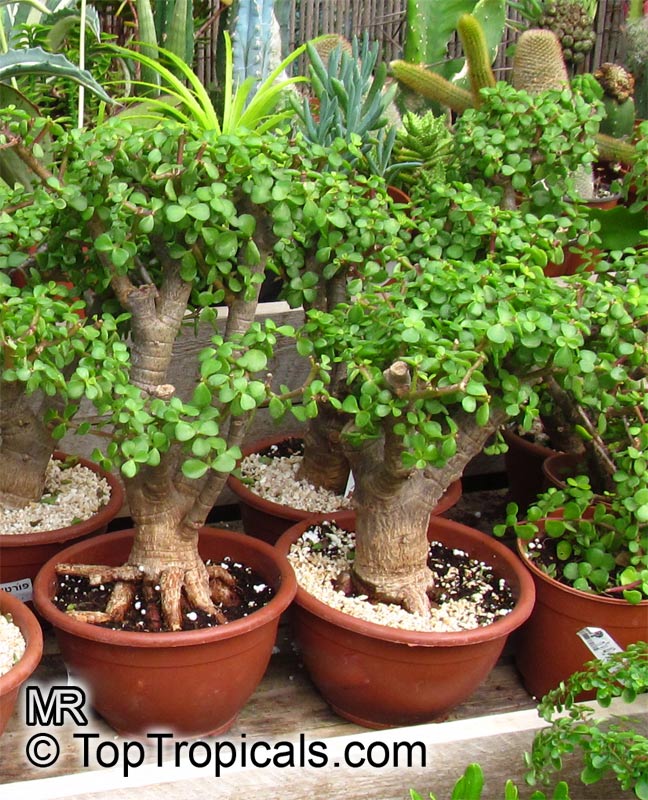
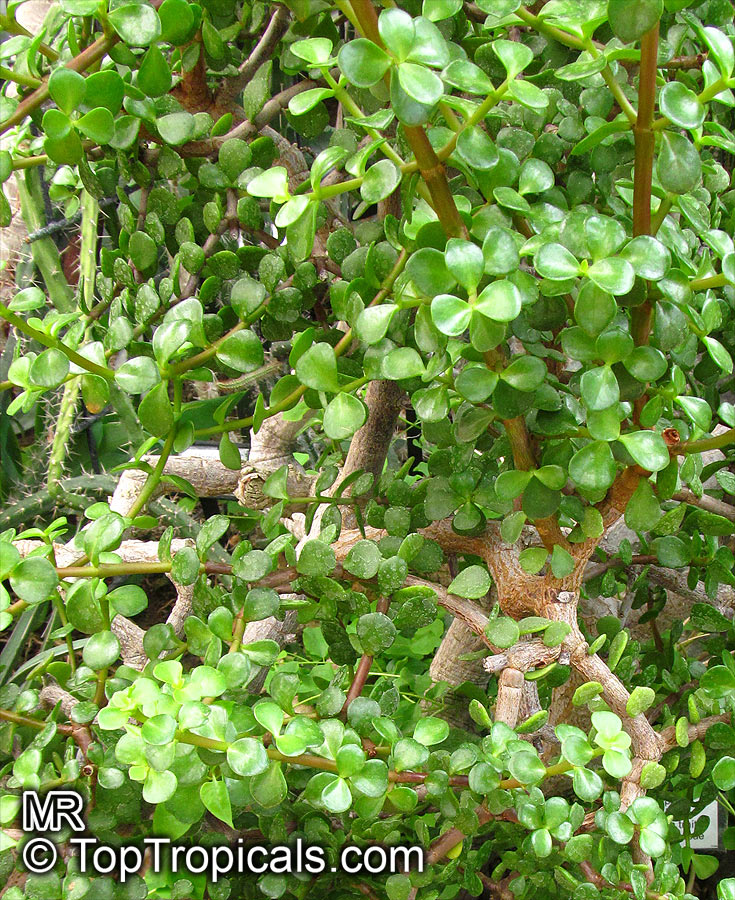
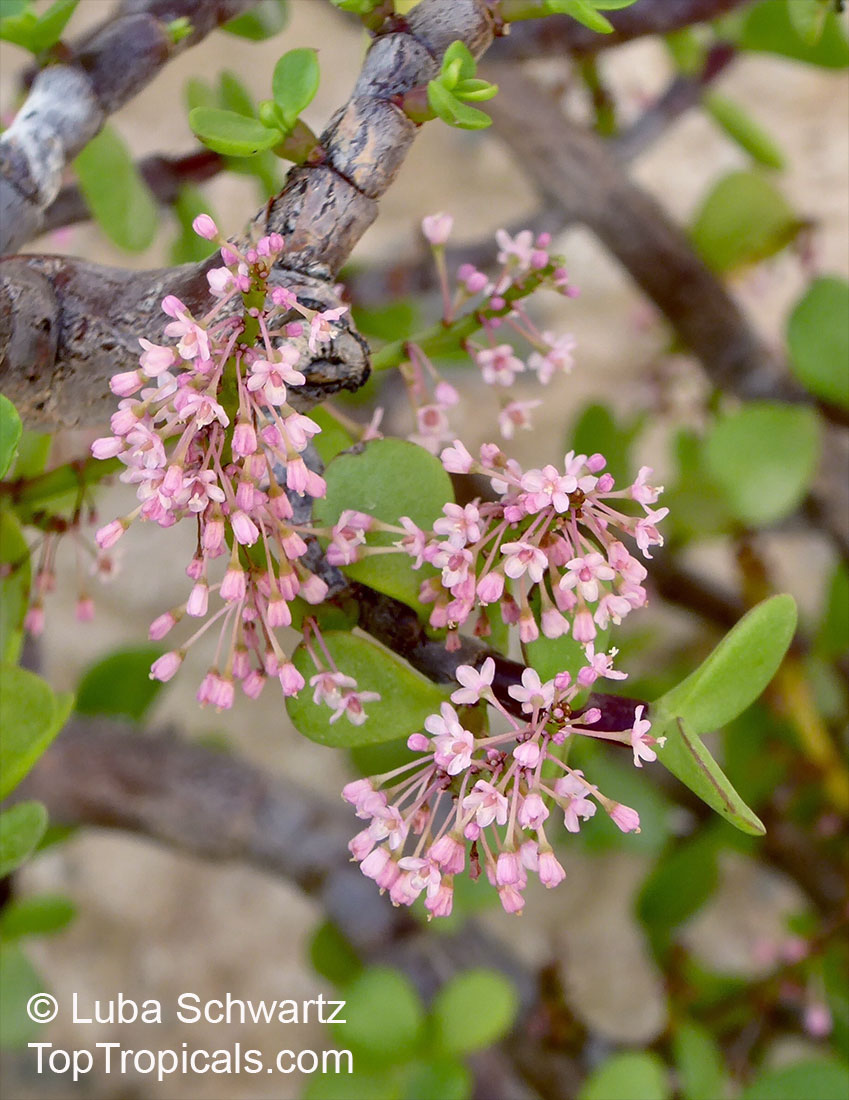
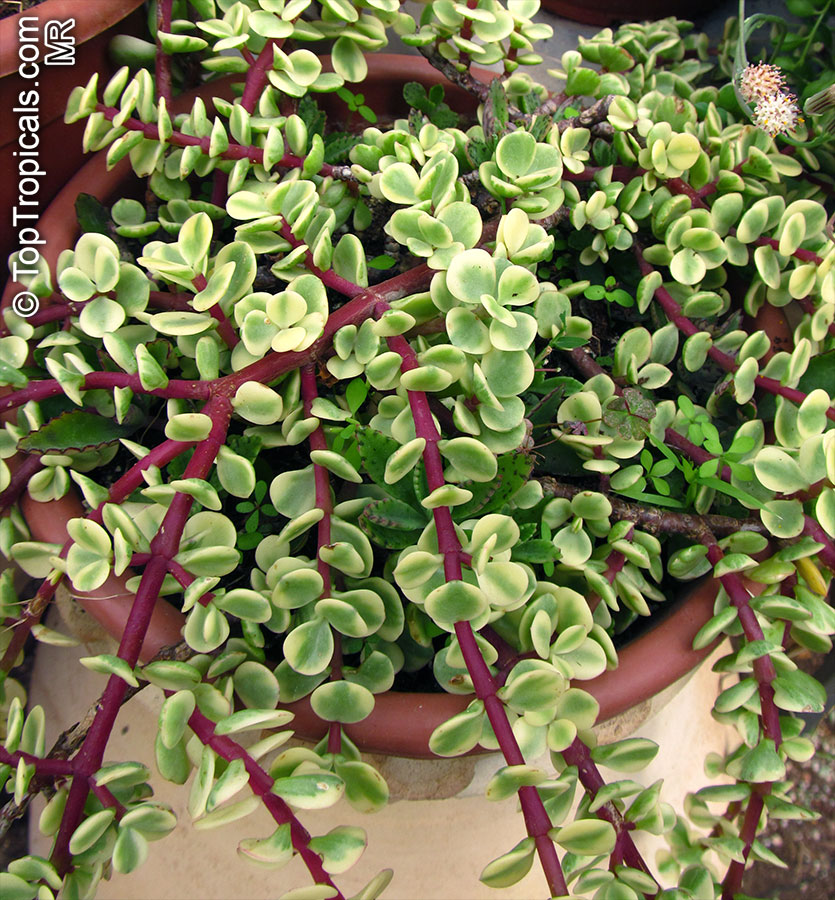
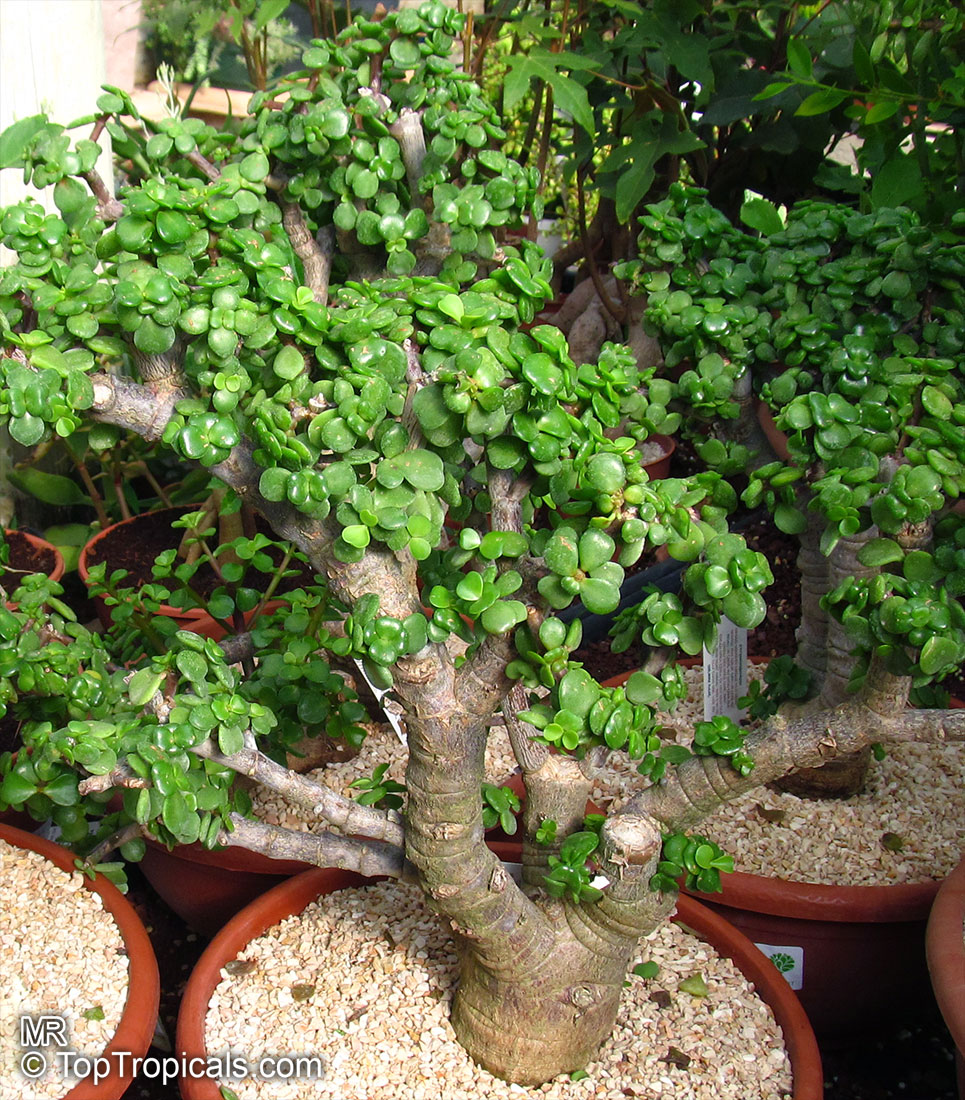
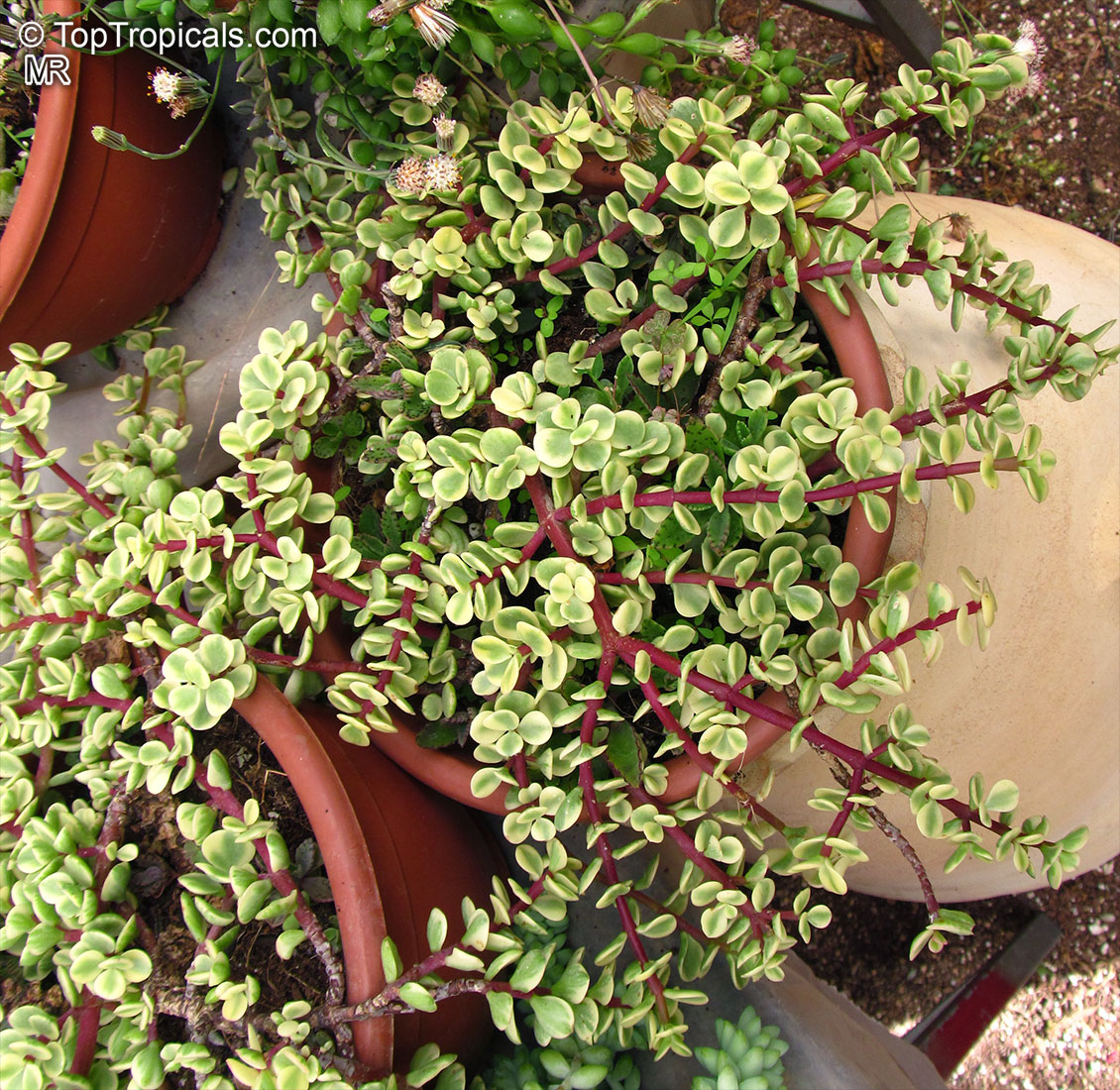
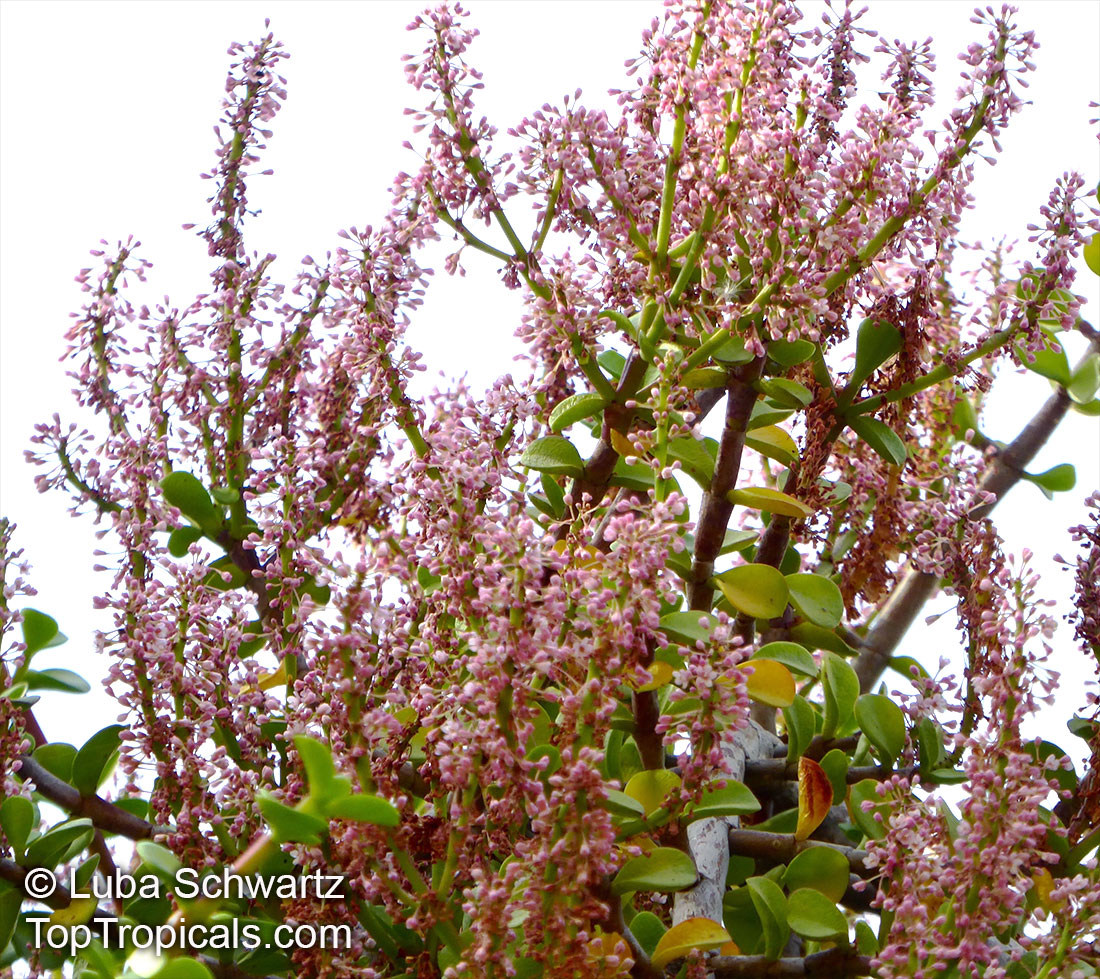
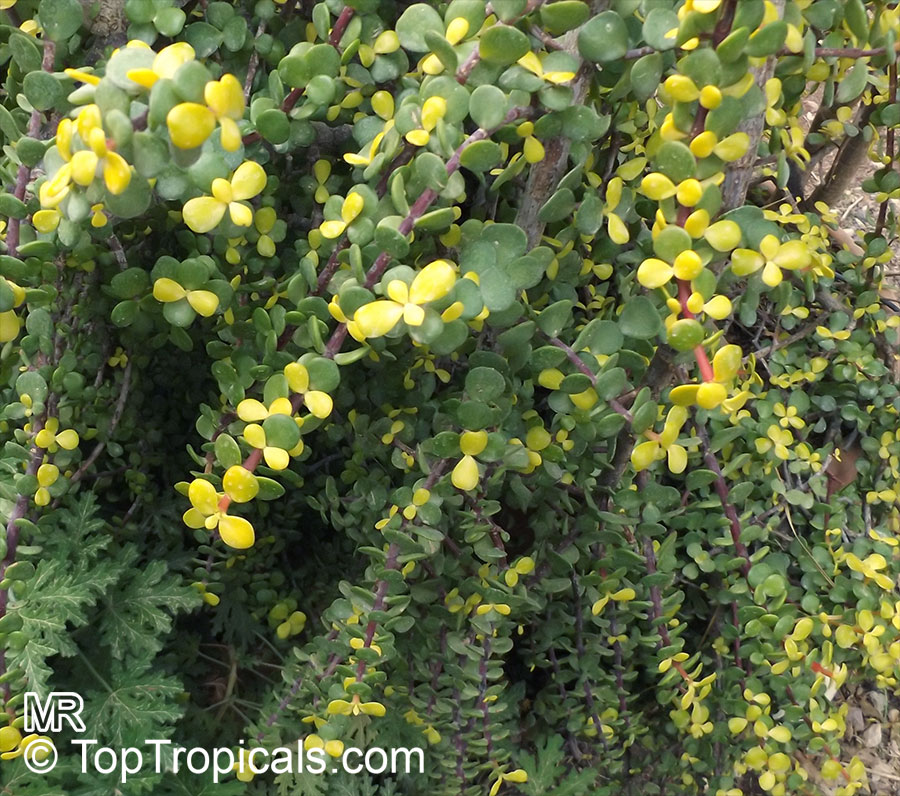
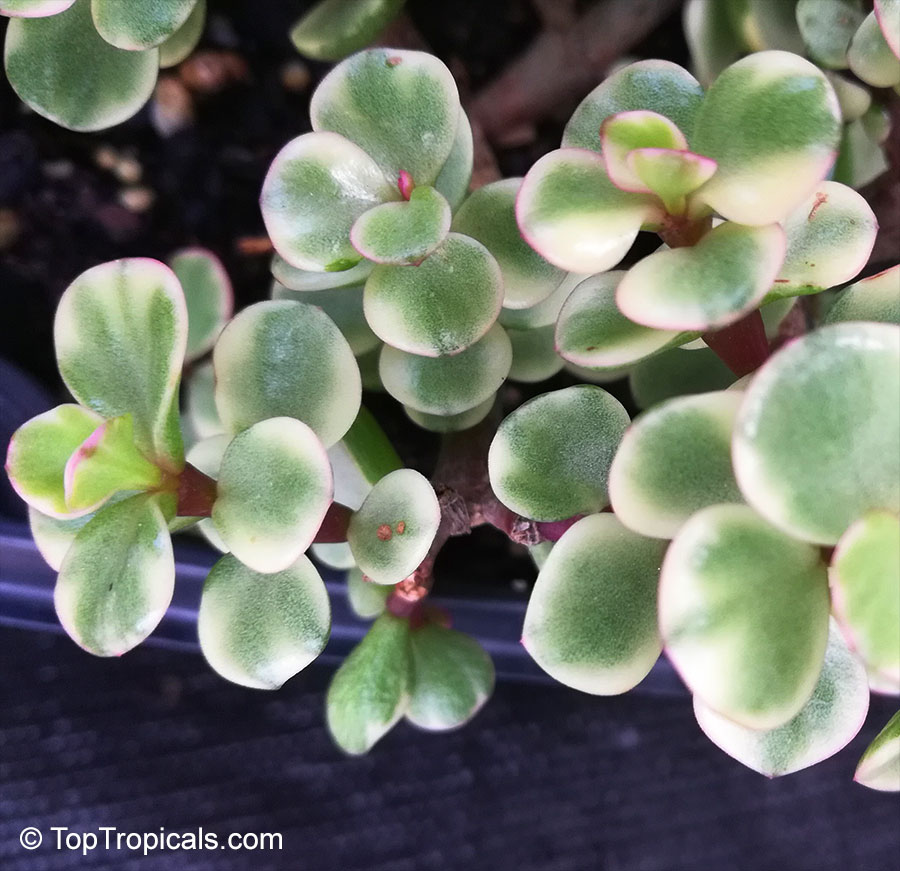
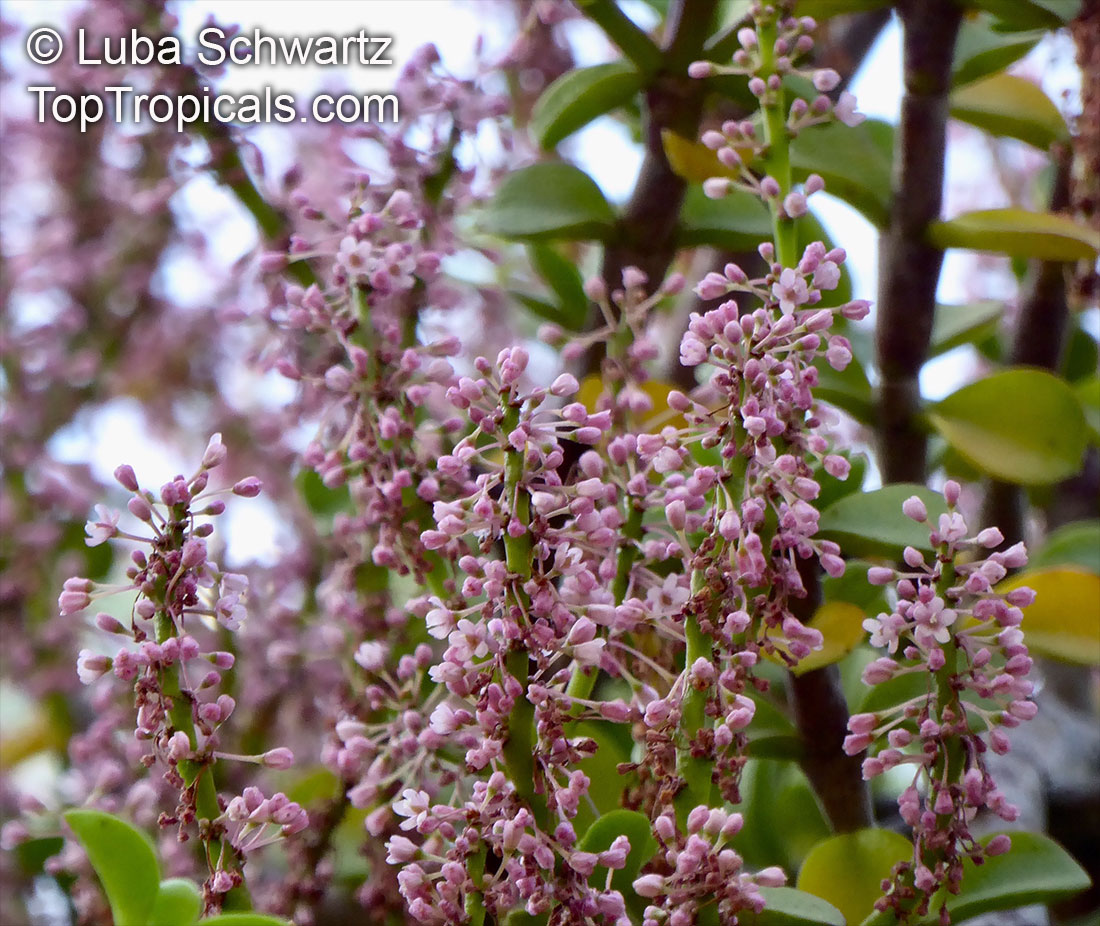
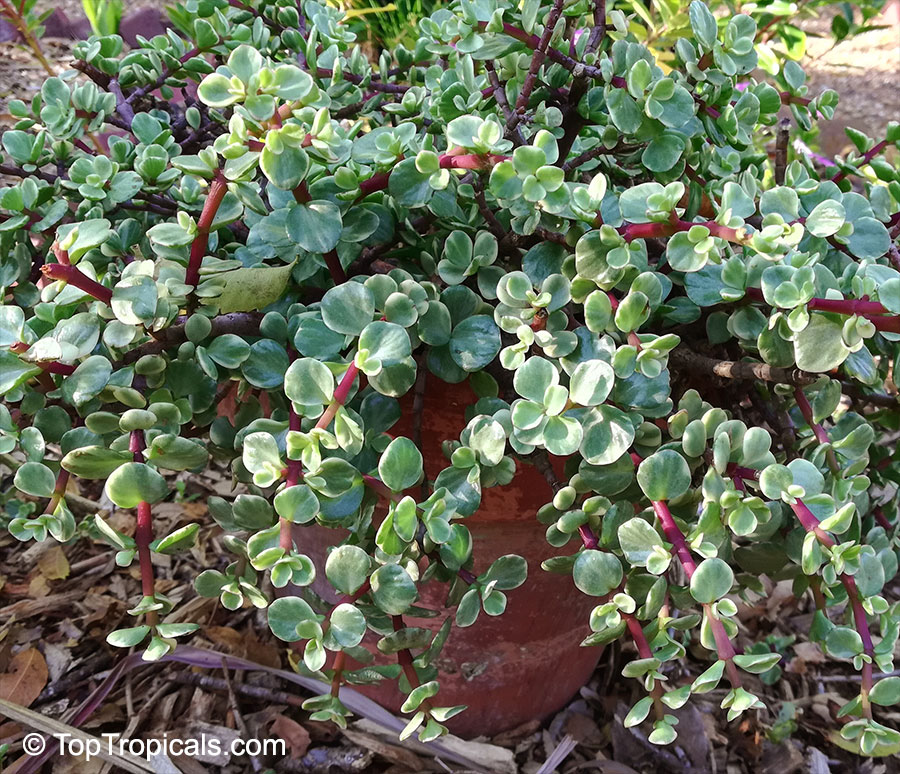
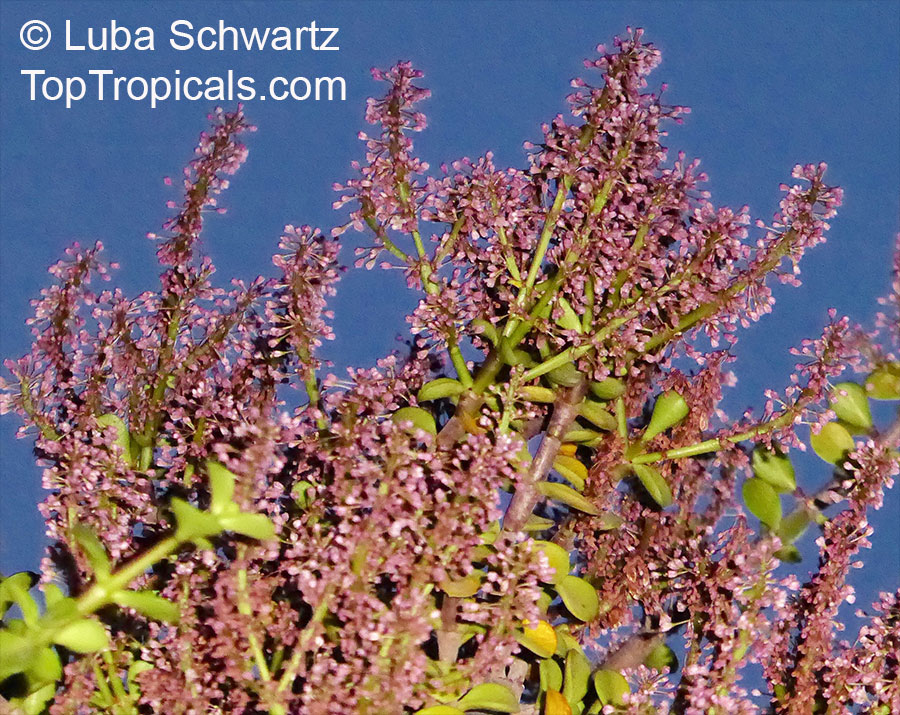
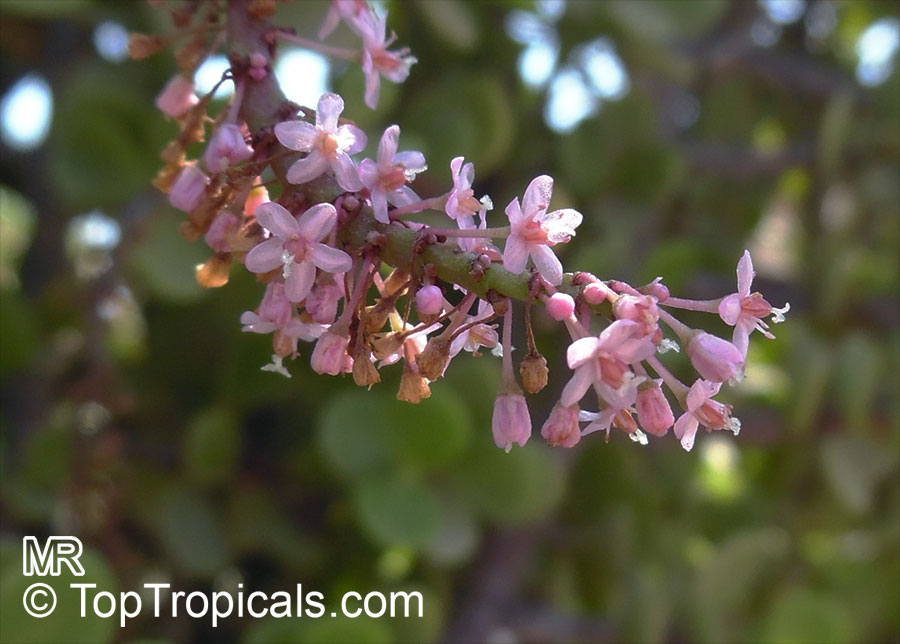
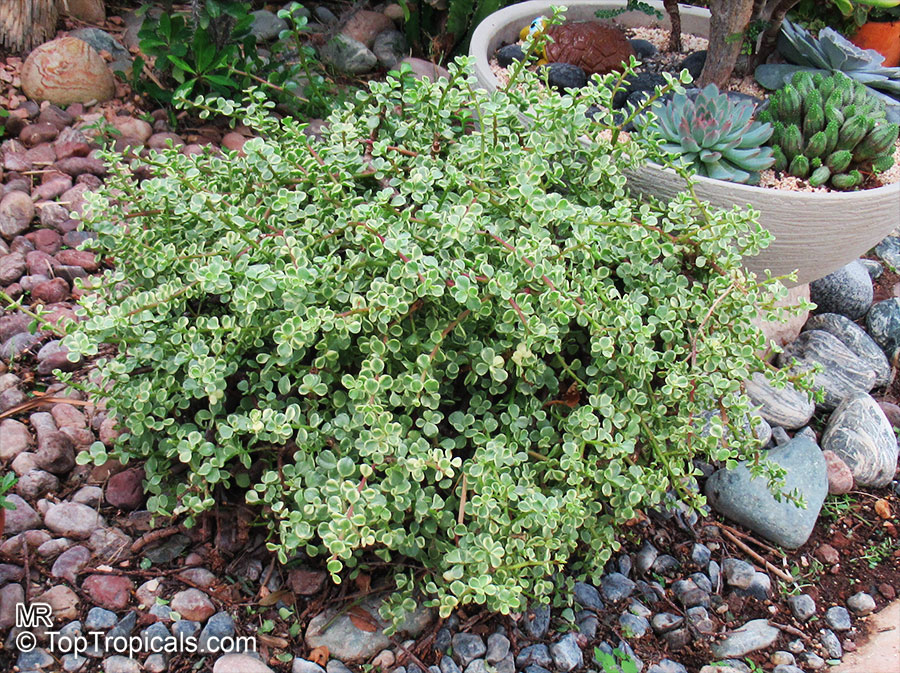
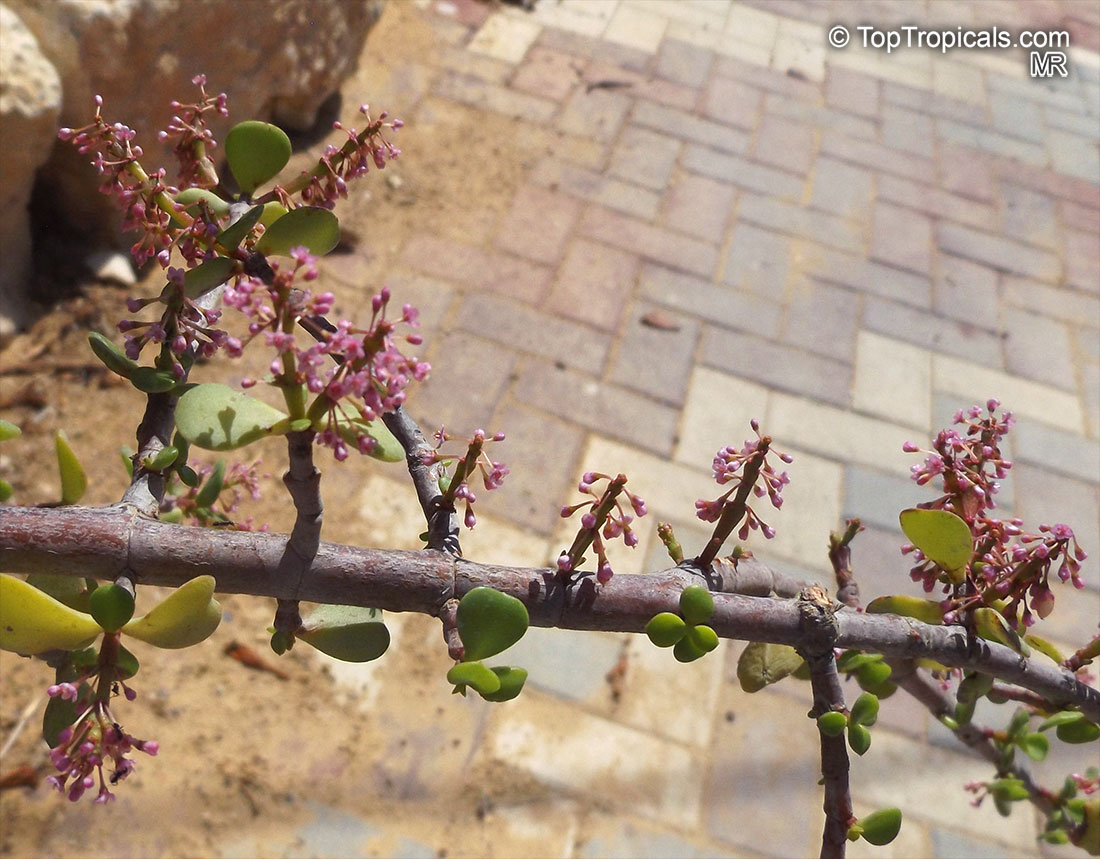
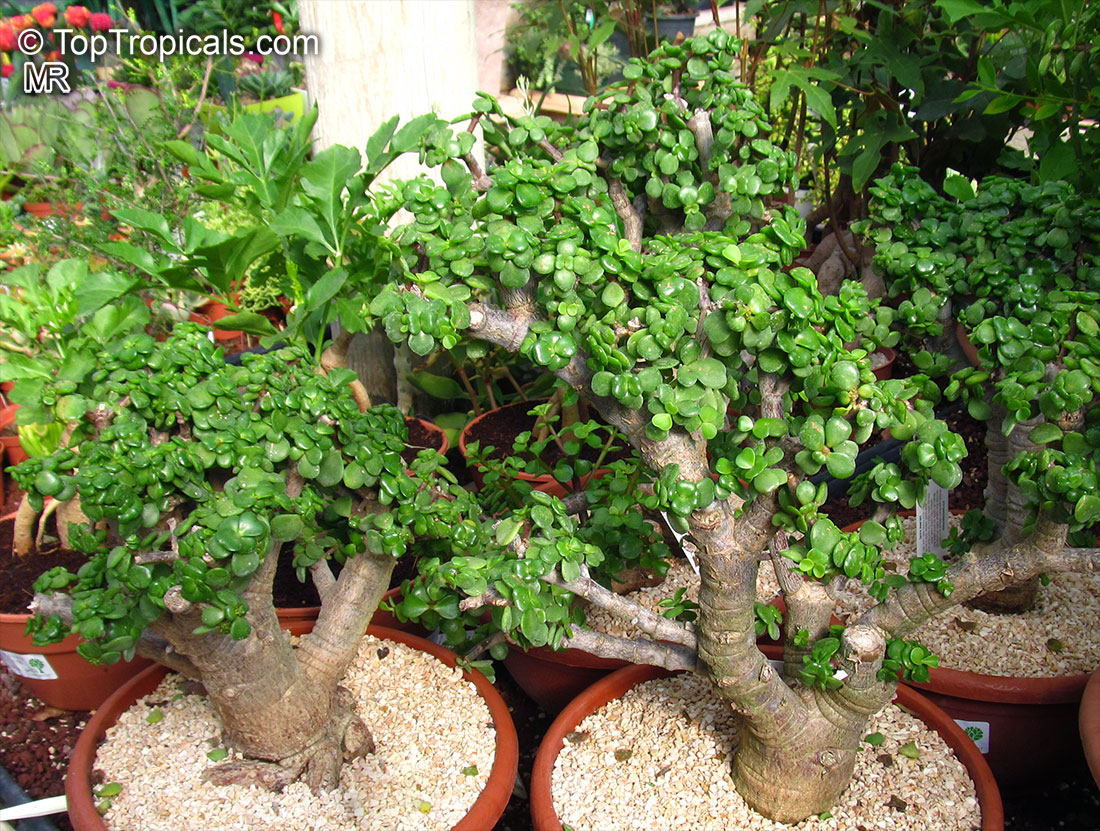
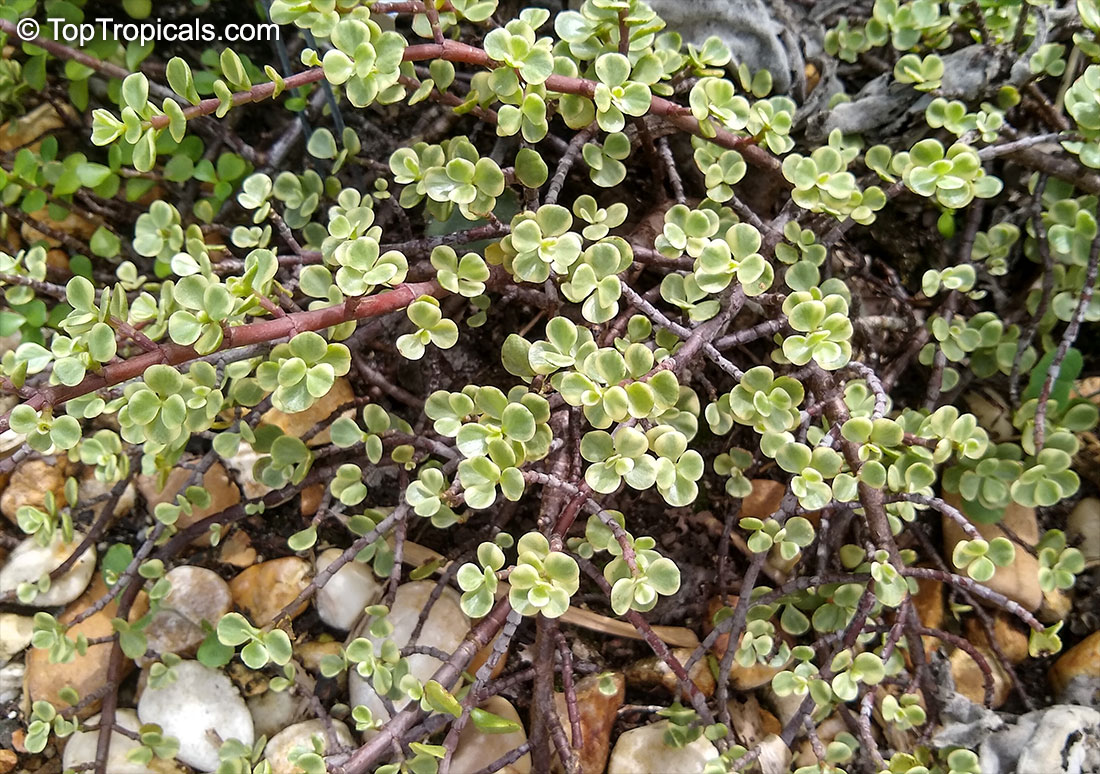
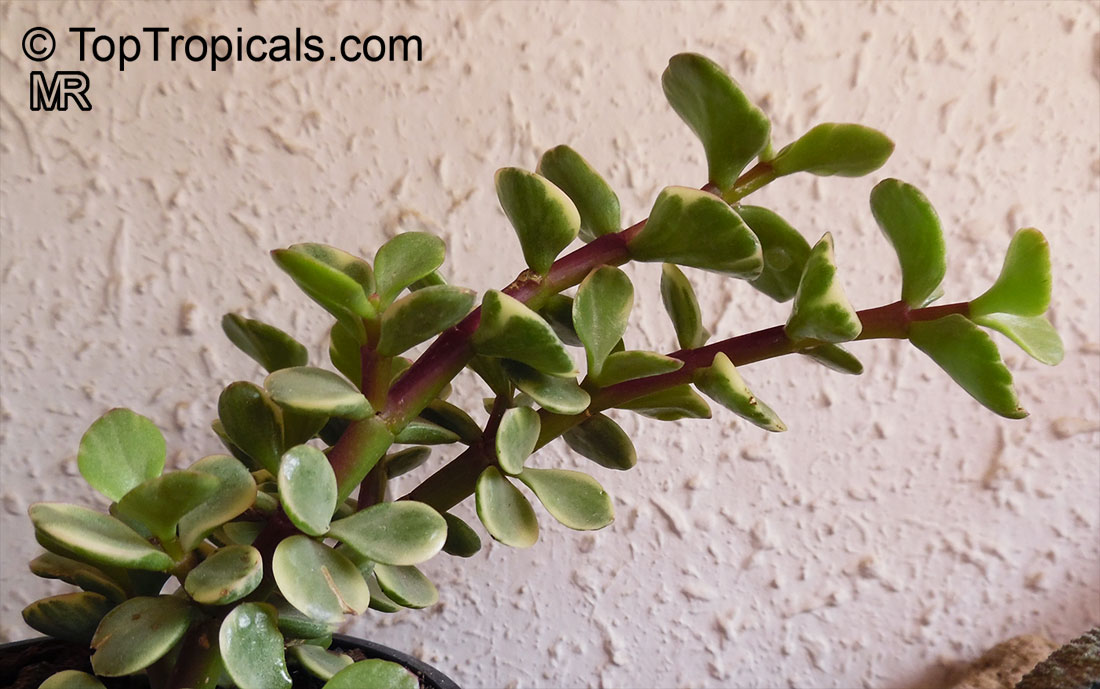
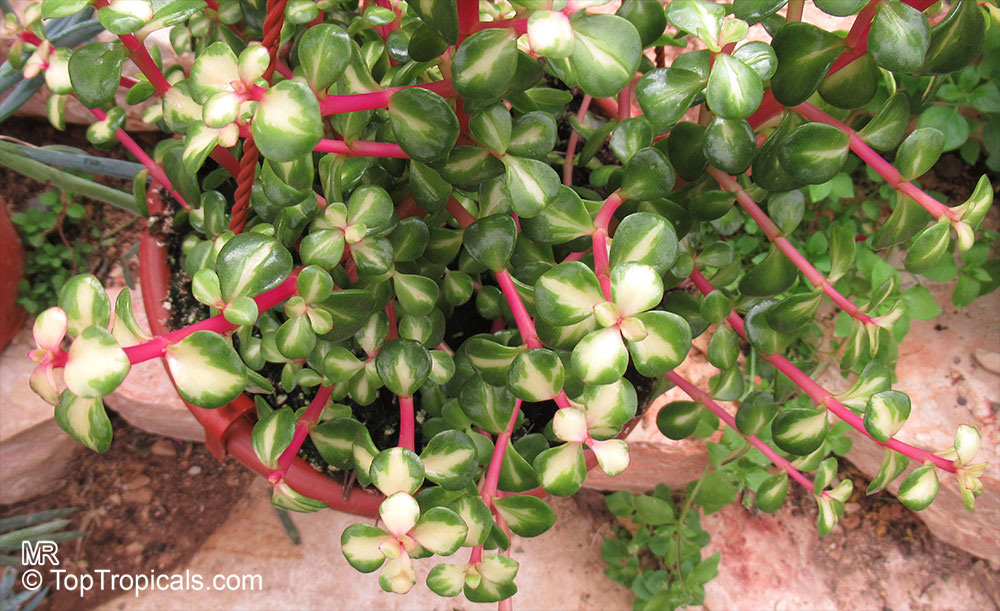
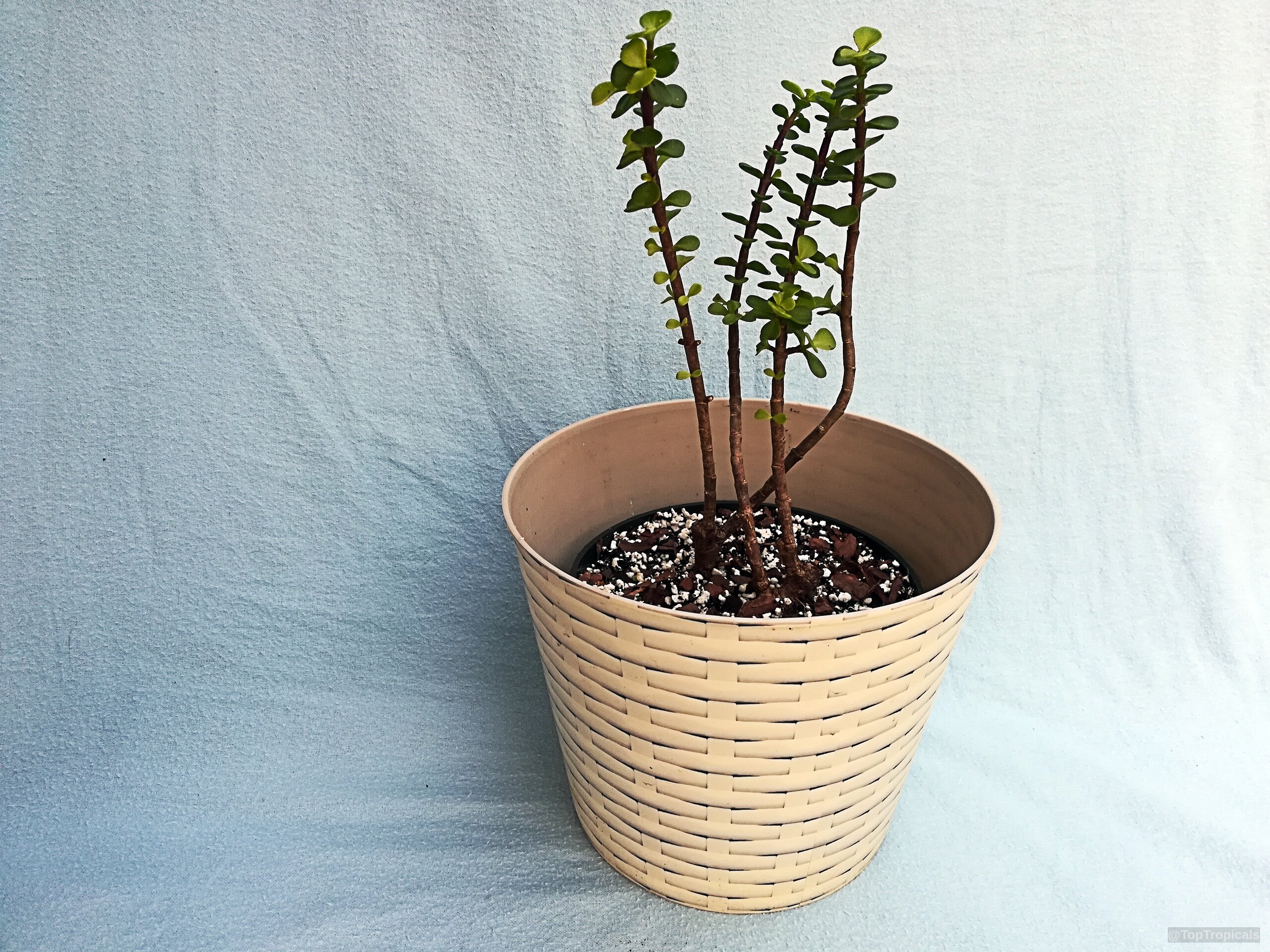
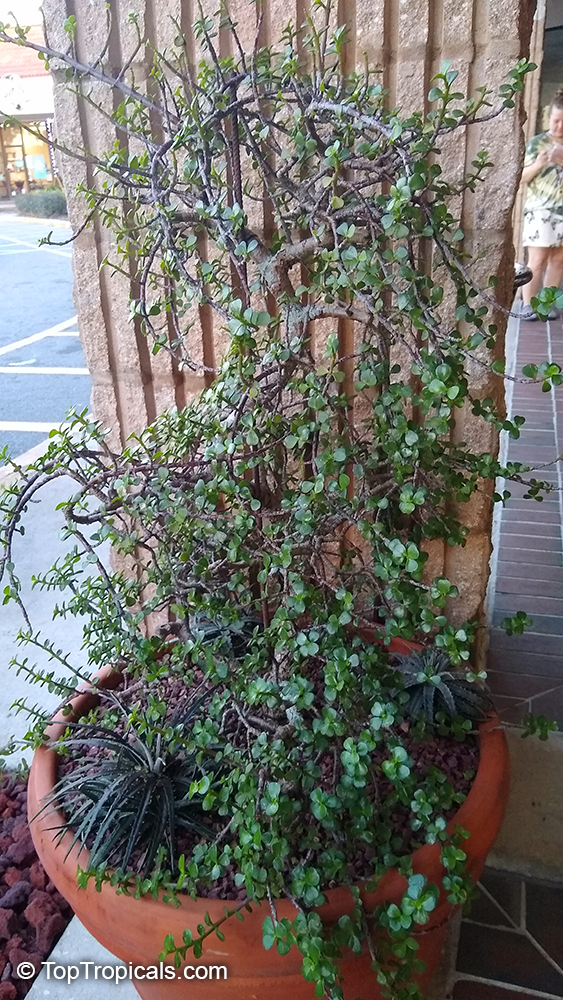
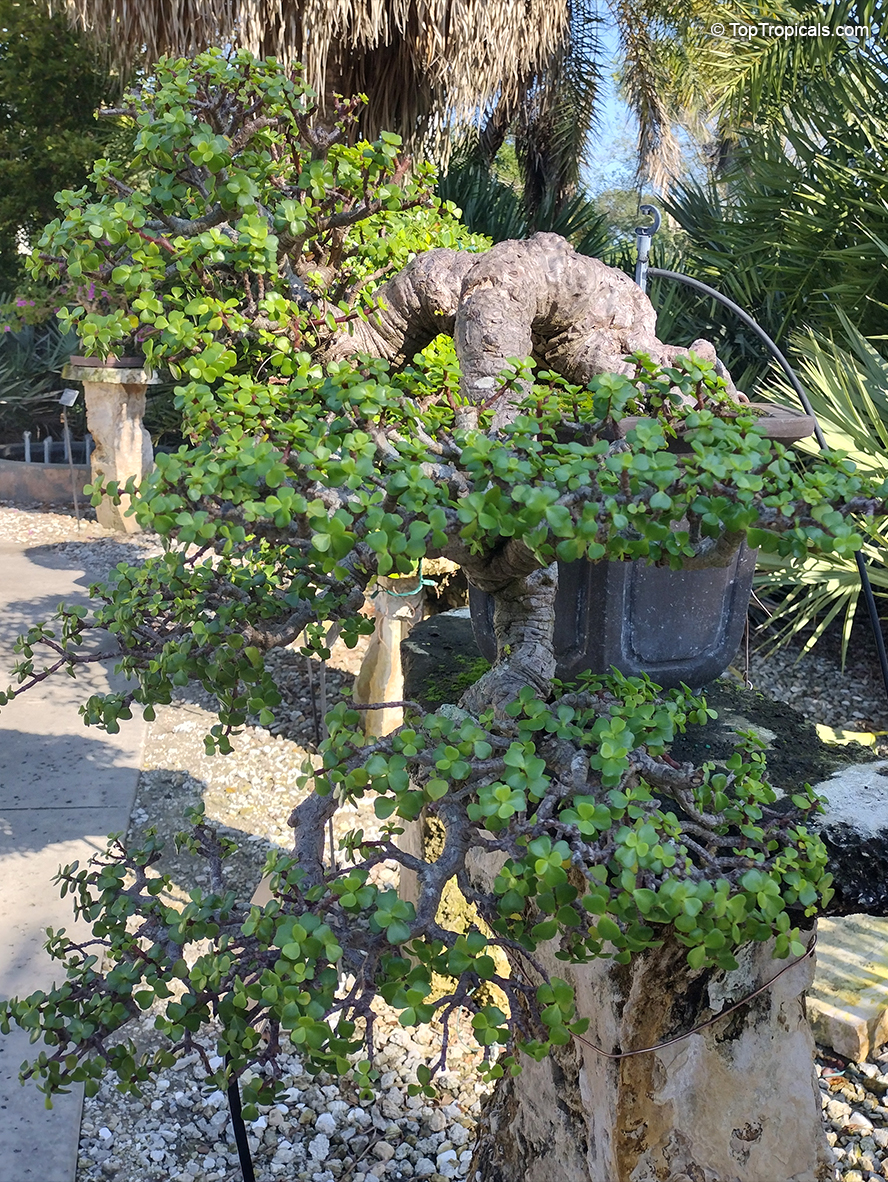
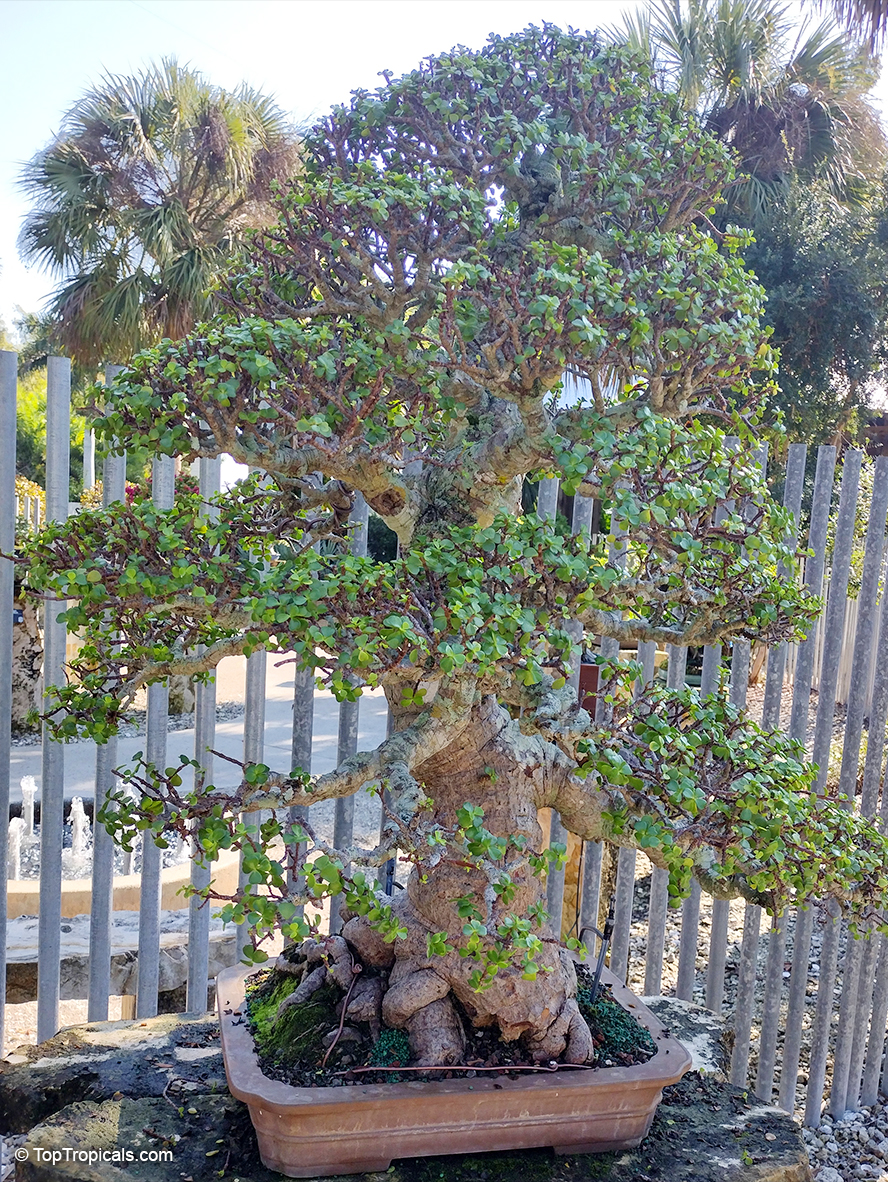
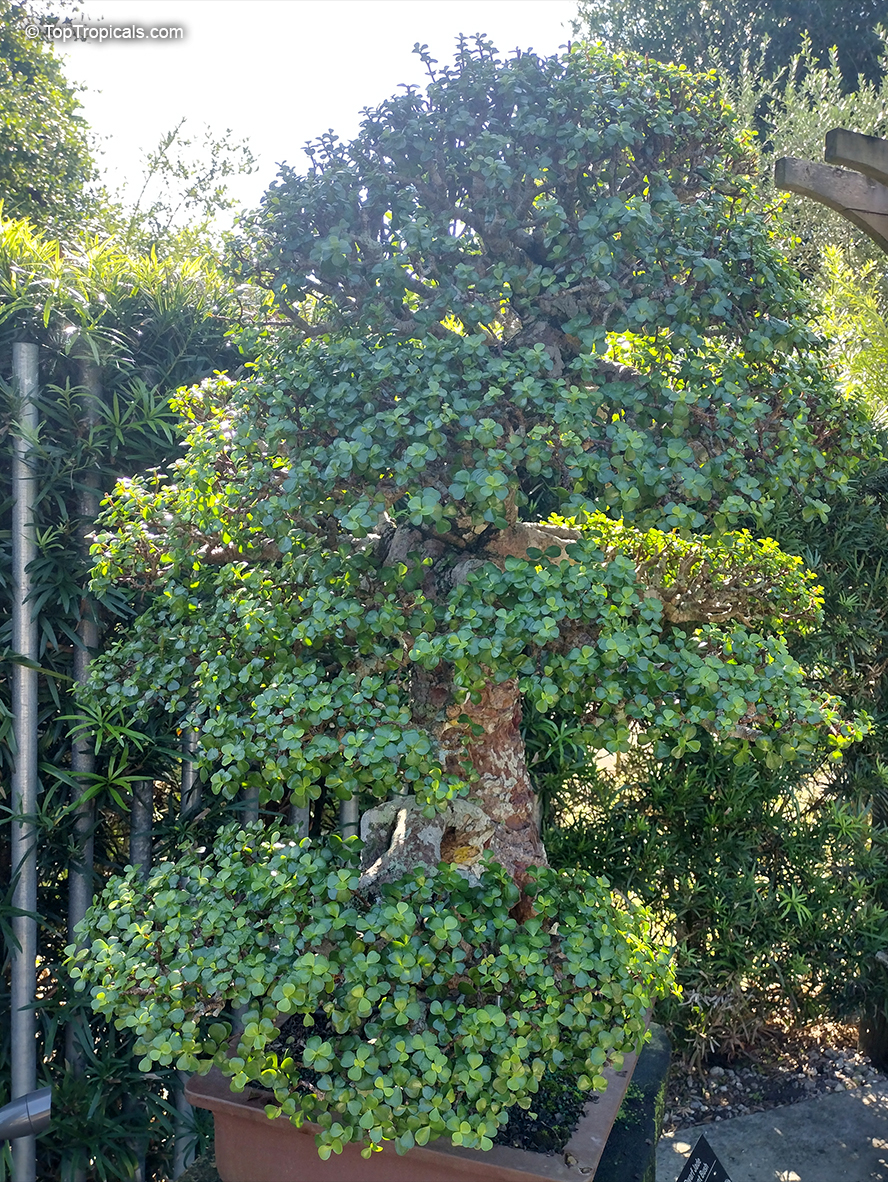
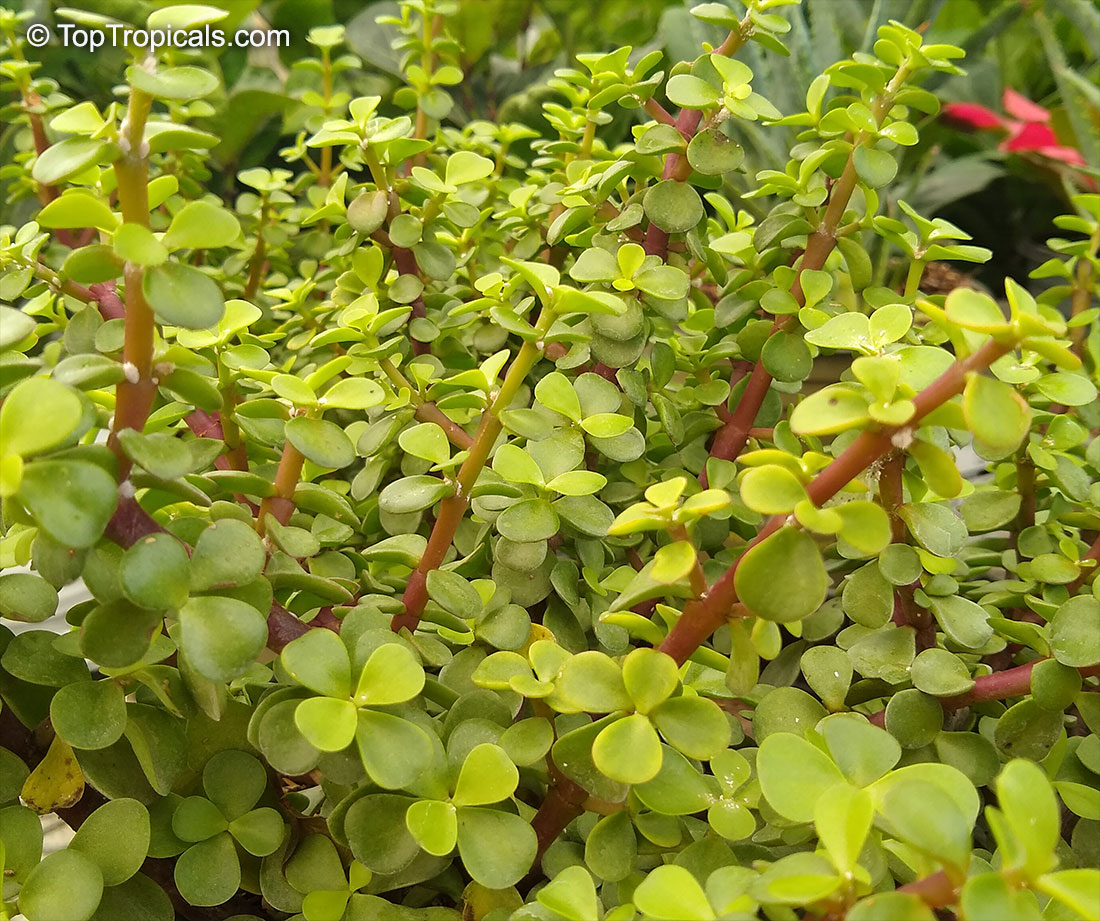
This interesting plant can be used as an indoor bonsai where sunlight or strong artificial light is sufficiently available. The plant known to us as P. Afra was first illustrated from a rooted cutting in 1732 by Dr. Johann Jakob Dillenius, Oxford professor of botany, in his Hortus elthamensis. Not having flowered, it was understandably thought to be a species of Crassula. The common names derive from the succulent nature of the plant's leaves and stout trunk, and also from the observation that elephants will browse upon this. This is a stout juicy-stemmed, soft-wooded, semi-evergreen upright shrub or small tree, in the ground growing about 9 ft tall. The diameter of the trunk can be 9" or more. The leaves and young branches/branch tips are quite phototropic. Older branches, gray, shiny and up to 2" thick, will hang down or trail on the ground. Spreading outward, less frequently they will grow erect, especially at the center of the plant. Has opposite, obovate (egg-shaped), glabrous, very fleshy, blunt green leaves usually less than 1" long and without a distinct petiole or leaf stem. The flowers are white/pink/rose/lilac-colored. In South Africa P. afra bears these star-shaped flowers in late spring and summer after the rains, but seldom blooms in the western U.S., Hawaii, or Florida. The flowers are rare in cultivation, but if kept very dry the older and presumably unpruned plants may flower after rain. The berry-like fruit is pinkish, small, light, dry, transparent. Leaves of plants grown in full sun are smaller than those of the same variety grown in partial shade. Full sun is also known to bleach the leaves to a pale yellowish color on some large potted specimens. Brown patches on leaves can be due to sun scorch. Move the affected plant to a more airy place and shade from the hot sun for two weeks. Cuttings can become rooted in water, but after about one month the cutting needs to be put in soil or else it will rot.
In Africa, it is a favorite food for both Elephants and Rhinoceros, and is grown in farms for feeding both animals and people. The foliage when eaten raw, steamed, lightly boiled, or especially stir-fried, is not only delicious but actually very nutritious, containing more beneficial Beta 3 fatty acids than most fish.
Read more about Portulacaria afra.
Similar plants: Portulacaria afra (Elephant's Food)
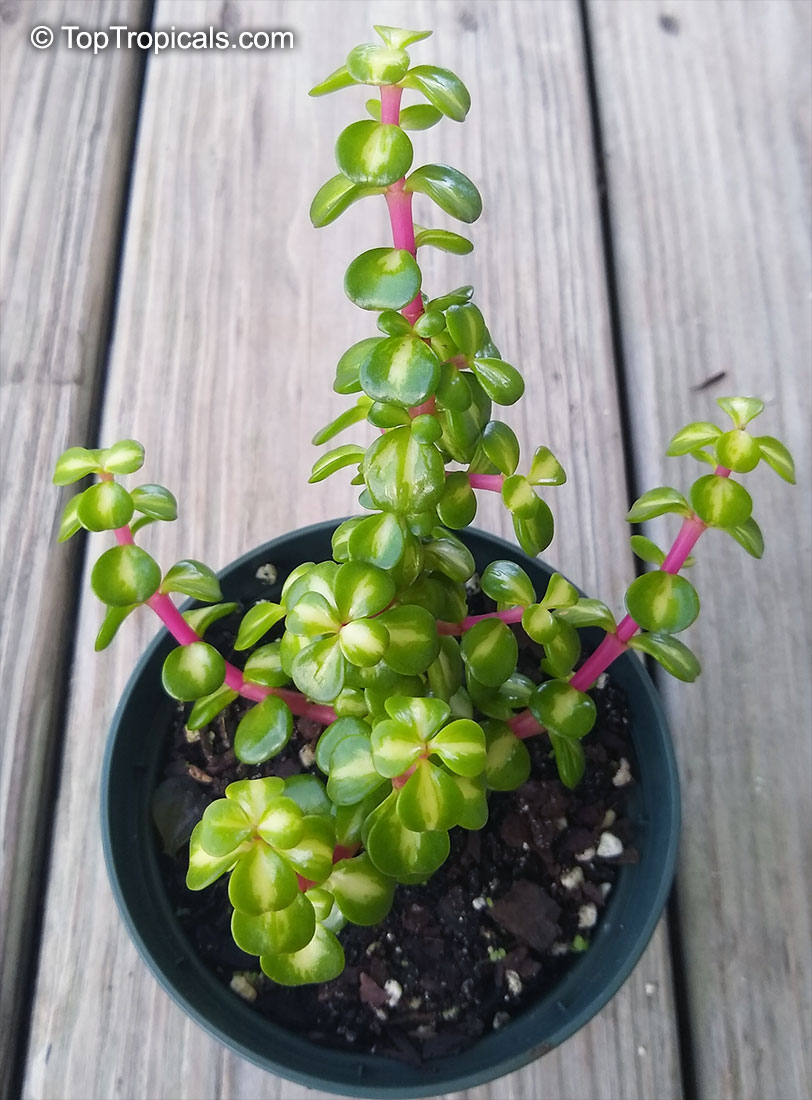

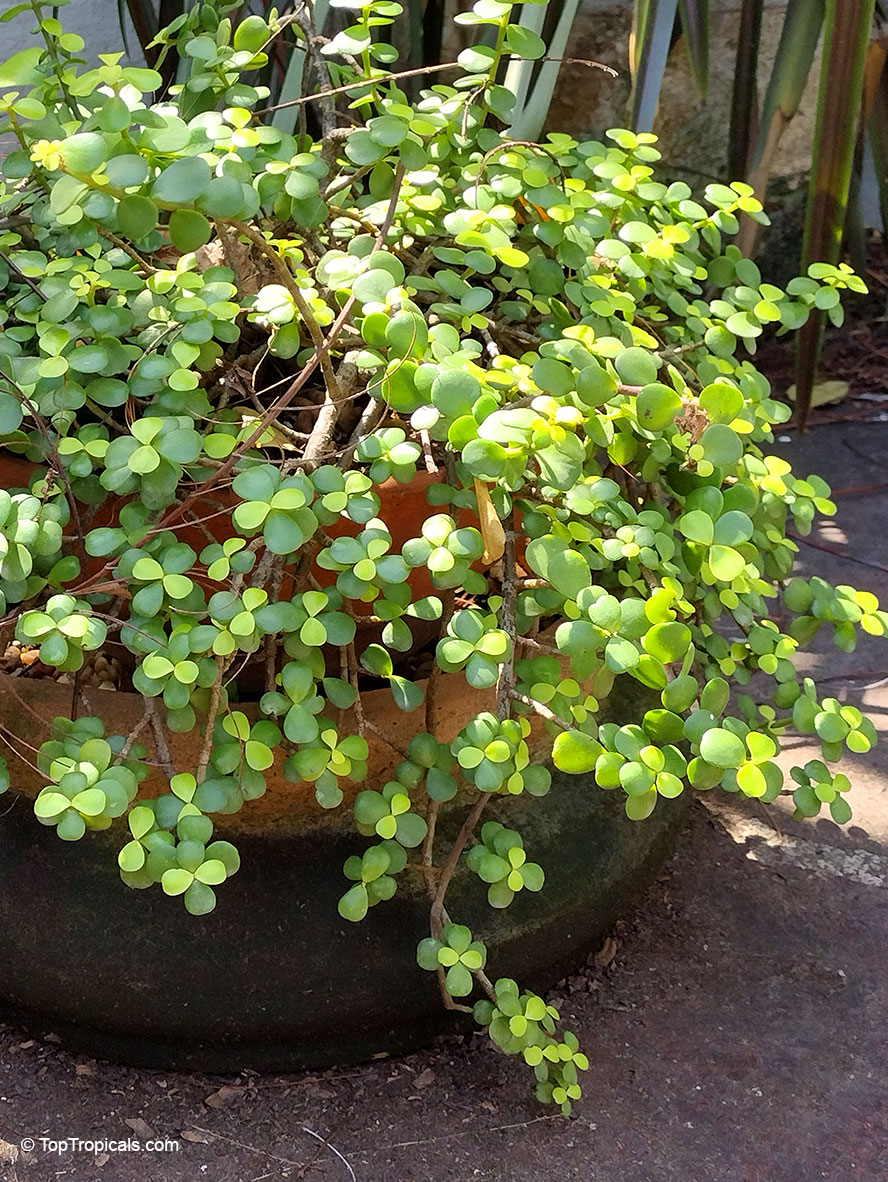
In Africa, it is a favorite food for both Elephants and Rhinoceros, and is grown in farms for feeding both animals and people. The foliage when eaten raw, steamed, lightly boiled, or especially stir-fried, is not only delicious but actually very nutritious, containing more beneficial Beta 3 fatty acids than most fish.
Read interesting Article about this plant.
Recommended Fertilizer: SUNSHINE Robusta - Rapid Growth Booster
Local pickup only. This item is not available for shipping. Local delivery may be available in Ft. Myers or Sebring, Florida. Contact us for an estimate. Non-pickup orders are subject to restocking fees.
 SUNSHINE C-Cibus (NPK 2-2-4) - Crop Booster for every watering.
  SUNSHINE C-Cibus (NPK 2-2-4) - Crop Booster for every watering.