Pictogram Guide · Mouse over pictogram for definition
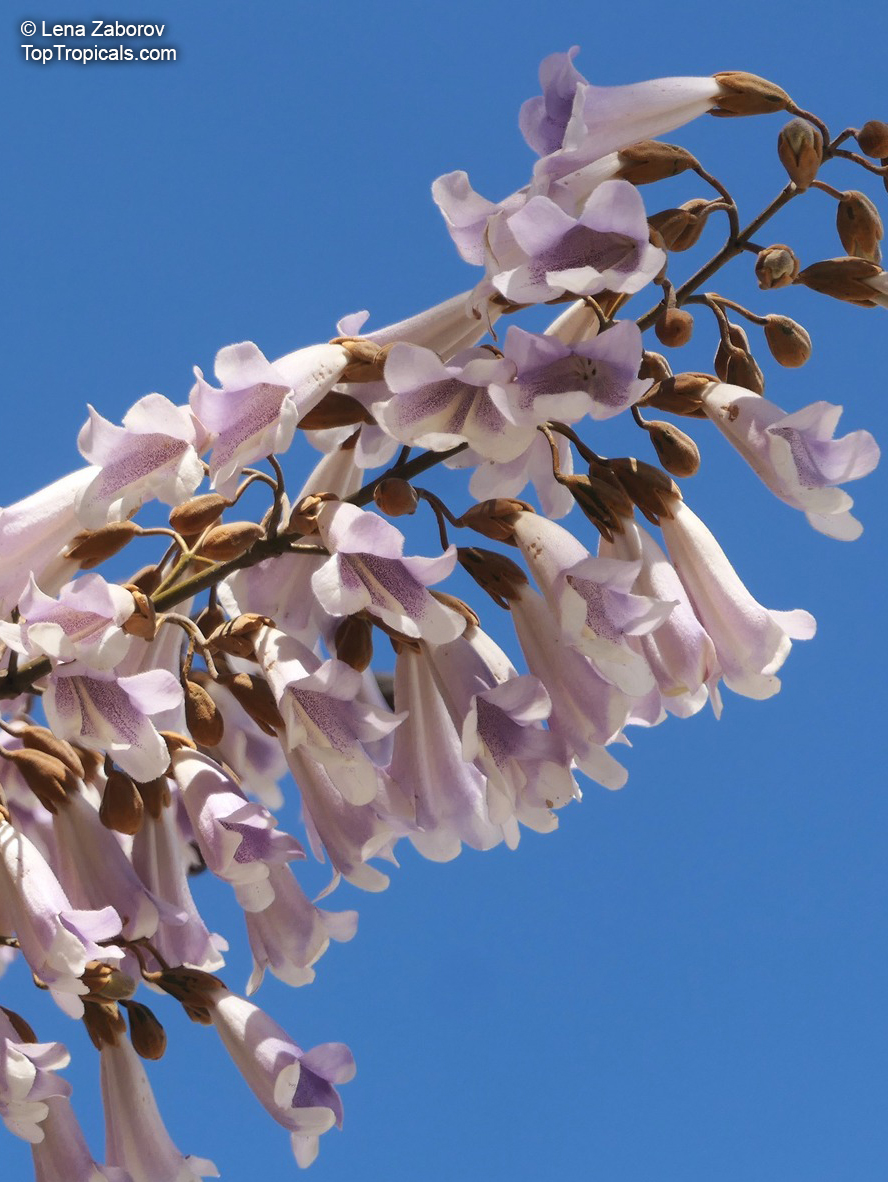
Paulownia sp.
Princess Tree, Empress TreeFamily: Paulowniaceae (Formerly:Scrophulariaceae)
Origin: China
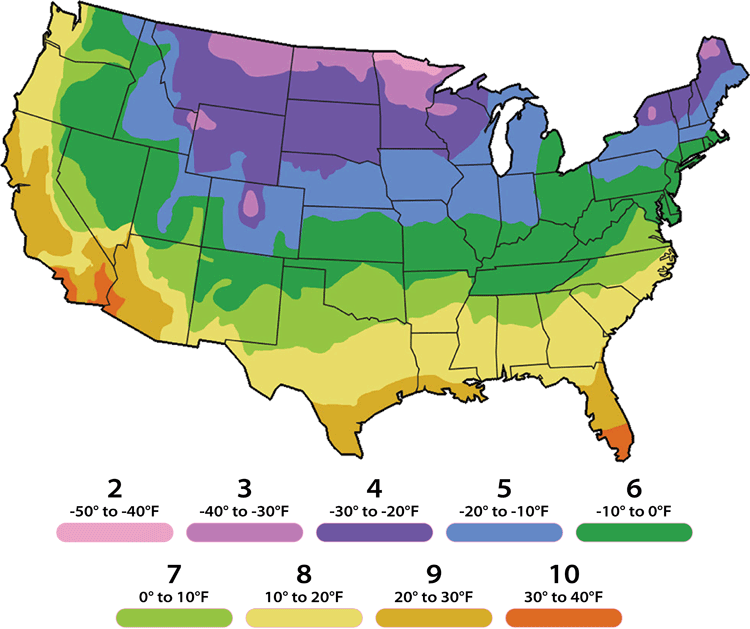


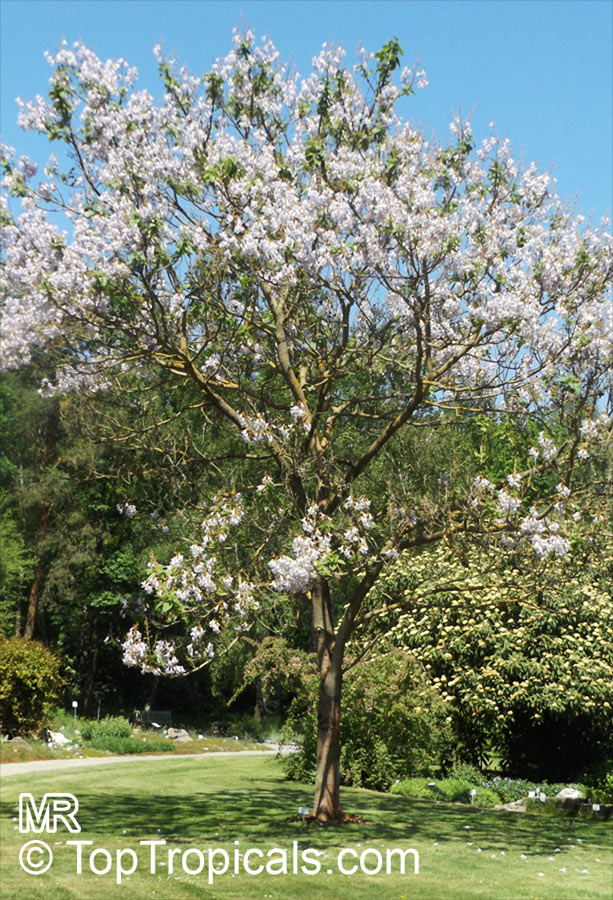
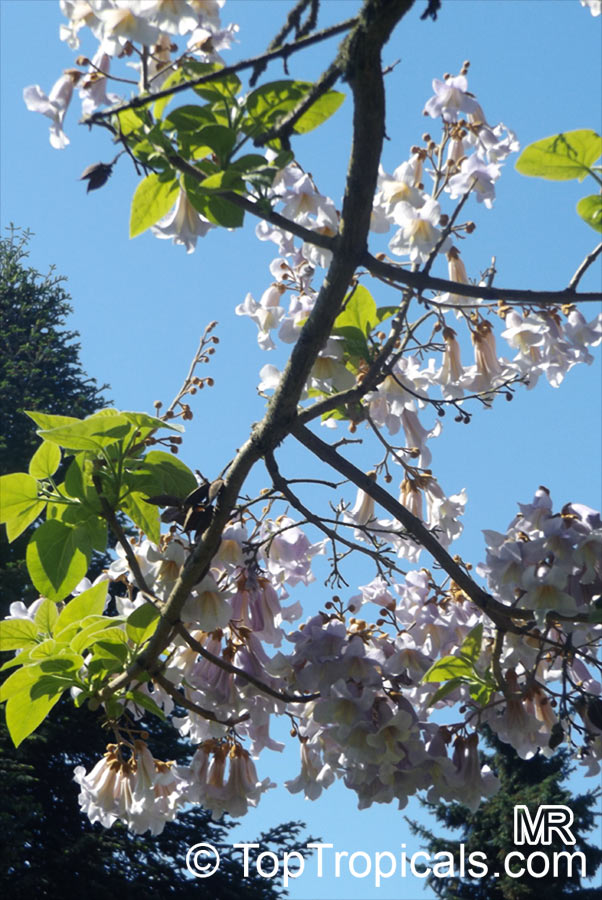
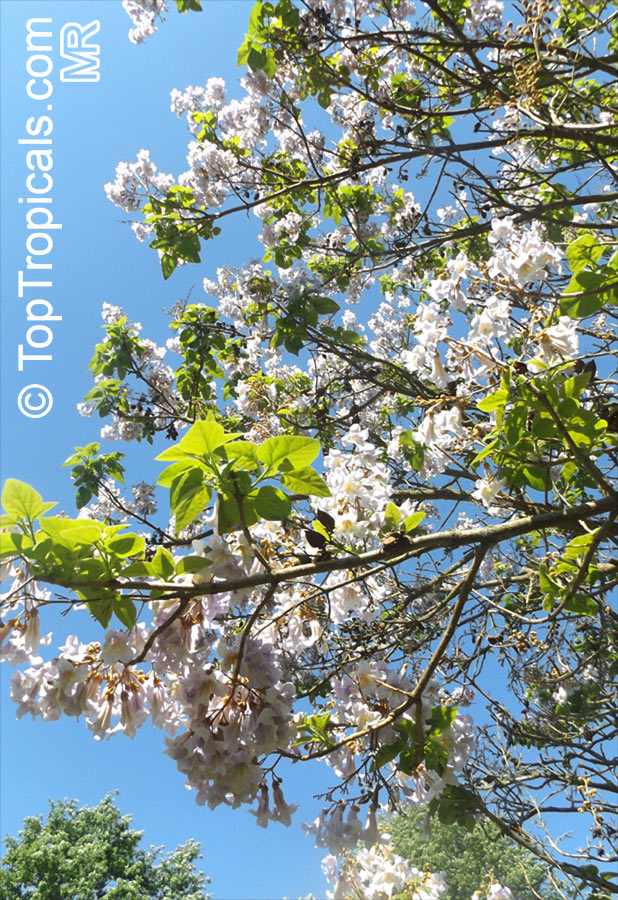
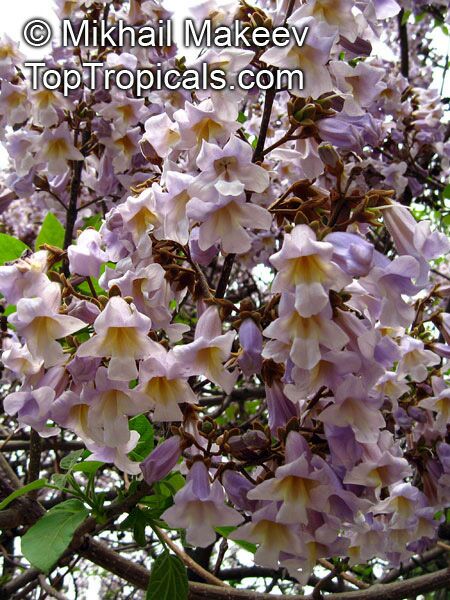
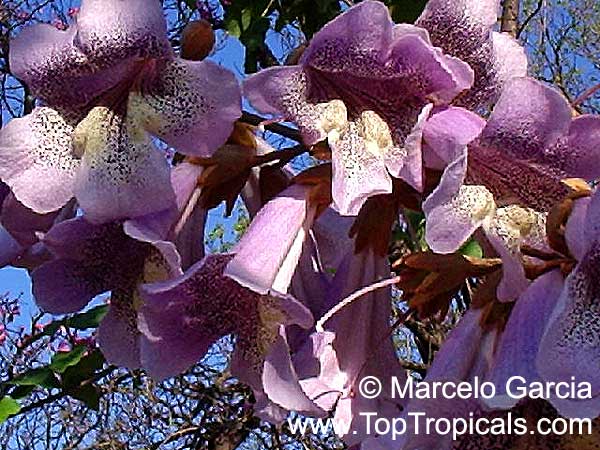
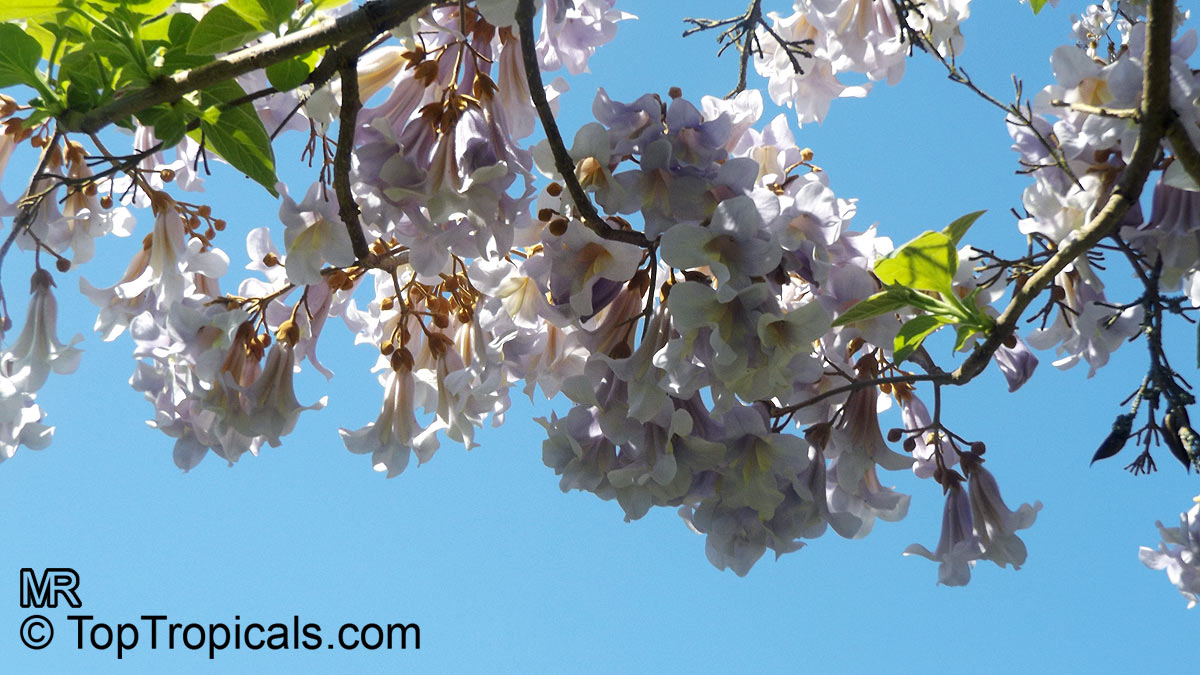
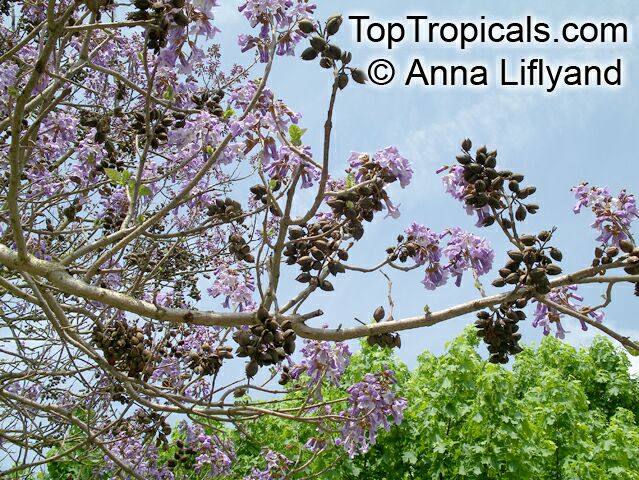
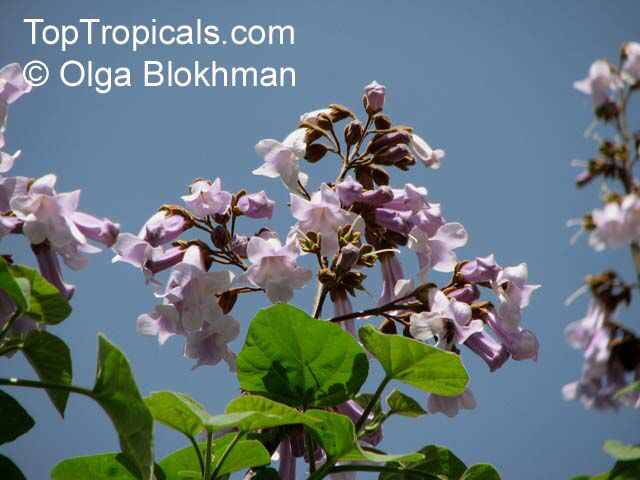
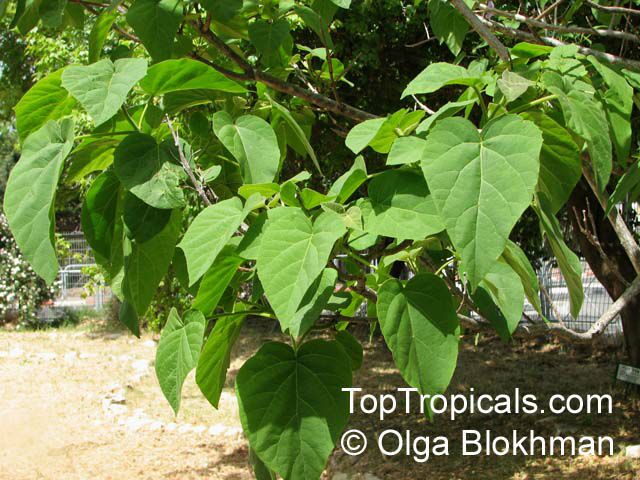
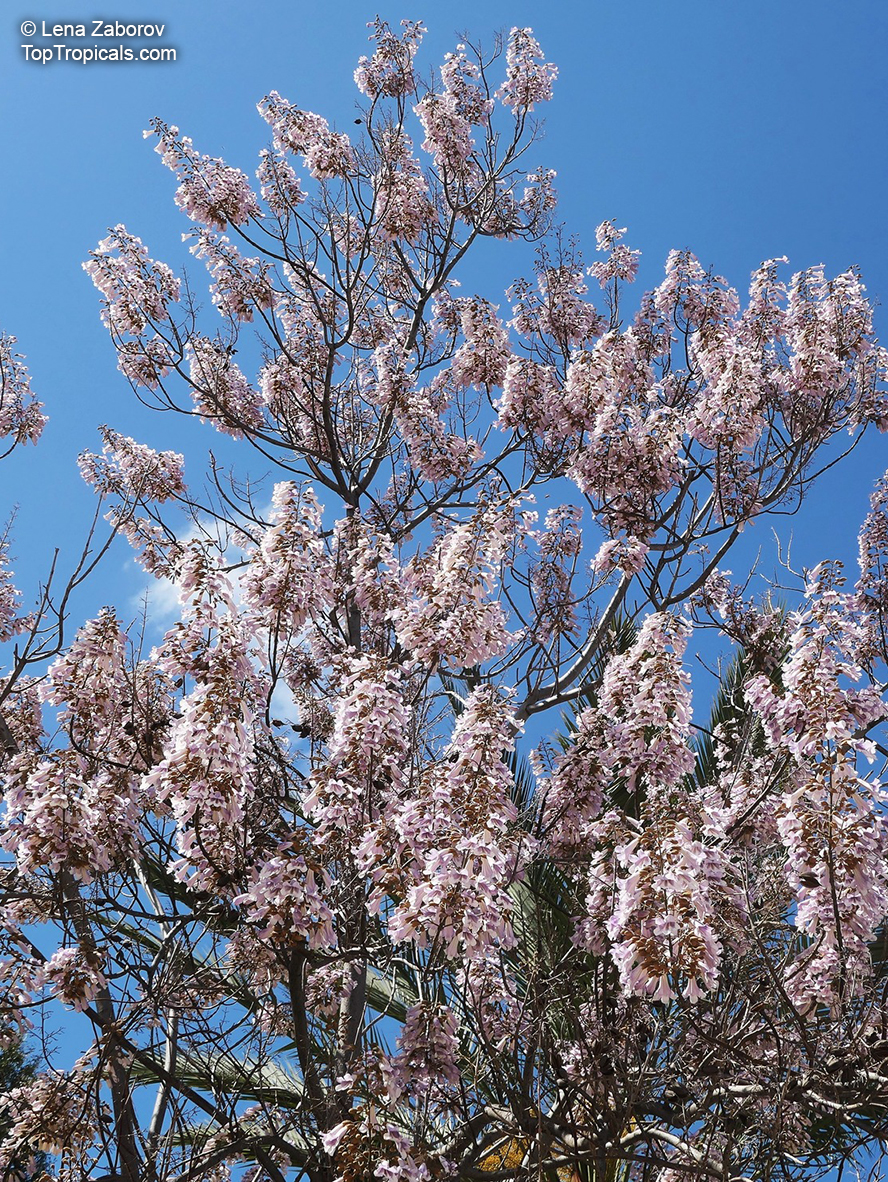
The Paulownia sp. (Princess Tree) is a deciduous plant that is grown in USDA Plant Hardiness Zones 6-11. Its fragrant, bell-shaped pink or lavender, purple flowers attract butterflies, hummingbirds, and other beneficial wildlife to your garden.
To grow Paulownia sp.successfully, it should be planted in a location that receives at least 6 hours of direct sunlight daily. The tree thrives in full sun and moderate water. It is recommended to provide plenty of water during its first year, especially during active growth periods. Mulching around the tree will help the roots retain moisture and protect the tree from the cold. In cold climates, it is best to grow Paulownia in pots so that they can be moved indoors during winter. If grown outdoors, the plant should be protected from harsh winter winds.
Paulownia trees are considered the tree of the future due to their unique growth rate. In good growing conditions during the summer months, the plant can reach up to 20 feet high or even higher, depending on the Paulownia tree species used. The wood is easy to work with and suitable for various uses, including the manufacture of furniture, plywood, moldings, and doors. The flowers are colorful and beautiful in spring, while the trees are green and shady in summer. Paulownia trees are drought-resistant once established.