Actinidia deliciosa (Kiwi Fruit)
Botanical name: Actinidia chinensis
Common name: Kiwi Fruit
Family: Actinidiaceae
Origin: China
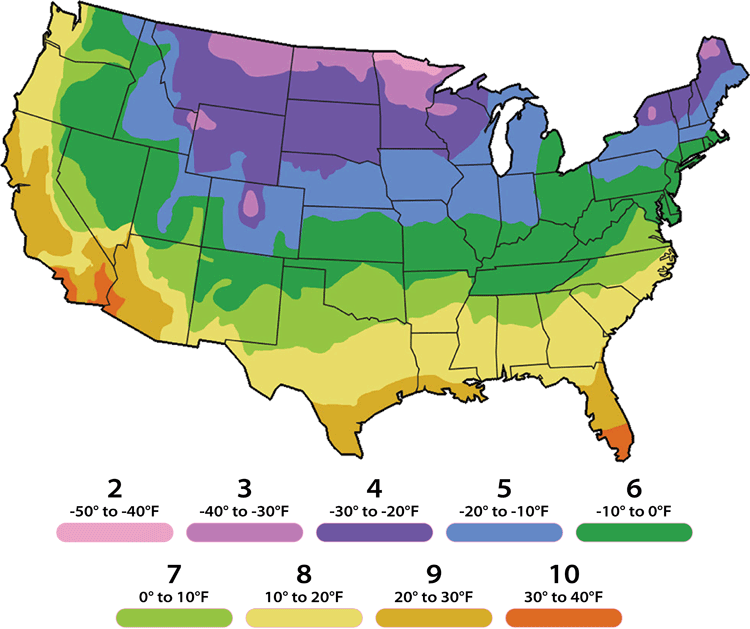
Hardiness: 10°F


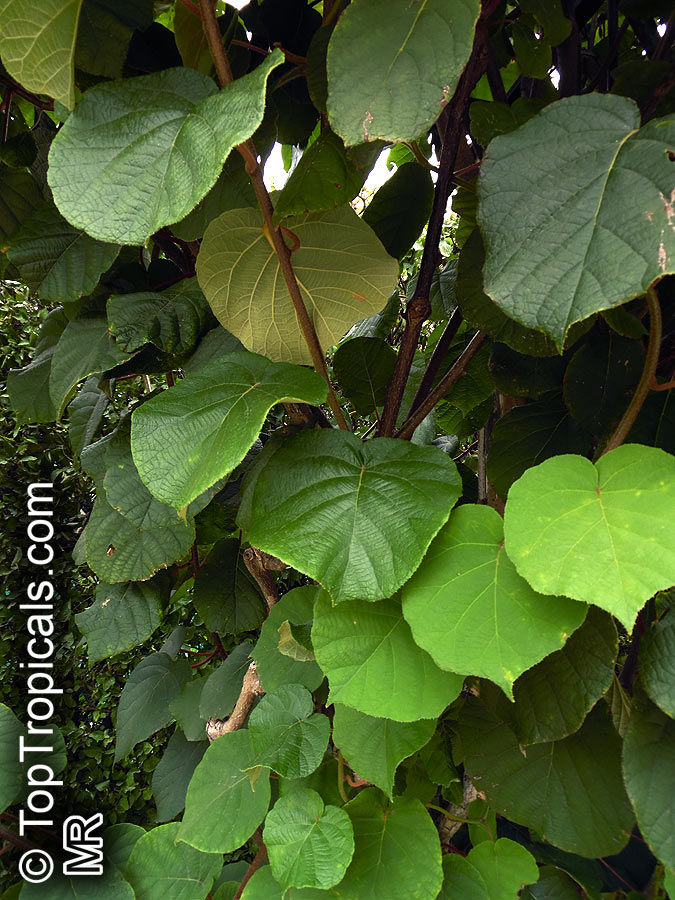
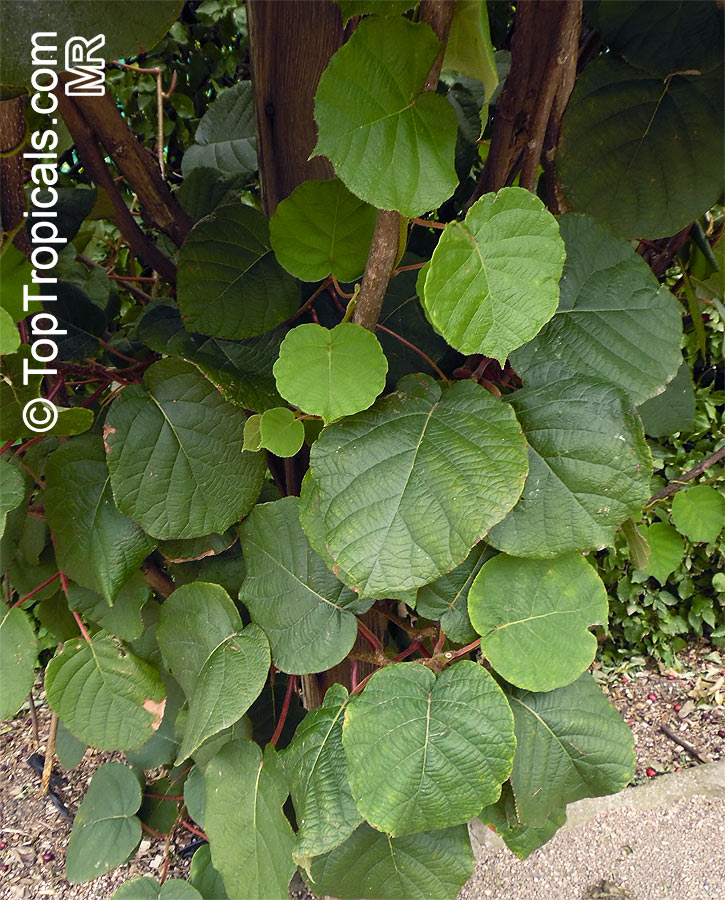
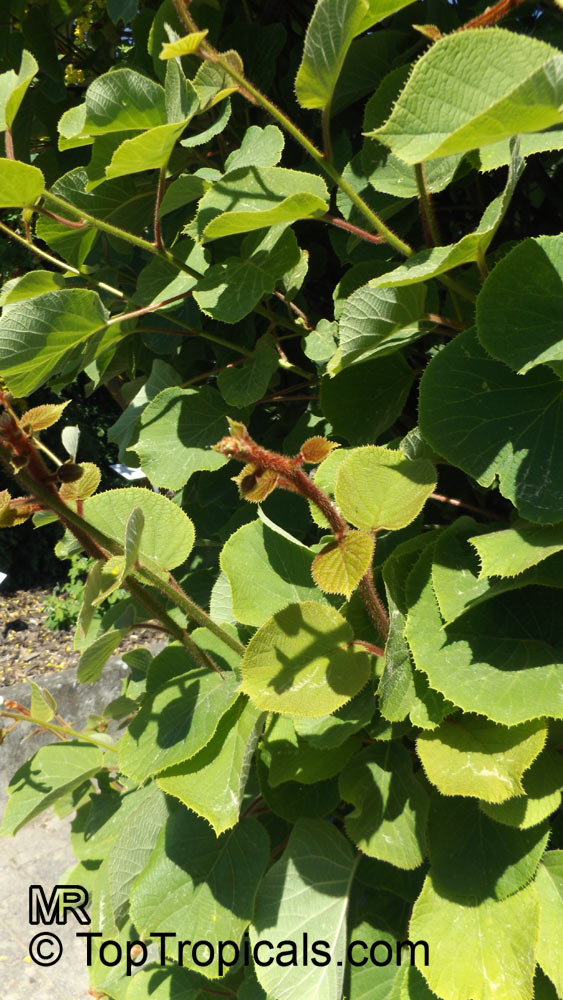
Actinidia chinensis is a vigorous deciduous climbing vine native to central and southern China. When supported by a trellis, arbor, or fence, it can stretch to about 30 feet, covering the structure with a lush canopy of broad, heart-shaped leaves. In warm months the vine grows quickly, often filling its allotted space within two or three seasons.
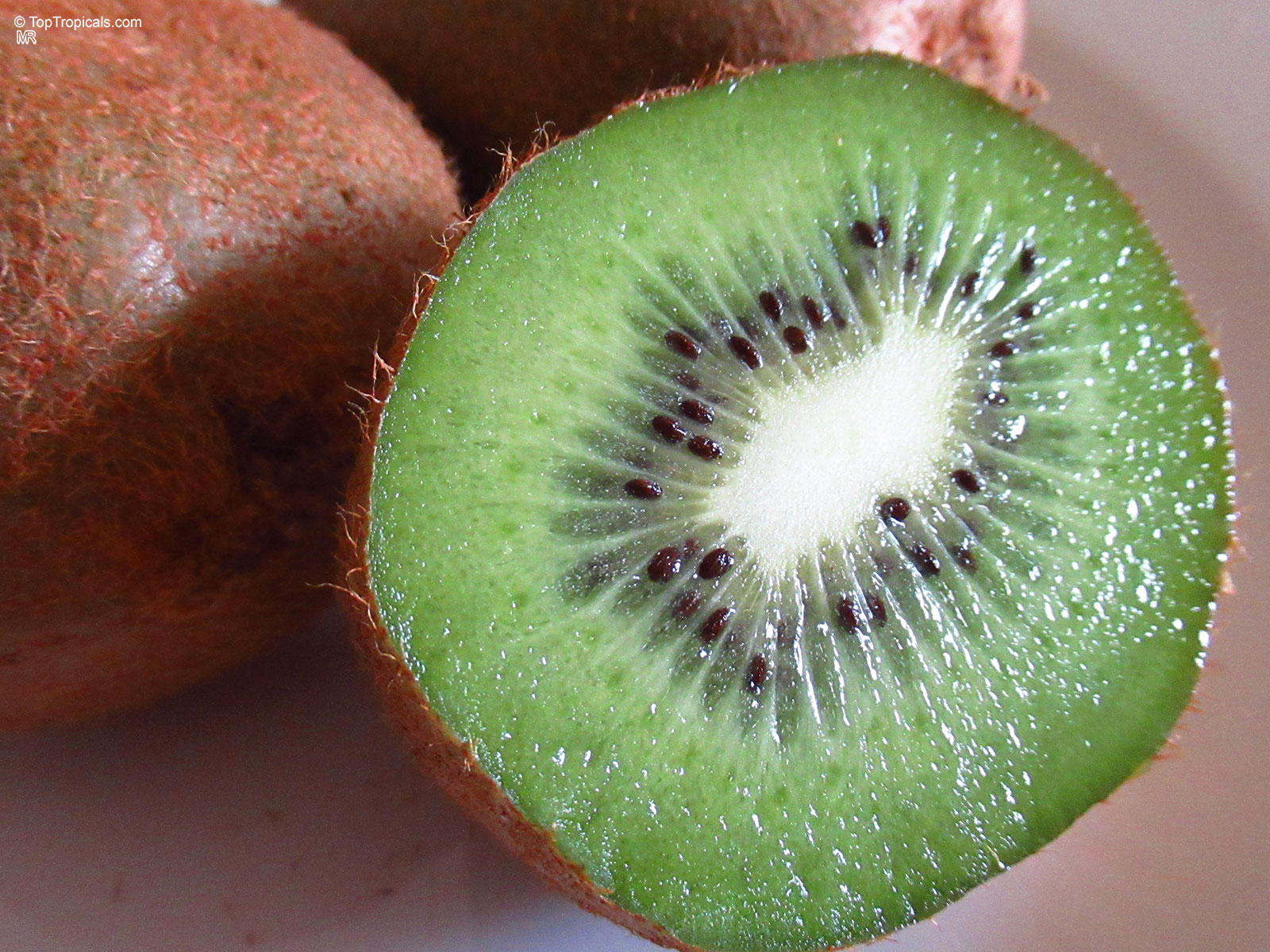
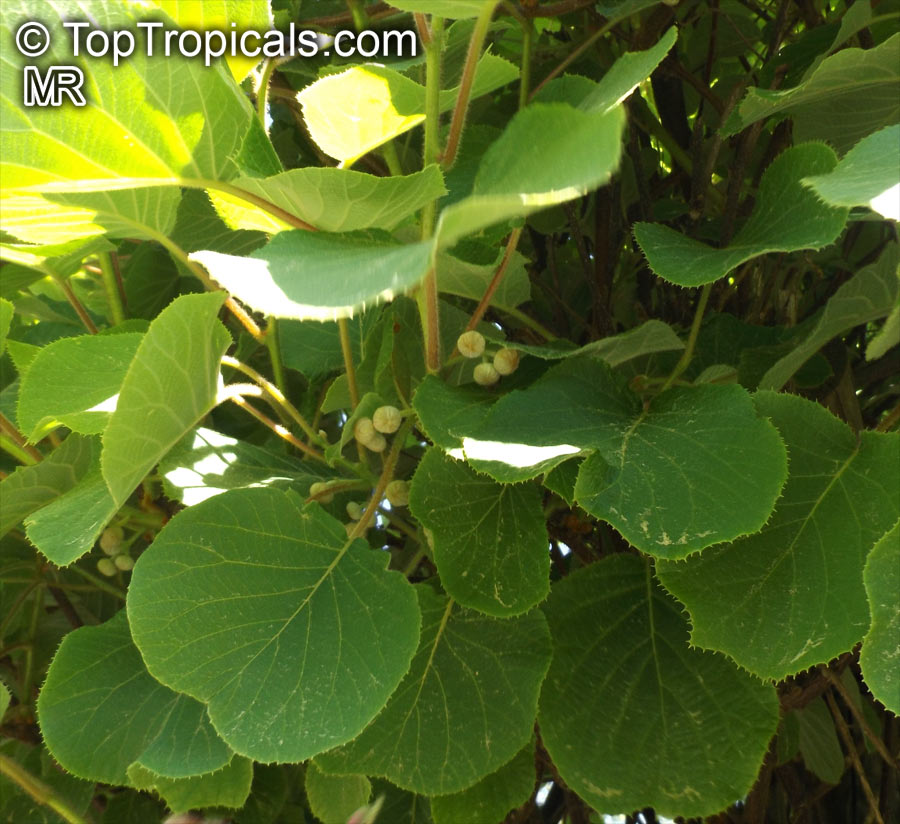
The plant thrives in full sun and fertile, well-drained soil enriched with compost, although a touch of afternoon shade is welcome in hot climates. Consistent moisture throughout summer is essential, as dry spells can noticeably reduce both fruit size and quality. In late spring, creamy-white to pale yellow flowers open, usually on separate male and female plants. Female vines that receive good pollination produce the familiar fuzzy brown fruits by late autumn. Depending on the variety and ripeness, the fruit may be tangy, sweet-tart, or mellow in flavor, with sweetness varying widely.
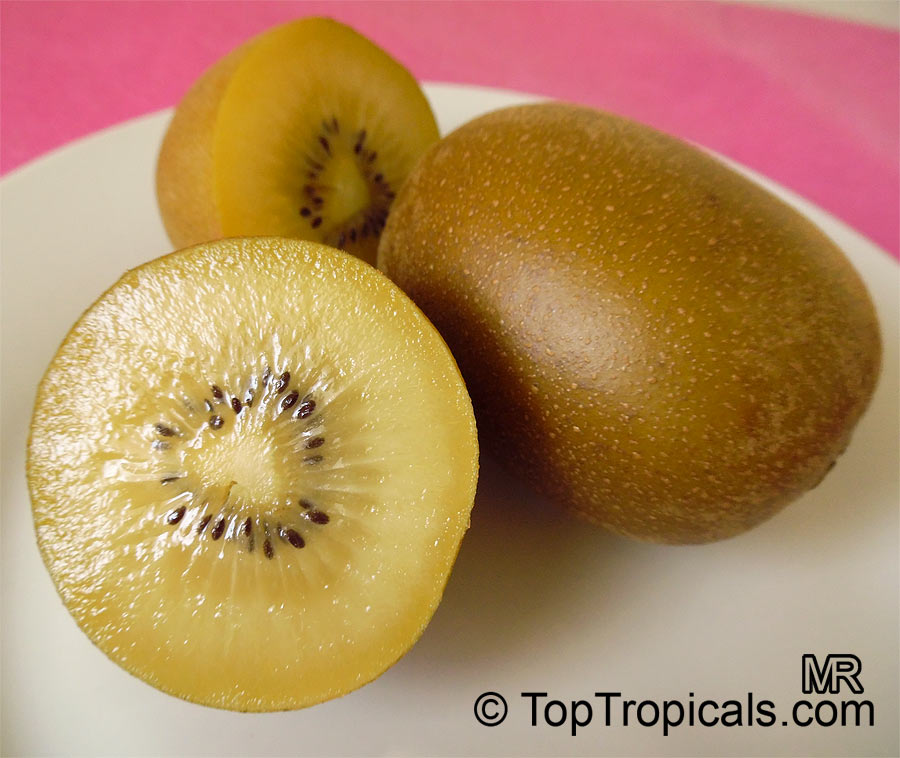
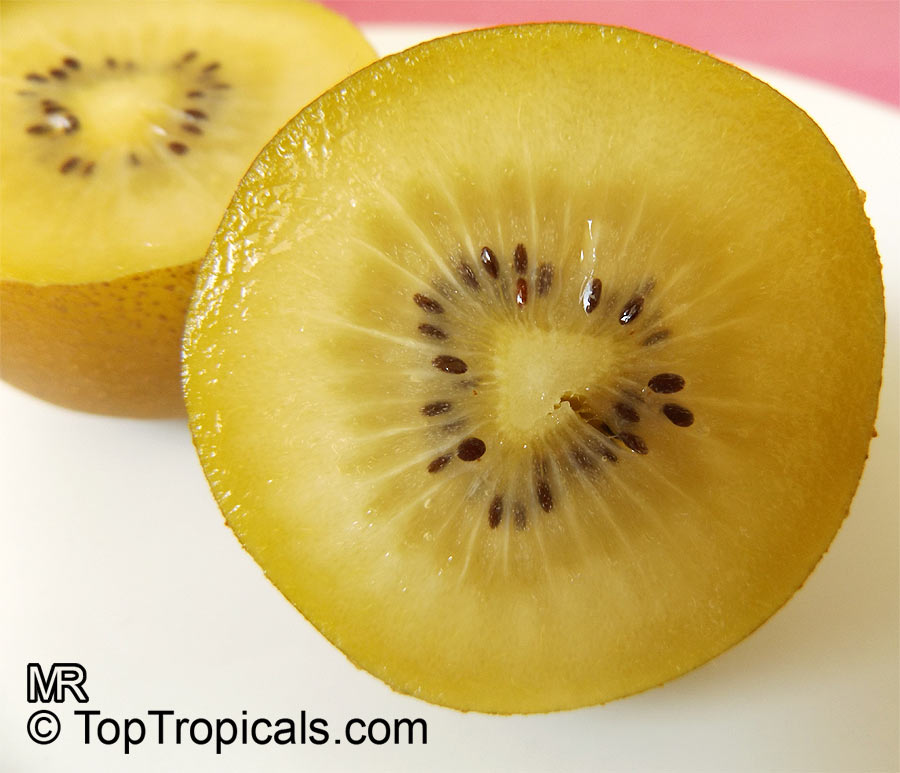
The first domesticated form of kiwifruit was Actinidia chinensis var. deliciosa, also treated in the literature as Actinidia deliciosa. This green, fuzzy kiwifruit originates from central southern China, where it grows naturally at elevations of 800 to 1,400 m. It became the first kiwifruit vine to enter large-scale commercial cultivation and remains the foundation of the traditional green kiwifruit market. The golden-fleshed cultivar Actinidia chinensis 'Sun Gold', often seen in markets, is notably sweeter and less tangy than many other selections.
While best suited to USDA Zones 8 9, it can be grown in sheltered spots in Zone 7 with winter and late frost protection. Young shoots are sensitive to cold snaps in spring. The vine can also be managed in a large container with regular pruning and a compact trellis, though this demands attentive watering and feeding. Fruits are enjoyed fresh, blended into drinks, or preserved as jam.
Similar plants: Actinidia chinensis (Kiwi Fruit)